

×

Mauritius🇲🇺 | festivalsDivaliClay diyas, doorstep rangoli, Triolet temple, sweet boxes | things to do and best time to go

Explore Chinese Spring FestivalExplore Holi

Backpacking in Divali
🏆 Top pickfestival ranked #3
By Johan Kruseman 🇳🇱 | Updated October 22, 2026

Divali in Mauritius is not a festival with a gate, a stage or a ticket; it unfolds island-wide in Hindu homes, temples and neighborhoods on a public holiday that falls in October or November, on the new moon. Look for it in the north of Mauritius around Triolet and Goodlands, and in the central towns, where whole streets glow after dark. Walk a residential road once the lamps are lit and you’ll see rows of clay diyas along walls and doorsteps, chalk-bright rangoli on the pavement, and families carrying plates of sweets to neighbors. Say yes if someone hands you a ladoo or a gulab jamun. Go out on foot rather than by car, because the best details sit at doorstep level. Book your bed and any rental car well ahead, since shops close and buses thin out on the holiday itself.

Discover everything you want to know in the 📖 Mauritius Travel Guide.


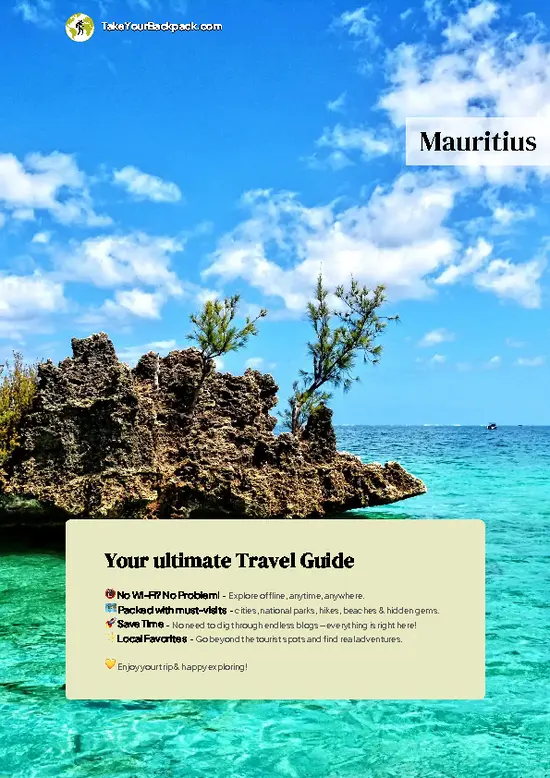
example page 0 from our offline Travel Guide for Mauritius
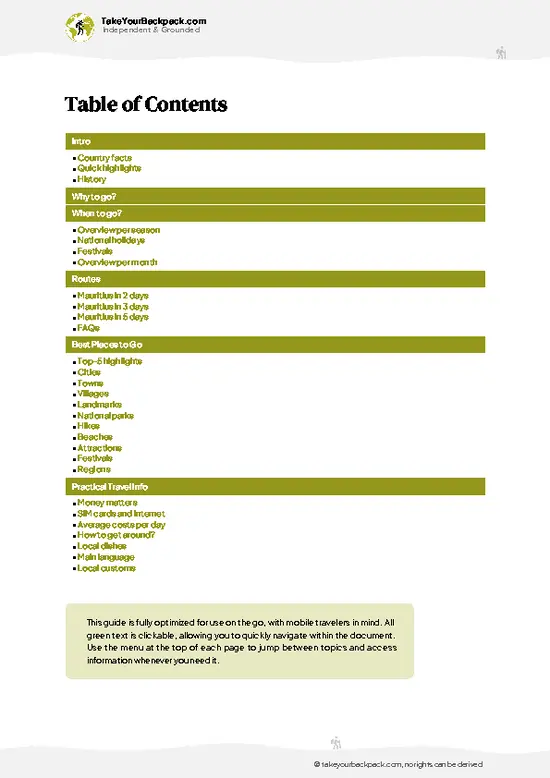
example page 1 from our offline Travel Guide for Mauritius
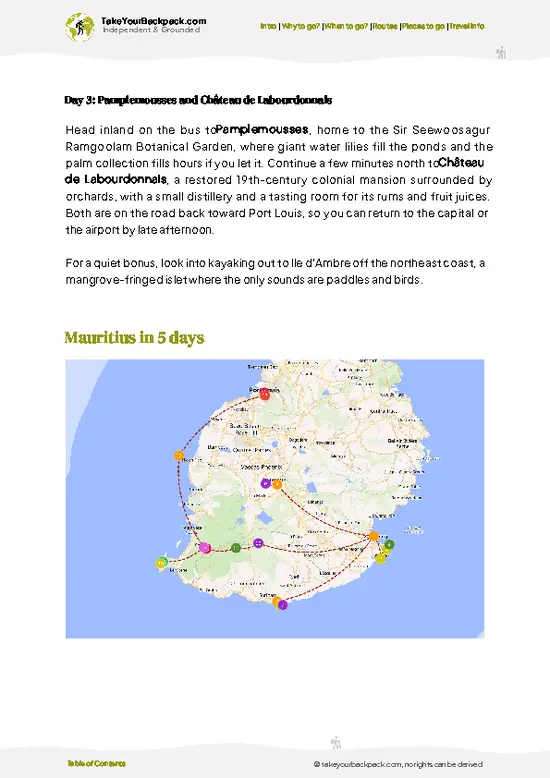
example page 2 from our offline Travel Guide for Mauritius
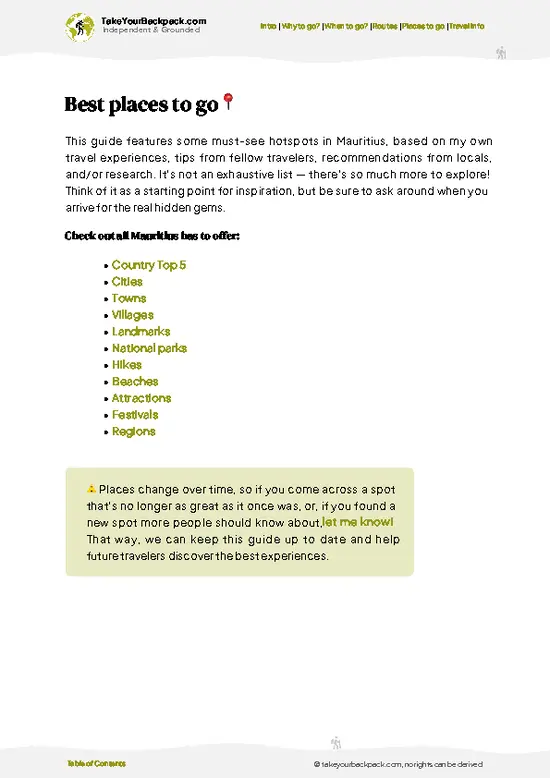
example page 3 from our offline Travel Guide for Mauritius
example page 4 from our offline Travel Guide for Mauritius
example page 5 from our offline Travel Guide for Mauritius
example page 6 from our offline Travel Guide for Mauritius
example page 7 from our offline Travel Guide for Mauritius
Loading the map 🌍
CLICK TO FILTER
cities
towns
villages
landmarks
national parks
hikes
beaches
attractions
festivals
regions
SHOW COUNTRY’S BESTSHOW ALL

✨ Why go?
Ranked #3 festival in Mauritius
Why visitors keep coming back

Divali is one of the few moments when Mauritius lets a traveler see Hindu family life from the doorstep rather than from behind a camera. Hindus make up roughly half the population, so the festival is a national event, not a niche one, and the island’s multicultural character shows in who joins in: Creole, Chinese and Muslim neighbors often swap plates of sweets with Hindu friends. That is the temporary community here. It forms street by street, and a polite hello at a lit gate can turn into an invitation to taste homemade gato kokos or halwa. The cost of taking part is close to nothing, because the best moments happen outdoors and in homes, not behind paywalls.
The festival also fits a longer route well. It lands in the shoulder of the island’s hot season, when the days are warm but the beaches … read more 👉
Divali is one of the few moments when Mauritius lets a traveler see Hindu family life from the doorstep rather than from behind a camera. Hindus make up roughly half the population, so the festival is a national event, not a niche one, and the island’s multicultural character shows in who joins in: Creole, Chinese and Muslim neighbors often swap plates of sweets with Hindu friends. That is the temporary community here. It forms street by street, and a polite hello at a lit gate can turn into an invitation to taste homemade gato kokos or halwa. The cost of taking part is close to nothing, because the best moments happen outdoors and in homes, not behind paywalls.
The festival also fits a longer route well. It lands in the shoulder of the island’s hot season, when the days are warm but the beaches are not yet packed, so you can pair a few days of village wandering with time on the coast. If you are traveling the Indian Ocean, it makes a more intimate alternative to the larger celebrations on the subcontinent, with the Maheswarnath Mandir in Triolet as your anchor.

💡 HighlightsMust-see experiences and standout moments

  1. Maheswarnath Mandir, Triolet: The island’s largest Hindu temple complex sits in the north and is the natural starting point for Divali. Expect devotees in bright clothes, offerings of flowers and fruit, and a calm courtyard beside the main shrine. Entry is free; dress modestly and remove your shoes.
  2. Diyas along village streets: Clay oil lamps line walls, gateposts and steps in Hindu neighborhoods once night comes in. Triolet, Goodlands and the central towns reward an evening stroll, when the flicker catches painted doorways and neighbors sit out front greeting passersby.
  3. Rangoli at the doorstep: Families draw geometric patterns in colored powder and flower petals at their thresholds to welcome Lakshmi. They are small, fast to appreciate and best seen early in the day before feet and wind scuff
… read more 👉
  1. Maheswarnath Mandir, Triolet: The island’s largest Hindu temple complex sits in the north and is the natural starting point for Divali. Expect devotees in bright clothes, offerings of flowers and fruit, and a calm courtyard beside the main shrine. Entry is free; dress modestly and remove your shoes.
  2. Diyas along village streets: Clay oil lamps line walls, gateposts and steps in Hindu neighborhoods once night comes in. Triolet, Goodlands and the central towns reward an evening stroll, when the flicker catches painted doorways and neighbors sit out front greeting passersby.
  3. Rangoli at the doorstep: Families draw geometric patterns in colored powder and flower petals at their thresholds to welcome Lakshmi. They are small, fast to appreciate and best seen early in the day before feet and wind scuff them.
  4. Divali sweets: Sweet shops and home kitchens turn out ladoo, barfi, gulab jamun, halwa and gato kokos by the tray. Buy a mixed box from a local confectioner and share it; sticky fingers are part of the experience, and refusing is harder than accepting.
  5. Grand Bassin (Ganga Talao): The crater lake in the southwest highlands is the holiest Hindu site on the island, with temples around the shore and a huge statue of Shiva at the entrance. During Divali, pilgrims come for prayers and offerings, and the quiet water and incense make a fitting finish to a few days of festivities. Wear modest clothes and keep food away from the shrine areas, as monkeys are bold.
Divali is best started at the Triolet temple in daylight, because it explains the offerings, lamps and greetings you’ll then recognize on every street that night.
Spotted a mistake or missing something? Contact us.

🌤️ When to go?When is the celebration of Divali?

Divali is held across Mauritius on the night of the new moon in October or November (the Hindu month of Kartik), so the date shifts each year, and the main celebration is a single evening with a public holiday, centered on Hindu neighborhoods such as Port Louis, Quatre Bornes and Triolet.
  • Best night: The holiday evening itself, when rows of clay lamps (diyas) line verandas, temples and streets, and families trade sweets. Wander residential streets after dark.
  • Weather: Evenings run about 19 to 24°C (66 to 75°F) with light showers possible as the humid season approaches. Bring a light rain layer, sandals you can slip off at temples and a scarf for covering shoulders.
  • Booking: There is no ticketed event, so book a bed two to three weeks ahead. Prices rise modestly, roughly 10 to 20 percent, near
… read more 👉
Divali is held across Mauritius on the night of the new moon in October or November (the Hindu month of Kartik), so the date shifts each year, and the main celebration is a single evening with a public holiday, centered on Hindu neighborhoods such as Port Louis, Quatre Bornes and Triolet.
  • Best night: The holiday evening itself, when rows of clay lamps (diyas) line verandas, temples and streets, and families trade sweets. Wander residential streets after dark.
  • Weather: Evenings run about 19 to 24°C (66 to 75°F) with light showers possible as the humid season approaches. Bring a light rain layer, sandals you can slip off at temples and a scarf for covering shoulders.
  • Booking: There is no ticketed event, so book a bed two to three weeks ahead. Prices rise modestly, roughly 10 to 20 percent, near Triolet and Port Louis.
  • Crowds and roads: Buses thin out after dusk and roads clog near temples, so travel to your chosen area by late afternoon and plan your return before the last buses.
Arrive in the afternoon to watch families light the lamps at dusk.


source: climatestotravel.comJANJanuary: not recommended for travelingFEBFebruary: not recommended for travelingMARMarch: not recommended for travelingAPRApril: not recommended for travelingMAYMay: not recommended for travelingJUNJune: not recommended for travelingJULJuly: not recommended for travelingAUGAugust: not recommended for travelingSEPSeptember: not recommended for travelingOCTOctober: highly recommended for travelingNOVNovember: highly recommended for travelingDECDecember: not recommended for traveling

✈️ The backpacker research shortcutMauritius Travel Guide

An offline-friendly backpacking guide with optimized travel routes, ranked highlights, transport advice, and the best areas to stay.
example page 0 from our offline Travel Guide for Mauritius
example page 1 from our offline Travel Guide for Mauritius
example page 2 from our offline Travel Guide for Mauritius
example page 3 from our offline Travel Guide for Mauritius
example page 4 from our offline Travel Guide for Mauritius
example page 5 from our offline Travel Guide for Mauritius
example page 6 from our offline Travel Guide for Mauritius
example page 7 from our offline Travel Guide for Mauritius
The digital guide (246 pages) contains:
✅ 65 highlights, ranked by travel appeal
✅ Optimized 2, 3 & 5-day travel routes
✅ Cities, national parks, landmarks, beaches
✅ How to get around
✅ Offline-friendly for travel without Wi-Fi
👉 Click to see all 30+ guide features

📅 Plan smarter in minutes, not weeks
✅ Month by month travel advice
✅ Festivals & national holidays
✅ Budget expectations

🗺️ Go to the right places, skip the overrated ones
✅ Honest pros & cons of destinations
✅ Top hikes, parks & viewpoints
✅ Lesser-known places most travelers miss
✅ Clear “worth it vs skip it” guidance

🛏️ Travel smoothly without rookie mistakes
✅ Best areas to stay
✅ Transport systems explained simply
✅ Common scams & safety advice
✅ SIM cards, money & practical tips

🌍 Understand the country, not just visit it
✅ Culture & traditions
✅ 52 Essential phrases & customs
✅ Festivals worth planning around
✅ Traveler-friendly historical context
✅ Insights that make places more meaningful

📱 Built for real travel conditions
✅ Fully downloadable PDF
✅ Works completely offline
✅ Optimized for phone use
✅ Useful in remote areas & buses
✅ Everything in one place
Stop searching, start planning
Get instant access to your full guide. 30‑day money-back guarantee.
+ Add another guide for just

By proceeding you agree to our terms.
Sent to your inbox immediately after payment • 100% Secure Checkout
Best Backpacking Travel Advisor 2025 tourism awardBest Backpacking
Travel Advisor
2025
What others say about Take Your Backpack Guides:
⭐⭐⭐⭐⭐
Fantastic, amazing amount of information!
⭐⭐⭐⭐⭐
My goodness this is amazing, it's what I've been looking for hats off too you!
⭐⭐⭐⭐⭐
I think this is absolutely BRILLIANT
⭐⭐⭐⭐
Very complete and informative. It's still missing places, but I gotta to commend you
⭐⭐⭐⭐⭐
This is truly amazing, thank you, can't wait to explore it with my kids!
⭐⭐⭐⭐⭐
Awesome resource, thank you!
⭐⭐⭐⭐⭐
This is amazing! Can't wait to explore the ones I haven't seen
⭐⭐⭐⭐
I love this! Well done, great idea.
⭐⭐⭐⭐⭐
Thanks for taking the time to make this gem!
⭐⭐⭐⭐⭐
This might be the best website I've ever seen.
⭐⭐⭐⭐⭐
Congratulations, and thank you so much for your work; it's incredibly valuable.
⭐⭐⭐⭐
In all seriousness I think you did a great job pointing out the important spots
⭐⭐⭐⭐⭐
10/10 very good
⭐⭐⭐⭐⭐
As someone who's only just starting to visit regularly this is awesome, thank you.
⭐⭐⭐⭐
Thank you very much! I'm going to visit my dad, it's going to be very useful!
⭐⭐⭐⭐⭐
This is really cool! We'll be travelling for the first time and this definitely come in handy.
⭐⭐⭐⭐⭐
You are now our minister of culture, congratulations 👨‍💼
⭐⭐⭐⭐⭐
Just wanted to tell you that this is a pearl! Going to follow your recommendations.
⭐⭐⭐⭐⭐
This is so cool. I'll definitely be using the resource for my travels soon.
⭐⭐⭐⭐⭐
This is very impressive! Good work.
⭐⭐⭐⭐⭐
This is an amazing and informative site. Very well done!

🛏️ Where to stay?How to pick the right area

Port Louis is the smartest base for Divali, because the main temple processions and the evening lights are concentrated in the capital and its neighboring towns, and the island's bus network fans out from its two bus stations. Stay in the area around the Caudan Waterfront and Chinatown if you want to walk to the street decorations, sweet stalls and the city's temples after dark. It is compact, busy by day and quiet in the late evening, so stick to well-lit main streets once the crowds thin out. Port Louis has few social stays, so many solo travelers split their time with Grand Baie.

Grand Baie, … read more 👉
Port Louis is the smartest base for Divali, because the main temple processions and the evening lights are concentrated in the capital and its neighboring towns, and the island's bus network fans out from its two bus stations. Stay in the area around the Caudan Waterfront and Chinatown if you want to walk to the street decorations, sweet stalls and the city's temples after dark. It is compact, busy by day and quiet in the late evening, so stick to well-lit main streets once the crowds thin out. Port Louis has few social stays, so many solo travelers split their time with Grand Baie.

Grand Baie, about 25 to 40 minutes north by bus or taxi, is the place to go for company. It has the island's densest cluster of backpacker-friendly guesthouses and hostels, plenty of cheap eateries, and easy evening conversation with other travelers. Buses back from Port Louis run until roughly early evening, so check the last departure or share a taxi (about US$25 to 35) if you stay late.

Curepipe and Quatre Bornes, on the central plateau, suit those who want a local residential feel and quieter streets. Both have Hindu temples with their own celebrations, lower prices and frequent buses to the capital. They are cooler at night, but less social, so they work best for travelers happy to meet people at the festival itself.

Book early, since Divali falls in the busy Indian-heritage family travel period and beds near the capital fill quickly.

👛 Costs (as of 22 October 2026)How expensive it really is

Divali costs about US$37 to 78 a day for a backpacker, since the celebration is free and your spending goes mostly on a bed and food.
CategoryBudget RangeLocal Reality
Festival ticketsUS$0Street lighting, temple visits and neighborhood celebrations are free to join. Donations at temples are optional.
AccommodationUS$20 to 40Dorms and simple guesthouses in Grand Baie or Quatre Bornes. Expect slightly higher rates in the north on the holiday weekend.
Local transportUS$2 to 8Buses cost about US$0.40 to 2 per ride. Taxis from Port Louis to Triolet run roughly US$25 to 35.
Food & drinksUS$10 to 20Street snacks and dholl puri are cheap, and a sit-down curry costs US$5 to 9. Sweets add a few dollars.
Miscellaneous expensesUS$5 to 10Diyas, incense, a SIM card or temple offerings. Cash is needed at stalls.
… read more 👉
Divali costs about US$37 to 78 a day for a backpacker, since the celebration is free and your spending goes mostly on a bed and food.
CategoryBudget RangeLocal Reality
Festival ticketsUS$0Street lighting, temple visits and neighborhood celebrations are free to join. Donations at temples are optional.
AccommodationUS$20 to 40Dorms and simple guesthouses in Grand Baie or Quatre Bornes. Expect slightly higher rates in the north on the holiday weekend.
Local transportUS$2 to 8Buses cost about US$0.40 to 2 per ride. Taxis from Port Louis to Triolet run roughly US$25 to 35.
Food & drinksUS$10 to 20Street snacks and dholl puri are cheap, and a sit-down curry costs US$5 to 9. Sweets add a few dollars.
Miscellaneous expensesUS$5 to 10Diyas, incense, a SIM card or temple offerings. Cash is needed at stalls.
Total Daily BudgetUS$37 to 78About US$60 a day is a realistic figure for the high-season holiday weekend.


source: mauritiusnow.com
⚠️ Prices can change and everyone travels differently, so take this as a rough guide. Hope it helps you plan your adventure!

🍲 FoodWhat to Eat & Drink

Divali is about sweets, and the island’s Hindu families make them in huge quantities. Neighbors swap boxes of gato patate (sweet potato cakes), ladou (round chickpea-flour balls), gulab jamun and jalebi, all sticky, syrupy and sized for sharing. Say yes when offered a piece at a doorway. Refusing politely is fine, but accepting is the friendlier move.

For savory bites, look for dholl puri, the thin yellow split-pea flatbread filled with curry and chutney, and gato pima, crunchy chili-spiced fritters. Street vendors in Port Louis, Quatre Bornes and Triolet fry gato piment and samosas by the dozen. A dholl puri typically costs US$0.50 to 1 and a bag of sweets US$2 to 5.

Drinks are simple. Alouda, a chilled milk drink with basil seeds and jelly, cuts through the sugar, and fresh sugarcane juice … read more 👉
Divali is about sweets, and the island’s Hindu families make them in huge quantities. Neighbors swap boxes of gato patate (sweet potato cakes), ladou (round chickpea-flour balls), gulab jamun and jalebi, all sticky, syrupy and sized for sharing. Say yes when offered a piece at a doorway. Refusing politely is fine, but accepting is the friendlier move.

For savory bites, look for dholl puri, the thin yellow split-pea flatbread filled with curry and chutney, and gato pima, crunchy chili-spiced fritters. Street vendors in Port Louis, Quatre Bornes and Triolet fry gato piment and samosas by the dozen. A dholl puri typically costs US$0.50 to 1 and a bag of sweets US$2 to 5.

Drinks are simple. Alouda, a chilled milk drink with basil seeds and jelly, cuts through the sugar, and fresh sugarcane juice and tea with milk are everywhere. Temples and homes are vegetarian during the festival, so meat dishes are scarce at celebrations.

Pay in cash, because small stalls take only rupees. Eat with your right hand when invited into a home, and remove your shoes at the door. Arrive hungry, since hosts often keep refilling plates.

FAQTraveler FAQ

Divali takes place on the new moon night of the Hindu month of Kartik, usually in late October or November, so the date changes yearly. It is a public holiday across Mauritius, with the main evening celebrated in Port Louis, Quatre Bornes and Triolet. Festivities last one night, although decorating and sweet-making start days earlier.
Attending Divali is free, because the lighting of diyas, street displays and temple visits are open to everyone. Your costs are a bed at roughly US$20 to 40 a night, local buses at US$0.40 to 2 a ride and snacks such as dholl puri for under US$1. Plan on about US$45 to 85 a day in total.
No tickets are needed for Divali, since it is celebrated in homes, streets and temples rather than at a gated venue. What you should book ahead is a bed, ideally two to three weeks early in Grand Baie or near Triolet, as the holiday weekend fills up. Buses thin out after dark, so arrive by late afternoon and plan your return.
⚠️ Things can change over time, so always validate details locally before you go.

Other Mauritian festivals near Divali

Explore more nearby:


💡 Not sure where to go next?
Create a personalized itinerary for Mauritius including Divali and the places that fit your trip.

Generate my itinerary

👉 Discover all festivals

Or checkout all Mauritius has to offer (think cities, towns, villages, national parks, hikes, beaches, festivals)
Country photo of Mauritius

We 💚 feedbackParting advice and final tips

Divali works best as the middle of a route, not the whole of it. I’d spend the daytime in Port Louis at the Central Market, stock up on sweets, then head north to Triolet for the evening lamps before finishing on the Grand Baie coast. Pack a small gift box of sweets for any family that waves you in, and keep your phone away during prayers.

✍️ Help improve this page!
The information on this page is based on in-depth research, insights shared by experienced travelers, and feedback from the local travel community in Mauritius. While every effort is made to keep the information accurate and current, conditions can change — so if you spot anything incorrect or outdated, please get in touch.


🙋‍♂️ Give feedback

👋 Meet the founderWho’s Behind Take Your Backpack?

Johan, backpacker and founder of TakeYourBackpackHi, I’m Johan (Netherlands 🇳🇱), the creator of TakeYourBackpack. Over the past 3 decades, I’ve backpacked through 90+ countries across six continents, gaining extensive experience with independent travel, long-term trips, and overland routes.

This site is built on a combination of firsthand travel experience and carefully curated insights from other backpackers. Many guides are based on places I’ve personally visited, while others bring together tips, observations, and practical advice shared by trusted travelers I’ve met along the way.

The goal is to provide realistic, experience-driven guidance — not generic itineraries — so you can explore destinations with better context, clearer expectations, and more confidence.