×

Mayotte🇾🇹 | regionsPetite TerreDzaoudzi rock, crater lake, lagoon beaches, barge crossing | things to do and best time to go

Explore ChissiouaExplore Bandrélé

Backpacking in Petite Terre
🏆 Top pickregion ranked #3
By Johan Kruseman 🇳🇱 | Updated October 22, 2026

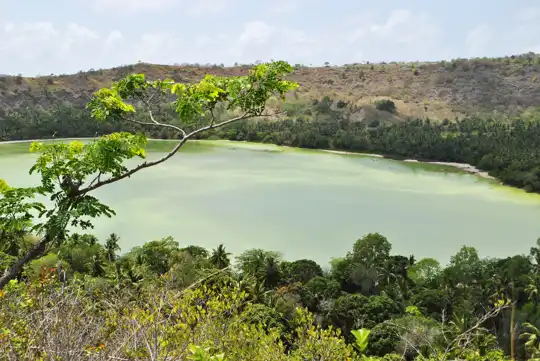
Most travelers decide whether to sleep on Petite Terre or cross over from Mamoudzou for a day, and what tips it is the flight schedule: the airport sits here, so early departures make a night on the rock sensible. Petite Terre lies just east of the main island in the north of Mayotte, reached by a short barge ride across the lagoon. On the ground, Dzaoudzi’s steep rock is all old colonial stone, sea wind and hot pavement, and the climb ends with the lagoon spread below you. Labattoir and Pamandzi are plainer, with concrete houses, roaming goats and scooters buzzing past, and you won’t find many hotels. Crowds are thin, which suits you, though the tarmac is hot and shade is rare. The reward comes at Lac Dziani, a crater lake of green water ringed by trees, where lemurs sometimes watch you from the rim.

Discover everything you want to know in the 📖 Mayotte Travel Guide.


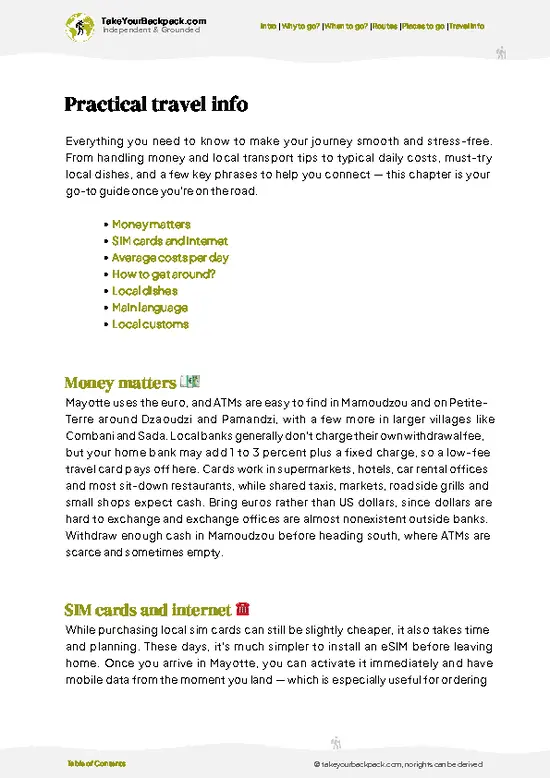
example page 0 from our offline Travel Guide for Mayotte
example page 1 from our offline Travel Guide for Mayotte
example page 2 from our offline Travel Guide for Mayotte
example page 3 from our offline Travel Guide for Mayotte
example page 4 from our offline Travel Guide for Mayotte
example page 5 from our offline Travel Guide for Mayotte
example page 6 from our offline Travel Guide for Mayotte
example page 7 from our offline Travel Guide for Mayotte
Loading the map 🌍
CLICK TO FILTER
towns
landmarks
national parks
hikes
beaches
attractions
festivals
regions
SHOW COUNTRY’S BESTSHOW ALL

✨ Why go?
Ranked #3 region in Mayotte
Why visitors keep coming back

Petite Terre packs a fortress rock, a crater lake and several lagoon beaches into an island you can cross by bike or on foot. Nothing here demands a long transfer, so you spend your hours snorkeling, walking and eating rather than waiting at stops. The barge from Mamoudzou runs constantly through the day, which means you can sleep here and still reach the main island for supplies or visit it on a whim. That flexibility lets you keep a slow rhythm, swimming in the morning and climbing in the cooler hours.

The mix is unusual. You get colonial history on the Rocher de Dzaoudzi, then walk to Lac Dziani to see a volcanic crater filled with green water, and finish on sand where turtles graze offshore. Mahorais families fill the beaches on weekends, so you meet locals rather than tour groups. It … read more 👉
Petite Terre packs a fortress rock, a crater lake and several lagoon beaches into an island you can cross by bike or on foot. Nothing here demands a long transfer, so you spend your hours snorkeling, walking and eating rather than waiting at stops. The barge from Mamoudzou runs constantly through the day, which means you can sleep here and still reach the main island for supplies or visit it on a whim. That flexibility lets you keep a slow rhythm, swimming in the morning and climbing in the cooler hours.

The mix is unusual. You get colonial history on the Rocher de Dzaoudzi, then walk to Lac Dziani to see a volcanic crater filled with green water, and finish on sand where turtles graze offshore. Mahorais families fill the beaches on weekends, so you meet locals rather than tour groups. It is a compact, low-key base for anyone wanting nature and culture in the same day.

💡 HighlightsKey sights and experiences for travelers

  1. Rocher de Dzaoudzi: the old capital sits on a steep rock, with colonial buildings, ramparts and lookouts over the lagoon toward the main island.
  2. Musée de Mayotte: housed on the rock, it covers local history, Swahili-influenced traditions and the island’s ties to France in a cool, quiet setting.
  3. Lac Dziani: a green crater lake on the island’s eastern side, ringed by trees where lemurs sometimes gather. The path around the rim is short and mostly flat.
  4. Plage des Badamiers: a palm-fringed curve of pale sand under almond trees, popular at weekends, calm for swimming and with lagoon views.
  5. Plage de Moya: a long sandy beach and sheltered lagoon where turtles are often spotted in the shallows while you snorkel.
  6. Plage de Papani: a quieter stretch where Mahorais families picnic and children play in the
… read more 👉
  1. Rocher de Dzaoudzi: the old capital sits on a steep rock, with colonial buildings, ramparts and lookouts over the lagoon toward the main island.
  2. Musée de Mayotte: housed on the rock, it covers local history, Swahili-influenced traditions and the island’s ties to France in a cool, quiet setting.
  3. Lac Dziani: a green crater lake on the island’s eastern side, ringed by trees where lemurs sometimes gather. The path around the rim is short and mostly flat.
  4. Plage des Badamiers: a palm-fringed curve of pale sand under almond trees, popular at weekends, calm for swimming and with lagoon views.
  5. Plage de Moya: a long sandy beach and sheltered lagoon where turtles are often spotted in the shallows while you snorkel.
  6. Plage de Papani: a quieter stretch where Mahorais families picnic and children play in the lagoon, a good place to chat with locals.
  7. La Digue: the causeway linking Dzaoudzi and Labattoir, with fishing boats on one side and the lagoon on the other. It is a lesser-known walk locals use daily.
  8. Labattoir waterfront: a down-to-earth strip of small shops, grills and fishermen unloading catch, where you can eat simply among locals.
  9. Pamandzi village lanes: quiet backstreets of small houses, mosques and gardens away from the beaches, ideal for an unhurried wander.
  10. The barge crossing: a daily commuter ride where you watch the rock, boats and the main island’s hills slide past at close range.
Petite Terre rewards an early start, so do Lac Dziani first while the air is cool and the lemurs are most active, then save the beaches for the heat.
Spotted a mistake or missing something? Contact us.

Things to do near Petite Terre

Ratings based on Tripadvisor reviews. When you book through this link, you support our work at no extra cost to you.

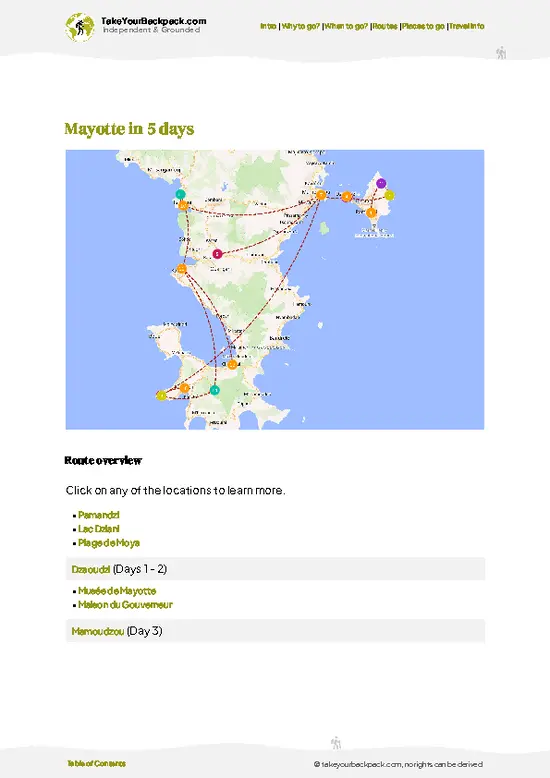
⌛️ 5 daysSeeing the highlights in 5 days

Day 1: Lac Dziani: Do not skip the crater lake. Walk the rim early, before the sun gets heavy, and watch the green water and the lemurs in the trees. Afterward, head to Labattoir for a simple lunch, since the barge schedule means you can sleep on the island and still keep the whole day flexible.

Day 2: Dzaoudzi: Climb the Rocher de Dzaoudzi and spend time in the Musée de Mayotte, which makes more sense once you have seen the old capital’s ramparts. Walk back along La Digue toward Labattoir in the afternoon, when fishermen are working the causeway and the light flattens out over the lagoon.

Day 3: Plage des Badamiers: Devote the day to sand and water. Badamiers has shade from almond trees, so you can swim in the morning and rest through the hottest hours. Because the island is small, nothing … read more 👉
Day 1: Lac Dziani: Do not skip the crater lake. Walk the rim early, before the sun gets heavy, and watch the green water and the lemurs in the trees. Afterward, head to Labattoir for a simple lunch, since the barge schedule means you can sleep on the island and still keep the whole day flexible.

Day 2: Dzaoudzi: Climb the Rocher de Dzaoudzi and spend time in the Musée de Mayotte, which makes more sense once you have seen the old capital’s ramparts. Walk back along La Digue toward Labattoir in the afternoon, when fishermen are working the causeway and the light flattens out over the lagoon.

Day 3: Plage des Badamiers: Devote the day to sand and water. Badamiers has shade from almond trees, so you can swim in the morning and rest through the hottest hours. Because the island is small, nothing here forces you to rush between spots.

Day 4: Plage de Moya: Bring a mask and snorkel. Moya’s lagoon is where turtles are often spotted, so slow swimming pays off. Afterward, wander Pamandzi’s lanes to see everyday island life away from the water.

Day 5: Mamoudzou detour: Take the barge across for the day. The detour adds markets, restaurants and shops in Mamoudzou without upsetting the logistics, because crossings are frequent and you can return when you like. If you want one more beach instead, Plage de Papani is a quiet alternative on Petite Terre itself.

If you can only do one day, make it Day 1. The crater lake in the cool early hours is the clearest reason to come.

🌤️ When to go?Choosing the right time of year

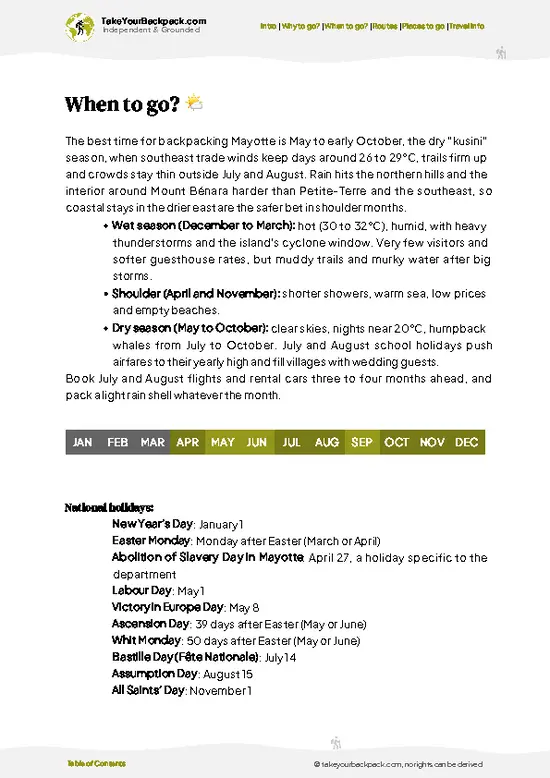
The dry season from May to October is the most comfortable window for Petite Terre, with little rain and cooler, breezier days.
  • Dry Season (May to October): Days run 26 to 30°C (79 to 86°F), nights dip to about 21°C (70°F), and the trade wind keeps the Moya beach shaded spots pleasant. The lagoon is calm and clear, so snorkeling and the Mont Choungui side hikes are at their best. Daylight lasts roughly 11 to 12 hours. Flights and rooms cost most in July and August when visitors from mainland France arrive.
  • Wet Season (November to April): Expect 28 to 33°C (82 to 91°F), heavy humidity and sudden downpours that turn Pamandzi’s streets into streams. Cyclone risk peaks from January to March. Prices drop and the beaches empty, but boat trips are often cancelled.
  • Turtle and Whale Season: Humpback
… read more 👉
The dry season from May to October is the most comfortable window for Petite Terre, with little rain and cooler, breezier days.
  • Dry Season (May to October): Days run 26 to 30°C (79 to 86°F), nights dip to about 21°C (70°F), and the trade wind keeps the Moya beach shaded spots pleasant. The lagoon is calm and clear, so snorkeling and the Mont Choungui side hikes are at their best. Daylight lasts roughly 11 to 12 hours. Flights and rooms cost most in July and August when visitors from mainland France arrive.
  • Wet Season (November to April): Expect 28 to 33°C (82 to 91°F), heavy humidity and sudden downpours that turn Pamandzi’s streets into streams. Cyclone risk peaks from January to March. Prices drop and the beaches empty, but boat trips are often cancelled.
  • Turtle and Whale Season: Humpback whales pass the lagoon from roughly July to September, and green turtles come to the Moya shoreline year-round.
Book the Dzaoudzi ferry early in the morning during July and August, since the first crossings fill with commuters.


source: climatestotravel.comJANJanuary: fair for travelingFEBFebruary: fair for travelingMARMarch: fair for travelingAPRApril: fair for travelingMAYMay: excellent for travelingJUNJune: highly recommended for travelingJULJuly: highly recommended for travelingAUGAugust: highly recommended for travelingSEPSeptember: highly recommended for travelingOCTOctober: excellent for travelingNOVNovember: fair for travelingDECDecember: fair for traveling
when-to-go

✈️ The backpacker research shortcutMayotte Travel Guide

An offline-friendly backpacking guide with optimized travel routes, ranked highlights, transport advice, and the best areas to stay.
example page 0 from our offline Travel Guide for Mayotte
example page 1 from our offline Travel Guide for Mayotte
example page 2 from our offline Travel Guide for Mayotte
example page 3 from our offline Travel Guide for Mayotte
example page 4 from our offline Travel Guide for Mayotte
example page 5 from our offline Travel Guide for Mayotte
example page 6 from our offline Travel Guide for Mayotte
example page 7 from our offline Travel Guide for Mayotte
The digital guide (129 pages) contains:
✅ 27 highlights, ranked by travel appeal
✅ Optimized 2, 3 & 5-day travel routes
✅ Cities, national parks, landmarks, beaches
✅ How to get around
✅ Offline-friendly for travel without Wi-Fi
👉 Click to see all 30+ guide features

📅 Plan smarter in minutes, not weeks
✅ Month by month travel advice
✅ Festivals & national holidays
✅ Budget expectations

🗺️ Go to the right places, skip the overrated ones
✅ Honest pros & cons of destinations
✅ Top hikes, parks & viewpoints
✅ Lesser-known places most travelers miss
✅ Clear “worth it vs skip it” guidance

🛏️ Travel smoothly without rookie mistakes
✅ Best areas to stay
✅ Transport systems explained simply
✅ Common scams & safety advice
✅ SIM cards, money & practical tips

🌍 Understand the country, not just visit it
✅ Culture & traditions
✅ 52 Essential phrases & customs
✅ Festivals worth planning around
✅ Traveler-friendly historical context
✅ Insights that make places more meaningful

📱 Built for real travel conditions
✅ Fully downloadable PDF
✅ Works completely offline
✅ Optimized for phone use
✅ Useful in remote areas & buses
✅ Everything in one place
Stop searching, start planning
Get instant access to your full guide. 30‑day money-back guarantee.
+ Add another guide for just

By proceeding you agree to our terms.
Sent to your inbox immediately after payment • 100% Secure Checkout
Best Backpacking Travel Advisor 2025 tourism awardBest Backpacking
Travel Advisor
2025
What others say about Take Your Backpack Guides:
⭐⭐⭐⭐⭐
Fantastic, amazing amount of information!
⭐⭐⭐⭐⭐
My goodness this is amazing, it's what I've been looking for hats off too you!
⭐⭐⭐⭐⭐
I think this is absolutely BRILLIANT
⭐⭐⭐⭐
Very complete and informative. It's still missing places, but I gotta to commend you
⭐⭐⭐⭐⭐
This is truly amazing, thank you, can't wait to explore it with my kids!
⭐⭐⭐⭐⭐
Awesome resource, thank you!
⭐⭐⭐⭐⭐
This is amazing! Can't wait to explore the ones I haven't seen
⭐⭐⭐⭐
I love this! Well done, great idea.
⭐⭐⭐⭐⭐
Thanks for taking the time to make this gem!
⭐⭐⭐⭐⭐
This might be the best website I've ever seen.
⭐⭐⭐⭐⭐
Congratulations, and thank you so much for your work; it's incredibly valuable.
⭐⭐⭐⭐
In all seriousness I think you did a great job pointing out the important spots
⭐⭐⭐⭐⭐
10/10 very good
⭐⭐⭐⭐⭐
As someone who's only just starting to visit regularly this is awesome, thank you.
⭐⭐⭐⭐
Thank you very much! I'm going to visit my dad, it's going to be very useful!
⭐⭐⭐⭐⭐
This is really cool! We'll be travelling for the first time and this definitely come in handy.
⭐⭐⭐⭐⭐
You are now our minister of culture, congratulations 👨‍💼
⭐⭐⭐⭐⭐
Just wanted to tell you that this is a pearl! Going to follow your recommendations.
⭐⭐⭐⭐⭐
This is so cool. I'll definitely be using the resource for my travels soon.
⭐⭐⭐⭐⭐
This is very impressive! Good work.
⭐⭐⭐⭐⭐
This is an amazing and informative site. Very well done!

🛏️ Where to stay?How to pick the right area

Dzaoudzi and Pamandzi are the two practical bases, and both work better than staying across the water if you want lagoon access and calm streets. Dzaoudzi, the old colonial hub, has a small walkable center, the fort rock views and the ferry terminal close at hand, so early departures to Mamoudzou are simple. It is quiet at night and easy for solo travelers, with a handful of cafés where you will meet teachers, officials and the occasional diver. Expect to pay roughly €40 to 90 for a simple room.

Pamandzi is the more residential side, close to the airport and the road to Moya. Stay here for local … read more 👉
Dzaoudzi and Pamandzi are the two practical bases, and both work better than staying across the water if you want lagoon access and calm streets. Dzaoudzi, the old colonial hub, has a small walkable center, the fort rock views and the ferry terminal close at hand, so early departures to Mamoudzou are simple. It is quiet at night and easy for solo travelers, with a handful of cafés where you will meet teachers, officials and the occasional diver. Expect to pay roughly €40 to 90 for a simple room.

Pamandzi is the more residential side, close to the airport and the road to Moya. Stay here for local life, bakeries in the early morning and the shortest route to the island’s best-known beach. It is less social than Dzaoudzi, but you will meet more locals, and apartment rentals can cost less per person if you share.

Moya, at the southeast tip, offers beach access and a relaxed outdoor feel, though lodging is limited and evenings are very quiet. Book ahead from July to August. Evenings are safest in the main streets of Dzaoudzi and Pamandzi, where traffic is light and foot traffic is steady until about 9 p.m.

🚌 Getting aroundTransportation options and practical tips

Petite Terre sits across the lagoon from Mamoudzou, and the costliest error is turning up at the Dzaoudzi barge terminal late in the evening or on a Sunday, when crossings thin out and you end up paying for a taxi or a night you hadn’t planned. Once you are on the islet, everything is compact, with just two main settlements, Dzaoudzi and Pamandzi, linked by a single causeway road. Getting around on foot works well, and the ride across the water is dependable most days.
  • Passenger Barge (Amphidrome): The ferry shuttles between Mamoudzou and Dzaoudzi roughly every 15 to 30 minutes for about 30 minutes, costing around €1 per passenger. You stand on an open deck in a warm salty wind, with the fort rock of Dzaoudzi rising ahead as the diesel hum fades.
  • Walking: The Dzaoudzi old town and the causeway
… read more 👉
Petite Terre sits across the lagoon from Mamoudzou, and the costliest error is turning up at the Dzaoudzi barge terminal late in the evening or on a Sunday, when crossings thin out and you end up paying for a taxi or a night you hadn’t planned. Once you are on the islet, everything is compact, with just two main settlements, Dzaoudzi and Pamandzi, linked by a single causeway road. Getting around on foot works well, and the ride across the water is dependable most days.
  • Passenger Barge (Amphidrome): The ferry shuttles between Mamoudzou and Dzaoudzi roughly every 15 to 30 minutes for about 30 minutes, costing around €1 per passenger. You stand on an open deck in a warm salty wind, with the fort rock of Dzaoudzi rising ahead as the diesel hum fades.
  • Walking: The Dzaoudzi old town and the causeway to Pamandzi take about 30 to 40 minutes on foot. You pass fishing boats, frangipani smells and kids playing football on cracked tarmac, and end at the airport edge with the lagoon on both sides.
  • Shared Taxis (Taxi-Collectif): White minibuses run the length of the islet for about €1 to 2 a seat. They are tightly packed, loud with music, and a good way to reach Moya beach without a sweaty climb.
  • Bicycle or Scooter Rental: Rentals run about €10 to 25 a day. The road to Moya climbs through dry scrub and rewards you with a sudden turquoise view over the lagoon, though the hills are steep in midday heat.
  • Water Taxi (Boutres and Kwassa Boats): Local skippers run boat transfers to sandbars and islets for roughly €15 to 40 a person depending on distance. You skim over glassy water, with the sun hot on your shoulders.
Carry small euro coins for the collective taxis and the barge, and start your day before 9 a.m. so the walk to Moya stays cool.

👛 Costs (as of 22 October 2026)How expensive it really is

Visiting Petite Terre in Mayotte can be a unique experience, but it’s essential to know what you’re getting into financially.
  • Transportation: Expect to pay around €30 to €50 for a round-trip boat ride from the main island to Petite Terre. The boats can fill up quickly, especially during peak times, so booking in advance is wise.
  • Accommodation: There are limited options on Petite Terre. If you plan to stay overnight, budget around €60 to €100 for basic lodging. Camping is also an option, but facilities are minimal, so be prepared for a more rugged experience.
  • Food: Dining options are sparse. You might spend about €10 to €20 per meal at local eateries. Stocking up on snacks and water before heading over can save you some cash and ensure you have enough to eat.
  • Activities: While the main draw is
… read more 👉
Visiting Petite Terre in Mayotte can be a unique experience, but it’s essential to know what you’re getting into financially.
  • Transportation: Expect to pay around €30 to €50 for a round-trip boat ride from the main island to Petite Terre. The boats can fill up quickly, especially during peak times, so booking in advance is wise.
  • Accommodation: There are limited options on Petite Terre. If you plan to stay overnight, budget around €60 to €100 for basic lodging. Camping is also an option, but facilities are minimal, so be prepared for a more rugged experience.
  • Food: Dining options are sparse. You might spend about €10 to €20 per meal at local eateries. Stocking up on snacks and water before heading over can save you some cash and ensure you have enough to eat.
  • Activities: While the main draw is the stunning beaches and nature, if you want to explore guided tours or snorkeling trips, budget an additional €20 to €50. These experiences can enrich your visit but are not always necessary to enjoy the island.
  • Park Fees: There’s typically a small entrance fee for nature reserves, around €5. This helps maintain the area and ensures you can enjoy its natural beauty without the crowds.

Understanding these costs will help you plan a trip that balances adventure with your budget.


source: mayotte-tourisme.com
⚠️ Prices can change and everyone travels differently, so take this as a rough guide. Hope it helps you plan your adventure!

🍲 FoodLocal Cuisine & Drinks

Mahorais cooking on Petite Terre leans on coconut, cassava and the lagoon. Look for mataba, cassava leaves simmered with coconut milk, and poulet coco, chicken in a rich, mildly spiced coconut sauce, served with rice or green bananas. Grilled fish comes smoky and charred at the edges, and brochettes sizzle at roadside stands as the evening cools. Fresh ylang-ylang and vanilla perfume the sweet snacks, and bananas arrive stewed with coconut.

For drinks, try fresh coconut water cut with a machete, passion fruit juice and sweet ginger tea. Alcohol is less common, since the island is mostly Muslim, so expect many places to serve none.

Backpackers eat well at bakeries for warm baguettes and samosa-like sambos for about €1 to 2, and at small snack shops near the Dzaoudzi quay, where plates run … read more 👉
Mahorais cooking on Petite Terre leans on coconut, cassava and the lagoon. Look for mataba, cassava leaves simmered with coconut milk, and poulet coco, chicken in a rich, mildly spiced coconut sauce, served with rice or green bananas. Grilled fish comes smoky and charred at the edges, and brochettes sizzle at roadside stands as the evening cools. Fresh ylang-ylang and vanilla perfume the sweet snacks, and bananas arrive stewed with coconut.

For drinks, try fresh coconut water cut with a machete, passion fruit juice and sweet ginger tea. Alcohol is less common, since the island is mostly Muslim, so expect many places to serve none.

Backpackers eat well at bakeries for warm baguettes and samosa-like sambos for about €1 to 2, and at small snack shops near the Dzaoudzi quay, where plates run roughly €6 to 12. Casual restaurants in Pamandzi serve set lunches for €10 to 15.

Dining customs follow Muslim practice. Eat with your right hand when sharing a dish, dress modestly in town, and during Ramadan many places close until sunset. Cash in euros is handy, because small vendors rarely take cards.

FAQTraveler FAQ

Two days is enough to cover Petite Terre, which is only about 3 kilometers across. Spend day one on the Dzaoudzi old town, the fort rock and the Pamandzi causeway, then use day two for Moya beach, snorkeling and a walk up Mont Choungui. Add a third day if you want a boat excursion to the lagoon sandbars, which cost roughly €15 to 40.
Walking, shared taxis and the passenger barge cover everything without a car. The barge from Mamoudzou costs around €1 and takes about 30 minutes, while collective taxis along the islet run about €1 to 2 a seat. For Moya beach, rent a bike for €10 to 25 a day or take a taxi, since the road climbs over hills.
Petite Terre is known for its calm lagoon beaches, especially Moya, and for the colonial fort rock of Dzaoudzi that once served as the island’s capital. It also hosts Mayotte’s airport, so most visitors pass through it. Snorkeling with green turtles and whale watching from July to September are the main draws, with whales best spotted on boat outings costing around €40 to 70.
⚠️ Things can change over time, so always validate details locally before you go.

More places to explore across Mayotte

Petite Terre isn’t the only highlight in Mayotte. Explore all what Mayotte has to offer.
Country photo of Mayotte

We 💚 feedbackParting advice and final tips

Petite Terre pairs best with a few days on the main island, so treat it as the calm end of a route that starts in Mamoudzou. I would stay one night near the airport, do Lac Dziani at first light, then swim at Moya in the afternoon. Bring cash for small grills and skip midday walks on the rock.

✍️ Help improve this page!
The information on this page is based on in-depth research, insights shared by experienced travelers, and feedback from the local travel community in Mayotte. While every effort is made to keep the information accurate and current, conditions can change — so if you spot anything incorrect or outdated, please get in touch.


🙋‍♂️ Give feedback

👋 Meet the founderWho’s Behind Take Your Backpack?

Johan, backpacker and founder of TakeYourBackpackHi, I’m Johan (Netherlands 🇳🇱), the creator of TakeYourBackpack. Over the past 3 decades, I’ve backpacked through 90+ countries across six continents, gaining extensive experience with independent travel, long-term trips, and overland routes.

This site is built on a combination of firsthand travel experience and carefully curated insights from other backpackers. Many guides are based on places I’ve personally visited, while others bring together tips, observations, and practical advice shared by trusted travelers I’ve met along the way.

The goal is to provide realistic, experience-driven guidance — not generic itineraries — so you can explore destinations with better context, clearer expectations, and more confidence.