
×

Mexico🇲🇽 | festivalsDía de los MuertosMarigold ofrendas, cemetery vigils, Oaxaca comparsas, pan de muerto | things to do and best time to go

Explore CarnavalExplore Día de la Independencia

Backpacking in Día de los Muertos
🏆 Top pickfestival ranked #1
By Johan Kruseman 🇳🇱 | Updated October 20, 2026

Decades ago, Día de los Muertos was a quiet family affair: graves scrubbed, candles lit, a long night of sitting with the dead. Today it also comes with parade floats, face-painting stalls and a Bond-film procession that Mexico City invented for a movie and then kept. The real thing still happens, though, mostly in cemeteries. It runs around October 31 to November 2 across Mexico, with Oaxaca, Michoacán and Mexico’s capital as the big stages. I walked into a small cemetery expecting hushed solemnity and found a family sharing tamales, a guitarist taking requests and a grandmother lecturing her late husband’s headstone about the neighbors. Nobody minded me hovering, and I left with a cup of hot atole. Streets fill with marigold petals, sugar skulls and incense smoke, and every plaza turns into a stage. Families, photographers and backpackers all squeeze in together. Anyone who likes music, food and strong feelings will love it. If you want quiet, empty sights or a guaranteed bed on short notice, skip it.

Discover everything you want to know in the 📖 Mexico Travel Guide.


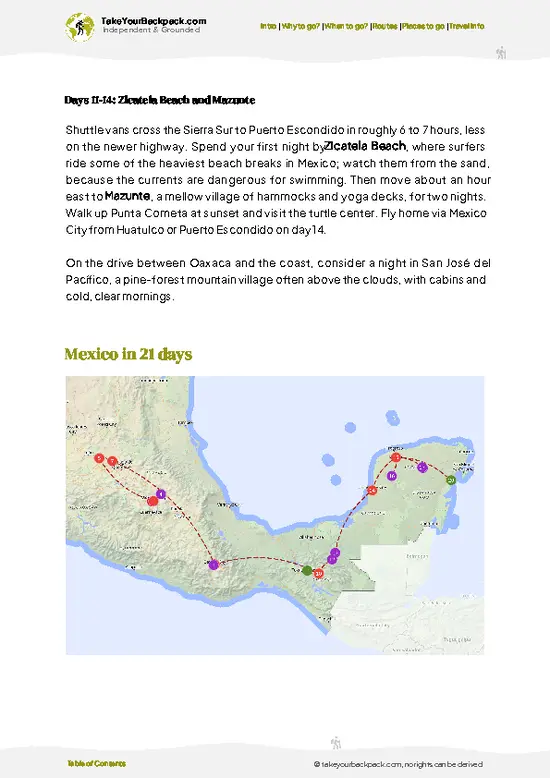
example page 0 from our offline Travel Guide for Mexico
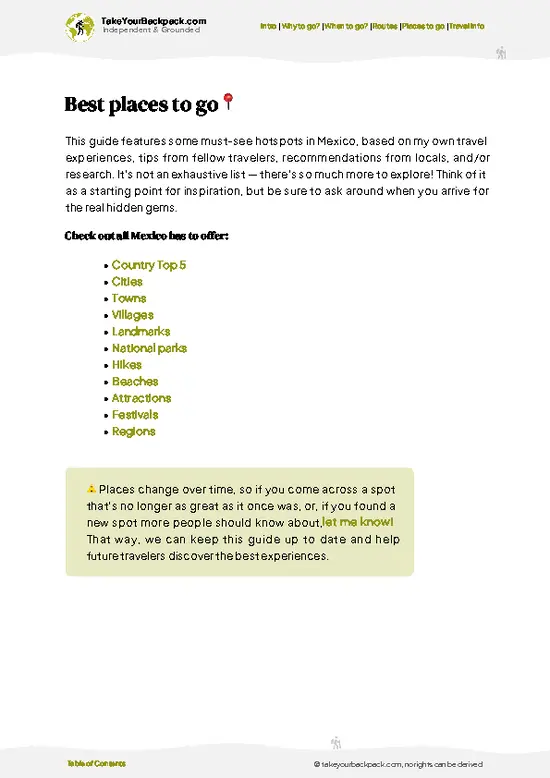
example page 1 from our offline Travel Guide for Mexico
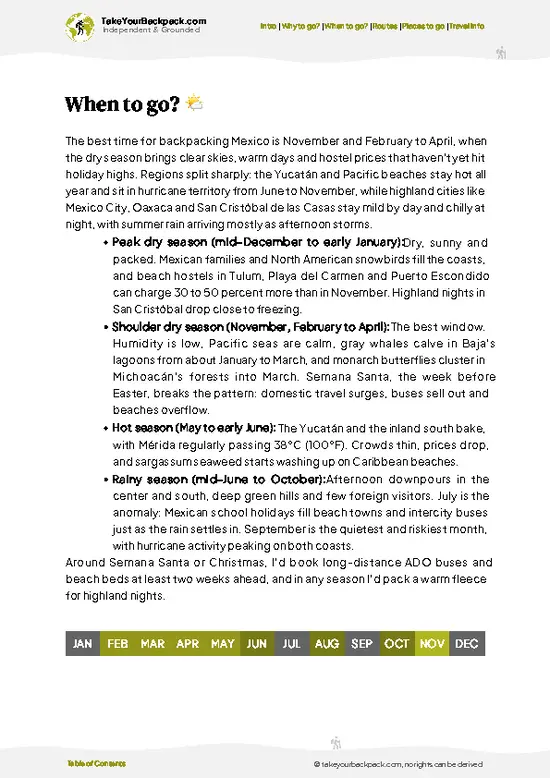
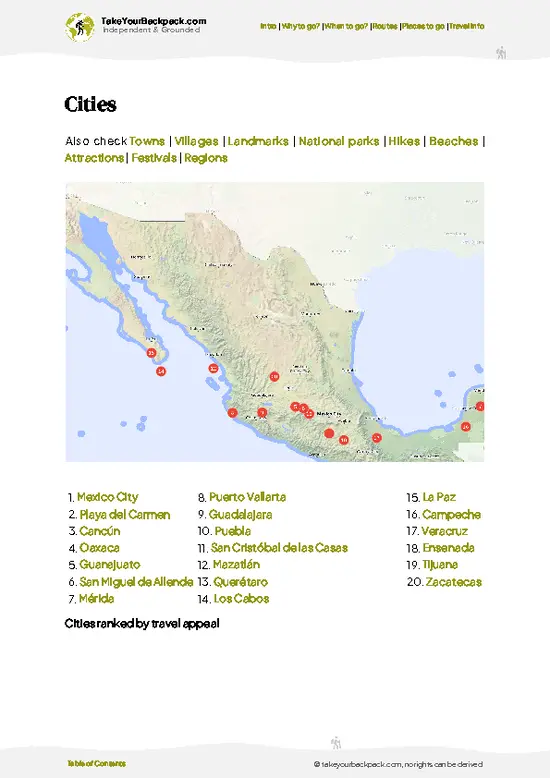
example page 2 from our offline Travel Guide for Mexico
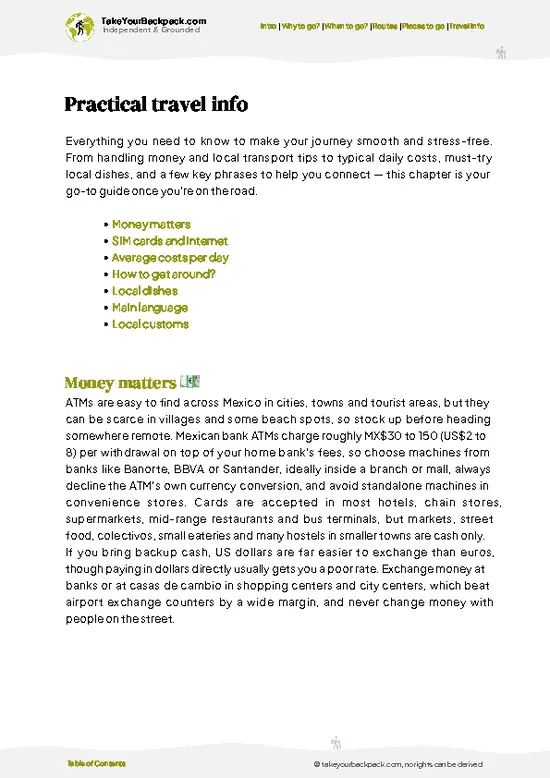
example page 3 from our offline Travel Guide for Mexico
example page 4 from our offline Travel Guide for Mexico
example page 5 from our offline Travel Guide for Mexico
example page 6 from our offline Travel Guide for Mexico
example page 7 from our offline Travel Guide for Mexico
Loading the map 🌍
CLICK TO FILTER
cities
towns
villages
landmarks
national parks
hikes
beaches
attractions
festivals
regions
SHOW COUNTRY’S BESTSHOW ALL

✨ Why go?
Ranked #1 festival in Mexico
Reasons people choose to celebrate the here

Día de los Muertos pulls backpackers in because the whole country turns into one long, shared party with the dead as guests of honor. Hostels in Oaxaca City and Pátzcuaro fill with travelers swapping tips on which cemetery to visit at midnight, and by the second night you will know half the dorm by name. Strangers get invited to home altars, handed pan de muerto and asked to sit down, which is rare at a festival this famous.

The other draw is how neatly it fits a longer Mexico route. You can start in Mexico City, with its giant Zócalo ofrenda displays, then cross to Oaxaca for the comparsas, the costumed neighborhood processions that wind through the streets with brass bands. Then finish by the lake at Janitzio island near Pátzcuaro, where candlelit vigils last all night. Compared with a … read more 👉
Día de los Muertos pulls backpackers in because the whole country turns into one long, shared party with the dead as guests of honor. Hostels in Oaxaca City and Pátzcuaro fill with travelers swapping tips on which cemetery to visit at midnight, and by the second night you will know half the dorm by name. Strangers get invited to home altars, handed pan de muerto and asked to sit down, which is rare at a festival this famous.

The other draw is how neatly it fits a longer Mexico route. You can start in Mexico City, with its giant Zócalo ofrenda displays, then cross to Oaxaca for the comparsas, the costumed neighborhood processions that wind through the streets with brass bands. Then finish by the lake at Janitzio island near Pátzcuaro, where candlelit vigils last all night. Compared with a ticketed music festival, most of this is free, outdoors and open to anyone who shows up respectfully. Book beds early, bring a good camera and an appetite.

💡 HighlightsWhat this place is best known for

  1. Ofrendas (home and public altars): The heart of the holiday. Marigolds, photos, candles, favorite foods and sugar skulls are stacked on tiered altars in homes, markets and plazas. Each one tells you who the family misses and what they loved to eat.
  2. Cemetery vigils: Families spend the night at graves, cleaning them, eating and singing. Janitzio island near Pátzcuaro and the cemeteries around Oaxaca are among the best known. Go quietly, ask before taking photos and keep your distance from mourners.
  3. Comparsas in Oaxaca: Neighborhood parades of costumed dancers, brass bands and decorated skeletons wander the streets after dark. Some groups are satirical, some are macabre, and all of them are loud and joyful.
  4. Mexico City’s Grand Procession: Giant skeleton figures and floats move along Paseo de la
… read more 👉
  1. Ofrendas (home and public altars): The heart of the holiday. Marigolds, photos, candles, favorite foods and sugar skulls are stacked on tiered altars in homes, markets and plazas. Each one tells you who the family misses and what they loved to eat.
  2. Cemetery vigils: Families spend the night at graves, cleaning them, eating and singing. Janitzio island near Pátzcuaro and the cemeteries around Oaxaca are among the best known. Go quietly, ask before taking photos and keep your distance from mourners.
  3. Comparsas in Oaxaca: Neighborhood parades of costumed dancers, brass bands and decorated skeletons wander the streets after dark. Some groups are satirical, some are macabre, and all of them are loud and joyful.
  4. Mexico City’s Grand Procession: Giant skeleton figures and floats move along Paseo de la Reforma toward the Zócalo. It began as a movie set piece and became a real tradition, so expect crowds and plenty of elaborate catrina makeup.
  5. Pan de muerto, atole and mole: Sweet round bread dusted with sugar, thick hot corn drink and rich sauces appear in bakeries and on altars. Eating them is part of the ritual, and every region has its own version.
The cheapest way to join in is to wander the free public altars and cemetery gatherings, which cost nothing beyond a few flowers or a candle you may choose to bring.
Spotted a mistake or missing something? Contact us.

🌤️ When to go?When is the celebration of Día de los Muertos?

Día de los Muertos is held every year on November 1 and 2, with many towns starting the altars and vigils on the evening of October 31 and some, like Pátzcuaro and Oaxaca City, running a full week of events around it.
  • Best night: The night of November 1 into November 2 is the main event. Cemetery vigils at Janitzio island and Mixquic are at their fullest, so go the evening of October 31 or on November 2 if you want more room to stand.
  • Weather: Days run about 22 to 27°C (72 to 81°F), and nights in the highlands drop to 5 to 10°C (41 to 50°F). Rain is rare by now. Bring a warm layer, comfortable shoes for cobblestones and a small flashlight for cemeteries.
  • Booking: Reserve beds 2 to 3 months ahead in Oaxaca, Pátzcuaro and Mexico City. Prices commonly rise 50 to 100 percent over normal rates.
  • Roads
… read more 👉
Día de los Muertos is held every year on November 1 and 2, with many towns starting the altars and vigils on the evening of October 31 and some, like Pátzcuaro and Oaxaca City, running a full week of events around it.
  • Best night: The night of November 1 into November 2 is the main event. Cemetery vigils at Janitzio island and Mixquic are at their fullest, so go the evening of October 31 or on November 2 if you want more room to stand.
  • Weather: Days run about 22 to 27°C (72 to 81°F), and nights in the highlands drop to 5 to 10°C (41 to 50°F). Rain is rare by now. Bring a warm layer, comfortable shoes for cobblestones and a small flashlight for cemeteries.
  • Booking: Reserve beds 2 to 3 months ahead in Oaxaca, Pátzcuaro and Mexico City. Prices commonly rise 50 to 100 percent over normal rates.
  • Roads and trains: Cemetery roads close to traffic by late afternoon. Arrive in town by midday on November 1, and leave on November 3 morning, because buses fill on the afternoon of November 2.
Book your return bus the day you arrive, since seats home on November 2 sell out first.


source: climatestotravel.comJANJanuary: not recommended for travelingFEBFebruary: not recommended for travelingMARMarch: not recommended for travelingAPRApril: not recommended for travelingMAYMay: not recommended for travelingJUNJune: not recommended for travelingJULJuly: not recommended for travelingAUGAugust: not recommended for travelingSEPSeptember: not recommended for travelingOCTOctober: highly recommended for travelingNOVNovember: highly recommended for travelingDECDecember: not recommended for traveling

✈️ The backpacker research shortcutMexico Travel Guide

An offline-friendly backpacking guide with optimized travel routes, ranked highlights, transport advice, and the best areas to stay.
example page 0 from our offline Travel Guide for Mexico
example page 1 from our offline Travel Guide for Mexico
example page 2 from our offline Travel Guide for Mexico
example page 3 from our offline Travel Guide for Mexico
example page 4 from our offline Travel Guide for Mexico
example page 5 from our offline Travel Guide for Mexico
example page 6 from our offline Travel Guide for Mexico
example page 7 from our offline Travel Guide for Mexico
The digital guide (402 pages) contains:
✅ 138 highlights, ranked by travel appeal
✅ Optimized 7, 14 & 21-day travel routes
✅ Cities, national parks, landmarks, beaches
✅ How to get around
✅ Offline-friendly for travel without Wi-Fi
👉 Click to see all 30+ guide features

📅 Plan smarter in minutes, not weeks
✅ Month by month travel advice
✅ Festivals & national holidays
✅ Budget expectations

🗺️ Go to the right places, skip the overrated ones
✅ Honest pros & cons of destinations
✅ Top hikes, parks & viewpoints
✅ Lesser-known places most travelers miss
✅ Clear “worth it vs skip it” guidance

🛏️ Travel smoothly without rookie mistakes
✅ Best areas to stay
✅ Transport systems explained simply
✅ Common scams & safety advice
✅ SIM cards, money & practical tips

🌍 Understand the country, not just visit it
✅ Culture & traditions
✅ 52 Essential phrases & customs
✅ Festivals worth planning around
✅ Traveler-friendly historical context
✅ Insights that make places more meaningful

📱 Built for real travel conditions
✅ Fully downloadable PDF
✅ Works completely offline
✅ Optimized for phone use
✅ Useful in remote areas & buses
✅ Everything in one place
Stop searching, start planning
Get instant access to your full guide. 30‑day money-back guarantee.
+ Add another guide for just

By proceeding you agree to our terms.
Sent to your inbox immediately after payment • 100% Secure Checkout
Best Backpacking Travel Advisor 2025 tourism awardBest Backpacking
Travel Advisor
2025
What others say about Take Your Backpack Guides:
⭐⭐⭐⭐⭐
Fantastic, amazing amount of information!
⭐⭐⭐⭐⭐
My goodness this is amazing, it's what I've been looking for hats off too you!
⭐⭐⭐⭐⭐
I think this is absolutely BRILLIANT
⭐⭐⭐⭐
Very complete and informative. It's still missing places, but I gotta to commend you
⭐⭐⭐⭐⭐
This is truly amazing, thank you, can't wait to explore it with my kids!
⭐⭐⭐⭐⭐
Awesome resource, thank you!
⭐⭐⭐⭐⭐
This is amazing! Can't wait to explore the ones I haven't seen
⭐⭐⭐⭐
I love this! Well done, great idea.
⭐⭐⭐⭐⭐
Thanks for taking the time to make this gem!
⭐⭐⭐⭐⭐
This might be the best website I've ever seen.
⭐⭐⭐⭐⭐
Congratulations, and thank you so much for your work; it's incredibly valuable.
⭐⭐⭐⭐
In all seriousness I think you did a great job pointing out the important spots
⭐⭐⭐⭐⭐
10/10 very good
⭐⭐⭐⭐⭐
As someone who's only just starting to visit regularly this is awesome, thank you.
⭐⭐⭐⭐
Thank you very much! I'm going to visit my dad, it's going to be very useful!
⭐⭐⭐⭐⭐
This is really cool! We'll be travelling for the first time and this definitely come in handy.
⭐⭐⭐⭐⭐
You are now our minister of culture, congratulations 👨‍💼
⭐⭐⭐⭐⭐
Just wanted to tell you that this is a pearl! Going to follow your recommendations.
⭐⭐⭐⭐⭐
This is so cool. I'll definitely be using the resource for my travels soon.
⭐⭐⭐⭐⭐
This is very impressive! Good work.
⭐⭐⭐⭐⭐
This is an amazing and informative site. Very well done!

🛏️ Where to stay?Choosing the right base

Stay in the historic center of whichever town you pick, because the altars, parades and cemetery shuttles all start from the main plaza and you will want to walk home at 2 a.m.

In Oaxaca City, the streets around the Zócalo and the Jalatlaco neighborhood are the easiest bases. Jalatlaco is quieter, walkable and full of hostel-style guesthouses where solo travelers end up sharing cemetery trips to Xoxocotlán and Atzompa. Centro is louder, but it puts you right at the comparsa parades and the night street scene.

In Mexico City, Centro Histórico and Roma Norte are the strongest choices. Centro puts … read more 👉
Stay in the historic center of whichever town you pick, because the altars, parades and cemetery shuttles all start from the main plaza and you will want to walk home at 2 a.m.

In Oaxaca City, the streets around the Zócalo and the Jalatlaco neighborhood are the easiest bases. Jalatlaco is quieter, walkable and full of hostel-style guesthouses where solo travelers end up sharing cemetery trips to Xoxocotlán and Atzompa. Centro is louder, but it puts you right at the comparsa parades and the night street scene.

In Mexico City, Centro Histórico and Roma Norte are the strongest choices. Centro puts you near the Zócalo offrenda displays and the metro, while Roma and Condesa are safer-feeling after dark and have a lively hostel crowd. Coyoacán is calmer and has its own altars and a very local feel.

In Michoacán, stay in Pátzcuaro’s center near Plaza Vasco de Quiroga. It is small, social and the launch point for boats to Janitzio. Book early, as options are limited.

Whichever base you choose, pick a spot within walking distance of the plaza, avoid remote cemetery-adjacent lodging with no late transport, and choose dorms with shared common areas to meet other travelers fast.

👛 Costs (as of 20 October 2026)Typical daily expenses

Expect to spend about US$75 to 110 a day at Día de los Muertos on a budget, with accommodation making up most of that during the holiday premium.
CategoryBudget RangeLocal Reality
Festival ticketsUS$0 to 25Most altars, parades and cemetery vigils are free. Paid extras include Mexico City’s Coco-style night shows, guided cemetery tours (US$20 to 45) and boat rides to Janitzio (about US$5 to 8 round trip).
AccommodationUS$25 to 50Dorm beds jump from around US$12 to 18 normally to US$25 to 50 in high season. Private rooms can reach US$80 to 150.
Local transportUS$5 to 15City buses and metro cost under US$1. Special cemetery shuttles and taxis run US$2 to 10, with prices higher at night. Intercity buses cost US$10 to 30.
Food & drinksUS$15 to 25Street tamales, atole and pan de muerto cost US$1
… read more 👉
Expect to spend about US$75 to 110 a day at Día de los Muertos on a budget, with accommodation making up most of that during the holiday premium.
CategoryBudget RangeLocal Reality
Festival ticketsUS$0 to 25Most altars, parades and cemetery vigils are free. Paid extras include Mexico City’s Coco-style night shows, guided cemetery tours (US$20 to 45) and boat rides to Janitzio (about US$5 to 8 round trip).
AccommodationUS$25 to 50Dorm beds jump from around US$12 to 18 normally to US$25 to 50 in high season. Private rooms can reach US$80 to 150.
Local transportUS$5 to 15City buses and metro cost under US$1. Special cemetery shuttles and taxis run US$2 to 10, with prices higher at night. Intercity buses cost US$10 to 30.
Food & drinksUS$15 to 25Street tamales, atole and pan de muerto cost US$1 to 3 each. A sit-down comida corrida runs US$5 to 9. Mezcal pours at bars are US$3 to 6.
Miscellaneous expensesUS$5 to 10Marigolds, candles and face-painting sessions for photos cost US$2 to 8. Tips and small donations at altars add up.
Total Daily BudgetUS$75 to 110Per person, per day, in high season.
⚠️ Prices can change and everyone travels differently, so take this as a rough guide. Hope it helps you plan your adventure!

🍲 FoodEating & Drinking in Día de los Muertos

The smell of pan de muerto hits you first: a round, sweet loaf dusted with sugar and topped with bone-shaped strips, baked fresh in every town. Try it dunked in chocolate caliente or atole, thick corn-based drinks sold from steaming pots around the plazas and cemeteries.

Regional dishes change the experience. In Oaxaca, go for mole negro, tamales wrapped in banana leaf and a cup of tejate, the foamy cacao and maize drink. Around Pátzcuaro, look for corundas and uchepos (fresh corn tamales) and whitefish from the lake. Mixquic is known for its street stalls of tacos, elotes and esquites. For drinks, mezcal is poured at altars as an offering and shared among strangers, and ponche, a warm fruit punch, takes the chill off cold nights.

Some quirks help. Bring cash in small bills, since market … read more 👉
The smell of pan de muerto hits you first: a round, sweet loaf dusted with sugar and topped with bone-shaped strips, baked fresh in every town. Try it dunked in chocolate caliente or atole, thick corn-based drinks sold from steaming pots around the plazas and cemeteries.

Regional dishes change the experience. In Oaxaca, go for mole negro, tamales wrapped in banana leaf and a cup of tejate, the foamy cacao and maize drink. Around Pátzcuaro, look for corundas and uchepos (fresh corn tamales) and whitefish from the lake. Mixquic is known for its street stalls of tacos, elotes and esquites. For drinks, mezcal is poured at altars as an offering and shared among strangers, and ponche, a warm fruit punch, takes the chill off cold nights.

Some quirks help. Bring cash in small bills, since market stalls and cemetery vendors rarely take cards. Lines at popular tamale and atole stands move quickly but fill after dark, so eat early. Portions are generous and meant for sharing, and if a family offers you a bite at their altar, accept politely. Food left on altars is for the departed, so do not take any unless it is offered.

FAQTraveler FAQ

Día de los Muertos takes place on November 1 and 2 each year, with celebrations often starting on the evening of October 31. Mexico City, Oaxaca and Pátzcuaro typically run events for several days around those dates. The biggest cemetery vigils happen the night of November 1 into November 2.
Attending Día de los Muertos is mostly free, since altars, parades and cemetery visits cost nothing. Expect to pay US$5 to 8 for the boat to Janitzio and US$20 to 45 for a guided cemetery tour. A budget traveler should plan on US$75 to 110 a day including a bed, because accommodation prices rise sharply.
Most Día de los Muertos events need no tickets, so you can walk into plazas, markets and public cemeteries freely. Guided tours, boat rides to Janitzio and some staged shows in Mexico City do sell out, so book those 2 to 4 weeks ahead. The bigger need is a bed, which should be reserved 2 to 3 months in advance in Oaxaca and Pátzcuaro.
⚠️ Things can change over time, so always validate details locally before you go.

Other Mexican festivals near Día de los Muertos

Explore more nearby:


💡 Not sure where to go next?
Create a personalized itinerary for Mexico including Día de los Muertos and the places that fit your trip.

Generate my itinerary

👉 Discover all festivals

Or checkout all Mexico has to offer (think cities, towns, villages, national parks, hikes, beaches, festivals)
Country photo of Mexico

We 💚 feedbackKey takeaways before you go

Día de los Muertos deserves at least four nights in one region, so you can see the preparations, the altars and the cemetery vigils without sprinting between cities. I would pick Oaxaca or Pátzcuaro and stay put, then add a night in Mexico City if time allows. The crowds are real, and so is the lack of sleep.

✈️ When did I visit Mexico?
As part of my 1.5 year travel around the world trip, I visited Mexico in February and March 2016. Had to hurry a bit as I didn’t want to miss the free performance of the Rolling Stones in Cuba.

✍️ Help improve this page!
The information on this page is based on my own backpacking experience in Mexico, supplemented with up-to-date research and feedback from other travelers. Travel details can change, so if you notice anything outdated or incomplete, feel free to let me know.


🙋‍♂️ Give feedback

👋 Meet the founderWho’s Behind Take Your Backpack?

Johan, backpacker and founder of TakeYourBackpackHi, I’m Johan (Netherlands 🇳🇱), the creator of TakeYourBackpack. Over the past 3 decades, I’ve backpacked through 90+ countries across six continents, gaining extensive experience with independent travel, long-term trips, and overland routes.

This site is built on a combination of firsthand travel experience and carefully curated insights from other backpackers. Many guides are based on places I’ve personally visited, while others bring together tips, observations, and practical advice shared by trusted travelers I’ve met along the way.

The goal is to provide realistic, experience-driven guidance — not generic itineraries — so you can explore destinations with better context, clearer expectations, and more confidence.