×

Mozambique🇲🇿 | festivalsM’saho Timbila FestivalChopi xylophones, ngodo suites, mafura wood, Zavala district | things to do and best time to go

Explore AZGO FestivalExplore Independence Day

Backpacking in M’saho Timbila
👌 Worth visitingfestival ranked #8
By Johan Kruseman 🇳🇱 | Updated October 22, 2026

The festival is built around timbila, giant wooden xylophones whose keys are cut from the mafura tree and whose resonators are gourds, and UNESCO lists Chopi timbila music as Intangible Cultural Heritage. Orchestras of dozens of players, dancers and singers perform full suites called ngodo, often with a story or social commentary running through them. M’saho Timbila Festival happens in Zavala district, in the south of Mozambique’s Inhambane Province, inland from the coast around Quissico. You get Chopi villagers, visiting Mozambicans, cultural researchers and a handful of foreign travelers, with performance groups competing and showing off. It is loud, danceable, and warm. The atmosphere is rural and communal, not polished. Plan on a long, rough day trip or a night in Quissico, and carry small cash because card machines are rare out here.

Discover everything you want to know in the 📖 Mozambique Travel Guide.


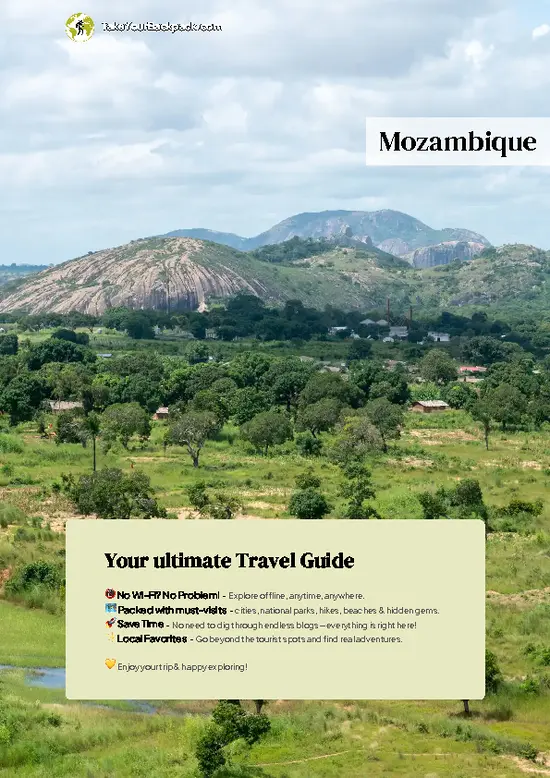
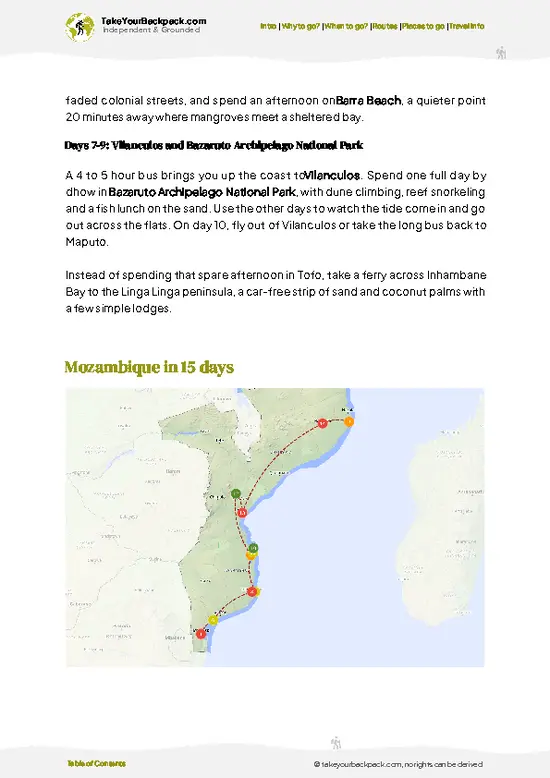
example page 0 from our offline Travel Guide for Mozambique
example page 1 from our offline Travel Guide for Mozambique
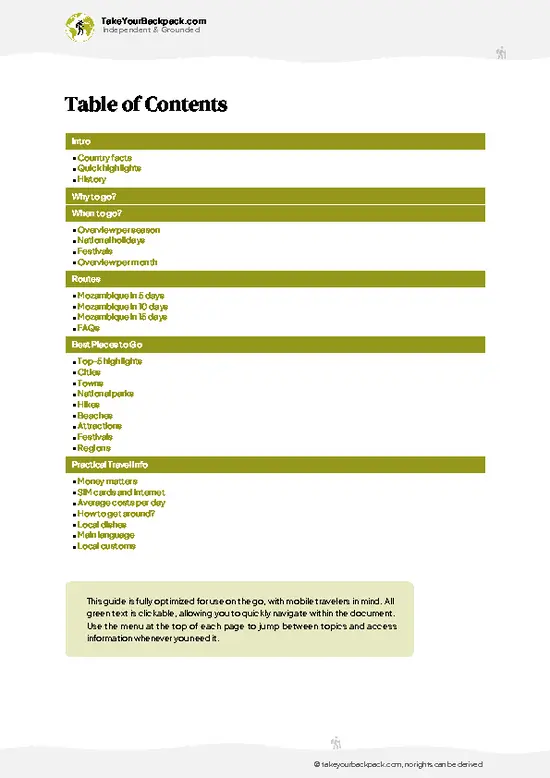
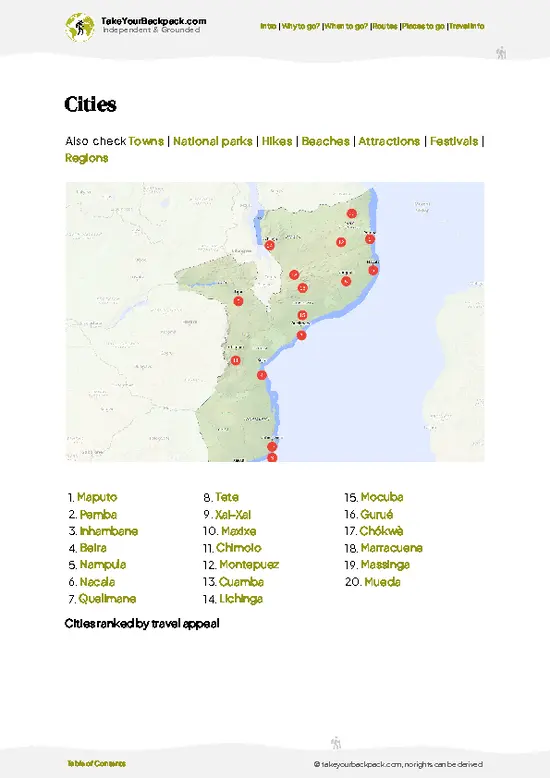
example page 2 from our offline Travel Guide for Mozambique
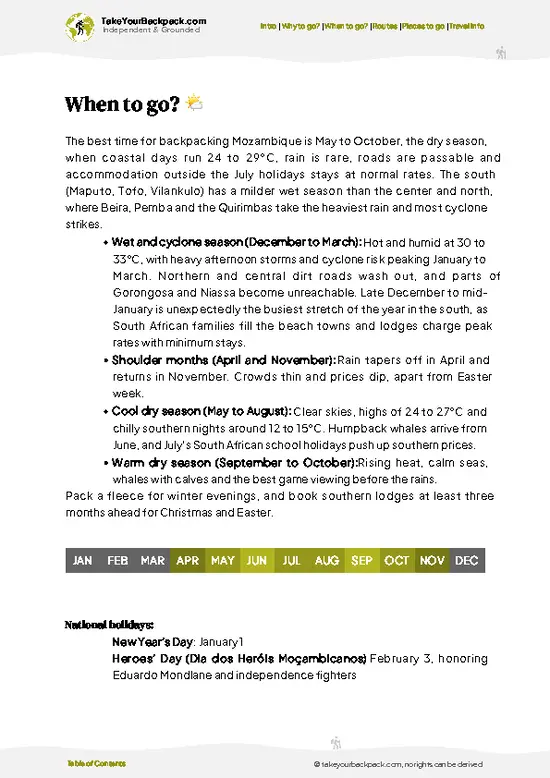
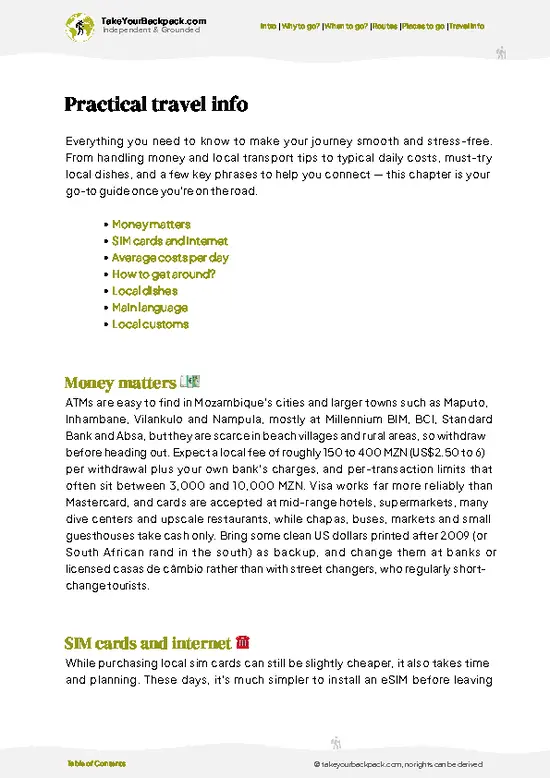
example page 3 from our offline Travel Guide for Mozambique
example page 4 from our offline Travel Guide for Mozambique
example page 5 from our offline Travel Guide for Mozambique
example page 6 from our offline Travel Guide for Mozambique
example page 7 from our offline Travel Guide for Mozambique
Loading the map 🌍
CLICK TO FILTER
cities
towns
national parks
hikes
beaches
attractions
festivals
regions
SHOW COUNTRY’S BESTSHOW ALL

✨ Why go?
Ranked #8 festival in Mozambique
Why visitors keep coming back

M’saho Timbila Festival gives you something almost no other event in southern Africa does: a chance to hear Chopi orchestras play the full ngodo suite live, in the heartland where the tradition began. That is the main draw. The second is how small it feels. Foreign travelers are a minority, so you end up chatting with local families, musicians and teachers rather than other backpackers. Watching a timbila orchestra of 20 or more players march, sing and shift tempo mid-suite is a lesson in rhythm no recording prepares you for. It also pairs well with a beach-heavy trip. Quissico sits near the lagoons and dunes of the Inhambane coast, so you can swap surf days for a cultural afternoon, then return to the sand. Costs stay low compared with big European festivals, and the experience is far more personal.

💡 HighlightsDon't-miss highlights and experiences

  1. Timbila Orchestra Performances: The core of the festival. Large ensembles play wooden xylophones tuned in different registers, with the deep-voiced instruments anchoring the melody while players layer fast patterns on top.
  2. The Ngodo Dance Suites: Dancers in coordinated costumes move through a multi-part suite that tells stories about village life, politics and history. The shifts between movements are the best part to watch.
  3. Group Competitions: Groups from different communities perform to be judged, so the energy is high and the crowd has strong opinions. Watch how audiences react to a clever improvised passage.
  4. Meeting the Instrument Makers: Craftspeople explain how timbila keys are cut from mafura wood and tuned, and how gourd resonators give the instruments their buzzing, bright tone. Some
… read more 👉
  1. Timbila Orchestra Performances: The core of the festival. Large ensembles play wooden xylophones tuned in different registers, with the deep-voiced instruments anchoring the melody while players layer fast patterns on top.
  2. The Ngodo Dance Suites: Dancers in coordinated costumes move through a multi-part suite that tells stories about village life, politics and history. The shifts between movements are the best part to watch.
  3. Group Competitions: Groups from different communities perform to be judged, so the energy is high and the crowd has strong opinions. Watch how audiences react to a clever improvised passage.
  4. Meeting the Instrument Makers: Craftspeople explain how timbila keys are cut from mafura wood and tuned, and how gourd resonators give the instruments their buzzing, bright tone. Some will let you try a few notes.
  5. Local Food and Village Atmosphere: Stalls and family cooks serve simple, filling Mozambican dishes, often with seafood from the nearby coast, while crowds gather under trees between sets. It is a good way to talk with people.
Set aside a full day to see the main performances, or two if you want time for makers and food.
Spotted a mistake or missing something? Contact us.

🌤️ When to go?When is the celebration of M’saho Timbila Festival?

M’saho Timbila Festival is held in Zavala district, Inhambane Province, usually in August (some editions have slipped to September), running over a few days with the exact dates set each year by the organizers.
  • Best day: The opening and the main day have the largest orchestras, with dozens of timbila xylophones playing together and dancers in full costume. Quieter days suit photography and chatting with musicians.
  • Weather: Expect warm, dry days of about 24 to 28°C (75 to 82°F) and cool nights near 14 to 16°C (57 to 61°F). Rain is unlikely. Bring a hat, sunscreen, a light jacket and a scarf against dust.
  • Booking: Zavala has very few beds, so reserve a room in Inhambane or Quissico at least a month ahead. Prices there can rise 20 to 40 percent around the festival.
  • Roads: Travel on the EN1 and arrive
… read more 👉
M’saho Timbila Festival is held in Zavala district, Inhambane Province, usually in August (some editions have slipped to September), running over a few days with the exact dates set each year by the organizers.
  • Best day: The opening and the main day have the largest orchestras, with dozens of timbila xylophones playing together and dancers in full costume. Quieter days suit photography and chatting with musicians.
  • Weather: Expect warm, dry days of about 24 to 28°C (75 to 82°F) and cool nights near 14 to 16°C (57 to 61°F). Rain is unlikely. Bring a hat, sunscreen, a light jacket and a scarf against dust.
  • Booking: Zavala has very few beds, so reserve a room in Inhambane or Quissico at least a month ahead. Prices there can rise 20 to 40 percent around the festival.
  • Roads: Travel on the EN1 and arrive the morning of the first day, leaving before late afternoon when minibuses fill and light fades.
Arrive early, because the best viewing spots under the shade trees go first.


source: climatestotravel.comJANJanuary: not recommended for travelingFEBFebruary: not recommended for travelingMARMarch: not recommended for travelingAPRApril: not recommended for travelingMAYMay: excellent for travelingJUNJune: not recommended for travelingJULJuly: not recommended for travelingAUGAugust: not recommended for travelingSEPSeptember: not recommended for travelingOCTOctober: not recommended for travelingNOVNovember: not recommended for travelingDECDecember: not recommended for traveling

✈️ The backpacker research shortcutMozambique Travel Guide

An offline-friendly backpacking guide with optimized travel routes, ranked highlights, transport advice, and the best areas to stay.
example page 0 from our offline Travel Guide for Mozambique
example page 1 from our offline Travel Guide for Mozambique
example page 2 from our offline Travel Guide for Mozambique
example page 3 from our offline Travel Guide for Mozambique
example page 4 from our offline Travel Guide for Mozambique
example page 5 from our offline Travel Guide for Mozambique
example page 6 from our offline Travel Guide for Mozambique
example page 7 from our offline Travel Guide for Mozambique
The digital guide (324 pages) contains:
✅ 78 highlights, ranked by travel appeal
✅ Optimized 5, 10 & 15-day travel routes
✅ Cities, national parks, landmarks, beaches
✅ How to get around
✅ Offline-friendly for travel without Wi-Fi
👉 Click to see all 30+ guide features

📅 Plan smarter in minutes, not weeks
✅ Month by month travel advice
✅ Festivals & national holidays
✅ Budget expectations

🗺️ Go to the right places, skip the overrated ones
✅ Honest pros & cons of destinations
✅ Top hikes, parks & viewpoints
✅ Lesser-known places most travelers miss
✅ Clear “worth it vs skip it” guidance

🛏️ Travel smoothly without rookie mistakes
✅ Best areas to stay
✅ Transport systems explained simply
✅ Common scams & safety advice
✅ SIM cards, money & practical tips

🌍 Understand the country, not just visit it
✅ Culture & traditions
✅ 52 Essential phrases & customs
✅ Festivals worth planning around
✅ Traveler-friendly historical context
✅ Insights that make places more meaningful

📱 Built for real travel conditions
✅ Fully downloadable PDF
✅ Works completely offline
✅ Optimized for phone use
✅ Useful in remote areas & buses
✅ Everything in one place
Stop searching, start planning
Get instant access to your full guide. 30‑day money-back guarantee.
+ Add another guide for just

By proceeding you agree to our terms.
Sent to your inbox immediately after payment • 100% Secure Checkout
Best Backpacking Travel Advisor 2025 tourism awardBest Backpacking
Travel Advisor
2025
What others say about Take Your Backpack Guides:
⭐⭐⭐⭐⭐
Fantastic, amazing amount of information!
⭐⭐⭐⭐⭐
My goodness this is amazing, it's what I've been looking for hats off too you!
⭐⭐⭐⭐⭐
I think this is absolutely BRILLIANT
⭐⭐⭐⭐
Very complete and informative. It's still missing places, but I gotta to commend you
⭐⭐⭐⭐⭐
This is truly amazing, thank you, can't wait to explore it with my kids!
⭐⭐⭐⭐⭐
Awesome resource, thank you!
⭐⭐⭐⭐⭐
This is amazing! Can't wait to explore the ones I haven't seen
⭐⭐⭐⭐
I love this! Well done, great idea.
⭐⭐⭐⭐⭐
Thanks for taking the time to make this gem!
⭐⭐⭐⭐⭐
This might be the best website I've ever seen.
⭐⭐⭐⭐⭐
Congratulations, and thank you so much for your work; it's incredibly valuable.
⭐⭐⭐⭐
In all seriousness I think you did a great job pointing out the important spots
⭐⭐⭐⭐⭐
10/10 very good
⭐⭐⭐⭐⭐
As someone who's only just starting to visit regularly this is awesome, thank you.
⭐⭐⭐⭐
Thank you very much! I'm going to visit my dad, it's going to be very useful!
⭐⭐⭐⭐⭐
This is really cool! We'll be travelling for the first time and this definitely come in handy.
⭐⭐⭐⭐⭐
You are now our minister of culture, congratulations 👨‍💼
⭐⭐⭐⭐⭐
Just wanted to tell you that this is a pearl! Going to follow your recommendations.
⭐⭐⭐⭐⭐
This is so cool. I'll definitely be using the resource for my travels soon.
⭐⭐⭐⭐⭐
This is very impressive! Good work.
⭐⭐⭐⭐⭐
This is an amazing and informative site. Very well done!

🛏️ Where to stay?Best areas to stay in Mozambique

Inhambane town is the best base for backpackers, with the most hostels, guesthouses and travelers in the region, and it sits roughly 3 to 4 hours by road from Zavala. The old waterfront area around the market and the bay is walkable, safe by day, and full of cafes where you can find people to split a hired vehicle with. Nearby Tofo beach, about 30 minutes from Inhambane, has the strongest backpacker scene, with dorms, shared kitchens and dive crowds, and it is easy to meet solo travelers there. The trade-off is a longer trip to the festival grounds. For a shorter ride, look at Quissico, the closest … read more 👉
Inhambane town is the best base for backpackers, with the most hostels, guesthouses and travelers in the region, and it sits roughly 3 to 4 hours by road from Zavala. The old waterfront area around the market and the bay is walkable, safe by day, and full of cafes where you can find people to split a hired vehicle with. Nearby Tofo beach, about 30 minutes from Inhambane, has the strongest backpacker scene, with dorms, shared kitchens and dive crowds, and it is easy to meet solo travelers there. The trade-off is a longer trip to the festival grounds. For a shorter ride, look at Quissico, the closest town with simple guesthouses, about 30 to 60 minutes from the venue depending on the road. It is quiet and local, so you will meet fewer foreigners but more festival-goers and musicians. Book early in every option, since beds fill fast in festival week. Keep valuables out of sight, and avoid arriving after dark in smaller towns.

👛 Costs (as of 22 October 2026)Money, prices, and spending tips

A day at M’saho Timbila Festival costs about US$0 to 5 for an independent traveler, and the total daily budget works out at US$85 including a high-season bed.
CategoryBudget RangeLocal Reality
Festival ticketsUS$0 to 5Entry is free or very cheap, with small fees at times for vehicles or special seating.
AccommodationUS$15 to 40 per nightDorms and basic guesthouses in Inhambane or Tofo cost less. Rooms near Zavala are scarce and rise in price in festival week.
Local transportUS$10 to 25Shared minibuses (chapas) run along the EN1, but a hired vehicle from Inhambane or Quissico costs more and is easier on festival day.
Food & drinksUS$8 to 15Stall meals cost US$2 to 5, and beer about US$1 to 2.
Miscellaneous expensesUS$5 to 10Water, sunscreen, small tips for performers, and handmade crafts or recordings.
… read more 👉
A day at M’saho Timbila Festival costs about US$0 to 5 for an independent traveler, and the total daily budget works out at US$85 including a high-season bed.
CategoryBudget RangeLocal Reality
Festival ticketsUS$0 to 5Entry is free or very cheap, with small fees at times for vehicles or special seating.
AccommodationUS$15 to 40 per nightDorms and basic guesthouses in Inhambane or Tofo cost less. Rooms near Zavala are scarce and rise in price in festival week.
Local transportUS$10 to 25Shared minibuses (chapas) run along the EN1, but a hired vehicle from Inhambane or Quissico costs more and is easier on festival day.
Food & drinksUS$8 to 15Stall meals cost US$2 to 5, and beer about US$1 to 2.
Miscellaneous expensesUS$5 to 10Water, sunscreen, small tips for performers, and handmade crafts or recordings.
Total Daily BudgetUS$38 to 95About US$85 with a high-season bed.
⚠️ Prices can change and everyone travels differently, so take this as a rough guide. Hope it helps you plan your adventure!

🍲 FoodLocal Flavors for Backpackers

Food at M’saho Timbila Festival is village cooking served in a field, and that is the appeal. Stalls and women with pots sell grilled chicken, rice with beans, xima (stiff maize porridge) with stews, and fresh seafood curries brought up from the coast. Look for cashew nuts from Inhambane province and sweet fried dough balls, sold in paper bags for about US$0.50 to 1.

For drinks, cold beer and soft drinks come from crates in the shade, around US$1 to 2. The local specialty is cane spirit and home-brewed palm or maize drinks, often shared from one cup. Try a small taste if offered, since refusing the first sip can seem curt, and drink slowly.

Pay in cash (meticais), as cards are useless here, and carry small notes because change is scarce. Lines are loose and informal, so greet the cook and … read more 👉
Food at M’saho Timbila Festival is village cooking served in a field, and that is the appeal. Stalls and women with pots sell grilled chicken, rice with beans, xima (stiff maize porridge) with stews, and fresh seafood curries brought up from the coast. Look for cashew nuts from Inhambane province and sweet fried dough balls, sold in paper bags for about US$0.50 to 1.

For drinks, cold beer and soft drinks come from crates in the shade, around US$1 to 2. The local specialty is cane spirit and home-brewed palm or maize drinks, often shared from one cup. Try a small taste if offered, since refusing the first sip can seem curt, and drink slowly.

Pay in cash (meticais), as cards are useless here, and carry small notes because change is scarce. Lines are loose and informal, so greet the cook and wait your turn. Portions are generous enough to share, and plates are often reused, so eat where food is hot and freshly cooked. Bring bottled water, since the sun and dust are intense.

FAQFrequently asked questions about M’saho Timbila

M’saho Timbila Festival takes place in August in most years, occasionally moving into September, and lasts a few days. The organizers set the exact dates annually. It is held in Zavala district, Inhambane Province, roughly 3 to 4 hours by road from Inhambane town.
Attending M’saho Timbila Festival is cheap, with entry free or only a few US dollars. Most of your money goes on getting there and sleeping, since a bed in Inhambane or Tofo costs about US$15 to 40 a night. Budget US$10 to 25 for transport and US$8 to 15 daily for food and drinks.
M’saho Timbila Festival generally does not require tickets in advance, since entry is usually free or paid at the gate. What you should book early is a bed, as Zavala has very few and Inhambane and Quissico fill up in festival week. Reserve at least a month ahead and arrange transport the day before.
⚠️ Things can change over time, so always validate details locally before you go.

Other Mozambican festivals near M’saho Timbila

Explore more nearby:

  • Festival de Xai-Xai—Gaza province, riverfront gatherings, local cuisine, folk performances| 117 km away
  • Festival de Inhaca—island setting, marine life, community celebrations, boat trips| 231 km away
  • Marrabenta Festival—Marrabenta guitar, dikanza scraper, capulana cloth, Maputo hips| 237 km away

💡 Not sure where to go next?
Create a personalized itinerary for Mozambique including M’saho Timbila and the places that fit your trip.

Generate my itinerary

👉 Discover all festivals

Or checkout all Mozambique has to offer (think cities, towns, villages, national parks, hikes, beaches, festivals)
Country photo of Mozambique

We 💚 feedbackFinal thoughts on celebrating the M’saho Timbila

Most visitors rush to the stage and ignore the instrument makers at the edges. Go and talk to them. Seeing a key tuned by shaving the underside of the wood explains why every orchestra sounds different. M’saho Timbila Festival is far better with a local contact, so I would arrange a guide in Quissico beforehand.

✍️ Help improve this page!
The information on this page is based on in-depth research, insights shared by experienced travelers, and feedback from the local travel community in Mozambique. While every effort is made to keep the information accurate and current, conditions can change — so if you spot anything incorrect or outdated, please get in touch.


🙋‍♂️ Give feedback

👋 Meet the founderWho’s Behind Take Your Backpack?

Johan, backpacker and founder of TakeYourBackpackHi, I’m Johan (Netherlands 🇳🇱), the creator of TakeYourBackpack. Over the past 3 decades, I’ve backpacked through 90+ countries across six continents, gaining extensive experience with independent travel, long-term trips, and overland routes.

This site is built on a combination of firsthand travel experience and carefully curated insights from other backpackers. Many guides are based on places I’ve personally visited, while others bring together tips, observations, and practical advice shared by trusted travelers I’ve met along the way.

The goal is to provide realistic, experience-driven guidance — not generic itineraries — so you can explore destinations with better context, clearer expectations, and more confidence.