×

Myanmar🇲🇲 | townsHsipawShan hills, riverside villages, colonial relics | things to do and best time to go

Explore NyaungshweExplore Kyaukme

Backpacking in Hsipaw
🌟 Highlighttown ranked #4
By Johan Kruseman 🇳🇱 | Updated June 7, 2026

Years ago, Hsipaw felt like a sleepy Shan town where a handful of backpackers traded trek tips over lukewarm beer and candlelit dinners during power cuts; today it’s still quiet by Southeast Asia standards, but you feel the shift—more guesthouses, more trekking agencies, more English on signs, and a little less mystery. Sitting in northern Shan State, east of Mandalay on the old rail-and-road route toward Lashio, it works best as a soft-edged base for hill-country walks and village homestays rather than as a destination town in itself. The center is compact and walkable, with a scruffy market at dawn, a riverside at dusk, and a couple of pagodas and viewpoints that are pleasant but not life-changing. Buses and the slow, scenic train make it reachable, and once you’re there you mostly walk or grab cheap motos. It’s cheaper and calmer than Pyin Oo Lwin, less intense than Mandalay, and the social scene is low-key: a few hostels, shared trek groups, early nights. Safety and costs are usually manageable, but the real payoff is the feeling of stepping off the main circuit into somewhere that still runs on village time.

Discover everything you want to know in the 📖 Myanmar Travel Guide.
Safety warning

The current risk level for Myanmar is high. Check the advice before going.


Get your Myanmar guide
110 ranked highlights, routes & tips, works offline (405 pages)
Loading the map 🌍
CLICK TO FILTER
cities
towns
landmarks
national parks
hikes
beaches
attractions
festivals
regions
SHOW COUNTRY’S BESTSHOW ALL

✨ Why go?
Ranked #4 town in Myanmar
Why visitors keep coming back

Hsipaw is a backpacker’s hub that draws you in with its easy access to stunning hikes and cultural experiences. Nestled in the Shan State, it’s a gateway to trails that lead you through lush landscapes and local villages, where you can soak in the scent of fresh tea leaves and hear the chatter of locals. The walkable streets are lined with small-scale guesthouses and hostels, offering a cozy atmosphere that encourages connection among travelers.

You’ll find a mix of solo adventurers and small groups here, often lingering for a few days to fully embrace the laid-back vibe. The local food scene is a treat, with street vendors serving up spicy curries and noodle dishes that warm you from the inside out. While nightlife isn’t the main draw, the evenings are filled with friendly conversations … read more 👉
Hsipaw is a backpacker’s hub that draws you in with its easy access to stunning hikes and cultural experiences. Nestled in the Shan State, it’s a gateway to trails that lead you through lush landscapes and local villages, where you can soak in the scent of fresh tea leaves and hear the chatter of locals. The walkable streets are lined with small-scale guesthouses and hostels, offering a cozy atmosphere that encourages connection among travelers.

You’ll find a mix of solo adventurers and small groups here, often lingering for a few days to fully embrace the laid-back vibe. The local food scene is a treat, with street vendors serving up spicy curries and noodle dishes that warm you from the inside out. While nightlife isn’t the main draw, the evenings are filled with friendly conversations over a cold beer or tea, making it easy to meet fellow travelers.

If you’re a slow traveler or a hiker, Hsipaw is more than just a stop; it’s a place to recharge and immerse yourself in the local culture before heading deeper into Myanmar.
Want to include Hsipaw in your Myanmar route?
Create a personalized Myanmar itinerary that includes Hsipaw and the places that fit your trip — based on your travel style, budget, and available time. Get your route in seconds.

Generate my trip

💡 HighlightsPlaces and moments you shouldn't skip

  • Hsipaw Palace (Saopha’s Palace) — The old Shan prince’s timber palace in town is the clearest link to Hsipaw’s pre-colonial identity: faded carved wood, a small museum area, and quiet courtyards that tell more than a textbook about how the local elite used to live.
  • Hsipaw Market (Zaycho / Morning Market) — A colorful, chaotic slice of daily life where you’ll see Shan produce, fresh noodles, dried river fish and traders from surrounding villages; perfect for cheap bites and people-watching.
  • Hsipaw Railway Station & Platform — The station itself is small, but the train drama is huge: watch local life unfold as carriages pull in, vendors jump aboard, and the old Mandalay-Lashio line rumbles through town—great for photographs and hanging out with locals.
  • Dokhtawaddy Riverfront — The town’s
read more 👉
  • Hsipaw Palace (Saopha’s Palace) — The old Shan prince’s timber palace in town is the clearest link to Hsipaw’s pre-colonial identity: faded carved wood, a small museum area, and quiet courtyards that tell more than a textbook about how the local elite used to live.
  • Hsipaw Market (Zaycho / Morning Market) — A colorful, chaotic slice of daily life where you’ll see Shan produce, fresh noodles, dried river fish and traders from surrounding villages; perfect for cheap bites and people-watching.
  • Hsipaw Railway Station & Platform — The station itself is small, but the train drama is huge: watch local life unfold as carriages pull in, vendors jump aboard, and the old Mandalay-Lashio line rumbles through town—great for photographs and hanging out with locals.
  • Dokhtawaddy Riverfront — The town’s riverside is where daily routines slow down: riverboats, fishermen, simple tea-stalls and a mellow sunset over the water. You can grab a short boat across to nearby riverside hamlets.
  • Bawgyo Hill Pagoda — A short climb up gives you a hilltop pagoda and a panoramic view over Hsipaw and the river—one of the easiest, most rewarding sunset spots without leaving town.
  • Colonial-era Main Street & Wooden Houses — Walk the old main drag and side lanes to see teak villas, faded shopfronts and remnants of the British-era layout; the architecture is subtle but tells a layered story of the town’s past.
  • Local Monasteries near the town center — A cluster of active monasteries with lacquered woodwork, morning chanting and novice monks; visiting respectfully gives real insight into local religious life and daily rhythms.
  • Teashops and Shan Noodle Stalls — Not a single monument, but the town’s teahouse culture is a highlight: cheap bowls of Shan noodles, strong tea, and conversation—where you’ll meet aging locals and traveling bootstraps alike.
  • Handicraft & Textile Shops — Small stalls and family-run shops sell Shan longyi, embroidered textiles and silver trinkets; buying here supports local artisans and gives you authentic souvenirs you can actually use.
  • Evening Food Stalls / Night Market Area — As the sun drops, food stalls set up along the main streets: grilled skewers, sweets and steamed snacks. It’s lively, inexpensive, and where the town’s flavors are easiest to try in one place.
A few great day trips outside town: the Gokteik Viaduct (iconic rail bridge), the Shan villages around Bawgyo for short treks, and nearby Palaung tea-plantation villages — my personal favorite is the Gokteik Viaduct for the sheer scale and the classic train ride through the gorge.
Spotted a mistake or missing something? Contact us.
🏘️ NeighborhoodsUnderstanding the local layout

Hsipaw is a charming town that offers a blend of rich culture and stunning landscapes, perfect for backpackers seeking both adventure and relaxation. Here’s how to navigate its neighborhoods:

Town Center: This is the heartbeat of Hsipaw. You’ll find local markets, street food stalls, and cozy guesthouses. The vibe is lively, especially in the evenings when the streets come alive with chatter and the aroma of grilled snacks fills the air. It’s walkable, making it easy to explore on foot. Ideal for short stays, you can soak in the local culture without straying far from your base.

Naung Pain: A quieter area just a short walk from the center. Here, you’ll find a more laid-back atmosphere, with fewer tourists and a chance to connect with locals. Guesthouses are affordable, and the scenery is … read more 👉
Hsipaw is a charming town that offers a blend of rich culture and stunning landscapes, perfect for backpackers seeking both adventure and relaxation. Here’s how to navigate its neighborhoods:

Town Center: This is the heartbeat of Hsipaw. You’ll find local markets, street food stalls, and cozy guesthouses. The vibe is lively, especially in the evenings when the streets come alive with chatter and the aroma of grilled snacks fills the air. It’s walkable, making it easy to explore on foot. Ideal for short stays, you can soak in the local culture without straying far from your base.

Naung Pain: A quieter area just a short walk from the center. Here, you’ll find a more laid-back atmosphere, with fewer tourists and a chance to connect with locals. Guesthouses are affordable, and the scenery is beautiful, with rice paddies and distant hills. Perfect for longer stays, it allows you to unwind while still being close enough to the action.

Thibaw: This neighborhood offers a unique glimpse into local life. It’s less touristy, with authentic eateries and small shops. The walkability is decent, but you might want a bike to explore further. The nightlife is minimal, making it a great spot for those seeking peace. Ideal for longer stays, you can immerse yourself in the daily rhythms of Hsipaw.

Hsipaw Riverfront: The riverfront area is stunning at sunset, with the light reflecting off the water. It’s a bit more upscale, with guesthouses that offer views and a touch of luxury. While it’s walkable, transport options are nearby for day trips. This area suits both short and longer stays, especially if you want a mix of relaxation and exploration.

⌛️ 1 dayWhat you can realistically do in a day

Hsipaw, Myanmar, is a pocket of tranquility where the Shan hills cradle the town, and the scent of fresh tea wafts through the air. It’s a place where the pace of life slows down, inviting you to explore its lush landscapes and rich culture. Start your day early with a stroll through the local market. The vibrant colors of fresh produce and the chatter of vendors create an atmosphere that’s both lively and intimate. Grab a bowl of mohinga from a street stall—this fish soup with rice noodles is a breakfast staple that warms you from the inside out.

After fueling up, head towards the stunning Naung Tong Lake. The morning light dances on the water, making it a perfect spot for reflection. Rent a bicycle and pedal along the lakeside paths, where you’ll encounter local fishermen casting their … read more 👉
Hsipaw, Myanmar, is a pocket of tranquility where the Shan hills cradle the town, and the scent of fresh tea wafts through the air. It’s a place where the pace of life slows down, inviting you to explore its lush landscapes and rich culture. Start your day early with a stroll through the local market. The vibrant colors of fresh produce and the chatter of vendors create an atmosphere that’s both lively and intimate. Grab a bowl of mohinga from a street stall—this fish soup with rice noodles is a breakfast staple that warms you from the inside out.

After fueling up, head towards the stunning Naung Tong Lake. The morning light dances on the water, making it a perfect spot for reflection. Rent a bicycle and pedal along the lakeside paths, where you’ll encounter local fishermen casting their nets and children splashing about. This is a slice of daily life that many tourists miss, and it’s a beautiful reminder of the town’s rhythm.

In the afternoon, make your way to the lesser-known village of Pankam, just a short ride from Hsipaw. Here, you can visit a traditional Shan house and learn about the weaving techniques that have been passed down through generations. The intricate patterns and vibrant colors of the textiles are mesmerizing. Plus, the villagers are often eager to share their stories, making this a truly enriching experience.

As the sun begins to set, return to Hsipaw and find a cozy spot at a local teahouse. Sip on sweet, milky tea while watching the world go by. The evening air cools, and the sounds of laughter and conversation fill the space. It’s the perfect way to wind down after a day of exploration, feeling connected to both the land and its people.
Turn your Hsipaw visit into an Myanmar adventure
Build a complete Myanmar route with Hsipaw, hidden gems, must-see destinations, and realistic travel times included.

Generate my trip

🌤️ When to go?Best time to visit Hsipaw


  • Weather: The dry season from November to February is your best bet. Expect clear skies and minimal rain, which means trails stay firm and rivers calm. Avoid the monsoon months (June to September) when heavy rains turn paths into mudslides and the air thickens with humidity.

  • Temperature: During the dry season, daytime highs hover around 20-25°C (68-77°F), perfect for trekking without overheating. Nights can dip to 10°C (50°F), so pack layers. The wet season brings warmer temps but also relentless humidity that can sap your energy fast.

  • Daylight Hours: Around 11 to 12 hours of daylight in the dry season gives you ample time to explore without rushing. The sun rises around 6:00 AM and sets by 6:00 PM, letting you catch those golden-hour views without scrambling.

  • Crowds: Tourist numbers
read more 👉

  • Weather: The dry season from November to February is your best bet. Expect clear skies and minimal rain, which means trails stay firm and rivers calm. Avoid the monsoon months (June to September) when heavy rains turn paths into mudslides and the air thickens with humidity.

  • Temperature: During the dry season, daytime highs hover around 20-25°C (68-77°F), perfect for trekking without overheating. Nights can dip to 10°C (50°F), so pack layers. The wet season brings warmer temps but also relentless humidity that can sap your energy fast.

  • Daylight Hours: Around 11 to 12 hours of daylight in the dry season gives you ample time to explore without rushing. The sun rises around 6:00 AM and sets by 6:00 PM, letting you catch those golden-hour views without scrambling.

  • Crowds: Tourist numbers peak in the dry season, especially December and January. While the town buzzes with fellow trekkers, it’s never overwhelming. The wet season sees fewer visitors, offering solitude but at the cost of less reliable trail conditions.

  • Seasonal Activities: The dry months are prime for hiking to waterfalls, visiting local villages, and river trips. The wet season swells the rivers, making boat rides more dramatic but also riskier and less predictable.

  • Price Fluctuations: Expect higher prices for accommodation and guides during the dry season’s peak months. Booking ahead can save you a headache. The wet season offers bargains but comes with the trade-off of limited options and less predictable weather.


Pro-tip: Aim for late November or early February—when the weather is crisp, crowds thin slightly, and the light hits the Shan hills just right for those deep, textured photos you’ll want to frame forever.


source: climatestotravel.comJANJanuary: excellent for travelingFEBFebruary: highly recommended for travelingMARMarch: good for travelingAPRApril: good for travelingMAYMay: fair for travelingJUNJune: below average for travelingJULJuly: below average for travelingAUGAugust: below average for travelingSEPSeptember: fair for travelingOCTOctober: good for travelingNOVNovember: excellent for travelingDECDecember: excellent for traveling
when-to-go

✈️ The backpacker research shortcutMyanmar Travel Guide

An offline-friendly backpacking guide with optimized travel routes, ranked highlights, transport advice, and the best areas to stay.
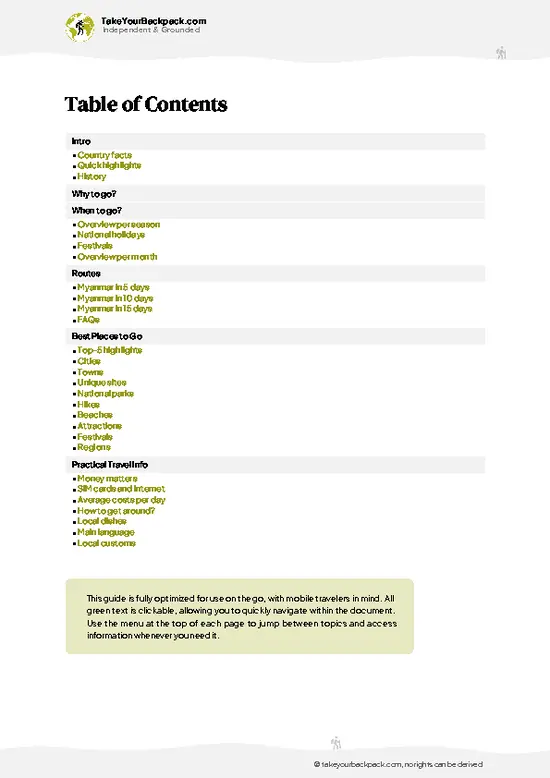
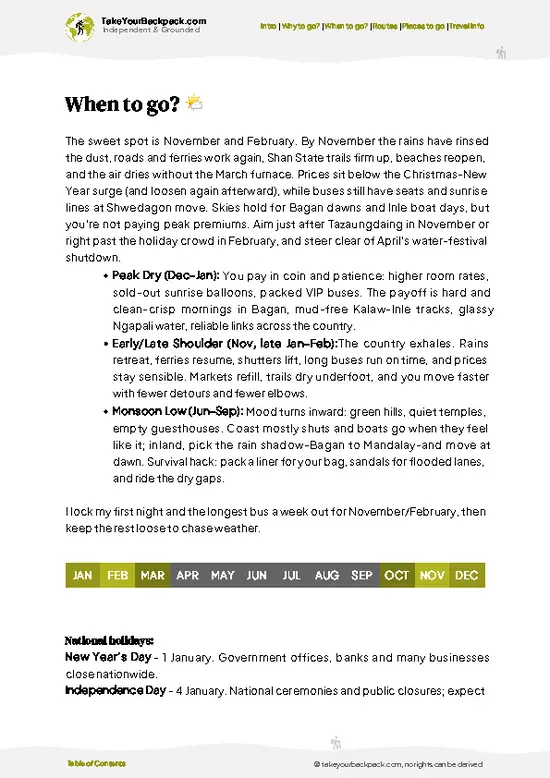
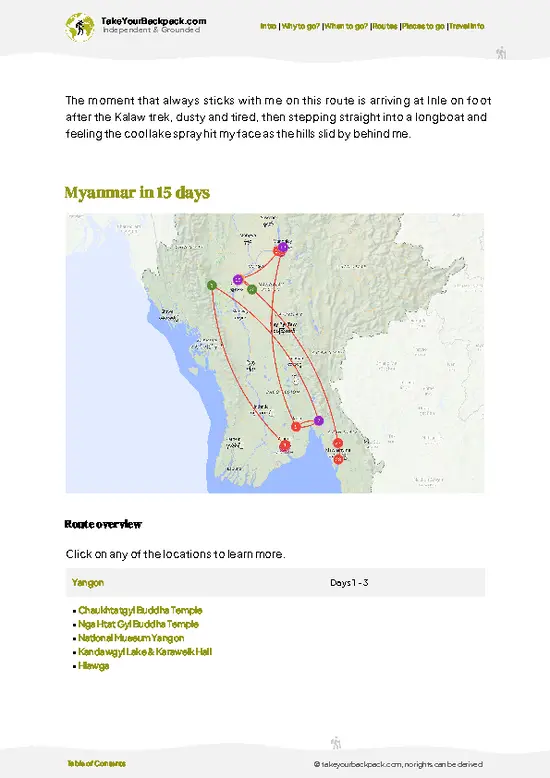
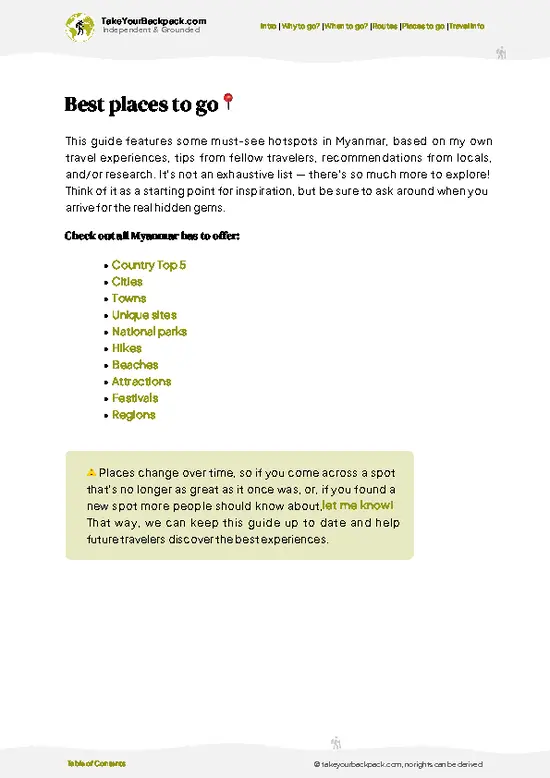
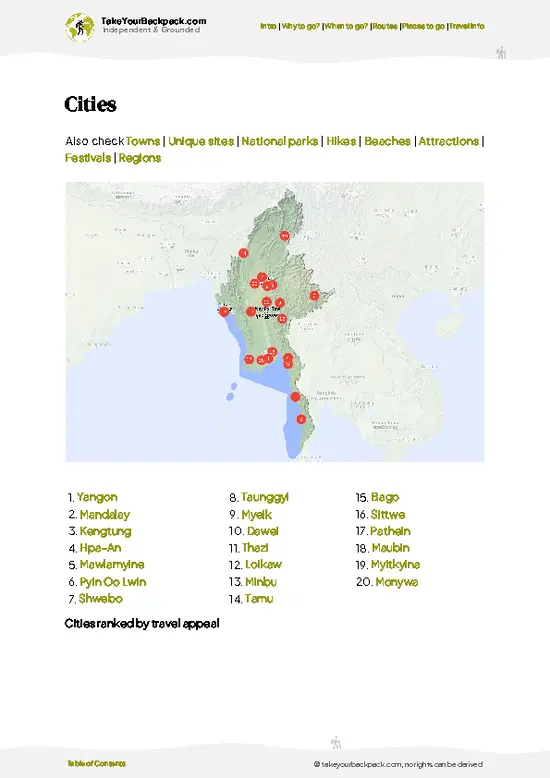
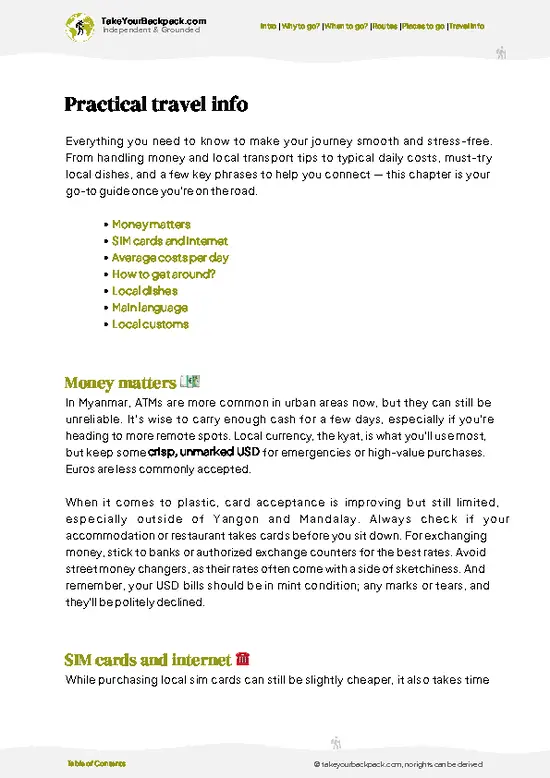
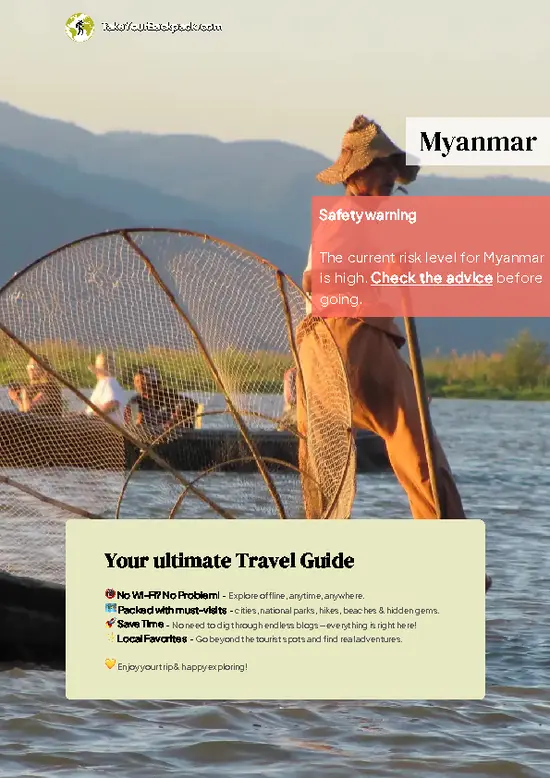
example page 0 from our offline Travel Guide for Myanmar
example page 1 from our offline Travel Guide for Myanmar
example page 2 from our offline Travel Guide for Myanmar
example page 3 from our offline Travel Guide for Myanmar
example page 4 from our offline Travel Guide for Myanmar
example page 5 from our offline Travel Guide for Myanmar
example page 6 from our offline Travel Guide for Myanmar
example page 7 from our offline Travel Guide for Myanmar
The digital guide (405 pages) contains:
110 highlights, ranked by travel appeal
Optimized 5, 10 & 15-day travel routes
Cities, national parks, landmarks, beaches
How to get around
Offline-friendly for travel without Wi-Fi
👉 Click to see all 30+ guide features

📅 Plan smarter in minutes, not weeks
Month by month travel advice
Festivals & national holidays
Budget expectations

🗺️ Go to the right places, skip the overrated ones
Honest pros & cons of destinations
Top hikes, parks & viewpoints
Lesser-known places most travelers miss
Clear “worth it vs skip it” guidance

🛏️ Travel smoothly without rookie mistakes
Best areas to stay
Transport systems explained simply
Common scams & safety advice
SIM cards, money & practical tips

🌍 Understand the country, not just visit it
Culture & traditions
52 Essential phrases & customs
Festivals worth planning around
Traveler-friendly historical context
Insights that make places more meaningful

📱 Built for real travel conditions
Fully downloadable PDF
Works completely offline
Optimized for phone use
Useful in remote areas & buses
Everything in one place
Save weeks of stressful planning
Get instant access to your full guide. 30‑day money-back guarantee.


By proceeding you agree to our terms.
Sent to your inbox immediately after payment • 100% Secure Checkout
Best Backpacking Travel Advisor 2025 tourism awardBest Backpacking
Travel Advisor
2025
What others say about Take Your Backpack Guides:
⭐⭐⭐⭐⭐
Fantastic, amazing amount of information!
⭐⭐⭐⭐⭐
My goodness this is amazing, it's what I've been looking for hats off too you!
⭐⭐⭐⭐⭐
I think this is absolutely BRILLIANT
⭐⭐⭐⭐
Very complete and informative. It's still missing places, but I gotta to commend you
⭐⭐⭐⭐⭐
This is truly amazing, thank you, can't wait to explore it with my kids!
⭐⭐⭐⭐⭐
Awesome resource, thank you!
⭐⭐⭐⭐⭐
This is amazing! Can't wait to explore the ones I haven't seen
⭐⭐⭐⭐
I love this! Well done, great idea.
⭐⭐⭐⭐⭐
Thanks for taking the time to make this gem!
⭐⭐⭐⭐⭐
This might be the best website I've ever seen.
⭐⭐⭐⭐⭐
Congratulations, and thank you so much for your work; it's incredibly valuable.
⭐⭐⭐⭐
In all seriousness I think you did a great job pointing out the important spots
⭐⭐⭐⭐⭐
10/10 very good
⭐⭐⭐⭐⭐
As someone who's only just starting to visit regularly this is awesome, thank you.
⭐⭐⭐⭐
Thank you very much! I'm going to visit my dad, it's going to be very useful!
⭐⭐⭐⭐⭐
This is really cool! We'll be travelling for the first time and this definitely come in handy.
⭐⭐⭐⭐⭐
You are now our minister of culture, congratulations 👨‍💼
⭐⭐⭐⭐⭐
Just wanted to tell you that this is a pearl! Going to follow your recommendations.
⭐⭐⭐⭐⭐
This is so cool. I'll definitely be using the resource for my travels soon.
⭐⭐⭐⭐⭐
This is very impressive! Good work.
⭐⭐⭐⭐⭐
This is an amazing and informative site. Very well done!

🛏️ Where to stay?How to pick the right area

In Hsipaw, the best spot for backpackers is the stretch along the main road near the town center, especially around the market area. This zone hums with life from dawn till dusk—vendors shouting over the scent of fresh fried snacks, locals bargaining in Shan language, and the occasional clatter of motorbikes. It’s safe, well-trodden, and packed with budget guesthouses and hostels that cater to solo travelers and groups alike. Staying here means you’re never far from the pulse of daily life, which is exactly what you want when you’re after authentic immersion without the hassle of navigating unfamiliar … read more 👉
In Hsipaw, the best spot for backpackers is the stretch along the main road near the town center, especially around the market area. This zone hums with life from dawn till dusk—vendors shouting over the scent of fresh fried snacks, locals bargaining in Shan language, and the occasional clatter of motorbikes. It’s safe, well-trodden, and packed with budget guesthouses and hostels that cater to solo travelers and groups alike. Staying here means you’re never far from the pulse of daily life, which is exactly what you want when you’re after authentic immersion without the hassle of navigating unfamiliar transport or sketchy neighborhoods.

Compared to the quieter outskirts or the more residential zones, this area offers a social vibe that’s hard to beat. You’ll find fellow backpackers swapping stories over cheap tea or planning treks to nearby villages. The hostels here often have communal spaces—think hammocks strung between bamboo poles or shared kitchens—that make it easy to connect without forcing it. Plus, the proximity to the river means you can catch golden hour light reflecting off the water after a day of hiking, a perfect reward for the dusty trails. Avoid the more isolated parts of town; they’re quieter but lack the energy and convenience that make Hsipaw’s center a backpacker’s sweet spot.

🚌 Getting aroundHow to get around Hsipaw

Hsipaw moves at the pace of the river that cuts through it—steady, unhurried, and a little unpredictable. The town doesn’t rush you; instead, it invites you to sync with its rhythm, where the morning mist clings to the hills and the scent of wood smoke drifts from teahouses. Here, schedules are loose suggestions rather than ironclad rules, and the best way to get around is to embrace a bit of improvisation. The streets are dusty, the air tinged with the earthy aroma of wet soil after a sudden rain, and the chatter of locals blends with the occasional clatter of motorbikes. This is a place where you’ll find your flow by moving with the moment, not against it.

Walking is your most reliable and rewarding mode of transit. The town is compact, and wandering on foot lets you soak in the faded colonial … read more 👉
Hsipaw moves at the pace of the river that cuts through it—steady, unhurried, and a little unpredictable. The town doesn’t rush you; instead, it invites you to sync with its rhythm, where the morning mist clings to the hills and the scent of wood smoke drifts from teahouses. Here, schedules are loose suggestions rather than ironclad rules, and the best way to get around is to embrace a bit of improvisation. The streets are dusty, the air tinged with the earthy aroma of wet soil after a sudden rain, and the chatter of locals blends with the occasional clatter of motorbikes. This is a place where you’ll find your flow by moving with the moment, not against it.

Walking is your most reliable and rewarding mode of transit. The town is compact, and wandering on foot lets you soak in the faded colonial architecture, the vibrant market stalls, and the quiet corners where locals sip tea. It’s free, flexible, and the best way to catch the subtle shifts in light and life throughout the day. Expect uneven sidewalks and occasional stray dogs, so sturdy shoes are a must.

Shared Pick-up Trucks serve as the informal minibuses here. They rumble through the main road, picking up passengers as they go. Prices are dirt cheap—usually around 1,000 to 2,000 kyat per ride—and they run from early morning until late afternoon, but don’t expect a timetable. You’ll need to flag one down and be ready to hop off when you reach your stop. It’s bumpy and noisy, but the open-air ride offers a raw, tactile connection to the landscape.

Motorbike Taxis are everywhere, and they’re the quickest way to cover short distances or reach trailheads outside town. Negotiate the fare upfront—usually 2,000 to 5,000 kyat depending on distance—and hold on tight. The drivers know every shortcut and pothole, and the wind in your face is a small price for the speed and freedom they offer.

Bicycle Rentals provide a middle ground between walking and motorbikes. For about 3,000 to 5,000 kyat per day, you can explore at your own pace, slipping through narrow lanes and climbing gentle hills. The air smells fresher away from the main road, and the quiet hum of your pedals lets you tune into the birdsong and distant church bells.

Long-Distance Buses connect Hsipaw to larger hubs like Mandalay and Lashio. These buses leave early morning, around 6 or 7 a.m., and tickets cost roughly 8,000 to 12,000 kyat. The ride is slow and winding, often taking 5 to 7 hours, but it’s the most budget-friendly way to move between regions. Bring snacks and water—the stops are few and far between, and the road hugs the hillsides with hairpin turns that demand your full attention.

👛 Costs (as of 1 February 2026)Money, prices, and spending tips

Backpacking in Hsipaw, Myanmar, offers a raw, authentic slice of Shan State life, and your wallet will feel that authenticity too—mostly in a good way. Here’s the real cost breakdown to keep you moving smoothly without surprises.
  • Dorm Accommodation: Expect to pay around $5 to $10 per night for a bed in a basic guesthouse dorm. These places are simple but clean, often with a fan and shared bathrooms. The vibe is low-key, and you’ll likely meet other travelers swapping stories over a cold drink.
  • Meals: Street food and local eateries dominate here. A filling meal of Shan noodles or curry with rice will set you back about $1.50 to $3. Western-style cafes or more touristy spots can push that to $4 or $5. Breakfasts are often simple—think fresh fruit or toast with tea for under $2.
  • Local Transport:
read more 👉
Backpacking in Hsipaw, Myanmar, offers a raw, authentic slice of Shan State life, and your wallet will feel that authenticity too—mostly in a good way. Here’s the real cost breakdown to keep you moving smoothly without surprises.
  • Dorm Accommodation: Expect to pay around $5 to $10 per night for a bed in a basic guesthouse dorm. These places are simple but clean, often with a fan and shared bathrooms. The vibe is low-key, and you’ll likely meet other travelers swapping stories over a cold drink.
  • Meals: Street food and local eateries dominate here. A filling meal of Shan noodles or curry with rice will set you back about $1.50 to $3. Western-style cafes or more touristy spots can push that to $4 or $5. Breakfasts are often simple—think fresh fruit or toast with tea for under $2.
  • Local Transport: Getting around town is cheap and straightforward. Shared motorbike taxis or songthaews (open-air trucks) cost roughly $0.50 to $1 per short trip. Renting a motorbike for a day to explore nearby villages runs about $7 to $10, giving you freedom but requiring some caution on rough roads.
  • Basic Activities/Entry Fees: Trekking is the main draw, and local guides charge around $15 to $25 per day, often including meals and accommodation in villages. Entry fees to natural sites or cultural spots are minimal, usually under $2. Independent trekking is possible but less common and riskier without a guide.
  • Miscellaneous Expenses: Bottled water, snacks, and small souvenirs add up slowly—budget around $1 to $3 daily. Internet cafes or SIM cards with data cost about $5 for a decent package, essential if you want to stay connected.

All told, you’re looking at roughly $15 to $30 per day to cover the essentials without cutting corners. This range lets you experience Hsipaw’s charm without feeling like you’re skimping on comfort or local flavor. The balance here is key: a bit of planning on transport and meals means more energy for those unforgettable treks through misty hills and quiet villages.


source: myanmar.travel
⚠️ Prices can change and everyone travels differently, so take this as a rough guide. Hope it helps you plan your adventure!

🚌 Day tripsShort trips worth adding

Hsipaw is a backpacker’s dream base, offering a gateway to stunning landscapes and rich culture without the tourist crowds.

1. Trek to the Palaung Villages
This trek is a must for those wanting to immerse themselves in local life. You’ll wander through lush tea plantations, where the air is thick with the earthy scent of fresh leaves. The trail takes about 3-4 hours one way, leading you to charming Palaung villages. Expect to pay around $5 for a guide, which is worth every kyat for the insights into their unique customs. The best time to go is during the cool season, from November to February, when the weather is pleasant. A common mistake? Many first-timers underestimate the terrain; wear sturdy shoes to navigate the uneven paths.


2. Visit the Hsipaw Hot Springs
A short 30-minute … read more 👉
Hsipaw is a backpacker’s dream base, offering a gateway to stunning landscapes and rich culture without the tourist crowds.

1. Trek to the Palaung Villages
This trek is a must for those wanting to immerse themselves in local life. You’ll wander through lush tea plantations, where the air is thick with the earthy scent of fresh leaves. The trail takes about 3-4 hours one way, leading you to charming Palaung villages. Expect to pay around $5 for a guide, which is worth every kyat for the insights into their unique customs. The best time to go is during the cool season, from November to February, when the weather is pleasant. A common mistake? Many first-timers underestimate the terrain; wear sturdy shoes to navigate the uneven paths.


2. Visit the Hsipaw Hot Springs
A short 30-minute ride from town, these natural hot springs are a perfect way to unwind after a day of trekking. The springs are nestled in a serene setting, surrounded by towering trees and the distant sounds of nature. Entry is typically around $2, making it an affordable treat. Early morning or late afternoon visits offer a quieter experience, as many tourists flock there mid-day. Don’t forget your swimsuit! A rookie error is bringing a towel; they’re often provided, but it’s good to check ahead.


3. Explore the Ancient Shan Temples
Just a short bike ride from Hsipaw, the ancient Shan temples are a treasure trove of history. The intricate carvings and faded murals tell stories of a bygone era. Plan for a leisurely 2-3 hour exploration, and you’ll likely spend less than $1 on bike rental. The best time to visit is early morning when the light casts a golden hue over the structures, enhancing their beauty. Many first-timers miss the smaller, lesser-known temples; don’t just stick to the main ones—wander off the beaten path for a more authentic experience.


4. Boat Trip on the Dokthawady River
A boat trip along the Dokthawady River offers a unique perspective of the landscape. You’ll glide past local fishermen and vibrant riverbank life, with the scent of wet earth and foliage filling the air. The trip takes about 2 hours, costing around $10 for a shared boat. The best time is during the dry season, from November to April, when the river is calm. A common mistake is to skip the early morning rides; the sunrise views are breathtaking and the river is less crowded.


Each of these trips not only showcases the beauty of Hsipaw but also deepens your connection to its culture and people.
Want to know what more Myanmar offers?
The Myanmar Travel Guide describes 110 highlights, from cities to national parks, from beaches to hikes

Get the Travel Guide -

🛡️ SafetyScams, Hazards, and Annoyances

Hsipaw is generally safe, but a few practical tips can enhance your experience. The town has a laid-back vibe, but keep your wits about you, especially in crowded markets. Watch your belongings when navigating through the bustling stalls; pickpockets can be opportunistic.

If you’re traveling solo, consider your evening plans. While the streets are usually calm, it’s wise to stick to well-lit areas and avoid wandering too far off the beaten path after dark.

Scams are rare, but a common annoyance is the occasional inflated price for tourists. Always ask for the price upfront, especially with taxis or local guides. A friendly smile and a firm but polite demeanor can go a long way in these situations.

Overall, carry yourself confidently, engage with locals, and embrace the rhythm of Hsipaw. … read more 👉
Hsipaw is generally safe, but a few practical tips can enhance your experience. The town has a laid-back vibe, but keep your wits about you, especially in crowded markets. Watch your belongings when navigating through the bustling stalls; pickpockets can be opportunistic.

If you’re traveling solo, consider your evening plans. While the streets are usually calm, it’s wise to stick to well-lit areas and avoid wandering too far off the beaten path after dark.

Scams are rare, but a common annoyance is the occasional inflated price for tourists. Always ask for the price upfront, especially with taxis or local guides. A friendly smile and a firm but polite demeanor can go a long way in these situations.

Overall, carry yourself confidently, engage with locals, and embrace the rhythm of Hsipaw. The warmth of the community will make your journey feel rewarding, even amidst minor bumps.

Other Burmese towns near Hsipaw

Explore more nearby:

  • Kyaukme—tea plantations, train stop, mountain base| 29 km away
  • Ywangan—coffee farms, Shan plateau, mountain air| 184 km away
  • Nyaungshwe—canal town, Inle Lake access, floating markets| 222 km away

💡 Not sure where to go next?
Create a personalized itinerary for Myanmar including Hsipaw and the places that fit your trip.

Generate my itinerary

👉 Discover all towns

Or checkout all Myanmar has to offer (think cities, towns, villages, national parks, hikes, beaches, festivals)
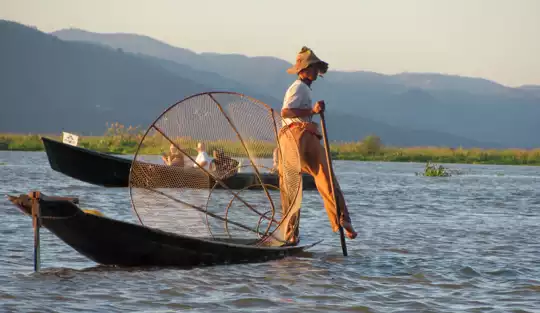
Country photo of Myanmar

We 💚 feedbackKey takeaways before you go

Hsipaw is a slice of authentic Myanmar, where the air is thick with the scent of fresh tea leaves and the sound of local life hums around you. Trekking through the surrounding hills reveals stunning views and warm encounters with locals. But be prepared: the roads can be rough, and getting here takes time. Embrace the journey; the payoff is a deeper connection to a culture that feels untouched by the rush of modernity.

✈️ When did I visit Myanmar?
In November 2013 I backpacked through Myanmar, bringing a full stack of pristine dollar bills as they had no ATMs back then.

✍️ Help improve this page!
The information on this page is based on my own backpacking experience in Myanmar, supplemented with up-to-date research and feedback from other travelers. Travel details can change, so if you notice anything outdated or incomplete, feel free to let me know.


🙋‍♂️ Give feedback

👋 Meet the founderWho’s Behind Take Your Backpack?

Johan, backpacker and founder of TakeYourBackpackHi, I’m Johan (Netherlands 🇳🇱), the creator of TakeYourBackpack. Over the past decade, I’ve backpacked through 80+ countries across six continents, gaining extensive experience with independent travel, long-term trips, and overland routes.

This site is built on a combination of firsthand travel experience and carefully curated insights from other backpackers. Many guides are based on places I’ve personally visited, while others bring together tips, observations, and practical advice shared by trusted travelers I’ve met along the way.

The goal is to provide realistic, experience-driven guidance — not generic itineraries — so you can explore destinations with better context, clearer expectations, and more confidence.

Get full Myanmar guide •
Instant download • 110 highlights • Full Offline guide