×

Namibia🇳🇦 | festivalsMarula FestivalMarula harvest, fermented fruit beer, Ovambo villages, cold-pressed oil | things to do and best time to go

Explore Kalahari Desert FestivalExplore Namibian Annual Music Awards

Backpacking in Marula
👀 For curious travelersfestival ranked #8
By Johan Kruseman 🇳🇱 | Updated October 22, 2026

Entry to Marula Festival is cheap, and the food and drink on site cost little, so a modest wallet goes a long way. The festival takes place in the north of Namibia, in the Ovambo heartland where marula trees line the fields and villages. Expect a celebration of the marula harvest, with traditional music, dance, craft stalls and plenty of marula fruit, juice and beer. The crowd is mostly local families and Namibian travelers, with a small scattering of backpackers, so the vibe is friendly and unpolished. Air smells of woodsmoke, sweet fermenting fruit and grilled meat, drums carry across dusty ground, and the heat is real. It usually runs a few days in the hot, late-summer fruiting season. It is worth visiting for a face-to-face look at a living food culture. Before going, sort out your own transport, because public options to the area are thin.

Discover everything you want to know in the 📖 Namibia Travel Guide.


example page 0 from our offline Travel Guide for Namibia
example page 1 from our offline Travel Guide for Namibia
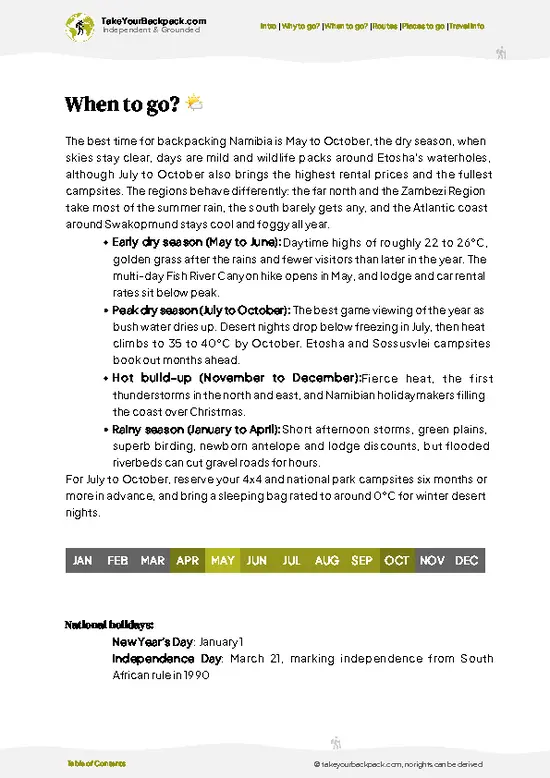
example page 2 from our offline Travel Guide for Namibia
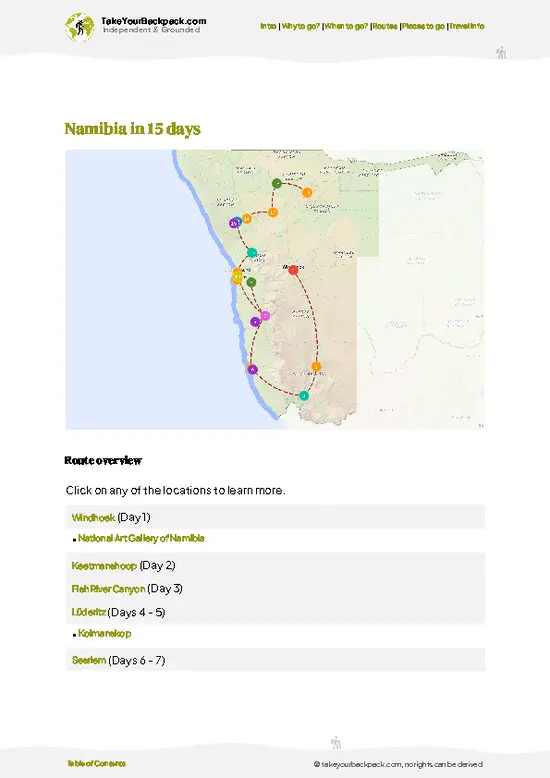
example page 3 from our offline Travel Guide for Namibia
example page 4 from our offline Travel Guide for Namibia
example page 5 from our offline Travel Guide for Namibia
example page 6 from our offline Travel Guide for Namibia
example page 7 from our offline Travel Guide for Namibia
Loading the map 🌍
CLICK TO FILTER
cities
towns
villages
landmarks
national parks
hikes
beaches
attractions
festivals
regions
SHOW COUNTRY’S BESTSHOW ALL

✨ Why go?
Ranked #8 festival in Namibia
Why visitors keep coming back

Marula Festival pulls backpackers off the Etosha and Windhoek circuit and into the north, where few tourists linger. The main draw is the marula harvest culture of the Ovambo people: you can watch fruit pressed, tasted and turned into juice, oil and beer, then ask the people who made it how. That beats any lodge tasting. Social energy comes easily, since locals are curious about visitors and happy to share a bowl or a dance circle. Costs stay low because stalls sell local food and crafts at village prices, far below safari-lodge rates. The timing also fits a longer overland loop, so you can pair it with the northern towns and a pass through the Caprivi on the way east. Come for a day or two, and you leave with names, phone numbers and a very different Namibia.

💡 HighlightsThe experiences that define the visit

  1. Marula fruit tasting: Fresh marula has a sharp, tangy flavor with a resin-like edge, and eating it beside the trees that grew it is the festival’s core experience.
  2. Marula beer and juice: Locals brew a cloudy, sour fermented drink from the fruit. Try a small cup first, since it is stronger and tarter than expected.
  3. Traditional music and dance: Drums, singing and group dances fill the grounds, and the energy rises through the afternoon as crowds gather.
  4. Marula oil and craft stalls: Women’s groups sell cold-pressed marula oil, soaps and cosmetics, and you can see how the kernels are cracked by hand.
  5. Local food stalls: Grilled meat, porridge and village snacks are cooked over open fires, giving you a cheap, filling lunch among families.
For a first visit, start with the fruit tasting, because it explains everything else on site.
Spotted a mistake or missing something? Contact us.

🌤️ When to go?When is the celebration of Marula Festival?

Marula Festival is held over a weekend in late February or early March, with the date set by when the marula fruit ripens, at Ongwediva in the Oshana region of northern Namibia.
  • Best day: Go on the Saturday, when the main stage, traditional dance groups and craft stalls are all running and the crowd is liveliest.
  • Weather: Expect hot, humid days of 30 to 35°C (86 to 95°F), with afternoon thunderstorms likely. Bring a hat, sunscreen, a light rain jacket and shoes you can get muddy.
  • Booking: Reserve a bed two to four weeks ahead. Rates in Ongwediva and Oshakati rise by roughly 20 to 40 percent that weekend.
  • Roads: The B1 highway from Windhoek is busiest on Friday afternoon and Sunday evening. Arrive Friday midday and leave Monday morning.
Arrive early on Saturday to get a shaded spot before the heat peaks.

source: climatestotravel.comJANJanuary: not recommended for travelingFEBFebruary: not recommended for travelingMARMarch: not recommended for travelingAPRApril: not recommended for travelingMAYMay: excellent for travelingJUNJune: excellent for travelingJULJuly: excellent for travelingAUGAugust: excellent for travelingSEPSeptember: excellent for travelingOCTOctober: not recommended for travelingNOVNovember: not recommended for travelingDECDecember: not recommended for traveling

✈️ The backpacker research shortcutNamibia Travel Guide

An offline-friendly backpacking guide with optimized travel routes, ranked highlights, transport advice, and the best areas to stay.
example page 0 from our offline Travel Guide for Namibia
example page 1 from our offline Travel Guide for Namibia
example page 2 from our offline Travel Guide for Namibia
example page 3 from our offline Travel Guide for Namibia
example page 4 from our offline Travel Guide for Namibia
example page 5 from our offline Travel Guide for Namibia
example page 6 from our offline Travel Guide for Namibia
example page 7 from our offline Travel Guide for Namibia
The digital guide (294 pages) contains:
✅ 71 highlights, ranked by travel appeal
✅ Optimized 5, 10 & 15-day travel routes
✅ Cities, national parks, landmarks, beaches
✅ How to get around
✅ Offline-friendly for travel without Wi-Fi
👉 Click to see all 30+ guide features

📅 Plan smarter in minutes, not weeks
✅ Month by month travel advice
✅ Festivals & national holidays
✅ Budget expectations

🗺️ Go to the right places, skip the overrated ones
✅ Honest pros & cons of destinations
✅ Top hikes, parks & viewpoints
✅ Lesser-known places most travelers miss
✅ Clear “worth it vs skip it” guidance

🛏️ Travel smoothly without rookie mistakes
✅ Best areas to stay
✅ Transport systems explained simply
✅ Common scams & safety advice
✅ SIM cards, money & practical tips

🌍 Understand the country, not just visit it
✅ Culture & traditions
✅ 52 Essential phrases & customs
✅ Festivals worth planning around
✅ Traveler-friendly historical context
✅ Insights that make places more meaningful

📱 Built for real travel conditions
✅ Fully downloadable PDF
✅ Works completely offline
✅ Optimized for phone use
✅ Useful in remote areas & buses
✅ Everything in one place
Stop searching, start planning
Get instant access to your full guide. 30‑day money-back guarantee.
+ Add another guide for just

By proceeding you agree to our terms.
Sent to your inbox immediately after payment • 100% Secure Checkout
Best Backpacking Travel Advisor 2025 tourism awardBest Backpacking
Travel Advisor
2025
What others say about Take Your Backpack Guides:
⭐⭐⭐⭐⭐
Fantastic, amazing amount of information!
⭐⭐⭐⭐⭐
My goodness this is amazing, it's what I've been looking for hats off too you!
⭐⭐⭐⭐⭐
I think this is absolutely BRILLIANT
⭐⭐⭐⭐
Very complete and informative. It's still missing places, but I gotta to commend you
⭐⭐⭐⭐⭐
This is truly amazing, thank you, can't wait to explore it with my kids!
⭐⭐⭐⭐⭐
Awesome resource, thank you!
⭐⭐⭐⭐⭐
This is amazing! Can't wait to explore the ones I haven't seen
⭐⭐⭐⭐
I love this! Well done, great idea.
⭐⭐⭐⭐⭐
Thanks for taking the time to make this gem!
⭐⭐⭐⭐⭐
This might be the best website I've ever seen.
⭐⭐⭐⭐⭐
Congratulations, and thank you so much for your work; it's incredibly valuable.
⭐⭐⭐⭐
In all seriousness I think you did a great job pointing out the important spots
⭐⭐⭐⭐⭐
10/10 very good
⭐⭐⭐⭐⭐
As someone who's only just starting to visit regularly this is awesome, thank you.
⭐⭐⭐⭐
Thank you very much! I'm going to visit my dad, it's going to be very useful!
⭐⭐⭐⭐⭐
This is really cool! We'll be travelling for the first time and this definitely come in handy.
⭐⭐⭐⭐⭐
You are now our minister of culture, congratulations 👨‍💼
⭐⭐⭐⭐⭐
Just wanted to tell you that this is a pearl! Going to follow your recommendations.
⭐⭐⭐⭐⭐
This is so cool. I'll definitely be using the resource for my travels soon.
⭐⭐⭐⭐⭐
This is very impressive! Good work.
⭐⭐⭐⭐⭐
This is an amazing and informative site. Very well done!

🛏️ Where to stay?Best areas to stay in Namibia

Ongwediva is the best place to stay, because it puts you within a short walk or cheap taxi ride of the festival grounds. The town is compact and safe by day, and guesthouse owners are used to travelers arriving for the event. Shared rooms and budget guesthouses fill early, so you will often end up chatting with other visitors at breakfast or over a braai in the yard.

Oshakati, about 15 to 20 minutes away by taxi (US$3 to 6), is the second choice. It has more shops, ATMs, and minibus connections, which helps if you are moving on afterward, though it feels busier and less relaxed at night. Ondangwa, … read more 👉
Ongwediva is the best place to stay, because it puts you within a short walk or cheap taxi ride of the festival grounds. The town is compact and safe by day, and guesthouse owners are used to travelers arriving for the event. Shared rooms and budget guesthouses fill early, so you will often end up chatting with other visitors at breakfast or over a braai in the yard.

Oshakati, about 15 to 20 minutes away by taxi (US$3 to 6), is the second choice. It has more shops, ATMs, and minibus connections, which helps if you are moving on afterward, though it feels busier and less relaxed at night. Ondangwa, further east, is quieter and works if everything nearer is booked, but you will need a shared taxi each way.

For safety, avoid walking between towns after dark and arrange rides back from the festival before the evening crowds thin. Camping options around the region are limited, so most solo backpackers do better in a guesthouse in Ongwediva.

👛 Costs (as of 22 October 2026)Travel costs and budget guide for Marula

A realistic budget for Marula Festival is about US$48 to 105 per day for an independent traveler, with accommodation making up the largest share.
CategoryBudget RangeLocal Reality
Festival ticketsUS$3 to 8Gate entry is modest and paid per day. Some exhibitions and evening concerts cost extra.
AccommodationUS$25 to 50Guesthouse rooms in Ongwediva and Oshakati cost more that weekend. Dorm beds are scarce, so a shared room is the usual budget choice.
Local transportUS$5 to 12Shared taxis between Ongwediva and Oshakati cost a few dollars. Private rides from the grounds cost more late at night.
Food & drinksUS$10 to 20A braai plate with oshifima runs US$3 to 6, and marula juice or liqueur by the glass is US$1 to 4.
Miscellaneous expensesUS$5 to 15Marula oil, jelly and baskets make good souvenirs. Carry
… read more 👉
A realistic budget for Marula Festival is about US$48 to 105 per day for an independent traveler, with accommodation making up the largest share.
CategoryBudget RangeLocal Reality
Festival ticketsUS$3 to 8Gate entry is modest and paid per day. Some exhibitions and evening concerts cost extra.
AccommodationUS$25 to 50Guesthouse rooms in Ongwediva and Oshakati cost more that weekend. Dorm beds are scarce, so a shared room is the usual budget choice.
Local transportUS$5 to 12Shared taxis between Ongwediva and Oshakati cost a few dollars. Private rides from the grounds cost more late at night.
Food & drinksUS$10 to 20A braai plate with oshifima runs US$3 to 6, and marula juice or liqueur by the glass is US$1 to 4.
Miscellaneous expensesUS$5 to 15Marula oil, jelly and baskets make good souvenirs. Carry cash in small notes, as many stalls do not take cards.
Total Daily BudgetUS$48 to 105About US$85 on a typical festival day.
⚠️ Prices can change and everyone travels differently, so take this as a rough guide. Hope it helps you plan your adventure!

🍲 FoodLocal Cuisine & Drinks

Marula Festival is built around the fruit itself, so start with marula juice and the creamy marula liqueur poured over ice. Stalls also sell marula jelly, nuts and oil, and many producers let you taste before you buy.

For real northern Namibian flavor, look for oshifima, a stiff pearl millet porridge, served with beef stew or spinach-style greens. Grilled meat from braai stands is everywhere, and you can often smell the smoke from the entrance. Adventurous eaters can try omaongo, the fermented marula drink, and omagungu, edible mopane worms, which taste earthy and slightly nutty.

Plates are generous, so share with a neighbor and sample more. Lines at popular braai stalls swell around lunchtime, so eat a little early. Bring cash in small notes, since many stalls cannot take cards and mobile … read more 👉
Marula Festival is built around the fruit itself, so start with marula juice and the creamy marula liqueur poured over ice. Stalls also sell marula jelly, nuts and oil, and many producers let you taste before you buy.

For real northern Namibian flavor, look for oshifima, a stiff pearl millet porridge, served with beef stew or spinach-style greens. Grilled meat from braai stands is everywhere, and you can often smell the smoke from the entrance. Adventurous eaters can try omaongo, the fermented marula drink, and omagungu, edible mopane worms, which taste earthy and slightly nutty.

Plates are generous, so share with a neighbor and sample more. Lines at popular braai stalls swell around lunchtime, so eat a little early. Bring cash in small notes, since many stalls cannot take cards and mobile networks get congested. Marula spirits are strong and the sun is fierce, so alternate with water.

FAQFrequently asked questions about Marula

Marula Festival takes place over a weekend in late February or early March, depending on when the fruit ripens. It is held at Ongwediva in northern Namibia's Oshana region, roughly 700 kilometers north of Windhoek. Most visitors come for two days, with Saturday being the busiest.
Attending Marula Festival costs little for the gate itself, usually US$3 to 8 per day. Add US$25 to 50 a night for a guesthouse in Ongwediva or Oshakati, and US$10 to 20 for food and drinks. A budget of about US$55 to 85 per day covers most independent travelers.
Marula Festival entry is normally paid at the gate, so advance tickets are rarely needed. The real booking pressure is on beds, which fill in Ongwediva and Oshakati two to four weeks ahead. Reserve lodging early, and bring cash for tickets and stalls.
⚠️ Things can change over time, so always validate details locally before you go.

Other Namibian festivals near Marula

Explore more nearby:


💡 Not sure where to go next?
Create a personalized itinerary for Namibia including Marula and the places that fit your trip.

Generate my itinerary

👉 Discover all festivals

Or checkout all Namibia has to offer (think cities, towns, villages, national parks, hikes, beaches, festivals)
Country photo of Namibia

We 💚 feedbackFinal thoughts on celebrating the Marula

Marula Festival rewards anyone who talks to the women running the oil and craft stalls, since many first-timers walk straight past them to the music. They explain how the kernels are cracked by hand, and that detail stays with you. I would bring small bills, a hat and a water bottle, and skip the strongest beer until evening.

✍️ Help improve this page!
The information on this page is based on in-depth research, insights shared by experienced travelers, and feedback from the local travel community in Namibia. While every effort is made to keep the information accurate and current, conditions can change — so if you spot anything incorrect or outdated, please get in touch.


🙋‍♂️ Give feedback

👋 Meet the founderWho’s Behind Take Your Backpack?

Johan, backpacker and founder of TakeYourBackpackHi, I’m Johan (Netherlands 🇳🇱), the creator of TakeYourBackpack. Over the past 3 decades, I’ve backpacked through 90+ countries across six continents, gaining extensive experience with independent travel, long-term trips, and overland routes.

This site is built on a combination of firsthand travel experience and carefully curated insights from other backpackers. Many guides are based on places I’ve personally visited, while others bring together tips, observations, and practical advice shared by trusted travelers I’ve met along the way.

The goal is to provide realistic, experience-driven guidance — not generic itineraries — so you can explore destinations with better context, clearer expectations, and more confidence.