×

Namibia🇳🇦 | festivalsOlufuko FestivalAawambo rites, Outapi, womanhood ceremony, trade fair | things to do and best time to go

Explore Windhoek OktoberfestExplore Enjando Street Festival

Backpacking in Olufuko
👍 Recommendedfestival ranked #4
By Johan Kruseman 🇳🇱 | Updated October 22, 2026

Olufuko Festival suits curious travelers who want to watch a living Aawambo tradition rather than a staged show, and anyone who travels well with dust, heat and slow schedules. If you want polished entertainment, reliable timetables or quiet nights, you may find it less rewarding. The festival takes place at Outapi in the Omusati Region, in the north of Namibia, a couple of hours' drive from the Angolan border. It celebrates womanhood and cultural heritage through traditional dance, song, crafts, food and ceremonial displays, with a trade fair running alongside. Crowds are mostly Namibian families, officials and a thin scatter of foreign visitors. Mistakes catch people out fast. Rooms in Outapi sell out, so book months ahead or stay in Oshakati and drive in. Fuel and cash run short, so fill the tank and carry notes in advance. Programs shift, so arrive early and stay flexible. Expect sand underfoot, drum rhythms rolling across the grounds and the smell of wood smoke and roasting meat.

Discover everything you want to know in the 📖 Namibia Travel Guide.


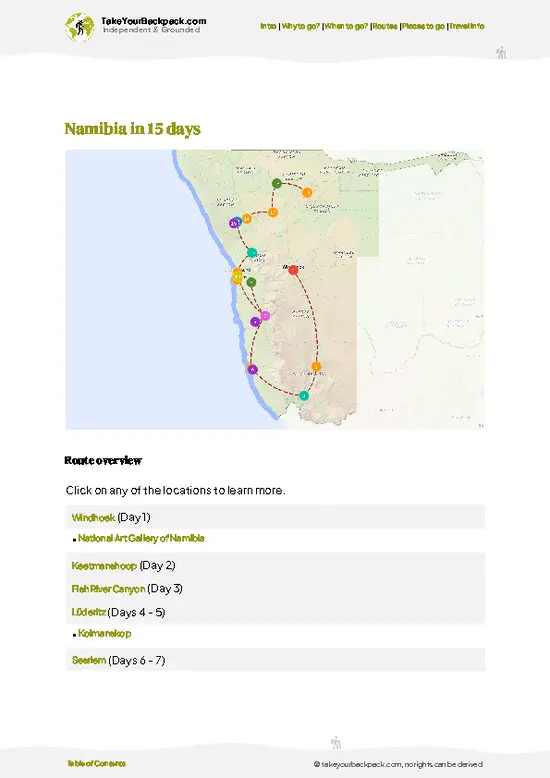
example page 0 from our offline Travel Guide for Namibia
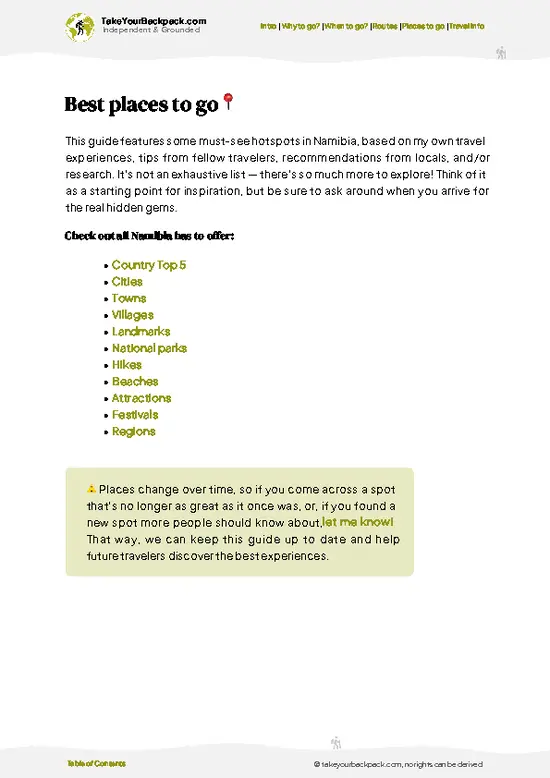
example page 1 from our offline Travel Guide for Namibia
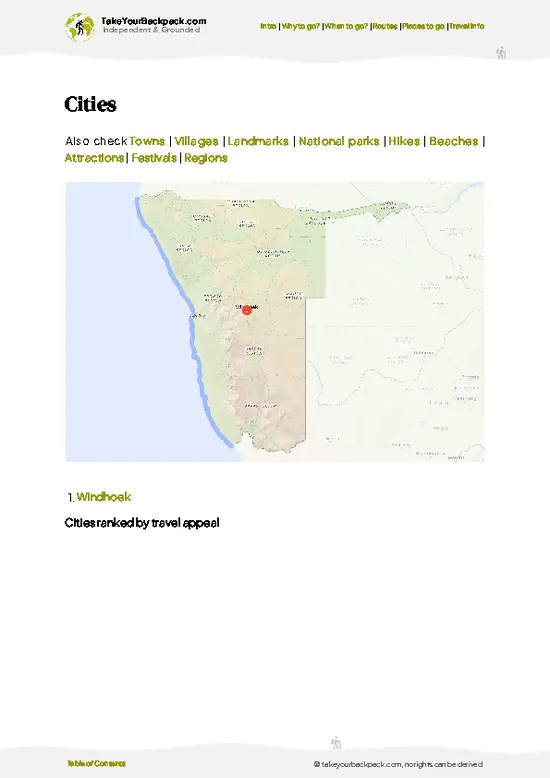
example page 2 from our offline Travel Guide for Namibia
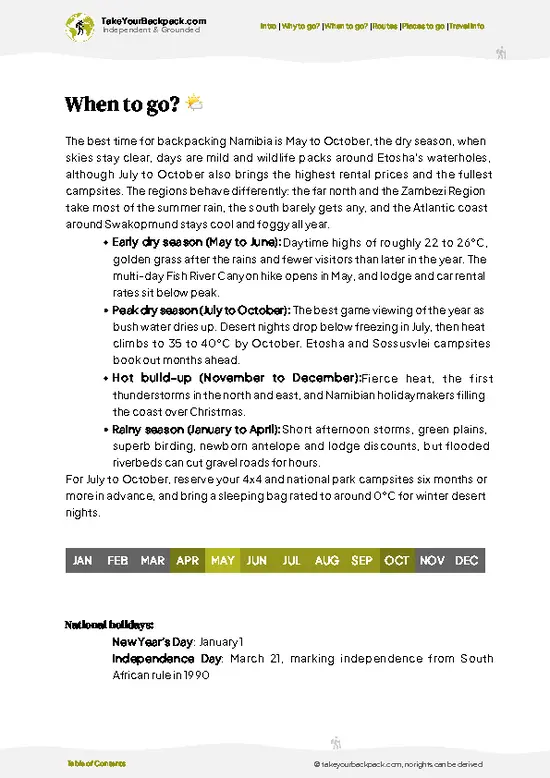
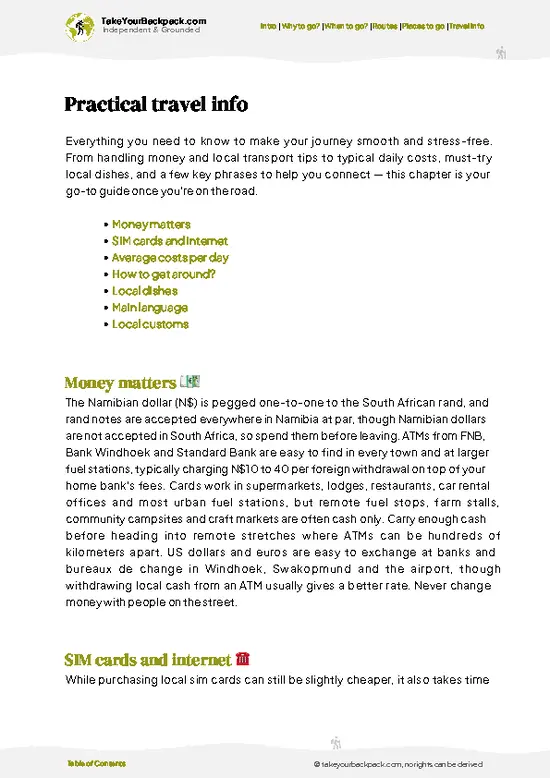
example page 3 from our offline Travel Guide for Namibia
example page 4 from our offline Travel Guide for Namibia
example page 5 from our offline Travel Guide for Namibia
example page 6 from our offline Travel Guide for Namibia
example page 7 from our offline Travel Guide for Namibia
Loading the map 🌍
CLICK TO FILTER
cities
towns
villages
landmarks
national parks
hikes
beaches
attractions
festivals
regions
SHOW COUNTRY’S BESTSHOW ALL

✨ Why go?
Ranked #4 festival in Namibia
What makes this festival worth celebrating

Olufuko Festival is one of the few events in Namibia where you can meet the Aawambo people on their own ground, and that is the reason to rearrange a route around it. Most visitors to Namibia chase dunes and wildlife in the south and west. Outapi pulls you into the north, where Omusati Region life is ordinary and unhurried, and the festival gives that setting a focus. You sit among families who have traveled in for the ceremonies, and conversations start easily over shared food and a stall counter. Because few foreign backpackers turn up, you stand out, and people tend to be curious and generous with explanations. It also fits well into a longer loop. You can pair it with Etosha National Park to the south or continue toward the Kunene and the Angolan border. Costs stay low next to big music … read more 👉
Olufuko Festival is one of the few events in Namibia where you can meet the Aawambo people on their own ground, and that is the reason to rearrange a route around it. Most visitors to Namibia chase dunes and wildlife in the south and west. Outapi pulls you into the north, where Omusati Region life is ordinary and unhurried, and the festival gives that setting a focus. You sit among families who have traveled in for the ceremonies, and conversations start easily over shared food and a stall counter. Because few foreign backpackers turn up, you stand out, and people tend to be curious and generous with explanations. It also fits well into a longer loop. You can pair it with Etosha National Park to the south or continue toward the Kunene and the Angolan border. Costs stay low next to big music festivals, since entry is modest and local food is cheap. Come for the culture, not for comfort, and you will leave with something Namibia's tourist trail rarely offers.

💡 HighlightsEssential experiences to have while celebrating the Olufuko

  1. Traditional Olufuko ceremonies: The heart of the festival is the cultural rites honoring young women's passage into adulthood, revived in modern form. Watching them with respect and an open mind explains why the event exists.
  2. Aawambo dance and song performances: Groups perform in coordinated costume, with drums, clapping and call-and-response singing carrying across the grounds. The energy builds through the afternoon.
  3. Traditional crafts and the trade fair: Stalls sell baskets, beadwork, pottery and clothing made in the north. Buying direct from makers is cheap and usually friendlier than any airport shop.
  4. Local food stalls: Expect mahangu (pearl millet) porridge, grilled meat and home-brewed drinks sold by the plate. Eating here is the easiest way to start conversations.
  5. Evening gatherings around
… read more 👉
  1. Traditional Olufuko ceremonies: The heart of the festival is the cultural rites honoring young women's passage into adulthood, revived in modern form. Watching them with respect and an open mind explains why the event exists.
  2. Aawambo dance and song performances: Groups perform in coordinated costume, with drums, clapping and call-and-response singing carrying across the grounds. The energy builds through the afternoon.
  3. Traditional crafts and the trade fair: Stalls sell baskets, beadwork, pottery and clothing made in the north. Buying direct from makers is cheap and usually friendlier than any airport shop.
  4. Local food stalls: Expect mahangu (pearl millet) porridge, grilled meat and home-brewed drinks sold by the plate. Eating here is the easiest way to start conversations.
  5. Evening gatherings around Outapi: After the official program ends, the town fills with music, braai fires and people catching up. It is loud, social and very Namibian.
Olufuko Festival is best experienced first through the traditional ceremonies, since everything else makes more sense once you understand what they mean.
Spotted a mistake or missing something? Contact us.

🌤️ When to go?When is the celebration of Olufuko Festival?

Olufuko Festival runs for about a week in late August, with the date shifting yearly, and it is held at Outapi in the Omusati Region of northern Namibia, on the grounds near the town’s Ombala yOkuluvale.
  • Best days: The opening days bring the speeches, parades and the ceremonial entrance of the girls, while the middle of the week offers trade fairs, music and traditional dance. Weekends pull the largest crowds.
  • Weather: Days are dry, sunny and warm at roughly 27 to 31°C (81 to 88°F), and nights drop to about 10 to 14°C (50 to 57°F). Bring a hat, sunscreen, a warm layer and a scarf for the dust.
  • Booking: Outapi has limited beds, so reserve rooms two to three months ahead. Expect rates to climb by 30 to 60 percent during festival week.
  • Roads: The B1 and the road from Oshakati fill up on opening day
… read more 👉
Olufuko Festival runs for about a week in late August, with the date shifting yearly, and it is held at Outapi in the Omusati Region of northern Namibia, on the grounds near the town’s Ombala yOkuluvale.
  • Best days: The opening days bring the speeches, parades and the ceremonial entrance of the girls, while the middle of the week offers trade fairs, music and traditional dance. Weekends pull the largest crowds.
  • Weather: Days are dry, sunny and warm at roughly 27 to 31°C (81 to 88°F), and nights drop to about 10 to 14°C (50 to 57°F). Bring a hat, sunscreen, a warm layer and a scarf for the dust.
  • Booking: Outapi has limited beds, so reserve rooms two to three months ahead. Expect rates to climb by 30 to 60 percent during festival week.
  • Roads: The B1 and the road from Oshakati fill up on opening day and on weekends. Arrive before midday and leave early in the morning.
Arrive on a weekday morning and you get the same program with shorter lines for food and transport.


source: climatestotravel.comJANJanuary: not recommended for travelingFEBFebruary: not recommended for travelingMARMarch: not recommended for travelingAPRApril: not recommended for travelingMAYMay: not recommended for travelingJUNJune: not recommended for travelingJULJuly: not recommended for travelingAUGAugust: excellent for travelingSEPSeptember: not recommended for travelingOCTOctober: not recommended for travelingNOVNovember: not recommended for travelingDECDecember: not recommended for traveling

✈️ The backpacker research shortcutNamibia Travel Guide

An offline-friendly backpacking guide with optimized travel routes, ranked highlights, transport advice, and the best areas to stay.
example page 0 from our offline Travel Guide for Namibia
example page 1 from our offline Travel Guide for Namibia
example page 2 from our offline Travel Guide for Namibia
example page 3 from our offline Travel Guide for Namibia
example page 4 from our offline Travel Guide for Namibia
example page 5 from our offline Travel Guide for Namibia
example page 6 from our offline Travel Guide for Namibia
example page 7 from our offline Travel Guide for Namibia
The digital guide (294 pages) contains:
✅ 71 highlights, ranked by travel appeal
✅ Optimized 5, 10 & 15-day travel routes
✅ Cities, national parks, landmarks, beaches
✅ How to get around
✅ Offline-friendly for travel without Wi-Fi
👉 Click to see all 30+ guide features

📅 Plan smarter in minutes, not weeks
✅ Month by month travel advice
✅ Festivals & national holidays
✅ Budget expectations

🗺️ Go to the right places, skip the overrated ones
✅ Honest pros & cons of destinations
✅ Top hikes, parks & viewpoints
✅ Lesser-known places most travelers miss
✅ Clear “worth it vs skip it” guidance

🛏️ Travel smoothly without rookie mistakes
✅ Best areas to stay
✅ Transport systems explained simply
✅ Common scams & safety advice
✅ SIM cards, money & practical tips

🌍 Understand the country, not just visit it
✅ Culture & traditions
✅ 52 Essential phrases & customs
✅ Festivals worth planning around
✅ Traveler-friendly historical context
✅ Insights that make places more meaningful

📱 Built for real travel conditions
✅ Fully downloadable PDF
✅ Works completely offline
✅ Optimized for phone use
✅ Useful in remote areas & buses
✅ Everything in one place
Stop searching, start planning
Get instant access to your full guide. 30‑day money-back guarantee.
+ Add another guide for just

By proceeding you agree to our terms.
Sent to your inbox immediately after payment • 100% Secure Checkout
Best Backpacking Travel Advisor 2025 tourism awardBest Backpacking
Travel Advisor
2025
What others say about Take Your Backpack Guides:
⭐⭐⭐⭐⭐
Fantastic, amazing amount of information!
⭐⭐⭐⭐⭐
My goodness this is amazing, it's what I've been looking for hats off too you!
⭐⭐⭐⭐⭐
I think this is absolutely BRILLIANT
⭐⭐⭐⭐
Very complete and informative. It's still missing places, but I gotta to commend you
⭐⭐⭐⭐⭐
This is truly amazing, thank you, can't wait to explore it with my kids!
⭐⭐⭐⭐⭐
Awesome resource, thank you!
⭐⭐⭐⭐⭐
This is amazing! Can't wait to explore the ones I haven't seen
⭐⭐⭐⭐
I love this! Well done, great idea.
⭐⭐⭐⭐⭐
Thanks for taking the time to make this gem!
⭐⭐⭐⭐⭐
This might be the best website I've ever seen.
⭐⭐⭐⭐⭐
Congratulations, and thank you so much for your work; it's incredibly valuable.
⭐⭐⭐⭐
In all seriousness I think you did a great job pointing out the important spots
⭐⭐⭐⭐⭐
10/10 very good
⭐⭐⭐⭐⭐
As someone who's only just starting to visit regularly this is awesome, thank you.
⭐⭐⭐⭐
Thank you very much! I'm going to visit my dad, it's going to be very useful!
⭐⭐⭐⭐⭐
This is really cool! We'll be travelling for the first time and this definitely come in handy.
⭐⭐⭐⭐⭐
You are now our minister of culture, congratulations 👨‍💼
⭐⭐⭐⭐⭐
Just wanted to tell you that this is a pearl! Going to follow your recommendations.
⭐⭐⭐⭐⭐
This is so cool. I'll definitely be using the resource for my travels soon.
⭐⭐⭐⭐⭐
This is very impressive! Good work.
⭐⭐⭐⭐⭐
This is an amazing and informative site. Very well done!

🛏️ Where to stay?Best areas and accommodation options

Outapi itself is the most practical base, because you can walk to the festival grounds and avoid hunting for a lift after dark. Rooms are limited and fill early, so many backpackers pair it with a second town.

Oshakati, about 1.5 to 2 hours away by road, is the better choice for budget travelers. It has the widest range of guesthouses and lodges in the north, plenty of supermarkets, and the minibus links toward Outapi. It is also where you will meet other travelers and can split fuel costs on a shared car. Ongwediva, right next door, is a little calmer and tends to feel safer for solo travelers … read more 👉
Outapi itself is the most practical base, because you can walk to the festival grounds and avoid hunting for a lift after dark. Rooms are limited and fill early, so many backpackers pair it with a second town.

Oshakati, about 1.5 to 2 hours away by road, is the better choice for budget travelers. It has the widest range of guesthouses and lodges in the north, plenty of supermarkets, and the minibus links toward Outapi. It is also where you will meet other travelers and can split fuel costs on a shared car. Ongwediva, right next door, is a little calmer and tends to feel safer for solo travelers at night.

Opuwo and Ruacana are further afield and make sense only if you are continuing along the Kunene route afterward. Ruacana is roughly an hour and a half from Outapi.

For a social, low-cost stay, look for guesthouses and campsites with shared kitchens and courtyards, since these are where festival-goers swap lifts and plans. Choose somewhere with secure parking or a locked gate, avoid walking between towns after dark, and book early because festival week empties everything with a bed.

👛 Costs (as of 22 October 2026)Money, prices, and spending tips

Olufuko Festival costs most independent travelers about US$75 to 120 a day, with the main spend going on a bed in festival week.
CategoryBudget RangeLocal Reality
Festival ticketsUS$0 to 5Entry to the grounds is low-cost or free, and some events or exhibitions may charge a small fee.
AccommodationUS$30 to 90Guesthouse rooms and campsites cost US$30 to 55 normally, and rise to US$60 to 90 in festival week. Staying in Oshakati is cheaper.
Local transportUS$10 to 30Shared minibuses between Oshakati and Outapi cost a few dollars each way. Hiring a private car or taxi costs more, and fuel is extra.
Food & drinksUS$8 to 18Stall plates of meat and oshifima cost US$3 to 6, and beers around US$1.50 to 3.
Miscellaneous expensesUS$5 to 15Crafts, sunscreen, phone data and tips for guides or drivers.
Total Daily
… read more 👉
Olufuko Festival costs most independent travelers about US$75 to 120 a day, with the main spend going on a bed in festival week.
CategoryBudget RangeLocal Reality
Festival ticketsUS$0 to 5Entry to the grounds is low-cost or free, and some events or exhibitions may charge a small fee.
AccommodationUS$30 to 90Guesthouse rooms and campsites cost US$30 to 55 normally, and rise to US$60 to 90 in festival week. Staying in Oshakati is cheaper.
Local transportUS$10 to 30Shared minibuses between Oshakati and Outapi cost a few dollars each way. Hiring a private car or taxi costs more, and fuel is extra.
Food & drinksUS$8 to 18Stall plates of meat and oshifima cost US$3 to 6, and beers around US$1.50 to 3.
Miscellaneous expensesUS$5 to 15Crafts, sunscreen, phone data and tips for guides or drivers.
Total Daily BudgetUS$103Based on high-season accommodation and mid-range spending.
⚠️ Prices can change and everyone travels differently, so take this as a rough guide. Hope it helps you plan your adventure!

🍲 FoodLocal Flavors for Backpackers

The food here is northern Namibian home cooking, served by stalls and family kitchens around the grounds. The staple is mahangu (pearl millet) porridge, called oshifima, a firm dough you pinch off with your fingers and dip into stews. Pair it with goat or beef stew, dried or fried mopane worms, and spinach-style leaf relish cooked with onion and tomato.

Grilled meat is everywhere. Look for braaied beef and sausages sizzling over open coals, sold by the portion and often with a spoonful of oshifima on the side. For something truly local, try omaere, a soured milk, and oshikundu, a lightly fermented mahangu drink with a gritty, tangy taste. Bottled soft drinks and local beers are sold at stands and bars across the site.

Portions are generous and meant to be shared, so ordering one plate between … read more 👉
The food here is northern Namibian home cooking, served by stalls and family kitchens around the grounds. The staple is mahangu (pearl millet) porridge, called oshifima, a firm dough you pinch off with your fingers and dip into stews. Pair it with goat or beef stew, dried or fried mopane worms, and spinach-style leaf relish cooked with onion and tomato.

Grilled meat is everywhere. Look for braaied beef and sausages sizzling over open coals, sold by the portion and often with a spoonful of oshifima on the side. For something truly local, try omaere, a soured milk, and oshikundu, a lightly fermented mahangu drink with a gritty, tangy taste. Bottled soft drinks and local beers are sold at stands and bars across the site.

Portions are generous and meant to be shared, so ordering one plate between two is perfectly normal. Lines get long around midday when the performances break. Cash in Namibian dollars is what most stalls want, and card machines are unreliable, so bring small notes. Eat with your right hand if you are using your fingers, and accept a taste if a stallholder offers one.

FAQTraveler FAQ

Olufuko Festival takes place in late August each year, lasting about a week, and the exact dates change annually. It is held in Outapi in the Omusati Region of northern Namibia. Outapi lies roughly 1.5 to 2 hours by road from Oshakati, so most visitors plan to arrive the day before the opening.
Attending Olufuko Festival is inexpensive, with entry typically free or about US$0 to 5. The bigger costs are a bed, at roughly US$60 to 90 a night in festival week, and transport. A realistic daily budget is US$75 to 120, including stall meals of US$3 to 6.
Olufuko Festival generally does not require advance tickets for general entry to the grounds, so you can pay at the gate if there is a fee. What you do need to book early is accommodation, since Outapi has few beds and rooms fill two to three months ahead. Some special events may charge separately, so carry small cash notes.
⚠️ Things can change over time, so always validate details locally before you go.

Other Namibian festivals near Olufuko

Explore more nearby:


💡 Not sure where to go next?
Create a personalized itinerary for Namibia including Olufuko and the places that fit your trip.

Generate my itinerary

👉 Discover all festivals

Or checkout all Namibia has to offer (think cities, towns, villages, national parks, hikes, beaches, festivals)
Country photo of Namibia

We 💚 feedbackSumming up the experience

Olufuko Festival trips go wrong when people treat it like a concert and show up late with no bed and an empty tank. I would book a room early, arrive on the first day when programs are most complete, and keep your camera lowered during ceremonies until you see what locals consider acceptable. Ask before photographing anyone.

✍️ Help improve this page!
The information on this page is based on in-depth research, insights shared by experienced travelers, and feedback from the local travel community in Namibia. While every effort is made to keep the information accurate and current, conditions can change — so if you spot anything incorrect or outdated, please get in touch.


🙋‍♂️ Give feedback

👋 Meet the founderWho’s Behind Take Your Backpack?

Johan, backpacker and founder of TakeYourBackpackHi, I’m Johan (Netherlands 🇳🇱), the creator of TakeYourBackpack. Over the past 3 decades, I’ve backpacked through 90+ countries across six continents, gaining extensive experience with independent travel, long-term trips, and overland routes.

This site is built on a combination of firsthand travel experience and carefully curated insights from other backpackers. Many guides are based on places I’ve personally visited, while others bring together tips, observations, and practical advice shared by trusted travelers I’ve met along the way.

The goal is to provide realistic, experience-driven guidance — not generic itineraries — so you can explore destinations with better context, clearer expectations, and more confidence.