
×

New Caledonia🇳🇨 | beachesBaie d’OroOutrigger crossing, shallow reef basin, squeaky sand, east-coast quiet | things to do and best time to go

Explore Îlot CanardExplore Malabou Beach

Backpacking in Baie d’Oro
🌟 Highlightbeach ranked #3
By Johan Kruseman 🇳🇱 | Updated October 15, 2026

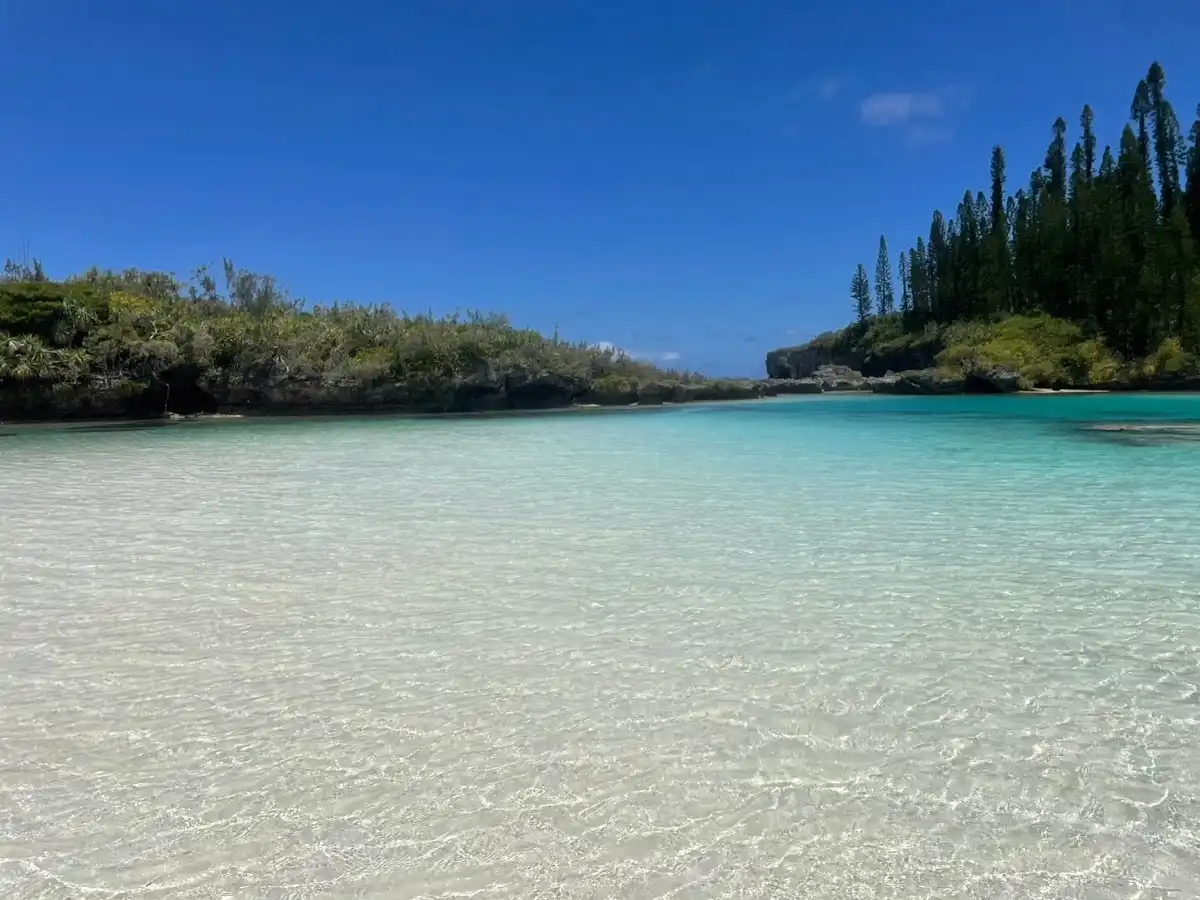
At Oro Bay a path follows a small river to the natural pool, and at high tide you wade knee-deep through the channel to reach it. Oro Bay sits on the east coast of the Isle of Pines, in the south of New Caledonia. The sand is fine and squeaky white, the casuarinas hiss in the trade wind, and the lagoon turns from milky green to deep blue within a few paddle strokes. Tall Araucaria pines lean over the shore, and you smell salt, wet wood and woodsmoke from nearby huts. The setting is gorgeous but remote. Sun is relentless on the open sand and shade is scarce, so you trade comfort for quiet. It is far more peaceful than the west coast beaches, with a Kanak village feel and almost no commercial buzz. Arrange a ride or hire a bike in Vao before you head out, because the road is long and there are no buses.

Discover everything you want to know in the 📖 New Caledonia Travel Guide.


example page 0 from our offline Travel Guide for New Caledonia
example page 1 from our offline Travel Guide for New Caledonia
example page 2 from our offline Travel Guide for New Caledonia
example page 3 from our offline Travel Guide for New Caledonia
example page 4 from our offline Travel Guide for New Caledonia
example page 5 from our offline Travel Guide for New Caledonia
example page 6 from our offline Travel Guide for New Caledonia
example page 7 from our offline Travel Guide for New Caledonia
Loading the map 🌍
CLICK TO FILTER
cities
towns
villages
landmarks
national parks
hikes
beaches
attractions
festivals
regions
SHOW COUNTRY’S BESTSHOW ALL

✨ Why go?
Ranked #3 beach in New Caledonia
Why visitors keep coming back

Oro Bay works as a base for slow travel because the island is small enough that nature and culture sit within a bike ride of each other. In a single day you can swim at the natural pool reached on foot, then roll back toward Vao and stop at the church and the village shops. You do not need a rental car for every move, and the pace keeps you from rushing.
The east coast also gives you the island’s calmest water. The bay faces the barrier lagoon, so snorkeling is easy for beginners, with small reef fish and the occasional turtle gliding past the shallows. The walk toward Pic N’Ga adds a short climb for views over the whole island, which makes a good counterweight to lazy beach hours.
The last reason is atmosphere. Kanak families still run the boats and guesthouses, and the slow wooden pirogue … read more 👉
Oro Bay works as a base for slow travel because the island is small enough that nature and culture sit within a bike ride of each other. In a single day you can swim at the natural pool reached on foot, then roll back toward Vao and stop at the church and the village shops. You do not need a rental car for every move, and the pace keeps you from rushing.
The east coast also gives you the island’s calmest water. The bay faces the barrier lagoon, so snorkeling is easy for beginners, with small reef fish and the occasional turtle gliding past the shallows. The walk toward Pic N’Ga adds a short climb for views over the whole island, which makes a good counterweight to lazy beach hours.
The last reason is atmosphere. Kanak families still run the boats and guesthouses, and the slow wooden pirogue crossings keep the experience grounded in local work rather than staged shows. Bring cash, patience and a hat, and you will fit right in.

💡 HighlightsKey sights and experiences for travelers

  1. Oro Bay beach: a long curve of powder sand backed by Araucaria pines, with water so shallow and clear you can wade a long way out. Mornings are the quietest.
  2. Pirogue trip across Upi Bay: a sailing outrigger leaves from Saint-Joseph Bay near Vao and glides between the rock islets of Upi Bay, and the boatmen read the tide and wind by eye.
  3. Piscine Naturelle d’Oro: a shallow, protected basin ringed by coral, where small fish and sometimes rays drift around your ankles. Bring a mask and reef-safe sunscreen.
  4. Upi Bay: a short distance away, with a lagoon dotted by tall rock islets and clustered pines. It is a calm spot for photographing the shapes in the water.
  5. Pic N’Ga trail: the island’s highest point at about 262 meters. The path is steep and rocky in places, and from the top you see lagoon colors
… read more 👉
  1. Oro Bay beach: a long curve of powder sand backed by Araucaria pines, with water so shallow and clear you can wade a long way out. Mornings are the quietest.
  2. Pirogue trip across Upi Bay: a sailing outrigger leaves from Saint-Joseph Bay near Vao and glides between the rock islets of Upi Bay, and the boatmen read the tide and wind by eye.
  3. Piscine Naturelle d’Oro: a shallow, protected basin ringed by coral, where small fish and sometimes rays drift around your ankles. Bring a mask and reef-safe sunscreen.
  4. Upi Bay: a short distance away, with a lagoon dotted by tall rock islets and clustered pines. It is a calm spot for photographing the shapes in the water.
  5. Pic N’Ga trail: the island’s highest point at about 262 meters. The path is steep and rocky in places, and from the top you see lagoon colors on every side. Allow roughly two hours round trip.
  6. Vao village and church: the main settlement, where the Catholic church anchors a quiet center of small shops and neighbors chatting on shaded verandas.
  7. Saint-Maurice Bay: a lesser-known quiet inlet tied to the island’s missionary history, with a simple monument and almost no visitors.
  8. Queen Hortense’s Cave: a limestone cave in the north, with stalactites and a small opening to the sky. It is cool and damp, a good break from the midday sun.
  9. Kanumera Bay: a sheltered beach with glassy water and a gentle slope. It is calmer than the busier shores and good for an easy swim.
  10. Kuto Bay: a wide, twin-sided beach with a small sand bridge, ideal for a late afternoon walk when the light turns golden.
Book the Upi Bay pirogue first, since the tide and wind decide the timing and the rest of your days can bend around it.
Spotted a mistake or missing something? Contact us.
⌛️ 1 day1-day itinerary for Baie d’Oro

Day 1: Vao: A settling-in day built on short walks and errands. Arrive, pick up cash, food and a bike or ride arrangement, and walk the village. On the Isle of Pines nothing runs on a timetable, so transport sets a slow rhythm that suits the place. Evening at the church square gives you the local pace.
Day 2: Kuto Bay and Kanumera Bay: A pure beach day. Start at Kuto in the morning when the sand is cool, then move to Kanumera for sheltered swimming at lunch. Keep the distances short, because heat and sun will drain you faster than the pedaling.
Day 3: Pic N’Ga and Upi Bay: An active day with a climb. Hike Pic N’Ga early before the sun heats the rock, then descend to Upi Bay for a swim among its rock islets. You earn the views, and the bay’s pines give you shade to rest.
Day 4: Saint-Maurice Bay … read more 👉
Day 1: Vao: A settling-in day built on short walks and errands. Arrive, pick up cash, food and a bike or ride arrangement, and walk the village. On the Isle of Pines nothing runs on a timetable, so transport sets a slow rhythm that suits the place. Evening at the church square gives you the local pace.
Day 2: Kuto Bay and Kanumera Bay: A pure beach day. Start at Kuto in the morning when the sand is cool, then move to Kanumera for sheltered swimming at lunch. Keep the distances short, because heat and sun will drain you faster than the pedaling.
Day 3: Pic N’Ga and Upi Bay: An active day with a climb. Hike Pic N’Ga early before the sun heats the rock, then descend to Upi Bay for a swim among its rock islets. You earn the views, and the bay’s pines give you shade to rest.
Day 4: Saint-Maurice Bay and Queen Hortense’s Cave: A history morning. Visit the quiet bay with its missionary connection, then continue north to the cave. The detour to Queen Hortense’s Cave adds a cool, dark contrast to the open beach days without breaking the logistics, since it sits on the same side as the roads you already use.
Day 5: Oro Bay: The day that justifies the whole trip. Arrive early and walk along the river to the natural pool while the water is clear and the light is low. Swim over coral, then return to the beach and linger until the afternoon breeze picks up. Go near low tide, when the wade through the channel is easiest.

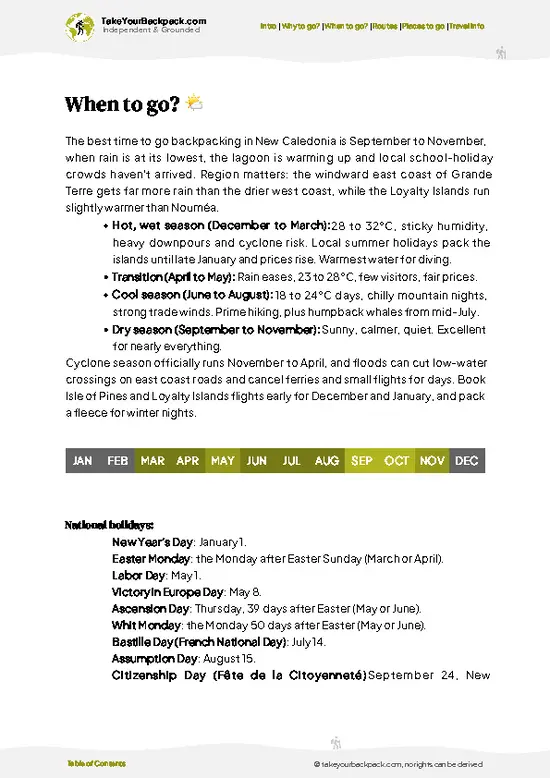
🌤️ When to go?Best time to visit Baie d’Oro

May to October brings the most comfortable weather for Oro Bay, with long beach days and calm water at the natural pool.
  • Cool and dry, June to August: Days run 18 to 24°C (64 to 75°F) with about 10.5 to 11 hours of daylight. The water feels brisk, and humpback whales pass offshore from about July to September. French school holidays in July push up prices and fill rooms.
  • Warm and dry, September to November: Temperatures climb to 22 to 28°C (72 to 82°F), the wind eases and the lagoon turns its brightest turquoise. This is the easiest window for snorkeling and for finding a room.
  • Hot and wet, December to April: Expect 25 to 31°C (77 to 88°F), heavy humidity, sudden downpours and about 13.5 hours of daylight. Cyclone risk peaks from January to March. Christmas and New Year are the priciest weeks.
… read more 👉
May to October brings the most comfortable weather for Oro Bay, with long beach days and calm water at the natural pool.
  • Cool and dry, June to August: Days run 18 to 24°C (64 to 75°F) with about 10.5 to 11 hours of daylight. The water feels brisk, and humpback whales pass offshore from about July to September. French school holidays in July push up prices and fill rooms.
  • Warm and dry, September to November: Temperatures climb to 22 to 28°C (72 to 82°F), the wind eases and the lagoon turns its brightest turquoise. This is the easiest window for snorkeling and for finding a room.
  • Hot and wet, December to April: Expect 25 to 31°C (77 to 88°F), heavy humidity, sudden downpours and about 13.5 hours of daylight. Cyclone risk peaks from January to March. Christmas and New Year are the priciest weeks.
Book the Christmas and July weeks months ahead, or visit in September when seats and beds are easy to find.


source: climatestotravel.comJANJanuary: fair for travelingFEBFebruary: fair for travelingMARMarch: fair for travelingAPRApril: fair for travelingMAYMay: highly recommended for travelingJUNJune: highly recommended for travelingJULJuly: good for travelingAUGAugust: good for travelingSEPSeptember: excellent for travelingOCTOctober: excellent for travelingNOVNovember: fair for travelingDECDecember: fair for traveling
new-caledonia-beach-baie-doro
© Google |

✈️ The backpacker research shortcutNew Caledonia Travel Guide

An offline-friendly backpacking guide with optimized travel routes, ranked highlights, transport advice, and the best areas to stay.
example page 0 from our offline Travel Guide for New Caledonia
example page 1 from our offline Travel Guide for New Caledonia
example page 2 from our offline Travel Guide for New Caledonia
example page 3 from our offline Travel Guide for New Caledonia
example page 4 from our offline Travel Guide for New Caledonia
example page 5 from our offline Travel Guide for New Caledonia
example page 6 from our offline Travel Guide for New Caledonia
example page 7 from our offline Travel Guide for New Caledonia
The digital guide (158 pages) contains:
✅ 42 highlights, ranked by travel appeal
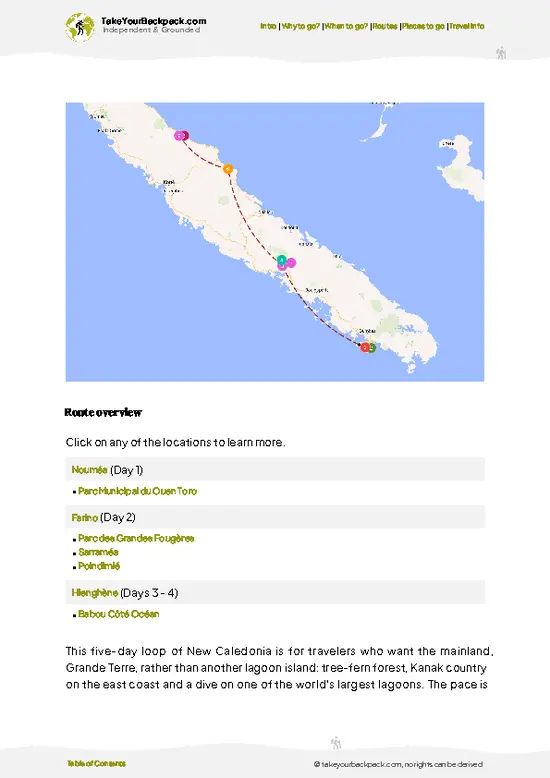
✅ Optimized 2, 3 & 5-day travel routes
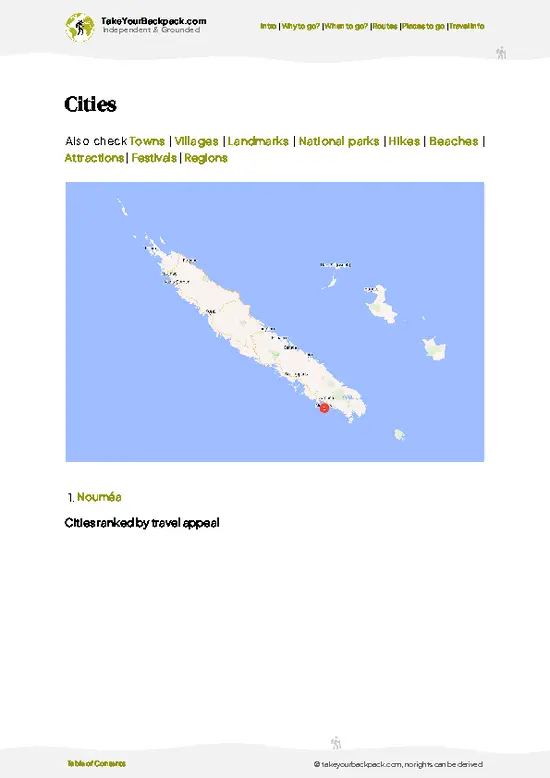
✅ Cities, national parks, landmarks, beaches
✅ How to get around
✅ Offline-friendly for travel without Wi-Fi
👉 Click to see all 30+ guide features

📅 Plan smarter in minutes, not weeks
✅ Month by month travel advice
✅ Festivals & national holidays
✅ Budget expectations

🗺️ Go to the right places, skip the overrated ones
✅ Honest pros & cons of destinations
✅ Top hikes, parks & viewpoints
✅ Lesser-known places most travelers miss
✅ Clear “worth it vs skip it” guidance

🛏️ Travel smoothly without rookie mistakes
✅ Best areas to stay
✅ Transport systems explained simply
✅ Common scams & safety advice
✅ SIM cards, money & practical tips

🌍 Understand the country, not just visit it
✅ Culture & traditions
✅ 52 Essential phrases & customs
✅ Festivals worth planning around
✅ Traveler-friendly historical context
✅ Insights that make places more meaningful

📱 Built for real travel conditions
✅ Fully downloadable PDF
✅ Works completely offline
✅ Optimized for phone use
✅ Useful in remote areas & buses
✅ Everything in one place
Stop searching, start planning
Get instant access to your full guide. 30‑day money-back guarantee.
+ Add another guide for just

By proceeding you agree to our terms.
Sent to your inbox immediately after payment • 100% Secure Checkout
Best Backpacking Travel Advisor 2025 tourism awardBest Backpacking
Travel Advisor
2025
What others say about Take Your Backpack Guides:
⭐⭐⭐⭐⭐
Fantastic, amazing amount of information!
⭐⭐⭐⭐⭐
My goodness this is amazing, it's what I've been looking for hats off too you!
⭐⭐⭐⭐⭐
I think this is absolutely BRILLIANT
⭐⭐⭐⭐
Very complete and informative. It's still missing places, but I gotta to commend you
⭐⭐⭐⭐⭐
This is truly amazing, thank you, can't wait to explore it with my kids!
⭐⭐⭐⭐⭐
Awesome resource, thank you!
⭐⭐⭐⭐⭐
This is amazing! Can't wait to explore the ones I haven't seen
⭐⭐⭐⭐
I love this! Well done, great idea.
⭐⭐⭐⭐⭐
Thanks for taking the time to make this gem!
⭐⭐⭐⭐⭐
This might be the best website I've ever seen.
⭐⭐⭐⭐⭐
Congratulations, and thank you so much for your work; it's incredibly valuable.
⭐⭐⭐⭐
In all seriousness I think you did a great job pointing out the important spots
⭐⭐⭐⭐⭐
10/10 very good
⭐⭐⭐⭐⭐
As someone who's only just starting to visit regularly this is awesome, thank you.
⭐⭐⭐⭐
Thank you very much! I'm going to visit my dad, it's going to be very useful!
⭐⭐⭐⭐⭐
This is really cool! We'll be travelling for the first time and this definitely come in handy.
⭐⭐⭐⭐⭐
You are now our minister of culture, congratulations 👨‍💼
⭐⭐⭐⭐⭐
Just wanted to tell you that this is a pearl! Going to follow your recommendations.
⭐⭐⭐⭐⭐
This is so cool. I'll definitely be using the resource for my travels soon.
⭐⭐⭐⭐⭐
This is very impressive! Good work.
⭐⭐⭐⭐⭐
This is an amazing and informative site. Very well done!

🛏️ Where to stay?Where staying makes the most sense

Kuto Bay is the best base on the Isle of Pines for backpackers. Kuto has a long, gently curving white beach with calm shallows, a few small shops and the island's ferry jetty close by, so you can arrive, drop your bag and swim within an hour. It is also where most budget travelers end up, which makes it easy to find people to share a rental car or a pirogue fare.
Next door, Kanumera Bay is separated from Kuto by a narrow strip of land and is quieter. The sunsets are the main event, the snorkeling off the rocks is easy, and the walk between the two bays takes a few minutes. It suits you if you want … read more 👉
Kuto Bay is the best base on the Isle of Pines for backpackers. Kuto has a long, gently curving white beach with calm shallows, a few small shops and the island's ferry jetty close by, so you can arrive, drop your bag and swim within an hour. It is also where most budget travelers end up, which makes it easy to find people to share a rental car or a pirogue fare.
Next door, Kanumera Bay is separated from Kuto by a narrow strip of land and is quieter. The sunsets are the main event, the snorkeling off the rocks is easy, and the walk between the two bays takes a few minutes. It suits you if you want to sleep in and read rather than meet a crowd.
Vao, the island's main village, is better for self-caterers and anyone curious about daily life. There is a small market, a church that anchors Sunday mornings and a few stores for groceries, which helps you keep costs down on an expensive island. It is less social in the evenings.
Oro Bay itself has very little accommodation, so most visitors treat it as a day trip. Staying in Kuto or Kanumera puts you within easy reach of it and keeps your options open.

🚌 Getting aroundTransportation options and practical tips

From the Vao village center or the Kuto jetty, a sealed road crosses the island's pine-lined interior to Oro Bay. There are no buses or trains on the Isle of Pines, so you move by bike, rental car, a lodge transfer or your own feet. It works well because the island is small and traffic is nearly nonexistent, but nothing runs on a timetable.
  • Rental bicycle: About 1,500 to 2,500 XPF (US$14 to 23) a day from lodges and shops around Kuto and Vao. The road to Oro Bay is mostly flat, with the scent of Araucaria pines and warm tar around you, and you arrive sweaty to a bay of pale sand that is worth every pedal stroke.
  • Rental car or scooter: Roughly 7,000 to 11,000 XPF (US$65 to 100) a day for a small car, and book ahead in July and December. You can stop at Kanumera and Kuto on the way and keep the
… read more 👉
From the Vao village center or the Kuto jetty, a sealed road crosses the island's pine-lined interior to Oro Bay. There are no buses or trains on the Isle of Pines, so you move by bike, rental car, a lodge transfer or your own feet. It works well because the island is small and traffic is nearly nonexistent, but nothing runs on a timetable.
  • Rental bicycle: About 1,500 to 2,500 XPF (US$14 to 23) a day from lodges and shops around Kuto and Vao. The road to Oro Bay is mostly flat, with the scent of Araucaria pines and warm tar around you, and you arrive sweaty to a bay of pale sand that is worth every pedal stroke.
  • Rental car or scooter: Roughly 7,000 to 11,000 XPF (US$65 to 100) a day for a small car, and book ahead in July and December. You can stop at Kanumera and Kuto on the way and keep the windows down for the sound of cicadas and surf.
  • Lodge or tour transfer: Usually 1,000 to 3,000 XPF (US$9 to 28) per person, or included in a day excursion. It is the least effort and gets you to Oro Bay in time for the calm morning light on the water.
  • On foot to the natural pool: From the hotel at Oro Bay, a path along the river reaches the natural pool in about 20 minutes, and at high tide you wade knee-deep for part of it. You step into a shallow, glassy lagoon full of small fish.
  • Walking and hitching: Locals often stop for walkers on the main road, though cars are scarce. A short walk along the shaded track gives you birdsong and the smell of sun-warmed pine needles.
Go to Oro Bay early, before the midday heat flattens the road, and arrange your ride back before you leave, since phone signal and passing cars are both unreliable.

🍲 FoodLocal Flavors for Backpackers

Start with bougna, the Kanak feast of yam, taro, sweet potato and chicken or fish cooked in an earth oven with coconut milk. It arrives smoky and soft, and you usually have to order it a day ahead. On the Isle of Pines, fresh lagoon fish is the other star, grilled or served as poisson cru with lime and coconut milk, tangy and cold against the heat. Lobster appears on some lodge menus, and it is pricey.
Because this is French territory, mornings smell of baguettes and croissants, and coffee comes strong and small. Locals drink fresh coconut water straight from the husk, and Number One is the local lager that tastes best cold on the sand.
For budget eating, look to small snack bars and roadside stalls near Kuto and Vao for sandwiches, steak frites and fish plates, and to the Vao shops for supplies. … read more 👉
Start with bougna, the Kanak feast of yam, taro, sweet potato and chicken or fish cooked in an earth oven with coconut milk. It arrives smoky and soft, and you usually have to order it a day ahead. On the Isle of Pines, fresh lagoon fish is the other star, grilled or served as poisson cru with lime and coconut milk, tangy and cold against the heat. Lobster appears on some lodge menus, and it is pricey.
Because this is French territory, mornings smell of baguettes and croissants, and coffee comes strong and small. Locals drink fresh coconut water straight from the husk, and Number One is the local lager that tastes best cold on the sand.
For budget eating, look to small snack bars and roadside stalls near Kuto and Vao for sandwiches, steak frites and fish plates, and to the Vao shops for supplies. Lodges often serve set dinners, so tell them early if you have dietary needs.
Expect early closing, since kitchens go quiet by about 8 pm, and pack snacks for Oro Bay, where food options are minimal. Prices are high because most items arrive by ship. Meals are relaxed, so a greeting before you order matters, and tipping is not expected.

🛡️ SafetyScams, Hazards, and Annoyances

Baie d’Oro beach is a calm, low-risk place to swim, and the main thing to plan around is the tide. The bay on the Isle of Pines is sheltered by reef and lagoon, so waves are small and you will not meet rips on the sand side. Shallow water means the sea drops away slowly, which suits families and nervous swimmers alike.

The natural pool is where tides matter. You reach it on foot, wading at high tide, so check the tide before you set out and leave yourself a margin to walk back. Water that is ankle-deep on arrival can reach your thighs later. Wear reef shoes, since coral rubble and sea urchins sit on the shallow bottom.

Sun is the real hazard. Shade is patchy, and the midday glare off white sand and clear water burns quickly, so bring a rash shirt, hat and reef-safe sunscreen. Theft is rarely … read more 👉
Baie d’Oro beach is a calm, low-risk place to swim, and the main thing to plan around is the tide. The bay on the Isle of Pines is sheltered by reef and lagoon, so waves are small and you will not meet rips on the sand side. Shallow water means the sea drops away slowly, which suits families and nervous swimmers alike.

The natural pool is where tides matter. You reach it on foot, wading at high tide, so check the tide before you set out and leave yourself a margin to walk back. Water that is ankle-deep on arrival can reach your thighs later. Wear reef shoes, since coral rubble and sea urchins sit on the shallow bottom.

Sun is the real hazard. Shade is patchy, and the midday glare off white sand and clear water burns quickly, so bring a rash shirt, hat and reef-safe sunscreen. Theft is rarely a worry here, but zip valuables into a bag and carry drinking water with you.

FAQFrequently asked questions about Baie d’Oro

Two to three days covers the Isle of Pines well, including Oro Bay. One day goes to Oro Bay and its natural pool, another to the beaches at Kuto and Kanumera, and a third can be set aside for the climb up Pic N’Ga (about 262 m) for the island view. Staying four or five days gives you slack for weather and bike rides.
Bike rental, which costs roughly 1,500 to 2,500 XPF (US$14 to 23) a day, is the standard way to get around without a car, since the island is small and the main roads are flat. Lodge transfers to Oro Bay cost about 1,000 to 3,000 XPF per person, and walkers can often get a lift on the main road. There is no public bus, so plan your return ride before heading out to Oro Bay.
The Isle of Pines is known for its tall, slender Araucaria pines, white-sand beaches and the turquoise lagoon around Oro Bay. Visitors come for the natural pool at Oro Bay, a shallow, fish-filled basin about a 20-minute walk from the hotel on the bay. The island is also known for Kanak culture, the ruins of an old penal settlement near Kuto and humpback whale season from about July to September.
⚠️ Things can change over time, so always validate details locally before you go.

Other New Caledonian beaches near Baie d’Oro

Explore more nearby:

  • Anse Vata—Kitesurf lessons, palm-backed promenade, aquarium nearby, bus-line access| 115 km away
  • Îlot Canard—Underwater snorkel trail, buoyed info panels, paddle-out islet| 115 km away
  • Baie des Citrons—Restaurant strip, jellyfish notices, crescent bay, paddleboards| 116 km away

💡 Not sure where to go next?
Create a personalized itinerary for New Caledonia including Baie d’Oro and the places that fit your trip.

Generate my itinerary

👉 Discover all beaches

Or checkout all New Caledonia has to offer (think cities, towns, villages, national parks, hikes, beaches, festivals)
Country photo of New Caledonia

We 💚 feedbackSumming up the experience

Pair Oro Bay with a few nights around Vao and the Kuto and Kanumera bays, and keep the Pic N’Ga climb for a cooler morning. The natural pool is the day to plan around, so I would check the tide times first and fit everything else in afterward. Bring cash and a hat.

✍️ Help improve this page!
The information on this page is based on in-depth research, insights shared by experienced travelers, and feedback from the local travel community in New Caledonia. While every effort is made to keep the information accurate and current, conditions can change — so if you spot anything incorrect or outdated, please get in touch.


🙋‍♂️ Give feedback

👋 Meet the founderWho’s Behind Take Your Backpack?

Johan, backpacker and founder of TakeYourBackpackHi, I’m Johan (Netherlands 🇳🇱), the creator of TakeYourBackpack. Over the past 3 decades, I’ve backpacked through 90+ countries across six continents, gaining extensive experience with independent travel, long-term trips, and overland routes.

This site is built on a combination of firsthand travel experience and carefully curated insights from other backpackers. Many guides are based on places I’ve personally visited, while others bring together tips, observations, and practical advice shared by trusted travelers I’ve met along the way.

The goal is to provide realistic, experience-driven guidance — not generic itineraries — so you can explore destinations with better context, clearer expectations, and more confidence.