×

New Caledonia🇳🇨 | citiesNouméaKanak art, long French lunches, Anse Vata lagoon, market breakfasts | things to do and best time to go

Explore Yedjélé BeachExplore Loyalty Islands Festival

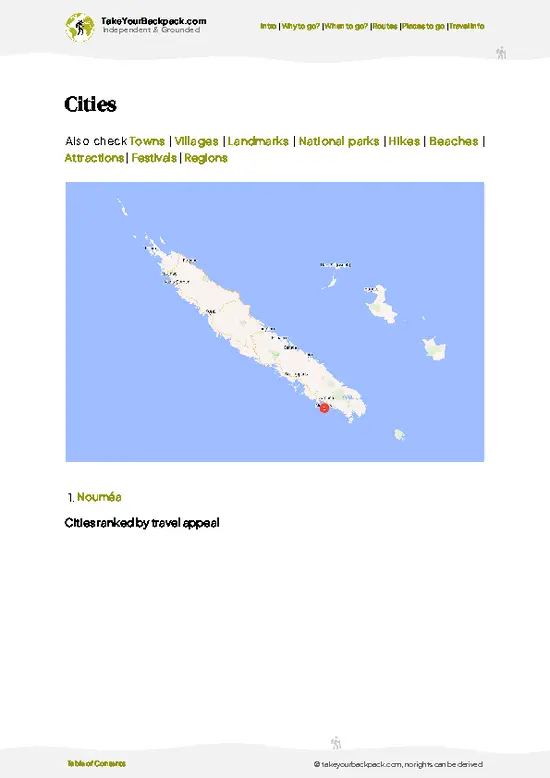
Backpacking in Nouméa
🏆 Top pickcity ranked #1
By Johan Kruseman 🇳🇱 | Updated October 16, 2026

Almost everything in Nouméa closes for a long lunch from roughly 11:30 to 1:30, and on Sunday much of the city goes quiet. That’s French habit carried to the tropics, so experienced travelers run errands and shop in the morning, then spend midday on a beach or over a plat du jour. Nouméa is New Caledonia’s capital, on the southwest coast of Grande Terre, and it suits travelers who want lagoon swimming, bakery breakfasts and a Kanak and French culture found nowhere else in the Pacific. It doesn’t suit anyone on a tight budget or chasing a party scene. Prices follow Paris more than Fiji, so the smarter move is to buy from supermarkets and snack bars and to walk. The air smells of frying onions, diesel and salt, the trade wind rattles the palms, and at dusk on Anse Vata the sand is still warm while joggers slap along the promenade.

Discover everything you want to know in the 📖 New Caledonia Travel Guide.


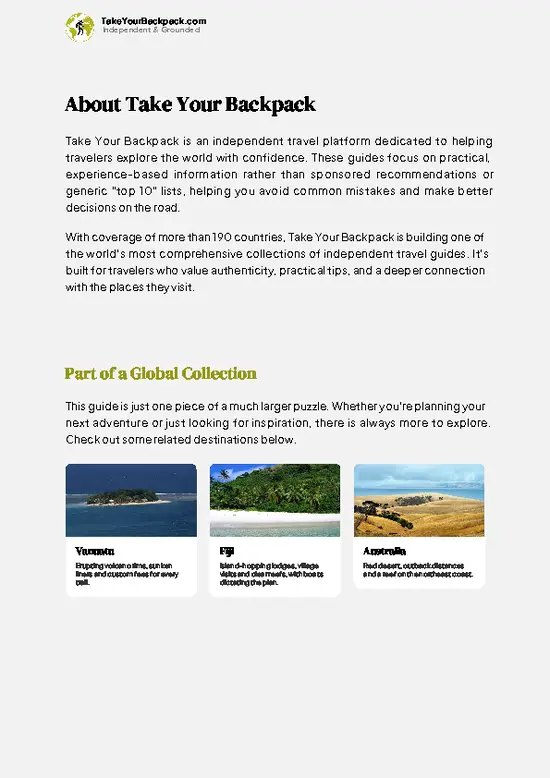
example page 0 from our offline Travel Guide for New Caledonia
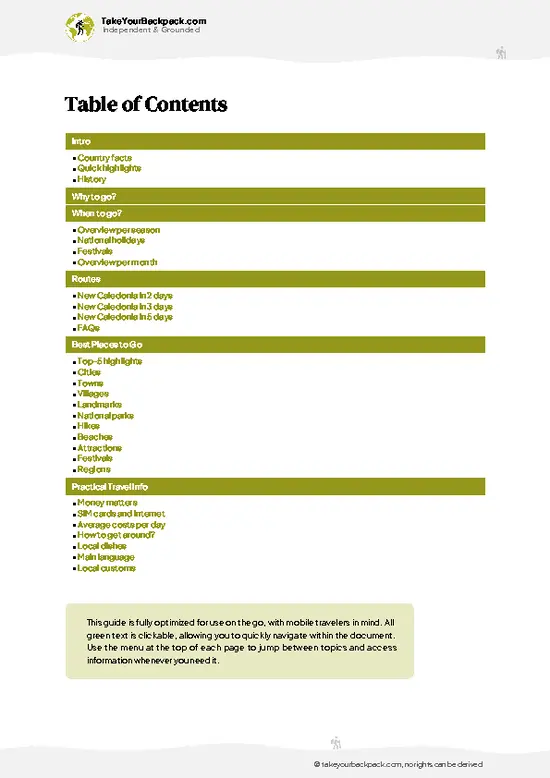
example page 1 from our offline Travel Guide for New Caledonia
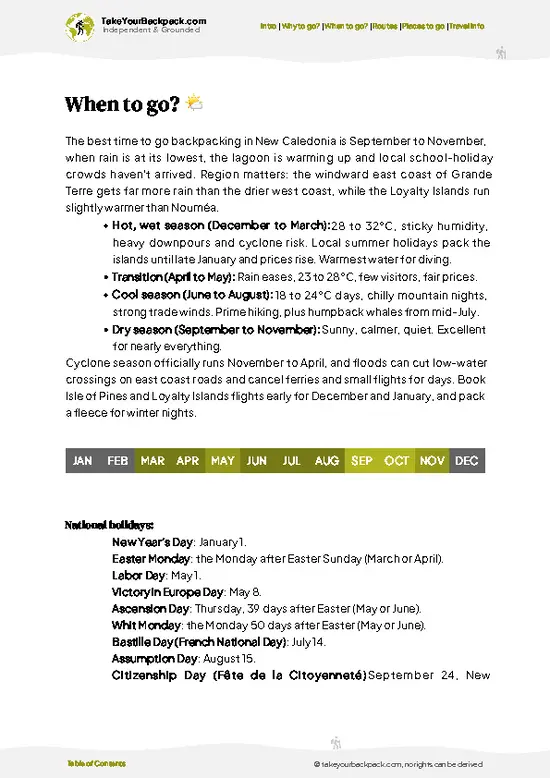
example page 2 from our offline Travel Guide for New Caledonia
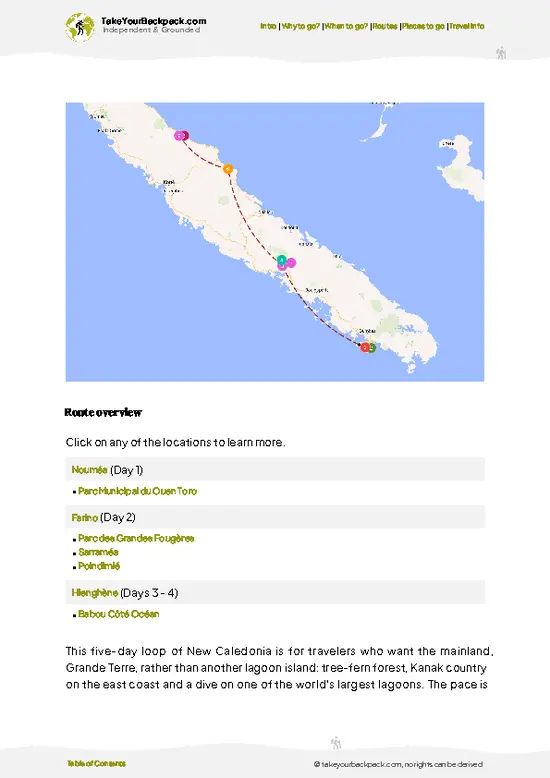
example page 3 from our offline Travel Guide for New Caledonia
example page 4 from our offline Travel Guide for New Caledonia
example page 5 from our offline Travel Guide for New Caledonia
example page 6 from our offline Travel Guide for New Caledonia
example page 7 from our offline Travel Guide for New Caledonia
Loading the map 🌍
CLICK TO FILTER
cities
towns
villages
landmarks
national parks
hikes
beaches
attractions
festivals
regions
SHOW COUNTRY’S BESTSHOW ALL

✨ Why go?
Ranked #1 city in New Caledonia
Why visitors keep coming back

Nouméa works as the gateway to everything else in New Caledonia, and it’s a decent place to land for a few days before you head out. The center is small enough to cover on foot, with a grid of French-style streets, bakeries and a shaded main square. The city beaches of Anse Vata and Baie des Citrons give you lagoon swimming and cafés without any expedition, which is rare for a capital. Backpackers also come because the island and reef trips mostly start here, and boats leave from Port Moselle marina, so you can sort out bookings, gear and supplies in one spot. Hostel choice is thin compared with Southeast Asia, and you’ll spend more on food and drinks than you expect, so this is a city for a short, well-planned stop rather than a long stay. The mix of Kanak, French, Polynesian and Asian communities … read more 👉
Nouméa works as the gateway to everything else in New Caledonia, and it’s a decent place to land for a few days before you head out. The center is small enough to cover on foot, with a grid of French-style streets, bakeries and a shaded main square. The city beaches of Anse Vata and Baie des Citrons give you lagoon swimming and cafés without any expedition, which is rare for a capital. Backpackers also come because the island and reef trips mostly start here, and boats leave from Port Moselle marina, so you can sort out bookings, gear and supplies in one spot. Hostel choice is thin compared with Southeast Asia, and you’ll spend more on food and drinks than you expect, so this is a city for a short, well-planned stop rather than a long stay. The mix of Kanak, French, Polynesian and Asian communities shows up in food, language and markets, and it’s the French-Pacific culture that gives the place its character. Nightlife is low-key: bars around the marina and the beach strips, not clubs.

💡 HighlightsThe experiences that define the visit

  1. Tjibaou Cultural Centre: Renzo Piano’s cluster of curved timber “cases” rises from the Tina peninsula and is the best introduction to Kanak art, carving and living traditions. A path winds through gardens of plants with traditional uses. Go in the morning, allow 2 to 3 hours, and expect to pay roughly 500 to 1,000 XPF (US$5 to 9).
  2. Place des Cocotiers: The central square has a music kiosk, a fountain, and the shade of old trees that make midday bearable. It’s free, takes 30 to 45 minutes, and is best early or after 4 PM, when locals sit around the edges.
  3. Marché du Port: Fish, tropical fruit, coffee and pastries at Port Moselle, busiest from about 6 to 9 AM. Entry is free, and an hour is plenty. Arrive early because stalls thin out by late morning.
  4. Musée de Nouvelle-Calédonie: Carved door posts,
… read more 👉
  1. Tjibaou Cultural Centre: Renzo Piano’s cluster of curved timber “cases” rises from the Tina peninsula and is the best introduction to Kanak art, carving and living traditions. A path winds through gardens of plants with traditional uses. Go in the morning, allow 2 to 3 hours, and expect to pay roughly 500 to 1,000 XPF (US$5 to 9).
  2. Place des Cocotiers: The central square has a music kiosk, a fountain, and the shade of old trees that make midday bearable. It’s free, takes 30 to 45 minutes, and is best early or after 4 PM, when locals sit around the edges.
  3. Marché du Port: Fish, tropical fruit, coffee and pastries at Port Moselle, busiest from about 6 to 9 AM. Entry is free, and an hour is plenty. Arrive early because stalls thin out by late morning.
  4. Musée de Nouvelle-Calédonie: Carved door posts, ceremonial masks and roof finials are shown with context, plus a garden of traditional huts. Allow 1.5 hours and about 500 XPF (US$5). Go in the cooler morning.
  5. Aquarium des Lagons: Anse Vata’s aquarium shows reef species of the local lagoon, including glowing corals and a nautilus. It costs roughly 2,000 XPF (US$18) and takes 1.5 hours. It suits the middle of the day, when the beach is too hot.
  6. Parc Zoologique et Forestier: This hillside park in Montravel protects native dry forest and birds, among them the kagu, New Caledonia’s flightless national bird. Allow 2 hours and 500 to 700 XPF (US$5 to 6). Visit in the morning, when the birds are active.
  7. Ouen Toro: This forested hill above Anse Vata has lookouts over the lagoon, reef and city, plus old World War II gun emplacements. It’s free, takes 1 to 2 hours on foot, and is best at sunrise or late afternoon.
Most visitors skip the kagu enclosure at the forest park, yet it’s the easiest place to see this rare grey bird in person.
Beyond the city, popular day trips include the Amédée Islet lighthouse, the Île des Pins, and the forest trails and swimming holes of Rivière Bleue Provincial Park.
Spotted a mistake or missing something? Contact us.

Things to do in Nouméa

Ratings based on Tripadvisor reviews. When you book through this link, you support our work at no extra cost to you.

🏘️ NeighborhoodsHow different areas shape the experience

Nouméa sits on a hilly peninsula, and each bay has its own personality. Distances look short on the map, but heat and slopes change the math, so an experienced traveler picks one area per morning and moves between them by bus.
  • Centre-Ville and Place des Cocotiers: The grid of streets around the square is shaded by flame trees and huge old banyans, with the smell of fresh baguettes and strong espresso drifting from bakeries by 6am. Shops close at midday and Sundays are very quiet, so do your errands in the morning. It is fully walkable, and the Marché Municipal at the port is the place for breakfast.
  • Baie de la Moselle and the port: Fishing boats unload at dawn, and the market stalls sell grilled fish, coconut bread and tropical fruit. Go early, because by 11am the stalls thin out and the sun
… read more 👉
Nouméa sits on a hilly peninsula, and each bay has its own personality. Distances look short on the map, but heat and slopes change the math, so an experienced traveler picks one area per morning and moves between them by bus.
  • Centre-Ville and Place des Cocotiers: The grid of streets around the square is shaded by flame trees and huge old banyans, with the smell of fresh baguettes and strong espresso drifting from bakeries by 6am. Shops close at midday and Sundays are very quiet, so do your errands in the morning. It is fully walkable, and the Marché Municipal at the port is the place for breakfast.
  • Baie de la Moselle and the port: Fishing boats unload at dawn, and the market stalls sell grilled fish, coconut bread and tropical fruit. Go early, because by 11am the stalls thin out and the sun gets hard. It is a flat 10 to 15 minute walk from the center.
  • Anse Vata and Baie des Citrons: These are the beach strips, with a seafront promenade, bars and restaurants that stay lit after dark. The water is calm and clear, though the area is pricey. Skip the sit-down lunches and buy a sandwich from a snack bar instead. Catch a bus from the center, since the walk is a hot 5 km or so.
  • Quartier Latin: A relaxed, café-lined district between the center and the beaches, with creperies, bookshops and a few cheap bars. It is walkable but hilly, and the evening air smells of grilled food and jasmine.
  • Faubourg Blanchot and Orphelinat: Residential slopes with quiet streets and sea views toward the islets. Few sights, but good for a sunset stroll. Walk it in the late afternoon once the heat eases.

⌛️ 1 dayA smart one-day plan

The day is built around walking in the cool morning, a long break at midday when the shops shut and the sun is fierce, and a short taxi or bus hop to the beach in the afternoon.
7:00 AM: Marché du Port. Start at the harbor market while the fish is still being laid out. Buy a coffee, a pastry and fruit for later, and walk around the stalls before the heat builds.
9:00 AM: Place des Cocotiers. Stroll uphill to the central square, sit under the trees, then climb to Cathedral Saint-Joseph for harbor views and a quiet moment.
10:30 AM: Musée de Nouvelle-Calédonie. Walk to the museum for Kanak carvings and a garden of traditional huts. It’s the clearest way to understand the place before you see more of it.
12:00 PM: Lunch and a break. Order a plat du jour at a café or buy a baguette sandwich from a … read more 👉
The day is built around walking in the cool morning, a long break at midday when the shops shut and the sun is fierce, and a short taxi or bus hop to the beach in the afternoon.
7:00 AM: Marché du Port. Start at the harbor market while the fish is still being laid out. Buy a coffee, a pastry and fruit for later, and walk around the stalls before the heat builds.
9:00 AM: Place des Cocotiers. Stroll uphill to the central square, sit under the trees, then climb to Cathedral Saint-Joseph for harbor views and a quiet moment.
10:30 AM: Musée de Nouvelle-Calédonie. Walk to the museum for Kanak carvings and a garden of traditional huts. It’s the clearest way to understand the place before you see more of it.
12:00 PM: Lunch and a break. Order a plat du jour at a café or buy a baguette sandwich from a snack bar, then rest in the shade or back at your hostel while the city shuts down.
2:30 PM: Anse Vata. Take a taxi or bus to the beach. Swim, snorkel the shallows, then visit the Aquarium des Lagons if you want to put names to the fish.
4:30 PM: Ouen Toro. Walk up the forested hill behind the beach, a trail few short-stay visitors take. Along the paths you’ll find old gun emplacements and views of reef, lagoon and islets. The light turns golden here before sunset.
6:00 PM: Baie des Citrons. Walk down to the next bay for a drink on the waterfront, and finish with dinner in one of the small restaurants along the strip.

🌤️ When to go?Choosing the right time of year

May to October is the most comfortable window, with daytime highs around 23 to 27°C (73 to 81°F) and lower humidity.
  • Cool Season (June to August): Nights fall to 16 to 19°C (61 to 66°F), and the sea is cool but swimmable. Daylight runs roughly 6:30am to 5:30pm. Whale watching starts around July and runs to September, and the Australian and French school holidays push flight and bed prices up.
  • Hot Season (December to March): Expect 28 to 32°C (82 to 90°F), heavy humidity and the heaviest rain. Cyclones are possible, and sunrise comes before 6am with light until nearly 7pm. Prices for beds ease at times, but the French summer holidays in December and January fill flights.
  • Transition Months (April to May and September to November): Highs of 25 to 29°C (77 to 84°F), mostly sunny skies, warm water
… read more 👉
May to October is the most comfortable window, with daytime highs around 23 to 27°C (73 to 81°F) and lower humidity.
  • Cool Season (June to August): Nights fall to 16 to 19°C (61 to 66°F), and the sea is cool but swimmable. Daylight runs roughly 6:30am to 5:30pm. Whale watching starts around July and runs to September, and the Australian and French school holidays push flight and bed prices up.
  • Hot Season (December to March): Expect 28 to 32°C (82 to 90°F), heavy humidity and the heaviest rain. Cyclones are possible, and sunrise comes before 6am with light until nearly 7pm. Prices for beds ease at times, but the French summer holidays in December and January fill flights.
  • Transition Months (April to May and September to November): Highs of 25 to 29°C (77 to 84°F), mostly sunny skies, warm water and thinner crowds. September to November is excellent for snorkeling and island hopping.
Book flights for late October or early November, when the weather is good but the holiday crowds have not arrived.


source: climatestotravel.comJANJanuary: fair for travelingFEBFebruary: fair for travelingMARMarch: good for travelingAPRApril: good for travelingMAYMay: excellent for travelingJUNJune: highly recommended for travelingJULJuly: highly recommended for travelingAUGAugust: highly recommended for travelingSEPSeptember: highly recommended for travelingOCTOctober: excellent for travelingNOVNovember: good for travelingDECDecember: fair for traveling
new-caledonia-city-noumea
© Google | Diva 2110

✈️ The backpacker research shortcutNew Caledonia Travel Guide

An offline-friendly backpacking guide with optimized travel routes, ranked highlights, transport advice, and the best areas to stay.
example page 0 from our offline Travel Guide for New Caledonia
example page 1 from our offline Travel Guide for New Caledonia
example page 2 from our offline Travel Guide for New Caledonia
example page 3 from our offline Travel Guide for New Caledonia
example page 4 from our offline Travel Guide for New Caledonia
example page 5 from our offline Travel Guide for New Caledonia
example page 6 from our offline Travel Guide for New Caledonia
example page 7 from our offline Travel Guide for New Caledonia
The digital guide (158 pages) contains:
✅ 42 highlights, ranked by travel appeal
✅ Optimized 2, 3 & 5-day travel routes
✅ Cities, national parks, landmarks, beaches
✅ How to get around
✅ Offline-friendly for travel without Wi-Fi
👉 Click to see all 30+ guide features

📅 Plan smarter in minutes, not weeks
✅ Month by month travel advice
✅ Festivals & national holidays
✅ Budget expectations

🗺️ Go to the right places, skip the overrated ones
✅ Honest pros & cons of destinations
✅ Top hikes, parks & viewpoints
✅ Lesser-known places most travelers miss
✅ Clear “worth it vs skip it” guidance

🛏️ Travel smoothly without rookie mistakes
✅ Best areas to stay
✅ Transport systems explained simply
✅ Common scams & safety advice
✅ SIM cards, money & practical tips

🌍 Understand the country, not just visit it
✅ Culture & traditions
✅ 52 Essential phrases & customs
✅ Festivals worth planning around
✅ Traveler-friendly historical context
✅ Insights that make places more meaningful

📱 Built for real travel conditions
✅ Fully downloadable PDF
✅ Works completely offline
✅ Optimized for phone use
✅ Useful in remote areas & buses
✅ Everything in one place
Stop searching, start planning
Get instant access to your full guide. 30‑day money-back guarantee.
+ Add another guide for just

By proceeding you agree to our terms.
Sent to your inbox immediately after payment • 100% Secure Checkout
Best Backpacking Travel Advisor 2025 tourism awardBest Backpacking
Travel Advisor
2025
What others say about Take Your Backpack Guides:
⭐⭐⭐⭐⭐
Fantastic, amazing amount of information!
⭐⭐⭐⭐⭐
My goodness this is amazing, it's what I've been looking for hats off too you!
⭐⭐⭐⭐⭐
I think this is absolutely BRILLIANT
⭐⭐⭐⭐
Very complete and informative. It's still missing places, but I gotta to commend you
⭐⭐⭐⭐⭐
This is truly amazing, thank you, can't wait to explore it with my kids!
⭐⭐⭐⭐⭐
Awesome resource, thank you!
⭐⭐⭐⭐⭐
This is amazing! Can't wait to explore the ones I haven't seen
⭐⭐⭐⭐
I love this! Well done, great idea.
⭐⭐⭐⭐⭐
Thanks for taking the time to make this gem!
⭐⭐⭐⭐⭐
This might be the best website I've ever seen.
⭐⭐⭐⭐⭐
Congratulations, and thank you so much for your work; it's incredibly valuable.
⭐⭐⭐⭐
In all seriousness I think you did a great job pointing out the important spots
⭐⭐⭐⭐⭐
10/10 very good
⭐⭐⭐⭐⭐
As someone who's only just starting to visit regularly this is awesome, thank you.
⭐⭐⭐⭐
Thank you very much! I'm going to visit my dad, it's going to be very useful!
⭐⭐⭐⭐⭐
This is really cool! We'll be travelling for the first time and this definitely come in handy.
⭐⭐⭐⭐⭐
You are now our minister of culture, congratulations 👨‍💼
⭐⭐⭐⭐⭐
Just wanted to tell you that this is a pearl! Going to follow your recommendations.
⭐⭐⭐⭐⭐
This is so cool. I'll definitely be using the resource for my travels soon.
⭐⭐⭐⭐⭐
This is very impressive! Good work.
⭐⭐⭐⭐⭐
This is an amazing and informative site. Very well done!

🛏️ Where to stay?Where staying makes the most sense

Anse Vata and the Quartier Latin are the two best bets for a budget bed in Nouméa. Dorm beds are scarce in New Caledonia compared with mainland backpacker hubs, so book ahead, especially for July and December.
Anse Vata puts you a few steps from the water, with supermarkets and a bus line nearby. It is lively into the evening but the streets are well lit and feel safe for walking back after dinner. Noise is moderate, mostly from bars along the promenade. The bus link to the center runs until about 7 or 8pm, so later trips mean a taxi or a walk.
The Quartier Latin is cheaper, calmer and closer to … read more 👉
Anse Vata and the Quartier Latin are the two best bets for a budget bed in Nouméa. Dorm beds are scarce in New Caledonia compared with mainland backpacker hubs, so book ahead, especially for July and December.
Anse Vata puts you a few steps from the water, with supermarkets and a bus line nearby. It is lively into the evening but the streets are well lit and feel safe for walking back after dinner. Noise is moderate, mostly from bars along the promenade. The bus link to the center runs until about 7 or 8pm, so later trips mean a taxi or a walk.
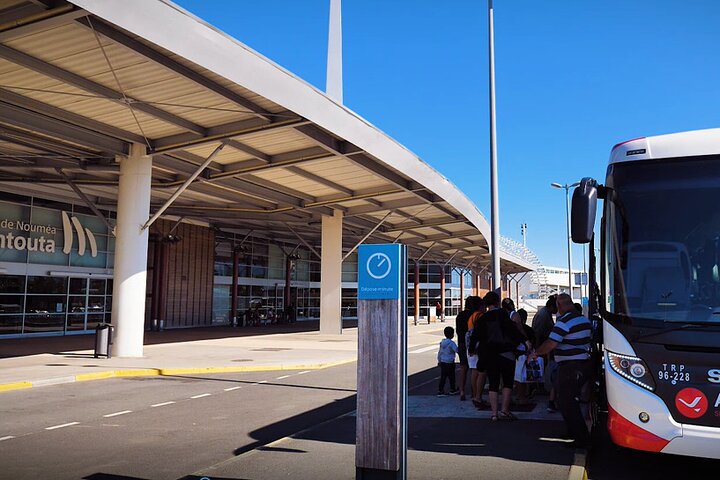
The Quartier Latin is cheaper, calmer and closer to the center, with a mix of self-catering studios and basic rooms. Cafés and bakeries are within a few minutes, and you can walk to Place des Cocotiers in about 10 minutes. It is quiet at night, which suits light sleepers. Buses to the beaches and airport shuttle stops are close.
Centre-Ville has a few budget options too, but it empties after dark and on Sundays, so it can feel dead. If you want a kitchen to cut food costs, look for studios with cooking facilities in either area.

🚌 Getting aroundMoving around without the hassle

The center around Place des Cocotiers and the port is flat and compact, easy on foot in 10 to 15 minutes between the main points. Walking stops making sense once you head to the southern beaches, Anse Vata and Baie des Citrons, about 5 to 7 km away, where midday sun and long climbs wear you down quickly. Traffic builds on the main roads at rush hour, and the city is built for cars, so plan your day around the bus timetable.
  • Walking: Free, and the best way to cover the center and harbor. Streets are shaded by banyans and flame trees, but the pavement radiates heat from 11am. Start early, carry water and take the shade side.
  • Tanéo buses: The city network covers the center, beaches and suburbs, with a single fare around 200 to 300 XPF (about US$2 to 3). Most lines run from around 5:30am to about
… read more 👉
The center around Place des Cocotiers and the port is flat and compact, easy on foot in 10 to 15 minutes between the main points. Walking stops making sense once you head to the southern beaches, Anse Vata and Baie des Citrons, about 5 to 7 km away, where midday sun and long climbs wear you down quickly. Traffic builds on the main roads at rush hour, and the city is built for cars, so plan your day around the bus timetable.
  • Walking: Free, and the best way to cover the center and harbor. Streets are shaded by banyans and flame trees, but the pavement radiates heat from 11am. Start early, carry water and take the shade side.
  • Tanéo buses: The city network covers the center, beaches and suburbs, with a single fare around 200 to 300 XPF (about US$2 to 3). Most lines run from around 5:30am to about 7 or 8pm, with fewer services on Sundays and holidays. Buy tickets onboard or get a pass at the main stops. Check the route maps, as lines are numbered and the ones to the beaches leave from the center.
  • Tiny Train and tourist shuttles: A small tourist train and open-air shuttles link the center to the beaches. They cost more than the bus (around 1,000 to 2,000 XPF, US$9 to 18) and mostly suit those short on time, so skip them if you can use the regular bus.
  • Taxis: Metered, with a start fee and rates that rise at night and on Sundays. A ride from the center to Anse Vata typically costs about 1,500 to 2,500 XPF (US$14 to 23). Phone dispatch is the reliable way to get one, since hailing in the street is rare. Splitting between three or four people makes it competitive.
  • Rental bike or car: A rental car costs from about 5,000 to 8,000 XPF a day (US$45 to 73) and is the practical option for the Grande Terre day trips, because intercity buses are sparse. Book ahead in July and December.

👛 Costs (as of 16 October 2026)How expensive it really is

Backpacking in Nouméa costs roughly €67 to 110 a day, and that is the price of a tight but comfortable trip in the Pacific’s most expensive corner for budget travelers. Everything is paid in the local currency, and the figures below are converted to euros.
CategoryBudget RangeLocal Reality
Dorm accommodation (high season)€28 to 38Beds are limited, so book ahead from June to October and around school holidays.
Dorm accommodation (off-season)€24 to 30Easier to find a bed on arrival, and some hostels discount stays of several nights.
Meals€20 to 32A baguette sandwich or market snack runs €5 to 9, a sit-down plat du jour €13 to 18, and a beer in a bar €4 to 6. Self-catering cuts this sharply.
Local transport€2 to 4Single rides on the Tanéo buses cost about €1.60, and most central sights are walkable.
… read more 👉
Backpacking in Nouméa costs roughly €67 to 110 a day, and that is the price of a tight but comfortable trip in the Pacific’s most expensive corner for budget travelers. Everything is paid in the local currency, and the figures below are converted to euros.
CategoryBudget RangeLocal Reality
Dorm accommodation (high season)€28 to 38Beds are limited, so book ahead from June to October and around school holidays.
Dorm accommodation (off-season)€24 to 30Easier to find a bed on arrival, and some hostels discount stays of several nights.
Meals€20 to 32A baguette sandwich or market snack runs €5 to 9, a sit-down plat du jour €13 to 18, and a beer in a bar €4 to 6. Self-catering cuts this sharply.
Local transport€2 to 4Single rides on the Tanéo buses cost about €1.60, and most central sights are walkable.
City transport pass€4 to 6A day or multi-ride Tanéo ticket pays off only if you ride to Anse Vata, Baie des Citrons and back in one day.
Basic activities and entry fees€8 to 20The aquarium and museums cost around €8 to 14, while a boat trip to an islet is €30 to 45. Beaches, the Latin Quarter and the waterfront walks are free.
Miscellaneous€5 to 10Covers coffee, a local SIM card, laundry and sunscreen, which is priced steeply on the island.
Total Daily Budget€67 to 110Based on a high-season dorm bed, with the lower end reached by self-catering and walking.
Shop at the daily morning markets and supermarkets for fruit, bread and cheese, and build picnic lunches for the beach. This alone can save €10 or more a day compared with eating out.
⚠️ Prices can change and everyone travels differently, so take this as a rough guide. Hope it helps you plan your adventure!

🚌 Day tripsEasy escapes and nearby places

Nouméa works well for day trips if you accept that public transport beyond the city is thin, so tours and a rental car do most of the work. Boat trips leave from the Anse Vata and Moselle marinas.
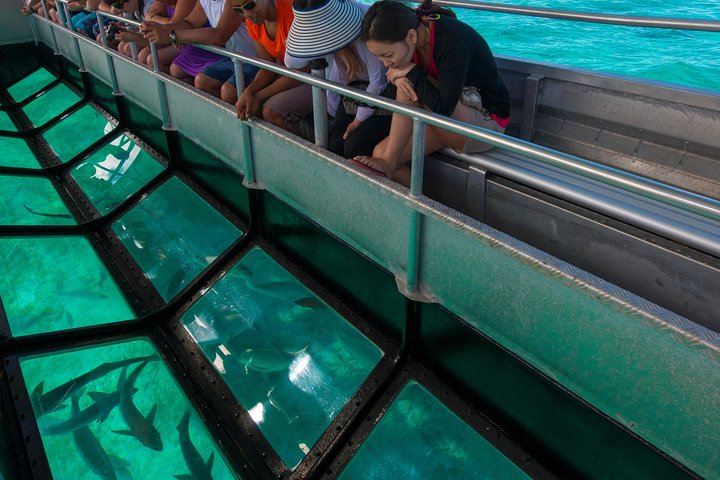
Île aux Canards and Îlot Maître: Short water-taxi hops of about 10 to 20 minutes from Anse Vata take you to tiny islets with white sand and fish-filled shallows. Expect roughly 2,500 to 4,500 XPF (US$23 to 41) return, plus snorkel gear rental. Go from September to March for calm, warm water, and bring your own sun protection because shade is limited.

Parc de la Rivière Bleue: About 45 to 60 minutes by car from Nouméa, this park holds giant kauri trees, a flooded forest and the chance to hear the endangered cagou. Entry is about 500 to 1,000 XPF (US$5 to 9). A common mistake is arriving without water … read more 👉
Nouméa works well for day trips if you accept that public transport beyond the city is thin, so tours and a rental car do most of the work. Boat trips leave from the Anse Vata and Moselle marinas.
Île aux Canards and Îlot Maître: Short water-taxi hops of about 10 to 20 minutes from Anse Vata take you to tiny islets with white sand and fish-filled shallows. Expect roughly 2,500 to 4,500 XPF (US$23 to 41) return, plus snorkel gear rental. Go from September to March for calm, warm water, and bring your own sun protection because shade is limited.

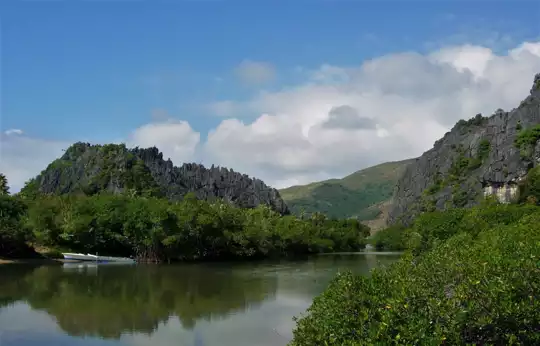
Parc de la Rivière Bleue: About 45 to 60 minutes by car from Nouméa, this park holds giant kauri trees, a flooded forest and the chance to hear the endangered cagou. Entry is about 500 to 1,000 XPF (US$5 to 9). A common mistake is arriving without water or repellent. Go early, in the cooler months of May to September, and expect to need a car or a booked shuttle.

Amédée Island: A catamaran takes roughly 45 to 60 minutes to reach the lighthouse island, with snorkeling among turtles and a lunch included in most packages. Costs are about 9,000 to 13,000 XPF (US$82 to 118), so it is a splurge but worth it for the clear lagoon. Book ahead in peak months, and go on a calm day between September and April.

La Foa and Farino: A drive of about 1.5 hours north along Route Territoriale 1 leads to a bridge by Gustave Eiffel’s firm and the village of Farino, with ranches and coffee. Fuel and a rental car split between travelers are the main costs. Leave early to beat the afternoon heat, and do not try to do it by bus.

🍲 FoodLocal Flavors for Backpackers

Nouméa mixes French technique with Pacific and Melanesian ingredients. Try bougna, a Kanak dish of yam, sweet potato, and chicken or fish cooked with coconut milk in an earth oven, often sold at weekend markets. Fresh lagoon fish and crab appear on menus, and deer (cerf) is a local meat, often served in sauce. Coconut bread and fruit from the market are cheap breakfasts.
For budget meals, head to the Marché Municipal at the port early in the morning, when the air smells of fresh bread, grilled fish and coffee. Snack bars (called snacks) serve sandwiches, burgers and steak frites for around 1,000 to 1,800 XPF (US$9 to 16). Boulangeries sell excellent baguettes and pastries, and supermarkets such as the ones near Anse Vata let you assemble picnics. Eating out is pricey, so lunch menus are the … read more 👉
Nouméa mixes French technique with Pacific and Melanesian ingredients. Try bougna, a Kanak dish of yam, sweet potato, and chicken or fish cooked with coconut milk in an earth oven, often sold at weekend markets. Fresh lagoon fish and crab appear on menus, and deer (cerf) is a local meat, often served in sauce. Coconut bread and fruit from the market are cheap breakfasts.
For budget meals, head to the Marché Municipal at the port early in the morning, when the air smells of fresh bread, grilled fish and coffee. Snack bars (called snacks) serve sandwiches, burgers and steak frites for around 1,000 to 1,800 XPF (US$9 to 16). Boulangeries sell excellent baguettes and pastries, and supermarkets such as the ones near Anse Vata let you assemble picnics. Eating out is pricey, so lunch menus are the smart option.
For drinks, local beer Number One is easy to find, and French wine is widely available though costly because of import taxes. Rum and café culture thrive, and an espresso is a daily ritual. Evenings gather around bars at Baie des Citrons, where tables fill after sunset.

🛡️ SafetyStaying Safe: What Travelers Should Know

Nouméa is a calm, safe city, and most trouble is petty. Opportunistic theft from parked cars and unattended beach bags is the main issue, so keep valuables out of sight at Anse Vata and Baie des Citrons, and do not leave anything in a rental car. The center is quiet after dark and on Sundays, with few people on the streets, so take a taxi rather than walking long, empty stretches late at night. Solo travelers, including women, generally report few problems, though groups of drunk people around some bars can be annoying on weekend nights. Tensions around politics have occasionally disrupted traffic and services, so check local news and your government’s advice before arriving and avoid demonstrations. The sun is a bigger daily risk than crime: UV is strong, so use reef-safe sunscreen. Swim … read more 👉
Nouméa is a calm, safe city, and most trouble is petty. Opportunistic theft from parked cars and unattended beach bags is the main issue, so keep valuables out of sight at Anse Vata and Baie des Citrons, and do not leave anything in a rental car. The center is quiet after dark and on Sundays, with few people on the streets, so take a taxi rather than walking long, empty stretches late at night. Solo travelers, including women, generally report few problems, though groups of drunk people around some bars can be annoying on weekend nights. Tensions around politics have occasionally disrupted traffic and services, so check local news and your government’s advice before arriving and avoid demonstrations. The sun is a bigger daily risk than crime: UV is strong, so use reef-safe sunscreen. Swim in marked areas, and treat jellyfish and sea snakes with respect.

FAQTraveler FAQ

Three to four days covers Nouméa well. Spend one day on the center, market and museums, one at Anse Vata and the nearby islets, and one or two on trips such as Amédée Island (about US$82 to 118) or Rivière Bleue (about 45 to 60 minutes by car).
Yes, Nouméa is safe for solo backpackers, and violent crime against visitors is rare. The usual issue is theft from cars and beach bags, so lock valuables away. Take a taxi (about US$14 to 23 from the center to Anse Vata) after dark, since the center empties at night.
Nouméa is known for its lagoon, one of the largest in the world and a UNESCO World Heritage site, plus a French-influenced café culture. It is also famous for the Tjibaou Cultural Centre, which celebrates Kanak heritage, and beaches at Anse Vata. Boat trips to Amédée Island and the nearby islets are a main draw, typically costing US$23 to 118.
⚠️ Things can change over time, so always validate details locally before you go.

Ideas for continuing your journey

Nouméa isn’t the only highlight in New Caledonia. Explore all what New Caledonia has to offer.
Country photo of New Caledonia

We 💚 feedbackKey takeaways before you go

Nouméa will suit you most if you love French bakeries, snorkeling and learning about Kanak culture, and are happy with a quiet evening. It’s less rewarding for party seekers. I’d buy bread, cheese and fruit at the market and eat them on the beach, and bring water shoes for the rocky shallows.

✍️ Help improve this page!
The information on this page is based on in-depth research, insights shared by experienced travelers, and feedback from the local travel community in New Caledonia. While every effort is made to keep the information accurate and current, conditions can change — so if you spot anything incorrect or outdated, please get in touch.


🙋‍♂️ Give feedback

👋 Meet the founderWho’s Behind Take Your Backpack?

Johan, backpacker and founder of TakeYourBackpackHi, I’m Johan (Netherlands 🇳🇱), the creator of TakeYourBackpack. Over the past 3 decades, I’ve backpacked through 90+ countries across six continents, gaining extensive experience with independent travel, long-term trips, and overland routes.

This site is built on a combination of firsthand travel experience and carefully curated insights from other backpackers. Many guides are based on places I’ve personally visited, while others bring together tips, observations, and practical advice shared by trusted travelers I’ve met along the way.

The goal is to provide realistic, experience-driven guidance — not generic itineraries — so you can explore destinations with better context, clearer expectations, and more confidence.