×

New Caledonia🇳🇨 | festivalsTjibaou Cultural Center FestivalGreat Huts, Kanak Path, Tina Peninsula, mangrove edge | things to do and best time to go

Explore Carnaval de NouméaExplore Domaine de Deva

Backpacking in Tjibaou Cultural Center
By Johan Kruseman 🇳🇱 | Updated October 15, 2026

The Tjibaou Cultural Center is not a festival ground you can wander into on a whim: it sits on a forested peninsula, and most of its programming is tied to its own calendar of dance, music and art events rather than a single fixed festival. That surprises first-timers who arrive expecting a fenced field with tents. The center lies on Tina Peninsula, a short drive northeast of Nouméa in New Caledonia, beside a mangrove-edged bay. Renzo Piano’s curved wooden “cases” rise like giant hulls, creaking and whistling in the trade wind, with the smell of damp bush and salt around them. Expect Kanak dance, contemporary Pacific music, storytelling and exhibitions, drawing locals, families, artists and curious travelers rather than a party crowd. The mood is calm, proud and warm. Check the center’s current program before you book anything, because dates and formats change.

Discover everything you want to know in the 📖 New Caledonia Travel Guide.


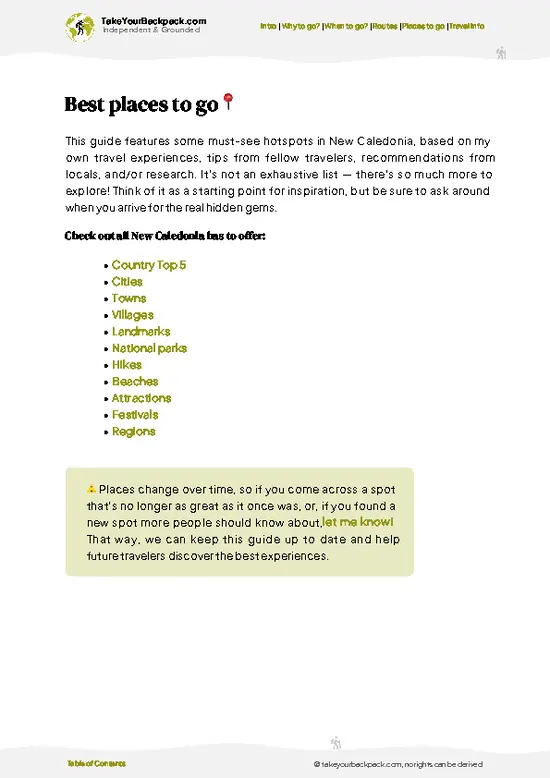
example page 0 from our offline Travel Guide for New Caledonia
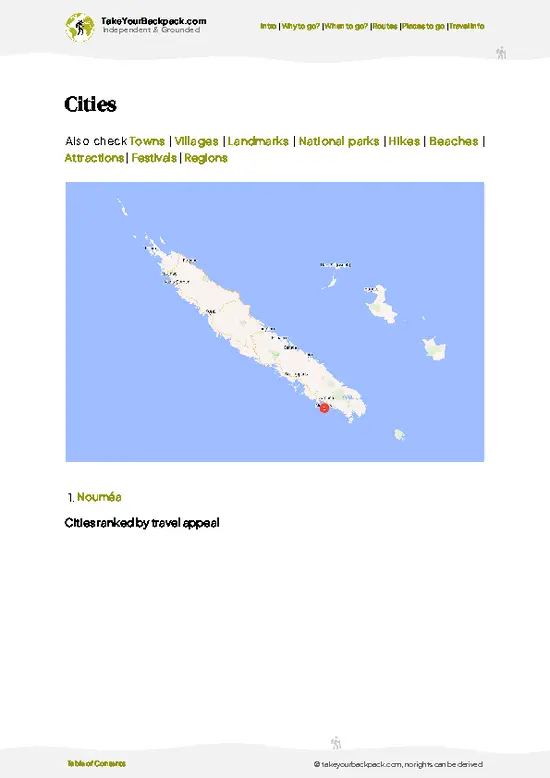
example page 1 from our offline Travel Guide for New Caledonia
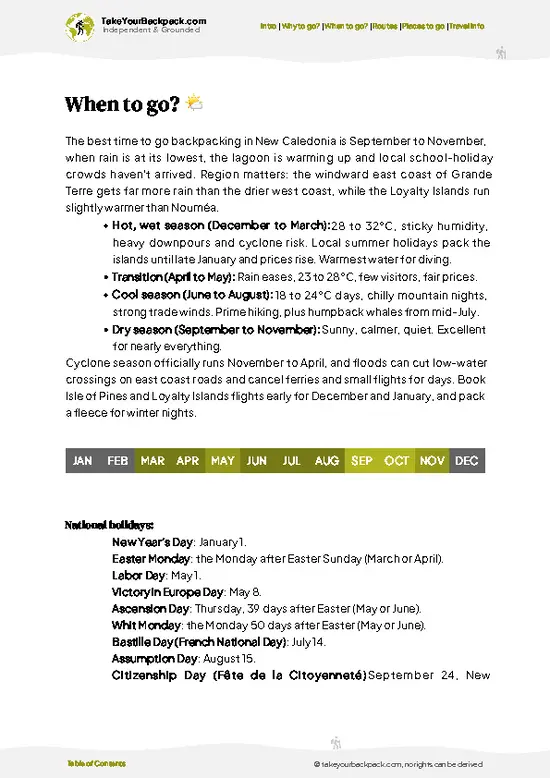
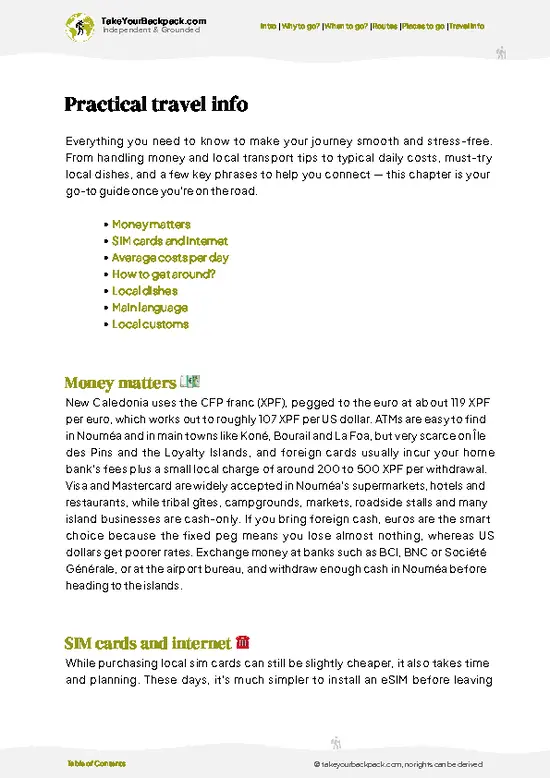
example page 2 from our offline Travel Guide for New Caledonia
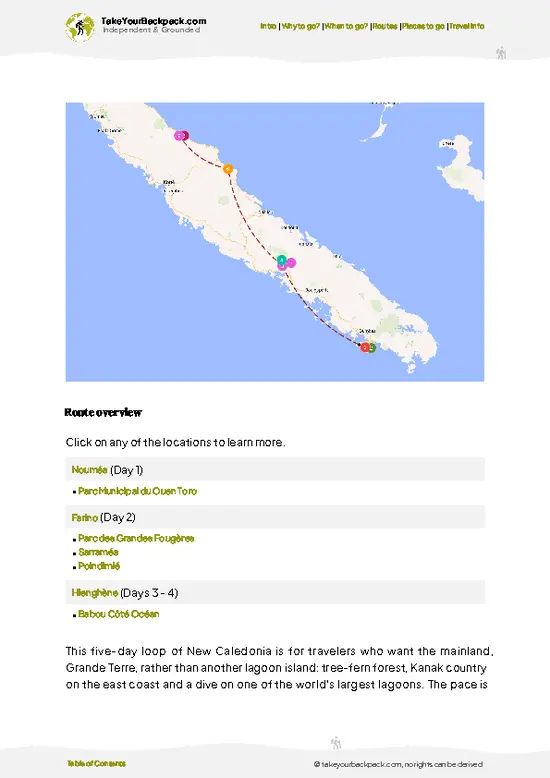
example page 3 from our offline Travel Guide for New Caledonia
example page 4 from our offline Travel Guide for New Caledonia
example page 5 from our offline Travel Guide for New Caledonia
example page 6 from our offline Travel Guide for New Caledonia
example page 7 from our offline Travel Guide for New Caledonia
Loading the map 🌍
CLICK TO FILTER
cities
towns
villages
landmarks
national parks
hikes
beaches
attractions
festivals
regions
SHOW COUNTRY’S BESTSHOW ALL

✨ Why go?
Ranked #99 festival in New Caledonia
What makes it a must-see festival

Backpackers build a route around this because it is one of the few places in the Pacific where Kanak culture is presented by Kanak people on their own terms. Instead of a staged hotel show, you get dancers, carvers and musicians who explain what the songs and gestures mean, and you leave understanding the island far better than a beach week would give you.

It also suits a tight budget. Entry costs far less than a big music festival ticket, and you do not need to camp, rent gear or plan around a remote site. Most of the day is spent walking the Kanak Path, a trail through gardens planted with species used in custom ceremonies, so you learn plenty even between performances.

There is a social side too. Strangers share benches, swap questions with performers and end up chatting over a drink … read more 👉
Backpackers build a route around this because it is one of the few places in the Pacific where Kanak culture is presented by Kanak people on their own terms. Instead of a staged hotel show, you get dancers, carvers and musicians who explain what the songs and gestures mean, and you leave understanding the island far better than a beach week would give you.

It also suits a tight budget. Entry costs far less than a big music festival ticket, and you do not need to camp, rent gear or plan around a remote site. Most of the day is spent walking the Kanak Path, a trail through gardens planted with species used in custom ceremonies, so you learn plenty even between performances.

There is a social side too. Strangers share benches, swap questions with performers and end up chatting over a drink at the café. It fits easily into a longer New Caledonia trip as the cultural anchor before you head north or out to the islands.

💡 HighlightsThe experiences that define the visit

  1. The Great Huts (Cases): Ten tall, ribbed structures of iroko timber and steel, inspired by traditional Kanak chief’s houses. Wind moves through the slats and produces a low hum. They are the image most people come for.
  2. The Kanak Path: A walk through landscaped gardens where each area represents a stage of Kanak life and myth. Plants are labeled, and the trail ends near the mangroves.
  3. Live dance and music performances: Kanak dance groups and Pacific musicians perform on the grounds during events. Costumes, chants and drumming are the closest thing to the festival atmosphere.
  4. The exhibition galleries: Rotating shows of Kanak and Oceanic art, with carved door posts, masks and contemporary works from Pacific artists. The cool interior is a welcome break from midday heat.
  5. The mangrove and bay edge:
… read more 👉
  1. The Great Huts (Cases): Ten tall, ribbed structures of iroko timber and steel, inspired by traditional Kanak chief’s houses. Wind moves through the slats and produces a low hum. They are the image most people come for.
  2. The Kanak Path: A walk through landscaped gardens where each area represents a stage of Kanak life and myth. Plants are labeled, and the trail ends near the mangroves.
  3. Live dance and music performances: Kanak dance groups and Pacific musicians perform on the grounds during events. Costumes, chants and drumming are the closest thing to the festival atmosphere.
  4. The exhibition galleries: Rotating shows of Kanak and Oceanic art, with carved door posts, masks and contemporary works from Pacific artists. The cool interior is a welcome break from midday heat.
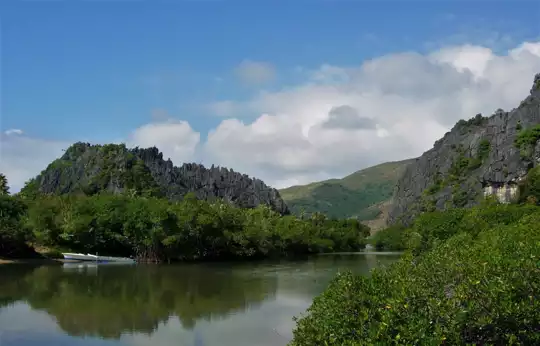
  5. The mangrove and bay edge: The grounds meet the shoreline, where you can watch light shift on the water at the end of the day. It is quiet, shaded and good for slowing down.
Start with the Kanak Path in the morning, while the air is cooler, since it gives you the context that makes the huts and performances make sense.
Spotted a mistake or missing something? Contact us.

Things to do near Tjibaou Cultural Center Festival

Ratings based on Tripadvisor reviews. When you book through this link, you support our work at no extra cost to you.

🌤️ When to go?When is the celebration of Tjibaou Cultural Center Festival?

The Tjibaou Cultural Center in Nouméa (Tina Peninsula, about 10 km northeast of the center) hosts its main Kanak arts events around late October to early November, with dates that shift each year and programs running from a single weekend to several days.
  • Best day: Go on the main performance day, when dance troupes, storytelling and contemporary music share the grounds among the tall shell-shaped huts. Weekdays are calmer for the galleries.
  • Weather: Expect 22 to 28°C (72 to 82°F), warm sun, humidity and the odd shower. Bring a hat, sunscreen, a light rain shell and water. Sunset falls around 6 pm.
  • Booking: Reserve a bed one to two months ahead, as Nouméa has few budget rooms. Prices can rise 10 to 20 percent on peak nights.
  • Getting there: Roads to Tina clog just before evening shows. Arrive an
… read more 👉
The Tjibaou Cultural Center in Nouméa (Tina Peninsula, about 10 km northeast of the center) hosts its main Kanak arts events around late October to early November, with dates that shift each year and programs running from a single weekend to several days.
  • Best day: Go on the main performance day, when dance troupes, storytelling and contemporary music share the grounds among the tall shell-shaped huts. Weekdays are calmer for the galleries.
  • Weather: Expect 22 to 28°C (72 to 82°F), warm sun, humidity and the odd shower. Bring a hat, sunscreen, a light rain shell and water. Sunset falls around 6 pm.
  • Booking: Reserve a bed one to two months ahead, as Nouméa has few budget rooms. Prices can rise 10 to 20 percent on peak nights.
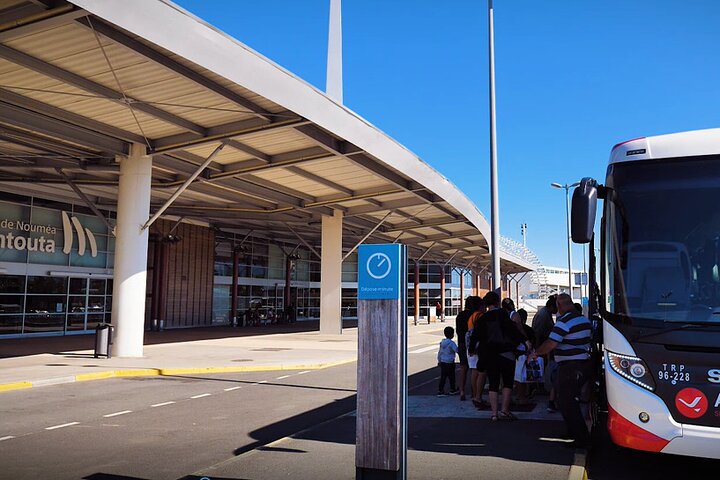
  • Getting there: Roads to Tina clog just before evening shows. Arrive an hour early and leave after the first rush, or share a taxi back to the center.
Check the center’s program a few weeks out, since the exact schedule is confirmed late.


source: climatestotravel.comJANJanuary: not recommended for travelingFEBFebruary: not recommended for travelingMARMarch: not recommended for travelingAPRApril: not recommended for travelingMAYMay: excellent for travelingJUNJune: not recommended for travelingJULJuly: not recommended for travelingAUGAugust: not recommended for travelingSEPSeptember: not recommended for travelingOCTOctober: not recommended for travelingNOVNovember: not recommended for travelingDECDecember: not recommended for traveling

✈️ The backpacker research shortcutNew Caledonia Travel Guide

An offline-friendly backpacking guide with optimized travel routes, ranked highlights, transport advice, and the best areas to stay.
example page 0 from our offline Travel Guide for New Caledonia
example page 1 from our offline Travel Guide for New Caledonia
example page 2 from our offline Travel Guide for New Caledonia
example page 3 from our offline Travel Guide for New Caledonia
example page 4 from our offline Travel Guide for New Caledonia
example page 5 from our offline Travel Guide for New Caledonia
example page 6 from our offline Travel Guide for New Caledonia
example page 7 from our offline Travel Guide for New Caledonia
The digital guide (158 pages) contains:
✅ 42 highlights, ranked by travel appeal
✅ Optimized 2, 3 & 5-day travel routes
✅ Cities, national parks, landmarks, beaches
✅ How to get around
✅ Offline-friendly for travel without Wi-Fi
👉 Click to see all 30+ guide features

📅 Plan smarter in minutes, not weeks
✅ Month by month travel advice
✅ Festivals & national holidays
✅ Budget expectations

🗺️ Go to the right places, skip the overrated ones
✅ Honest pros & cons of destinations
✅ Top hikes, parks & viewpoints
✅ Lesser-known places most travelers miss
✅ Clear “worth it vs skip it” guidance

🛏️ Travel smoothly without rookie mistakes
✅ Best areas to stay
✅ Transport systems explained simply
✅ Common scams & safety advice
✅ SIM cards, money & practical tips

🌍 Understand the country, not just visit it
✅ Culture & traditions
✅ 52 Essential phrases & customs
✅ Festivals worth planning around
✅ Traveler-friendly historical context
✅ Insights that make places more meaningful

📱 Built for real travel conditions
✅ Fully downloadable PDF
✅ Works completely offline
✅ Optimized for phone use
✅ Useful in remote areas & buses
✅ Everything in one place
Stop searching, start planning
Get instant access to your full guide. 30‑day money-back guarantee.
+ Add another guide for just

By proceeding you agree to our terms.
Sent to your inbox immediately after payment • 100% Secure Checkout
Best Backpacking Travel Advisor 2025 tourism awardBest Backpacking
Travel Advisor
2025
What others say about Take Your Backpack Guides:
⭐⭐⭐⭐⭐
Fantastic, amazing amount of information!
⭐⭐⭐⭐⭐
My goodness this is amazing, it's what I've been looking for hats off too you!
⭐⭐⭐⭐⭐
I think this is absolutely BRILLIANT
⭐⭐⭐⭐
Very complete and informative. It's still missing places, but I gotta to commend you
⭐⭐⭐⭐⭐
This is truly amazing, thank you, can't wait to explore it with my kids!
⭐⭐⭐⭐⭐
Awesome resource, thank you!
⭐⭐⭐⭐⭐
This is amazing! Can't wait to explore the ones I haven't seen
⭐⭐⭐⭐
I love this! Well done, great idea.
⭐⭐⭐⭐⭐
Thanks for taking the time to make this gem!
⭐⭐⭐⭐⭐
This might be the best website I've ever seen.
⭐⭐⭐⭐⭐
Congratulations, and thank you so much for your work; it's incredibly valuable.
⭐⭐⭐⭐
In all seriousness I think you did a great job pointing out the important spots
⭐⭐⭐⭐⭐
10/10 very good
⭐⭐⭐⭐⭐
As someone who's only just starting to visit regularly this is awesome, thank you.
⭐⭐⭐⭐
Thank you very much! I'm going to visit my dad, it's going to be very useful!
⭐⭐⭐⭐⭐
This is really cool! We'll be travelling for the first time and this definitely come in handy.
⭐⭐⭐⭐⭐
You are now our minister of culture, congratulations 👨‍💼
⭐⭐⭐⭐⭐
Just wanted to tell you that this is a pearl! Going to follow your recommendations.
⭐⭐⭐⭐⭐
This is so cool. I'll definitely be using the resource for my travels soon.
⭐⭐⭐⭐⭐
This is very impressive! Good work.
⭐⭐⭐⭐⭐
This is an amazing and informative site. Very well done!

🛏️ Where to stay?Best areas to stay in New Caledonia

The Anse Vata and Baie des Citrons strip is the best base for backpackers, with the most social energy and the easiest bus and taxi links to the Tina Peninsula, about 20 to 30 minutes away depending on traffic. Evenings here are busy with beachside walkers and cafe terraces, and solo travelers rarely feel isolated. The area is well lit and generally safe after dark.
Central Nouméa, around Place des Cocotiers and the marina, is the cheaper alternative. You get markets, bakeries and a good choice of low-cost rooms and shared dorms, plus the main bus hub, so you can reach the festival without a car. … read more 👉
The Anse Vata and Baie des Citrons strip is the best base for backpackers, with the most social energy and the easiest bus and taxi links to the Tina Peninsula, about 20 to 30 minutes away depending on traffic. Evenings here are busy with beachside walkers and cafe terraces, and solo travelers rarely feel isolated. The area is well lit and generally safe after dark.
Central Nouméa, around Place des Cocotiers and the marina, is the cheaper alternative. You get markets, bakeries and a good choice of low-cost rooms and shared dorms, plus the main bus hub, so you can reach the festival without a car. It is quieter at night, so stick to the main streets after late shows and book a taxi for the return.
The Quartier Latin and Orphelinat Bay, between the center and the beaches, suit travelers who want a calmer residential feel and short rides to both. Staying near Tina itself is possible, but options are limited and dining is sparse. Book early, as rooms in all these areas fill when events overlap with school holidays or cruise ship days.

👛 Costs (as of 15 October 2026)Typical daily expenses

A realistic budget for a day at the festival is about US$85 to 200 including a bed in Nouméa at high-season rates.
CategoryBudget RangeLocal Reality
Festival ticketsUS$0 to 25Grounds and some shows are low-cost or free, while major evening performances are ticketed at around 2,000 to 3,000 CFP. Gallery entry is a few dollars extra.
AccommodationUS$50 to 90Dorms and basic private rooms in Nouméa are the cheapest options, and prices climb during festival weeks.
Local transportUS$5 to 30Tanéo buses cost about US$2 per ride, while a taxi to Tina from the center runs around US$15 to 25 each way.
Food & drinksUS$25 to 40Festival stalls and bakery lunches cost US$8 to 15 per meal, and a beer is US$4 to 6.
MiscellaneousUS$5 to 15Water, sunscreen, craft souvenirs and small tips for performers or stallholders.
… read more 👉
A realistic budget for a day at the festival is about US$85 to 200 including a bed in Nouméa at high-season rates.
CategoryBudget RangeLocal Reality
Festival ticketsUS$0 to 25Grounds and some shows are low-cost or free, while major evening performances are ticketed at around 2,000 to 3,000 CFP. Gallery entry is a few dollars extra.
AccommodationUS$50 to 90Dorms and basic private rooms in Nouméa are the cheapest options, and prices climb during festival weeks.
Local transportUS$5 to 30Tanéo buses cost about US$2 per ride, while a taxi to Tina from the center runs around US$15 to 25 each way.
Food & drinksUS$25 to 40Festival stalls and bakery lunches cost US$8 to 15 per meal, and a beer is US$4 to 6.
MiscellaneousUS$5 to 15Water, sunscreen, craft souvenirs and small tips for performers or stallholders.
Total Daily BudgetUS$85 to 200The total depends mostly on how many ticketed shows you attend.
⚠️ Prices can change and everyone travels differently, so take this as a rough guide. Hope it helps you plan your adventure!

🍲 FoodLocal Cuisine & Drinks

Expect a mix of Kanak and French-Pacific flavors, with bougna as the dish to chase. It is yam, sweet potato, taro and chicken or fish slow-cooked in coconut milk inside banana leaves, and festival stalls sometimes sell portions when cooked in an earth oven. Pair it with grilled fish, coconut crab when available, and fresh tropical fruit.
Snack stalls handle the rest: grilled sausages, sandwiches, crepes and the occasional bag of fried banana. Drinks run to cold beer (Number One is the local lager), fruit juices and coconut water, plus coffee that leans French.
For the most authentic bite, look for community groups cooking on site rather than generic food trucks. Lines move slowly, because dishes are prepared in batches, so go early for the best choice. Portions of bougna are filling and easy … read more 👉
Expect a mix of Kanak and French-Pacific flavors, with bougna as the dish to chase. It is yam, sweet potato, taro and chicken or fish slow-cooked in coconut milk inside banana leaves, and festival stalls sometimes sell portions when cooked in an earth oven. Pair it with grilled fish, coconut crab when available, and fresh tropical fruit.
Snack stalls handle the rest: grilled sausages, sandwiches, crepes and the occasional bag of fried banana. Drinks run to cold beer (Number One is the local lager), fruit juices and coconut water, plus coffee that leans French.
For the most authentic bite, look for community groups cooking on site rather than generic food trucks. Lines move slowly, because dishes are prepared in batches, so go early for the best choice. Portions of bougna are filling and easy to share between two.
Bring cash in Pacific francs (CFP), since small vendors often prefer it, and have small notes ready. Carry a water bottle, as the sun is strong on the open grounds. Eating near the Tina lagoon trees makes a pleasant pause between performances.

FAQTraveler FAQ

The main Kanak arts festival at the Tjibaou Cultural Center is usually held in late October or early November, and the exact dates change each year. Programs can last from a weekend to several days. It takes place at Tina Peninsula, about 10 km from central Nouméa, with the evening shows drawing the biggest crowds.
Entry to the grounds is low-cost or free for many events, while major evening performances typically cost around 2,000 to 3,000 CFP (US$18 to 28). Add US$50 to 90 a night for a Nouméa bed and about US$25 to 40 daily for food. A taxi to Tina costs about US$15 to 25 each way.
For daytime visits and open-air events, you can usually buy tickets at the door. Ticketed evening performances sell out sooner, so book online or at the center one to two weeks ahead. Beds in Nouméa should be reserved a month or two before, and arriving an hour early helps with parking and seating.
⚠️ Things can change over time, so always validate details locally before you go.

Other New Caledonian festivals near Tjibaou Cultural Center

Explore more nearby:

  • Carnaval de Nouméa—Nouméa parade, handmade costumes, Place des Cocotiers, face paint| 1 km away
  • Foire de Bourail—Téné racecourse rodeo, cattle judging, horse events, barbecue stalls, mid-August weekend| 122 km away
  • Loyalty Islands Festival—Drehu song and dance, bougna earth oven, Lifou, Wé| 167 km away

💡 Not sure where to go next?
Create a personalized itinerary for New Caledonia including Tjibaou Cultural Center and the places that fit your trip.

Generate my itinerary

👉 Discover all festivals

Or checkout all New Caledonia has to offer (think cities, towns, villages, national parks, hikes, beaches, festivals)
Country photo of New Caledonia

We 💚 feedbackKey takeaways before you go

Pair it with a day in Nouméa’s markets and a swim at the bays south of town, then push on north along the west coast for the bush and villages the center only hints at. I would go on a performance day and arrive early, so you can walk the grounds before the crowds and the heat build.

✍️ Help improve this page!
The information on this page is based on in-depth research, insights shared by experienced travelers, and feedback from the local travel community in New Caledonia. While every effort is made to keep the information accurate and current, conditions can change — so if you spot anything incorrect or outdated, please get in touch.


🙋‍♂️ Give feedback

👋 Meet the founderWho’s Behind Take Your Backpack?

Johan, backpacker and founder of TakeYourBackpackHi, I’m Johan (Netherlands 🇳🇱), the creator of TakeYourBackpack. Over the past 3 decades, I’ve backpacked through 90+ countries across six continents, gaining extensive experience with independent travel, long-term trips, and overland routes.

This site is built on a combination of firsthand travel experience and carefully curated insights from other backpackers. Many guides are based on places I’ve personally visited, while others bring together tips, observations, and practical advice shared by trusted travelers I’ve met along the way.

The goal is to provide realistic, experience-driven guidance — not generic itineraries — so you can explore destinations with better context, clearer expectations, and more confidence.