×

New Zealand🇳🇿 | townsWānakaLone willow, Roys Peak ridge, sofa cinema | things to do and best time to go

Explore TaupōExplore Nelson

Backpacking in Wānaka
🏆 Top picktown ranked #2
By Johan Kruseman 🇳🇱 | Updated October 16, 2026

The decision that shapes a Wānaka stay is whether you give it two nights as a pass-through or four or five days, and the weather and your appetite for hiking tip it: one clear day is easy to fill, a run of them is not. Wānaka sits on the southern shore of Lake Wānaka in the Otago region of New Zealand’s South Island. The town itself is small. A lakefront walk, a quirky cinema and a few good cafés are worth your time, while the souvenir strip adds little. The real value is the trailheads, ski fields and national park behind it. Hostels are modest in size, evenings are slow, and you meet people over trail talk rather than at bars. I start with the lakefront stroll before breakfast, when the water is flat and the shore is empty. Unlike Queenstown, Wānaka has no bungy-and-nightclub circuit, so you sleep better and hike more.

Discover everything you want to know in the 📖 New Zealand Travel Guide.


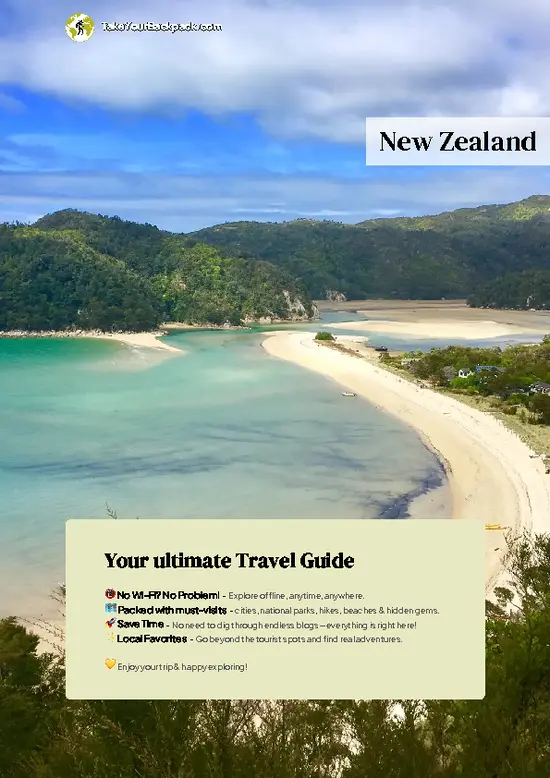
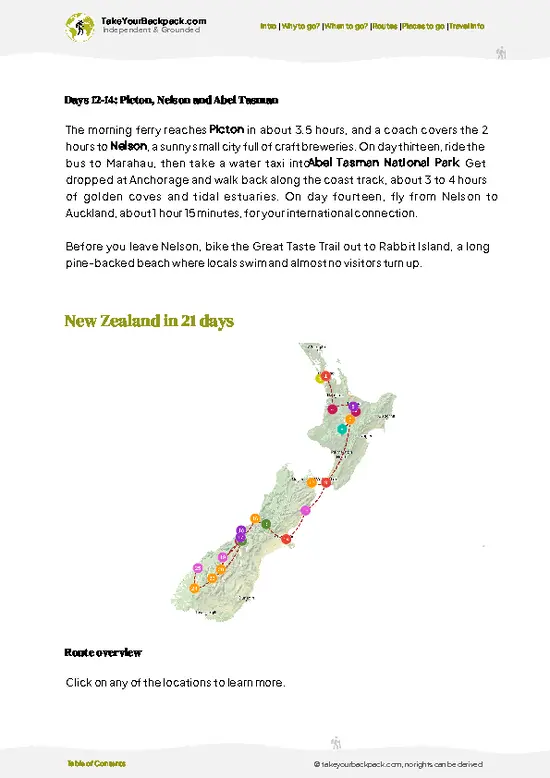
example page 0 from our offline Travel Guide for New Zealand
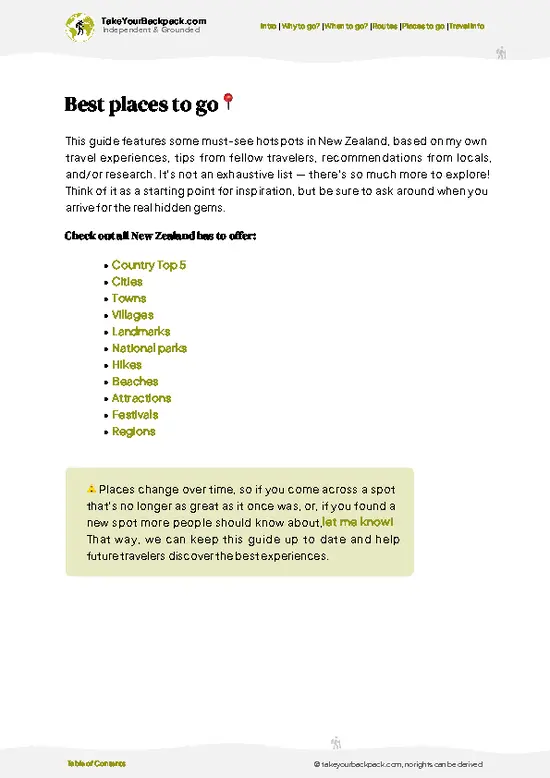
example page 1 from our offline Travel Guide for New Zealand
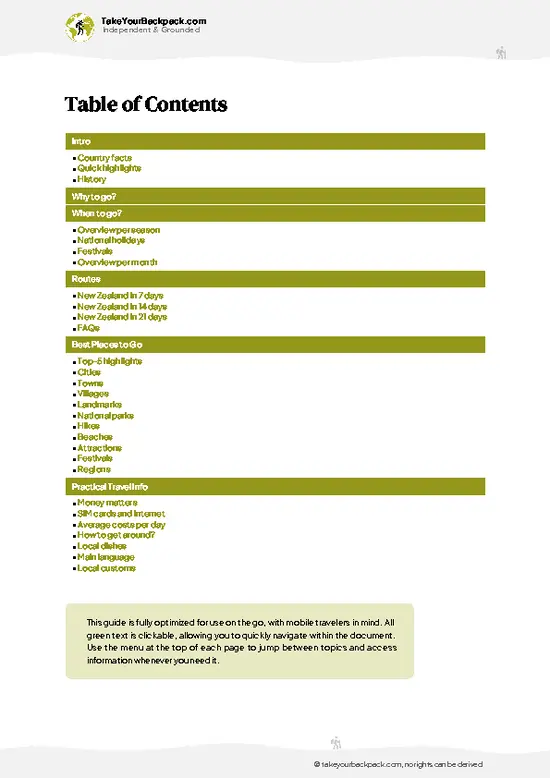
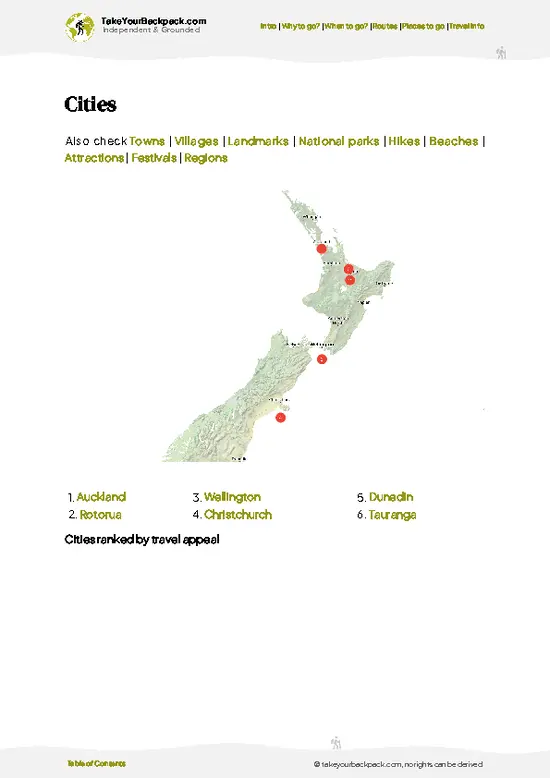
example page 2 from our offline Travel Guide for New Zealand
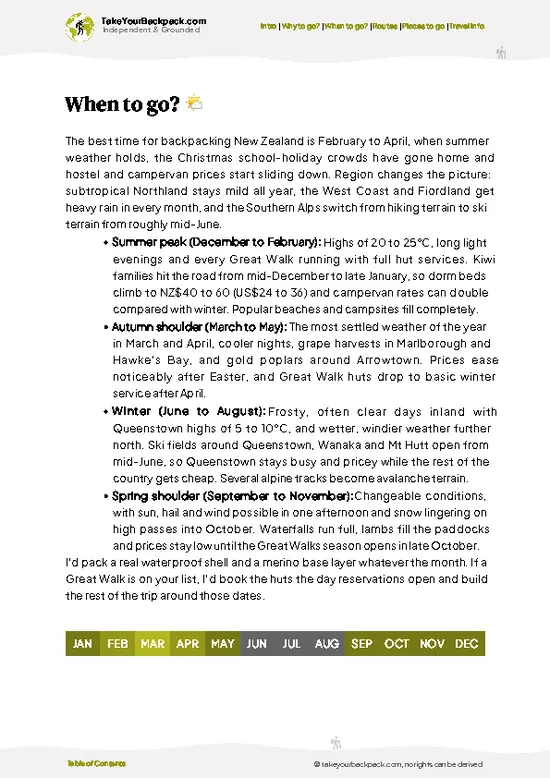
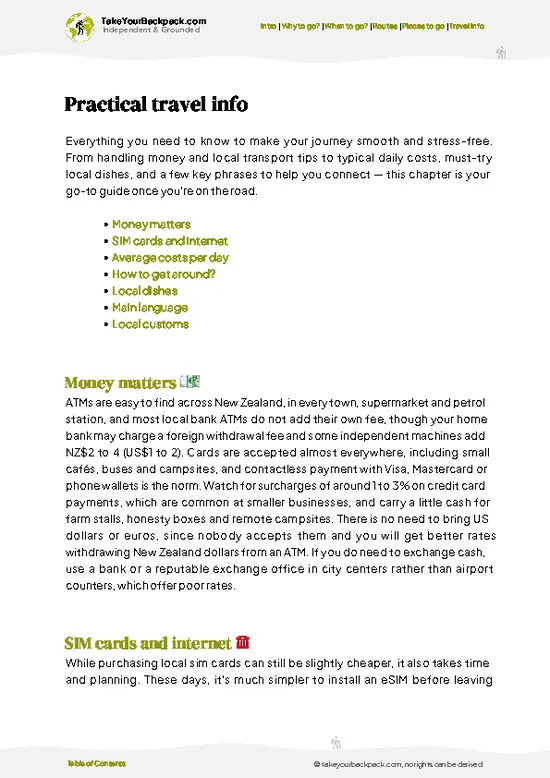
example page 3 from our offline Travel Guide for New Zealand
example page 4 from our offline Travel Guide for New Zealand
example page 5 from our offline Travel Guide for New Zealand
example page 6 from our offline Travel Guide for New Zealand
example page 7 from our offline Travel Guide for New Zealand
Loading the map 🌍
CLICK TO FILTER
cities
towns
villages
landmarks
national parks
hikes
beaches
attractions
festivals
regions
SHOW COUNTRY’S BESTSHOW ALL

✨ Why go?
Ranked #2 town in New Zealand
What sets this place apart

Wānaka works because it puts Roys Peak, Mount Iron and the Mount Aspiring National Park approaches within easy reach of a walkable lakeside town. You can hike hard in the morning, eat well in the afternoon and still be in bed at a sensible hour. Most travelers come for two nights and end up staying four, because the good days stack up: one for a big ridge climb, one for a river valley or glacier walk, one for doing very little beside the lake. The social side is relaxed. Hostels are small, shared kitchens fill with hikers comparing weather windows, and the Cinema Paradiso evening is a natural group plan. That makes it a strong fit for solo walkers, slow travelers and small groups who want company without a party. If you need nightlife, big-ticket adrenaline or a lot of urban sightseeing, a … read more 👉
Wānaka works because it puts Roys Peak, Mount Iron and the Mount Aspiring National Park approaches within easy reach of a walkable lakeside town. You can hike hard in the morning, eat well in the afternoon and still be in bed at a sensible hour. Most travelers come for two nights and end up staying four, because the good days stack up: one for a big ridge climb, one for a river valley or glacier walk, one for doing very little beside the lake. The social side is relaxed. Hostels are small, shared kitchens fill with hikers comparing weather windows, and the Cinema Paradiso evening is a natural group plan. That makes it a strong fit for solo walkers, slow travelers and small groups who want company without a party. If you need nightlife, big-ticket adrenaline or a lot of urban sightseeing, a short stop is plenty. If you like early starts, big views and a town that rewards loitering, it deserves more time than most itineraries give it.

💡 HighlightsPlaces and moments you shouldn't skip

  1. That Wānaka Tree: A lone willow standing in the lake just west of the town center, and the most photographed tree in the country. Go at sunrise or dusk, when the light is soft and the crowds are thin. Free, 20 to 30 minutes, and the lakefront path to it is flat.
  2. Roys Peak Track: A steep zigzag climb to a ridge with a sweeping view over the lake and Mount Aspiring. Start early in clear weather. Free, about 16 km return, 5 to 6 hours. The track closes each year for lambing from 1 October to 10 November.
  3. Mount Iron Track: A 548 m hill right beside town with a loop that ends in a view of the lake, the Clutha valley and the Southern Alps. Good for a late afternoon or a poor-weather morning. Free, 1 to 1.5 hours.
  4. Puzzling World: A maze, a tilted room and illusion rooms built for fun on the edge of
… read more 👉
  1. That Wānaka Tree: A lone willow standing in the lake just west of the town center, and the most photographed tree in the country. Go at sunrise or dusk, when the light is soft and the crowds are thin. Free, 20 to 30 minutes, and the lakefront path to it is flat.
  2. Roys Peak Track: A steep zigzag climb to a ridge with a sweeping view over the lake and Mount Aspiring. Start early in clear weather. Free, about 16 km return, 5 to 6 hours. The track closes each year for lambing from 1 October to 10 November.
  3. Mount Iron Track: A 548 m hill right beside town with a loop that ends in a view of the lake, the Clutha valley and the Southern Alps. Good for a late afternoon or a poor-weather morning. Free, 1 to 1.5 hours.
  4. Puzzling World: A maze, a tilted room and illusion rooms built for fun on the edge of town. Best on a rainy day. Entry roughly NZ$20 to 30 depending on what you add, 1.5 to 2 hours.
  5. Cinema Paradiso: An independent cinema with sofas and old car seats in the auditorium, and fresh cookies served at the interval. Check the evening screening times. Tickets about NZ$18 to 22, 2 to 3 hours.
Day trips worth planning include Rob Roy Glacier in Mount Aspiring National Park, the Blue Pools near Makarora, the Cardrona valley and Arrowtown. If time is short, skip Puzzling World and put the hours into a hike.
Spotted a mistake or missing something? Contact us.

Things to do around Wānaka

Ratings based on Tripadvisor reviews. When you book through this link, you support our work at no extra cost to you.

🏘️ NeighborhoodsUnderstanding the local layout

Wānaka is small enough that the whole town center fits in a 15 minute stroll, so the real decision is where to spend your hours, and the lakefront wins.
  • Lakefront and Town Center: Ardmore Street runs straight to the water, and nearly every cafe, bakery, bar, outdoor shop and supermarket sits within a few blocks. Spend your time here. Sunset on the shore, with the lone willow tree standing in the shallows, is free and better than most paid activities. Fully walkable.
  • Pembroke Park and Eely Point: A grassy stretch of lake edge just east of the center, with swimming spots, picnic tables and a calm, local feel. Worth an easy hour or two on a warm afternoon, and it works because the crowds thin out away from the main street.
  • Wānaka Station Park and Lakeside Track: A flat shoreline path leads west,
… read more 👉
Wānaka is small enough that the whole town center fits in a 15 minute stroll, so the real decision is where to spend your hours, and the lakefront wins.
  • Lakefront and Town Center: Ardmore Street runs straight to the water, and nearly every cafe, bakery, bar, outdoor shop and supermarket sits within a few blocks. Spend your time here. Sunset on the shore, with the lone willow tree standing in the shallows, is free and better than most paid activities. Fully walkable.
  • Pembroke Park and Eely Point: A grassy stretch of lake edge just east of the center, with swimming spots, picnic tables and a calm, local feel. Worth an easy hour or two on a warm afternoon, and it works because the crowds thin out away from the main street.
  • Wānaka Station Park and Lakeside Track: A flat shoreline path leads west, good for walking or biking when you want views without effort. Skip it in strong wind, since the open shore has no shelter.
  • Albert Town: A small riverside village about 6 km east where the Clutha meets the Hawea. Fine for a riverside walk, but there is little to eat, so it is not worth a dedicated trip.
  • Wānaka Airport and Cinema Area: Mostly practical. The airport area draws people for Puzzling World and the cinema, but it is spread out and not pleasant on foot, so treat it as a quick stop only.

⌛️ 1 dayHow to make the most of one day

6:30 AM, That Wānaka Tree: Walk the flat lakefront path west to the willow while the water is still and the light is low. It is the one photo stop that is better at dawn, and the walk is a gentle wake-up.
8:00 AM, Breakfast on the lakefront: Pick any café along Ardmore Street and order something filling. You are about to climb, so eat properly, then stroll to Mount Iron’s base on foot.
9:00 AM, Mount Iron Track: Do the loop up and back down through dry grass and rock outcrops. The top gives a clear view of the lake, the river valley and the surrounding peaks, and it shows you the layout of the whole region in about an hour and a half.
12:00 PM, Lunch by the water: Return to town, grab something simple and eat on the grass at the waterfront. Sit longer than you think you need to. Your legs will … read more 👉
6:30 AM, That Wānaka Tree: Walk the flat lakefront path west to the willow while the water is still and the light is low. It is the one photo stop that is better at dawn, and the walk is a gentle wake-up.
8:00 AM, Breakfast on the lakefront: Pick any café along Ardmore Street and order something filling. You are about to climb, so eat properly, then stroll to Mount Iron’s base on foot.
9:00 AM, Mount Iron Track: Do the loop up and back down through dry grass and rock outcrops. The top gives a clear view of the lake, the river valley and the surrounding peaks, and it shows you the layout of the whole region in about an hour and a half.
12:00 PM, Lunch by the water: Return to town, grab something simple and eat on the grass at the waterfront. Sit longer than you think you need to. Your legs will thank you.
1:30 PM, Eely Point and Bremner Bay: This is the quieter side of town. Follow the lake edge to the small beach and shallow bay, where locals swim, paddle and sit with a book. It is far less visited than the tree and feels like the town’s own backyard.
3:30 PM, Puzzling World: Head out to the edge of town for the maze and the illusion rooms. It is silly in the best way and a good change of pace after a morning of walking.
6:30 PM, Dinner: Return to the center and choose a place with a table for sharing. Shared tables are the easiest way to meet other travelers.
8:00 PM, Cinema Paradiso: Finish with a film in the sofa-filled cinema. Look for the interval cookies, then walk back to your bed.

🌤️ When to go?Choosing the right time of year

Wānaka works year-round, but your timing decides whether you are hiking, swimming or skiing.
  • Summer (Dec to Feb): Days of 20 to 26°C (68 to 79°F) and light until about 9:30 pm. Best for lake swimming and Roys Peak, but accommodation is at its priciest and the Roys Peak track is busy at sunrise.
  • Autumn (Mar to May): Highs of 11 to 20°C (52 to 68°F), cool clear mornings and golden poplars and willows around April. Prices ease and crowds drop.
  • Winter (Jun to Aug): Highs of 5 to 9°C (41 to 48°F), with frosts well below freezing at night and about 8.5 hours of daylight. Cardrona and Treble Cone open for skiing, and July school holidays push rates up.
  • Spring (Sep to Nov): Highs of 11 to 18°C (52 to 64°F), variable weather, snow lingering high up, and late season ski deals early on.
Book beds early for January and the July school holidays.

source: climatestotravel.comJANJanuary: excellent for travelingFEBFebruary: excellent for travelingMARMarch: highly recommended for travelingAPRApril: highly recommended for travelingMAYMay: good for travelingJUNJune: fair for travelingJULJuly: fair for travelingAUGAugust: fair for travelingSEPSeptember: good for travelingOCTOctober: highly recommended for travelingNOVNovember: highly recommended for travelingDECDecember: excellent for traveling
new-zealand-city-wanaka
© Google |

✈️ The backpacker research shortcutNew Zealand Travel Guide

An offline-friendly backpacking guide with optimized travel routes, ranked highlights, transport advice, and the best areas to stay.
example page 0 from our offline Travel Guide for New Zealand
example page 1 from our offline Travel Guide for New Zealand
example page 2 from our offline Travel Guide for New Zealand
example page 3 from our offline Travel Guide for New Zealand
example page 4 from our offline Travel Guide for New Zealand
example page 5 from our offline Travel Guide for New Zealand
example page 6 from our offline Travel Guide for New Zealand
example page 7 from our offline Travel Guide for New Zealand
The digital guide (327 pages) contains:
✅ 110 highlights, ranked by travel appeal
✅ Optimized 7, 14 & 21-day travel routes
✅ Cities, national parks, landmarks, beaches
✅ How to get around
✅ Offline-friendly for travel without Wi-Fi
👉 Click to see all 30+ guide features

📅 Plan smarter in minutes, not weeks
✅ Month by month travel advice
✅ Festivals & national holidays
✅ Budget expectations

🗺️ Go to the right places, skip the overrated ones
✅ Honest pros & cons of destinations
✅ Top hikes, parks & viewpoints
✅ Lesser-known places most travelers miss
✅ Clear “worth it vs skip it” guidance

🛏️ Travel smoothly without rookie mistakes
✅ Best areas to stay
✅ Transport systems explained simply
✅ Common scams & safety advice
✅ SIM cards, money & practical tips

🌍 Understand the country, not just visit it
✅ Culture & traditions
✅ Local customs
✅ Festivals worth planning around
✅ Traveler-friendly historical context
✅ Insights that make places more meaningful

📱 Built for real travel conditions
✅ Fully downloadable PDF
✅ Works completely offline
✅ Optimized for phone use
✅ Useful in remote areas & buses
✅ Everything in one place
Stop searching, start planning
Get instant access to your full guide. 30‑day money-back guarantee.
+ Add another guide for just

By proceeding you agree to our terms.
Sent to your inbox immediately after payment • 100% Secure Checkout
Best Backpacking Travel Advisor 2025 tourism awardBest Backpacking
Travel Advisor
2025
What others say about Take Your Backpack Guides:
⭐⭐⭐⭐⭐
Fantastic, amazing amount of information!
⭐⭐⭐⭐⭐
My goodness this is amazing, it's what I've been looking for hats off too you!
⭐⭐⭐⭐⭐
I think this is absolutely BRILLIANT
⭐⭐⭐⭐
Very complete and informative. It's still missing places, but I gotta to commend you
⭐⭐⭐⭐⭐
This is truly amazing, thank you, can't wait to explore it with my kids!
⭐⭐⭐⭐⭐
Awesome resource, thank you!
⭐⭐⭐⭐⭐
This is amazing! Can't wait to explore the ones I haven't seen
⭐⭐⭐⭐
I love this! Well done, great idea.
⭐⭐⭐⭐⭐
Thanks for taking the time to make this gem!
⭐⭐⭐⭐⭐
This might be the best website I've ever seen.
⭐⭐⭐⭐⭐
Congratulations, and thank you so much for your work; it's incredibly valuable.
⭐⭐⭐⭐
In all seriousness I think you did a great job pointing out the important spots
⭐⭐⭐⭐⭐
10/10 very good
⭐⭐⭐⭐⭐
As someone who's only just starting to visit regularly this is awesome, thank you.
⭐⭐⭐⭐
Thank you very much! I'm going to visit my dad, it's going to be very useful!
⭐⭐⭐⭐⭐
This is really cool! We'll be travelling for the first time and this definitely come in handy.
⭐⭐⭐⭐⭐
You are now our minister of culture, congratulations 👨‍💼
⭐⭐⭐⭐⭐
Just wanted to tell you that this is a pearl! Going to follow your recommendations.
⭐⭐⭐⭐⭐
This is so cool. I'll definitely be using the resource for my travels soon.
⭐⭐⭐⭐⭐
This is very impressive! Good work.
⭐⭐⭐⭐⭐
This is an amazing and informative site. Very well done!

🛏️ Where to stay?Choosing the right base

Stay in or within a few blocks of the town center, as that is where most budget beds are and where you can do without transport.
The central lakefront area has the best choice of dorms and cheaper private rooms, usually in the NZ$35 to 60 (US$21 to 36) range for a bed in high season. Everything you need is on foot, including supermarkets, bus pickups and the main trailhead shuttles. Evenings are lively around Ardmore Street but rarely rowdy, and the town is quiet by about 11 pm, so noise is manageable. It feels safe walking back after dark. Book early for January and ski season, as beds can sell … read more 👉
Stay in or within a few blocks of the town center, as that is where most budget beds are and where you can do without transport.
The central lakefront area has the best choice of dorms and cheaper private rooms, usually in the NZ$35 to 60 (US$21 to 36) range for a bed in high season. Everything you need is on foot, including supermarkets, bus pickups and the main trailhead shuttles. Evenings are lively around Ardmore Street but rarely rowdy, and the town is quiet by about 11 pm, so noise is manageable. It feels safe walking back after dark. Book early for January and ski season, as beds can sell out weeks ahead.
The second option is the residential edge of town, a 10 to 20 minute walk from the center, where holiday parks and motor camps offer tent sites, cabins and cheaper rooms. Expect peaceful nights and more space for cooking, but you will want a bike or a lift for evenings out, and the walk back can be cold and dark in winter. Albert Town has holiday camping options too, but services are limited and public transport is slim.
For most backpackers, the center wins on convenience and the fringe wins on price and quiet.

🚌 Getting aroundGetting around like a local

Booking a rental car for your whole stay is the mistake that costs the most money, because central Wānaka is small enough to cross on foot in about 15 minutes, and a car sitting in a lot is the priciest bed-mate you can have. The real transport question is how you reach the trailheads and ski fields outside town, and that is where wheels, or a shuttle, earn their keep. Public transport inside town is essentially nonexistent, traffic is light apart from summer weekends and holiday peaks, and parking near the lakefront fills quickly in January.
  • Walking: Free, and the right default. The lakefront, the main street, the cinema, the supermarkets and most hostels all sit within a 1 to 2 km radius, and the flat lakeside path toward Roys Peninsula and the Waterfall Creek area is easy to follow. Pavements
… read more 👉
Booking a rental car for your whole stay is the mistake that costs the most money, because central Wānaka is small enough to cross on foot in about 15 minutes, and a car sitting in a lot is the priciest bed-mate you can have. The real transport question is how you reach the trailheads and ski fields outside town, and that is where wheels, or a shuttle, earn their keep. Public transport inside town is essentially nonexistent, traffic is light apart from summer weekends and holiday peaks, and parking near the lakefront fills quickly in January.
  • Walking: Free, and the right default. The lakefront, the main street, the cinema, the supermarkets and most hostels all sit within a 1 to 2 km radius, and the flat lakeside path toward Roys Peninsula and the Waterfall Creek area is easy to follow. Pavements get dark and quiet after 10pm, so carry a headlamp in winter.
  • Bicycle: Rentals run roughly NZ$40 to 60 a day for a standard bike and NZ$90 to 130 for an e-bike (about US$25 to 35 and US$55 to 80). The Millennium Track and the lakeside trails toward Albert Town are flat and well signposted, so a bike beats a car for the town-side loops. Wind off the lake can be strong in the afternoon, so ride out against it and come home with it behind you.
  • Intercity buses and shuttles: InterCity coaches run to Queenstown (about 1 hour 15 minutes, NZ$25 to 45), Christchurch and Dunedin, usually once or twice daily from the Wānaka i-SITE or a nearby stop. Book ahead in summer. Seats are cheap, but the timetable is thin, so build your plans around the departure rather than the reverse.
  • Trailhead and ski shuttles: Operators run seasonal transfers to Treble Cone, Cardrona and the Rob Roy and Mount Aspiring National Park trailheads, typically NZ$20 to 60 return. These are worth paying for over a rental car, because the Raspberry Creek road includes unsealed stretches and ford crossings, and the winter ski-field roads often require chains.
  • Taxi, rideshare and hitchhiking: Taxis exist but are expensive, around NZ$3 to 4 per kilometer plus a flag fall, and rides to the airport take about 15 minutes. Rideshare coverage is patchy. Hitching toward Cardrona or Albert Town is common in ski season, but traffic thins out in late afternoon, so start early.
A rental car makes sense only if you plan several far-flung days in a row, such as Mount Aspiring and Haast Pass, and then you can rent for just those days.

👛 Costs (as of 16 October 2026)How expensive it really is

A backpacker in Wānaka spends about US$100 a day in high season, and the table below shows where that money goes. Prices are in US dollars, though you pay in New Zealand dollars.
CategoryBudget RangeLocal Reality
Dorm accommodationUS$28 to 40 (high season, December to February); US$22 to 30 (winter low season)Dorm beds are the main expense and fill fast in summer and during the ski season. Book ahead, since last-minute beds can cost more or sell out.
MealsUS$25 to 38Self-catering from the supermarket keeps this low: pasta, sandwiches and breakfast cost US$10 to 15 a day. A pub meal or a burger is US$13 to 20, and a cafe coffee is about US$3.50 to 4.50.
Local transportUS$0 to 6The town center and lakefront are walkable. The local bus is a few dollars a ride, and hitching or a shared ride to trailheads
… read more 👉
A backpacker in Wānaka spends about US$100 a day in high season, and the table below shows where that money goes. Prices are in US dollars, though you pay in New Zealand dollars.
CategoryBudget RangeLocal Reality
Dorm accommodationUS$28 to 40 (high season, December to February); US$22 to 30 (winter low season)Dorm beds are the main expense and fill fast in summer and during the ski season. Book ahead, since last-minute beds can cost more or sell out.
MealsUS$25 to 38Self-catering from the supermarket keeps this low: pasta, sandwiches and breakfast cost US$10 to 15 a day. A pub meal or a burger is US$13 to 20, and a cafe coffee is about US$3.50 to 4.50.
Local transportUS$0 to 6The town center and lakefront are walkable. The local bus is a few dollars a ride, and hitching or a shared ride to trailheads is common. A rental car or shuttle to Mount Aspiring National Park costs far more.
Basic activities/entry feesUS$0 to 15Most hikes are free, including Roys Peak (free parking, closed 1 October to 10 November for lambing), Diamond Lake and Mount Iron. Paid extras such as the cinema or a shuttle add up quickly.
Miscellaneous expensesUS$5 to 12Laundry, a drink at a bar, snacks and a bit of gas money for shared trips. Ski lift passes in winter are a major extra, at roughly US$90 to 120 a day.
Total Daily BudgetUS$90 to 111 (about US$100)Based on a high-season dorm bed; winter off-peak can be about US$6 to 10 less.
To save money, shop at the town supermarket, cook in the hostel kitchen and pack a lunch for every hike. Free lakefront spots and trails fill most of your days, so your spending stays close to the low end.
⚠️ Prices can change and everyone travels differently, so take this as a rough guide. Hope it helps you plan your adventure!

🚌 Day tripsShort trips worth adding

Wānaka sits within reach of mountain trailheads, ski fields and wine country, so day trips are easy if you have a car or a shuttle seat.
Roys Peak:
The signature climb is a steep 16 km return zigzag to a ridge looking over the lake and Southern Alps, taking 5 to 6 hours. Parking is at the trailhead about 6 km from town. Go on a clear morning in summer or autumn, and bring more water than you think, as the climb has no shade. First-timers often start too late and run out of daylight, or skip layers for the cold summit wind.

Rob Roy Glacier Track:
A 10 km return walk of 3 to 4 hours in Mount Aspiring National Park, finishing at a glacier with waterfalls. Reach the trailhead after about 1 hour of driving from Wānaka, partly on gravel with several creek fords, or take a shuttle for about NZ$ 60 … read more 👉
Wānaka sits within reach of mountain trailheads, ski fields and wine country, so day trips are easy if you have a car or a shuttle seat.
Roys Peak:
The signature climb is a steep 16 km return zigzag to a ridge looking over the lake and Southern Alps, taking 5 to 6 hours. Parking is at the trailhead about 6 km from town. Go on a clear morning in summer or autumn, and bring more water than you think, as the climb has no shade. First-timers often start too late and run out of daylight, or skip layers for the cold summit wind.

Rob Roy Glacier Track:
A 10 km return walk of 3 to 4 hours in Mount Aspiring National Park, finishing at a glacier with waterfalls. Reach the trailhead after about 1 hour of driving from Wānaka, partly on gravel with several creek fords, or take a shuttle for about NZ$ 60 to 90 return. Best from November to April. Check the weather first, as rain can close the access road.

Cardrona Valley and Cardrona Distillery:
A 30 to 40 minute drive over the Crown Range road toward Queenstown, with the old Cardrona Hotel and a distillery on the way. It is a good half-day outing outside ski season, for a coffee, a pub lunch and valley views. Costs are mostly food and a tasting at NZ$ 15 to 30.

Lake Hawea:
A 20 minute drive north to a quieter lake with clear water and beaches for swimming and picnics. The Hawea Lookout is easy to reach, and visits fit well into a summer afternoon. It is free, and the main cost is fuel or a share of a car.

🛡️ SafetyStaying Safe: What Travelers Should Know

Wānaka is very safe, and the problems that catch travelers are mostly about weather and cars rather than crime. Leave nothing visible in a parked vehicle, especially at trailheads such as Roys Peak and Rob Roy, where opportunistic break-ins happen. Take your valuables with you. In the mountains, conditions change fast. Carry warm layers, a rain jacket, water and a charged phone, tell someone your route, and turn back if cloud closes in. Lake swimming is cold even in summer, so enter slowly and avoid swimming alone. Solo travelers and women walking home at night generally have no trouble, since the town center is small and well lit, though drinking in the evenings on cold nights leads to the odd slip on icy footpaths in winter. On gravel roads, drive slowly and watch for oncoming traffic. Sandflies … read more 👉
Wānaka is very safe, and the problems that catch travelers are mostly about weather and cars rather than crime. Leave nothing visible in a parked vehicle, especially at trailheads such as Roys Peak and Rob Roy, where opportunistic break-ins happen. Take your valuables with you. In the mountains, conditions change fast. Carry warm layers, a rain jacket, water and a charged phone, tell someone your route, and turn back if cloud closes in. Lake swimming is cold even in summer, so enter slowly and avoid swimming alone. Solo travelers and women walking home at night generally have no trouble, since the town center is small and well lit, though drinking in the evenings on cold nights leads to the odd slip on icy footpaths in winter. On gravel roads, drive slowly and watch for oncoming traffic. Sandflies can be a real annoyance near the water, so bring repellent.

FAQFrequently asked questions about Wānaka

Wānaka is worth a stay of its own, especially if you like hiking and lake scenery without Queenstown’s crowds. Roys Peak, Rob Roy Glacier and Isthmus Peak give you three strong day walks, and in winter Cardrona and Treble Cone ski fields are 35 to 50 minutes away by road. Most travelers who treat it as a quick stopover wish they had stayed longer.
Three to four days covers Wānaka well. That gives you one day for Roys Peak (5 to 6 hours return), one for Rob Roy Glacier (about 3 to 4 hours return) and one flexible day for biking, kayaking on the lake or a ski day in season. Add a fifth day if you want Mount Aspiring National Park or Blue Pools with extra time.
Yes, a day trip from Queenstown is possible, since the drive over the Crown Range takes roughly 1 hour and buses take about 1 hour 15 minutes, costing NZ$25 to 45 one way. A day gives you time for the lakefront and one short walk, such as Roys Peak’s lower viewpoint, but not a full hike plus a relaxed evening. Doing the trip in reverse is just as easy, and an overnight stay is better value for the bigger hikes.
⚠️ Things can change over time, so always validate details locally before you go.

Other New Zealander towns near Wānaka

Explore more nearby:

  • Queenstown—Lake Wakatipu, steamship, Remarkables, late-night burgers| 53 km away
  • Te Anau—Fiordland gateway, glowworm caves, takahē| 138 km away
  • Oamaru—Whitestone warehouses, blue penguins, steampunk| 151 km away

💡 Not sure where to go next?
Create a personalized itinerary for New Zealand including Wānaka and the places that fit your trip.

Generate my itinerary

👉 Discover all towns

Or checkout all New Zealand has to offer (think cities, towns, villages, national parks, hikes, beaches, festivals)
Country photo of New Zealand

We 💚 feedbackFinal thoughts on visiting Wānaka

Travelers often arrive, see a cloudy morning, and decide to leave early, then miss the clearing that usually comes by afternoon. Give Wānaka one extra night and watch the forecast rather than the sky at breakfast. I would save Roys Peak for the first clear dawn and keep the rest of the days flexible.

✈️ When did I visit New Zealand?
All the way back in high school I have been visiting the North Island of New Zealand (1993).

✍️ Help improve this page!
The information on this page is based on my own backpacking experience in New Zealand, supplemented with up-to-date research and feedback from other travelers. Travel details can change, so if you notice anything outdated or incomplete, feel free to let me know.


🙋‍♂️ Give feedback

👋 Meet the founderWho’s Behind Take Your Backpack?

Johan, backpacker and founder of TakeYourBackpackHi, I’m Johan (Netherlands 🇳🇱), the creator of TakeYourBackpack. Over the past 3 decades, I’ve backpacked through 90+ countries across six continents, gaining extensive experience with independent travel, long-term trips, and overland routes.

This site is built on a combination of firsthand travel experience and carefully curated insights from other backpackers. Many guides are based on places I’ve personally visited, while others bring together tips, observations, and practical advice shared by trusted travelers I’ve met along the way.

The goal is to provide realistic, experience-driven guidance — not generic itineraries — so you can explore destinations with better context, clearer expectations, and more confidence.