×

Niger🇳🇪 | regionsAir and Ténéré Natural ReservesSahara dunes, volcanic massifs, desert wildlife, ancient caravan routes | things to do and best time to go

Explore Ader DoutchiExplore Bilma

Backpacking in Air and Ténéré Natural Reserves
UNESCO World Heritage site
🏆 Top pickregion ranked #1
By Johan Kruseman 🇳🇱 | Updated September 3, 2026

Forget the glossy brochure myth: Air and Ténéré isn’t some easy-access Sahara playground where you hop off a bus, snap a camel selfie, and call it a day. This is the wild heart of Niger, sprawled across the northeast, where the Air Mountains crash into the endless Ténéré desert. If you’re picturing a place with paved roads and bustling hostels, reset your expectations—this is raw, remote, and spectacularly empty. The payoff? Landscapes that look like they were designed by a fever-dreaming geologist: jagged volcanic peaks, ancient rock art, and sand seas that swallow the horizon. Agadez is your launchpad, a city with Tuareg swagger and a market that feels more Indiana Jones than Instagram. Getting around is a logistical puzzle—think battered 4x4s, not buses—and costs can spike fast, but you’ll trade crowds and kitsch for real-deal adventure. Compared to the south’s busier cities or the Niger River’s green belt, Air and Ténéré is all about solitude, scale, and a sense of discovery you can’t fake.

Discover everything you want to know in the 📖 Niger Travel Guide.
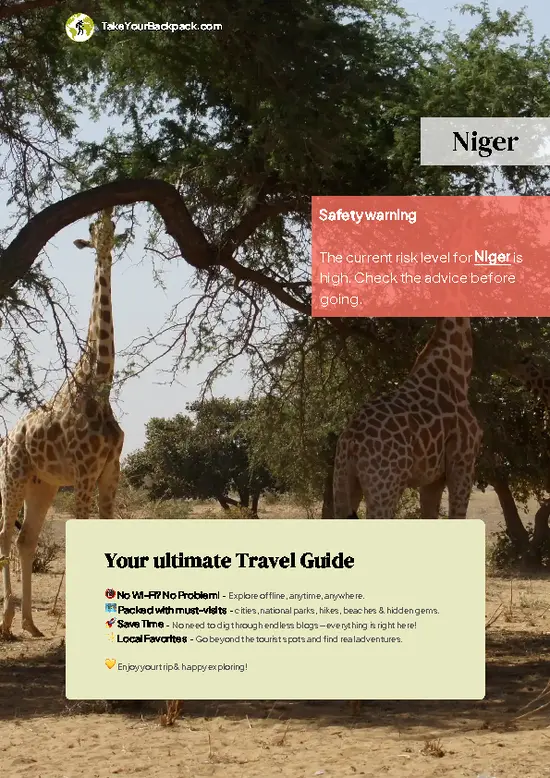
Safety warning

The current risk level for Niger is high. Check the advice before going.


Get your Niger guide
67 ranked highlights, routes & tips, works offline (284 pages)
Loading the map 🌍
CLICK TO FILTER
cities
towns
villages
landmarks
national parks
hikes
attractions
festivals
regions
SHOW COUNTRY’S BESTSHOW ALL

✨ Why go?
Ranked #1 region in Niger
Reasons people choose to visit here

Backpackers flock to the Air and Ténéré Natural Reserves for a reason: it’s a playground of diverse landscapes that keeps the adventure fresh without the hassle of constant relocation. Picture this: vast sand dunes, rugged mountains, and sprawling savannas all in one spot. You can spend days exploring without feeling like you’re on a treadmill of travel.

The transport flexibility here is a game-changer. Rent a 4x4 or hop on a shared taxi-brousse; either way, you’re not tied to a rigid schedule. This freedom lets you dive into the local culture at your own pace. Want to linger in a village market? Go for it. Prefer to chase sunsets over the dunes? You’ve got the time.

Plus, the blend of nature and culture is rich. You can hike through stunning terrains by day and share stories with Tuareg … read more 👉
Backpackers flock to the Air and Ténéré Natural Reserves for a reason: it’s a playground of diverse landscapes that keeps the adventure fresh without the hassle of constant relocation. Picture this: vast sand dunes, rugged mountains, and sprawling savannas all in one spot. You can spend days exploring without feeling like you’re on a treadmill of travel.

The transport flexibility here is a game-changer. Rent a 4x4 or hop on a shared taxi-brousse; either way, you’re not tied to a rigid schedule. This freedom lets you dive into the local culture at your own pace. Want to linger in a village market? Go for it. Prefer to chase sunsets over the dunes? You’ve got the time.

Plus, the blend of nature and culture is rich. You can hike through stunning terrains by day and share stories with Tuareg nomads by night. This is slow travel at its finest, allowing you to soak in the essence of Niger without the rush. Each moment here is a chance to connect deeply with both the land and its people, making every experience feel like a well-earned treasure.
Want to include Air and Ténéré Natural Reserves in your Niger route?
Create a personalized Niger itinerary that includes Air and Ténéré Natural Reserves and the places that fit your trip — based on your travel style, budget, and available time. Get your route in seconds.

Generate my trip

💡 HighlightsWhat this place is best known for

  • Mont Gréboun (Mont Idoukal-n-Taghès)
    Niger’s roof — the highest peak in the Aïr Massif at roughly 2,020-2,030 m. Hikeable (with a guide), the summit gives sweeping views over the rugged granite spires and desert below. It’s a proper mountain day: stone ridges, cool air at dawn and a real sense of having climbed “somewhere different.”
  • Aïr Mountains (Aïr Massif) — the granite heart
    Towering inselbergs, narrow wadis and strange weathered rock formations that you won’t find on a standard Sahara postcard. Walkable valleys, nomad camps and seasonal blooms make this a mix of geology and living culture — great for multi-day treks and nights under very dark skies.
  • Timia Oasis and Valley
    A green ribbon in the Aïr: date palms, tamarinds, small gardens and a seasonal cascade in wetter months.
read more 👉
  • Mont Gréboun (Mont Idoukal-n-Taghès)
    Niger’s roof — the highest peak in the Aïr Massif at roughly 2,020-2,030 m. Hikeable (with a guide), the summit gives sweeping views over the rugged granite spires and desert below. It’s a proper mountain day: stone ridges, cool air at dawn and a real sense of having climbed “somewhere different.”
  • Aïr Mountains (Aïr Massif) — the granite heart
    Towering inselbergs, narrow wadis and strange weathered rock formations that you won’t find on a standard Sahara postcard. Walkable valleys, nomad camps and seasonal blooms make this a mix of geology and living culture — great for multi-day treks and nights under very dark skies.
  • Timia Oasis and Valley
    A green ribbon in the Aïr: date palms, tamarinds, small gardens and a seasonal cascade in wetter months. The village atmosphere is relaxed, fruit-trees give real shade and locals sell fresh dates and tea — a very tangible “this desert can be hospitable” experience.
  • Djado Plateau and Ruined Ksar
    Ghost villages clinging to a remote escarpment, sandstone ruins and wells that tell a long story of trade, abandonment and desert encroachment. It’s very remote and visiting feels like stepping into Sahara archaeology — one of those places where ruins, sand and silence take over.
  • Bilma Oasis and Salt Pans
    The salt-works town at the eastern edge of the Ténéré: date palms, mudbrick streets and traditional salt extraction in open pans. Watching (or joining) the local method of harvesting salt and seeing the old caravan routes gives real, hands-on context to the trans-Saharan history.
  • Adrar Bous (archaeological ridge)
    An archaeologist’s hotspot tucked in the Aïr — prehistoric rock art, archaeological trenches and even dinosaur fossil finds have come from here. It’s a compact place where deep time meets human prehistory; bring a guide who knows the panels and digs.
  • Aouderas crater oasis
    Hidden-gem alert: a collapsed volcanic/erosion crater holding an oasis and small gardens. Less visited than Timia, Aouderas has an intimate, lived-in feel — mudbrick homesteads tucked into cliffs, local wells and quiet trails that locals use but most tourists miss.
  • Tin-Toumma / Ténéré sand sea
    Big, soft dunes and long empty horizons — the true Sahara desert experience. Not just “sand for photos”: this erg is a shifting landscape that rewards simple things — dune walks, sunset lines, starry camps — and a keen respect for remoteness (plan logistics carefully).
  • Iférouane (Tuareg town and markets)
    A remote Aïr town where Tuareg trade routes meet daily life. Markets, leatherwork and local ceremonies (depending on timing) give a closer look at local culture than the bigger tourist stops. Good place to arrange local guides and learn about caravan history from people who still live it.
  • Rock-art and petroglyph concentrations in the Aïr
    Scattered panels of ancient engravings and paintings tucked into gullies and rock faces. These panels show Saharan life over millennia — cattle, humans, mysterious symbols — and are best visited with a local guide who knows which lesser-seen panels to show you (many visitors only see the textbook photos; you can see the quieter, authentic sites).
Spotted a mistake or missing something? Contact us.
⌛️ 5 daysHow to make the most of Air and Ténéré Natural Reserves

Day 1: Agadez
Start your adventure in Agadez, the gateway to the Air and Ténéré Natural Reserves. This bustling town is where the Sahara meets culture. Spend the day acclimatizing and exploring the local markets. The transport system here is your lifeline; shared taxis and buses connect you to the next leg of your journey. Get familiar with the schedules, as they can be erratic.

Day 2: Agadez to Air Mountains
Early morning, hop on a 4x4 to the Air Mountains. This is where the landscape shifts dramatically. The ride is bumpy but exhilarating, taking about 5 hours. The mountains are a haven for unique wildlife and stunning rock formations. You’ll feel the pulse of the desert here. The key is to leave early to avoid the midday heat and maximize your exploration time.

Day 3: Air Mountains … read more 👉
Day 1: Agadez
Start your adventure in Agadez, the gateway to the Air and Ténéré Natural Reserves. This bustling town is where the Sahara meets culture. Spend the day acclimatizing and exploring the local markets. The transport system here is your lifeline; shared taxis and buses connect you to the next leg of your journey. Get familiar with the schedules, as they can be erratic.

Day 2: Agadez to Air Mountains
Early morning, hop on a 4x4 to the Air Mountains. This is where the landscape shifts dramatically. The ride is bumpy but exhilarating, taking about 5 hours. The mountains are a haven for unique wildlife and stunning rock formations. You’ll feel the pulse of the desert here. The key is to leave early to avoid the midday heat and maximize your exploration time.

Day 3: Air Mountains to Ténéré Desert
Today, you’ll venture deeper into the Ténéré Desert. The journey takes around 6 hours, but it’s worth every minute. The vastness of the desert is awe-inspiring. You’ll encounter nomadic tribes and experience their hospitality. This is where you truly understand the rhythm of life in the Sahara.

Day 4: Ténéré Desert Exploration
Spend the day wandering the dunes and soaking in the silence. This is your chance to connect with the landscape. Consider a guided camel trek; it’s a unique way to experience the desert. The transport here is all about timing—plan your trek for sunrise or sunset for the most magical views.

Day 5: Off-Path Reward: Aïr Mountains Detour
On your way back to Agadez, take a detour to the Aïr Mountains. This adds a few hours but rewards you with breathtaking views and fewer tourists. The contrast of the mountains against the desert is striking.

The must-do day? Day 3. The journey into the Ténéré Desert is the heart of this trip, where you’ll find the essence of Niger’s wild beauty. Embrace the adventure; it’s what makes this region unforgettable.
Turn your Air and Ténéré Natural Reserves visit into an Niger adventure
Build a complete Niger route with Air and Ténéré Natural Reserves, hidden gems, must-see destinations, and realistic travel times included.

Generate my trip

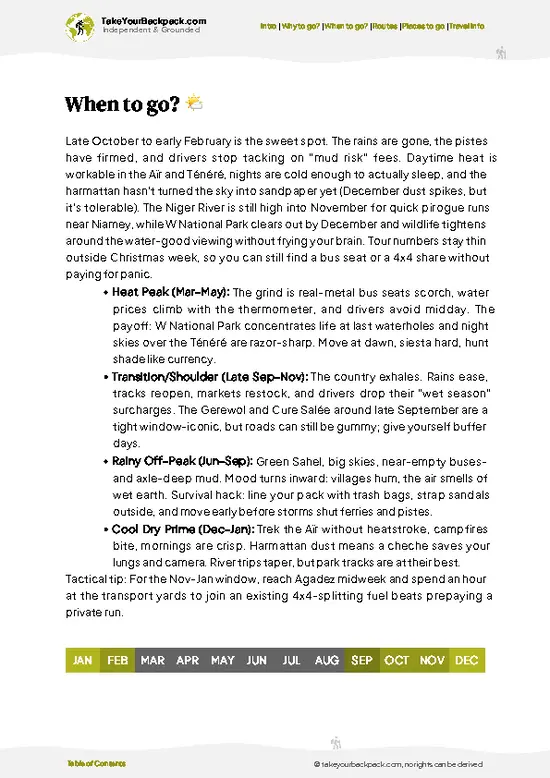
🌤️ When to go?Seasonal considerations and timing


  • Weather: The best window is from October to February. This is when the scorching heat of the Sahara eases up, making trekking bearable. Outside these months, temperatures can spike above 45°C (113°F), turning your hike into a slow roast.

  • Temperature: Expect daytime highs between 20-30°C (68-86°F) during the cooler months, but nights can drop sharply, sometimes near freezing. Pack layers—you’ll want a warm jacket for the desert chill after sunset.

  • Daylight Hours: Around 11 to 12 hours of daylight give you a solid chunk of time to explore without rushing. Sunrise is early, so start your day before the heat builds.

  • Crowds: The reserves are remote, so crowds are minimal year-round. However, the cooler season sees a slight uptick in adventurous backpackers and researchers, giving you a
read more 👉

  • Weather: The best window is from October to February. This is when the scorching heat of the Sahara eases up, making trekking bearable. Outside these months, temperatures can spike above 45°C (113°F), turning your hike into a slow roast.

  • Temperature: Expect daytime highs between 20-30°C (68-86°F) during the cooler months, but nights can drop sharply, sometimes near freezing. Pack layers—you’ll want a warm jacket for the desert chill after sunset.

  • Daylight Hours: Around 11 to 12 hours of daylight give you a solid chunk of time to explore without rushing. Sunrise is early, so start your day before the heat builds.

  • Crowds: The reserves are remote, so crowds are minimal year-round. However, the cooler season sees a slight uptick in adventurous backpackers and researchers, giving you a chance to swap stories without feeling swamped.

  • Seasonal Activities: Cooler months are prime for wildlife spotting—especially migratory birds and desert-adapted species. Sand dune hikes and stargazing sessions are also more enjoyable when you’re not battling heat exhaustion.

  • Price Fluctuations: Expect slightly higher costs during peak season (October to February) due to demand for guides and accommodations. Off-season travel might save you a few bucks but at the cost of extreme heat and limited services.


Pro-tip: Arrive just before the cool season kicks in—late September—to snag better rates and enjoy the transition from blistering heat to perfect trekking weather without the crowds.


source: climatestotravel.comJANJanuary: excellent for travelingFEBFebruary: excellent for travelingMARMarch: good for travelingAPRApril: fair for travelingMAYMay: below average for travelingJUNJune: below average for travelingJULJuly: below average for travelingAUGAugust: below average for travelingSEPSeptember: good for travelingOCTOctober: excellent for travelingNOVNovember: excellent for travelingDECDecember: excellent for traveling
when-to-go

✈️ The backpacker research shortcutNiger Travel Guide

An offline-friendly backpacking guide with optimized travel routes, ranked highlights, transport advice, and the best areas to stay.
example page 0 from our offline Travel Guide for Niger
example page 1 from our offline Travel Guide for Niger
example page 2 from our offline Travel Guide for Niger
example page 3 from our offline Travel Guide for Niger
example page 4 from our offline Travel Guide for Niger
example page 5 from our offline Travel Guide for Niger
example page 6 from our offline Travel Guide for Niger
example page 7 from our offline Travel Guide for Niger
The digital guide (284 pages) contains:
67 highlights, ranked by travel appeal
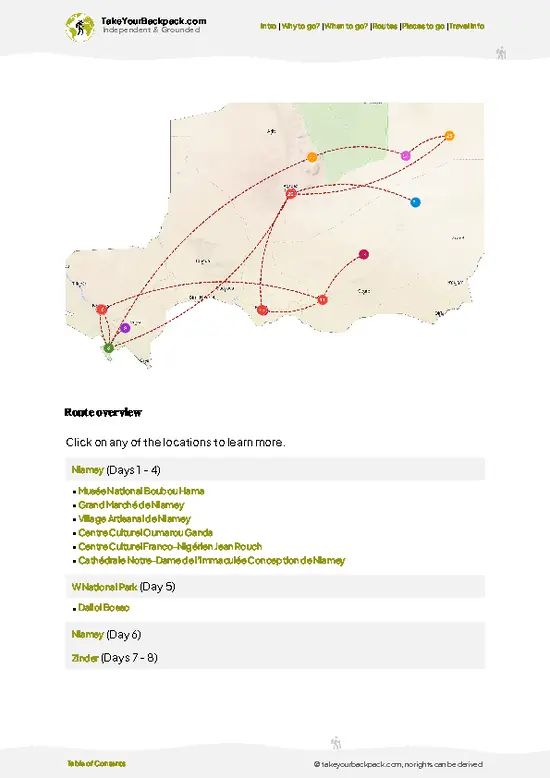
Optimized 5, 10 & 15-day travel routes
Cities, national parks, landmarks, beaches
How to get around
Offline-friendly for travel without Wi-Fi
👉 Click to see all 30+ guide features

📅 Plan smarter in minutes, not weeks
Month by month travel advice
Festivals & national holidays
Budget expectations

🗺️ Go to the right places, skip the overrated ones
Honest pros & cons of destinations
Top hikes, parks & viewpoints
Lesser-known places most travelers miss
Clear “worth it vs skip it” guidance

🛏️ Travel smoothly without rookie mistakes
Best areas to stay
Transport systems explained simply
Common scams & safety advice
SIM cards, money & practical tips

🌍 Understand the country, not just visit it
Culture & traditions
52 Essential phrases & customs
Festivals worth planning around
Traveler-friendly historical context
Insights that make places more meaningful

📱 Built for real travel conditions
Fully downloadable PDF
Works completely offline
Optimized for phone use
Useful in remote areas & buses
Everything in one place
Save weeks of stressful planning
Get instant access to your full guide. 30‑day money-back guarantee.
+ Add another guide for just US$7.80

By proceeding you agree to our terms.
Sent to your inbox immediately after payment • 100% Secure Checkout
Best Backpacking Travel Advisor 2025 tourism awardBest Backpacking
Travel Advisor
2025
What others say about Take Your Backpack Guides:
⭐⭐⭐⭐⭐
Fantastic, amazing amount of information!
⭐⭐⭐⭐⭐
My goodness this is amazing, it's what I've been looking for hats off too you!
⭐⭐⭐⭐⭐
I think this is absolutely BRILLIANT
⭐⭐⭐⭐
Very complete and informative. It's still missing places, but I gotta to commend you
⭐⭐⭐⭐⭐
This is truly amazing, thank you, can't wait to explore it with my kids!
⭐⭐⭐⭐⭐
Awesome resource, thank you!
⭐⭐⭐⭐⭐
This is amazing! Can't wait to explore the ones I haven't seen
⭐⭐⭐⭐
I love this! Well done, great idea.
⭐⭐⭐⭐⭐
Thanks for taking the time to make this gem!
⭐⭐⭐⭐⭐
This might be the best website I've ever seen.
⭐⭐⭐⭐⭐
Congratulations, and thank you so much for your work; it's incredibly valuable.
⭐⭐⭐⭐
In all seriousness I think you did a great job pointing out the important spots
⭐⭐⭐⭐⭐
10/10 very good
⭐⭐⭐⭐⭐
As someone who's only just starting to visit regularly this is awesome, thank you.
⭐⭐⭐⭐
Thank you very much! I'm going to visit my dad, it's going to be very useful!
⭐⭐⭐⭐⭐
This is really cool! We'll be travelling for the first time and this definitely come in handy.
⭐⭐⭐⭐⭐
You are now our minister of culture, congratulations 👨‍💼
⭐⭐⭐⭐⭐
Just wanted to tell you that this is a pearl! Going to follow your recommendations.
⭐⭐⭐⭐⭐
This is so cool. I'll definitely be using the resource for my travels soon.
⭐⭐⭐⭐⭐
This is very impressive! Good work.
⭐⭐⭐⭐⭐
This is an amazing and informative site. Very well done!

🛏️ Where to stay?How to pick the right area

When you’re navigating the rugged beauty of the Air and Ténéré Natural Reserves, your choice of where to stay can make or break your experience. Let’s dive into the best spots that keep you safe, social, and connected to the heart of Niger.

Start in Agadez. This bustling town is the gateway to the reserves. It’s a melting pot of cultures, with a lively market scene and plenty of travelers sharing stories over a bowl of local stew. The vibe here is welcoming, and you’ll find fellow backpackers eager to swap tips on the best routes and hidden spots.

Next up, consider Timia. Nestled in a lush … read more 👉
When you’re navigating the rugged beauty of the Air and Ténéré Natural Reserves, your choice of where to stay can make or break your experience. Let’s dive into the best spots that keep you safe, social, and connected to the heart of Niger.

Start in Agadez. This bustling town is the gateway to the reserves. It’s a melting pot of cultures, with a lively market scene and plenty of travelers sharing stories over a bowl of local stew. The vibe here is welcoming, and you’ll find fellow backpackers eager to swap tips on the best routes and hidden spots.

Next up, consider Timia. Nestled in a lush oasis, it’s a bit off the beaten path but worth the trek. The locals are friendly, and you’ll often find yourself invited to share a meal or a cup of tea. The natural beauty surrounding Timia is jaw-dropping, making it a perfect base for hiking and exploring.

Lastly, don’t overlook Bilma. While it’s more remote, the sense of adventure here is palpable. The town has a small but vibrant community of travelers, and the sunsets over the dunes are something you won’t want to miss.

Each of these spots offers a unique slice of Niger, balancing comfort and authenticity. Choose wisely, and you’ll walk away with stories that last a lifetime.

🚌 Getting aroundGetting around like a local

The Air and Ténéré Natural Reserves in Niger pulse with a rhythm that’s anything but predictable. Here, schedules are mere suggestions, and the flow of travel feels like a dance between chaos and intuition. You’ll find yourself navigating vast stretches of sand and rock, where the horizon seems to stretch endlessly, and the only certainty is the sun’s relentless march across the sky. This isn’t a place for the rigid planner; it’s for those who embrace the unexpected, where every twist in the road could lead to a breathtaking vista or a chance encounter with a nomadic tribe. Get ready to adapt, because in this wild expanse, your journey is as much about the experience as it is about the destination.


  • Shared Taxis (Brousse): These are your lifeline for budget travel. They run from major towns
read more 👉
The Air and Ténéré Natural Reserves in Niger pulse with a rhythm that’s anything but predictable. Here, schedules are mere suggestions, and the flow of travel feels like a dance between chaos and intuition. You’ll find yourself navigating vast stretches of sand and rock, where the horizon seems to stretch endlessly, and the only certainty is the sun’s relentless march across the sky. This isn’t a place for the rigid planner; it’s for those who embrace the unexpected, where every twist in the road could lead to a breathtaking vista or a chance encounter with a nomadic tribe. Get ready to adapt, because in this wild expanse, your journey is as much about the experience as it is about the destination.


  • Shared Taxis (Brousse): These are your lifeline for budget travel. They run from major towns like Agadez to various points in the reserves. Expect to pay around 2,000-3,000 CFA for a ride, with departures often in the early morning. They can be cramped, but the camaraderie is part of the charm.


  • 4x4 Rentals: If you’re feeling adventurous and want to explore at your own pace, renting a 4x4 is the way to go. Prices hover around 50,000 CFA per day, plus fuel. You’ll need to book in advance, and make sure you’re comfortable with off-road driving. This option gives you the freedom to chase sunsets and detours.


  • Motorcycle Taxis (Zémidjan): For short hops, these are a fun and efficient choice. Prices vary, but expect to pay around 500-1,000 CFA for a quick ride. They zip through the dust and can navigate tight spots where larger vehicles can’t. Just hold on tight!


  • Guided Tours: If you want a hassle-free experience, consider joining a guided tour. Prices can range from 30,000 CFA for a day trip to much higher for multi-day excursions. This option includes transport, meals, and a local guide, ensuring you don’t miss the highlights.


  • Walking: Don’t underestimate the power of your own two feet. Many trails are accessible, and walking allows you to soak in the landscape. It’s free, and the pace is entirely yours. Just be sure to carry plenty of water and sunscreen.


For a tactical tip: always negotiate your transport prices upfront, especially with shared taxis and motorcycle taxis. It’s part of the local culture, and you’ll feel like a savvy insider rather than a lost tourist. Plus, it sets the tone for your adventure—embrace the spontaneity!

🍲 FoodLocal Cuisine & Drinks

In the Air and Ténéré Natural Reserves, food is a vibrant tapestry of flavors that tells the story of the land and its people. You can’t miss trying djerma, a savory stew made with meat and vegetables, often served with , a thick porridge made from millet or sorghum. The aroma wafts through the air, inviting you to dig in. Pair it with bitter leaf soup for a truly local experience.

Street food is where the magic happens. Vendors set up shop with sizzling skewers of grilled meat, seasoned to perfection. Grab a plate and enjoy it with a side of spicy pepper sauce. Markets are bustling with energy, filled with the chatter of locals and the scent of spices. Here, you can sip on bissap, a refreshing hibiscus drink that cools you down after a long day of exploring.

Dining customs are casual … read more 👉
In the Air and Ténéré Natural Reserves, food is a vibrant tapestry of flavors that tells the story of the land and its people. You can’t miss trying djerma, a savory stew made with meat and vegetables, often served with , a thick porridge made from millet or sorghum. The aroma wafts through the air, inviting you to dig in. Pair it with bitter leaf soup for a truly local experience.

Street food is where the magic happens. Vendors set up shop with sizzling skewers of grilled meat, seasoned to perfection. Grab a plate and enjoy it with a side of spicy pepper sauce. Markets are bustling with energy, filled with the chatter of locals and the scent of spices. Here, you can sip on bissap, a refreshing hibiscus drink that cools you down after a long day of exploring.

Dining customs are casual but rich in tradition. Sharing food is a sign of friendship, so don’t be surprised if someone offers you a taste from their plate. When eating, use your right hand—it’s a sign of respect. Embrace the communal vibe; meals are often enjoyed together, creating bonds over shared flavors and laughter. This is where you’ll truly feel like a part of the local scene.

FAQFrequently asked questions about Air and Ténéré Natural Reserves

At least 5 to 7 days are needed to explore the Air and Ténéré Natural Reserves thoroughly, allowing time for travel between key sites and acclimatization to the desert environment.
Getting around without a car is extremely difficult due to the vast and remote desert terrain; most travelers rely on organized tours with 4x4 vehicles or camel caravans for navigation.
The Air and Ténéré Natural Reserves are known for their dramatic desert landscapes, including the Air Mountains and the Ténéré Desert, as well as rich archaeological sites with ancient rock art and fossils.
⚠️ Things can change over time, so always validate details locally before you go.

Ideas for continuing your journey

Air and Ténéré Natural Reserves isn’t the only highlight in Niger. Explore all what Niger has to offer.
Country photo of Niger

We 💚 feedbackSumming up the experience

The vibe in Air and Ténéré is raw and expansive, like stepping into a painting where the colors are the desert and the sky. The best surprise? The night sky—it’s a cosmic show that’ll leave you breathless. But here’s the insider tip: don’t underestimate the heat. Early mornings are your best friend for hikes; afternoons can feel like walking on the sun. Embrace the quiet. It’s a place that rewards patience and presence. You’ll leave with a piece of the Sahara in your soul.

✍️ Help improve this page!
The information on this page is based on in-depth research, insights shared by experienced travelers, and feedback from the local travel community in Niger. While every effort is made to keep the information accurate and current, conditions can change — so if you spot anything incorrect or outdated, please get in touch.


🙋‍♂️ Give feedback

👋 Meet the founderWho’s Behind Take Your Backpack?

Johan, backpacker and founder of TakeYourBackpackHi, I’m Johan (Netherlands 🇳🇱), the creator of TakeYourBackpack. Over the past decade, I’ve backpacked through 80+ countries across six continents, gaining extensive experience with independent travel, long-term trips, and overland routes.

This site is built on a combination of firsthand travel experience and carefully curated insights from other backpackers. Many guides are based on places I’ve personally visited, while others bring together tips, observations, and practical advice shared by trusted travelers I’ve met along the way.

The goal is to provide realistic, experience-driven guidance — not generic itineraries — so you can explore destinations with better context, clearer expectations, and more confidence.

Get full Niger guide •
Instant download • 67 highlights • Full Offline guide