×

Niger🇳🇪 | citiesZinderBirni quarter, Sultan of Damagaram, indigo dyers, Kara-Kara hills | things to do and best time to go

Explore TanoutExplore Arlit

Backpacking in Zinder
🏆 Top pickcity ranked #3
By Johan Kruseman 🇳🇱 | Updated October 22, 2026

Zinder was once a stop on the trans-Saharan caravan trade and, for a time, the capital of French Niger. Today it is a quiet, dusty regional city where the tourist infrastructure has mostly faded and few foreigners pass through. It lies in the south of Niger, near the Nigerian border, roughly 850 kilometers east of Niamey. Come if you want old Hausa-Kanuri architecture, working markets and a place where nobody is selling you anything. Skip it if you need nightlife, polished hostels or a checklist of sights, because there are few of those and the heat is relentless for much of the year. The old quarter of Birni is the reason to be here, and the weaving of the Hausa craftsmen is the second. The big modern avenues are not worth your time. Birni’s mud-walled courtyards, with their carved wooden doors and flat roofs, are what remain in your mind long after the dust has settled.

Discover everything you want to know in the 📖 Niger Travel Guide.
Safety warning

The current risk level for Niger is high. Check the advice before going.


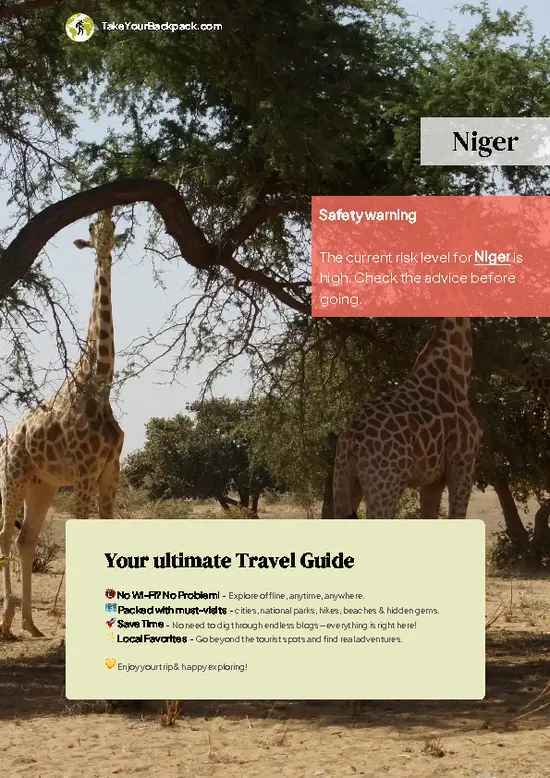
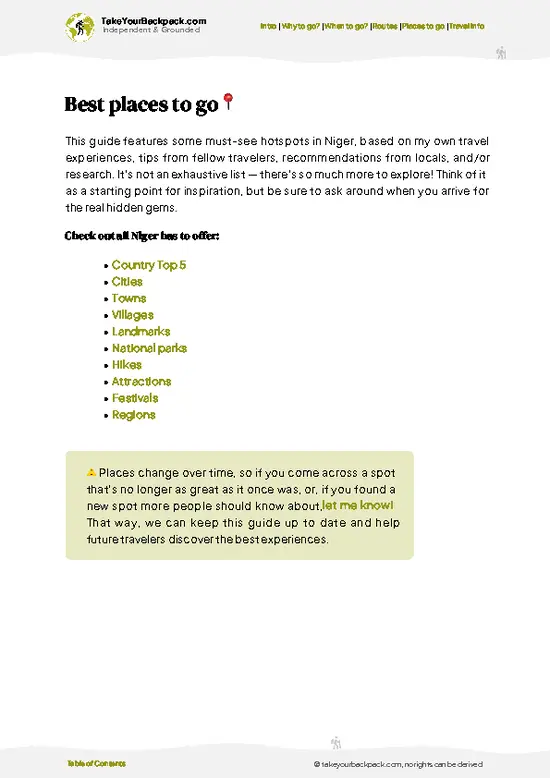
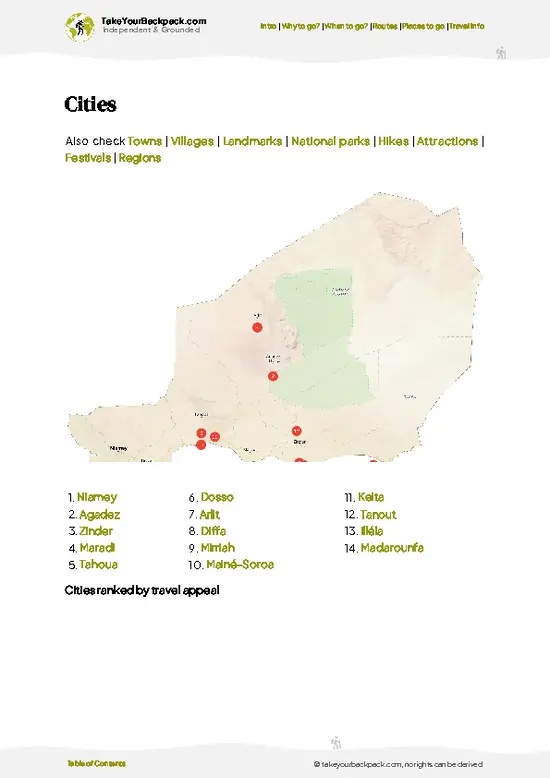
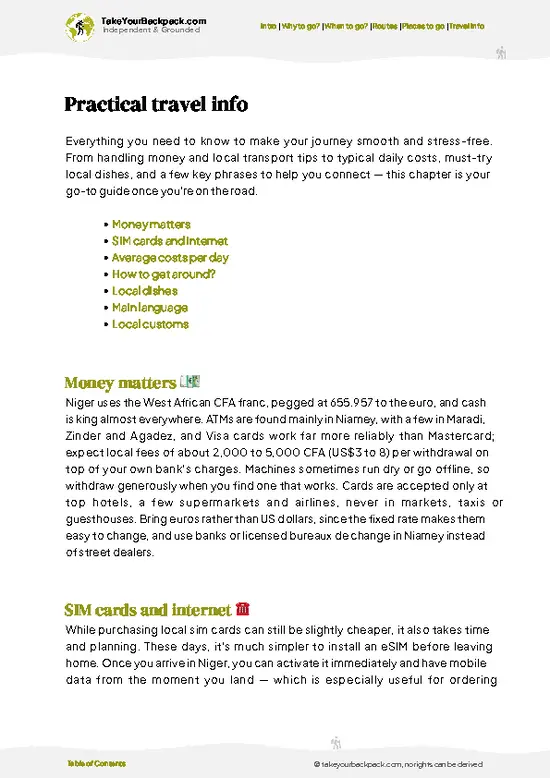
example page 0 from our offline Travel Guide for Niger
example page 1 from our offline Travel Guide for Niger
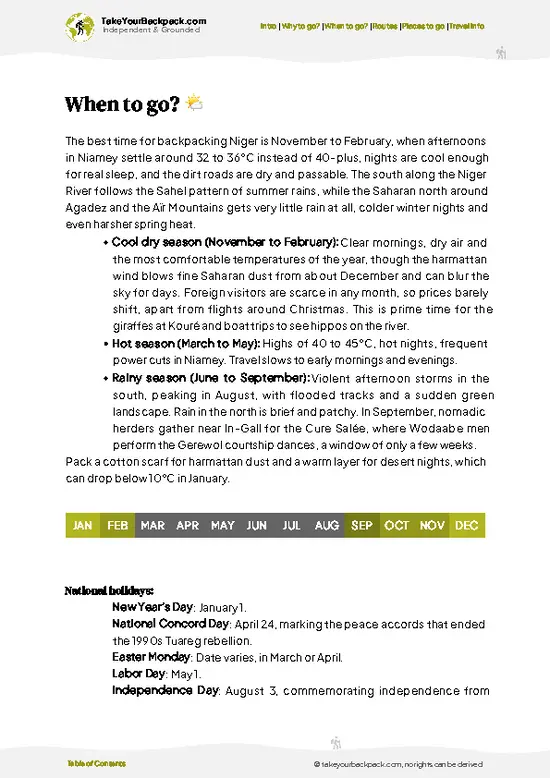
example page 2 from our offline Travel Guide for Niger
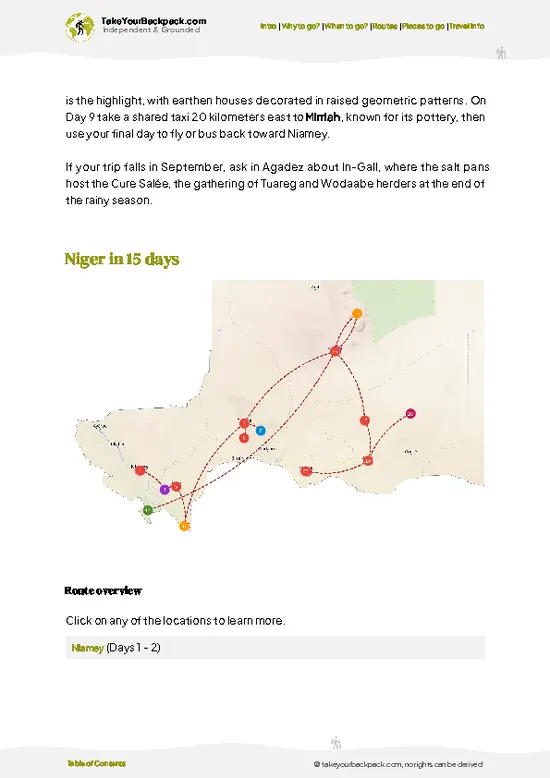
example page 3 from our offline Travel Guide for Niger
example page 4 from our offline Travel Guide for Niger
example page 5 from our offline Travel Guide for Niger
example page 6 from our offline Travel Guide for Niger
example page 7 from our offline Travel Guide for Niger
Loading the map 🌍
CLICK TO FILTER
cities
towns
villages
landmarks
national parks
hikes
attractions
festivals
regions
SHOW COUNTRY’S BESTSHOW ALL

✨ Why go?
Ranked #3 city in Niger
What sets this place apart

Zinder gives you something Niger’s capital cannot: a walkable center where the architecture is old, the crafts are still made by hand, and the people are curious rather than jaded. Most backpackers come for the Birni quarter, a district of Hausa-style houses that you can cover entirely on foot in a morning. The second draw is how few other foreigners you will meet, which means conversations happen easily and guides, if you hire one, give you real attention. Zinder also sits well as a pause on an overland route toward the Nigerian border or the Sahel interior, so it works as a stage rather than a base for weeks. Accommodation is limited and simple, nightlife is nearly absent, and you will need patience with heat and with arranging transport. Give it two nights if you love old towns and craft … read more 👉
Zinder gives you something Niger’s capital cannot: a walkable center where the architecture is old, the crafts are still made by hand, and the people are curious rather than jaded. Most backpackers come for the Birni quarter, a district of Hausa-style houses that you can cover entirely on foot in a morning. The second draw is how few other foreigners you will meet, which means conversations happen easily and guides, if you hire one, give you real attention. Zinder also sits well as a pause on an overland route toward the Nigerian border or the Sahel interior, so it works as a stage rather than a base for weeks. Accommodation is limited and simple, nightlife is nearly absent, and you will need patience with heat and with arranging transport. Give it two nights if you love old towns and craft markets. If you want variety and comfort, treat it as a short stop on the way elsewhere.

💡 HighlightsKey sights and experiences for travelers

  1. Birni quarter: the old Hausa town and the thing Zinder is best known for. Narrow lanes run between mud-brick houses with carved doors, decorated facades and flat roofs. Walk it in the cooler hours of the morning. Free to wander, though a local guide for about €3 to 6 helps with introductions. Allow 2 to 3 hours.
  2. Sultan’s Palace (Palais du Sultan): the residence of the Sultan of Damagaram, built in the 19th century with traditional earth architecture. Courtyards and ceremonial rooms give a sense of the old kingdom. Visit in the morning. Small donation or fee of about €1 to 3 expected. About 45 minutes.
  3. Zinder Grand Market: a large daily market for textiles, leather goods, spices, grain and livestock supplies. It is busiest in the morning and quiets down in the afternoon heat. Free to enter, and
… read more 👉
  1. Birni quarter: the old Hausa town and the thing Zinder is best known for. Narrow lanes run between mud-brick houses with carved doors, decorated facades and flat roofs. Walk it in the cooler hours of the morning. Free to wander, though a local guide for about €3 to 6 helps with introductions. Allow 2 to 3 hours.
  2. Sultan’s Palace (Palais du Sultan): the residence of the Sultan of Damagaram, built in the 19th century with traditional earth architecture. Courtyards and ceremonial rooms give a sense of the old kingdom. Visit in the morning. Small donation or fee of about €1 to 3 expected. About 45 minutes.
  3. Zinder Grand Market: a large daily market for textiles, leather goods, spices, grain and livestock supplies. It is busiest in the morning and quiets down in the afternoon heat. Free to enter, and bargaining is normal. Allow 1 to 2 hours.
  4. Dyers’ and weavers’ workshops: artisans in the old town dye cloth in indigo and weave strips on narrow looms. Watching the work costs nothing, and cloth or leather purchases start around €3 to 10. Go in the morning. About 1 hour.
  5. Damagaram Fort (Fort Cazemajou): a colonial-era fort on the edge of the old town, tied to the French conquest and the murder of Captain Cazemajou in 1898. Exterior viewing is usually the practical option. A visit takes about 30 minutes, and photography should be cleared with locals first.
  6. Birni Mosque area: the old mosque and its surroundings anchor daily life in the old quarter. Look from outside and respect prayer times. Late afternoon is pleasant when the heat drops. Free, about 30 minutes.
  7. Kara-Kara rock hills: granite outcrops on the town’s edge give a view across the flat rooftops and the town’s layout. Climb in the morning or around the end of the day. Free, about 1 to 1.5 hours with a guide recommended.
For day trips, travelers with a guide and a local driver can look at the rock formations and villages around the Damagaram region, and the border area toward Nigeria’s Kano has its own old Hausa trading towns, but both need careful local advice on security before going. For a first visit, spend your best hours in the Birni quarter, because it is the one place that explains Zinder.
Spotted a mistake or missing something? Contact us.

🏘️ NeighborhoodsNeighborhood guide to Zinder

Zinder splits into a handful of districts, and only two of them really repay your time. Skip the dusty outskirts and the main highway strip; there is nothing to see there.
  • Birni is the old Hausa quarter and the reason to come. Narrow lanes of mud-brick houses with carved doors and decorated facades wind around the Sultan’s Palace. Walk it slowly in a couple of hours, ideally with a local guide who knows which doors are worth a look. It is quiet at night and has almost no restaurants.
  • Zengou is the old Kanuri-influenced quarter nearby, with its own mud-brick lanes and a sense of everyday life that is less visited than Birni. Combine it with Birni on foot, since the two are close.
  • Damagaram Sultan’s Palace area is the historic heart. The 19th-century palace is the one formal sight and a short visit
… read more 👉
Zinder splits into a handful of districts, and only two of them really repay your time. Skip the dusty outskirts and the main highway strip; there is nothing to see there.
  • Birni is the old Hausa quarter and the reason to come. Narrow lanes of mud-brick houses with carved doors and decorated facades wind around the Sultan’s Palace. Walk it slowly in a couple of hours, ideally with a local guide who knows which doors are worth a look. It is quiet at night and has almost no restaurants.
  • Zengou is the old Kanuri-influenced quarter nearby, with its own mud-brick lanes and a sense of everyday life that is less visited than Birni. Combine it with Birni on foot, since the two are close.
  • Damagaram Sultan’s Palace area is the historic heart. The 19th-century palace is the one formal sight and a short visit is enough. The surrounding square is where you will pick up a guide.
  • Grand Marché area is the busiest part of town, with dense stalls selling cloth, leather, spices and household goods. Go for a morning wander, not a full day. Watch your bag in the thickest crowds.
  • Sabon Gari is the newer, wider-streeted district with most of the cheap eats, bus offices and small shops. It is useful, not scenic, and dead after dark apart from a few snack stands.
  • Kara hills and Goure road edge are the rocky outcrops at the edge of town, good for a short climb and a view over the flat-roofed rooftops. Worth a quick detour, not a half day.

⌛️ 1 dayHow to make the most of one day

Keep the day on foot, with a taxi only for the longer hops, and stop for a long rest indoors from midday until the heat eases.
7:30 AM: Birni quarter Start early when the air is cool and the lanes are quiet. Wander the mud-brick houses and their carved doors, and let a local guide point out the details. Then walk to the palace.
9:30 AM: Sultan’s Palace See the courtyards and the ceremonial architecture, and ask politely before taking photos. It anchors the whole story of Damagaram. Continue on foot to the market.
10:30 AM: Grand Market Browse textiles, spices and leather before the heat peaks. Buy a cloth strip or snacks and drink plenty of water.
12:30 PM: Midday break Return to your lodging or find a shaded café for lunch and rest. Nothing useful happens outdoors in this heat.
4:00 PM: Dyers’ … read more 👉
Keep the day on foot, with a taxi only for the longer hops, and stop for a long rest indoors from midday until the heat eases.
7:30 AM: Birni quarter Start early when the air is cool and the lanes are quiet. Wander the mud-brick houses and their carved doors, and let a local guide point out the details. Then walk to the palace.
9:30 AM: Sultan’s Palace See the courtyards and the ceremonial architecture, and ask politely before taking photos. It anchors the whole story of Damagaram. Continue on foot to the market.
10:30 AM: Grand Market Browse textiles, spices and leather before the heat peaks. Buy a cloth strip or snacks and drink plenty of water.
12:30 PM: Midday break Return to your lodging or find a shaded café for lunch and rest. Nothing useful happens outdoors in this heat.
4:00 PM: Dyers’ and weavers’ workshops Off the standard route, these small workshops in the old town let you see indigo dyeing and narrow-loom weaving up close. Buying a small piece supports the craftspeople directly. Walk or take a short taxi.
5:30 PM: Kara-Kara rock hills Take a taxi to the base and climb with a guide for a view across the flat rooftops as the heat fades. Come down before dark.
7:00 PM: Dinner Eat grilled meat or rice dishes at a local spot near your lodging, and turn in early.

🌤️ When to go?Seasonal considerations and timing

November to February is the most comfortable window in Zinder, with days around 28 to 33°C (82 to 91°F) and cool nights that can dip to 12 to 16°C (54 to 61°F).
  • Cool Dry Season (Nov to Feb): Clear skies, dusty harmattan haze at times, and the best walking weather. Daylight runs roughly 11 to 11.5 hours. Prices for rooms and transport stay steady, and tourist numbers are very low.
  • Hot Season (Mar to May): Afternoons reach 38 to 43°C (100 to 109°F), and midday is too hot for the old quarters. Do your walking in the first hours of the day.
  • Rainy Season (Jun to Sep): Highs of 32 to 36°C (90 to 97°F) with storms, mostly July and August. Some roads turn muddy and travel slows, but the surrounding landscape turns green.
  • Festival Periods: Religious holidays and the Cure Salée in the wider region draw
… read more 👉
November to February is the most comfortable window in Zinder, with days around 28 to 33°C (82 to 91°F) and cool nights that can dip to 12 to 16°C (54 to 61°F).
  • Cool Dry Season (Nov to Feb): Clear skies, dusty harmattan haze at times, and the best walking weather. Daylight runs roughly 11 to 11.5 hours. Prices for rooms and transport stay steady, and tourist numbers are very low.
  • Hot Season (Mar to May): Afternoons reach 38 to 43°C (100 to 109°F), and midday is too hot for the old quarters. Do your walking in the first hours of the day.
  • Rainy Season (Jun to Sep): Highs of 32 to 36°C (90 to 97°F) with storms, mostly July and August. Some roads turn muddy and travel slows, but the surrounding landscape turns green.
  • Festival Periods: Religious holidays and the Cure Salée in the wider region draw crowds and can push up transport fares briefly.
Plan to arrive in December or January, and book onward buses a day ahead around holidays.


source: climatestotravel.comJANJanuary: excellent for travelingFEBFebruary: excellent for travelingMARMarch: fair for travelingAPRApril: below average for travelingMAYMay: below average for travelingJUNJune: fair for travelingJULJuly: fair for travelingAUGAugust: fair for travelingSEPSeptember: fair for travelingOCTOctober: good for travelingNOVNovember: excellent for travelingDECDecember: excellent for traveling
when-to-go

✈️ The backpacker research shortcutNiger Travel Guide

An offline-friendly backpacking guide with optimized travel routes, ranked highlights, transport advice, and the best areas to stay.
example page 0 from our offline Travel Guide for Niger
example page 1 from our offline Travel Guide for Niger
example page 2 from our offline Travel Guide for Niger
example page 3 from our offline Travel Guide for Niger
example page 4 from our offline Travel Guide for Niger
example page 5 from our offline Travel Guide for Niger
example page 6 from our offline Travel Guide for Niger
example page 7 from our offline Travel Guide for Niger
The digital guide (254 pages) contains:
✅ 57 highlights, ranked by travel appeal
✅ Optimized 5, 10 & 15-day travel routes
✅ Cities, national parks, landmarks, beaches
✅ How to get around
✅ Offline-friendly for travel without Wi-Fi
👉 Click to see all 30+ guide features

📅 Plan smarter in minutes, not weeks
✅ Month by month travel advice
✅ Festivals & national holidays
✅ Budget expectations

🗺️ Go to the right places, skip the overrated ones
✅ Honest pros & cons of destinations
✅ Top hikes, parks & viewpoints
✅ Lesser-known places most travelers miss
✅ Clear “worth it vs skip it” guidance

🛏️ Travel smoothly without rookie mistakes
✅ Best areas to stay
✅ Transport systems explained simply
✅ Common scams & safety advice
✅ SIM cards, money & practical tips

🌍 Understand the country, not just visit it
✅ Culture & traditions
✅ 52 Essential phrases & customs
✅ Festivals worth planning around
✅ Traveler-friendly historical context
✅ Insights that make places more meaningful

📱 Built for real travel conditions
✅ Fully downloadable PDF
✅ Works completely offline
✅ Optimized for phone use
✅ Useful in remote areas & buses
✅ Everything in one place
Stop searching, start planning
Get instant access to your full guide. 30‑day money-back guarantee.
+ Add another guide for just

By proceeding you agree to our terms.
Sent to your inbox immediately after payment • 100% Secure Checkout
Best Backpacking Travel Advisor 2025 tourism awardBest Backpacking
Travel Advisor
2025
What others say about Take Your Backpack Guides:
⭐⭐⭐⭐⭐
Fantastic, amazing amount of information!
⭐⭐⭐⭐⭐
My goodness this is amazing, it's what I've been looking for hats off too you!
⭐⭐⭐⭐⭐
I think this is absolutely BRILLIANT
⭐⭐⭐⭐
Very complete and informative. It's still missing places, but I gotta to commend you
⭐⭐⭐⭐⭐
This is truly amazing, thank you, can't wait to explore it with my kids!
⭐⭐⭐⭐⭐
Awesome resource, thank you!
⭐⭐⭐⭐⭐
This is amazing! Can't wait to explore the ones I haven't seen
⭐⭐⭐⭐
I love this! Well done, great idea.
⭐⭐⭐⭐⭐
Thanks for taking the time to make this gem!
⭐⭐⭐⭐⭐
This might be the best website I've ever seen.
⭐⭐⭐⭐⭐
Congratulations, and thank you so much for your work; it's incredibly valuable.
⭐⭐⭐⭐
In all seriousness I think you did a great job pointing out the important spots
⭐⭐⭐⭐⭐
10/10 very good
⭐⭐⭐⭐⭐
As someone who's only just starting to visit regularly this is awesome, thank you.
⭐⭐⭐⭐
Thank you very much! I'm going to visit my dad, it's going to be very useful!
⭐⭐⭐⭐⭐
This is really cool! We'll be travelling for the first time and this definitely come in handy.
⭐⭐⭐⭐⭐
You are now our minister of culture, congratulations 👨‍💼
⭐⭐⭐⭐⭐
Just wanted to tell you that this is a pearl! Going to follow your recommendations.
⭐⭐⭐⭐⭐
This is so cool. I'll definitely be using the resource for my travels soon.
⭐⭐⭐⭐⭐
This is very impressive! Good work.
⭐⭐⭐⭐⭐
This is an amazing and informative site. Very well done!

🛏️ Where to stay?How to pick the right area

The best area for a budget bed in Zinder is the central district near the Grand Marché and the main roads, where simple guesthouses and a few small hotels cluster. Dedicated backpacker hostels with dorms barely exist here, so expect private rooms with fan or basic air conditioning, usually €10 to 25 a night. Rooms with cold-water bathrooms are the cheapest.
The second option is the area close to the old town and the Sultan’s Palace on the edge of Birni. It is quieter in the evenings and lets you walk to the historic lanes at first light, before the heat arrives. Options are fewer and often fill … read more 👉
The best area for a budget bed in Zinder is the central district near the Grand Marché and the main roads, where simple guesthouses and a few small hotels cluster. Dedicated backpacker hostels with dorms barely exist here, so expect private rooms with fan or basic air conditioning, usually €10 to 25 a night. Rooms with cold-water bathrooms are the cheapest.
The second option is the area close to the old town and the Sultan’s Palace on the edge of Birni. It is quieter in the evenings and lets you walk to the historic lanes at first light, before the heat arrives. Options are fewer and often fill up with aid workers, so call ahead if you can.
Night safety is fine in both areas if you stay on lit streets, and the central district has the better motorbike taxi supply after dark. Noise is the main drawback: mosques call at dawn, roosters follow, and generators run during power cuts. Bring earplugs. Pick a place with a working fan or generator backup, since the hot months are hard without one. Bus offices for Niamey and Maradi are a short ride from the center, which makes early departures easy to manage.

🚌 Getting aroundHow to get around Zinder

Zinder’s old quarters are easy on foot, since Birni, Zengou and the palace all sit within about 2 km (1.2 miles) of each other, but the market, bus stations and outer districts are too far to walk comfortably in the heat. Public transport barely exists, so most backpackers combine walking with motorbike taxis and the odd shared cab. Traffic is light and roads are mostly flat.
  • Walking: Free, and the right choice for the historic center. Allow two to three hours to cover Birni, Zengou and the palace square. Start early, as the afternoon sun is punishing from March to May.
  • Motorbike taxis: The default for getting around, usually €0.30 to 0.80 per ride in town. Agree the price before you climb on. They run from dawn until roughly 9 or 10 pm, and are fast but dusty and unhelmeted.
  • Shared and private
… read more 👉
Zinder’s old quarters are easy on foot, since Birni, Zengou and the palace all sit within about 2 km (1.2 miles) of each other, but the market, bus stations and outer districts are too far to walk comfortably in the heat. Public transport barely exists, so most backpackers combine walking with motorbike taxis and the odd shared cab. Traffic is light and roads are mostly flat.
  • Walking: Free, and the right choice for the historic center. Allow two to three hours to cover Birni, Zengou and the palace square. Start early, as the afternoon sun is punishing from March to May.
  • Motorbike taxis: The default for getting around, usually €0.30 to 0.80 per ride in town. Agree the price before you climb on. They run from dawn until roughly 9 or 10 pm, and are fast but dusty and unhelmeted.
  • Shared and private taxis: Cars cost about €1 to 2 for a short city ride, and €3 to 6 if you hire one for a few hours. They are worth it for the road out to the bus station or in the heat, but they are few and often older vehicles.
  • Intercity buses: Bus companies run from Zinder to Niamey (about 10 to 12 hours, roughly €15 to 25), Maradi (3 to 4 hours, roughly €4 to 7) and other towns. Most leave early, often between 5 and 8 am, so buy a ticket the day before. Do not count on strict schedules.
  • Bush taxis: Packed minibuses and cars leave when full to nearby towns, usually €1 to 4 depending on distance. They are the only option for many small places but are cramped and unpredictable.
Skip any plan that relies on apps or fixed timetables; there are none. Ask your guesthouse to call a driver you can trust, and carry small change since drivers rarely have it.

👛 Costs (as of 22 October 2026)Money, prices, and spending tips

Zinder costs about €22 to 39 a day for a backpacker who stays in basic private rooms and eats local, which makes it one of the cheaper stops in the region. Prices are paid in cash in local currency, and card use is rare.
CategoryBudget RangeLocal Reality
Dorm accommodation (high season)€12 to 18No true dorms; a basic fan room in a guesthouse is the usual choice
Dorm accommodation (off-season)€9 to 14Rates soften in the heat and rains, and bargaining helps
Meals€4 to 8Street grills, bean fritters and rice plates cover the day
Local transport€1 to 3Motorbike taxis for a few short rides
City transport passNot availableNo pass exists; pay per ride
Basic activities/entry fees€2 to 6Palace entry and a guide for the old quarters
Miscellaneous€2 to 4Water, SIM data, small tips and snacks
Total Daily Budget€22
… read more 👉
Zinder costs about €22 to 39 a day for a backpacker who stays in basic private rooms and eats local, which makes it one of the cheaper stops in the region. Prices are paid in cash in local currency, and card use is rare.
CategoryBudget RangeLocal Reality
Dorm accommodation (high season)€12 to 18No true dorms; a basic fan room in a guesthouse is the usual choice
Dorm accommodation (off-season)€9 to 14Rates soften in the heat and rains, and bargaining helps
Meals€4 to 8Street grills, bean fritters and rice plates cover the day
Local transport€1 to 3Motorbike taxis for a few short rides
City transport passNot availableNo pass exists; pay per ride
Basic activities/entry fees€2 to 6Palace entry and a guide for the old quarters
Miscellaneous€2 to 4Water, SIM data, small tips and snacks
Total Daily Budget€22 to 39Based on high-season lodging
Save money by buying food at the market and eating where locals do, since guesthouse restaurants charge noticeably more for the same plate.


source: niger-tourisme.com
⚠️ Prices can change and everyone travels differently, so take this as a rough guide. Hope it helps you plan your adventure!

🚌 Day tripsEasy escapes and nearby places

Zinder works well as a base for short outings, though public transport to rural sites is thin and most trips need a hired car or motorbike.
Kourgeri:
A small village known for traditional life and nearby rock formations, reachable in around an hour by hired vehicle. Expect to pay roughly €20 to 35 for a driver, split if you find company. Go in the cooler months, and a common mistake is leaving late and missing the soft morning light.

Droum:
A quiet village on the edge of the Zinder region, with a rural market and a sense of ordinary Hausa life far from the road. It takes about 45 minutes to 1 hour each way and costs roughly €15 to 30 round trip with a driver. Go on market day for the best atmosphere, and bring cash.

Gouré:
A town to the east on the road toward Diffa, with wide sandy landscapes … read more 👉
Zinder works well as a base for short outings, though public transport to rural sites is thin and most trips need a hired car or motorbike.
Kourgeri:
A small village known for traditional life and nearby rock formations, reachable in around an hour by hired vehicle. Expect to pay roughly €20 to 35 for a driver, split if you find company. Go in the cooler months, and a common mistake is leaving late and missing the soft morning light.

Droum:
A quiet village on the edge of the Zinder region, with a rural market and a sense of ordinary Hausa life far from the road. It takes about 45 minutes to 1 hour each way and costs roughly €15 to 30 round trip with a driver. Go on market day for the best atmosphere, and bring cash.

Gouré:
A town to the east on the road toward Diffa, with wide sandy landscapes and dune-edged scenery. It is about 2.5 to 3 hours away, so it is a long day. Bush taxis cost roughly €4 to 8 one way, a private car €50 to 80. Start before dawn, and check road conditions in the rainy months.
👉 Explore Gouré
Magaria:
A market town south of Zinder near the Nigerian border, known for farm trade and a lively weekly market. It takes around 2 hours each way, and shared transport costs roughly €3 to 6 one way. Visit on a market day, and keep your passport handy for checkpoints.

🍲 FoodLocal Cuisine & Drinks

Zinder’s food leans Hausa and Kanuri, with dishes built around millet, sorghum and grilled meat. Look for fura da nono, a millet ball mashed into fermented milk and drunk from a bowl, sold from street stalls and best in the morning. Tuwo, a thick millet or rice dough, comes with soups of okra or baobab leaf, and kilishi, thin spiced dried beef, is a regional specialty that travels well as a snack.
For eating on a budget, head to the Grand Marché and the streets around the bus stations, where women sell masa (fried rice cakes) and kosai (bean fritters) for a few cents. Roadside grills turn out brochettes of lamb and beef at dusk, smoky with pepper and onion; a full plate costs around €1.50 to 3. Small cafés serve bread, eggs and sweet tea, and a few places offer rice with sauce for €1 to 2.
Milky … read more 👉
Zinder’s food leans Hausa and Kanuri, with dishes built around millet, sorghum and grilled meat. Look for fura da nono, a millet ball mashed into fermented milk and drunk from a bowl, sold from street stalls and best in the morning. Tuwo, a thick millet or rice dough, comes with soups of okra or baobab leaf, and kilishi, thin spiced dried beef, is a regional specialty that travels well as a snack.
For eating on a budget, head to the Grand Marché and the streets around the bus stations, where women sell masa (fried rice cakes) and kosai (bean fritters) for a few cents. Roadside grills turn out brochettes of lamb and beef at dusk, smoky with pepper and onion; a full plate costs around €1.50 to 3. Small cafés serve bread, eggs and sweet tea, and a few places offer rice with sauce for €1 to 2.
Milky spiced tea and sweet green tea poured in small glasses between friends is part of the social ritual; you may be invited to join. Alcohol is hard to find outside a few hotel bars, so plan on tea, hibiscus juice (bissap) and bagged water. Eat with your right hand, and wait for the host to start.

🛡️ SafetySafety Tips and Common Scams in Zinder

Zinder is generally calm for day-to-day travel, but the security picture in Niger changes, so check your government’s advice and ask your guesthouse about local conditions before heading out of town. Within the city, the busiest parts, such as the Grand Marché, are where pickpockets and bag snatchers work, so carry only what you need and keep valuables in a front pocket.
Solo travelers, including women, usually find people polite, though you will get attention and many requests for gifts or money, especially from children. A calm no and a smile usually ends it. Dress modestly, covering shoulders and knees, and ask before photographing people, the palace, or any official buildings, as police may stop you.
After dark, stick to lit streets and take a motorbike taxi rather than walking far. Carry … read more 👉
Zinder is generally calm for day-to-day travel, but the security picture in Niger changes, so check your government’s advice and ask your guesthouse about local conditions before heading out of town. Within the city, the busiest parts, such as the Grand Marché, are where pickpockets and bag snatchers work, so carry only what you need and keep valuables in a front pocket.
Solo travelers, including women, usually find people polite, though you will get attention and many requests for gifts or money, especially from children. A calm no and a smile usually ends it. Dress modestly, covering shoulders and knees, and ask before photographing people, the palace, or any official buildings, as police may stop you.
After dark, stick to lit streets and take a motorbike taxi rather than walking far. Carry a copy of your passport and be ready for police checkpoints on roads in and out. Guides may quote tourist prices, so agree the fee before you start. Avoid unplanned trips toward border areas and use trusted drivers for any rural travel.

FAQFrequently asked questions about Zinder

Two days is enough for Zinder itself, which gives you time for the Sultan’s Palace, the old Birni and Zengou quarters, and the Grand Marché. Add a third day if you want a trip to a village such as Kourgeri, about an hour away by hired car for roughly €20 to 35. Plan more time if you are traveling from Niamey, as the bus takes 10 to 12 hours.
Zinder is generally manageable for solo backpackers during the day, but Niger’s security situation changes, so check your government’s travel advice before you go. In town, watch for pickpockets in the Grand Marché, use motorbike taxis after dark, and expect police checkpoints on the roads out. Avoid unplanned trips toward border areas and arrange rural outings with a trusted driver.
Zinder is known for its historic old quarter of Birni, with mud-brick houses and the 19th-century Sultan’s Palace of the Damagaram sultanate. It also has the quarter of Zengou and a busy central market. Visitors usually spend one to two days here, and rooms start around €10 to 25 a night.
⚠️ Things can change over time, so always validate details locally before you go.

Other Nigerien cities near Zinder

Explore more nearby:

  • Mirriah—Sultan’s court, banco lanes, millet market, Zinder day trip| 21 km away
  • Tanout—Damergou herders, weekly market, acacia scrub, grill row| 131 km away
  • Madarounfa—Hippo lake, pirogues, fishing landing, Monday market| 205 km away

💡 Not sure where to go next?
Create a personalized itinerary for Niger including Zinder and the places that fit your trip.

Generate my itinerary

👉 Discover all cities

Or checkout all Niger has to offer (think cities, towns, villages, national parks, hikes, beaches, festivals)
Country photo of Niger

We 💚 feedbackParting advice and final tips

Zinder’s weavers and dyers are easy to overlook while you chase the old quarter, yet they are the living side of the town. I would spend an hour in a workshop, buy one small cloth strip, and bring small bills and a scarf for the dust. Skip trying to cram in too much.

✍️ Help improve this page!
The information on this page is based on in-depth research, insights shared by experienced travelers, and feedback from the local travel community in Niger. While every effort is made to keep the information accurate and current, conditions can change — so if you spot anything incorrect or outdated, please get in touch.


🙋‍♂️ Give feedback

👋 Meet the founderWho’s Behind Take Your Backpack?

Johan, backpacker and founder of TakeYourBackpackHi, I’m Johan (Netherlands 🇳🇱), the creator of TakeYourBackpack. Over the past 3 decades, I’ve backpacked through 90+ countries across six continents, gaining extensive experience with independent travel, long-term trips, and overland routes.

This site is built on a combination of firsthand travel experience and carefully curated insights from other backpackers. Many guides are based on places I’ve personally visited, while others bring together tips, observations, and practical advice shared by trusted travelers I’ve met along the way.

The goal is to provide realistic, experience-driven guidance — not generic itineraries — so you can explore destinations with better context, clearer expectations, and more confidence.