×

Nigeria🇳🇬 | national parksCross River National Parkdense rainforest, Cross River gorillas, river valleys, endemic species | things to do and best time to go

Explore Ado Awaye Suspended Lake TrailExplore Gashaka Gumti National Park

Backpacking in Cross River
🏆 Top picknational park ranked #2
By Johan Kruseman 🇳🇱 | Updated September 3, 2026

The first real fork in the road at Cross River National Park is whether you’ll base yourself near the Oban or Okwangwo sector. This isn’t a trivial choice: Oban is easier to reach from Calabar and offers more structured trails, while Okwangwo is wilder, harder to access, and delivers the kind of rainforest that swallows you whole. Cross River National Park sits in southeastern Nigeria, brushing up against Cameroon’s border. For backpackers, it’s a place that rewards patience and planning. The scenery is dense, humid, and alive—think ancient trees, rare primates, and the kind of green that stains your memory. Hiking is possible but not always straightforward; trails can be muddy, guides are essential, and signage is minimal. Wildlife is spectacular if elusive. Entrance fees are moderate, but getting here and finding budget accommodation takes effort. Crowds are rare, but so are creature comforts. Compared to Yankari or Gashaka Gumti, Cross River feels rawer, less tamed, and more demanding—perfect if you want bragging rights, but not if you’re after an easy win.

Discover everything you want to know in the 📖 Nigeria Travel Guide.
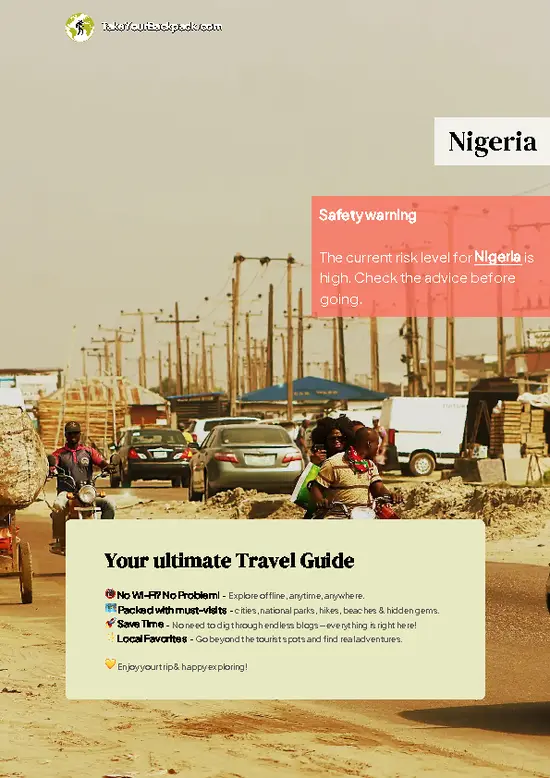
Safety warning

The current risk level for Nigeria is high. Check the advice before going.


Get your Nigeria guide
87 ranked highlights, routes & tips, works offline (322 pages)
Loading the map 🌍
CLICK TO FILTER
cities
towns
landmarks
national parks
hikes
beaches
attractions
festivals
regions
SHOW COUNTRY’S BESTSHOW ALL

✨ Why go?
Ranked #2 national park in Nigeria
What makes this national park worth exploring

Cross River National Park attracts backpackers for several compelling reasons. First, independent exploration is a major draw. The park’s extensive trail network allows you to roam freely, soaking in the lush rainforest and diverse wildlife without the constraints of a guided tour.

Budget-conscious travelers appreciate the affordable camping options and nearby hostels, which provide a comfortable base without breaking the bank. You can pitch your tent under the stars or find a cozy bed in a local hostel, keeping your expenses low while maximizing your experience.

The variety of trails caters to all skill levels, from leisurely walks to challenging hikes. This means you can tailor your adventure to your energy levels and interests, making it ideal for both seasoned trekkers and newcomers. … read more 👉
Cross River National Park attracts backpackers for several compelling reasons. First, independent exploration is a major draw. The park’s extensive trail network allows you to roam freely, soaking in the lush rainforest and diverse wildlife without the constraints of a guided tour.

Budget-conscious travelers appreciate the affordable camping options and nearby hostels, which provide a comfortable base without breaking the bank. You can pitch your tent under the stars or find a cozy bed in a local hostel, keeping your expenses low while maximizing your experience.

The variety of trails caters to all skill levels, from leisurely walks to challenging hikes. This means you can tailor your adventure to your energy levels and interests, making it ideal for both seasoned trekkers and newcomers.

Self-guided travelers thrive here, as the park is designed for those who want to set their own pace. Just be aware of the hidden costs—like park fees or transportation to trailheads—that can sneak up on you. Planning for these will help you preserve your energy and budget for the moments that truly matter.
Want to include Cross River National Park in your Nigeria route?
Create a personalized Nigeria itinerary that includes Cross River National Park and the places that fit your trip — based on your travel style, budget, and available time. Get your route in seconds.

Generate my trip

💡 HighlightsPlaces and moments you shouldn't skip

  • Oban Hills (southern lowland rainforest) — One of West Africa’s largest tracts of primary rainforest: cathedral trees, thick understory and mossy trails. It’s the place for old-growth forest vibes and spectacular, close-up plant life — giant buttress roots, strangler figs and dense ferny gullies.
  • Okwangwo Hills (montane forest and ridges) — Steeper, more rugged country with misty ridgelines and cooler air. The contrast with Oban’s lowland forest is obvious and rewarding for hikers who want viewpoints, different plant communities and the feeling of being properly remote.
  • Kwa River & Kwa Falls — A graceful river winding through forest with attractive cascades and polished pools. Great spot to break a hike, cool off and enjoy forest sounds — the falls are photogenic and a real change of pace
read more 👉
  • Oban Hills (southern lowland rainforest) — One of West Africa’s largest tracts of primary rainforest: cathedral trees, thick understory and mossy trails. It’s the place for old-growth forest vibes and spectacular, close-up plant life — giant buttress roots, strangler figs and dense ferny gullies.
  • Okwangwo Hills (montane forest and ridges) — Steeper, more rugged country with misty ridgelines and cooler air. The contrast with Oban’s lowland forest is obvious and rewarding for hikers who want viewpoints, different plant communities and the feeling of being properly remote.
  • Kwa River & Kwa Falls — A graceful river winding through forest with attractive cascades and polished pools. Great spot to break a hike, cool off and enjoy forest sounds — the falls are photogenic and a real change of pace from the deep jungle.
  • Primate diversity — Drills, mona monkeys, putty-nosed monkeys and chimpanzees all make the park their home. You won’t see them around every bend, but guided walks and patience often pay off with lively troop encounters and unforgettable primate behavior.
  • Cross River gorilla habitat — The park protects some of the last habitat for the critically endangered Cross River gorilla. Sightings are extremely rare, but the ranger patrols and occasional tracking trips give a real sense of how special and fragile this place is.
  • Birdwatching hotspots — A magnet for forest specialists: expect hornbills, turacos, and a clutch of West African endemics. Bring binoculars — dawn and dusk are magic for calls and colorful flocks moving through the canopy.
  • Community camps and ranger-led trails — Local communities (think Ekuri and others nearby) run simple camps and hire guides, so you get hands-on tracking, night walks, and cultural insight. It’s low-budget, authentic, and the best way to see wildlife responsibly.
Spotted a mistake or missing something? Contact us.

🌤️ When to go?Seasonal considerations and timing


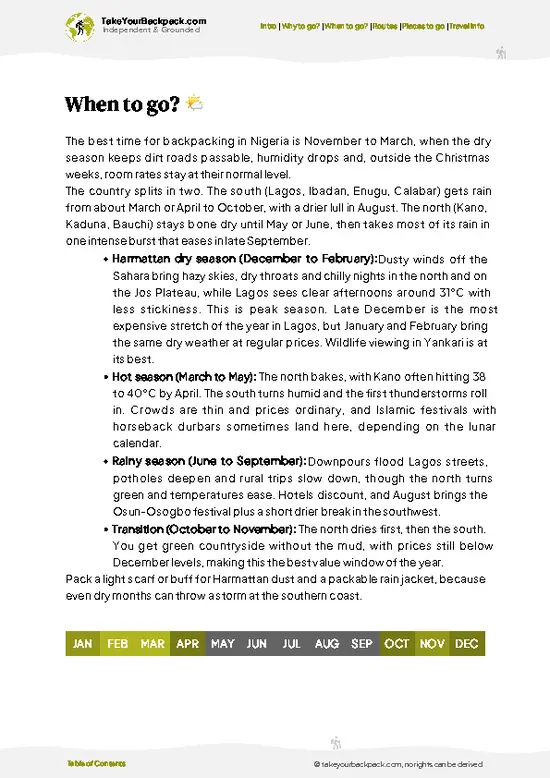
  • Topic: Weather and Temperature – The dry season from November to March is your best bet. Expect daytime highs around 28-32°C (82-90°F) with cooler nights near 20°C (68°F). The wet season (April to October) brings heavy rains, making trails slippery and mosquito activity a real nuisance.

  • Topic: Daylight Hours – Daylight stays fairly consistent year-round, roughly 11 to 12 hours. Plan hikes early to avoid the midday heat and maximize your time on the trails.

  • Topic: Crowds – This park isn’t a tourist hotspot, so crowds are minimal year-round. However, weekends and Nigerian public holidays see a slight uptick in local visitors, especially during the dry season.

  • Topic: Seasonal Activities – Dry months favor wildlife spotting and trekking. The wet season can showcase lush greenery and waterfalls
read more 👉

  • Topic: Weather and Temperature – The dry season from November to March is your best bet. Expect daytime highs around 28-32°C (82-90°F) with cooler nights near 20°C (68°F). The wet season (April to October) brings heavy rains, making trails slippery and mosquito activity a real nuisance.

  • Topic: Daylight Hours – Daylight stays fairly consistent year-round, roughly 11 to 12 hours. Plan hikes early to avoid the midday heat and maximize your time on the trails.

  • Topic: Crowds – This park isn’t a tourist hotspot, so crowds are minimal year-round. However, weekends and Nigerian public holidays see a slight uptick in local visitors, especially during the dry season.

  • Topic: Seasonal Activities – Dry months favor wildlife spotting and trekking. The wet season can showcase lush greenery and waterfalls but expect limited access to some areas due to flooding.

  • Topic: Price Fluctuations – Accommodation and guide fees remain stable but expect slight increases during peak dry months when demand rises. Booking ahead can save you a few bucks.


Pro-tip: Aim for late November or February to dodge rain, avoid local holiday crowds, and enjoy cooler, stable weather—perfect for stretching your legs without wasting energy on soggy trails.


source: climatestotravel.comJANJanuary: excellent for travelingFEBFebruary: excellent for travelingMARMarch: highly recommended for travelingAPRApril: fair for travelingMAYMay: fair for travelingJUNJune: fair for travelingJULJuly: fair for travelingAUGAugust: fair for travelingSEPSeptember: fair for travelingOCTOctober: fair for travelingNOVNovember: highly recommended for travelingDECDecember: excellent for traveling
when-to-go

✈️ The backpacker research shortcutNigeria Travel Guide

An offline-friendly backpacking guide with optimized travel routes, ranked highlights, transport advice, and the best areas to stay.
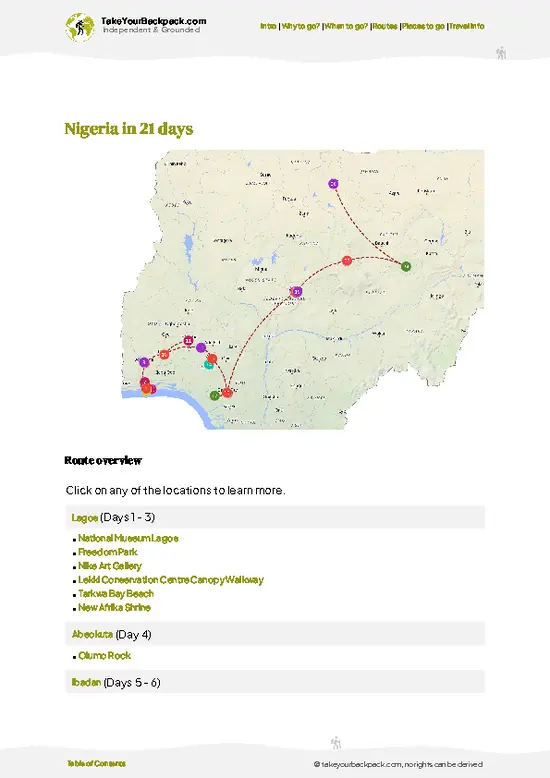
example page 0 from our offline Travel Guide for Nigeria
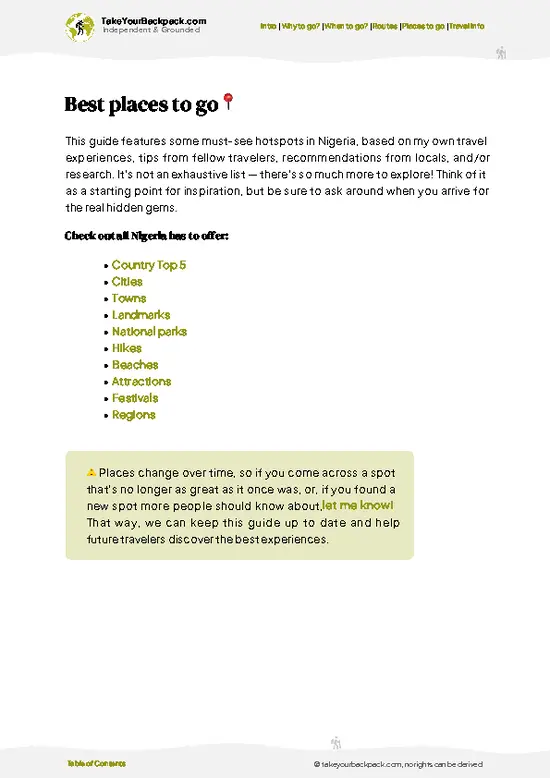
example page 1 from our offline Travel Guide for Nigeria
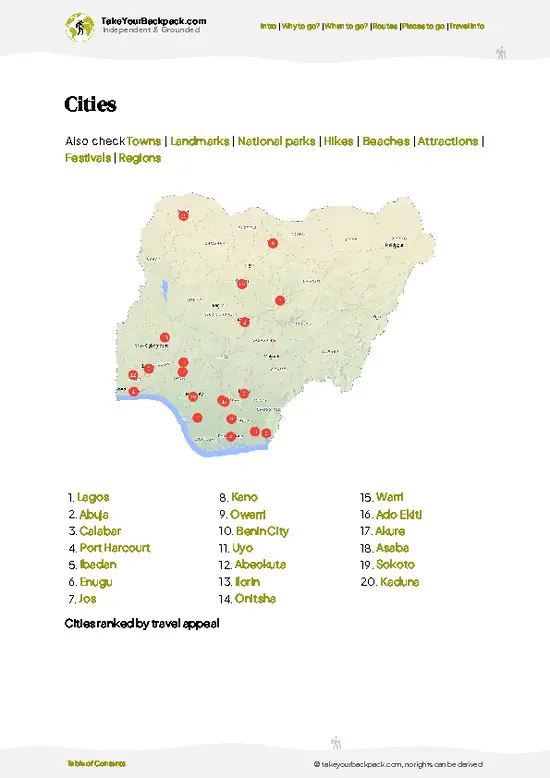
example page 2 from our offline Travel Guide for Nigeria
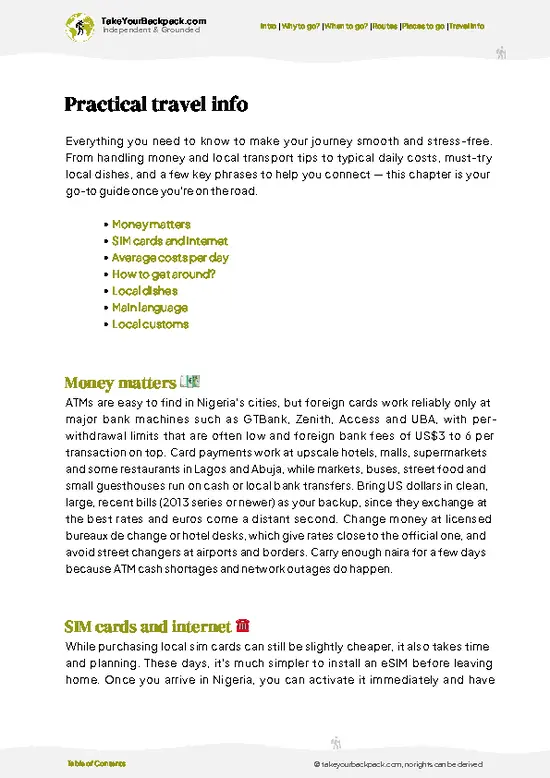
example page 3 from our offline Travel Guide for Nigeria
example page 4 from our offline Travel Guide for Nigeria
example page 5 from our offline Travel Guide for Nigeria
example page 6 from our offline Travel Guide for Nigeria
example page 7 from our offline Travel Guide for Nigeria
The digital guide (322 pages) contains:
87 highlights, ranked by travel appeal
Optimized 7, 14 & 21-day travel routes
Cities, national parks, landmarks, beaches
How to get around
Offline-friendly for travel without Wi-Fi
👉 Click to see all 30+ guide features

📅 Plan smarter in minutes, not weeks
Month by month travel advice
Festivals & national holidays
Budget expectations

🗺️ Go to the right places, skip the overrated ones
Honest pros & cons of destinations
Top hikes, parks & viewpoints
Lesser-known places most travelers miss
Clear “worth it vs skip it” guidance

🛏️ Travel smoothly without rookie mistakes
Best areas to stay
Transport systems explained simply
Common scams & safety advice
SIM cards, money & practical tips

🌍 Understand the country, not just visit it
Culture & traditions
52 Essential phrases & customs
Festivals worth planning around
Traveler-friendly historical context
Insights that make places more meaningful

📱 Built for real travel conditions
Fully downloadable PDF
Works completely offline
Optimized for phone use
Useful in remote areas & buses
Everything in one place
Save weeks of stressful planning
Get instant access to your full guide. 30‑day money-back guarantee.
+ Add another guide for just US$7.80

By proceeding you agree to our terms.
Sent to your inbox immediately after payment • 100% Secure Checkout
Best Backpacking Travel Advisor 2025 tourism awardBest Backpacking
Travel Advisor
2025
What others say about Take Your Backpack Guides:
⭐⭐⭐⭐⭐
Fantastic, amazing amount of information!
⭐⭐⭐⭐⭐
My goodness this is amazing, it's what I've been looking for hats off too you!
⭐⭐⭐⭐⭐
I think this is absolutely BRILLIANT
⭐⭐⭐⭐
Very complete and informative. It's still missing places, but I gotta to commend you
⭐⭐⭐⭐⭐
This is truly amazing, thank you, can't wait to explore it with my kids!
⭐⭐⭐⭐⭐
Awesome resource, thank you!
⭐⭐⭐⭐⭐
This is amazing! Can't wait to explore the ones I haven't seen
⭐⭐⭐⭐
I love this! Well done, great idea.
⭐⭐⭐⭐⭐
Thanks for taking the time to make this gem!
⭐⭐⭐⭐⭐
This might be the best website I've ever seen.
⭐⭐⭐⭐⭐
Congratulations, and thank you so much for your work; it's incredibly valuable.
⭐⭐⭐⭐
In all seriousness I think you did a great job pointing out the important spots
⭐⭐⭐⭐⭐
10/10 very good
⭐⭐⭐⭐⭐
As someone who's only just starting to visit regularly this is awesome, thank you.
⭐⭐⭐⭐
Thank you very much! I'm going to visit my dad, it's going to be very useful!
⭐⭐⭐⭐⭐
This is really cool! We'll be travelling for the first time and this definitely come in handy.
⭐⭐⭐⭐⭐
You are now our minister of culture, congratulations 👨‍💼
⭐⭐⭐⭐⭐
Just wanted to tell you that this is a pearl! Going to follow your recommendations.
⭐⭐⭐⭐⭐
This is so cool. I'll definitely be using the resource for my travels soon.
⭐⭐⭐⭐⭐
This is very impressive! Good work.
⭐⭐⭐⭐⭐
This is an amazing and informative site. Very well done!

🛏️ Where to stay?Where staying makes the most sense

Cross River National Park is a treasure trove of biodiversity, but finding the right place to stay can make or break your experience. Inside the park, accommodation options are limited. The park’s main lodge, the Oban Hilltop Lodge, offers basic amenities and a chance to immerse yourself in the sounds of the forest. However, be prepared for a rustic experience; this isn’t luxury travel.

If you prefer more options, consider staying in nearby towns like Ikom or Calabar. Ikom has a few budget-friendly guesthouses, but they can be hit or miss. Calabar, about an hour’s drive from the park, has a … read more 👉
Cross River National Park is a treasure trove of biodiversity, but finding the right place to stay can make or break your experience. Inside the park, accommodation options are limited. The park’s main lodge, the Oban Hilltop Lodge, offers basic amenities and a chance to immerse yourself in the sounds of the forest. However, be prepared for a rustic experience; this isn’t luxury travel.

If you prefer more options, consider staying in nearby towns like Ikom or Calabar. Ikom has a few budget-friendly guesthouses, but they can be hit or miss. Calabar, about an hour’s drive from the park, has a wider range of accommodations, from hostels to mid-range hotels. The Calabar International Hotel is a solid choice for comfort and access to local culture.

Keep in mind that transportation can be tricky. Public transport is available, but it’s often unreliable. Renting a vehicle or arranging a local guide can save you time and energy. Factor in these logistics to avoid unnecessary stress. Prioritize your budget for experiences in the park, like guided hikes or birdwatching, rather than splurging on fancy accommodations.

👛 Costs (as of 3 September 2026)Typical daily expenses

Visiting Cross River National Park in Nigeria can be an incredible experience, but it’s essential to be aware of the costs involved to avoid any surprises.

Entrance fees typically range from $5 to $10 per person. This fee grants you access to the park’s stunning biodiversity and trails. However, if you plan to engage in guided tours or activities, expect to pay extra. Guided tours can cost anywhere from $30 to $100, depending on the length and type of experience.

Accommodation options vary widely. Basic lodges or campsites might start around $20 per night, while more comfortable options can go up to $100 or more. Always check what’s included in the price—some places may charge extra for meals or amenities.

Transportation is another factor. If you’re traveling from nearby towns, budget … read more 👉
Visiting Cross River National Park in Nigeria can be an incredible experience, but it’s essential to be aware of the costs involved to avoid any surprises.

Entrance fees typically range from $5 to $10 per person. This fee grants you access to the park’s stunning biodiversity and trails. However, if you plan to engage in guided tours or activities, expect to pay extra. Guided tours can cost anywhere from $30 to $100, depending on the length and type of experience.

Accommodation options vary widely. Basic lodges or campsites might start around $20 per night, while more comfortable options can go up to $100 or more. Always check what’s included in the price—some places may charge extra for meals or amenities.

Transportation is another factor. If you’re traveling from nearby towns, budget for local transport, which can range from $10 to $30, depending on the distance and mode of transport.

Lastly, consider the costs of food and water. Meals can be inexpensive, around $5 to $15, but it’s wise to carry some snacks and extra water, especially if you plan on hiking.

By keeping these costs in mind, you can better manage your budget and focus on enjoying the park’s natural beauty without the stress of unexpected expenses.
⚠️ Prices can change and everyone travels differently, so take this as a rough guide. Hope it helps you plan your adventure!

🥾 TrailsBest hikes in Cross River national park

Cross River National Park is a hidden gem for hikers looking to immerse themselves in Nigeria’s lush landscapes and rich biodiversity. The park features dense rainforests, rolling hills, and stunning river views, making it a feast for the eyes. The terrain can be quite challenging, with muddy paths and steep inclines, so be prepared for a workout. Wildlife enthusiasts will love the chance to spot rare species, including the Cross River gorilla and various primates, birds, and butterflies flitting about.

One of the notable trails is the Oban Trail. Here are the details:
  • Length: 10 kilometers
  • Estimated
read more 👉
Cross River National Park is a hidden gem for hikers looking to immerse themselves in Nigeria’s lush landscapes and rich biodiversity. The park features dense rainforests, rolling hills, and stunning river views, making it a feast for the eyes. The terrain can be quite challenging, with muddy paths and steep inclines, so be prepared for a workout. Wildlife enthusiasts will love the chance to spot rare species, including the Cross River gorilla and various primates, birds, and butterflies flitting about.

One of the notable trails is the Oban Trail. Here are the details:
  • Length: 10 kilometers
  • Estimated Duration: 4-5 hours
  • Difficulty Level: Moderate to Challenging
  • Key Features: Scenic views of the rainforest, potential wildlife sightings, and the chance to explore local flora
  • Terrain: Muddy paths, steep climbs, and sections that may require some scrambling

Getting to Cross River National Park can be a bit of an adventure in itself. Public transport options are available, but they can be limited, so it’s wise to plan ahead. Buses or shared taxis from nearby towns can get you close, but expect some delays and bumpy roads. The park isn’t usually overcrowded, which is a plus, but weekends can bring in more visitors, especially locals. As for the entrance fee, it’s quite budget-friendly, so you won’t break the bank just to soak in all that natural beauty.
⚠️ Hiking info can sometimes be outdated or inaccurate. Before you hit the trail, check the latest conditions with locals. If you do spot anything that's off, I'd love to hear from you, so I can update it for fellow travelers.

🛡️ SafetyScams, Hazards, and Annoyances

Cross River National Park offers a rich experience, but it’s essential to be prepared. The weather can shift quickly, with sudden rain showers common, especially during the wet season. Dress in layers and carry a reliable rain jacket to stay comfortable.

Terrain varies significantly. Expect steep sections and uneven footing, particularly on less-traveled paths. Good hiking boots with solid grip are non-negotiable. Navigation can be tricky; download offline maps and familiarize yourself with trail markers.

Wildlife encounters are part of the adventure. While you might spot monkeys or various bird species, keep your distance. Don’t feed animals; it disrupts their natural behavior.

First-timers often underestimate the physical demands. Pace yourself, especially on longer hikes. Start early … read more 👉
Cross River National Park offers a rich experience, but it’s essential to be prepared. The weather can shift quickly, with sudden rain showers common, especially during the wet season. Dress in layers and carry a reliable rain jacket to stay comfortable.

Terrain varies significantly. Expect steep sections and uneven footing, particularly on less-traveled paths. Good hiking boots with solid grip are non-negotiable. Navigation can be tricky; download offline maps and familiarize yourself with trail markers.

Wildlife encounters are part of the adventure. While you might spot monkeys or various bird species, keep your distance. Don’t feed animals; it disrupts their natural behavior.

First-timers often underestimate the physical demands. Pace yourself, especially on longer hikes. Start early in the day to avoid the heat and give yourself ample time to explore without rushing. Respect the trails and leave no trace; this ensures the park remains pristine for future visitors.

FAQCommon questions from travelers

3 to 4 days are ideal to explore Cross River National Park thoroughly, allowing time for hiking, wildlife viewing, and visiting key sites like the Oban Hills and the Afi Mountain Wildlife Sanctuary.
Yes, you can visit Cross River National Park without a car by using local transport options such as buses or shared taxis from Calabar, but having a car or arranging guided tours is recommended for easier access to remote areas within the park.
Yes, there is an entrance fee and permit required to enter Cross River National Park, typically around 2,000 to 5,000 Nigerian Naira for foreigners, payable at the park entrance or through authorized tour operators.
⚠️ Things can change over time, so always validate details locally before you go.

Other Nigerian national parks near Cross River

Explore more nearby:


💡 Not sure where to go next?
Create a personalized itinerary for Nigeria including Cross River and the places that fit your trip.

Generate my itinerary

👉 Discover all national parks

Or checkout all Nigeria has to offer (think cities, towns, villages, national parks, hikes, beaches, festivals)
Country photo of Nigeria

We 💚 feedbackKey takeaways before you go

Cross River National Park is a treasure, but it demands respect. The humidity can be relentless, so pack light, breathable clothing. Don’t underestimate the trails; they can be tougher than they look. The best surprise? The vibrant local culture and the warmth of the communities nearby. Engage with the locals; their stories add depth to your experience. Just remember, the park’s beauty is best enjoyed when you’re prepared. Keep your energy for the moments that matter, and you’ll leave with memories that stick.

✍️ Help improve this page!
The information on this page is based on in-depth research, insights shared by experienced travelers, and feedback from the local travel community in Nigeria. While every effort is made to keep the information accurate and current, conditions can change — so if you spot anything incorrect or outdated, please get in touch.


🙋‍♂️ Give feedback

👋 Meet the founderWho’s Behind Take Your Backpack?

Johan, backpacker and founder of TakeYourBackpackHi, I’m Johan (Netherlands 🇳🇱), the creator of TakeYourBackpack. Over the past decade, I’ve backpacked through 80+ countries across six continents, gaining extensive experience with independent travel, long-term trips, and overland routes.

This site is built on a combination of firsthand travel experience and carefully curated insights from other backpackers. Many guides are based on places I’ve personally visited, while others bring together tips, observations, and practical advice shared by trusted travelers I’ve met along the way.

The goal is to provide realistic, experience-driven guidance — not generic itineraries — so you can explore destinations with better context, clearer expectations, and more confidence.

Get full Nigeria guide •
Instant download • 87 highlights • Full Offline guide