
×

Nigeria🇳🇬 | unique sitesNok Village
terracotta artifacts, archaeological site, early civilization | things to do and best time to go

Explore Kano City WallsExplore Ogbunike Caves

Backpacking in Nok Village
👌 Worth visitingunique site ranked #7
By Johan Kruseman 🇳🇱 | Updated May 5, 2026

A kid’s laughter bounces off clay walls as you crouch beside a potter, hands slick with red earth, the air thick with woodsmoke and the metallic tang of fired terracotta. This is Nok Village, tucked into the rolling hills of Kaduna State, central Nigeria—about as far from a curated museum as you can get. Here’s the truth: you won’t find crowds jostling for selfies or glossy signs pointing the way. The wow-factor isn’t in a single artifact, but in the living pulse of a community that’s been shaping clay for millennia. Yes, getting here takes grit—roads are rough, public transport is patchy, and there’s no tourist infrastructure to soften the edges. But if you want to feel history under your fingernails, not just see it behind glass, Nok delivers the real magic.

Discover everything you want to know in the 📖 Nigeria Travel Guide.
Safety warning

The current risk level for Nigeria is high. Check the advice before going.


Get your Nigeria Travel Guide
Loading the map 🌍
CLICK TO FILTER
city
town
unique site
national park
hike
beach
attraction
festival
region
SHOW COUNTRY‘S BESTSHOW ALL

✨ Why go?
Ranked #7 unique site in Nigeria
What makes it a must-see unique site

Nok Village in Nigeria isn’t just another stop; it’s a gateway to history. Sure, you’ll dodge crowds and the occasional selfie stick, but what you gain is authenticity. This village is the cradle of the Nok culture, known for its ancient terracotta sculptures dating back over 2,500 years.

The cost? Minimal. You can explore the site without breaking the bank, making it a backpacker’s dream. Plus, it fits perfectly into a broader route through Nigeria, allowing you to soak in the richness of local life.

You’ll find the real magic in the stories shared by locals, the vibrant markets, and the chance to witness traditional crafts. This isn’t just a photo op; it’s a chance to connect with a culture that’s often overlooked. So, if you’re in Nigeria, don’t just pass through—make time for Nok Village. … read more 👉
Nok Village in Nigeria isn’t just another stop; it’s a gateway to history. Sure, you’ll dodge crowds and the occasional selfie stick, but what you gain is authenticity. This village is the cradle of the Nok culture, known for its ancient terracotta sculptures dating back over 2,500 years.

The cost? Minimal. You can explore the site without breaking the bank, making it a backpacker’s dream. Plus, it fits perfectly into a broader route through Nigeria, allowing you to soak in the richness of local life.

You’ll find the real magic in the stories shared by locals, the vibrant markets, and the chance to witness traditional crafts. This isn’t just a photo op; it’s a chance to connect with a culture that’s often overlooked. So, if you’re in Nigeria, don’t just pass through—make time for Nok Village. It’s a rewarding experience that adds depth to your journey.
Get the complete Travel Guide for Nigeria
Everything organized for offline planning — routes, highlights, costs & tips

See what’s inside 👉

Get the Travel Guide -

💡 HighlightsThe experiences that define the visit

  • Ancient Nok Terracotta Sculptures — The real headline: distinctive, expressive terracotta heads and figurines dating back roughly to the first millennium BCE-early CE. Seeing the style up close (elongated faces, intricate hairstyles) is like meeting a lost art tradition that predates many West African states.
  • Archaeological Areas and Finds-in-Place — Patches of excavation and concentrations of broken terracotta give you a tangible feel for where artifacts were discovered — it’s archaeology you can walk through rather than only view behind glass.
  • Living Pottery Traditions — Local potters still work with hand techniques descended from long craft histories; watching a pot being shaped or buying a locally made piece links the ancient objects to present-day practice.
  • Village Walks and Everyday
read more 👉
  • Ancient Nok Terracotta Sculptures — The real headline: distinctive, expressive terracotta heads and figurines dating back roughly to the first millennium BCE-early CE. Seeing the style up close (elongated faces, intricate hairstyles) is like meeting a lost art tradition that predates many West African states.
  • Archaeological Areas and Finds-in-Place — Patches of excavation and concentrations of broken terracotta give you a tangible feel for where artifacts were discovered — it’s archaeology you can walk through rather than only view behind glass.
  • Living Pottery Traditions — Local potters still work with hand techniques descended from long craft histories; watching a pot being shaped or buying a locally made piece links the ancient objects to present-day practice.
  • Village Walks and Everyday Life — Strolling the lanes offers authentic village rhythms: markets, kids playing, compounds and conversations. It’s a good chance to see how the site’s name and heritage matter to people who live there now.
  • Simple Local Museums/Displays — Small community displays and roadside collections often show original and replica pieces with basic interpretation — low-key museums that are raw but informative, ideal for budget travelers who want context without the crowds.
  • Plateau Views and Short Hikes — The surrounding savanna and rocky outcrops give pleasant, unpretentious scenery; short walks reward you with wide sky photography and a break from the artifacts-heavy visit.
  • Oral Histories and Storytelling — Chats with elders or local guides bring myths, names, and local perspectives to the ruins — the human stories that put the ancient terracottas into cultural context.
Spotted a mistake or missing something? Contact us.

🌤️ When to go?Best time to visit Nok Village


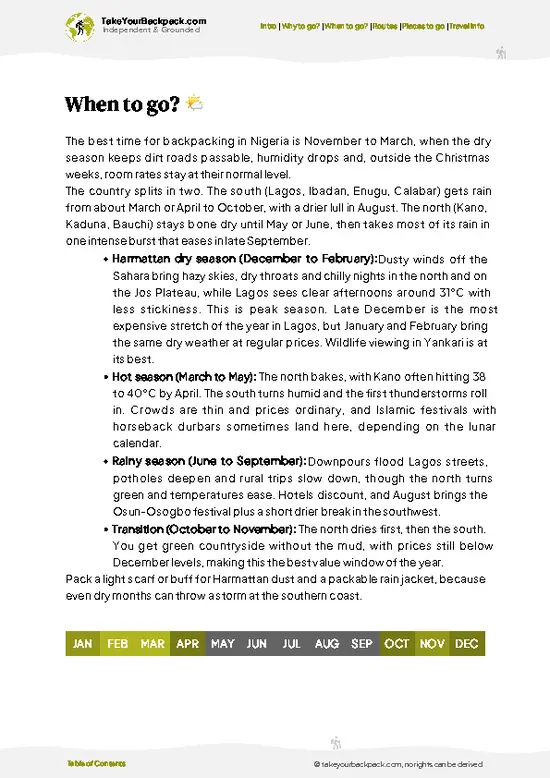
  • Weather: The dry season from November to March is your best bet. Expect clear skies and minimal rain, which means muddy trails won’t slow you down. The rainy season (April to October) can turn the village paths into slippery messes, making trekking a slog rather than a joy.

  • Temperature: Daytime temps hover around 28-32°C (82-90°F) during the dry season—warm but manageable. Nights cool down to about 18-22°C (64-72°F), perfect for camping without sweating buckets.

  • Daylight Hours: Nigeria’s near-equatorial location means roughly 11-12 hours of daylight year-round. Early mornings and late afternoons are golden hours for photos and exploring without the harsh midday sun.

  • Crowds: Nok Village isn’t exactly a tourist hotspot, but the dry season draws more visitors, especially December and January.
read more 👉

  • Weather: The dry season from November to March is your best bet. Expect clear skies and minimal rain, which means muddy trails won’t slow you down. The rainy season (April to October) can turn the village paths into slippery messes, making trekking a slog rather than a joy.

  • Temperature: Daytime temps hover around 28-32°C (82-90°F) during the dry season—warm but manageable. Nights cool down to about 18-22°C (64-72°F), perfect for camping without sweating buckets.

  • Daylight Hours: Nigeria’s near-equatorial location means roughly 11-12 hours of daylight year-round. Early mornings and late afternoons are golden hours for photos and exploring without the harsh midday sun.

  • Crowds: Nok Village isn’t exactly a tourist hotspot, but the dry season draws more visitors, especially December and January. If you want solitude, aim for shoulder months like November or February.

  • Seasonal Activities: The dry season aligns with local festivals and traditional ceremonies, offering a rare window into authentic Nok culture. The rainy season sees fewer events and more indoor downtime.

  • Price Fluctuations: Expect higher prices for guides and accommodation during peak dry months due to demand. Off-season travel can save you money but comes with the risk of rain disrupting plans.


Pro-tip: Visit just before or after peak dry season to dodge crowds and inflated prices while still enjoying mostly dry, pleasant weather.


source: climatestotravel.comJANJanuary: excellent for travelingFEBFebruary: highly recommended for travelingMARMarch: highly recommended for travelingAPRApril: fair for travelingMAYMay: fair for travelingJUNJune: below average for travelingJULJuly: below average for travelingAUGAugust: below average for travelingSEPSeptember: fair for travelingOCTOctober: fair for travelingNOVNovember: highly recommended for travelingDECDecember: excellent for traveling
when-to-go

✈️ The backpacker research shortcutNigeria Travel Guide

An offline-friendly backpacking guide with optimized travel routes, ranked highlights, transport advice, and the best areas to stay.
example page 0 from our offline Travel Guide for Nigeriaexample page 1 from our offline Travel Guide for Nigeriaexample page 2 from our offline Travel Guide for Nigeriaexample page 3 from our offline Travel Guide for Nigeriaexample page 4 from our offline Travel Guide for Nigeriaexample page 5 from our offline Travel Guide for Nigeria
The digital guide (286 pages) contains:
89 highlights, ranked by travel appeal
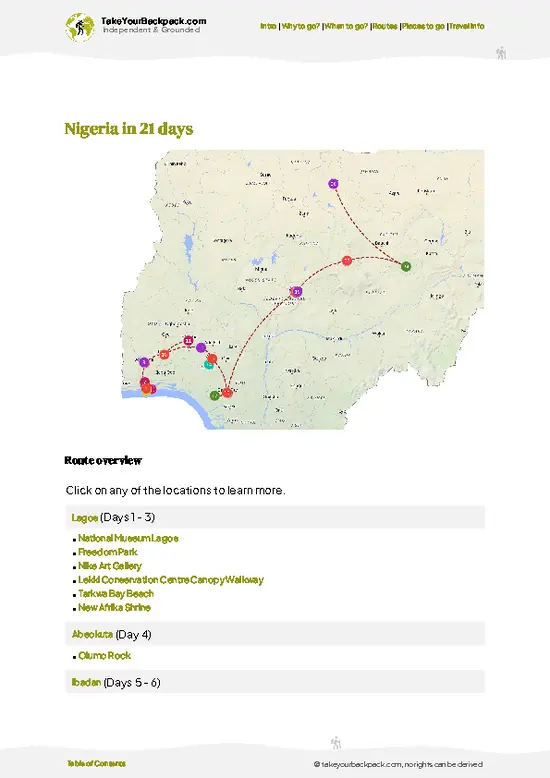
Optimized 7, 14 & 21-day travel routes
Best neighborhoods to stay
How to get around
Offline-friendly for travel without Wi-Fi
👉 See all 30+ guide features

📅 Plan smarter in minutes, not weeks
Month by month travel advice
Festivals & national holidays
Budget expectations

🗺️ Go to the right places, skip the overrated ones
Honest pros & cons of destinations
Top hikes, parks & viewpoints
Lesser-known places most travelers miss
Clear “worth it vs skip it” guidance

🛏️ Travel smoothly without rookie mistakes
Best areas to stay
Transport systems explained simply
Common scams & safety advice
SIM cards, money & practical tips

🌍 Understand the country, not just visit it
Culture & traditions
52 Essential phrases & customs
Festivals worth planning around
Traveler-friendly historical context
Insights that make places more meaningful

📱 Built for real travel conditions
Fully downloadable PDF
Works completely offline
Optimized for phone use
Useful in remote areas & buses
Everything in one place
Save weeks of stressful planning
Get instant access to the full guide directly. 30-day money-back guarantee.


Sent to your inbox immediately after payment • 100% Secure Checkout
Best Backpacking Travel Advisor 2025 tourism awardBest Backpacking
Travel Advisor
2025
What others say about Take Your Backpack Guides:
⭐⭐⭐⭐⭐
Fantastic, amazing amount of information!
⭐⭐⭐⭐⭐
My goodness this is amazing, it's what I've been looking for hats off too you!
⭐⭐⭐⭐⭐
I think this is absolutely BRILLIANT
⭐⭐⭐⭐
Very complete and informative. It's still missing places, but I gotta to commend you
⭐⭐⭐⭐⭐
This is truly amazing, thank you, can't wait to explore it with my kids!
⭐⭐⭐⭐⭐
Awesome resource, thank you!
⭐⭐⭐⭐⭐
This is amazing! Can't wait to explore the ones I haven't seen
⭐⭐⭐⭐
I love this! Well done, great idea.
⭐⭐⭐⭐⭐
Thanks for taking the time to make this gem!
⭐⭐⭐⭐⭐
This might be the best website I've ever seen.
⭐⭐⭐⭐⭐
Congratulations, and thank you so much for your work; it's incredibly valuable.
⭐⭐⭐⭐
In all seriousness I think you did a great job pointing out the important spots
⭐⭐⭐⭐⭐
10/10 very good
⭐⭐⭐⭐⭐
As someone who's only just starting to visit regularly this is awesome, thank you.
⭐⭐⭐⭐
Thank you very much! I'm going to visit my dad, it's going to be very useful!
⭐⭐⭐⭐⭐
This is really cool! We'll be travelling for the first time and this definitely come in handy.
⭐⭐⭐⭐⭐
You are now our minister of culture, congratulations 👨‍💼
⭐⭐⭐⭐⭐
Just wanted to tell you that this is a pearl! Going to follow your recommendations.
⭐⭐⭐⭐⭐
This is so cool. I'll definitely be using the resource for my travels soon.
⭐⭐⭐⭐⭐
This is very impressive! Good work.
⭐⭐⭐⭐⭐
This is an amazing and informative site. Very well done!

🛏️ Where to stay?Where staying makes the most sense

Nok Village, with its ancient terracotta sculptures, is a treasure trove for those seeking authenticity. But let’s get real: the crowds can be overwhelming, especially during peak tourist seasons. You’ll want to stay somewhere that balances proximity with a bit of peace.

Consider the nearby town of Jos. It’s a hub for backpackers, offering a mix of budget accommodations and a vibrant local scene. The atmosphere is friendly, and you’ll find fellow travelers eager to share stories over a meal. Plus, Jos has a cooler climate, which is a refreshing break from the heat.

Another option is to look … read more 👉
Nok Village, with its ancient terracotta sculptures, is a treasure trove for those seeking authenticity. But let’s get real: the crowds can be overwhelming, especially during peak tourist seasons. You’ll want to stay somewhere that balances proximity with a bit of peace.

Consider the nearby town of Jos. It’s a hub for backpackers, offering a mix of budget accommodations and a vibrant local scene. The atmosphere is friendly, and you’ll find fellow travelers eager to share stories over a meal. Plus, Jos has a cooler climate, which is a refreshing break from the heat.

Another option is to look at smaller villages surrounding Nok. These spots often have guesthouses run by locals who are more than happy to share their culture and insights. You’ll get a taste of daily life, and the hospitality is genuine.

Safety is generally good, but stick to well-traveled areas and trust your instincts. The real magic of Nok isn’t just in the sculptures; it’s in the connections you make along the way.

👛 Costs (as of 23 February 2026)Typical daily expenses

Visiting Nok Village in Nigeria is a journey into a world of ancient artistry and culture, but it comes with its own set of costs. Here’s a breakdown to help you plan your adventure.
  • Accommodation: Expect to pay between $20 to $50 per night for basic lodgings. Options range from local guesthouses to more comfortable hotels. The closer you are to the village, the more authentic the experience, but amenities may be limited.
  • Food: Meals can cost anywhere from $5 to $15. Street food is a great way to taste local flavors without breaking the bank. Restaurants in the area offer traditional dishes, but prices can vary based on location and type of meal.
  • Transportation: Getting to Nok Village from major cities like Abuja or Jos can cost around $30 to $100, depending on your mode of transport. Public
read more 👉
Visiting Nok Village in Nigeria is a journey into a world of ancient artistry and culture, but it comes with its own set of costs. Here’s a breakdown to help you plan your adventure.
  • Accommodation: Expect to pay between $20 to $50 per night for basic lodgings. Options range from local guesthouses to more comfortable hotels. The closer you are to the village, the more authentic the experience, but amenities may be limited.
  • Food: Meals can cost anywhere from $5 to $15. Street food is a great way to taste local flavors without breaking the bank. Restaurants in the area offer traditional dishes, but prices can vary based on location and type of meal.
  • Transportation: Getting to Nok Village from major cities like Abuja or Jos can cost around $30 to $100, depending on your mode of transport. Public buses are cheaper but less comfortable. Hiring a private taxi or driver is more convenient but pricier.
  • Entrance Fees: There’s typically no formal entrance fee for the village itself, but some local guides may charge around $10 to $20 for a tour. This is worth it for the insights into the rich history and culture of the area.
  • Activities: Engaging with local artisans or participating in workshops can cost between $10 to $50. These experiences are invaluable for understanding the craftsmanship behind the famous Nok terracotta sculptures.

Plan your budget wisely, and you’ll find that the real magic of Nok Village lies in its culture and community, not just the price tag.
⚠️ Prices can change and everyone travels differently, so take this as a rough guide. Hope it helps you plan your adventure!

Other Nigerian unique sites near Nok Village

Explore more nearby:

  • Aso Rock—granite monolith, Abuja skyline, panoramic city views| 70 km away
  • Kano City Walls—ancient ramparts, city gates, mud-brick fortifications| 282 km away
  • Awhum Waterfall—cascading water, limestone cliffs, cool grotto| 336 km away

👉 Discover all unique sites

Or checkout all Nigeria has to offer (think cities, towns, villages, national parks, hikes, beaches, festivals)
Country photo of Nigeria

We 💚 feedbackKey takeaways before you go

Nok Village isn’t what you’ll see on Instagram. Expect crowds, especially during festivals, and prices that can surprise you. But here’s the kicker: the real magic lies in the warmth of the locals and the ancient terracotta sculptures that whisper stories of a rich past. Don’t rush through; take time to connect. Just be ready for the heat—it’s intense. Trust me, the experience is worth every bead of sweat.

✍️ Help improve this page!
The information on this page is based on in-depth research, insights shared by experienced travelers, and feedback from the local travel community in Nigeria. While every effort is made to keep the information accurate and current, conditions can change — so if you spot anything incorrect or outdated, please get in touch.


🙋‍♂️ Give feedback

👋 Meet the founderWho’s Behind Take Your Backpack?

Johan, backpacker and founder of TakeYourBackpackHi, I’m Johan (Netherlands 🇳🇱), the creator of TakeYourBackpack. Over the past decade, I’ve backpacked through 80+ countries across six continents, gaining extensive experience with independent travel, long-term trips, and overland routes.

This site is built on a combination of firsthand travel experience and carefully curated insights from other backpackers. Many guides are based on places I’ve personally visited, while others bring together tips, observations, and practical advice shared by trusted travelers I’ve met along the way.

The goal is to provide realistic, experience-driven guidance — not generic itineraries — so you can explore destinations with better context, clearer expectations, and more confidence.

Get Full Country Guide |
Instant download • 89 highlights • Full Offline guide