×

Nigeria🇳🇬 | best landmarksWhere to Find the 8 Best landmarks in Nigeria

Exploring the best unique sites in Nigeria is a journey through a rich tapestry of culture, history, and nature. Unique sites here are defined by their cultural significance, historical depth, and natural beauty, each offering a distinct experience that varies by region and season. From the ancient walls of Kano to the vibrant markets of Lagos, the scale and vibe of these sites can dramatically affect your backpacking adventure.

In Nigeria, accessibility can be a mixed bag. Some sites are well-connected, while others require a bit of grit and planning. Choosing the right unique site impacts your budget, safety, and overall experience. For instance, visiting during the dry season can enhance your travel ease, while certain festivals can elevate your cultural immersion. Understanding these nuances will help you navigate your options, ensuring you spend your energy and resources on experiences that truly resonate.

By Johan Kruseman 🇳🇱 | Updated June 9, 2026
Explore the best national parks in Nigeria

Why go?Why These unique site Stand Out

Unique sites in Nigeria matter because they encapsulate a rich tapestry of cultural, historical, and natural significance that sets the country apart from others. Nigeria’s diverse ethnic groups, each with their own traditions and languages, create a vibrant cultural landscape. This diversity is reflected in festivals, art, and music that are deeply rooted in the local heritage. Unlike many countries, Nigeria offers a blend of ancient civilizations and modern influences, making its historical sites a fascinating study in contrasts.

Geographically, Nigeria boasts a variety of landscapes, from the arid north to the lush south, each offering unique ecosystems and biodiversity. This variety not only enhances the natural beauty but also provides opportunities for ecotourism. However, the country’s … read more 👉
Unique sites in Nigeria matter because they encapsulate a rich tapestry of cultural, historical, and natural significance that sets the country apart from others. Nigeria’s diverse ethnic groups, each with their own traditions and languages, create a vibrant cultural landscape. This diversity is reflected in festivals, art, and music that are deeply rooted in the local heritage. Unlike many countries, Nigeria offers a blend of ancient civilizations and modern influences, making its historical sites a fascinating study in contrasts.

Geographically, Nigeria boasts a variety of landscapes, from the arid north to the lush south, each offering unique ecosystems and biodiversity. This variety not only enhances the natural beauty but also provides opportunities for ecotourism. However, the country’s infrastructure can be a double-edged sword. While some areas are accessible, others require considerable travel time, which can detract from the depth of exploration. Understanding the climatic conditions is crucial; the rainy season can limit access to certain sites, while the dry season might be more favorable for travel but can also bring crowds.

Travelers should weigh the trade-offs between accessibility and immersive experiences. Some of the most profound encounters may require venturing off the beaten path, which can be challenging but rewarding. Additionally, peak visitor periods can lead to overcrowding, diminishing the experience.

In summary, Nigeria’s unique sites are not just places to visit; they are gateways to understanding a complex and vibrant nation. However, being aware of the constraints and trade-offs involved will help preserve both energy and budget for the moments that truly matter.
Evaluating the Top Choices
The list of best unique sites in Nigeria is created based on history or culture, wow factor, atmosphere, quirks, and memorability. If you feel a unique site is missing in this list, please let us know.

When to go?Timing Your Visit for the Best Experience

Seasonality and Unique Sites in Nigeria


Nigeria’s unique sites are best experienced when the weather cooperates. The dry season, typically from November to March, offers the most favorable conditions. Expect less rain, clearer skies, and comfortable temperatures. This is prime time for exploring, as visibility is at its peak.

However, the dry season also brings crowds. Popular sites can feel congested, and prices for accommodations may spike. If avoiding the hustle is a priority, consider the shoulder months of October and April. These transitional periods can still offer decent weather while allowing for a more relaxed experience. Just be prepared for the occasional rain shower, especially in October.

The rainy season, from April to October, presents its own challenges. Heavy downpours … read more 👉

Seasonality and Unique Sites in Nigeria


Nigeria’s unique sites are best experienced when the weather cooperates. The dry season, typically from November to March, offers the most favorable conditions. Expect less rain, clearer skies, and comfortable temperatures. This is prime time for exploring, as visibility is at its peak.

However, the dry season also brings crowds. Popular sites can feel congested, and prices for accommodations may spike. If avoiding the hustle is a priority, consider the shoulder months of October and April. These transitional periods can still offer decent weather while allowing for a more relaxed experience. Just be prepared for the occasional rain shower, especially in October.

The rainy season, from April to October, presents its own challenges. Heavy downpours can limit access to certain areas, particularly those that are less developed. Roads may become impassable, and some sites might close temporarily. Yet, this season also has its perks. The landscape transforms into a lush, vibrant green, and the air is fresh. Plus, fewer tourists mean lower prices and a more intimate experience with the local culture.

Cultural festivals often align with specific seasons, adding another layer to the travel experience. These events can draw large crowds, so planning around them can be crucial. While they offer a unique glimpse into local traditions, they can also complicate logistics.

Understanding these seasonal dynamics is key to maximizing the experience. Choose your timing wisely to avoid the pitfalls of peak crowds or adverse weather. The right season can make all the difference in enjoying Nigeria’s rich tapestry of unique sites.

unique site hoppingTips for Visiting Multiple Destinations

General Routing Logic

Nigeria is vast, and its unique sites are spread across diverse regions. Start by clustering sites geographically. The North offers rich cultural heritage and historical landmarks, while the South boasts vibrant cities and natural wonders. Traveling from Lagos to Abuja, then heading north to Kano or Sokoto, creates a logical flow. This minimizes backtracking and maximizes your time at each site.

Typical Time Needed

Plan for at least half a day at major sites. For instance, the National Museum in Lagos deserves a few hours, while the Olumo Rock in Abeokuta can take a full afternoon. Factor in travel time between locations, which can vary significantly. Expect 2-4 hours of driving between major cities, depending on traffic and road conditions.

Common Planning Mistakes

read more 👉

General Routing Logic

Nigeria is vast, and its unique sites are spread across diverse regions. Start by clustering sites geographically. The North offers rich cultural heritage and historical landmarks, while the South boasts vibrant cities and natural wonders. Traveling from Lagos to Abuja, then heading north to Kano or Sokoto, creates a logical flow. This minimizes backtracking and maximizes your time at each site.

Typical Time Needed

Plan for at least half a day at major sites. For instance, the National Museum in Lagos deserves a few hours, while the Olumo Rock in Abeokuta can take a full afternoon. Factor in travel time between locations, which can vary significantly. Expect 2-4 hours of driving between major cities, depending on traffic and road conditions.

Common Planning Mistakes

One common pitfall is overloading the itinerary. Trying to cram too many sites into a short time can lead to burnout. Prioritize quality over quantity. Choose a few key sites and allow for flexibility. This way, if a local festival or event pops up, you can adjust your plans without stress.

Trade-offs and Constraints

Balancing speed and depth is crucial. Rushing through sites may save time but can rob the experience of its richness. Budget constraints also play a role; some areas may require more expensive accommodations or transport. Weigh comfort against cost. Sometimes, a slightly pricier option can enhance the overall experience, especially in remote areas where amenities are limited.

Realistic Pacing

Maintain a pace that allows for exploration and spontaneity. Allow for downtime to absorb the local culture. Nigeria’s charm lies in its people and stories, which often unfold in unplanned moments. Strategic planning is essential, but so is the willingness to embrace the unexpected.

The ListThe Best landmarks of Nigeria

1 Olumo Rock

granite outcrop, ancient hideout, Abeokuta views

Climb winding stairs and natural crevices to discover panoramic vistas and the stories of those who once found refuge here.

2 Ogbunike Caves

underground chambers, sacred tunnels, bat colonies

Venture into a labyrinth of cool, echoing passageways, where tradition and nature intertwine beneath the forest floor.

3 Aso Rock

granite monolith, Abuja skyline, panoramic city views

Climb above the capital’s bustle to experience a striking natural outcrop, where city life and ancient geology meet in quiet contrast.

4 Erin Ijesha Waterfall

multi-level falls, rainforest trail, natural pools

Ascend through lush forest, pausing at each tier to swim or rest, as the falls reveal new perspectives with every climb.

5 Awhum Waterfall

cascading water, limestone cliffs, cool grotto

Follow a shaded path to a cool cascade, where water carves through rock and the air is thick with mist and birdsong.

6 Kano City Walls

ancient ramparts, city gates, mud-brick fortifications

Trace the outline of centuries-old defenses, where the city’s layered history is etched into every weathered wall and gateway.

7 Nok Village

terracotta artifacts, archaeological site, early civilization

Encounter the legacy of an ancient culture, where fragments of artistry and daily life offer a window into West Africa’s distant past.

8 Awhum Monastery

Benedictine community, forested retreat, spiritual silence

Step into a secluded sanctuary where daily rituals, quiet contemplation, and forested surroundings create a rare sense of stillness.

Loading the map 🌍

Expert viewInsights from Locals and Experts

Significance
Nigeria is a land of contrasts, where ancient traditions collide with modern aspirations. The unique sites here are not just places; they’re stories waiting to be uncovered. From the sacred shrines of the Yoruba to the vibrant markets of the North, each site offers a glimpse into the rich tapestry of Nigerian culture. But here’s the kicker: you can’t just hop from one to another without a plan. Prioritize sites based on your interests—history, culture, or nature—and be prepared to invest time in each. You’ll want to absorb the atmosphere, not just check boxes on a list.

Access Constraints
Getting to these unique sites can be a challenge. Infrastructure varies widely; some areas are well-connected, while others require a bit of grit. Expect to navigate a mix of paved roads and … read more 👉
Significance
Nigeria is a land of contrasts, where ancient traditions collide with modern aspirations. The unique sites here are not just places; they’re stories waiting to be uncovered. From the sacred shrines of the Yoruba to the vibrant markets of the North, each site offers a glimpse into the rich tapestry of Nigerian culture. But here’s the kicker: you can’t just hop from one to another without a plan. Prioritize sites based on your interests—history, culture, or nature—and be prepared to invest time in each. You’ll want to absorb the atmosphere, not just check boxes on a list.

Access Constraints
Getting to these unique sites can be a challenge. Infrastructure varies widely; some areas are well-connected, while others require a bit of grit. Expect to navigate a mix of paved roads and rough terrain. Public transport can be unreliable, so consider hiring a local guide or driver who knows the lay of the land. This isn’t just about convenience; it’s about safety and maximizing your experience. If you’re planning to visit multiple sites, cluster them geographically to minimize travel time. Realistically, aim for three to five unique sites in a week, depending on their locations and your travel style.

Crowd Patterns
Timing is everything. Some sites are magnets for tourists and locals alike, especially during festivals or holidays. If you want to avoid the crowds, visit during the off-peak season or on weekdays. Early mornings are often quieter, allowing you to soak in the ambiance without the hustle. However, don’t underestimate the power of local events; they can enhance your experience if you’re prepared for the crowds. Just remember, the more popular the site, the more likely you’ll encounter vendors and guides eager to sell you something. Set a budget for these extras, as they can add up quickly.

Combining Sites
When planning your itinerary, think strategically about how many unique sites you can realistically combine. Some sites are close enough to visit in a single day, while others may require an overnight stay. Factor in travel time and the energy you’ll expend. If you’re visiting a site known for its natural beauty, like a national park, allow yourself time to explore rather than rushing through. You might find that the journey between sites is just as rewarding as the destinations themselves.

Time and Budget
Expect to spend a fair amount of time at each site. Rushing through won’t do justice to the experiences available. Budget-wise, be prepared for a range of expenses. Entry fees can vary, and while some sites are free, others may charge significantly. Factor in transportation, food, and potential guide fees. A good rule of thumb is to allocate a flexible budget that allows for unexpected costs while still prioritizing experiences that matter to you.

Regional Variation
Nigeria is vast, and regional differences can significantly impact your experience. The North has its own cultural nuances, while the South offers a different vibe altogether. Be aware of local customs and dress codes, especially in more conservative areas. Engaging with locals can enrich your experience, but it’s crucial to approach with respect and an open mind. Each region has its own rhythm; adapt to it rather than trying to impose your own.

Safety Considerations
Safety is paramount. While many areas are safe for tourists, some regions may have travel advisories. Stay informed and heed local advice. Avoid flashy displays of wealth and be cautious in crowded areas. Trust your instincts; if something feels off, it probably is. Engaging with local guides not only enhances your understanding but also provides an extra layer of safety. They know the terrain and can help you navigate potential pitfalls.

Cultural Considerations
Understanding local culture is key to a rewarding experience. Each unique site has its own significance, often tied to local beliefs and traditions. Take the time to learn about these before your visit. It’s not just about seeing; it’s about connecting. Participate in local customs when appropriate, but always do so with respect. This will not only enrich your experience but also foster goodwill with the communities you visit.

Final Thoughts
In Nigeria, the journey is as important as the destination. Embrace the unpredictability and allow yourself to be immersed in the local culture. The unique sites are waiting, but they require your attention and respect. With thoughtful planning, you can navigate the complexities and truly appreciate what Nigeria has to offer.

✈️ The backpacker research shortcutNigeria Travel Guide

An offline-friendly backpacking guide with optimized travel routes, ranked highlights, transport advice, and the best areas to stay.
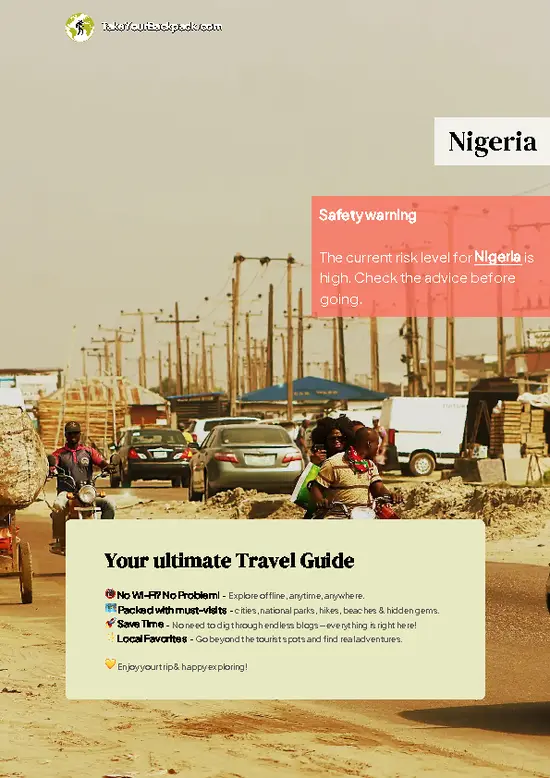
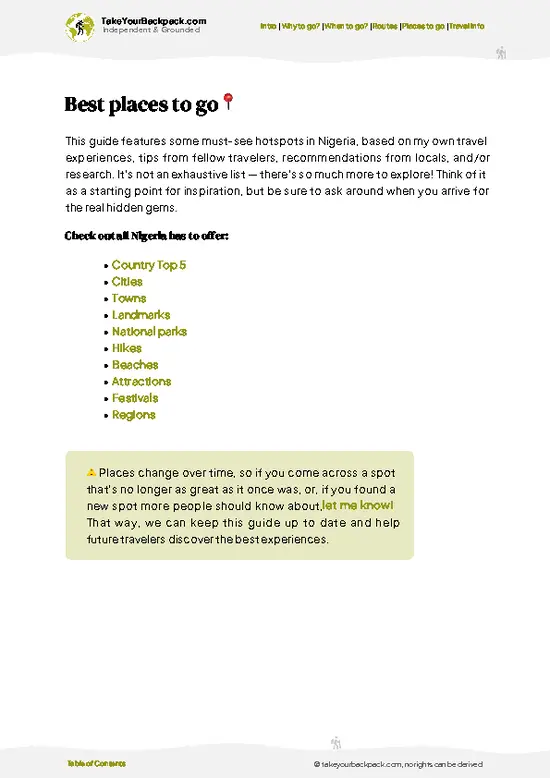
example page 0 from our offline Travel Guide for Nigeria
example page 1 from our offline Travel Guide for Nigeria
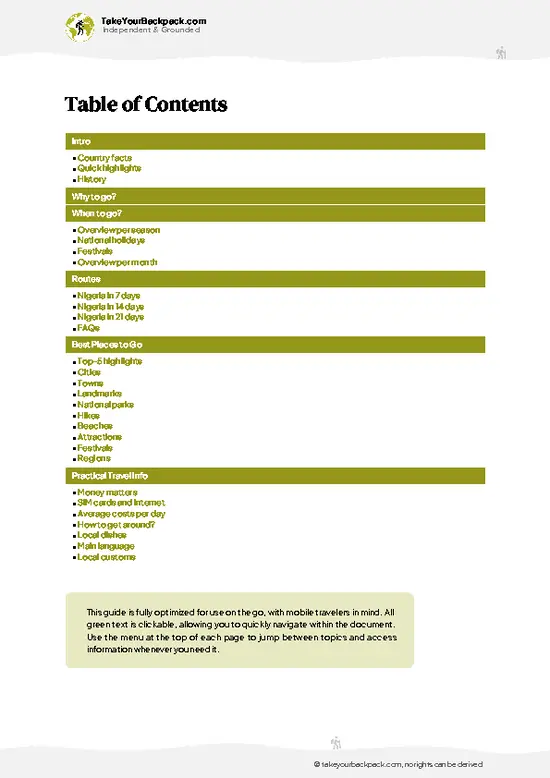
example page 2 from our offline Travel Guide for Nigeria
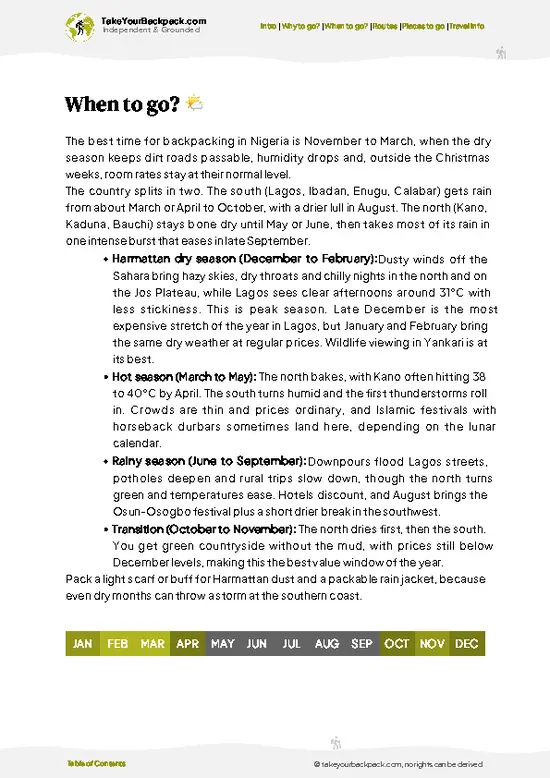
example page 3 from our offline Travel Guide for Nigeria
example page 4 from our offline Travel Guide for Nigeria
example page 5 from our offline Travel Guide for Nigeria
example page 6 from our offline Travel Guide for Nigeria
example page 7 from our offline Travel Guide for Nigeria
The digital guide (332 pages) contains:
89 highlights, ranked by travel appeal
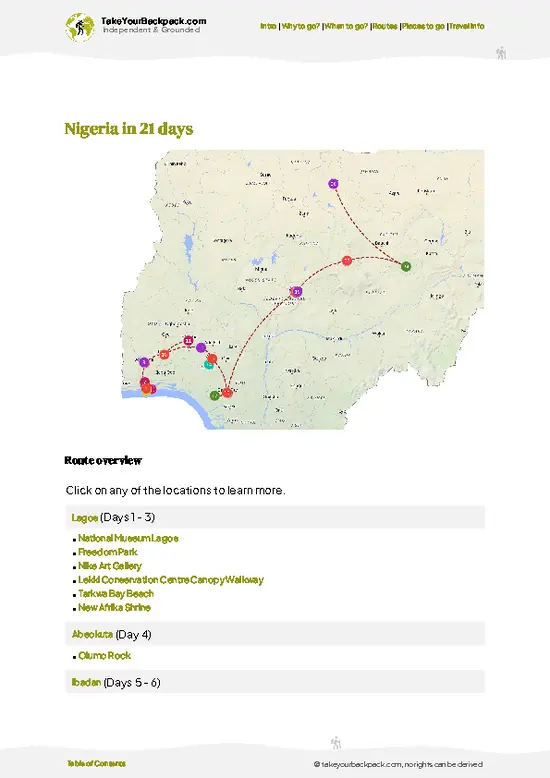
Optimized 7, 14 & 21-day travel routes
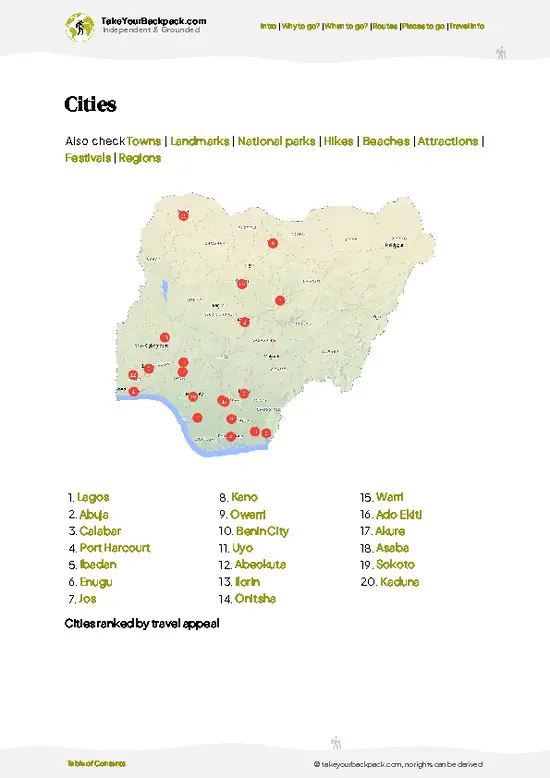
Cities, national parks, landmarks, beaches
How to get around
Offline-friendly for travel without Wi-Fi
👉 Click to see all 30+ guide features

📅 Plan smarter in minutes, not weeks
Month by month travel advice
Festivals & national holidays
Budget expectations

🗺️ Go to the right places, skip the overrated ones
Honest pros & cons of destinations
Top hikes, parks & viewpoints
Lesser-known places most travelers miss
Clear “worth it vs skip it” guidance

🛏️ Travel smoothly without rookie mistakes
Best areas to stay
Transport systems explained simply
Common scams & safety advice
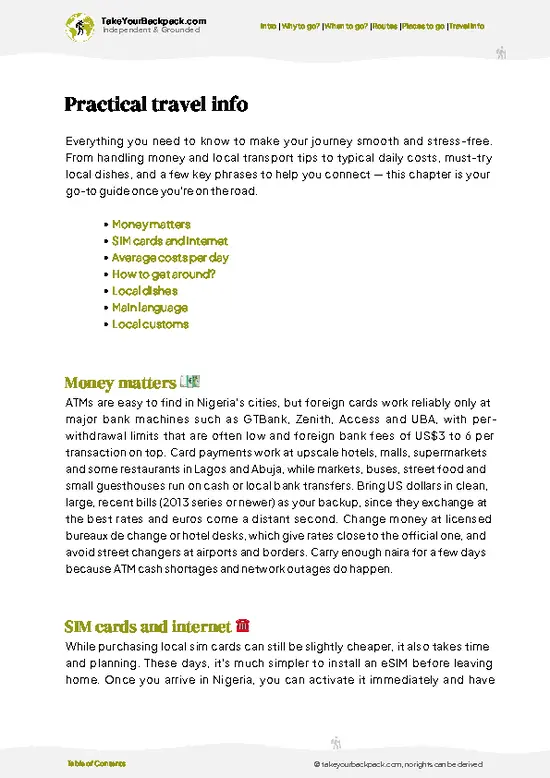
SIM cards, money & practical tips

🌍 Understand the country, not just visit it
Culture & traditions
52 Essential phrases & customs
Festivals worth planning around
Traveler-friendly historical context
Insights that make places more meaningful

📱 Built for real travel conditions
Fully downloadable PDF
Works completely offline
Optimized for phone use
Useful in remote areas & buses
Everything in one place
Save weeks of stressful planning
Get instant access to your full guide. 30‑day money-back guarantee.


By proceeding you agree to our terms.
Sent to your inbox immediately after payment • 100% Secure Checkout
Best Backpacking Travel Advisor 2025 tourism awardBest Backpacking
Travel Advisor
2025
What others say about Take Your Backpack Guides:
⭐⭐⭐⭐⭐
Fantastic, amazing amount of information!
⭐⭐⭐⭐⭐
My goodness this is amazing, it's what I've been looking for hats off too you!
⭐⭐⭐⭐⭐
I think this is absolutely BRILLIANT
⭐⭐⭐⭐
Very complete and informative. It's still missing places, but I gotta to commend you
⭐⭐⭐⭐⭐
This is truly amazing, thank you, can't wait to explore it with my kids!
⭐⭐⭐⭐⭐
Awesome resource, thank you!
⭐⭐⭐⭐⭐
This is amazing! Can't wait to explore the ones I haven't seen
⭐⭐⭐⭐
I love this! Well done, great idea.
⭐⭐⭐⭐⭐
Thanks for taking the time to make this gem!
⭐⭐⭐⭐⭐
This might be the best website I've ever seen.
⭐⭐⭐⭐⭐
Congratulations, and thank you so much for your work; it's incredibly valuable.
⭐⭐⭐⭐
In all seriousness I think you did a great job pointing out the important spots
⭐⭐⭐⭐⭐
10/10 very good
⭐⭐⭐⭐⭐
As someone who's only just starting to visit regularly this is awesome, thank you.
⭐⭐⭐⭐
Thank you very much! I'm going to visit my dad, it's going to be very useful!
⭐⭐⭐⭐⭐
This is really cool! We'll be travelling for the first time and this definitely come in handy.
⭐⭐⭐⭐⭐
You are now our minister of culture, congratulations 👨‍💼
⭐⭐⭐⭐⭐
Just wanted to tell you that this is a pearl! Going to follow your recommendations.
⭐⭐⭐⭐⭐
This is so cool. I'll definitely be using the resource for my travels soon.
⭐⭐⭐⭐⭐
This is very impressive! Good work.
⭐⭐⭐⭐⭐
This is an amazing and informative site. Very well done!

🛏️ Where to stay?Top Places to Consider Staying

Yes — hostels and budget accommodation are available in Nigeria, concentrated in major cities like Lagos (Victoria Island, Lekki, Yaba, Ikeja), Abuja (Wuse, Garki) and Port Harcourt (GRA/Diobu).
Victoria Island and Lekki put you close to nightlife, beaches and business hubs but are pricier and suffer heavy traffic; Ikeja and Yaba offer cheaper stays with better transit links yet feel busier and less polished.
Wuse and Garki in Abuja are central, relatively secure and convenient for markets and government sites but quiet after dark, while Port Harcourt’s GRA is calmer and safer than industrial areas though budget options are scarcer and expect security checkpoints and fewer late‑night services. … read more 👉
Yes — hostels and budget accommodation are available in Nigeria, concentrated in major cities like Lagos (Victoria Island, Lekki, Yaba, Ikeja), Abuja (Wuse, Garki) and Port Harcourt (GRA/Diobu).
Victoria Island and Lekki put you close to nightlife, beaches and business hubs but are pricier and suffer heavy traffic; Ikeja and Yaba offer cheaper stays with better transit links yet feel busier and less polished.
Wuse and Garki in Abuja are central, relatively secure and convenient for markets and government sites but quiet after dark, while Port Harcourt’s GRA is calmer and safer than industrial areas though budget options are scarcer and expect security checkpoints and fewer late‑night services.

If you enjoy meeting fellow travelers, consider choosing hostels with high ratings for atmosphere. On the other hand, if you prefer having your own space, a hotel might be a better option.

NigeriaMore Places Across Nigeria

👋 Meet the founderWho’s Behind Take Your Backpack?

Johan, backpacker and founder of TakeYourBackpackHi, I’m Johan (Netherlands 🇳🇱), the creator of TakeYourBackpack. Over the past decade, I’ve backpacked through 80+ countries across six continents, gaining extensive experience with independent travel, long-term trips, and overland routes.

This site is built on a combination of firsthand travel experience and carefully curated insights from other backpackers. Many guides are based on places I’ve personally visited, while others bring together tips, observations, and practical advice shared by trusted travelers I’ve met along the way.

The goal is to provide realistic, experience-driven guidance — not generic itineraries — so you can explore destinations with better context, clearer expectations, and more confidence.

Get full Nigeria guide •
Instant download • 89 highlights • Full Offline guide