v2.webp)
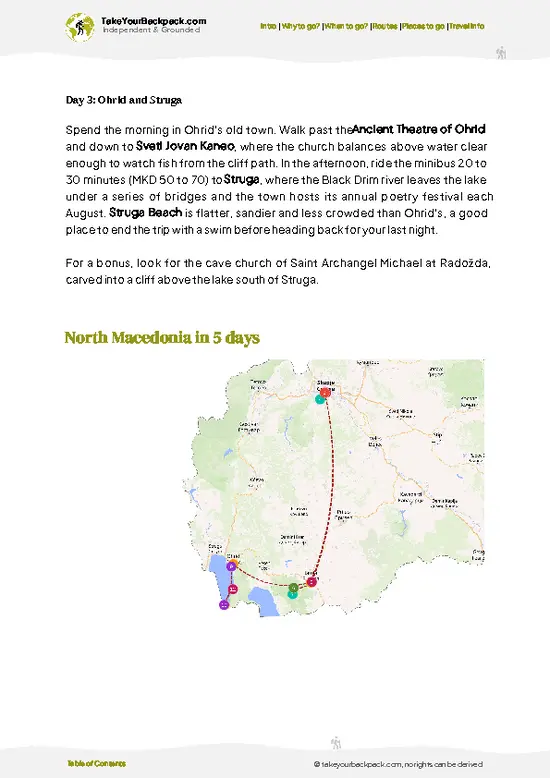
- Isar (the hill and archaeological site) — a short, steep walk up a grassy hill that rewards you with visible ruins and a proper overlook of the city. You can actually wander among foundations and stonework that hint at Strumica’s long past, and the view at sunset is great for photos or a quiet moment away from the market bustle.
- Strumica Clock Tower (Sahat Kula) — the little tower in/near the main square is an easy landmark and a classic photo stop. It’s also useful: once you find the clock tower you’re in the middle of cafés, bakeries and the pedestrian strip where locals hang out.
- Strumica Regional / Municipal Museum — small but focused: archaeology, local history and folk costumes. It’s the fastest way to get context for everything you’ll see around town without spending hours; staff
- Isar (the hill and archaeological site) — a short, steep walk up a grassy hill that rewards you with visible ruins and a proper overlook of the city. You can actually wander among foundations and stonework that hint at Strumica’s long past, and the view at sunset is great for photos or a quiet moment away from the market bustle.
- Strumica Clock Tower (Sahat Kula) — the little tower in/near the main square is an easy landmark and a classic photo stop. It’s also useful: once you find the clock tower you’re in the middle of cafés, bakeries and the pedestrian strip where locals hang out.
- Strumica Regional / Municipal Museum — small but focused: archaeology, local history and folk costumes. It’s the fastest way to get context for everything you’ll see around town without spending hours; staff are usually helpful if you ask for highlights.
- Main Town Square & Fountain — the city’s living room. Daytime vendors, evening terraces and people-watching that tells you a lot about daily life here. Sit with a coffee, watch the comings and goings, and use it as your base for exploring nearby streets.
- Church of St. Dimitrija (Sv. Dimitrija) — one of the bigger Orthodox churches inside the city, important to local religious life. Even if you’re not religious, the interior frescoes, the iconostasis and the rhythm of services are worth seeing for cultural context.
- Old Bazaar streets & Ottoman-era corners — not a single monument but a patch of winding streets with old stone houses, small shops and traces of Ottoman urban fabric. It’s where you feel the layered history beneath the modern town and find honest, inexpensive local cafés.
- Strumica Theatre & Cultural Centre — the city’s cultural hub: plays, concerts and occasional festivals. Check the schedule — catching a local production or a concert is an easy way to see contemporary Strumica culture in action.
- Riverside promenade / Kapistec Park — a handy green stretch along the river where locals walk, kids play and vendors pop up. Good for a relaxed early-morning stroll and to notice small monuments and everyday life away from the central square.
- Strumica Carnival (Masquerade) — an annual highlight (usually late winter) if your trip lines up. It’s noisy, colorful and deeply local — groups in elaborate masks, street parades, and a very social atmosphere. Seasonal, but culturally big — worth planning for if you can.
- Central Market (Green Market) — real produce, seasonal fruit and vegetables, local cheeses and cured meats — and the best place to overhear local gossip. Great for a cheap, authentic snack and to see what’s in season in this agricultural region.
Spotted a mistake or missing something? Contact us.

A Day from Skopje to Pristina and Prizren, Kosovo, opt. Kukes Alb

S&S Winery - Wine Tasting Experience in Ohrid

Ohrid cooking classes

Discover Ohrid Old Town Through the Eyes of a Local

Skopje Wine Tasting Experience – Wines by Zaharchev Winery

Full-Day Private Best of Ohrid and Lake Ohrid Tour

Six course dinner & Macedonian wine pairing at Dropstop Gastrobar

Skopje Street Food with Burek, Ajvar & Kebapi, The Local Way

Private Full-Day Best of Ohrid Tour from Skopje


 Best Backpacking
.jpg) Hi, I’m Johan (Netherlands 🇳🇱), the creator of TakeYourBackpack. Over the past 3 decades, I’ve backpacked through 90+ countries across six continents, gaining extensive experience with independent travel, long-term trips, and overland routes.
Hi, I’m Johan (Netherlands 🇳🇱), the creator of TakeYourBackpack. Over the past 3 decades, I’ve backpacked through 90+ countries across six continents, gaining extensive experience with independent travel, long-term trips, and overland routes.