
×

Oman🇴🇲 | national parksAl Wusta Wildlife Reservedesert plateau, wild gazelles, acacia savannah | things to do and best time to go

Explore Hawiyat Najm ParkExplore Al Jabal Al Akhdar

Backpacking in Al Wusta Wildlife Reserve
👍 Recommendednational park ranked #7
By Johan Kruseman 🇳🇱 | Updated May 20, 2026

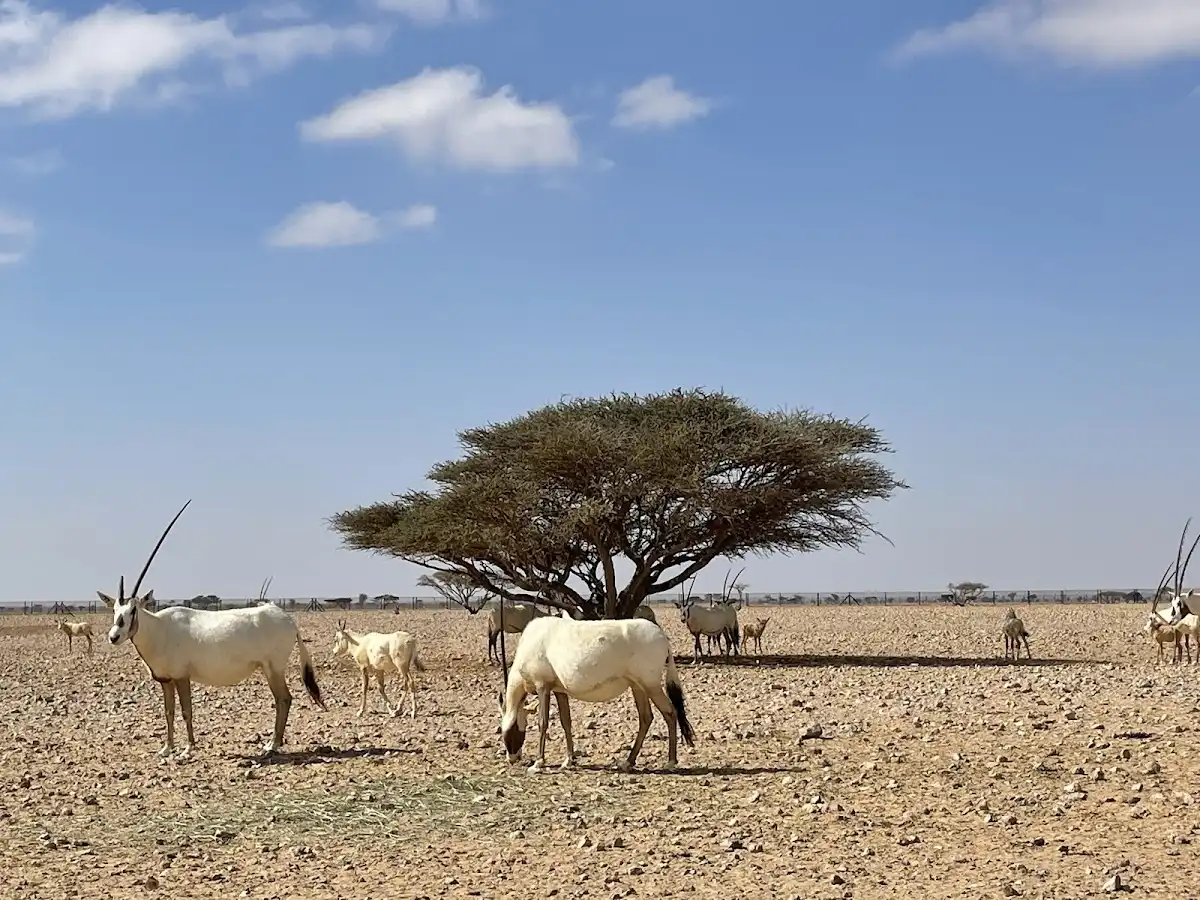
Most people only realize after they leave that Al Wusta Wildlife Reserve is one of the few places in Oman where you can see Arabian oryx in a semi-wild setting without paying luxury-lodge prices. The reserve sits in central Oman, in Al Wusta Governorate between Duqm and Haima, deep in the desert belt. For backpackers, it’s a low-frills, high-reward stop: flat, stark desert scenery, limited but easy walking and track-style “hiking,” and real chances of spotting oryx and other desert fauna if you time it for early morning or late afternoon. Access is car-dependent, public transport is basically nonexistent, and you should expect permits, checkpoints, and modest entrance or guiding fees. Camping is usually possible but basic, with almost no budget guesthouses nearby. Compared with Jebel Shams or Jebel Akhdar, you trade dramatic mountain trails and cooler air for emptier horizons, fewer crowds, and a quieter, almost research-station vibe.

Discover everything you want to know in the 📖 Oman Travel Guide.


Get your Oman guide
89 ranked highlights, routes & tips, works offline (349 pages)
Loading the map 🌍
CLICK TO FILTER
cities
towns
villages
landmarks
national parks
hikes
beaches
attractions
festivals
regions
SHOW COUNTRY’S BESTSHOW ALL

✨ Why go?
Ranked #7 national park in Oman
The unique appeal for travelers

Backpackers flock to Al Wusta Wildlife Reserve for its blend of independent exploration and budget-friendly options. The park offers a range of campsites and nearby hostels, making it easy to keep costs low while immersing yourself in nature.

With varied trails, you can choose your own adventure—whether you’re up for a challenging hike or a leisurely stroll. This variety caters to different skill levels, ensuring everyone finds their pace.

What sets Al Wusta apart is its suitability for self-guided travelers. You won’t feel pressured to join a tour; instead, you can navigate the park at your own speed, soaking in the unique flora and fauna.

Just remember, while the park is accessible, bring plenty of water and snacks. The remoteness can catch you off guard, but that’s part of the charm—just you and the wild.
Want to include Al Wusta Wildlife Reserve in your Oman route?
Create a personalized Oman itinerary that includes Al Wusta Wildlife Reserve and the places that fit your trip — based on your travel style, budget, and available time. Get your route in seconds.

Generate my trip

💡 HighlightsEssential experiences to have while exploring Al Wusta Wildlife Reserve

  • Arabian oryx viewing areas — The reserve is one of the best places in Oman to see reintroduced herds of Arabian oryx out on the wide plains. Dawn and dusk drives give the highest chance of sightings, and watching a small herd move across flat light is a bit hypnotic.
  • Endless sand-dune seas — Big, sculpted dunes that roll for miles: perfect for short hikes, climbing for sunset photos, and the kind of emptiness that makes you appreciate how quiet a desert can be. Bring wind protection and go early/late to avoid heat.
  • Seasonal wetlands and lagoons — After winter rains parts of the reserve hold shallow lagoons that attract waders and migratory waterbirds. Winter (roughly Nov-Mar) is the best time for birdwatching; binoculars and a guide help you pick out rarer migrants.
  • Desert wildlife hotspots
read more 👉
  • Arabian oryx viewing areas — The reserve is one of the best places in Oman to see reintroduced herds of Arabian oryx out on the wide plains. Dawn and dusk drives give the highest chance of sightings, and watching a small herd move across flat light is a bit hypnotic.
  • Endless sand-dune seas — Big, sculpted dunes that roll for miles: perfect for short hikes, climbing for sunset photos, and the kind of emptiness that makes you appreciate how quiet a desert can be. Bring wind protection and go early/late to avoid heat.
  • Seasonal wetlands and lagoons — After winter rains parts of the reserve hold shallow lagoons that attract waders and migratory waterbirds. Winter (roughly Nov-Mar) is the best time for birdwatching; binoculars and a guide help you pick out rarer migrants.
  • Desert wildlife hotspots — Look beyond the oryx: desert-adapted gazelles, raptors hunting thermals, and a variety of reptiles and small mammals inhabit the gravel plains and rocky outcrops. Early morning walks and slow drives are where you’ll spot them.
  • Ephemeral wildflower displays — After uncommon rains the usually-brown plains can bloom with low, delicate wildflowers and grasses. It’s brief but very rewarding for photographers and anyone who likes contrasts between stark landscapes and colour.
  • Vast starry skies — The reserve’s remoteness means very little light pollution. Night-time is prime for Milky Way shots, star trails, or just lying back and counting constellations — cold desert nights, so pack layers.
  • Scenic gravel plains and lookout ridges —Low ridgelines and rocky hummocks break the monotony of the flats and give panoramic views of the landscape. They make short, easy hikes with big payoffs for sunrise or a midday orientation stop.
Spotted a mistake or missing something? Contact us.
🌤️ When to go?When to go for the best experience


  • Weather: The best window is October to March when temperatures drop to a manageable 20-30°C (68-86°F). Avoid the scorching summer months, where highs can soar above 45°C (113°F), making hiking and wildlife spotting exhausting and risky.

  • Temperature: Nights can get chilly in winter, sometimes dipping below 10°C (50°F), so pack layers. Daytime warmth is comfortable but not oppressive, ideal for long treks and photography.

  • Daylight Hours: Winter days are shorter, around 10 hours of light, which means planning your hikes carefully to avoid being caught out after dark. Summer offers longer days but at the cost of extreme heat.

  • Crowds: The reserve sees a noticeable drop in visitors during the off-season summer months, but the heat often outweighs the benefit of fewer people. Peak season
read more 👉

  • Weather: The best window is October to March when temperatures drop to a manageable 20-30°C (68-86°F). Avoid the scorching summer months, where highs can soar above 45°C (113°F), making hiking and wildlife spotting exhausting and risky.

  • Temperature: Nights can get chilly in winter, sometimes dipping below 10°C (50°F), so pack layers. Daytime warmth is comfortable but not oppressive, ideal for long treks and photography.

  • Daylight Hours: Winter days are shorter, around 10 hours of light, which means planning your hikes carefully to avoid being caught out after dark. Summer offers longer days but at the cost of extreme heat.

  • Crowds: The reserve sees a noticeable drop in visitors during the off-season summer months, but the heat often outweighs the benefit of fewer people. Peak season brings more tourists but also better access to guided tours and services.

  • Seasonal Activities: Migratory bird watching peaks in winter, while spring offers blooming desert flora. Summer is mostly quiet, with limited wildlife activity due to heat stress.

  • Price Fluctuations: Accommodation and tour prices spike in peak season (October to March). Booking early can secure better rates, while summer offers lower prices but fewer amenities and harsher conditions.


Pro-tip: Aim for late autumn or early spring to balance weather, wildlife activity, and crowd levels—this timing preserves your energy and budget for the experiences that truly count.


source: climatestotravel.comJANJanuary: excellent for travelingFEBFebruary: excellent for travelingMARMarch: highly recommended for travelingAPRApril: good for travelingMAYMay: fair for travelingJUNJune: below average for travelingJULJuly: below average for travelingAUGAugust: below average for travelingSEPSeptember: fair for travelingOCTOctober: excellent for travelingNOVNovember: excellent for travelingDECDecember: excellent for traveling
oman-national-park-al-wusta-wildlife-reserve
© Google |

✈️ The backpacker research shortcutOman Travel Guide

An offline-friendly backpacking guide with optimized travel routes, ranked highlights, transport advice, and the best areas to stay.
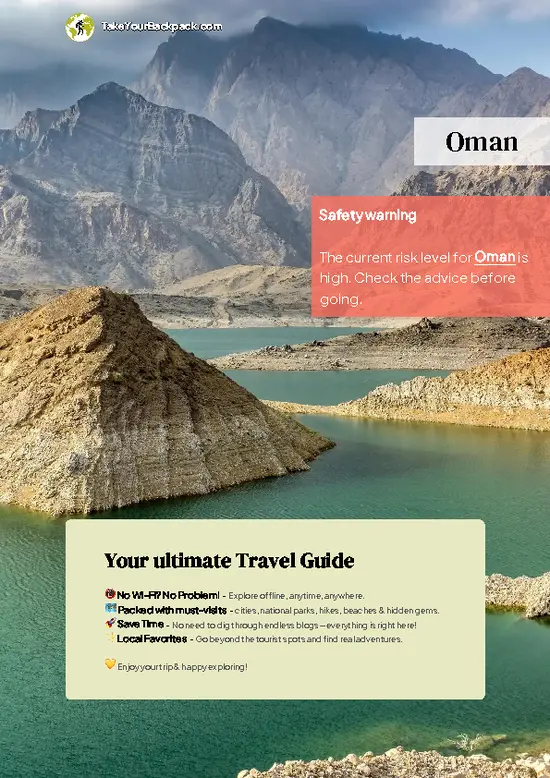
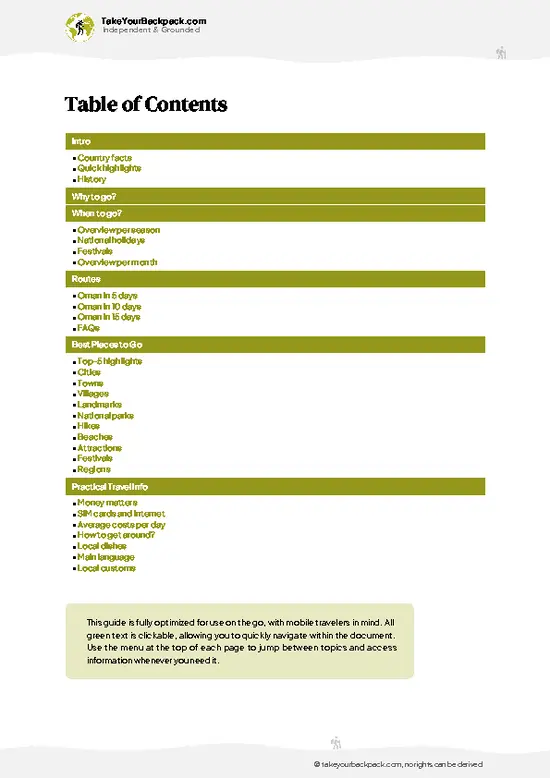
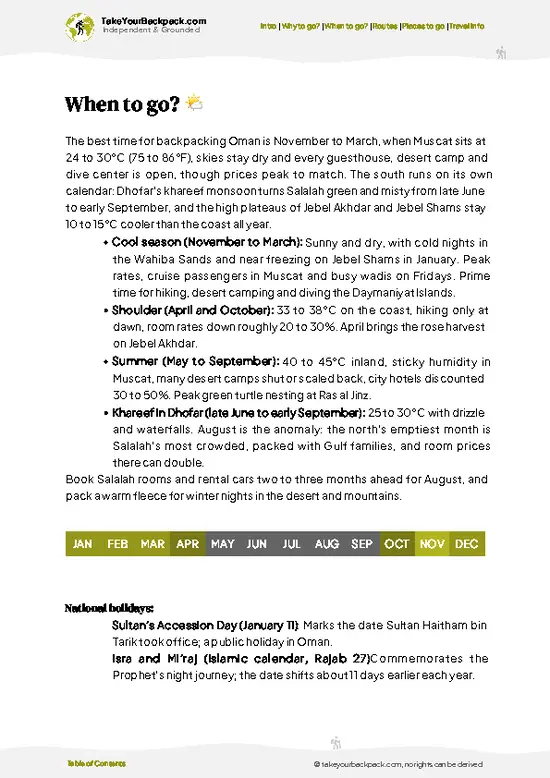
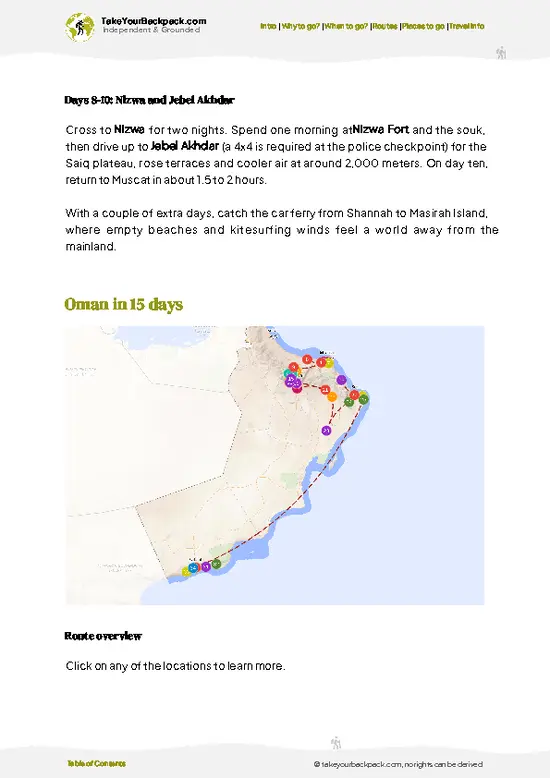
example page 0 from our offline Travel Guide for Omanexample page 1 from our offline Travel Guide for Omanexample page 2 from our offline Travel Guide for Omanexample page 3 from our offline Travel Guide for Omanexample page 4 from our offline Travel Guide for Omanexample page 5 from our offline Travel Guide for Omanexample page 6 from our offline Travel Guide for Omanexample page 7 from our offline Travel Guide for Oman
The digital guide (349 pages) contains:
89 highlights, ranked by travel appeal
Optimized 5, 10 & 15-day travel routes
Cities, national parks, landmarks, beaches
How to get around
Offline-friendly for travel without Wi-Fi
👉 Click to see all 30+ guide features

📅 Plan smarter in minutes, not weeks
Month by month travel advice
Festivals & national holidays
Budget expectations

🗺️ Go to the right places, skip the overrated ones
Honest pros & cons of destinations
Top hikes, parks & viewpoints
Lesser-known places most travelers miss
Clear “worth it vs skip it” guidance

🛏️ Travel smoothly without rookie mistakes
Best areas to stay
Transport systems explained simply
Common scams & safety advice
SIM cards, money & practical tips

🌍 Understand the country, not just visit it
Culture & traditions
52 Essential phrases & customs
Festivals worth planning around
Traveler-friendly historical context
Insights that make places more meaningful

📱 Built for real travel conditions
Fully downloadable PDF
Works completely offline
Optimized for phone use
Useful in remote areas & buses
Everything in one place
Save weeks of stressful planning
Get instant access to your full guide. 30‑day money-back guarantee.


By proceeding you agree to our terms.
Sent to your inbox immediately after payment • 100% Secure Checkout
Best Backpacking Travel Advisor 2025 tourism awardBest Backpacking
Travel Advisor
2025
What others say about Take Your Backpack Guides:
⭐⭐⭐⭐⭐
Fantastic, amazing amount of information!
⭐⭐⭐⭐⭐
My goodness this is amazing, it's what I've been looking for hats off too you!
⭐⭐⭐⭐⭐
I think this is absolutely BRILLIANT
⭐⭐⭐⭐
Very complete and informative. It's still missing places, but I gotta to commend you
⭐⭐⭐⭐⭐
This is truly amazing, thank you, can't wait to explore it with my kids!
⭐⭐⭐⭐⭐
Awesome resource, thank you!
⭐⭐⭐⭐⭐
This is amazing! Can't wait to explore the ones I haven't seen
⭐⭐⭐⭐
I love this! Well done, great idea.
⭐⭐⭐⭐⭐
Thanks for taking the time to make this gem!
⭐⭐⭐⭐⭐
This might be the best website I've ever seen.
⭐⭐⭐⭐⭐
Congratulations, and thank you so much for your work; it's incredibly valuable.
⭐⭐⭐⭐
In all seriousness I think you did a great job pointing out the important spots
⭐⭐⭐⭐⭐
10/10 very good
⭐⭐⭐⭐⭐
As someone who's only just starting to visit regularly this is awesome, thank you.
⭐⭐⭐⭐
Thank you very much! I'm going to visit my dad, it's going to be very useful!
⭐⭐⭐⭐⭐
This is really cool! We'll be travelling for the first time and this definitely come in handy.
⭐⭐⭐⭐⭐
You are now our minister of culture, congratulations 👨‍💼
⭐⭐⭐⭐⭐
Just wanted to tell you that this is a pearl! Going to follow your recommendations.
⭐⭐⭐⭐⭐
This is so cool. I'll definitely be using the resource for my travels soon.
⭐⭐⭐⭐⭐
This is very impressive! Good work.
⭐⭐⭐⭐⭐
This is an amazing and informative site. Very well done!

🛏️ Where to stay?Best areas to stay in Oman

When visiting the Al Wusta Wildlife Reserve, options for backpackers are limited but solid. There are no accommodations directly inside the reserve, which means you’ll need to base yourself in nearby towns.

The closest town is Al Wusta, where you can find basic guesthouses and budget hotels. These places offer a no-frills experience, but they provide a good launching point for your wildlife adventures. Expect simple amenities and a chance to connect with locals.

If you’re willing to travel a bit further, consider staying in the city of Duqm. It has a wider range of accommodations, from budget-friendly … read more 👉
When visiting the Al Wusta Wildlife Reserve, options for backpackers are limited but solid. There are no accommodations directly inside the reserve, which means you’ll need to base yourself in nearby towns.

The closest town is Al Wusta, where you can find basic guesthouses and budget hotels. These places offer a no-frills experience, but they provide a good launching point for your wildlife adventures. Expect simple amenities and a chance to connect with locals.

If you’re willing to travel a bit further, consider staying in the city of Duqm. It has a wider range of accommodations, from budget-friendly hotels to more comfortable options. Duqm is about an hour’s drive from the reserve, making it manageable for day trips.

Be mindful of transport costs; renting a car can be a smart move for flexibility. This way, you can explore the reserve at your own pace without worrying about public transport schedules.

👛 Costs (as of 10 May 2025)Typical daily expenses

Visiting Al Wusta Wildlife Reserve in Oman can be a rewarding experience, but it’s essential to be aware of the costs involved to avoid surprises.

Entry fees typically range from €5 to €10 (approximately $5 to $11). This fee grants you access to the reserve, where you can explore its unique ecosystems and wildlife.

If you’re considering guided tours, expect to pay between €50 and €100 ($55 to $110) per person. These tours often include transportation, a knowledgeable guide, and sometimes meals. They can enhance your experience significantly, especially if you want to spot elusive wildlife.

Accommodation options nearby vary widely. Budget travelers can find basic lodgings starting at around €30 ($33) per night. Mid-range hotels might cost between €70 and €120 ($77 to $132) for a more comfortable … read more 👉
Visiting Al Wusta Wildlife Reserve in Oman can be a rewarding experience, but it’s essential to be aware of the costs involved to avoid surprises.

Entry fees typically range from €5 to €10 (approximately $5 to $11). This fee grants you access to the reserve, where you can explore its unique ecosystems and wildlife.

If you’re considering guided tours, expect to pay between €50 and €100 ($55 to $110) per person. These tours often include transportation, a knowledgeable guide, and sometimes meals. They can enhance your experience significantly, especially if you want to spot elusive wildlife.

Accommodation options nearby vary widely. Budget travelers can find basic lodgings starting at around €30 ($33) per night. Mid-range hotels might cost between €70 and €120 ($77 to $132) for a more comfortable stay. Luxury options can exceed €150 ($165) per night.

Don’t forget about transportation. Renting a car is advisable for flexibility, with prices around €30 to €50 ($33 to $55) per day. Fuel is relatively inexpensive, but always check local prices.

Food costs can also add up. Expect to spend about €10 to €20 ($11 to $22) per meal at local restaurants. If you’re self-catering, grocery prices are reasonable, but be mindful of limited options in remote areas.

Plan for these expenses to ensure you have the energy and budget for the experiences that truly matter.
⚠️ Prices can change and everyone travels differently, so take this as a rough guide. Hope it helps you plan your adventure!

🥾 TrailsScenic routes and wildlife spotting in Al Wusta Wildlife Reserve

The Al Wusta Wildlife Reserve in Oman is a hidden gem for hikers looking to immerse themselves in stunning desert landscapes. Picture vast stretches of golden sands, rocky outcrops, and the occasional oasis. The terrain varies from flat plains to gentle hills, making it accessible for most hikers. Wildlife enthusiasts will love spotting Arabian oryx, gazelles, and a myriad of bird species, especially around the water sources.

While there aren’t extensive designated trails like you might find in more developed parks, you can explore the area on foot, keeping an eye out for wildlife and unique … read more 👉
The Al Wusta Wildlife Reserve in Oman is a hidden gem for hikers looking to immerse themselves in stunning desert landscapes. Picture vast stretches of golden sands, rocky outcrops, and the occasional oasis. The terrain varies from flat plains to gentle hills, making it accessible for most hikers. Wildlife enthusiasts will love spotting Arabian oryx, gazelles, and a myriad of bird species, especially around the water sources.

While there aren’t extensive designated trails like you might find in more developed parks, you can explore the area on foot, keeping an eye out for wildlife and unique geological formations. If you’re up for it, one of the more popular routes is the Oryx Trail. Here are the details:
  • Length: 5 km
  • Estimated Duration: 2-3 hours
  • Difficulty Level: Moderate
  • Key Features: Scenic views of the desert, potential wildlife sightings, and interesting rock formations
  • Terrain: Mix of sandy paths and rocky sections

Getting to the reserve can be a bit of an adventure. Public transport options are limited, so you might need to rent a car or join a tour. The park isn’t usually crowded, giving you a chance to enjoy the tranquility of nature. As for the entrance fee, it’s quite reasonable, but it’s best to check in advance since prices can change. Just remember to bring plenty of water and sun protection; the desert sun is no joke!
⚠️ Hiking info can sometimes be outdated or inaccurate. Before you hit the trail, check the latest conditions with locals. If you do spot anything that's off, I'd love to hear from you, so I can update it for fellow travelers.

🛡️ SafetyScams, Hazards, and Annoyances

Al Wusta Wildlife Reserve offers a straightforward experience for backpackers, but a few practical considerations can enhance your trip. The weather can shift unexpectedly, so pack layers and be ready for both heat and cooler evenings. Trails are generally well-marked, but some areas can be rocky or uneven, so good footwear is essential for stability.

Wildlife encounters are rare but respectful behavior is key; keep your distance and avoid feeding animals. Hydration is crucial, especially in the heat, so carry enough water and know where to refill if possible. Timing your hikes for early morning or late afternoon can help you avoid the hottest parts of the day. With these tips, you’ll preserve your energy and budget for the moments that truly matter.

Other Omani national parks near Al Wusta Wildlife Reserve

Explore more nearby:


💡 Not sure where to go next?
Create a personalized itinerary for Oman including Al Wusta Wildlife Reserve and the places that fit your trip.

Generate my itinerary

👉 Discover all national parks

Or checkout all Oman has to offer (think cities, towns, villages, national parks, hikes, beaches, festivals)
Country photo of Oman

We 💚 feedbackIs it worth it?

Al Wusta Wildlife Reserve is a quiet sanctuary, far from the usual tourist trails. The best surprise? Watching Arabian oryx roam freely at sunset—it’s a sight that sticks with you. Just a heads-up: the heat can be relentless, so plan your visits for early morning or late afternoon. Embrace the stillness; it’s where the magic happens, and you’ll leave feeling refreshed, not drained.

✍️ Help improve this page!
The information on this page is based on in-depth research, insights shared by experienced travelers, and feedback from the local travel community in Oman. While every effort is made to keep the information accurate and current, conditions can change — so if you spot anything incorrect or outdated, please get in touch.


🙋‍♂️ Give feedback

👋 Meet the founderWho’s Behind Take Your Backpack?

Johan, backpacker and founder of TakeYourBackpackHi, I’m Johan (Netherlands 🇳🇱), the creator of TakeYourBackpack. Over the past decade, I’ve backpacked through 80+ countries across six continents, gaining extensive experience with independent travel, long-term trips, and overland routes.

This site is built on a combination of firsthand travel experience and carefully curated insights from other backpackers. Many guides are based on places I’ve personally visited, while others bring together tips, observations, and practical advice shared by trusted travelers I’ve met along the way.

The goal is to provide realistic, experience-driven guidance — not generic itineraries — so you can explore destinations with better context, clearer expectations, and more confidence.

Get full Oman guide •
Instant download • 89 highlights • Full Offline guide