×

Panama🇵🇦 | national parksSanta Fe National ParkMountain village base, quetzals, river pools, coffee farms | things to do and best time to go

Explore Altos de Campana National ParkExplore Cerro Hoya National Park

Backpacking in Santa Fe
👍 Recommendednational park ranked #10
By Johan Kruseman 🇳🇱 | Updated October 23, 2026

The real decision at Santa Fe National Park is whether to base yourself in the village of Santa Fe and walk in, or hire a guide for the longer ridge routes, and trail markings decide it: they are sparse, so first-timers lean on a guide. The park sits in the mountains of Veraguas province in the north of Panama, reached from the Pan-American Highway by a winding road. I rode the chiva-style local bus up, and a farmer boarded with a live rooster in a sack that crowed at every hairpin, which made the climb oddly cheerful. Expect cool forest, waterfalls, birds and few crowds, but rough roads and patchy signage. A first day could mean a village walk, a river swim and a quiet evening planning your next trail.

Discover everything you want to know in the 📖 Panama Travel Guide.


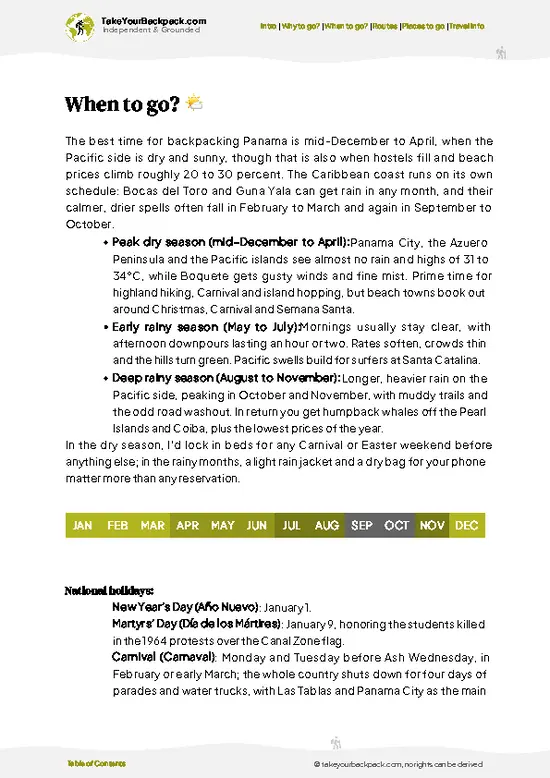
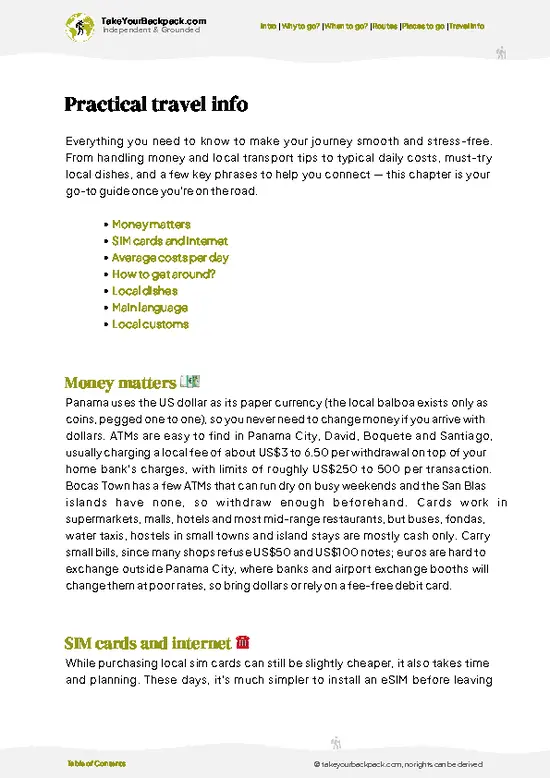
example page 0 from our offline Travel Guide for Panama
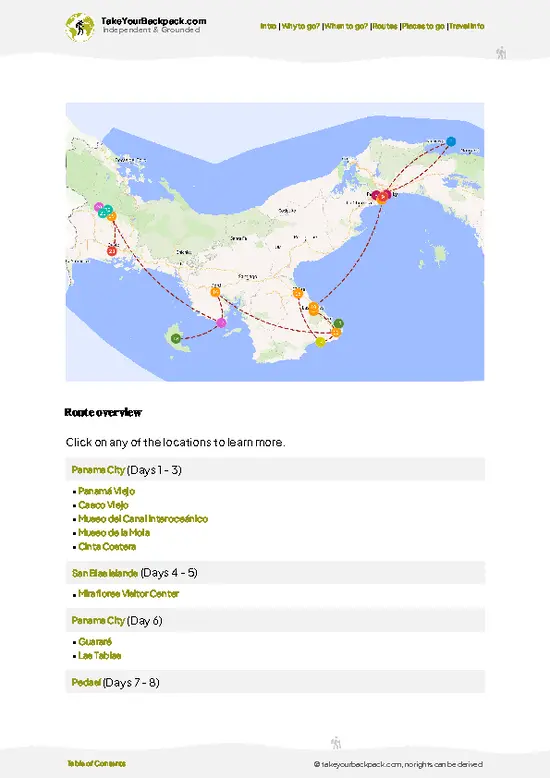
example page 1 from our offline Travel Guide for Panama
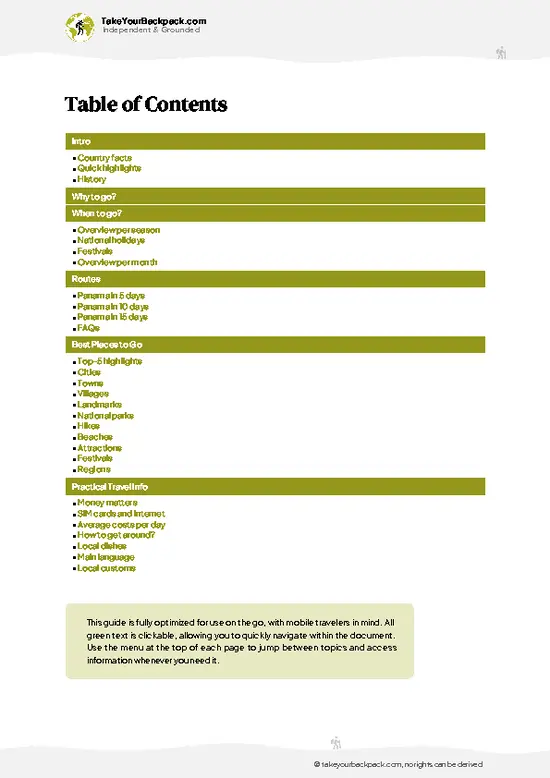
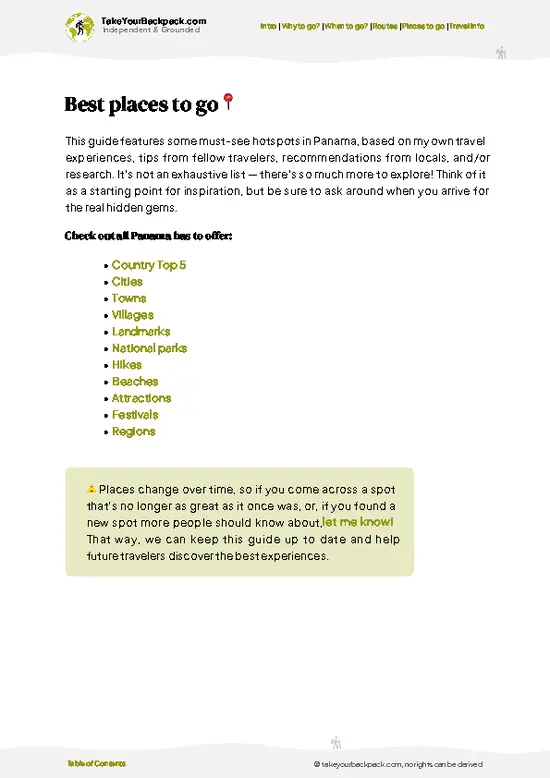
example page 2 from our offline Travel Guide for Panama
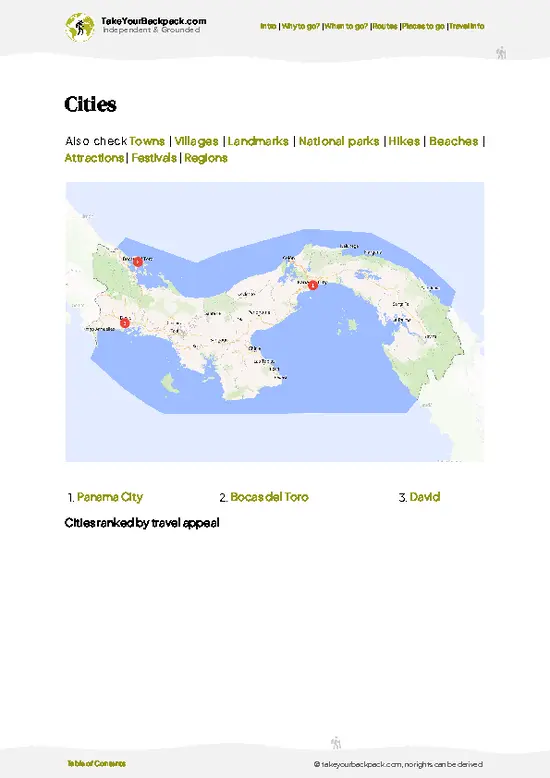
example page 3 from our offline Travel Guide for Panama
example page 4 from our offline Travel Guide for Panama
example page 5 from our offline Travel Guide for Panama
example page 6 from our offline Travel Guide for Panama
example page 7 from our offline Travel Guide for Panama
Loading the map 🌍
CLICK TO FILTER
cities
towns
villages
landmarks
national parks
hikes
beaches
attractions
festivals
regions
SHOW COUNTRY’S BESTSHOW ALL

✨ Why go?
Ranked #10 national park in Panama
What makes this national park worth exploring

Santa Fe National Park suits backpackers who like making their own plans. The village works as a walking base, so you can reach rivers, pools and forest paths on foot without a tour package, and the quiet means you often have the water to yourself. The second pull is the cloud forest on the Continental Divide side of the mountains, where birders chase the resplendent quetzal and orchids cling to every trunk. Waterfalls near town make easy half-day outings, while the higher routes give seasoned hikers real effort. Conversation with locals at the small cafes and farm stands fills in what no map shows. Go independent for short walks; add a local guide only for the high ridges, where trails fork without clear signs.

💡 HighlightsTop highlights of Santa Fe

  1. Cloud forest above Santa Fe: Mossy, orchid-laden woods on the Continental Divide, with mist that drifts through the trees by midday.
  2. Quetzal viewing: The resplendent quetzal is the star bird here, best spotted early near fruiting wild avocado trees.
  3. Rio Santa Maria pools: Clear, cold river swimming holes a short walk from the village, good after a sweaty hike.
  4. Waterfalls near the village: Several cascades reachable on foot or by short ride, each with a plunge pool.
  5. Birdwatching trails: Hummingbirds, tanagers and toucans show up along forest edges and coffee farms.
  6. Highland coffee farms: Small growers offer tastings and show how shade-grown beans are processed.
  7. Village viewpoints: Ridge lookouts over the green valleys toward the Pacific side on clear mornings.
Seeing all of it comfortably takes two to three days.
Spotted a mistake or missing something? Contact us.

Things to do near Santa Fe National Park

Ratings based on Tripadvisor reviews. When you book through this link, you support our work at no extra cost to you.

🌤️ When to go?When to go for the best experience

  • Dry Season (mid-December to April): Trails firm up and mountain views open. Santa Fe sits at roughly 400 to 1,000 m, so days run 27 to 31°C (81 to 88°F) and nights drop to 17 to 21°C (63 to 70°F). Daylight lasts about 11.5 to 12 hours. Panamanian holiday weekends bring the most visitors, though it never gets crowded.
  • Green Season (May to November): Rain arrives most afternoons and rivers swell, making crossings and muddy climbs slower. Temperatures hold at 24 to 29°C (75 to 84°F). Waterfalls and birdlife are at their best, and lodges often drop rates by 10 to 20 percent.
  • Wettest Stretch (September to November): Heavy rain can cut off river routes and unpaved roads for days. Plan buffer days.
Start hikes at first light in any season, since cloud and rain build by early afternoon.

source: climatestotravel.comJANJanuary: excellent for travelingFEBFebruary: excellent for travelingMARMarch: excellent for travelingAPRApril: highly recommended for travelingMAYMay: fair for travelingJUNJune: fair for travelingJULJuly: fair for travelingAUGAugust: fair for travelingSEPSeptember: fair for travelingOCTOctober: fair for travelingNOVNovember: fair for travelingDECDecember: highly recommended for traveling
panama-national-park-santa-fe-national-park
© Google |

✈️ The backpacker research shortcutPanama Travel Guide

An offline-friendly backpacking guide with optimized travel routes, ranked highlights, transport advice, and the best areas to stay.
example page 0 from our offline Travel Guide for Panama
example page 1 from our offline Travel Guide for Panama
example page 2 from our offline Travel Guide for Panama
example page 3 from our offline Travel Guide for Panama
example page 4 from our offline Travel Guide for Panama
example page 5 from our offline Travel Guide for Panama
example page 6 from our offline Travel Guide for Panama
example page 7 from our offline Travel Guide for Panama
The digital guide (272 pages) contains:
✅ 89 highlights, ranked by travel appeal
✅ Optimized 5, 10 & 15-day travel routes
✅ Cities, national parks, landmarks, beaches
✅ How to get around
✅ Offline-friendly for travel without Wi-Fi
👉 Click to see all 30+ guide features

📅 Plan smarter in minutes, not weeks
✅ Month by month travel advice
✅ Festivals & national holidays
✅ Budget expectations

🗺️ Go to the right places, skip the overrated ones
✅ Honest pros & cons of destinations
✅ Top hikes, parks & viewpoints
✅ Lesser-known places most travelers miss
✅ Clear “worth it vs skip it” guidance

🛏️ Travel smoothly without rookie mistakes
✅ Best areas to stay
✅ Transport systems explained simply
✅ Common scams & safety advice
✅ SIM cards, money & practical tips

🌍 Understand the country, not just visit it
✅ Culture & traditions
✅ 52 Essential phrases & customs
✅ Festivals worth planning around
✅ Traveler-friendly historical context
✅ Insights that make places more meaningful

📱 Built for real travel conditions
✅ Fully downloadable PDF
✅ Works completely offline
✅ Optimized for phone use
✅ Useful in remote areas & buses
✅ Everything in one place
Stop searching, start planning
Get instant access to your full guide. 30‑day money-back guarantee.
+ Add another guide for just

By proceeding you agree to our terms.
Sent to your inbox immediately after payment • 100% Secure Checkout
Best Backpacking Travel Advisor 2025 tourism awardBest Backpacking
Travel Advisor
2025
What others say about Take Your Backpack Guides:
⭐⭐⭐⭐⭐
Fantastic, amazing amount of information!
⭐⭐⭐⭐⭐
My goodness this is amazing, it's what I've been looking for hats off too you!
⭐⭐⭐⭐⭐
I think this is absolutely BRILLIANT
⭐⭐⭐⭐
Very complete and informative. It's still missing places, but I gotta to commend you
⭐⭐⭐⭐⭐
This is truly amazing, thank you, can't wait to explore it with my kids!
⭐⭐⭐⭐⭐
Awesome resource, thank you!
⭐⭐⭐⭐⭐
This is amazing! Can't wait to explore the ones I haven't seen
⭐⭐⭐⭐
I love this! Well done, great idea.
⭐⭐⭐⭐⭐
Thanks for taking the time to make this gem!
⭐⭐⭐⭐⭐
This might be the best website I've ever seen.
⭐⭐⭐⭐⭐
Congratulations, and thank you so much for your work; it's incredibly valuable.
⭐⭐⭐⭐
In all seriousness I think you did a great job pointing out the important spots
⭐⭐⭐⭐⭐
10/10 very good
⭐⭐⭐⭐⭐
As someone who's only just starting to visit regularly this is awesome, thank you.
⭐⭐⭐⭐
Thank you very much! I'm going to visit my dad, it's going to be very useful!
⭐⭐⭐⭐⭐
This is really cool! We'll be travelling for the first time and this definitely come in handy.
⭐⭐⭐⭐⭐
You are now our minister of culture, congratulations 👨‍💼
⭐⭐⭐⭐⭐
Just wanted to tell you that this is a pearl! Going to follow your recommendations.
⭐⭐⭐⭐⭐
This is so cool. I'll definitely be using the resource for my travels soon.
⭐⭐⭐⭐⭐
This is very impressive! Good work.
⭐⭐⭐⭐⭐
This is an amazing and informative site. Very well done!

🛏️ Where to stay?How to pick the right area

The village of Santa Fe, just outside the park boundary, is the best base, and nothing inside the park offers regular beds. Expect simple guesthouses and small lodges along the main road, with dorm or basic private rooms at roughly US$12 to 30 a night and nicer cabins with mountain views at US$40 to 80. Several family-run hostels and a few eco-lodges cluster within a short walk of the plaza, and some offer guided hikes, horseback rides and home-cooked dinners. Camping is possible at a few lodges and farms for about US$5 to 10 per person. For other options, Santiago, the provincial capital, has … read more 👉
The village of Santa Fe, just outside the park boundary, is the best base, and nothing inside the park offers regular beds. Expect simple guesthouses and small lodges along the main road, with dorm or basic private rooms at roughly US$12 to 30 a night and nicer cabins with mountain views at US$40 to 80. Several family-run hostels and a few eco-lodges cluster within a short walk of the plaza, and some offer guided hikes, horseback rides and home-cooked dinners. Camping is possible at a few lodges and farms for about US$5 to 10 per person. For other options, Santiago, the provincial capital, has chain hotels and the main bus terminal, and it works for a night when connections run late. Book ahead for holiday weekends, since the village has limited beds. Rooms fill less often during the rainy months.

👛 Costs (as of 23 October 2026)What things cost and how to budget

Santa Fe National Park costs roughly US$45 to 93 a day for a backpacker, with lodging as the biggest expense. The table below shows typical prices paid in US dollars, which Panama uses alongside the balboa.
CategoryBudget RangeLocal Reality
Entrance feesUS$5 to 10Fees for foreigners are paid at the ranger post or through the guide, and rates vary by sector.
Accommodation (high season)US$15 to 30Dorms and basic guesthouses in Santa Fe village; camping runs US$5 to 10.
Local transportUS$3 to 8Buses from Santiago run US$3 to 4 each way, and local pickups cost extra.
Food and suppliesUS$12 to 20Fondas serve set meals for US$4 to 7; stock up in Santiago for trail snacks.
Guides and activitiesUS$10 to 25Local guides charge about US$20 to 40 per group for day hikes, so splitting helps.
Total Daily BudgetUS$45 to 93Most solo backpackers land near US$60.
⚠️ Prices can change and everyone travels differently, so take this as a rough guide. Hope it helps you plan your adventure!

🥾 TrailsWhere to hike in Santa Fe: trails for every level

Santa Fe National Park offers forest walks that range from easy riverside strolls to long, steep ridge days, and most are done from the village.
  • Waterfall walks: Short, mostly flat paths of roughly one to three hours return, with muddy sections and a few stream crossings.
  • River trails: Easy walking along the Santa Maria with swimming stops, suitable for any fitness level.
  • Cloud forest routes: Steeper climbs of several hours through dense, wet forest, moderate to hard, with slippery roots and little signage.
  • Wildlife: Quetzals, hummingbirds, toucans, monkeys and many frogs, best seen early in the morning.
… read more 👉
Santa Fe National Park offers forest walks that range from easy riverside strolls to long, steep ridge days, and most are done from the village.
  • Waterfall walks: Short, mostly flat paths of roughly one to three hours return, with muddy sections and a few stream crossings.
  • River trails: Easy walking along the Santa Maria with swimming stops, suitable for any fitness level.
  • Cloud forest routes: Steeper climbs of several hours through dense, wet forest, moderate to hard, with slippery roots and little signage.
  • Wildlife: Quetzals, hummingbirds, toucans, monkeys and many frogs, best seen early in the morning.
Getting there is straightforward by public transport: buses run from Santiago to Santa Fe village, and the final stretch is a winding mountain road. Crowds are very light, even on weekends. Ranger posts exist, and a small entrance fee may apply for some areas. Bring waterproof layers, sturdy shoes and cash, as ATMs are scarce. Hire a local guide for the higher routes, because paths split without clear markers.
⚠️ Hiking info can sometimes be outdated or inaccurate. Before you hit the trail, check the latest conditions with locals. If you do spot anything that's off, I'd love to hear from you, so I can update it for fellow travelers.

🛡️ SafetyScams, Hazards, and Annoyances

Santa Fe National Park is straightforward for hikers with basic preparation, and the main issues are mud, rain and river levels. Trails are often slick and eroded, so wear boots with real tread and pack a rain jacket even in the dry season. Streams can rise fast after upland downpours, so skip crossings when water turns brown or loud. Trails are lightly marked, which makes a local guide worthwhile for longer routes. Snakes live here, including pit vipers, so watch where you step and keep hands off rocks and logs. Carry more water than you expect, plus a phone with offline maps, since signal fades in the valleys. Start early to be off the ridges before afternoon cloud.

FAQTraveler FAQ

Two to three days is enough for Santa Fe National Park. That covers a day hike to a waterfall or ridge viewpoint, a second day for birdwatching or a guided trek, and a rest or travel day. Allow four or five days if you want a longer route with a guide, and expect about two hours by road from Santiago.
Yes, Santa Fe National Park can be reached by bus. Buses run from Santiago to Santa Fe village in about 1.5 to 2 hours for roughly US$3 to 4, and the village is the practical base. Trailheads close to town can be walked, while farther sectors need a local pickup or a guide with a vehicle.
Yes, Santa Fe National Park charges foreign visitors a small entrance fee, generally around US$5 to 10, paid at the ranger post. No separate hiking permit is usually needed for day routes. Longer or overnight routes are best arranged through local guides in Santa Fe village, who typically charge about US$20 to 40 per group per day.
⚠️ Things can change over time, so always validate details locally before you go.

Other Panamanian national parks near Santa Fe

Explore more nearby:


💡 Not sure where to go next?
Create a personalized itinerary for Panama including Santa Fe and the places that fit your trip.

Generate my itinerary

👉 Discover all national parks

Or checkout all Panama has to offer (think cities, towns, villages, national parks, hikes, beaches, festivals)
Country photo of Panama

We 💚 feedbackIs it worth it?

Santa Fe National Park hides its best bird activity in the first hours after dawn, a window most first-timers sleep through. I would book a local guide for one early morning and spend the afternoons wandering the river on your own. Pack a rain shell, since the mountains turn wet fast.

✈️ When did I visit Panama?
Panama I visited during my half year trip through South and Central America back in 2003

✍️ Help improve this page!
The information on this page is based on my own backpacking experience in Panama, supplemented with up-to-date research and feedback from other travelers. Travel details can change, so if you notice anything outdated or incomplete, feel free to let me know.


🙋‍♂️ Give feedback

👋 Meet the founderWho’s Behind Take Your Backpack?

Johan, backpacker and founder of TakeYourBackpackHi, I’m Johan (Netherlands 🇳🇱), the creator of TakeYourBackpack. Over the past 3 decades, I’ve backpacked through 90+ countries across six continents, gaining extensive experience with independent travel, long-term trips, and overland routes.

This site is built on a combination of firsthand travel experience and carefully curated insights from other backpackers. Many guides are based on places I’ve personally visited, while others bring together tips, observations, and practical advice shared by trusted travelers I’ve met along the way.

The goal is to provide realistic, experience-driven guidance — not generic itineraries — so you can explore destinations with better context, clearer expectations, and more confidence.