v2.webp)
Casa Viola: The Time Capsule
Forget the Instagram façade—Casa Viola is not some sanitized, over-restored relic. This is the real deal: creaky wooden floors, thick adobe walls, and a sense of lived-in history that hits you the moment you step inside. Built in the 18th century, it’s the oldest house in Asunción still standing, and it wears its scars with pride. You’ll find a jumble of antique furniture, faded family portraits, and artifacts that feel like they were left behind in a hurry. The vibe is more “grandparent’s attic” than “museum under glass.” If you want to feel the pulse of old Paraguay, this is where it beats loudest. This one’s my personal favorite—there’s nothing quite like the thrill of brushing past centuries-old secrets in a place that refuses to be polished for tourists.
Casa … read more 👉
Forget the Instagram façade—Casa Viola is not some sanitized, over-restored relic. This is the real deal: creaky wooden floors, thick adobe walls, and a sense of lived-in history that hits you the moment you step inside. Built in the 18th century, it’s the oldest house in Asunción still standing, and it wears its scars with pride. You’ll find a jumble of antique furniture, faded family portraits, and artifacts that feel like they were left behind in a hurry. The vibe is more “grandparent’s attic” than “museum under glass.” If you want to feel the pulse of old Paraguay, this is where it beats loudest. This one’s my personal favorite—there’s nothing quite like the thrill of brushing past centuries-old secrets in a place that refuses to be polished for tourists.
Casa … read more 👉
Casa Viola: The Time Capsule
Forget the Instagram façade—Casa Viola is not some sanitized, over-restored relic. This is the real deal: creaky wooden floors, thick adobe walls, and a sense of lived-in history that hits you the moment you step inside. Built in the 18th century, it’s the oldest house in Asunción still standing, and it wears its scars with pride. You’ll find a jumble of antique furniture, faded family portraits, and artifacts that feel like they were left behind in a hurry. The vibe is more “grandparent’s attic” than “museum under glass.” If you want to feel the pulse of old Paraguay, this is where it beats loudest. This one’s my personal favorite—there’s nothing quite like the thrill of brushing past centuries-old secrets in a place that refuses to be polished for tourists.
Casa Clari: The Art Playground
If you’re expecting a stuffy gallery, you’re in for a surprise. Casa Clari is where Paraguay’s creative energy explodes—murals, installations, and rotating exhibits that actually challenge you, not just decorate the walls. The building itself is a patchwork of colonial bones and modern interventions, and the art is just as unpredictable. Sometimes you’ll stumble into a poetry reading, sometimes a wild experimental theater piece. The crowd is young, opinionated, and refreshingly unpretentious. This is where you see what Paraguay’s next generation is dreaming up.
Patio Arecayá: The Courtyard Hangout
Here’s the antidote to the selfie-stick crowd. Patio Arecayá is the heart of Manzana de la Rivera—a leafy, open-air courtyard where locals actually linger. Musicians tune up in the corner, kids chase each other around the fountain, and the café serves up tereré (cold yerba mate) that’ll keep you cool when the Paraguayan sun is doing its worst. It’s not a stage set; it’s a living, breathing hangout. If you want to eavesdrop on real conversations and see how Asunción unwinds, this is your spot.
Biblioteca Municipal: The Brain Trust
This isn’t your average municipal library. Tucked inside Manzana de la Rivera, the Biblioteca Municipal is a sanctuary for book lovers and history nerds. The collection is a goldmine of Paraguayan literature, rare manuscripts, and local newspapers dating back generations. It’s a quiet refuge from the city’s chaos, and if you’re lucky, you’ll catch a public reading or a workshop that pulls you straight into the intellectual bloodstream of Asunción.
Centro de Documentación y Archivo: The Memory Bank
For those who crave context, the Documentation and Archive Center is a deep dive into Paraguay’s turbulent past. This isn’t sanitized history—it’s raw, sometimes uncomfortable, and absolutely essential if you want to understand the country beyond the tourist gloss. Original documents, photographs, and testimonies from the dictatorship era are on display, and the staff don’t sugarcoat the stories. It’s sobering, but it’s also a testament to resilience and the power of memory.
Forget the Instagram façade—Casa Viola is not some sanitized, over-restored relic. This is the real deal: creaky wooden floors, thick adobe walls, and a sense of lived-in history that hits you the moment you step inside. Built in the 18th century, it’s the oldest house in Asunción still standing, and it wears its scars with pride. You’ll find a jumble of antique furniture, faded family portraits, and artifacts that feel like they were left behind in a hurry. The vibe is more “grandparent’s attic” than “museum under glass.” If you want to feel the pulse of old Paraguay, this is where it beats loudest. This one’s my personal favorite—there’s nothing quite like the thrill of brushing past centuries-old secrets in a place that refuses to be polished for tourists.
Casa Clari: The Art Playground
If you’re expecting a stuffy gallery, you’re in for a surprise. Casa Clari is where Paraguay’s creative energy explodes—murals, installations, and rotating exhibits that actually challenge you, not just decorate the walls. The building itself is a patchwork of colonial bones and modern interventions, and the art is just as unpredictable. Sometimes you’ll stumble into a poetry reading, sometimes a wild experimental theater piece. The crowd is young, opinionated, and refreshingly unpretentious. This is where you see what Paraguay’s next generation is dreaming up.
Patio Arecayá: The Courtyard Hangout
Here’s the antidote to the selfie-stick crowd. Patio Arecayá is the heart of Manzana de la Rivera—a leafy, open-air courtyard where locals actually linger. Musicians tune up in the corner, kids chase each other around the fountain, and the café serves up tereré (cold yerba mate) that’ll keep you cool when the Paraguayan sun is doing its worst. It’s not a stage set; it’s a living, breathing hangout. If you want to eavesdrop on real conversations and see how Asunción unwinds, this is your spot.
Biblioteca Municipal: The Brain Trust
This isn’t your average municipal library. Tucked inside Manzana de la Rivera, the Biblioteca Municipal is a sanctuary for book lovers and history nerds. The collection is a goldmine of Paraguayan literature, rare manuscripts, and local newspapers dating back generations. It’s a quiet refuge from the city’s chaos, and if you’re lucky, you’ll catch a public reading or a workshop that pulls you straight into the intellectual bloodstream of Asunción.
Centro de Documentación y Archivo: The Memory Bank
For those who crave context, the Documentation and Archive Center is a deep dive into Paraguay’s turbulent past. This isn’t sanitized history—it’s raw, sometimes uncomfortable, and absolutely essential if you want to understand the country beyond the tourist gloss. Original documents, photographs, and testimonies from the dictatorship era are on display, and the staff don’t sugarcoat the stories. It’s sobering, but it’s also a testament to resilience and the power of memory.
Spotted a mistake or missing something? Contact us.

Walking Tour with a Local in Asuncion "The Mother of Cities"

Paraguay River Nature and Wildlife Boat Tour from Asunción

Birding and Nature Chaco Tour

Asunción Private Walking Tour with a Local

Full day Paraguay River Nature and Wildlife Boat Tour

Iguazu Falls Tour Brazilian side from Asunción

Asuncion Highlights Walking Tour with a Guide

Discovering wildlife of the Chaco

Panoramic Private Airplane Flight Experience Over Asuncion

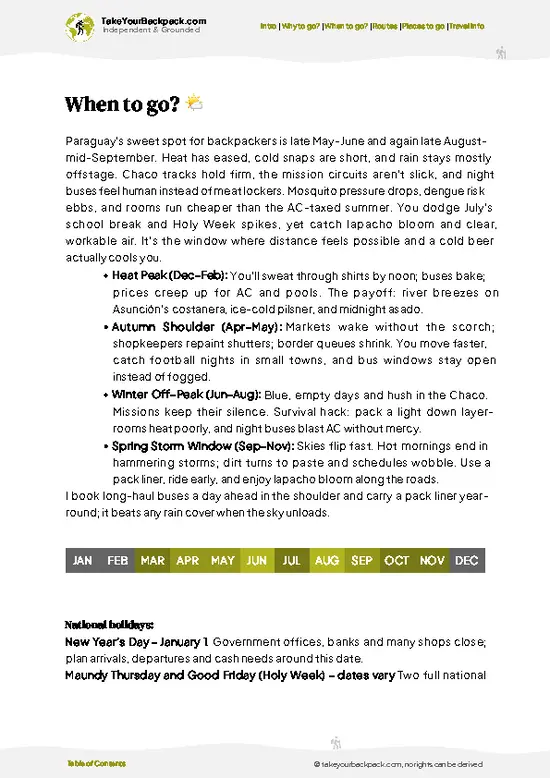
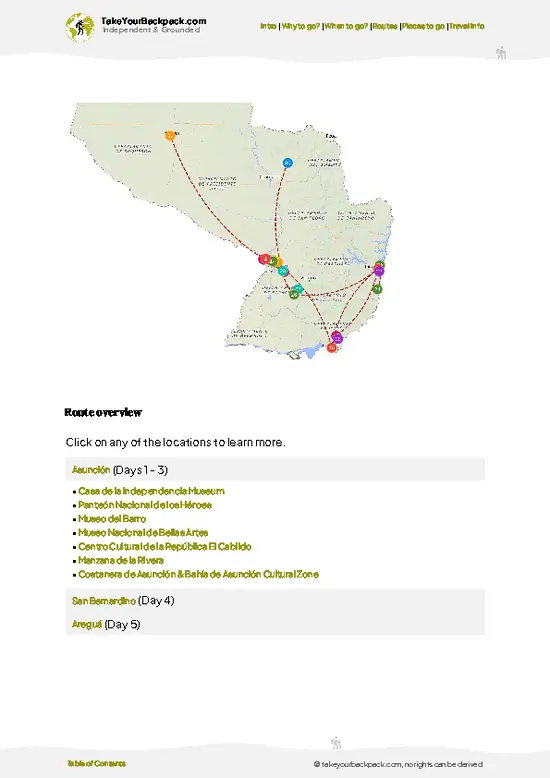

 Best Backpacking
.jpg) Hi, I’m Johan (Netherlands 🇳🇱), the creator of TakeYourBackpack. Over the past 3 decades, I’ve backpacked through 90+ countries across six continents, gaining extensive experience with independent travel, long-term trips, and overland routes.
Hi, I’m Johan (Netherlands 🇳🇱), the creator of TakeYourBackpack. Over the past 3 decades, I’ve backpacked through 90+ countries across six continents, gaining extensive experience with independent travel, long-term trips, and overland routes.