×

Philippines🇵🇭 | regionsSulu ArchipelagoBajau stilt villages, pearl farms, coral atolls | things to do and best time to go

Explore SiquijorExplore Surigao del Norte region

Backpacking in Sulu Archipelago
👀 For curious travelersregion ranked #12
By Johan Kruseman 🇳🇱 | Updated May 24, 2026

You land in Zamboanga with a week to play and hit the first big fork: do you burn time and money arranging permits, boats, and security to reach the Sulu Archipelago…or play it safe on easier islands like Siargao or Bohol and trade away that raw, edge-of-the-map feeling. That choice matters because Sulu, strung between Mindanao and Sabah in the far south of the Philippines, demands commitment.

For backpackers, Sulu is wild payoff with heavy asterisks. Coral-rich seas, sandbars that look unreal, Tausug culture, and almost zero mass tourism; but also complex security, patchy transport between islands, and very basic infrastructure. Compared with Palawan’s polished island-hopping, Sulu feels like pre-tourism Philippines—intense, fascinating, and only for travelers who are okay sacrificing comfort and convenience for authenticity and story-worthy days.

Discover everything you want to know in the 📖 Philippines Travel Guide.
Loading the map 🌍
CLICK TO FILTER
cities
towns
landmarks
national parks
hikes
beaches
attractions
festivals
regions
SHOW COUNTRY’S BESTSHOW ALL

✨ Why go?
Ranked #12 region in Philippines
Why Sulu Archipelago should be on your travel list

Backpackers flock to the Sulu Archipelago for a reason. This region offers a variety of landscapes that range from pristine beaches to lush mountains, all within a stone’s throw of each other. You can dive into crystal-clear waters one day and trek through dense jungles the next, without the hassle of constant relocation.

Transport options are surprisingly flexible, with local boats and jeepneys making it easy to hop between islands. This means you can savor the slow travel experience, soaking in the culture and connecting with locals. You’re not just a tourist; you’re part of the rhythm of island life.

Mixing nature and culture here is effortless. Whether you’re exploring traditional markets or lounging on a secluded beach, every moment feels like a high-value experience.
Want to include Sulu Archipelago in your Philippines route?
Create a personalized Philippines itinerary that includes Sulu Archipelago and the places that fit your trip — based on your travel style, budget, and available time. Get your route in seconds.

Generate my trip

💡 HighlightsDon't-miss highlights and experiences

  1. Bud Bongao (Bongao Peak), Bongao, Tawi-Tawi

    A short, sweaty hike up a sacred granite hill that doubles as an open-air shrine, with Muslim and animist shrines, cool caves, and panoramic views over the sea of islands at sunset. It’s the easiest way to get a real feel for Sama life, local pilgrimage practice, and island geography all at once — my personal favorite.
  2. Simunul Island & Sheikh Makhdum Mosque

    Home to the mosque and tomb traditionally credited to Sheikh Makhdum (14th century), this tiny island is where Islam is said to have first taken root in the Philippines. The place is short on tourist infrastructure but huge on historical resonance; you’ll meet elders who still tell the old stories.
  3. Panampangan Sandbar (Panampangan Island), Bongao

    A photogenic, shifting white sand
read more 👉
  1. Bud Bongao (Bongao Peak), Bongao, Tawi-Tawi

    A short, sweaty hike up a sacred granite hill that doubles as an open-air shrine, with Muslim and animist shrines, cool caves, and panoramic views over the sea of islands at sunset. It’s the easiest way to get a real feel for Sama life, local pilgrimage practice, and island geography all at once — my personal favorite.
  2. Simunul Island & Sheikh Makhdum Mosque

    Home to the mosque and tomb traditionally credited to Sheikh Makhdum (14th century), this tiny island is where Islam is said to have first taken root in the Philippines. The place is short on tourist infrastructure but huge on historical resonance; you’ll meet elders who still tell the old stories.
  3. Panampangan Sandbar (Panampangan Island), Bongao

    A photogenic, shifting white sand spit that appears at low tide — perfect for barefoot walks, shell combing, and crystal-clear shallow snorkeling. Locals bring makings for impromptu cookouts here; it feels like the archipelago’s natural postcard without the crowds.
  4. Turtle Islands Wildlife Sanctuary (Taganak, Boan, and nearby islets) — hidden gem

    One of the best places in the Philippines to see nesting green turtles and hatchlings if you time it right. Access requires coordination with local authorities and guides, but witnessing a hatchling run to the sea is a once-in-a-life feel-small moment.
  5. Bud Dajo (Mount Dajo), Jolo

    A low volcanic crater on Jolo with a heavy historical imprint — site of the 1906 battle between Moro defenders and U.S. forces. It’s a solemn, educational visit: the crater, graves, and local stories give context to the archipelago’s modern history (visit respectfully and preferably with a local guide).
  6. Jolo Cathedral (Our Lady of Mount Carmel), Jolo

    A major cultural and religious landmark for the Catholic community in Sulu; the cathedral’s history and continued role in town life reflect the region’s layered religious landscape. It’s worth a quiet visit to see how faith and community intersect in Jolo.
  7. Sama-Bajau stilt-house villages and houseboat life (examples around Bongao, Tandubas) — hidden gem

    Spending hours among stilt villages or riding with houseboat families gives unmatched insight into the sea-nomad lifestyle: boat maintenance, freediving for food, tiny floating markets and children learning to swim before they walk. Bring gifts like school supplies — it’s a meaningful way to connect.
  8. Sibutu Island reefs, caves and borderlands culture — hidden gem

    Sibutu (southern Tawi-Tawi) delivers rugged limestone coastlines, excellent snorkeling and diving on under-visited reefs, and a frontier feel near the Sabah border. Few international travelers get here, so the beaches and dive sites often feel privately owned by the locals.
  9. Mapun (Cagayan de Tawi-Tawi) — hidden gem

    Remote, sleepy, and achingly photogenic: Mapun offers long empty beaches, traditional Tausug villages, and an almost-forgotten pace of life. It’s the kind of place you visit to disappear for a couple of days and learn street-level island living from locals.
  10. Seaweed farms and coastal processing villages (throughout Sulu/Tawi-Tawi)

    Seaweed farming is the backbone of many coastal communities here; visiting drying racks, chat with farmers, and sampling raw and processed products gives a clear picture of the local economy. It’s an everyday, authentic experience that you won’t find on glossy island itineraries.
Spotted a mistake or missing something? Contact us.

⌛️ 5 daysA smart one-week plan

Day 1: Jolo
The Sulu Archipelago kicks off in Jolo, the capital of Sulu province. Arriving here, you’ll feel the pulse of local life. The transport system is a mix of jeepneys and motorbikes, which means you’ll be moving at a local pace. Embrace it. This isn’t a race; it’s about soaking in the culture. Spend the day exploring the bustling markets and trying local delicacies like Sulu’s famous beef rendang.

Day 2: Siasi
Hop on a boat to Siasi, a quick ride that’s part of the adventure. The sea breeze is invigorating, and the views are stunning. Siasi is less touristy, giving you a genuine feel for island life. Spend your time visiting the local artisans and enjoying the pristine beaches. The slower pace here allows for deeper connections with the locals.

Day 3: Tapul
Next, head to … read more 👉
Day 1: Jolo
The Sulu Archipelago kicks off in Jolo, the capital of Sulu province. Arriving here, you’ll feel the pulse of local life. The transport system is a mix of jeepneys and motorbikes, which means you’ll be moving at a local pace. Embrace it. This isn’t a race; it’s about soaking in the culture. Spend the day exploring the bustling markets and trying local delicacies like Sulu’s famous beef rendang.

Day 2: Siasi
Hop on a boat to Siasi, a quick ride that’s part of the adventure. The sea breeze is invigorating, and the views are stunning. Siasi is less touristy, giving you a genuine feel for island life. Spend your time visiting the local artisans and enjoying the pristine beaches. The slower pace here allows for deeper connections with the locals.

Day 3: Tapul
Next, head to Tapul, where you can experience the beauty of unspoiled nature. The boat ride is longer, but it’s worth it. The island is known for its breathtaking landscapes and serene atmosphere. Take a hike to the viewpoint for a panoramic view that’ll make your heart race.

Day 4: Off-Path Reward - Marungas
Take a detour to Marungas, a small island that’s a bit off the beaten path. The snorkeling here is phenomenal, with vibrant coral reefs and diverse marine life. It’s a hidden treasure that won’t disrupt your flow; just a short boat ride from Tapul.

Day 5: Back to Jolo
Return to Jolo for your final day. Reflect on your journey, visit any spots you missed, and grab some souvenirs. The transport back is straightforward, allowing you to savor your last moments in the archipelago.

The must-do day? Day 3 in Tapul. The combination of nature and tranquility encapsulates the essence of the Sulu Archipelago, making it a highlight you won’t forget.
Turn your Sulu Archipelago visit into an Philippines adventure
Build a complete Philippines route with Sulu Archipelago, hidden gems, must-see destinations, and realistic travel times included.

Generate my trip

🌤️ When to go?Seasonal considerations and timing


  • Weather: The dry season from March to May is your best bet—expect clear skies and calm seas perfect for island hopping. Avoid November to February; heavy rains and typhoons can shut down travel plans fast.

  • Temperature: Daytime temps hover around 28-32°C (82-90°F) year-round, but humidity spikes during the rainy season, making it feel hotter and stickier.

  • Daylight Hours: Roughly 11-12 hours daily, with sunrise around 6 AM and sunset near 6 PM, giving you plenty of daylight for exploration without rushing.

  • Crowds: The Sulu Archipelago is off the beaten path, so crowds are minimal even in peak season. Still, local festivals in April can draw lively, authentic gatherings worth timing your visit for.

  • Seasonal Activities: March to May is prime for diving and snorkeling—visibility peaks,
read more 👉

  • Weather: The dry season from March to May is your best bet—expect clear skies and calm seas perfect for island hopping. Avoid November to February; heavy rains and typhoons can shut down travel plans fast.

  • Temperature: Daytime temps hover around 28-32°C (82-90°F) year-round, but humidity spikes during the rainy season, making it feel hotter and stickier.

  • Daylight Hours: Roughly 11-12 hours daily, with sunrise around 6 AM and sunset near 6 PM, giving you plenty of daylight for exploration without rushing.

  • Crowds: The Sulu Archipelago is off the beaten path, so crowds are minimal even in peak season. Still, local festivals in April can draw lively, authentic gatherings worth timing your visit for.

  • Seasonal Activities: March to May is prime for diving and snorkeling—visibility peaks, and marine life is active. Fishing communities also hold traditional events during this time.

  • Price Fluctuations: Expect slightly higher prices in the dry season due to demand, but still far from tourist trap levels. Off-season means cheaper accommodations but riskier weather.


Pro-tip: Book your boat transfers early in the dry season; locals fill spots fast, and snagging a seat last minute can cost you both cash and patience.


source: climatestotravel.comJANJanuary: below average for travelingFEBFebruary: below average for travelingMARMarch: excellent for travelingAPRApril: excellent for travelingMAYMay: excellent for travelingJUNJune: good for travelingJULJuly: good for travelingAUGAugust: good for travelingSEPSeptember: good for travelingOCTOctober: good for travelingNOVNovember: below average for travelingDECDecember: below average for traveling
philippines-region-sulu-archipelago
© Google |

✈️ The backpacker research shortcutPhilippines Travel Guide

An offline-friendly backpacking guide with optimized travel routes, ranked highlights, transport advice, and the best areas to stay.
example page 0 from our offline Travel Guide for Philippines
example page 1 from our offline Travel Guide for Philippines
example page 2 from our offline Travel Guide for Philippines
example page 3 from our offline Travel Guide for Philippines
example page 4 from our offline Travel Guide for Philippines
example page 5 from our offline Travel Guide for Philippines
example page 6 from our offline Travel Guide for Philippines
example page 7 from our offline Travel Guide for Philippines
The digital guide (505 pages) contains:
144 highlights, ranked by travel appeal
Optimized 7, 14 & 21-day travel routes
Cities, national parks, landmarks, beaches
How to get around
Offline-friendly for travel without Wi-Fi
👉 Click to see all 30+ guide features

📅 Plan smarter in minutes, not weeks
Month by month travel advice
Festivals & national holidays
Budget expectations

🗺️ Go to the right places, skip the overrated ones
Honest pros & cons of destinations
Top hikes, parks & viewpoints
Lesser-known places most travelers miss
Clear “worth it vs skip it” guidance

🛏️ Travel smoothly without rookie mistakes
Best areas to stay
Transport systems explained simply
Common scams & safety advice
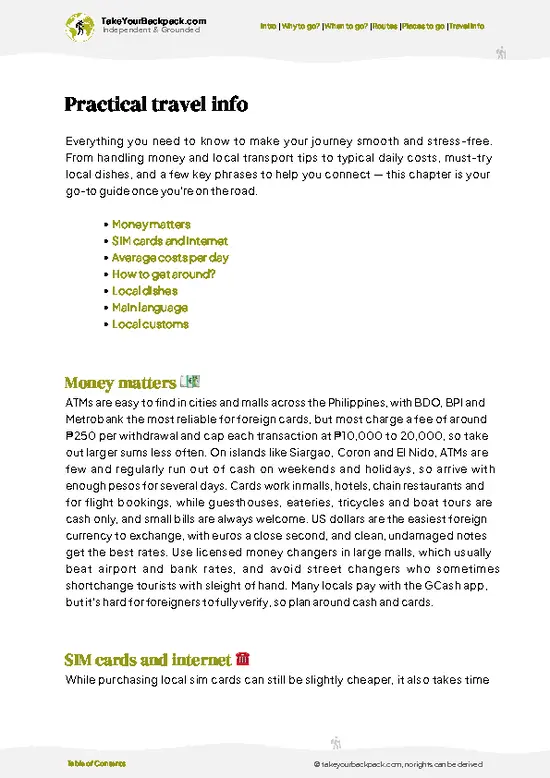
SIM cards, money & practical tips

🌍 Understand the country, not just visit it
Culture & traditions
52 Essential phrases & customs
Festivals worth planning around
Traveler-friendly historical context
Insights that make places more meaningful

📱 Built for real travel conditions
Fully downloadable PDF
Works completely offline
Optimized for phone use
Useful in remote areas & buses
Everything in one place
Save weeks of stressful planning
Get instant access to your full guide. 30‑day money-back guarantee.


By proceeding you agree to our terms.
Sent to your inbox immediately after payment • 100% Secure Checkout
Best Backpacking Travel Advisor 2025 tourism awardBest Backpacking
Travel Advisor
2025
What others say about Take Your Backpack Guides:
⭐⭐⭐⭐⭐
Fantastic, amazing amount of information!
⭐⭐⭐⭐⭐
My goodness this is amazing, it's what I've been looking for hats off too you!
⭐⭐⭐⭐⭐
I think this is absolutely BRILLIANT
⭐⭐⭐⭐
Very complete and informative. It's still missing places, but I gotta to commend you
⭐⭐⭐⭐⭐
This is truly amazing, thank you, can't wait to explore it with my kids!
⭐⭐⭐⭐⭐
Awesome resource, thank you!
⭐⭐⭐⭐⭐
This is amazing! Can't wait to explore the ones I haven't seen
⭐⭐⭐⭐
I love this! Well done, great idea.
⭐⭐⭐⭐⭐
Thanks for taking the time to make this gem!
⭐⭐⭐⭐⭐
This might be the best website I've ever seen.
⭐⭐⭐⭐⭐
Congratulations, and thank you so much for your work; it's incredibly valuable.
⭐⭐⭐⭐
In all seriousness I think you did a great job pointing out the important spots
⭐⭐⭐⭐⭐
10/10 very good
⭐⭐⭐⭐⭐
As someone who's only just starting to visit regularly this is awesome, thank you.
⭐⭐⭐⭐
Thank you very much! I'm going to visit my dad, it's going to be very useful!
⭐⭐⭐⭐⭐
This is really cool! We'll be travelling for the first time and this definitely come in handy.
⭐⭐⭐⭐⭐
You are now our minister of culture, congratulations 👨‍💼
⭐⭐⭐⭐⭐
Just wanted to tell you that this is a pearl! Going to follow your recommendations.
⭐⭐⭐⭐⭐
This is so cool. I'll definitely be using the resource for my travels soon.
⭐⭐⭐⭐⭐
This is very impressive! Good work.
⭐⭐⭐⭐⭐
This is an amazing and informative site. Very well done!

🛏️ Where to stay?Where staying makes the most sense

The Sulu Archipelago is a treasure trove for backpackers seeking authentic experiences. Start in Jolo, the capital of Sulu. It’s bustling with local life, and you’ll find friendly faces eager to share stories. The markets are a feast for the senses, and the food is a must-try.

Next up, Tawi-Tawi. This island is a bit off the beaten path, but that’s where the magic happens. The beaches are pristine, and the vibe is laid-back. You’ll meet fellow travelers at local eateries, swapping tales over fresh seafood.

Then there’s Bongao, known for its vibrant community. It’s a great base for exploring … read more 👉
The Sulu Archipelago is a treasure trove for backpackers seeking authentic experiences. Start in Jolo, the capital of Sulu. It’s bustling with local life, and you’ll find friendly faces eager to share stories. The markets are a feast for the senses, and the food is a must-try.

Next up, Tawi-Tawi. This island is a bit off the beaten path, but that’s where the magic happens. The beaches are pristine, and the vibe is laid-back. You’ll meet fellow travelers at local eateries, swapping tales over fresh seafood.

Then there’s Bongao, known for its vibrant community. It’s a great base for exploring nearby islands. The sunsets here are legendary, and you’ll want to grab a spot by the water to soak it all in.

Each of these spots offers a unique slice of life in the Philippines, balancing safety, social interaction, and budget-friendly options. Choose wisely, and you’ll create memories that last a lifetime.

🚌 Getting aroundHow to get around Sulu Archipelago

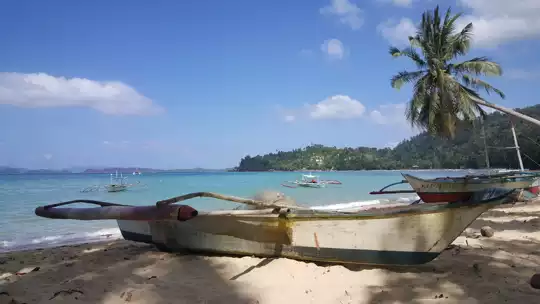
The Sulu Archipelago is a realm where time bends and schedules are more of a suggestion than a rule. Picture this: you’re on a bustling dock, the salty breeze tousling your hair, as colorful bangkas (traditional outrigger boats) bob in the waves, waiting for the next adventure. Here, the rhythm of life is dictated by the tides and the whims of the locals, not by rigid timetables. You’ll find that getting around is a dance of intuition and spontaneity, where every journey is a chance to connect with the vibrant culture and stunning landscapes.


  • Bangkas: These traditional boats are your best bet for hopping between islands. Prices range from 100 to 300 PHP depending on distance, and they usually leave when full, which can mean a wait or a quick departure. Expect a ride that’s both exhilarating
read more 👉
The Sulu Archipelago is a realm where time bends and schedules are more of a suggestion than a rule. Picture this: you’re on a bustling dock, the salty breeze tousling your hair, as colorful bangkas (traditional outrigger boats) bob in the waves, waiting for the next adventure. Here, the rhythm of life is dictated by the tides and the whims of the locals, not by rigid timetables. You’ll find that getting around is a dance of intuition and spontaneity, where every journey is a chance to connect with the vibrant culture and stunning landscapes.


  • Bangkas: These traditional boats are your best bet for hopping between islands. Prices range from 100 to 300 PHP depending on distance, and they usually leave when full, which can mean a wait or a quick departure. Expect a ride that’s both exhilarating and a bit bumpy, but the views are worth it.


  • Jeepneys: The iconic, colorful jeepneys are the local buses. Fares are incredibly cheap, usually around 10-20 PHP for short distances. They run frequently, but schedules are loose; just flag one down and hop on. It’s a fun way to mingle with locals and soak in the atmosphere.


  • Motorbike Rentals: For the adventurous, renting a motorbike can cost around 300-500 PHP per day. This gives you the freedom to explore at your own pace. Just be cautious; the roads can be rough and traffic unpredictable.


  • Tricycles: These are the go-to for short trips within towns. Fares are typically 20-50 PHP. They’re a bit cramped but offer a unique way to experience local life up close.


For efficient travel, always ask locals about the best times to catch a bangka or jeepney. They know the unspoken rhythms of the region, and a little insider info can save you hours of waiting.

🍲 FoodLocal Flavors for Backpackers

In the **Sulu Archipelago**, food is a vibrant tapestry of flavors and traditions. Dive into **satti**, a skewered meat dish served with a spicy sauce that ignites your taste buds. Don’t miss **lambuk**, a savory rice dish wrapped in banana leaves, perfect for a quick bite. The local **seafood** is a must; fresh catch grilled to perfection, often enjoyed right by the shore.

For a true local experience, head to bustling **markets** where the air is thick with the scent of grilled fish and sweet mangoes. Street vendors serve up **putu**, a rice cake that’s soft and slightly sweet, best paired with a cup of strong **barako coffee**.

Dining here is casual and communal. Expect to share dishes, and don’t be surprised if you’re invited to join a table. Remember, eating with your hands is not just … read more 👉
In the **Sulu Archipelago**, food is a vibrant tapestry of flavors and traditions. Dive into **satti**, a skewered meat dish served with a spicy sauce that ignites your taste buds. Don’t miss **lambuk**, a savory rice dish wrapped in banana leaves, perfect for a quick bite. The local **seafood** is a must; fresh catch grilled to perfection, often enjoyed right by the shore.

For a true local experience, head to bustling **markets** where the air is thick with the scent of grilled fish and sweet mangoes. Street vendors serve up **putu**, a rice cake that’s soft and slightly sweet, best paired with a cup of strong **barako coffee**.

Dining here is casual and communal. Expect to share dishes, and don’t be surprised if you’re invited to join a table. Remember, eating with your hands is not just accepted; it’s celebrated. Embrace the messiness and savor every bite!

Other Filipino regions near Sulu Archipelago

Explore more nearby:

  • Palawan—Karst cliffs, turquoise lagoons, remote beaches| 528 km away
  • Siquijor—Mystic healers, coral reefs, forested hills| 613 km away
  • Camiguin—Volcanic peaks, hot springs, sunken cemetery| 694 km away

💡 Not sure where to go next?
Create a personalized itinerary for Philippines including Sulu Archipelago and the places that fit your trip.

Generate my itinerary

👉 Discover all regions

Or checkout all Philippines has to offer (think cities, towns, villages, national parks, hikes, beaches, festivals)
Country photo of Philippines

We 💚 feedbackSumming up the experience

The Sulu Archipelago is a slice of paradise where you can dive into crystal-clear waters and meet locals who genuinely welcome you. But let’s be real: logistics can be a headache. Ferries are often delayed, and accommodations can be hit or miss. Embrace the chaos, and you’ll find the magic hidden beneath the surface. It’s worth the effort.

✈️ When did I visit Philippines?
Philippines being one of my favorites, due to the people and their mentality. I visited it first in 2010 and came back in January 2016 as part of my 1.5 year world trip.

✍️ Help improve this page!
The information on this page is based on my own backpacking experience in Philippines, supplemented with up-to-date research and feedback from other travelers. Travel details can change, so if you notice anything outdated or incomplete, feel free to let me know.


🙋‍♂️ Give feedback

👋 Meet the founderWho’s Behind Take Your Backpack?

Johan, backpacker and founder of TakeYourBackpackHi, I’m Johan (Netherlands 🇳🇱), the creator of TakeYourBackpack. Over the past decade, I’ve backpacked through 80+ countries across six continents, gaining extensive experience with independent travel, long-term trips, and overland routes.

This site is built on a combination of firsthand travel experience and carefully curated insights from other backpackers. Many guides are based on places I’ve personally visited, while others bring together tips, observations, and practical advice shared by trusted travelers I’ve met along the way.

The goal is to provide realistic, experience-driven guidance — not generic itineraries — so you can explore destinations with better context, clearer expectations, and more confidence.

Get full country guide •
Instant download • 144 highlights • Full Offline guide