
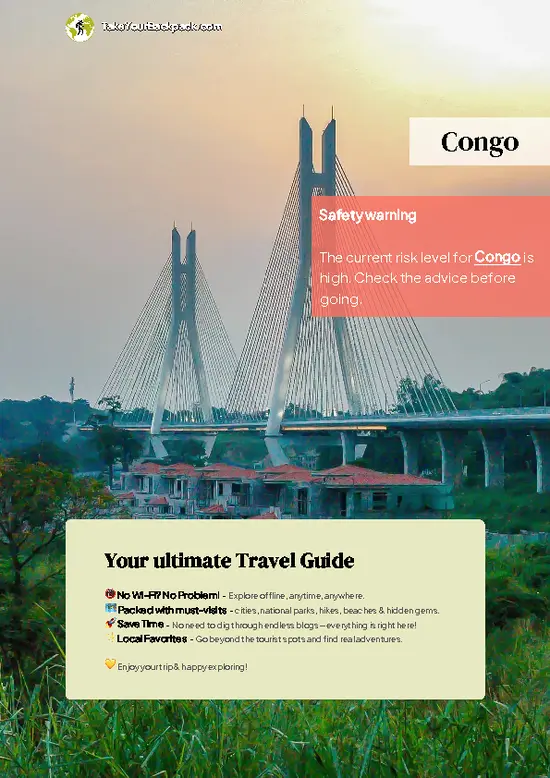
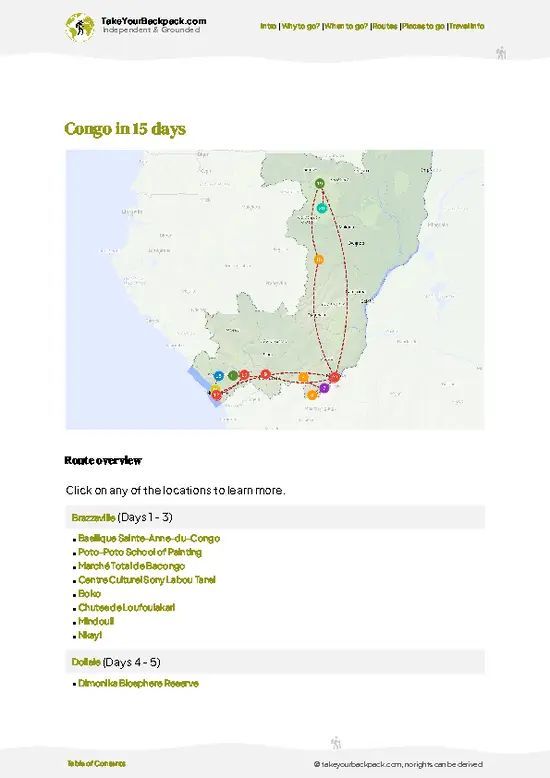
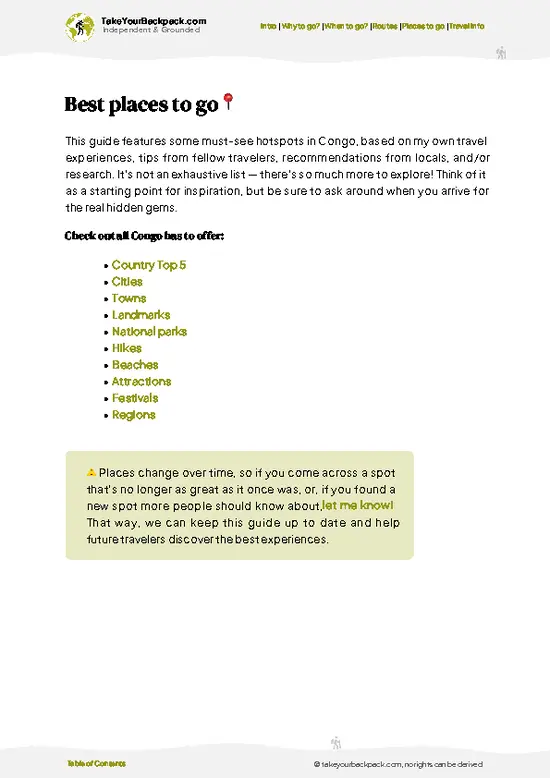
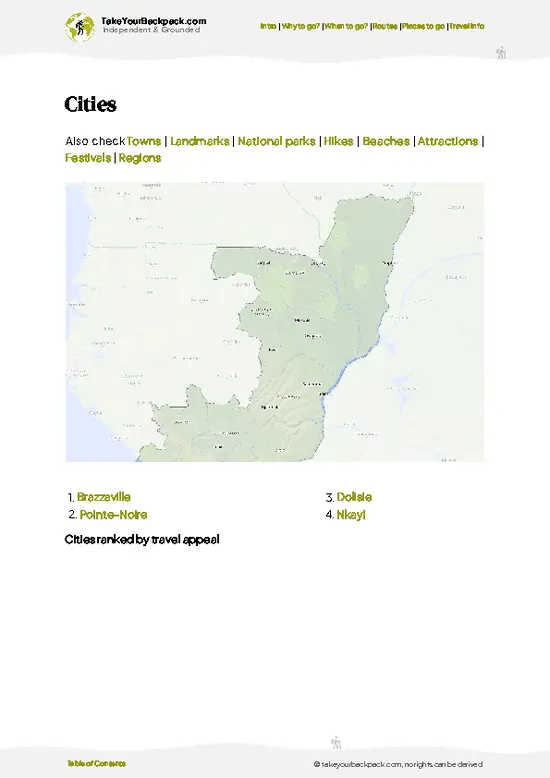
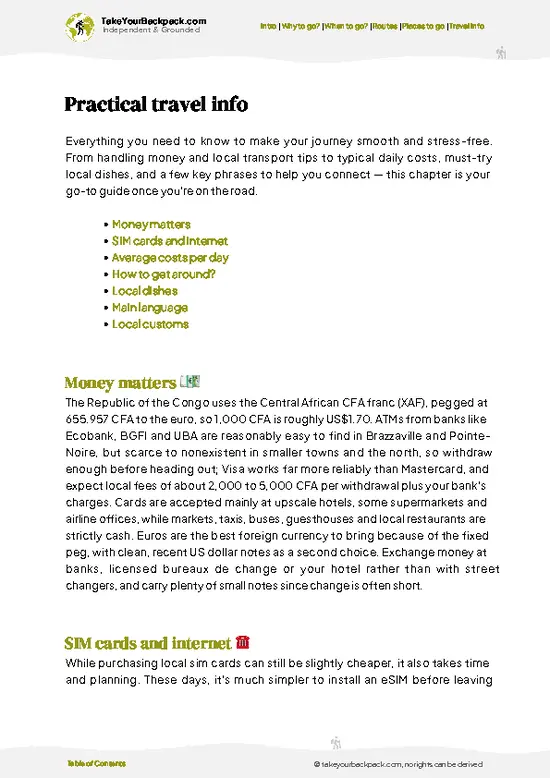
- The fishermen’s landing: This is the beach’s everyday show. Wooden pirogues beach on the sand, nets are untangled by hand, and the catch is sorted into baskets while buyers argue over prices. Arrive when boats are coming in and you can often get a fish grilled on the spot. Ask before taking photos of people.
- Loango Bay and its royal past: The water in front of you was the gateway of the Loango kingdom, a trading power that dealt in ivory, copper and cloth, and later became a notorious port in the slave trade. Walk the shoreline with that in mind and the empty horizon reads differently. A local guide can point out where the old landing places lay.
- Diosso Gorge: A short ride inland, this small canyon is carved into soft sandstone that shows streaks of ochre, pink and white. Paths along the rim
- The fishermen’s landing: This is the beach’s everyday show. Wooden pirogues beach on the sand, nets are untangled by hand, and the catch is sorted into baskets while buyers argue over prices. Arrive when boats are coming in and you can often get a fish grilled on the spot. Ask before taking photos of people.
- Loango Bay and its royal past: The water in front of you was the gateway of the Loango kingdom, a trading power that dealt in ivory, copper and cloth, and later became a notorious port in the slave trade. Walk the shoreline with that in mind and the empty horizon reads differently. A local guide can point out where the old landing places lay.
- Diosso Gorge: A short ride inland, this small canyon is carved into soft sandstone that shows streaks of ochre, pink and white. Paths along the rim give views into the pits, and the contrast with the flat coast is sharp. Go in the morning when the colors are strongest and the heat is lower.
- The royal tombs and museum at Diosso: This is where the kings of Loango are buried, and a modest museum holds objects linked to the dynasty and the colonial period. A guide brings the stories alive, and it is the best way to understand why this coast mattered. Expect a small entry fee and a visit of about an hour.
- A long walk along the tideline: Few spots near Pointe-Noire let you walk this far on open sand with so few people. Palms lean over the dunes, crabs scuttle into holes, and the sound is only surf and gulls. Walk at low tide for firmer sand, wear a hat, and stay out of the water above knee height because the undertow is strong. As the sun drops, the sea turns from steel to pewter, and the fishing crews head out for the night.
Spotted a mistake or missing something? Contact us.

 Best Backpacking
 Hi, I’m Johan (Netherlands 🇳🇱), the creator of TakeYourBackpack. Over the past 3 decades, I’ve backpacked through 90+ countries across six continents, gaining extensive experience with independent travel, long-term trips, and overland routes.