×

St. Lucia🇱🇨 | festivalsSaint Lucia CarnivalCastries parade, feathered costume bands, calypso monarch, soca fetes | things to do and best time to go

Explore Grande Anse BeachExplore La Rose Festival

Backpacking in Saint Lucia Carnival
🏆 Top pickfestival ranked #1
By Johan Kruseman 🇳🇱 | Updated October 22, 2026

The island’s biggest street party, J’ouvert, kicks off in the dark hours of Carnival Monday, with revelers covered in paint, powder and mud moving through Castries to soca trucks. Saint Lucia Carnival takes place in and around Castries, the capital on the northwest coast, and runs for about two weeks in July, ending with the Parade of the Bands. Expect soca, calypso, steel pan and costumed bands of several thousand people, a crowd of locals, diaspora visitors and a few backpackers. The vibe is friendly, loud and sweaty. Beds in Castries fill and spike in price weeks ahead, so book early or stay in a nearby town. Costume packages sell out and cost more at the door, so register with a band in advance. Bring cash for fetes, since small vendors rarely take cards. Wear closed shoes you can ruin. It suits soca lovers and social travelers, and it will frustrate anyone who wants quiet beaches or hates crowds.

Part of Backpacking in St. Lucia: all 31 places on one map, with routes and the best time to go.
Discover everything you want to know in the 📖 St. Lucia Travel Guide.
Loading the map 🌍
CLICK TO FILTER
towns
landmarks
national parks
hikes
beaches
attractions
festivals
regions
SHOW COUNTRY’S BESTSHOW ALL

✨ Why go?
Ranked #1 festival in St. Lucia
What sets this place apart

Saint Lucia Carnival is the one time the whole island turns up in the capital, and that is the main reason to build a route around it. Hostel-style crowds are small here, so the community you join is mostly local: J’ouvert before sunrise on Monday puts you in a street full of strangers who will smear you with paint and hand you a drink within minutes. You will leave with friends, phone numbers and invitations to beach lime afterward. The second pull is cost relative to bigger Caribbean carnivals. Fetes, the Calypso Monarch competition and the street parade cost far less than the headline events in Trinidad or Barbados, and you can join a band without a huge package. Many travelers pair it with a stay around Soufrière and the Pitons, or hop on to Martinique or Barbados by air once the Parade … read more 👉
Saint Lucia Carnival is the one time the whole island turns up in the capital, and that is the main reason to build a route around it. Hostel-style crowds are small here, so the community you join is mostly local: J’ouvert before sunrise on Monday puts you in a street full of strangers who will smear you with paint and hand you a drink within minutes. You will leave with friends, phone numbers and invitations to beach lime afterward. The second pull is cost relative to bigger Caribbean carnivals. Fetes, the Calypso Monarch competition and the street parade cost far less than the headline events in Trinidad or Barbados, and you can join a band without a huge package. Many travelers pair it with a stay around Soufrière and the Pitons, or hop on to Martinique or Barbados by air once the Parade of the Bands ends. July also means warm, sticky days, so plan swims and rest between nights out.

💡 HighlightsWhat this place is best known for

  1. Parade of the Bands: Thousands of masqueraders in feathered, beaded costumes roll through Castries on Monday and Tuesday behind music trucks. Join a band for the full experience or watch from the roadside for free.
  2. J’ouvert Morning: Starting in the dark hours before dawn, crowds covered in paint, mud and powder dance through the streets to soca. Wear clothes you will throw away.
  3. Calypso Monarch Competition: Singers perform witty and political calypso in front of judges and a loud audience. It shows you the island’s storytelling tradition more clearly than any street party.
  4. Soca Fetes: Open-air and club parties run through the weeks before the parade, with DJs and local artists playing fast soca. Tickets are usually sold in advance, and the best ones often sell out.
  5. Steel Pan and Local Food Stalls:
… read more 👉
  1. Parade of the Bands: Thousands of masqueraders in feathered, beaded costumes roll through Castries on Monday and Tuesday behind music trucks. Join a band for the full experience or watch from the roadside for free.
  2. J’ouvert Morning: Starting in the dark hours before dawn, crowds covered in paint, mud and powder dance through the streets to soca. Wear clothes you will throw away.
  3. Calypso Monarch Competition: Singers perform witty and political calypso in front of judges and a loud audience. It shows you the island’s storytelling tradition more clearly than any street party.
  4. Soca Fetes: Open-air and club parties run through the weeks before the parade, with DJs and local artists playing fast soca. Tickets are usually sold in advance, and the best ones often sell out.
  5. Steel Pan and Local Food Stalls: Around the festival grounds you find pan music and vendors selling grilled fish, fried bakes and cold Piton beer. It is a good place to rest between events and talk to locals.
Start with J’ouvert, since it is the most social and the quickest way to meet people before the larger parade days.
Spotted a mistake or missing something? Contact us.

🌤️ When to go?When is the celebration of Saint Lucia Carnival?

Saint Lucia Carnival runs for two days, the Monday and Tuesday in mid-to-late July, with the build-up of parties and competitions starting in late June, and the main action fills the streets of Castries, centered on the Derek Walcott Square area and the Castries waterfront.
  • Best day: Tuesday is the big one, when costumed bands cross the city and the street party peaks. Monday’s J’ouvert starts before dawn and is more raw and local, with paint, mud and soca trucks.
  • Weather: Expect 27 to 31°C (81 to 88°F), strong sun, high humidity and short, sudden showers. Bring a light rain shell, sunscreen, a hat, a refillable bottle and shoes you can ruin.
  • Booking: Reserve a bed by April or May, as Castries and Rodney Bay fill up. Rates commonly rise 20 to 40 percent. Band costume packages sell out early.
  • Crowds
… read more 👉
Saint Lucia Carnival runs for two days, the Monday and Tuesday in mid-to-late July, with the build-up of parties and competitions starting in late June, and the main action fills the streets of Castries, centered on the Derek Walcott Square area and the Castries waterfront.
  • Best day: Tuesday is the big one, when costumed bands cross the city and the street party peaks. Monday’s J’ouvert starts before dawn and is more raw and local, with paint, mud and soca trucks.
  • Weather: Expect 27 to 31°C (81 to 88°F), strong sun, high humidity and short, sudden showers. Bring a light rain shell, sunscreen, a hat, a refillable bottle and shoes you can ruin.
  • Booking: Reserve a bed by April or May, as Castries and Rodney Bay fill up. Rates commonly rise 20 to 40 percent. Band costume packages sell out early.
  • Crowds and transport: Roads around Castries close during parades, so arrive Sunday and leave Wednesday. Minibuses thin out after dark.
Stay within walking distance of the route so you are not stuck waiting for transport.


source: climatestotravel.comJANJanuary: not recommended for travelingFEBFebruary: not recommended for travelingMARMarch: not recommended for travelingAPRApril: not recommended for travelingMAYMay: not recommended for travelingJUNJune: not recommended for travelingJULJuly: excellent for travelingAUGAugust: not recommended for travelingSEPSeptember: not recommended for travelingOCTOctober: not recommended for travelingNOVNovember: not recommended for travelingDECDecember: not recommended for traveling

✈️ The backpacker research shortcutSt. Lucia Travel Guide

What the free pages can't give you: ready-made routes, every place ranked, and it works offline. All in 1 guide.
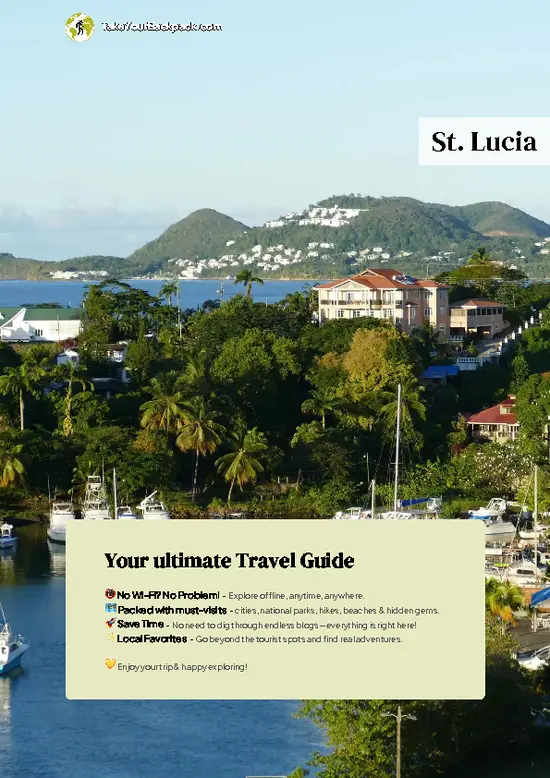
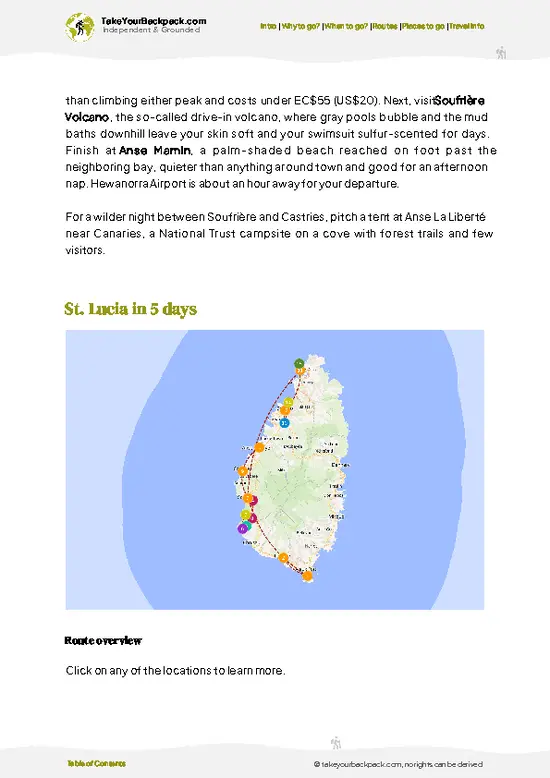
example page 0 from our offline Travel Guide for Saint Lucia
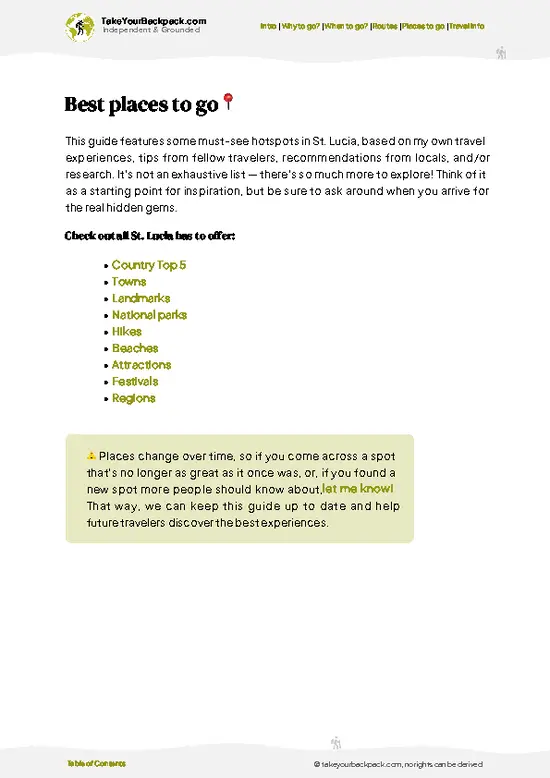
example page 1 from our offline Travel Guide for Saint Lucia
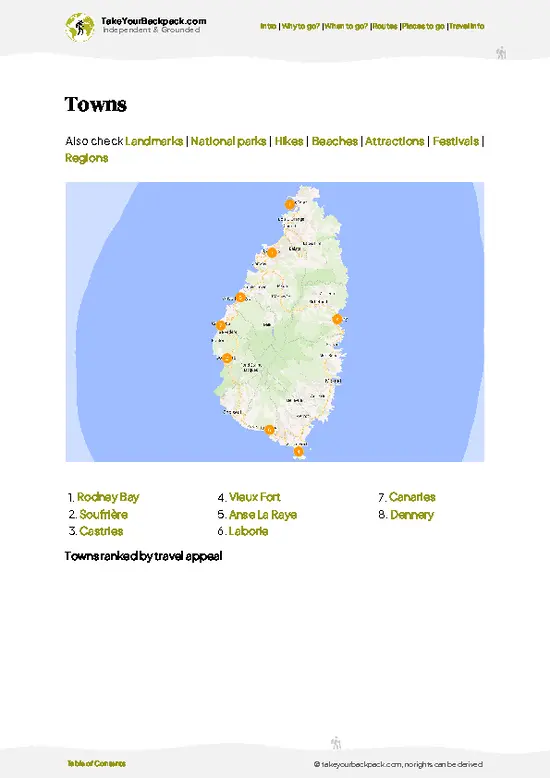
example page 2 from our offline Travel Guide for Saint Lucia
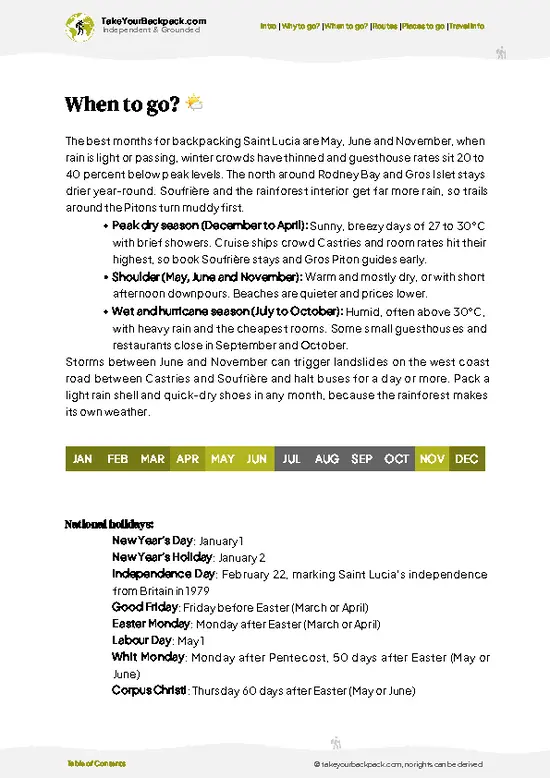
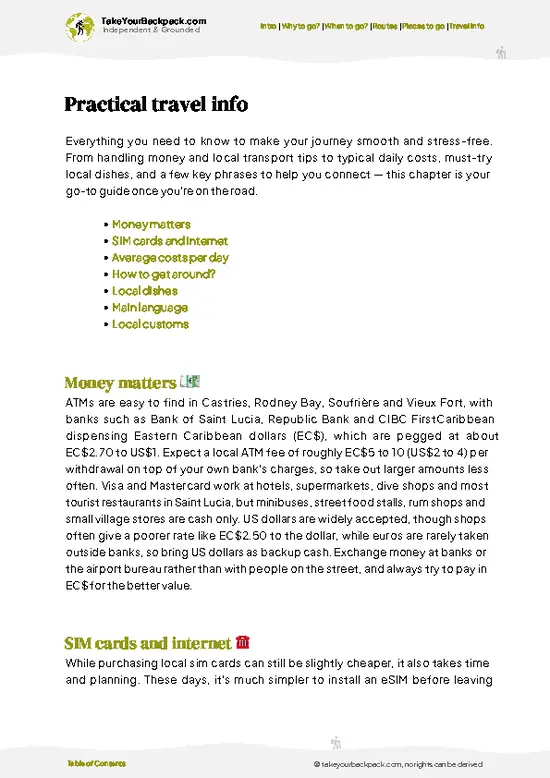
example page 3 from our offline Travel Guide for Saint Lucia
example page 4 from our offline Travel Guide for Saint Lucia
example page 5 from our offline Travel Guide for Saint Lucia
example page 6 from our offline Travel Guide for Saint Lucia
example page 7 from our offline Travel Guide for Saint Lucia
The digital guide (125 pages) contains:-page digital guide:
✅ Ready-made 2, 3 & 5-day routes
✅ All 31 places ranked, so you skip the overrated ones
✅ Works offline, all in 1 guide
✅ Cities, national parks, landmarks, beaches
✅ How to get around
👉 Click to see all 30+ guide features

📅 Plan smarter in minutes, not weeks
✅ Month by month travel advice
✅ Festivals & national holidays
✅ Budget expectations

🗺️ Go to the right places, skip the overrated ones
✅ Honest pros & cons of destinations
✅ Top hikes, parks & viewpoints
✅ Lesser-known places most travelers miss
✅ Clear “worth it vs skip it” guidance

🛏️ Travel smoothly without rookie mistakes
✅ Best areas to stay
✅ Transport systems explained simply
✅ Common scams & safety advice
✅ SIM cards, money & practical tips

🌍 Understand the country, not just visit it
✅ Culture & traditions
✅ 52 Essential phrases & customs
✅ Festivals worth planning around
✅ Traveler-friendly historical context
✅ Insights that make places more meaningful

📱 Built for real travel conditions
✅ Fully downloadable PDF
✅ Works completely offline
✅ Optimized for phone use
✅ Useful in remote areas & buses
✅ All in 1 guide
Stop searching, start planning
Get instant access to your full guide. 30‑day money-back guarantee.


By proceeding you agree to our terms.
Sent to your inbox immediately after payment • 100% Secure Checkout
Best Backpacking Travel Advisor 2025 tourism awardBest Backpacking
Travel Advisor
2025
What others say about Take Your Backpack Guides:
⭐⭐⭐⭐⭐
Fantastic, amazing amount of information!
⭐⭐⭐⭐⭐
My goodness this is amazing, it's what I've been looking for hats off too you!
⭐⭐⭐⭐⭐
I think this is absolutely BRILLIANT
⭐⭐⭐⭐
Very complete and informative. It's still missing places, but I gotta to commend you
⭐⭐⭐⭐⭐
This is truly amazing, thank you, can't wait to explore it with my kids!
⭐⭐⭐⭐⭐
Awesome resource, thank you!
⭐⭐⭐⭐⭐
This is amazing! Can't wait to explore the ones I haven't seen
⭐⭐⭐⭐
I love this! Well done, great idea.
⭐⭐⭐⭐⭐
Thanks for taking the time to make this gem!
⭐⭐⭐⭐⭐
This might be the best website I've ever seen.
⭐⭐⭐⭐⭐
Congratulations, and thank you so much for your work; it's incredibly valuable.
⭐⭐⭐⭐
In all seriousness I think you did a great job pointing out the important spots
⭐⭐⭐⭐⭐
10/10 very good
⭐⭐⭐⭐⭐
As someone who's only just starting to visit regularly this is awesome, thank you.
⭐⭐⭐⭐
Thank you very much! I'm going to visit my dad, it's going to be very useful!
⭐⭐⭐⭐⭐
This is really cool! We'll be travelling for the first time and this definitely come in handy.
⭐⭐⭐⭐⭐
You are now our minister of culture, congratulations 👨‍💼
⭐⭐⭐⭐⭐
Just wanted to tell you that this is a pearl! Going to follow your recommendations.
⭐⭐⭐⭐⭐
This is so cool. I'll definitely be using the resource for my travels soon.
⭐⭐⭐⭐⭐
This is very impressive! Good work.
⭐⭐⭐⭐⭐
This is an amazing and informative site. Very well done!

🛏️ Where to stay?Choosing the right base

Rodney Bay in Gros Islet is the best base for most backpackers, with Castries itself the choice if you want to step straight out onto the parade route.

Rodney Bay has the largest concentration of guesthouses, apartments and budget lodging in the north, plus plenty of bars, restaurants and a long beach. It is easy to meet other travelers there, and you can reach Castries by minibus in roughly 25 to 40 minutes, although traffic on carnival days is slow. Evenings are lively and busy enough that walking in groups feels comfortable.

Castries puts you right in the action, so you can drop back to your … read more 👉
Rodney Bay in Gros Islet is the best base for most backpackers, with Castries itself the choice if you want to step straight out onto the parade route.

Rodney Bay has the largest concentration of guesthouses, apartments and budget lodging in the north, plus plenty of bars, restaurants and a long beach. It is easy to meet other travelers there, and you can reach Castries by minibus in roughly 25 to 40 minutes, although traffic on carnival days is slow. Evenings are lively and busy enough that walking in groups feels comfortable.

Castries puts you right in the action, so you can drop back to your room to shower and rest between parades. It is also the hub for island minibuses. Choose accommodation on the hillsides such as Morne Fortune or near the city center rather than the quieter back streets, and take a taxi after dark, since the downtown empties out once the bands finish.

Gros Islet is worth a look if you want a more local feel. Its Friday night street party is a draw in its own right, so you can combine it with carnival weekend. Rooms there are more basic and usually cheaper. Book early wherever you go, as budget beds disappear first.

👛 Costs (as of 22 October 2026)Typical daily expenses

A day at Saint Lucia Carnival costs a backpacker about US$110 to 235 in high season, with accommodation taking the largest share.
CategoryBudget RangeLocal Reality
Festival ticketsUS$0 to 40Watching the street parades and J’ouvert from the roadside is free. Joining a band as a masquerader costs far more, and ticketed fetes and concerts run roughly US$20 to 40 each.
AccommodationUS$70 to 110Guesthouses and basic rooms in Rodney Bay or Castries during carnival week. Prices rise noticeably, and dorm-style beds are scarce.
Local transportUS$5 to 20Minibuses cost about US$1 to 3 per ride on main routes. Taxis from Rodney Bay to Castries often run US$30 to 40 and are priced per car.
Food & drinksUS$25 to 45Street plates like bake and saltfish cost about US$3 to 8. Beer is about US$2 to 4 and a rum shot
… read more 👉
A day at Saint Lucia Carnival costs a backpacker about US$110 to 235 in high season, with accommodation taking the largest share.
CategoryBudget RangeLocal Reality
Festival ticketsUS$0 to 40Watching the street parades and J’ouvert from the roadside is free. Joining a band as a masquerader costs far more, and ticketed fetes and concerts run roughly US$20 to 40 each.
AccommodationUS$70 to 110Guesthouses and basic rooms in Rodney Bay or Castries during carnival week. Prices rise noticeably, and dorm-style beds are scarce.
Local transportUS$5 to 20Minibuses cost about US$1 to 3 per ride on main routes. Taxis from Rodney Bay to Castries often run US$30 to 40 and are priced per car.
Food & drinksUS$25 to 45Street plates like bake and saltfish cost about US$3 to 8. Beer is about US$2 to 4 and a rum shot US$3 to 5.
Miscellaneous expensesUS$10 to 20Sunscreen, a poncho, a refill of water, paint or powder for J’ouvert, and tips. Most vendors prefer cash.
Total Daily BudgetUS$110 to 235About US$150 to 200 on a typical day, counting one high-season room.
⚠️ Prices can change and everyone travels differently, so take this as a rough guide. Hope it helps you plan your adventure!

🍲 FoodLocal Flavors for Backpackers

Street food is half the carnival, and the best of it sits in the stalls around the Castries waterfront and the parade route.

Go for bake and saltfish, a fried dough pocket stuffed with salted cod, and for fish cakes, spicy and crisp. Grilled chicken and pork come off oil-drum barbecues with breadfruit and macaroni pie, while green fig and saltfish, the national dish, appears on plates at lunchtime. Roasted corn and sugar cake, a chewy coconut sweet, are good for snacking between bands.

For drinks, Piton beer is the default in the sun. Local rum is sold by the shot or in mixers, and Chairman’s Reserve and Bounty are the names you will see most. Coconut water, cut open with a cutlass by a vendor, is the best way to cool down, and sorrel or ginger drinks are made at home.

Cash is king. Carry … read more 👉
Street food is half the carnival, and the best of it sits in the stalls around the Castries waterfront and the parade route.

Go for bake and saltfish, a fried dough pocket stuffed with salted cod, and for fish cakes, spicy and crisp. Grilled chicken and pork come off oil-drum barbecues with breadfruit and macaroni pie, while green fig and saltfish, the national dish, appears on plates at lunchtime. Roasted corn and sugar cake, a chewy coconut sweet, are good for snacking between bands.

For drinks, Piton beer is the default in the sun. Local rum is sold by the shot or in mixers, and Chairman’s Reserve and Bounty are the names you will see most. Coconut water, cut open with a cutlass by a vendor, is the best way to cool down, and sorrel or ginger drinks are made at home.

Cash is king. Carry small Eastern Caribbean dollar notes (you pay in them, though prices convert to a few US dollars), since vendors rarely have change for large bills and card machines are scarce. Lines move quickly, and portions are generous enough to share. Eat before J’ouvert, because stalls near the early morning route run out fast.

FAQFrequently asked questions about Saint Lucia Carnival

Saint Lucia Carnival takes place over two days, the Monday and Tuesday in mid-to-late July, with the main parades in Castries. Pre-carnival events such as calypso and soca competitions start from late June. J’ouvert begins in the early hours of Monday, and the costumed parade of the bands runs on Tuesday.
Watching Saint Lucia Carnival from the street is free, so spectators pay nothing for J’ouvert or the parades. Ticketed fetes and shows cost roughly US$20 to 40 each, while joining a band as a costumed masquerader costs far more. A realistic daily spend including a bed, food and minibuses is about US$150 to 200.
Saint Lucia Carnival does not need tickets for the street parades or J’ouvert, since you can stand anywhere along the route in Castries. Tickets are needed for fetes, concerts and the Calypso and Soca Monarch finals, and the popular ones sell out in advance. Costume packages for bands also sell out weeks earlier, and accommodation in Castries and Rodney Bay should be booked by April or May.
⚠️ Things can change over time, so always validate details locally before you go.

Other Saint Lucian festivals near Saint Lucia Carnival

Explore more nearby:

  • Vaval (Jouvert)—Pre-dawn Jouvert, paint and mud, sound trucks, Monday morning| 2 km away
  • La Rose Festival—Rose of Lima society, church service, king and queen regalia, chantwèl singers
  • La Marguerite Festival—Marguerite society procession, kwadril dance, Kwéyòl call-and-response, roadside food stalls

💡 Not sure where to go next?
Create a personalized itinerary for St. Lucia including Saint Lucia Carnival and the places that fit your trip.

Generate my itinerary

👉 Discover all festivals

Or checkout all St. Lucia has to offer (think cities, towns, villages, national parks, hikes, beaches, festivals)
Country photo of St. Lucia

We 💚 feedbackParting advice and final tips

Saint Lucia Carnival rewards a stay of about four nights, which covers J’ouvert, the parade days and one recovery day. I would book a bed within walking distance of Castries and then add a few days in the south for the Pitons. Skip the full costume if you are traveling light and join the crowd on foot instead.

✍️ Help improve this page!
The information on this page is based on in-depth research, insights shared by experienced travelers, and feedback from the local travel community in St. Lucia. While every effort is made to keep the information accurate and current, conditions can change — so if you spot anything incorrect or outdated, please get in touch.


🙋‍♂️ Give feedback

👋 Meet the founderWho’s Behind Take Your Backpack?

Johan, backpacker and founder of TakeYourBackpackHi, I’m Johan (Netherlands 🇳🇱), the creator of TakeYourBackpack. Over the past 30 years, I’ve backpacked through 88 countries across six continents, gaining extensive experience with independent travel, long-term trips, and overland routes.

This site is built on a combination of firsthand travel experience and carefully curated insights from other backpackers. Many guides are based on places I’ve personally visited, while others bring together tips, observations, and practical advice shared by trusted travelers I’ve met along the way.

The goal is to provide realistic, experience-driven guidance — not generic itineraries — so you can explore destinations with better context, clearer expectations, and more confidence.