×

Samoa🇼🇸 | landmarksMulinu’u Peninsulaancestral tombs, colonial-era monuments, coastal views | things to do and best time to go

Explore SalelologaExplore Papaseea Sliding Rocks

Backpacking in Mulinu’u Peninsula
👀 For curious travelersunique site ranked #5
By Johan Kruseman 🇳🇱 | Updated September 4, 2026

Everyone comes to Mulinu’u Peninsula chasing that “edge-of-the-world sunset over the Pacific” shot, but the real weight of this place isn’t in the sky colors, it’s in the graves, the quiet government buildings, and the way locals treat it as both sacred ground and everyday backdrop. Mulinu’u sits at the western tip of Apia, on the main island of Upolu in Samoa, basically an easy stroll or short ride from the capital. For backpackers, it’s not a jaw-dropper in the Instagram sense; it’s flat, simple, and often humid, with traffic humming nearby. But it’s loaded with political and cultural history, royal tombs, and a shoreline that photographs beautifully if you’re patient with the light. It’s cheap and very accessible, rarely “crowded,” yet it feels more like walking through Samoa’s memory than ticking off a postcard landmark.

Discover everything you want to know in the 📖 Samoa Travel Guide.


Get your Samoa guide
37 ranked highlights, routes & tips, works offline (162 pages)
Loading the map 🌍
CLICK TO FILTER
towns
villages
landmarks
national parks
hikes
beaches
attractions
festivals
regions
SHOW COUNTRY’S BESTSHOW ALL

✨ Why go?
Ranked #5 unique site in Samoa
What makes this unique site worth visiting

Mulinu’u Peninsula is a must-see for backpackers in Samoa, and here’s why. First off, it’s not just another pretty spot; it’s where history and culture collide. This is the final resting place of Samoan chiefs, and the spiritual energy is palpable. You’ll find yourself standing on sacred ground, surrounded by the crashing waves of the Pacific.

Now, let’s talk crowds. Unlike the tourist traps, Mulinu’u offers a chance to breathe. You can explore the stunning coastline without feeling like you’re in a sardine can. The cost? Minimal. A few tala for transport, and you’re golden.

What makes it even better is how it fits into your broader adventure. It’s a natural stop if you’re heading to Apia or exploring the island’s lush interior. Pair it with a visit to the nearby To Sua Ocean Trench for … read more 👉
Mulinu’u Peninsula is a must-see for backpackers in Samoa, and here’s why. First off, it’s not just another pretty spot; it’s where history and culture collide. This is the final resting place of Samoan chiefs, and the spiritual energy is palpable. You’ll find yourself standing on sacred ground, surrounded by the crashing waves of the Pacific.

Now, let’s talk crowds. Unlike the tourist traps, Mulinu’u offers a chance to breathe. You can explore the stunning coastline without feeling like you’re in a sardine can. The cost? Minimal. A few tala for transport, and you’re golden.

What makes it even better is how it fits into your broader adventure. It’s a natural stop if you’re heading to Apia or exploring the island’s lush interior. Pair it with a visit to the nearby To Sua Ocean Trench for a day that’s rich in both beauty and authenticity.

In short, Mulinu’u Peninsula isn’t just a stop; it’s a soulful experience that deserves your time.
Want to include Mulinu’u Peninsula in your Samoa route?
Create a personalized Samoa itinerary that includes Mulinu’u Peninsula and the places that fit your trip — based on your travel style, budget, and available time. Get your route in seconds.

Generate my trip

💡 HighlightsKey sights and experiences for travelers

  1. Parliament House (the Fale Fono) — The political heart of Samoa. The building blends modern form with references to the traditional Samoan fale and is where you’ll get a real sense of national identity and current affairs; if parliament isn’t sitting you can often wander the grounds and photograph the distinctive architecture.
  2. Monuments and memorials — Small but powerful markers of Samoa’s modern history. Scattered plaques, memorial stones and statues commemorate chiefs, wartime service and colonial-era events; it’s an easy, respectful way to read the island’s past without a museum visit.
  3. Waterfront lookouts and reef views — Low cliffs and grassy edges give clear sightlines across Apia Harbor to nearby islets and the reef. Sunrise and sunset light here is lovely; bring a windbreaker and
read more 👉
  1. Parliament House (the Fale Fono) — The political heart of Samoa. The building blends modern form with references to the traditional Samoan fale and is where you’ll get a real sense of national identity and current affairs; if parliament isn’t sitting you can often wander the grounds and photograph the distinctive architecture.
  2. Monuments and memorials — Small but powerful markers of Samoa’s modern history. Scattered plaques, memorial stones and statues commemorate chiefs, wartime service and colonial-era events; it’s an easy, respectful way to read the island’s past without a museum visit.
  3. Waterfront lookouts and reef views — Low cliffs and grassy edges give clear sightlines across Apia Harbor to nearby islets and the reef. Sunrise and sunset light here is lovely; bring a windbreaker and your camera — the colors change fast and the sea-spray adds atmosphere.
  4. Everyday fishing and boat life — Watch nets being mended, small boats hauled in and local fishers launching traditional canoes. It’s unhurried, practical island life — a good place to observe rhythms of work and sea that have sustained communities for generations.
  5. Relaxed parkland and shade trees — Small lawns and big shade trees make Mulinu’u a perfect spot for a picnic or a nap between sightseeing. Locals gather here, so it’s also a gentle window into daily social life without the tourist stage.
  6. Occasional civic and cultural ceremonies — National events, flag-raisings and formal processions happen here on big dates. If your timing’s right you can witness matai protocol, speeches and pageantry — powerful stuff, but remember to be quiet and respectful.
  7. Gateway to central Apia — Mulinu’u sits within easy walking distance of Apia’s markets, shops and waterfront promenade, so it’s simple to combine a contemplative hour on the peninsula with the bustle of town. It’s a compact, convenient slice of Samoa that ties nature, history and everyday life together.
Spotted a mistake or missing something? Contact us.

Things to do near Mulinu’u Peninsula

Ratings based on Tripadvisor reviews. When you book through this link, you support our work at no extra cost to you.

🌤️ When to go?Weather, crowds, and seasonal trade-offs


  • Weather: The dry season from May to October is your best bet—expect less rain and more reliable sunshine. The wet season (November to April) brings heavy showers and humidity that can turn your trek into a soggy slog.

  • Temperature: Temperatures hover around 24-29°C (75-85°F) year-round, but the dry season feels more comfortable. The wet season’s humidity can push the heat into the oppressive zone, making hiking less enjoyable.

  • Daylight Hours: Daylight is fairly consistent, roughly 11 to 12 hours daily, with sunrise around 6:30 AM and sunset near 6:30 PM. This gives you plenty of time to explore without rushing.

  • Crowds: Peak tourist season aligns with the dry months, especially July and August, when cruise ships and tour groups arrive. If you want solitude, aim for shoulder months like
read more 👉

  • Weather: The dry season from May to October is your best bet—expect less rain and more reliable sunshine. The wet season (November to April) brings heavy showers and humidity that can turn your trek into a soggy slog.

  • Temperature: Temperatures hover around 24-29°C (75-85°F) year-round, but the dry season feels more comfortable. The wet season’s humidity can push the heat into the oppressive zone, making hiking less enjoyable.

  • Daylight Hours: Daylight is fairly consistent, roughly 11 to 12 hours daily, with sunrise around 6:30 AM and sunset near 6:30 PM. This gives you plenty of time to explore without rushing.

  • Crowds: Peak tourist season aligns with the dry months, especially July and August, when cruise ships and tour groups arrive. If you want solitude, aim for shoulder months like May or September.

  • Seasonal Activities: Cultural festivals and traditional ceremonies often happen during the dry season, adding rich layers to your visit. The wet season is quieter but less predictable for events.

  • Price Fluctuations: Accommodation and tours spike during the dry season’s peak months. Booking in shoulder seasons can save you a decent chunk without sacrificing weather quality.


Pro-tip: Visit Mulinu’u Peninsula in late May or early September to dodge crowds, enjoy solid weather, and snag better deals—this is when the real magic happens, minus the tourist circus.


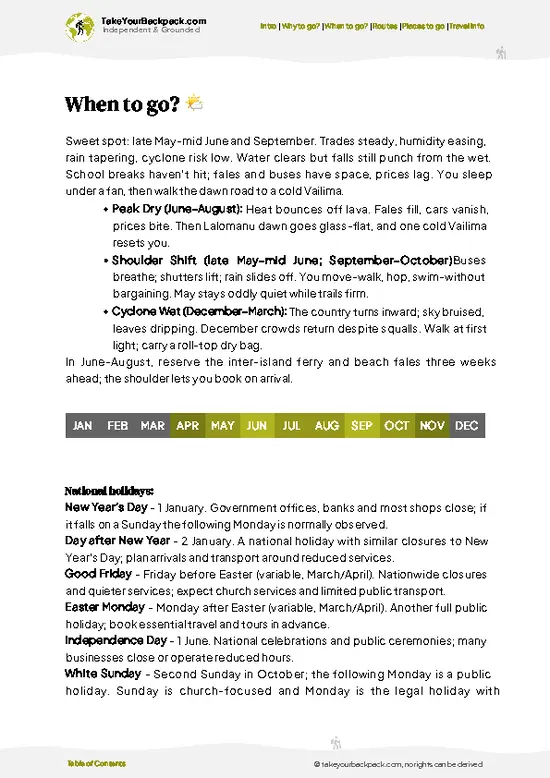
source: climatestotravel.comJANJanuary: fair for travelingFEBFebruary: fair for travelingMARMarch: fair for travelingAPRApril: fair for travelingMAYMay: highly recommended for travelingJUNJune: excellent for travelingJULJuly: excellent for travelingAUGAugust: excellent for travelingSEPSeptember: highly recommended for travelingOCTOctober: excellent for travelingNOVNovember: fair for travelingDECDecember: fair for traveling
when-to-go

✈️ The backpacker research shortcutSamoa Travel Guide

An offline-friendly backpacking guide with optimized travel routes, ranked highlights, transport advice, and the best areas to stay.
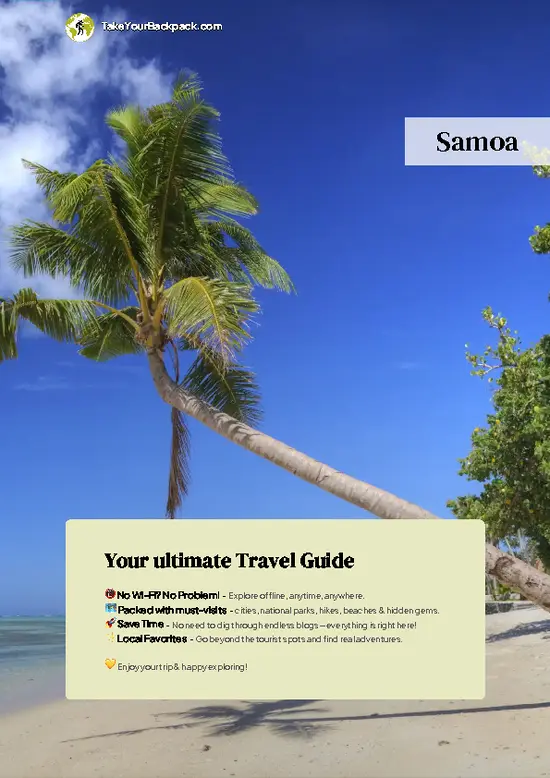
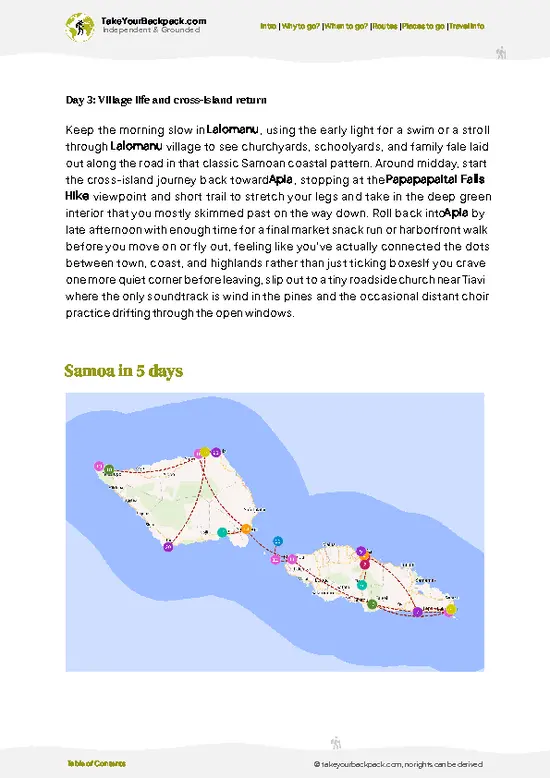
example page 0 from our offline Travel Guide for Samoa
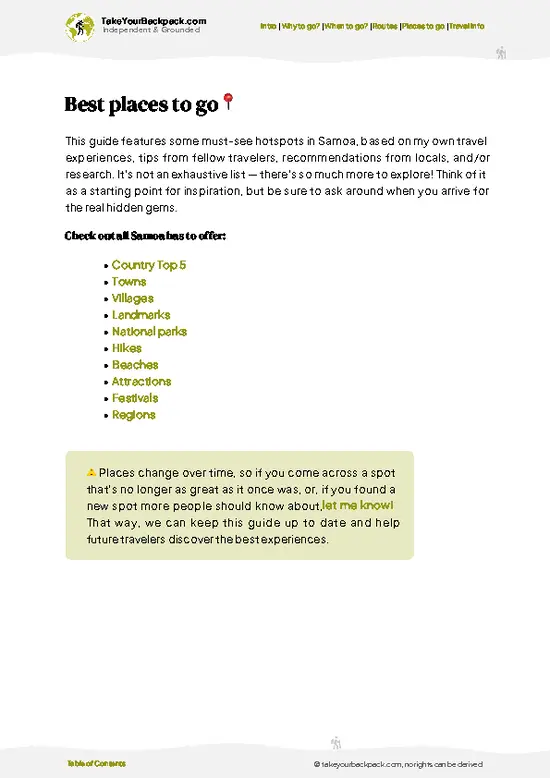
example page 1 from our offline Travel Guide for Samoa
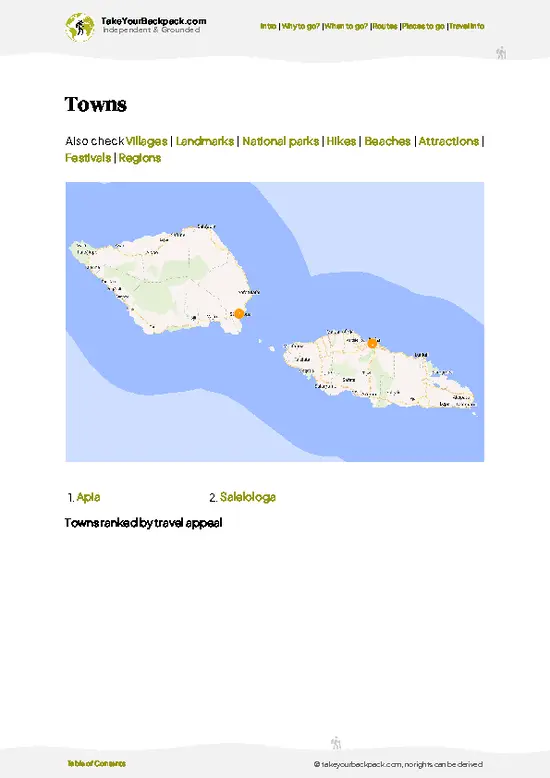
example page 2 from our offline Travel Guide for Samoa
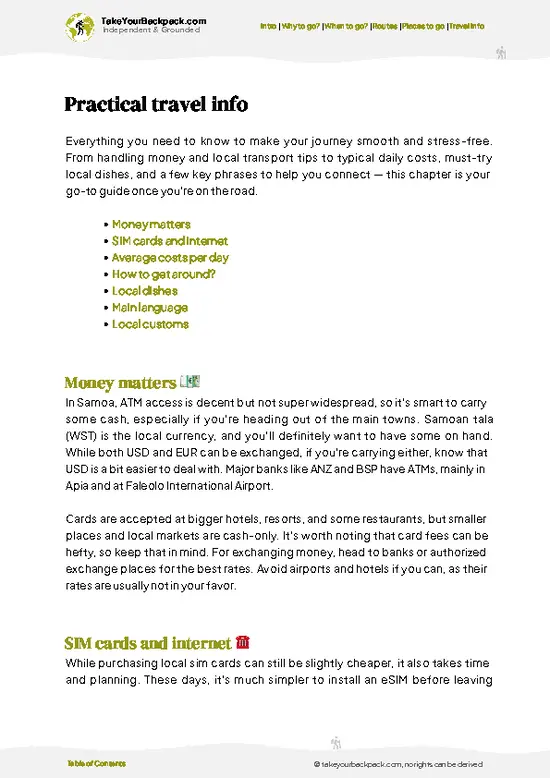
example page 3 from our offline Travel Guide for Samoa
example page 4 from our offline Travel Guide for Samoa
example page 5 from our offline Travel Guide for Samoa
example page 6 from our offline Travel Guide for Samoa
example page 7 from our offline Travel Guide for Samoa
The digital guide (162 pages) contains:
37 highlights, ranked by travel appeal
Optimized 2, 3 & 5-day travel routes
Cities, national parks, landmarks, beaches
How to get around
Offline-friendly for travel without Wi-Fi
👉 Click to see all 30+ guide features

📅 Plan smarter in minutes, not weeks
Month by month travel advice
Festivals & national holidays
Budget expectations

🗺️ Go to the right places, skip the overrated ones
Honest pros & cons of destinations
Top hikes, parks & viewpoints
Lesser-known places most travelers miss
Clear “worth it vs skip it” guidance

🛏️ Travel smoothly without rookie mistakes
Best areas to stay
Transport systems explained simply
Common scams & safety advice
SIM cards, money & practical tips

🌍 Understand the country, not just visit it
Culture & traditions
52 Essential phrases & customs
Festivals worth planning around
Traveler-friendly historical context
Insights that make places more meaningful

📱 Built for real travel conditions
Fully downloadable PDF
Works completely offline
Optimized for phone use
Useful in remote areas & buses
Everything in one place
Save weeks of stressful planning
Get instant access to your full guide. 30‑day money-back guarantee.
+ Add another guide for just US$7.80

By proceeding you agree to our terms.
Sent to your inbox immediately after payment • 100% Secure Checkout
Best Backpacking Travel Advisor 2025 tourism awardBest Backpacking
Travel Advisor
2025
What others say about Take Your Backpack Guides:
⭐⭐⭐⭐⭐
Fantastic, amazing amount of information!
⭐⭐⭐⭐⭐
My goodness this is amazing, it's what I've been looking for hats off too you!
⭐⭐⭐⭐⭐
I think this is absolutely BRILLIANT
⭐⭐⭐⭐
Very complete and informative. It's still missing places, but I gotta to commend you
⭐⭐⭐⭐⭐
This is truly amazing, thank you, can't wait to explore it with my kids!
⭐⭐⭐⭐⭐
Awesome resource, thank you!
⭐⭐⭐⭐⭐
This is amazing! Can't wait to explore the ones I haven't seen
⭐⭐⭐⭐
I love this! Well done, great idea.
⭐⭐⭐⭐⭐
Thanks for taking the time to make this gem!
⭐⭐⭐⭐⭐
This might be the best website I've ever seen.
⭐⭐⭐⭐⭐
Congratulations, and thank you so much for your work; it's incredibly valuable.
⭐⭐⭐⭐
In all seriousness I think you did a great job pointing out the important spots
⭐⭐⭐⭐⭐
10/10 very good
⭐⭐⭐⭐⭐
As someone who's only just starting to visit regularly this is awesome, thank you.
⭐⭐⭐⭐
Thank you very much! I'm going to visit my dad, it's going to be very useful!
⭐⭐⭐⭐⭐
This is really cool! We'll be travelling for the first time and this definitely come in handy.
⭐⭐⭐⭐⭐
You are now our minister of culture, congratulations 👨‍💼
⭐⭐⭐⭐⭐
Just wanted to tell you that this is a pearl! Going to follow your recommendations.
⭐⭐⭐⭐⭐
This is so cool. I'll definitely be using the resource for my travels soon.
⭐⭐⭐⭐⭐
This is very impressive! Good work.
⭐⭐⭐⭐⭐
This is an amazing and informative site. Very well done!

🛏️ Where to stay?Where staying makes the most sense

Mulinu’u Peninsula isn’t just a postcard; it’s a slice of Samoan life. But let’s get real: the crowds can be thick, especially during peak season. If you’re looking for a place to crash that’s safe and social, head to the nearby village of Apia. It’s buzzing with energy and offers a mix of budget-friendly options.

You’ll find guesthouses and shared accommodations where you can swap stories with fellow travelers. The vibe is relaxed, and locals are welcoming. Plus, you’re just a short ride from the peninsula’s stunning coastline and cultural sites.

Another solid choice is the area around the … read more 👉
Mulinu’u Peninsula isn’t just a postcard; it’s a slice of Samoan life. But let’s get real: the crowds can be thick, especially during peak season. If you’re looking for a place to crash that’s safe and social, head to the nearby village of Apia. It’s buzzing with energy and offers a mix of budget-friendly options.

You’ll find guesthouses and shared accommodations where you can swap stories with fellow travelers. The vibe is relaxed, and locals are welcoming. Plus, you’re just a short ride from the peninsula’s stunning coastline and cultural sites.

Another solid choice is the area around the beach at Lefaga. It’s quieter, with fewer tourists, and you can soak in the natural beauty without the chaos. Look for places that offer communal spaces; they’re perfect for meeting like-minded adventurers.

Don’t overlook the local markets for meals—authentic, cheap, and a great way to dive into the culture. The real magic of Mulinu’u isn’t just in the views; it’s in the connections you make and the stories you gather along the way.

👛 Costs (as of 4 September 2026)Typical daily expenses

Visiting the Mulinu’u Peninsula in Samoa can be a rewarding experience, but it’s essential to know what you’re getting into financially.
  • Accommodation: Expect to pay between $50 to $150 per night. Budget options are available, but they may lack some comforts. Mid-range hotels offer better amenities and stunning views, while luxury resorts can go up to $300 or more. Choose wisely based on your comfort level and budget.
  • Food: Meals can range from $10 to $30. Local eateries serve delicious traditional dishes at lower prices. If you opt for higher-end restaurants, be prepared to spend more. Street food is a great way to save money while enjoying authentic flavors.
  • Transportation: Renting a car costs around $50 to $80 per day. Taxis are available but can add up quickly. Public transport is limited,
read more 👉
Visiting the Mulinu’u Peninsula in Samoa can be a rewarding experience, but it’s essential to know what you’re getting into financially.
  • Accommodation: Expect to pay between $50 to $150 per night. Budget options are available, but they may lack some comforts. Mid-range hotels offer better amenities and stunning views, while luxury resorts can go up to $300 or more. Choose wisely based on your comfort level and budget.
  • Food: Meals can range from $10 to $30. Local eateries serve delicious traditional dishes at lower prices. If you opt for higher-end restaurants, be prepared to spend more. Street food is a great way to save money while enjoying authentic flavors.
  • Transportation: Renting a car costs around $50 to $80 per day. Taxis are available but can add up quickly. Public transport is limited, so having your own wheels is often the best way to explore the peninsula.
  • Activities: Many natural attractions are free, but guided tours can range from $30 to $100. Snorkeling, diving, and cultural experiences often have associated costs. Research what’s worth the splurge to enhance your visit.
  • Entrance Fees: Some sites may charge a small fee, typically between $5 to $20. Always check ahead to avoid surprises. These fees often support local conservation efforts, making them worth it.

Understanding these costs will help you plan a trip that balances your budget with the authentic experiences that make Mulinu’u Peninsula special.
⚠️ Prices can change and everyone travels differently, so take this as a rough guide. Hope it helps you plan your adventure!

FAQFrequently asked questions about Mulinu’u Peninsula

Mulinu’u Peninsula is a historic and cultural site in Samoa, known for its government buildings, including the Parliament House, and its scenic coastal views. It is also home to important monuments and the oldest Christian church in Samoa, the Mulinu’u Cathedral.
Visiting Mulinu’u Peninsula typically takes about 1 to 2 hours, enough time to explore the key landmarks, enjoy the coastal scenery, and take photos. It is a short stop rather than a full-day excursion.
You get to Mulinu’u Peninsula by road from Apia, the capital of Samoa, located about 5 kilometers away. Public buses and taxis are available, and the drive usually takes around 10 to 15 minutes.
⚠️ Things can change over time, so always validate details locally before you go.

Other Samoan landmarks near Mulinu’u Peninsula

Explore more nearby:


💡 Not sure where to go next?
Create a personalized itinerary for Samoa including Mulinu’u Peninsula and the places that fit your trip.

Generate my itinerary

👉 Discover all landmarks

Or checkout all Samoa has to offer (think cities, towns, villages, national parks, hikes, beaches, festivals)
Country photo of Samoa

We 💚 feedbackFinal thoughts on visiting Mulinu’u Peninsula

Mulinu’u Peninsula isn’t just a postcard; it’s where the real Samoa breathes. Expect crowds at the popular spots, but don’t let that fool you. The best surprise? Stumbling upon a local beach where the only company is a few friendly kids playing in the surf. Just a heads-up: the roads can be rough, so take it slow. Embrace the laid-back vibe, and you’ll find moments that stick with you long after you leave.

✍️ Help improve this page!
The information on this page is based on in-depth research, insights shared by experienced travelers, and feedback from the local travel community in Samoa. While every effort is made to keep the information accurate and current, conditions can change — so if you spot anything incorrect or outdated, please get in touch.


🙋‍♂️ Give feedback

👋 Meet the founderWho’s Behind Take Your Backpack?

Johan, backpacker and founder of TakeYourBackpackHi, I’m Johan (Netherlands 🇳🇱), the creator of TakeYourBackpack. Over the past decade, I’ve backpacked through 80+ countries across six continents, gaining extensive experience with independent travel, long-term trips, and overland routes.

This site is built on a combination of firsthand travel experience and carefully curated insights from other backpackers. Many guides are based on places I’ve personally visited, while others bring together tips, observations, and practical advice shared by trusted travelers I’ve met along the way.

The goal is to provide realistic, experience-driven guidance — not generic itineraries — so you can explore destinations with better context, clearer expectations, and more confidence.

Get full Samoa guide •
Instant download • 37 highlights • Full Offline guide