×

Samoa🇼🇸 | attractionsMuseum of Samoacolonial building, Pacific artifacts, natural history, cultural exhibits | things to do and best time to go

Explore Samoa Cultural VillageExplore Fugalei Market

Backpacking in Museum of Samoa
👌 Worth visitingattraction ranked #4
By Johan Kruseman 🇳🇱 | Updated May 17, 2026

Here’s the curveball: the Museum of Samoa is so low-key that you might walk past it twice before realizing you’ve found it—and that’s exactly its charm. Forget the glossy travel blogs promising grand halls and blockbuster exhibits; this place is tucked inside a modest colonial-era building in Apia, the capital. If you’re expecting air-conditioned galleries and selfie-ready installations, recalibrate now. What you get instead is raw, unfiltered access to Samoa’s tangled colonial history, tattoo traditions, and pre-contact artifacts—sometimes displayed with hand-written labels and a sense of scrappy pride. Entry is free or nearly so, which is a rare win for your wallet in Samoa, but don’t expect crowds; most tourists skip it for waterfalls or beach days. That’s your gain. The vibe is intimate, sometimes awkward, but always real. Compared to the country’s headline-grabbing natural wonders, the Museum of Samoa is a slow-burn: not flashy, but quietly essential if you want to understand the soul beneath the postcard.

Discover everything you want to know in the 📖 Samoa Travel Guide.
Loading the map 🌍
CLICK TO FILTER
town
village
unique site
national park
hike
beach
attraction
festival
region
SHOW COUNTRY’S BESTSHOW ALL

✨ Why go?
Ranked #4 attraction in Samoa
What sets this place apart

The Museum of Samoa isn’t some glossy, Instagram-ready spot where you snap a quick selfie and move on. It’s a place that demands your attention because it’s the heartbeat of the country’s identity. Sure, it’s not packed with flashy exhibits or high-tech displays, but that’s exactly why it’s worth your time. This museum holds the raw, unfiltered stories of Samoa—from ancient legends carved into wood to the gritty realities of colonial history and the resilience of its people. Backpackers who make the trek here aren’t just ticking off a checklist; they’re stepping into a living narrative that shapes the island’s soul.

It’s also a major milestone on any Samoa route because it grounds you. After days of beaches and hikes, the museum forces you to slow down and absorb the depth behind the postcard-perfect … read more 👉
The Museum of Samoa isn’t some glossy, Instagram-ready spot where you snap a quick selfie and move on. It’s a place that demands your attention because it’s the heartbeat of the country’s identity. Sure, it’s not packed with flashy exhibits or high-tech displays, but that’s exactly why it’s worth your time. This museum holds the raw, unfiltered stories of Samoa—from ancient legends carved into wood to the gritty realities of colonial history and the resilience of its people. Backpackers who make the trek here aren’t just ticking off a checklist; they’re stepping into a living narrative that shapes the island’s soul.

It’s also a major milestone on any Samoa route because it grounds you. After days of beaches and hikes, the museum forces you to slow down and absorb the depth behind the postcard-perfect scenes. The effort-to-reward ratio is high: a modest entrance fee and a couple of hours unlock a vault of cultural insight that no beach can offer. This isn’t about adrenaline or thrills; it’s about connecting with a place on a level that sticks with you long after you’ve left. If you want to understand Samoa beyond the surface, the Museum of Samoa is non-negotiable.
Get the complete Travel Guide for Samoa
Everything organized for offline planning — routes, highlights, costs & tips

See what’s inside 👉

Get the Travel Guide -

💡 HighlightsTop highlights of Museum of Samoa

1. The Tattoo Tools (Tatau Implements)
Forget the Instagrammed palm trees—this is the real Samoa, inked into skin and soul. The Museum of Samoa’s collection of traditional tattoo tools isn’t just a display; it’s a direct line to one of the world’s oldest living art forms. These bone and turtle-shell combs, lashed to wooden handles, are the same kind used for centuries in the sacred tatau ritual. You’ll see the actual implements that have drawn the pe’a and malu—tattoos that mark adulthood and identity. There’s nothing sanitized or commercial here. The tools are worn, stained, and utterly honest. If you want to understand Samoan pride, start here. The artistry is raw, the history is deep, and the pain is real.


2. The Lapita Pottery Shards
Most museums would tuck a few potsherds behind glass … read more 👉
1. The Tattoo Tools (Tatau Implements)
Forget the Instagrammed palm trees—this is the real Samoa, inked into skin and soul. The Museum of Samoa’s collection of traditional tattoo tools isn’t just a display; it’s a direct line to one of the world’s oldest living art forms. These bone and turtle-shell combs, lashed to wooden handles, are the same kind used for centuries in the sacred tatau ritual. You’ll see the actual implements that have drawn the pe’a and malu—tattoos that mark adulthood and identity. There’s nothing sanitized or commercial here. The tools are worn, stained, and utterly honest. If you want to understand Samoan pride, start here. The artistry is raw, the history is deep, and the pain is real.


2. The Lapita Pottery Shards
Most museums would tuck a few potsherds behind glass and call it a day. Not here. The Lapita pottery fragments at the Museum of Samoa are the archaeological equivalent of a backstage pass to the Pacific’s ancient migration. These shards—some etched with geometric patterns—are physical proof that Samoa was a crossroads of voyagers, not just a dot on a map. The Lapita people were the original navigators, and these fragments are their fingerprints. You’re looking at the roots of Polynesian culture, not some generic “island life” montage. It’s humbling, and it’s the kind of detail that never makes it to the travel brochures.


3. The Colonial-Era Photographs
If you want to see Samoa before the resorts and cruise ships, the museum’s wall of colonial-era photographs is a time machine. These aren’t the sanitized, sepia-toned fantasies you’ll find on postcards. You’ll see chiefs in full regalia, German administrators in starched uniforms, and everyday Samoans navigating the collision of cultures. The faces are unfiltered, the moments unscripted. It’s a crash course in the real consequences of colonialism—sometimes uncomfortable, always illuminating. You’ll leave with a more complicated, and more honest, sense of what Samoa has survived.


4. The Siapo (Tapa Cloth) Collection
Here’s where you get hands-on with Samoan creativity. The siapo—barkcloth painted with natural dyes—are more than souvenirs. Each piece is a story, mapped out in earthy browns and blacks, with motifs that reference everything from ocean currents to family lineages. The museum’s collection includes both antique and contemporary siapo, so you can trace how the art form has evolved without losing its roots. The tactile quality is impossible to fake. If you’re lucky, you might catch a demonstration and see how the patterns are beaten, dyed, and coaxed from tree bark. This is the anti-mass-production experience.


5. The Cyclone Ofa and Val Cultural Resilience Exhibit
Most places would rather gloss over disaster. Not here. The Museum of Samoa’s exhibit on Cyclone Ofa and Val doesn’t just show battered buildings and statistics—it tells the story of how Samoans rebuilt, reconnected, and reasserted their identity after devastation. You’ll see photos, oral histories, and artifacts that prove resilience isn’t just a buzzword. It’s a lived reality. This is the kind of exhibit that sticks with you long after you leave, because it’s about the strength of a community, not just the drama of a storm.
Spotted a mistake or missing something? Contact us.

Things to do around Museum of Samoa

Ratings based on Tripadvisor reviews. When you book through this link, you support our work at no extra cost to you.

🌤️ When to go?Choosing the right time of year


  • Weather: Samoa’s tropical climate means it’s warm year-round, but the best time to visit the Museum of Samoa is during the dry season from May to October. Expect less humidity and rain, with temperatures hovering around 24-29°C (75-84°F). The wet season, November to April, brings heavy rain and potential cyclones, which can dampen your experience and limit outdoor exploration.

  • Temperature: Temperatures are fairly stable, but the dry season offers more comfortable warmth without the sticky heat. Nights can drop to about 20°C (68°F) in the cooler months, making evening strolls around the museum more pleasant.

  • Daylight Hours: Daylight is consistent year-round, roughly 11 to 12 hours daily. However, visiting between May and October means clearer skies and more reliable daylight for exploring
read more 👉

  • Weather: Samoa’s tropical climate means it’s warm year-round, but the best time to visit the Museum of Samoa is during the dry season from May to October. Expect less humidity and rain, with temperatures hovering around 24-29°C (75-84°F). The wet season, November to April, brings heavy rain and potential cyclones, which can dampen your experience and limit outdoor exploration.

  • Temperature: Temperatures are fairly stable, but the dry season offers more comfortable warmth without the sticky heat. Nights can drop to about 20°C (68°F) in the cooler months, making evening strolls around the museum more pleasant.

  • Daylight Hours: Daylight is consistent year-round, roughly 11 to 12 hours daily. However, visiting between May and October means clearer skies and more reliable daylight for exploring the museum and nearby cultural sites.

  • Crowds: The Museum of Samoa doesn’t attract massive crowds like other Pacific hotspots, but the dry season sees a modest uptick in visitors. If you want a quieter, more personal experience, aim for shoulder months like May or September.

  • Seasonal Activities: Cultural festivals and traditional events often peak during the dry season, adding layers of authenticity to your visit. Timing your trip around these can turn a museum visit into a full cultural immersion.

  • Price Fluctuations: Accommodation and flights tend to be pricier during the dry season due to higher demand. Booking early or traveling in the shoulder months can save you money without sacrificing the quality of your visit.


Pro-tip: Visit in May or September to dodge the worst crowds and weather while catching cultural events that bring the Museum of Samoa’s stories vividly to life.


source: climatestotravel.comJANJanuary: fair for travelingFEBFebruary: fair for travelingMARMarch: fair for travelingAPRApril: fair for travelingMAYMay: excellent for travelingJUNJune: excellent for travelingJULJuly: excellent for travelingAUGAugust: excellent for travelingSEPSeptember: excellent for travelingOCTOctober: highly recommended for travelingNOVNovember: fair for travelingDECDecember: fair for traveling
samoa-attraction-museum-of-samoa
© Google |

✈️ The backpacker research shortcutSamoa Travel Guide

An offline-friendly backpacking guide with optimized travel routes, ranked highlights, transport advice, and the best areas to stay.
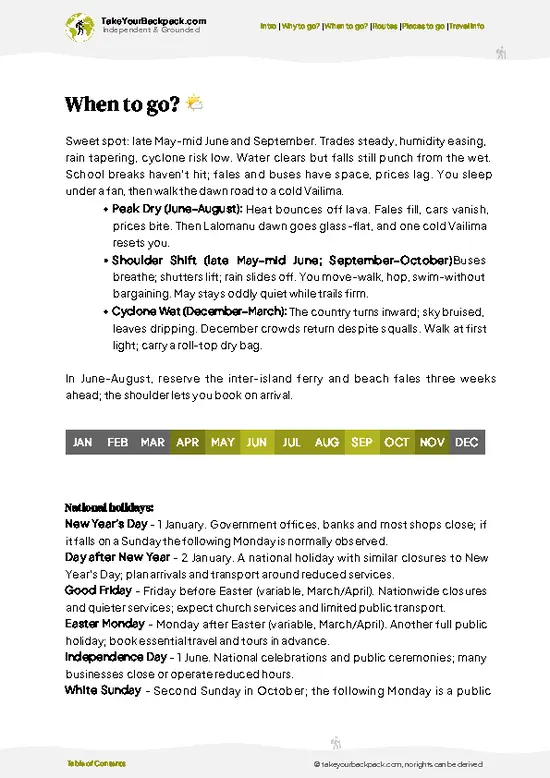
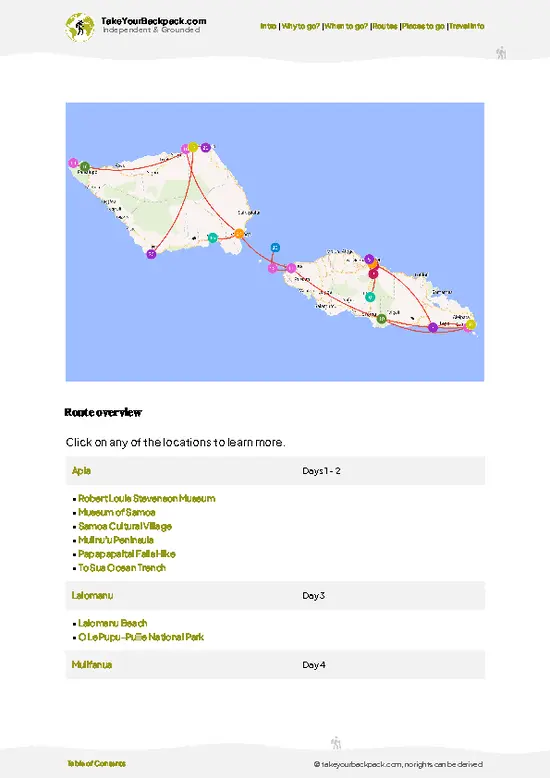
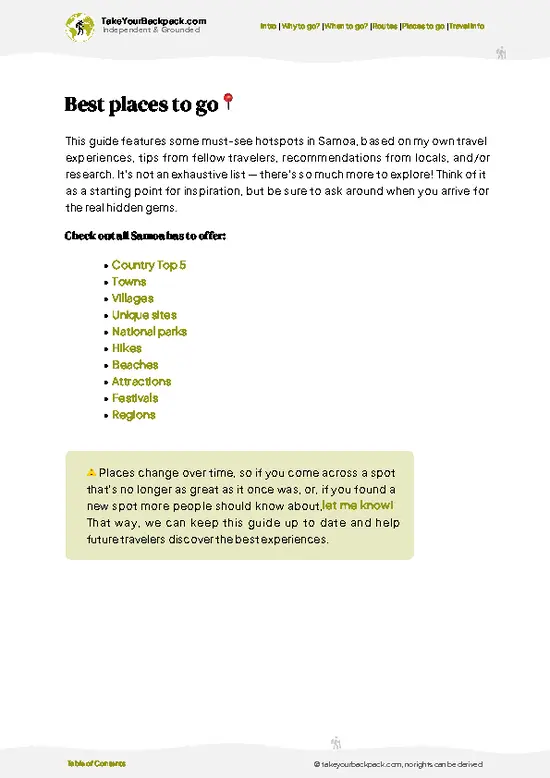
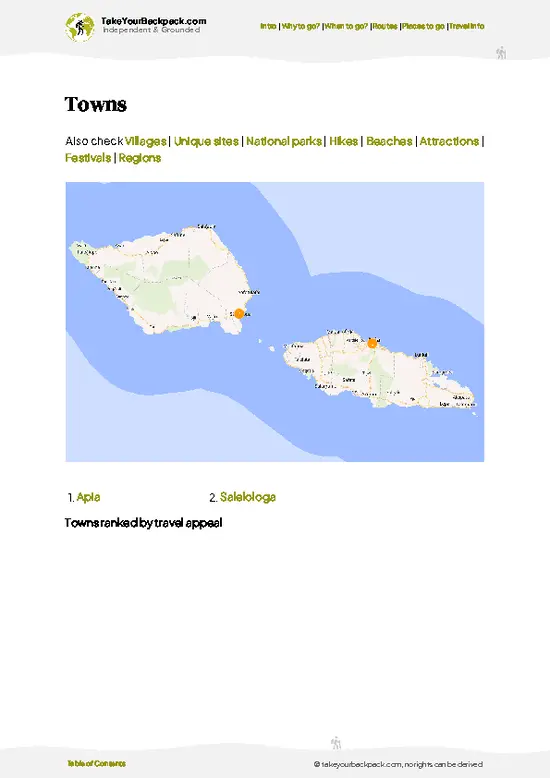
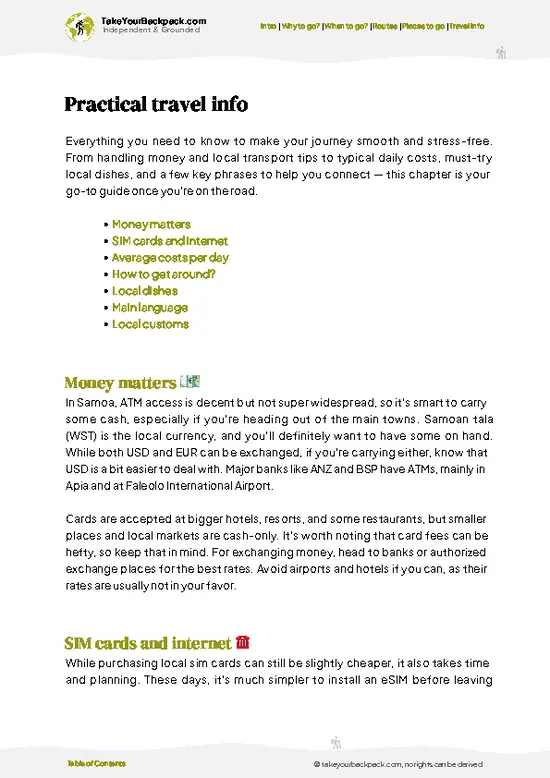
example page 0 from our offline Travel Guide for Samoaexample page 1 from our offline Travel Guide for Samoaexample page 2 from our offline Travel Guide for Samoaexample page 3 from our offline Travel Guide for Samoaexample page 4 from our offline Travel Guide for Samoaexample page 5 from our offline Travel Guide for Samoaexample page 6 from our offline Travel Guide for Samoaexample page 7 from our offline Travel Guide for Samoa
The digital guide (163 pages) contains:
37 highlights, ranked by travel appeal
Optimized 2, 3 & 5-day travel routes
Cities, national parks, beaches, historical sites, ...
How to get around
Offline-friendly for travel without Wi-Fi
👉 Click to see all 30+ guide features

📅 Plan smarter in minutes, not weeks
Month by month travel advice
Festivals & national holidays
Budget expectations

🗺️ Go to the right places, skip the overrated ones
Honest pros & cons of destinations
Top hikes, parks & viewpoints
Lesser-known places most travelers miss
Clear “worth it vs skip it” guidance

🛏️ Travel smoothly without rookie mistakes
Best areas to stay
Transport systems explained simply
Common scams & safety advice
SIM cards, money & practical tips

🌍 Understand the country, not just visit it
Culture & traditions
52 Essential phrases & customs
Festivals worth planning around
Traveler-friendly historical context
Insights that make places more meaningful

📱 Built for real travel conditions
Fully downloadable PDF
Works completely offline
Optimized for phone use
Useful in remote areas & buses
Everything in one place
Save weeks of stressful planning
Get instant access to the full guide directly. 30-day money-back guarantee.


Sent to your inbox immediately after payment • 100% Secure Checkout
Best Backpacking Travel Advisor 2025 tourism awardBest Backpacking
Travel Advisor
2025
What others say about Take Your Backpack Guides:
⭐⭐⭐⭐⭐
Fantastic, amazing amount of information!
⭐⭐⭐⭐⭐
My goodness this is amazing, it's what I've been looking for hats off too you!
⭐⭐⭐⭐⭐
I think this is absolutely BRILLIANT
⭐⭐⭐⭐
Very complete and informative. It's still missing places, but I gotta to commend you
⭐⭐⭐⭐⭐
This is truly amazing, thank you, can't wait to explore it with my kids!
⭐⭐⭐⭐⭐
Awesome resource, thank you!
⭐⭐⭐⭐⭐
This is amazing! Can't wait to explore the ones I haven't seen
⭐⭐⭐⭐
I love this! Well done, great idea.
⭐⭐⭐⭐⭐
Thanks for taking the time to make this gem!
⭐⭐⭐⭐⭐
This might be the best website I've ever seen.
⭐⭐⭐⭐⭐
Congratulations, and thank you so much for your work; it's incredibly valuable.
⭐⭐⭐⭐
In all seriousness I think you did a great job pointing out the important spots
⭐⭐⭐⭐⭐
10/10 very good
⭐⭐⭐⭐⭐
As someone who's only just starting to visit regularly this is awesome, thank you.
⭐⭐⭐⭐
Thank you very much! I'm going to visit my dad, it's going to be very useful!
⭐⭐⭐⭐⭐
This is really cool! We'll be travelling for the first time and this definitely come in handy.
⭐⭐⭐⭐⭐
You are now our minister of culture, congratulations 👨‍💼
⭐⭐⭐⭐⭐
Just wanted to tell you that this is a pearl! Going to follow your recommendations.
⭐⭐⭐⭐⭐
This is so cool. I'll definitely be using the resource for my travels soon.
⭐⭐⭐⭐⭐
This is very impressive! Good work.
⭐⭐⭐⭐⭐
This is an amazing and informative site. Very well done!

🛏️ Where to stay?Best areas and accommodation options

Staying near the Museum of Samoa means planting yourself right in the heart of Apia, the capital’s gritty, real-life pulse. Forget the glossy postcards—this is where you get the raw, unfiltered Samoa. The neighborhoods around the museum are a mix of local markets, street food stalls, and the kind of small guesthouses that don’t bother with fancy facades but offer a safe, welcoming vibe. This is where solo travelers and budget backpackers find their tribe, swapping stories over kava or sharing rides to the next beach.

Safety here isn’t about gated compounds; it’s about community. Locals keep an … read more 👉
Staying near the Museum of Samoa means planting yourself right in the heart of Apia, the capital’s gritty, real-life pulse. Forget the glossy postcards—this is where you get the raw, unfiltered Samoa. The neighborhoods around the museum are a mix of local markets, street food stalls, and the kind of small guesthouses that don’t bother with fancy facades but offer a safe, welcoming vibe. This is where solo travelers and budget backpackers find their tribe, swapping stories over kava or sharing rides to the next beach.

Safety here isn’t about gated compounds; it’s about community. Locals keep an eye on each other, and you’ll quickly learn the rhythms of the streets. You’re close enough to walk to the museum, but also to the waterfront where fishermen haul in the day’s catch and kids play barefoot in the surf. It’s social without the forced friendliness of tourist traps—people are genuinely curious, not just selling you something.

Yes, it’s busy and noisy, and the infrastructure won’t win awards. But that’s the point. You’re not here for a sanitized experience; you’re here to feel Samoa’s heartbeat, and that starts with where you lay your head.

👛 Costs (as of 6 March 2026)Travel costs and budget guide for Museum of Samoa

The Museum of Samoa offers free entry, with donations welcome. ([samoa.travel](https://www.samoa.travel/plan-book/activities/museum-of-samoa/?utm_source=openai))
⚠️ Prices can change and everyone travels differently, so take this as a rough guide. Hope it helps you plan your adventure!

Other Samoan attractions near Museum of Samoa

Explore more nearby:


👉 Discover all attractions

Or checkout all Samoa has to offer (think cities, towns, villages, national parks, hikes, beaches, festivals)
Country photo of Samoa

We 💚 feedbackIs it worth it?

The Museum of Samoa isn’t some polished, air-conditioned shrine—it’s a bit rough around the edges, and yes, it can feel quiet, even empty. But that’s exactly the point. You’re stepping into a space where history breathes through artifacts that locals genuinely care about, not just tourist props. The real magic is in the stories you overhear from staff or the chance to see traditional crafts up close, untouched by crowds. If you want flashy displays, look elsewhere. Here, it’s about connection—raw, real, and worth your time.

✍️ Help improve this page!
The information on this page is based on in-depth research, insights shared by experienced travelers, and feedback from the local travel community in Samoa. While every effort is made to keep the information accurate and current, conditions can change — so if you spot anything incorrect or outdated, please get in touch.


🙋‍♂️ Give feedback

👋 Meet the founderWho’s Behind Take Your Backpack?

Johan, backpacker and founder of TakeYourBackpackHi, I’m Johan (Netherlands 🇳🇱), the creator of TakeYourBackpack. Over the past decade, I’ve backpacked through 80+ countries across six continents, gaining extensive experience with independent travel, long-term trips, and overland routes.

This site is built on a combination of firsthand travel experience and carefully curated insights from other backpackers. Many guides are based on places I’ve personally visited, while others bring together tips, observations, and practical advice shared by trusted travelers I’ve met along the way.

The goal is to provide realistic, experience-driven guidance — not generic itineraries — so you can explore destinations with better context, clearer expectations, and more confidence.

Get full Samoa guide •
Instant download • 37 highlights • Full Offline guide