×

São Tomé and Príncipe🇸🇹 | national parksObo National Parkmisty rainforest, volcanic peaks, endemic birdlife, dense canopy | things to do and best time to go

Explore Lagoa AmeliaExplore Parque Natural do Príncipe

Backpacking in Obo
🏆 Top picknational park ranked #1
By Johan Kruseman 🇳🇱 | Updated April 28, 2026

Most guides gloss over this, but Obo National Park’s trails are rarely marked—if you’re expecting a well-signed, easy-to-navigate trek, you’re in for a surprise. Obo National Park sprawls across the southern half of São Tomé island, covering everything from cloud forest to volcanic peaks, and it’s the only national park of its scale in São Tomé and Príncipe. For backpackers, this is both a blessing and a logistical headache. The scenery is dense, wild, and genuinely unique—think moss-draped trees, endemic birds, and the kind of mist that soaks your socks before breakfast. Hiking here is raw and rewarding, but you’ll need a local guide unless you’re fluent in machete navigation. There’s no entrance fee, but transport to trailheads is patchy and accommodation is limited to basic guesthouses or wild camping (with permission). Crowds are rare, which means solitude, but also zero rescue infrastructure. Compared to the tiny, less developed Príncipe parks, Obo is the main event—more biodiversity, more trails, and more challenges. If you want easy, look elsewhere; if you want real, this is it.

Discover everything you want to know in the 📖 São Tomé and Príncipe Travel Guide.
Loading the map 🌍
CLICK TO FILTER
town
village
unique site
national park
hike
beach
attraction
festival
region
SHOW COUNTRY’S BESTSHOW ALL

✨ Why go?
Ranked #1 national park in São Tomé and Príncipe
The unique appeal for travelers

Backpackers flock to Obo National Park in São Tomé and Príncipe for its blend of independent exploration and affordable options. The park offers a range of budget camping sites and hostels nearby, making it easy to stretch your funds while immersing yourself in nature.

The trail variety is another draw. You can choose from easy walks to more challenging hikes, all showcasing the island’s lush landscapes and unique wildlife. This diversity means you can tailor your experience to your skill level and interests.

What sets Obo apart is its suitability for self-guided travelers. While guided tours are available, many paths are well-marked, allowing you to navigate at your own pace. This freedom lets you linger at viewpoints or explore hidden corners without feeling rushed.

However, be mindful … read more 👉
Backpackers flock to Obo National Park in São Tomé and Príncipe for its blend of independent exploration and affordable options. The park offers a range of budget camping sites and hostels nearby, making it easy to stretch your funds while immersing yourself in nature.

The trail variety is another draw. You can choose from easy walks to more challenging hikes, all showcasing the island’s lush landscapes and unique wildlife. This diversity means you can tailor your experience to your skill level and interests.

What sets Obo apart is its suitability for self-guided travelers. While guided tours are available, many paths are well-marked, allowing you to navigate at your own pace. This freedom lets you linger at viewpoints or explore hidden corners without feeling rushed.

However, be mindful of the weather; heavy rains can make trails slippery and challenging. Always check conditions before heading out. With the right preparation, Obo National Park becomes a playground for those seeking adventure without the constraints of a tour group.
Get the complete Travel Guide for São Tomé and Príncipe
Everything organized for offline planning — routes, highlights, costs & tips

See what’s inside 👉

Get the Travel Guide -

💡 HighlightsKey sights and experiences for travelers

  • Pico de São Tomé — The island’s highest summit (about 2,000 m) and the classic Obo trek: cloud forest one minute, sweeping Atlantic views the next. It’s steep and often misty, but the crater rims and sunrise panoramas make the effort worth it.
  • Pico Cão Grande — A volcanic plug that shoots straight up from the rainforest like a natural skyscraper. It’s one of the most photogenic landmarks on São Tomé; you don’t have to climb it to be blown away by the view from the jungle floor.
  • Montane cloud forest — Moss-draped trees, giant tree ferns and orchids everywhere. The constant mist gives the trails an otherworldly vibe and supports species you won’t find off-island.
  • Endemic wildlife hotspots — Obo is the best place to spot island-only animals: think Newton’s fiscal (the tiny, rare shrike),
read more 👉
  • Pico de São Tomé — The island’s highest summit (about 2,000 m) and the classic Obo trek: cloud forest one minute, sweeping Atlantic views the next. It’s steep and often misty, but the crater rims and sunrise panoramas make the effort worth it.
  • Pico Cão Grande — A volcanic plug that shoots straight up from the rainforest like a natural skyscraper. It’s one of the most photogenic landmarks on São Tomé; you don’t have to climb it to be blown away by the view from the jungle floor.
  • Montane cloud forest — Moss-draped trees, giant tree ferns and orchids everywhere. The constant mist gives the trails an otherworldly vibe and supports species you won’t find off-island.
  • Endemic wildlife hotspots — Obo is the best place to spot island-only animals: think Newton’s fiscal (the tiny, rare shrike), treefrogs, endemic skinks and a crazy array of butterflies. Early mornings on quiet trails are prime viewing time.
  • Hidden waterfalls and natural pools — Small cascades tucked into the forest are perfect for cooling off after a muddy hike. They may be unmarked, but guides and locals know the best spots for a quick swim and a photo.
  • Pristine lowland rainforest — Thick, primary forest that feels genuinely wild: huge hardwoods, layered understory and a deafening chorus of insects and birds. It’s where the island’s biodiversity really flexes.
  • Trail network and guided hikes — Trails range from short nature walks to multi-hour ascents; local guides are worth their weight in tips and local knowledge. Expect steep, wet paths and the occasional leech—good boots and a guide make everything easier.
Spotted a mistake or missing something? Contact us.

Things to do near Obo National Park

Ratings based on Tripadvisor reviews. When you book through this link, you support our work at no extra cost to you.

🌤️ When to go?When to go for the best experience


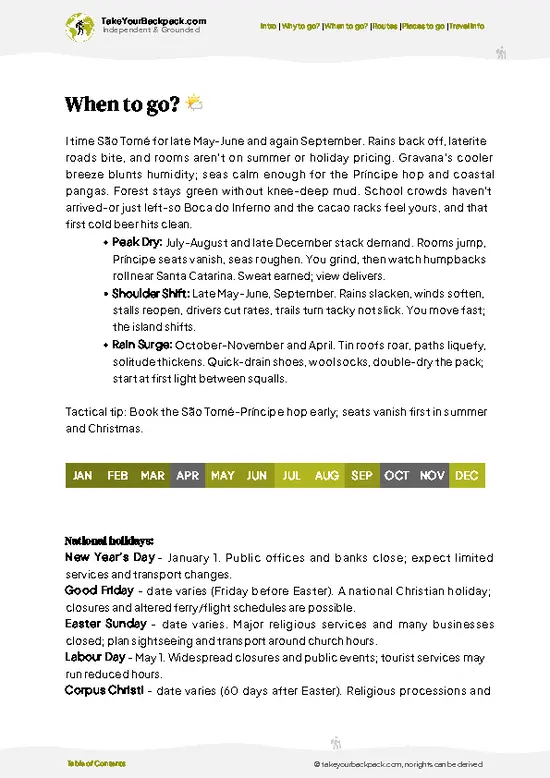
  • Weather: The dry season from June to September is your best bet. Rainfall drops significantly, making trails less slippery and the forest less oppressive. Avoid the heavy rains of October to May, which can turn paths into mud baths and limit visibility.

  • Temperature: Expect daytime highs around 27-30°C (80-86°F) year-round, with nights cooling to about 20-22°C (68-72°F). The dry season feels more comfortable, with less humidity, so you won’t be drenched in sweat after every step.

  • Daylight Hours: São Tomé sits near the equator, so daylight is steady—roughly 12 hours year-round. This means you can plan hikes without worrying about early sunsets, but always start early to avoid midday heat.

  • Crowds: The park sees few tourists overall, but the dry season attracts more visitors. If you want
read more 👉

  • Weather: The dry season from June to September is your best bet. Rainfall drops significantly, making trails less slippery and the forest less oppressive. Avoid the heavy rains of October to May, which can turn paths into mud baths and limit visibility.

  • Temperature: Expect daytime highs around 27-30°C (80-86°F) year-round, with nights cooling to about 20-22°C (68-72°F). The dry season feels more comfortable, with less humidity, so you won’t be drenched in sweat after every step.

  • Daylight Hours: São Tomé sits near the equator, so daylight is steady—roughly 12 hours year-round. This means you can plan hikes without worrying about early sunsets, but always start early to avoid midday heat.

  • Crowds: The park sees few tourists overall, but the dry season attracts more visitors. If you want solitude, shoulder months like May or October offer a quieter experience without the full-on wet season hassle.

  • Seasonal Activities: Birdwatching peaks during the dry months when species are more active and visible. Fruit trees also bear more during this time, adding a natural snack option on the trail.

  • Price Fluctuations: Accommodation and guides tend to be pricier in the dry season due to demand. Booking ahead can lock in better rates. The wet season offers lower prices but comes with the trade-off of tougher conditions.


Pro-tip: Aim for early dry season visits—June or July—when the weather is stable, crowds are manageable, and prices haven’t peaked yet. This sweet spot saves your energy and wallet for what really counts: the trail.


source: climatestotravel.comJANJanuary: below average for travelingFEBFebruary: below average for travelingMARMarch: below average for travelingAPRApril: below average for travelingMAYMay: good for travelingJUNJune: excellent for travelingJULJuly: excellent for travelingAUGAugust: excellent for travelingSEPSeptember: excellent for travelingOCTOctober: good for travelingNOVNovember: below average for travelingDECDecember: below average for traveling
when-to-go

✈️ The backpacker research shortcutSão Tomé and Príncipe Travel Guide

An offline-friendly backpacking guide with optimized travel routes, ranked highlights, transport advice, and the best areas to stay.
example page 0 from our offline Travel Guide for São Tomé and Príncipeexample page 1 from our offline Travel Guide for São Tomé and Príncipeexample page 2 from our offline Travel Guide for São Tomé and Príncipeexample page 3 from our offline Travel Guide for São Tomé and Príncipeexample page 4 from our offline Travel Guide for São Tomé and Príncipeexample page 5 from our offline Travel Guide for São Tomé and Príncipeexample page 6 from our offline Travel Guide for São Tomé and Príncipeexample page 7 from our offline Travel Guide for São Tomé and Príncipe
The digital guide (168 pages) contains:
42 highlights, ranked by travel appeal
Optimized 2, 3 & 5-day travel routes
Cities, national parks, beaches, historical sites, ...
How to get around
Offline-friendly for travel without Wi-Fi
👉 Click to see all 30+ guide features

📅 Plan smarter in minutes, not weeks
Month by month travel advice
Festivals & national holidays
Budget expectations

🗺️ Go to the right places, skip the overrated ones
Honest pros & cons of destinations
Top hikes, parks & viewpoints
Lesser-known places most travelers miss
Clear “worth it vs skip it” guidance

🛏️ Travel smoothly without rookie mistakes
Best areas to stay
Transport systems explained simply
Common scams & safety advice
SIM cards, money & practical tips

🌍 Understand the country, not just visit it
Culture & traditions
52 Essential phrases & customs
Festivals worth planning around
Traveler-friendly historical context
Insights that make places more meaningful

📱 Built for real travel conditions
Fully downloadable PDF
Works completely offline
Optimized for phone use
Useful in remote areas & buses
Everything in one place
Save weeks of stressful planning
Get instant access to the full guide directly. 30-day money-back guarantee.


Sent to your inbox immediately after payment • 100% Secure Checkout
Best Backpacking Travel Advisor 2025 tourism awardBest Backpacking
Travel Advisor
2025
What others say about Take Your Backpack Guides:
⭐⭐⭐⭐⭐
Fantastic, amazing amount of information!
⭐⭐⭐⭐⭐
My goodness this is amazing, it's what I've been looking for hats off too you!
⭐⭐⭐⭐⭐
I think this is absolutely BRILLIANT
⭐⭐⭐⭐
Very complete and informative. It's still missing places, but I gotta to commend you
⭐⭐⭐⭐⭐
This is truly amazing, thank you, can't wait to explore it with my kids!
⭐⭐⭐⭐⭐
Awesome resource, thank you!
⭐⭐⭐⭐⭐
This is amazing! Can't wait to explore the ones I haven't seen
⭐⭐⭐⭐
I love this! Well done, great idea.
⭐⭐⭐⭐⭐
Thanks for taking the time to make this gem!
⭐⭐⭐⭐⭐
This might be the best website I've ever seen.
⭐⭐⭐⭐⭐
Congratulations, and thank you so much for your work; it's incredibly valuable.
⭐⭐⭐⭐
In all seriousness I think you did a great job pointing out the important spots
⭐⭐⭐⭐⭐
10/10 very good
⭐⭐⭐⭐⭐
As someone who's only just starting to visit regularly this is awesome, thank you.
⭐⭐⭐⭐
Thank you very much! I'm going to visit my dad, it's going to be very useful!
⭐⭐⭐⭐⭐
This is really cool! We'll be travelling for the first time and this definitely come in handy.
⭐⭐⭐⭐⭐
You are now our minister of culture, congratulations 👨‍💼
⭐⭐⭐⭐⭐
Just wanted to tell you that this is a pearl! Going to follow your recommendations.
⭐⭐⭐⭐⭐
This is so cool. I'll definitely be using the resource for my travels soon.
⭐⭐⭐⭐⭐
This is very impressive! Good work.
⭐⭐⭐⭐⭐
This is an amazing and informative site. Very well done!

🛏️ Where to stay?How to pick the right area

Obo National Park is a treasure on São Tomé and Príncipe, but finding the right place to stay can make or break your experience. Inside the park, options are limited. There are a few basic lodges, like the Pousada Obo, which offers simple accommodations and a chance to immerse yourself in nature. Expect rustic charm, but don’t anticipate luxury. Bring your own supplies; dining options can be sparse.

For a broader range of choices, consider staying in São Tomé City. It’s about an hour’s drive from the park entrance. Here, you’ll find guesthouses like Residencial Avenida or Pensão São Jorge, both … read more 👉
Obo National Park is a treasure on São Tomé and Príncipe, but finding the right place to stay can make or break your experience. Inside the park, options are limited. There are a few basic lodges, like the Pousada Obo, which offers simple accommodations and a chance to immerse yourself in nature. Expect rustic charm, but don’t anticipate luxury. Bring your own supplies; dining options can be sparse.

For a broader range of choices, consider staying in São Tomé City. It’s about an hour’s drive from the park entrance. Here, you’ll find guesthouses like Residencial Avenida or Pensão São Jorge, both budget-friendly and comfortable. Staying in the city gives you access to local markets and eateries, which can be a refreshing change from park life.

If you’re looking for a more laid-back vibe, Principe Island is another option. While it’s not directly next to Obo, it offers beautiful beaches and eco-lodges like Bom Bom Island Resort. Just be aware of the ferry schedules; they can be unpredictable.

Plan ahead. The park’s remote nature means you’ll want to secure accommodations early, especially during peak seasons. This way, you’ll preserve your energy and budget for the adventures that await in the wild.

👛 Costs (as of 30 December 2024)How expensive it really is

Visiting Obo National Park in São Tomé and Príncipe can be a rewarding experience, but it’s essential to be aware of the costs involved to avoid any surprises.

Entry fees to the park typically range from €5 to €10 per person. This fee grants you access to the park’s trails and natural beauty. However, if you want to join a guided tour, which is highly recommended for a richer experience, expect to pay between €20 and €50. Guides can provide insights into the local flora and fauna that you might miss on your own.

Transportation costs can add up. If you’re coming from the capital, São Tomé, a taxi or shared ride to the park can cost around €15 to €30, depending on your negotiation skills and the type of vehicle. Be prepared for some negotiation, as prices can vary.

Accommodation options near … read more 👉
Visiting Obo National Park in São Tomé and Príncipe can be a rewarding experience, but it’s essential to be aware of the costs involved to avoid any surprises.

Entry fees to the park typically range from €5 to €10 per person. This fee grants you access to the park’s trails and natural beauty. However, if you want to join a guided tour, which is highly recommended for a richer experience, expect to pay between €20 and €50. Guides can provide insights into the local flora and fauna that you might miss on your own.

Transportation costs can add up. If you’re coming from the capital, São Tomé, a taxi or shared ride to the park can cost around €15 to €30, depending on your negotiation skills and the type of vehicle. Be prepared for some negotiation, as prices can vary.

Accommodation options near the park range widely. Budget travelers can find dormitory-style hostels for about €10 to €20 per night. Mid-range hotels will set you back around €50 to €100, while more upscale lodges can exceed €150. Booking in advance can sometimes yield better rates.

Food is generally affordable. Expect to spend about €5 to €15 per meal at local restaurants. If you’re venturing into the park for a day, packing snacks or a picnic can save you money and keep your energy up.

Plan for these costs to ensure you have enough budget for the experiences that truly matter. Being aware of these expenses will help you enjoy Obo National Park without the stress of unexpected financial burdens.
⚠️ Prices can change and everyone travels differently, so take this as a rough guide. Hope it helps you plan your adventure!

🥾 TrailsBest hikes in Obo national park

Obo National Park is a hidden gem in São Tomé and Príncipe, offering some seriously stunning hiking opportunities. The park’s lush rainforest, towering peaks, and dramatic coastlines make it a paradise for nature lovers. You’ll find a mix of terrain, from muddy paths to rocky ascents, so be prepared for a bit of a workout. Wildlife is abundant here; keep your eyes peeled for unique birds and maybe even some playful monkeys swinging through the trees.

One of the standout trails is the Rota das Letras. It’s about 10 kilometers long, taking roughly 3-4 hours to complete. This trail is rated as moderate, … read more 👉
Obo National Park is a hidden gem in São Tomé and Príncipe, offering some seriously stunning hiking opportunities. The park’s lush rainforest, towering peaks, and dramatic coastlines make it a paradise for nature lovers. You’ll find a mix of terrain, from muddy paths to rocky ascents, so be prepared for a bit of a workout. Wildlife is abundant here; keep your eyes peeled for unique birds and maybe even some playful monkeys swinging through the trees.

One of the standout trails is the Rota das Letras. It’s about 10 kilometers long, taking roughly 3-4 hours to complete. This trail is rated as moderate, making it accessible for most hikers. You’ll be treated to breathtaking views of the coastline and the chance to see some rare plant species along the way. The terrain can be a bit tricky in spots, with some steep sections and slippery mud, so sturdy shoes are a must.
  • Length: 10 km
  • Estimated Duration: 3-4 hours
  • Difficulty Level: Moderate
  • Key Features: Coastal views, unique flora, birdwatching
  • Terrain: Mixed (muddy paths, rocky sections)

Getting to Obo National Park is pretty straightforward. Public transport options are available, with minibuses running from the capital, São Tomé, to the park entrance. Just be aware that they can get crowded, especially on weekends when locals head out to enjoy nature. As for entrance fees, it’s quite affordable; just a small fee that helps with park maintenance. Overall, it’s a fantastic spot to escape the hustle and bustle and immerse yourself in some of the most beautiful scenery you’ll ever see.
⚠️ Hiking info can sometimes be outdated or inaccurate. Before you hit the trail, check the latest conditions with locals. If you do spot anything that's off, I'd love to hear from you, so I can update it for fellow travelers.

🛡️ SafetyTraveler Safety Guide

Obo National Park offers a rewarding experience, but it’s essential to be prepared. The weather can shift quickly, so pack layers to handle both warmth and sudden rain. The trails vary in steepness and can be muddy, especially after rain. Good footwear is crucial; sturdy hiking boots with good grip will save you from slips.

Navigation can be tricky. While trails are marked, having a map or GPS device is wise. Pay attention to your surroundings; the lush vegetation can obscure paths. River crossings may occur, so be ready to get your feet wet.

Wildlife encounters are part of the charm. Keep a respectful distance from animals, and avoid feeding them. This helps maintain their natural behavior and keeps you safe.

Lastly, don’t underestimate the park’s remoteness. Bring enough food and water, … read more 👉
Obo National Park offers a rewarding experience, but it’s essential to be prepared. The weather can shift quickly, so pack layers to handle both warmth and sudden rain. The trails vary in steepness and can be muddy, especially after rain. Good footwear is crucial; sturdy hiking boots with good grip will save you from slips.

Navigation can be tricky. While trails are marked, having a map or GPS device is wise. Pay attention to your surroundings; the lush vegetation can obscure paths. River crossings may occur, so be ready to get your feet wet.

Wildlife encounters are part of the charm. Keep a respectful distance from animals, and avoid feeding them. This helps maintain their natural behavior and keeps you safe.

Lastly, don’t underestimate the park’s remoteness. Bring enough food and water, and let someone know your plans. With the right preparation, you’ll preserve your energy and budget for the moments that truly matter.

Where to go next

Obo isn’t the only highlight in São Tomé and Príncipe. Explore all what São Tomé and Príncipe has to offer.
Country photo of São Tomé and Príncipe

We 💚 feedbackParting advice and final tips

Obo National Park is a raw slice of nature, where the air is thick with the scent of earth and rain. The best surprise? The sheer variety of trails—each one revealing a new layer of the island’s wild heart. But keep your energy in check; the humidity can sap your strength faster than you think. Bring plenty of water and a good pair of boots. Embrace the sweat; it’s part of the experience. This place isn’t just about the views; it’s about feeling alive in the moment.

✍️ Help improve this page!
The information on this page is based on in-depth research, insights shared by experienced travelers, and feedback from the local travel community in São Tomé and Príncipe. While every effort is made to keep the information accurate and current, conditions can change — so if you spot anything incorrect or outdated, please get in touch.


🙋‍♂️ Give feedback

👋 Meet the founderWho’s Behind Take Your Backpack?

Johan, backpacker and founder of TakeYourBackpackHi, I’m Johan (Netherlands 🇳🇱), the creator of TakeYourBackpack. Over the past decade, I’ve backpacked through 80+ countries across six continents, gaining extensive experience with independent travel, long-term trips, and overland routes.

This site is built on a combination of firsthand travel experience and carefully curated insights from other backpackers. Many guides are based on places I’ve personally visited, while others bring together tips, observations, and practical advice shared by trusted travelers I’ve met along the way.

The goal is to provide realistic, experience-driven guidance — not generic itineraries — so you can explore destinations with better context, clearer expectations, and more confidence.

Get full country guide •
Instant download • 42 highlights • Full Offline guide