×

Senegal🇸🇳 | landmarksKeur Moussa MonasteryKora-led psalms, Benedictine monks, goat cheese, baobab scrub | things to do and best time to go

Explore Dindefelo WaterfallExplore Lompoul Desert

Backpacking in Keur Moussa Monastery
👍 Recommendedunique site ranked #3
By Johan Kruseman 🇳🇱 | Updated October 22, 2026

Twenty-one-stringed koras, plucked by Benedictine monks in white robes, carry the psalms during services in the chapel at Keur Moussa Monastery. West African harp-lute against French plainchant is not a sound you expect from a monastery. The community sits east of Dakar in Senegal, in dry scrubland of thorn trees and baobabs, where red dust coats your shoes before you reach the gate. It is not a headline sight, and the compound is small. Services are short and quiet, and phone cameras are not welcome during prayer. Reaching it takes some effort on rattling local transport. In return you get shade, birdsong, the smell of fresh bread and goat cheese from the shop, and a place where nobody hurries you. Spend a first day arriving before the midday service, listening, then buying cheese and walking the grounds.

Discover everything you want to know in the 📖 Senegal Travel Guide.


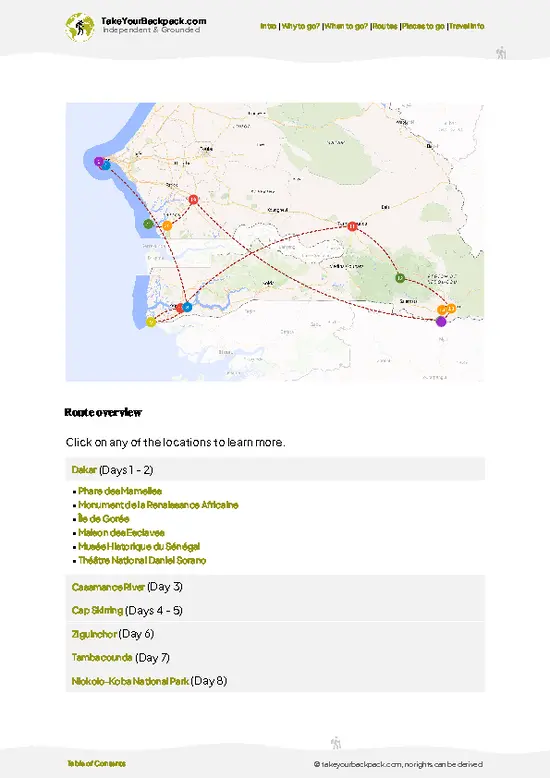
example page 0 from our offline Travel Guide for Senegal
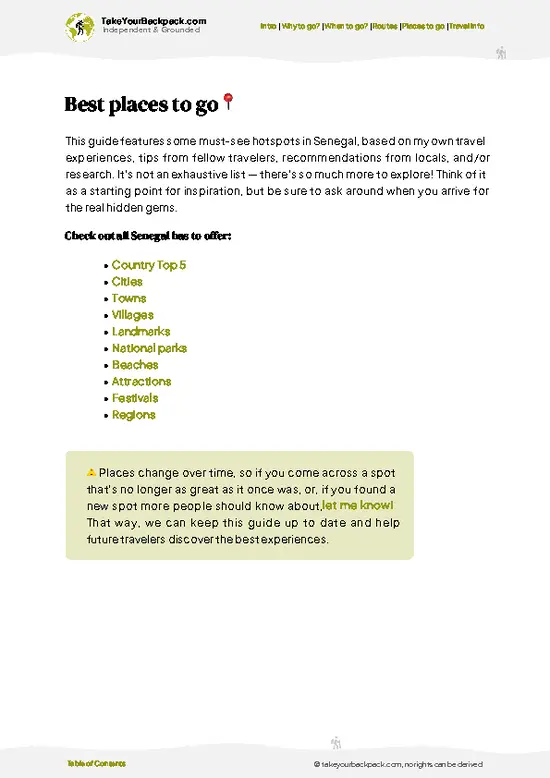
example page 1 from our offline Travel Guide for Senegal
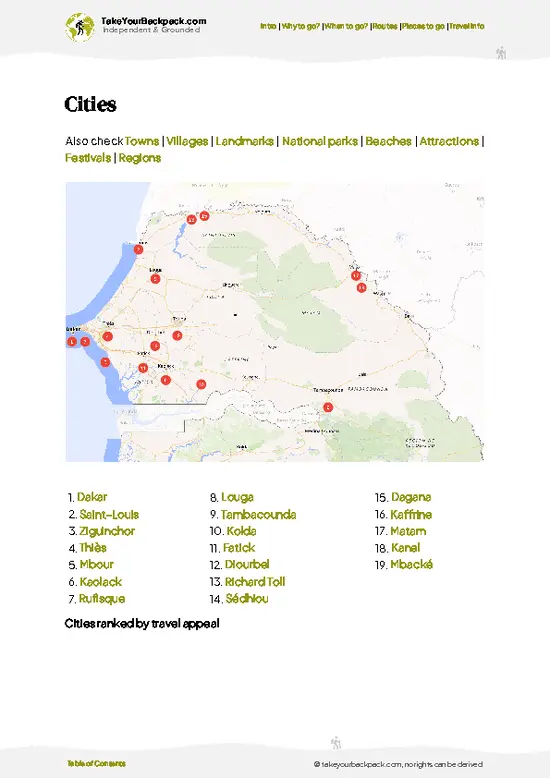
example page 2 from our offline Travel Guide for Senegal
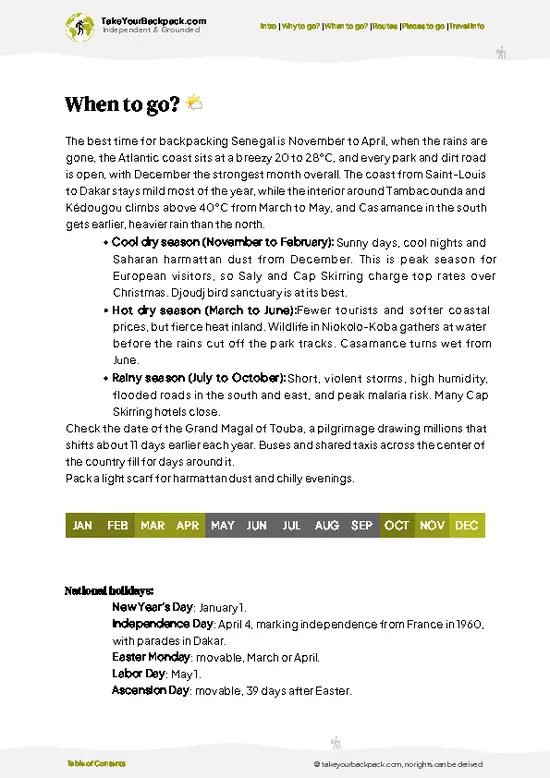
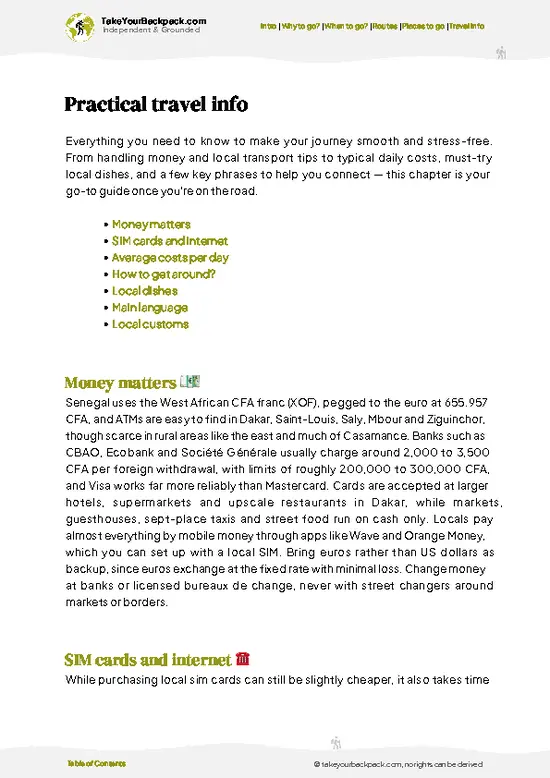
example page 3 from our offline Travel Guide for Senegal
example page 4 from our offline Travel Guide for Senegal
example page 5 from our offline Travel Guide for Senegal
example page 6 from our offline Travel Guide for Senegal
example page 7 from our offline Travel Guide for Senegal
Loading the map 🌍
CLICK TO FILTER
cities
towns
villages
landmarks
national parks
beaches
attractions
festivals
regions
SHOW COUNTRY’S BESTSHOW ALL

✨ Why go?
Ranked #3 unique site in Senegal
The unique appeal for travelers

Keur Moussa Monastery is the one place in Senegal where you can hear kora music woven into Gregorian-style chant, a fusion the monks have developed since the 1960s. That alone justifies the detour. A concert hall could not reproduce the setting: a plain stone church, open to the heat and the birds, with a community actually praying rather than performing. The monks also make their own instruments, so you can see where the sound comes from. The shop sells goat cheese and other monastery products that make a far better picnic than anything at a roadside stall, and the proceeds support the community. The monastery sits on the road east of Dakar, so it fits easily into a loop toward Thiès or into a day away from the capital. Pair it with a market stop on the way and you have a calmer counterpoint … read more 👉
Keur Moussa Monastery is the one place in Senegal where you can hear kora music woven into Gregorian-style chant, a fusion the monks have developed since the 1960s. That alone justifies the detour. A concert hall could not reproduce the setting: a plain stone church, open to the heat and the birds, with a community actually praying rather than performing. The monks also make their own instruments, so you can see where the sound comes from. The shop sells goat cheese and other monastery products that make a far better picnic than anything at a roadside stall, and the proceeds support the community. The monastery sits on the road east of Dakar, so it fits easily into a loop toward Thiès or into a day away from the capital. Pair it with a market stop on the way and you have a calmer counterpoint to Dakar’s noise. Come with patience for the schedule, modest clothes and a willingness to sit quietly. It rewards that with one of the most unusual hours you can spend in West Africa.

💡 HighlightsPlaces and moments you shouldn't skip

  1. The Sung Offices in the Church: This is what draws people here. Monks sing psalms accompanied by kora, and the sound drifts out across the dry landscape. Sit near the back and keep still.
  2. The Kora Workshop: The monastery is known for adapting the kora for liturgical use, and instruments are crafted on site. Even a glimpse of the calabash bodies and the long necks explains why each kora sounds slightly different.
  3. The Monastery Shop: Goat cheese from the community’s own herd is the star, alongside bread and other homemade products. Recordings of the monks’ music are the best souvenir you can carry home.
  4. The Church Architecture: The building is simple, built with local materials and open to the air, with none of the ornament of colonial cathedrals. Its plainness lets the acoustics do the work.
  5. The
… read more 👉
  1. The Sung Offices in the Church: This is what draws people here. Monks sing psalms accompanied by kora, and the sound drifts out across the dry landscape. Sit near the back and keep still.
  2. The Kora Workshop: The monastery is known for adapting the kora for liturgical use, and instruments are crafted on site. Even a glimpse of the calabash bodies and the long necks explains why each kora sounds slightly different.
  3. The Monastery Shop: Goat cheese from the community’s own herd is the star, alongside bread and other homemade products. Recordings of the monks’ music are the best souvenir you can carry home.
  4. The Church Architecture: The building is simple, built with local materials and open to the air, with none of the ornament of colonial cathedrals. Its plainness lets the acoustics do the work.
  5. The Grounds and Gardens: Paths run past fruit trees and cultivated plots that show how the monks feed themselves in a harsh climate. The shade here feels very welcome in the hot months.
  6. The Surrounding Baobab Country: Walking a short way beyond the gate brings you to open scrub dotted with baobabs and the red earth typical of the Thiès region. Early light makes the best photographs.
  7. The Guest Retreat Experience: The monastery welcomes visitors seeking quiet and prayer. Even a short stay lets you hear the full rhythm of the monks’ day, from dawn chant to evening prayer.
Keur Moussa Monastery is best approached by starting with the sung office in the church, because the music is the reason the place exists and everything else makes more sense once you have heard it.
Spotted a mistake or missing something? Contact us.

Things to do near Keur Moussa Monastery

Ratings based on Tripadvisor reviews. When you book through this link, you support our work at no extra cost to you.

🌤️ When to go?Best time to visit Keur Moussa Monastery

  • Cool Dry Season (November to February): Mornings and evenings are comfortable at 17 to 22°C (63 to 72°F), afternoons reach 26 to 30°C (79 to 86°F), and the harmattan wind can leave a dusty haze. This is when the monastery’s Sunday Mass with kora and balafong music is most pleasant to attend, and the walk from the road is easy. Expect more visitors and the highest guesthouse prices around Dakar.
  • Hot Dry Season (March to May): Afternoons climb to 30 to 35°C (86 to 95°F) with little shade on the approach. Visit early, before the midday heat. The crowds thin and rooms are easier to book.
  • Rainy Season (June to October): August and September are the wettest and most humid, with highs of 31 to 35°C (88 to 95°F) and sudden downpours that turn sandy tracks to mud. The surrounding land turns green, prices
… read more 👉
  • Cool Dry Season (November to February): Mornings and evenings are comfortable at 17 to 22°C (63 to 72°F), afternoons reach 26 to 30°C (79 to 86°F), and the harmattan wind can leave a dusty haze. This is when the monastery’s Sunday Mass with kora and balafong music is most pleasant to attend, and the walk from the road is easy. Expect more visitors and the highest guesthouse prices around Dakar.
  • Hot Dry Season (March to May): Afternoons climb to 30 to 35°C (86 to 95°F) with little shade on the approach. Visit early, before the midday heat. The crowds thin and rooms are easier to book.
  • Rainy Season (June to October): August and September are the wettest and most humid, with highs of 31 to 35°C (88 to 95°F) and sudden downpours that turn sandy tracks to mud. The surrounding land turns green, prices dip, and daylight runs roughly 11 to 13 hours.
Arrive for the Sunday morning Mass in the cool months, and check the service time locally before you go.


source: climatestotravel.comJANJanuary: highly recommended for travelingFEBFebruary: highly recommended for travelingMARMarch: excellent for travelingAPRApril: excellent for travelingMAYMay: excellent for travelingJUNJune: fair for travelingJULJuly: fair for travelingAUGAugust: fair for travelingSEPSeptember: fair for travelingOCTOctober: fair for travelingNOVNovember: highly recommended for travelingDECDecember: highly recommended for traveling
when-to-go

✈️ The backpacker research shortcutSenegal Travel Guide

An offline-friendly backpacking guide with optimized travel routes, ranked highlights, transport advice, and the best areas to stay.
example page 0 from our offline Travel Guide for Senegal
example page 1 from our offline Travel Guide for Senegal
example page 2 from our offline Travel Guide for Senegal
example page 3 from our offline Travel Guide for Senegal
example page 4 from our offline Travel Guide for Senegal
example page 5 from our offline Travel Guide for Senegal
example page 6 from our offline Travel Guide for Senegal
example page 7 from our offline Travel Guide for Senegal
The digital guide (360 pages) contains:
✅ 85 highlights, ranked by travel appeal
✅ Optimized 5, 10 & 15-day travel routes
✅ Cities, national parks, landmarks, beaches
✅ How to get around
✅ Offline-friendly for travel without Wi-Fi
👉 Click to see all 30+ guide features

📅 Plan smarter in minutes, not weeks
✅ Month by month travel advice
✅ Festivals & national holidays
✅ Budget expectations

🗺️ Go to the right places, skip the overrated ones
✅ Honest pros & cons of destinations
✅ Top hikes, parks & viewpoints
✅ Lesser-known places most travelers miss
✅ Clear “worth it vs skip it” guidance

🛏️ Travel smoothly without rookie mistakes
✅ Best areas to stay
✅ Transport systems explained simply
✅ Common scams & safety advice
✅ SIM cards, money & practical tips

🌍 Understand the country, not just visit it
✅ Culture & traditions
✅ 52 Essential phrases & customs
✅ Festivals worth planning around
✅ Traveler-friendly historical context
✅ Insights that make places more meaningful

📱 Built for real travel conditions
✅ Fully downloadable PDF
✅ Works completely offline
✅ Optimized for phone use
✅ Useful in remote areas & buses
✅ Everything in one place
Stop searching, start planning
Get instant access to your full guide. 30‑day money-back guarantee.
+ Add another guide for just

By proceeding you agree to our terms.
Sent to your inbox immediately after payment • 100% Secure Checkout
Best Backpacking Travel Advisor 2025 tourism awardBest Backpacking
Travel Advisor
2025
What others say about Take Your Backpack Guides:
⭐⭐⭐⭐⭐
Fantastic, amazing amount of information!
⭐⭐⭐⭐⭐
My goodness this is amazing, it's what I've been looking for hats off too you!
⭐⭐⭐⭐⭐
I think this is absolutely BRILLIANT
⭐⭐⭐⭐
Very complete and informative. It's still missing places, but I gotta to commend you
⭐⭐⭐⭐⭐
This is truly amazing, thank you, can't wait to explore it with my kids!
⭐⭐⭐⭐⭐
Awesome resource, thank you!
⭐⭐⭐⭐⭐
This is amazing! Can't wait to explore the ones I haven't seen
⭐⭐⭐⭐
I love this! Well done, great idea.
⭐⭐⭐⭐⭐
Thanks for taking the time to make this gem!
⭐⭐⭐⭐⭐
This might be the best website I've ever seen.
⭐⭐⭐⭐⭐
Congratulations, and thank you so much for your work; it's incredibly valuable.
⭐⭐⭐⭐
In all seriousness I think you did a great job pointing out the important spots
⭐⭐⭐⭐⭐
10/10 very good
⭐⭐⭐⭐⭐
As someone who's only just starting to visit regularly this is awesome, thank you.
⭐⭐⭐⭐
Thank you very much! I'm going to visit my dad, it's going to be very useful!
⭐⭐⭐⭐⭐
This is really cool! We'll be travelling for the first time and this definitely come in handy.
⭐⭐⭐⭐⭐
You are now our minister of culture, congratulations 👨‍💼
⭐⭐⭐⭐⭐
Just wanted to tell you that this is a pearl! Going to follow your recommendations.
⭐⭐⭐⭐⭐
This is so cool. I'll definitely be using the resource for my travels soon.
⭐⭐⭐⭐⭐
This is very impressive! Good work.
⭐⭐⭐⭐⭐
This is an amazing and informative site. Very well done!

🛏️ Where to stay?Best areas to stay in Senegal

For Keur Moussa Monastery, the best base for backpackers is Dakar, roughly 50 kilometers (31 miles) to the west, with Rufisque and Bargny as quieter fallback options closer to the road. The monastery has a guesthouse-style retreat tradition for quiet visitors, but beds are limited and not geared to socializing.

In Dakar, Medina and Plateau give you the widest choice of budget dorms and simple private rooms, plus markets and cheap eateries for easy evening meals. They suit solo travelers who want to meet others, and shared taxis and buses to the eastern suburbs leave from nearby. Ngor and Yoff … read more 👉
For Keur Moussa Monastery, the best base for backpackers is Dakar, roughly 50 kilometers (31 miles) to the west, with Rufisque and Bargny as quieter fallback options closer to the road. The monastery has a guesthouse-style retreat tradition for quiet visitors, but beds are limited and not geared to socializing.

In Dakar, Medina and Plateau give you the widest choice of budget dorms and simple private rooms, plus markets and cheap eateries for easy evening meals. They suit solo travelers who want to meet others, and shared taxis and buses to the eastern suburbs leave from nearby. Ngor and Yoff on the northwest coast are the social choice: a surf-and-beach crowd, hostels with rooftop or courtyard common areas, and calmer streets after dark. They sit farther from the monastery, so expect a longer morning transfer.

Rufisque is a practical compromise. It is an old coastal town on the route toward Keur Moussa, cheaper than central Dakar and less hectic, though with few dedicated hostels and little nightlife. Choose it only if an early start matters more than company.

Keep valuables out of sight in Plateau and Medina crowds, and arrange night arrivals in advance.

👛 Costs (as of 22 October 2026)Travel costs and budget guide for Keur Moussa Monastery

A day at Keur Moussa Monastery costs about €24 to 46 for most backpackers, including transport from Dakar, food and a donation. Entry is free, and visitors pay in West African CFA francs, though the figures here are in euros.
CategoryBudget RangeLocal Reality
Entry€0No ticket. A small donation at the chapel or shop is customary.
Transport (round trip from Dakar)€4 to 9Minibuses and shared taxis via Rufisque, then a short local ride or walk. A private taxi costs much more, around €30 to 45.
Accommodation (high season)€12 to 20Dorm or simple private room in Dakar, mainly November to February. Low season runs about €9 to 15.
Food€4 to 8Street meals and café plates in Dakar. Few options near the monastery, so bring snacks.
Souvenirs and monastery products€2 to 6Monks sell cheese, cassettes, and kora
… read more 👉
A day at Keur Moussa Monastery costs about €24 to 46 for most backpackers, including transport from Dakar, food and a donation. Entry is free, and visitors pay in West African CFA francs, though the figures here are in euros.
CategoryBudget RangeLocal Reality
Entry€0No ticket. A small donation at the chapel or shop is customary.
Transport (round trip from Dakar)€4 to 9Minibuses and shared taxis via Rufisque, then a short local ride or walk. A private taxi costs much more, around €30 to 45.
Accommodation (high season)€12 to 20Dorm or simple private room in Dakar, mainly November to February. Low season runs about €9 to 15.
Food€4 to 8Street meals and café plates in Dakar. Few options near the monastery, so bring snacks.
Souvenirs and monastery products€2 to 6Monks sell cheese, cassettes, and kora music recordings, as well as other goods.
Donation and extras€2 to 3Water, small tips, and a chapel offering.
Total Daily Budget€24 to 46Roughly €35 on a typical day.
⚠️ Prices can change and everyone travels differently, so take this as a rough guide. Hope it helps you plan your adventure!

FAQFrequently asked questions about Keur Moussa Monastery

Keur Moussa Monastery is a Benedictine community east of Dakar, founded in 1963, known for blending Gregorian chant with West African instruments such as the kora and balafong. Monks also make goat cheese and sell it in the shop. Sunday Mass is the main draw for visitors, and entry is free.
Keur Moussa Monastery needs about half a day, or 3 to 4 hours on site if you attend a service and browse the shop. Add 1.5 to 3 hours of round-trip travel from Dakar depending on traffic. Leave early on Sundays, since the road out of the capital clogs by late morning.
Keur Moussa Monastery lies about 50 kilometers (31 miles) from Dakar, reached by minibus or shared taxi toward Rufisque and Bayakh, then a local ride for the last stretch. Expect around 1 to 2 hours each way and a fare of roughly €2 to 5 each leg. A private taxi costs about €30 to 45 round trip and is easiest for Sunday timing.
⚠️ Things can change over time, so always validate details locally before you go.

Other Senegalese landmarks near Keur Moussa Monastery

Explore more nearby:

  • Phare des Mamelles—White lighthouse, twin basalt hills, Atlantic panorama, Ouakam lanes| 42 km away
  • Lompoul Desert—Orange dunes, sand-only access, camel and sandboard, tented camps| 88 km away
  • Dindefelo Waterfall—100-meter cascade, cold plunge pool, guided forest trail, Fouta Djallon foothills| 583 km away

💡 Not sure where to go next?
Create a personalized itinerary for Senegal including Keur Moussa Monastery and the places that fit your trip.

Generate my itinerary

👉 Discover all landmarks

Or checkout all Senegal has to offer (think cities, towns, villages, national parks, hikes, beaches, festivals)
Country photo of Senegal

We 💚 feedbackSumming up the experience

Keur Moussa Monastery suits travelers who love music, quiet places and slow mornings, and it will bore anyone chasing ticks on a checklist. I would plan around the sung service, dress modestly and bring cash for cheese. A bag with a cold pack makes the shop a real bonus.

✍️ Help improve this page!
The information on this page is based on in-depth research, insights shared by experienced travelers, and feedback from the local travel community in Senegal. While every effort is made to keep the information accurate and current, conditions can change — so if you spot anything incorrect or outdated, please get in touch.


🙋‍♂️ Give feedback

👋 Meet the founderWho’s Behind Take Your Backpack?

Johan, backpacker and founder of TakeYourBackpackHi, I’m Johan (Netherlands 🇳🇱), the creator of TakeYourBackpack. Over the past 3 decades, I’ve backpacked through 90+ countries across six continents, gaining extensive experience with independent travel, long-term trips, and overland routes.

This site is built on a combination of firsthand travel experience and carefully curated insights from other backpackers. Many guides are based on places I’ve personally visited, while others bring together tips, observations, and practical advice shared by trusted travelers I’ve met along the way.

The goal is to provide realistic, experience-driven guidance — not generic itineraries — so you can explore destinations with better context, clearer expectations, and more confidence.