×

Senegal🇸🇳 | attractionsMusée des Civilisations NoiresCircular rotunda, masks and kora, trade kingdoms, diaspora gallery | things to do and best time to go

Explore Monument de la Renaissance AfricaineExplore Théâtre National Daniel Sorano

Backpacking in Musée des Civilisations Noires
🌟 Highlightattraction ranked #4
By Johan Kruseman 🇳🇱 | Updated October 22, 2026

Walk in during the afternoon and you get air conditioning, a quiet ring road of curved concrete and a full tour of Black civilizations in one sitting, which in Dakar counts as a small miracle. The Musée des Civilisations Noires stands in Senegal’s capital, in the Dakar Plateau area near the Grand Théâtre, a short ride from the center. The circular building echoes Great Zimbabwe and Sahelian granary forms, and inside, the light is soft, the floors hum with footsteps and the halls smell faintly of polished stone. The first-floor Africa-wide displays of masks, instruments and ancient tools deserve your time. The thinner contemporary galleries and a few sparse labels deserve less. Crowds stay light and the entry fee is modest. History buffs and art lovers will like it most. Anyone wanting beaches, adrenaline or a fast photo stop will not.

Discover everything you want to know in the 📖 Senegal Travel Guide.


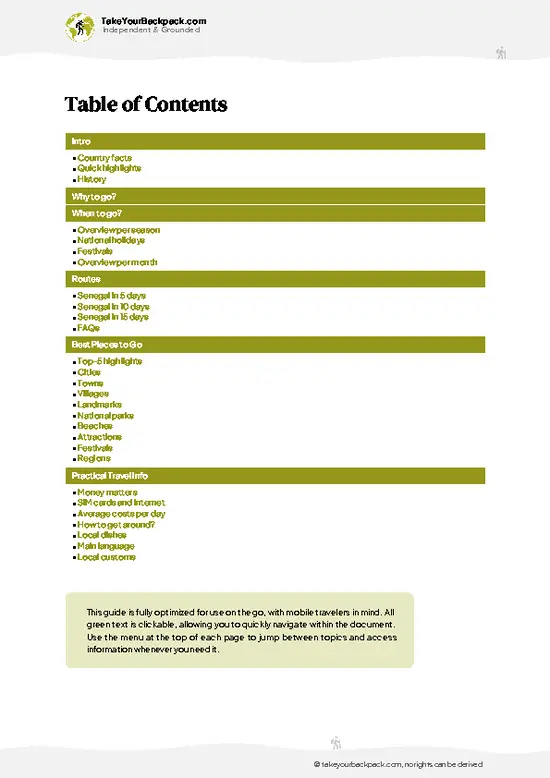
example page 0 from our offline Travel Guide for Senegal
example page 1 from our offline Travel Guide for Senegal
example page 2 from our offline Travel Guide for Senegal
example page 3 from our offline Travel Guide for Senegal
example page 4 from our offline Travel Guide for Senegal
example page 5 from our offline Travel Guide for Senegal
example page 6 from our offline Travel Guide for Senegal
example page 7 from our offline Travel Guide for Senegal
Loading the map 🌍
CLICK TO FILTER
cities
towns
villages
landmarks
national parks
beaches
attractions
festivals
regions
SHOW COUNTRY’S BESTSHOW ALL

✨ Why go?
Ranked #4 attraction in Senegal
Why Musée des Civilisations Noires should be on your travel list

Musée des Civilisations Noires gives you a crash course in Africa before you head deeper into Senegal, and that context changes how you read everything afterward. The collection opens with the deep-time story of humankind, then moves through kingdoms, trade, spirituality and the Atlantic slave trade, so the Gorée Island visit and the markets later in your trip start to make sense. It also matters as a statement. The museum was conceived under Léopold Sédar Senghor’s vision of Négritude and opened in 2018, and the circular design built with Chinese partnership funding is itself part of the story. The Arts of Africa and the Diaspora galleries add a modern voice, with painters, sculptors and photographers from across the continent. For a traveler who wants more than coastline and street food, … read more 👉
Musée des Civilisations Noires gives you a crash course in Africa before you head deeper into Senegal, and that context changes how you read everything afterward. The collection opens with the deep-time story of humankind, then moves through kingdoms, trade, spirituality and the Atlantic slave trade, so the Gorée Island visit and the markets later in your trip start to make sense. It also matters as a statement. The museum was conceived under Léopold Sédar Senghor’s vision of Négritude and opened in 2018, and the circular design built with Chinese partnership funding is itself part of the story. The Arts of Africa and the Diaspora galleries add a modern voice, with painters, sculptors and photographers from across the continent. For a traveler who wants more than coastline and street food, this is the best place in Dakar to slow down and think, and it is easy to fit into a morning or afternoon.

💡 HighlightsThe experiences that define the visit

  1. The Circular Building and Central Hall: The rotunda draws on Great Zimbabwe walls and Sahelian granaries, with a vast open atrium that gives the visit its sense of scale.
  2. Origins of Humanity Gallery: Casts and tools trace early human life in Africa, a clear starting point for the museum’s story.
  3. Masks and Ritual Objects: Carved wood masks and ceremonial figures from across West and Central Africa show how varied spiritual life has been.
  4. Musical Instruments Collection: Kora, balafon and drums are displayed with context, so you can match what you see to the sounds on Dakar streets.
  5. Kingdoms and Trade Routes Displays: Maps and artifacts follow the Mali Empire, Saharan caravans and coastal powers.
  6. Slave Trade and Diaspora Section: Documents and objects connect Senegal’s coast to the Americas, and it
… read more 👉
  1. The Circular Building and Central Hall: The rotunda draws on Great Zimbabwe walls and Sahelian granaries, with a vast open atrium that gives the visit its sense of scale.
  2. Origins of Humanity Gallery: Casts and tools trace early human life in Africa, a clear starting point for the museum’s story.
  3. Masks and Ritual Objects: Carved wood masks and ceremonial figures from across West and Central Africa show how varied spiritual life has been.
  4. Musical Instruments Collection: Kora, balafon and drums are displayed with context, so you can match what you see to the sounds on Dakar streets.
  5. Kingdoms and Trade Routes Displays: Maps and artifacts follow the Mali Empire, Saharan caravans and coastal powers.
  6. Slave Trade and Diaspora Section: Documents and objects connect Senegal’s coast to the Americas, and it pairs well with a later boat trip to Gorée.
  7. Contemporary Art Galleries: Paintings, sculpture and photography by African and diaspora artists offer a modern counterpoint to the older rooms.
  8. Esplanade and Surrounding Grounds: The open forecourt beside the Grand Théâtre is a good place to sit, watch Dakar traffic and catch the afternoon light on the curved walls.
The esplanade and grounds cost nothing, while every gallery inside needs the museum entry ticket.
Spotted a mistake or missing something? Contact us.

Things to do around Musée des Civilisations Noires

Ratings based on Tripadvisor reviews. When you book through this link, you support our work at no extra cost to you.

🌤️ When to go?Choosing the right time of year

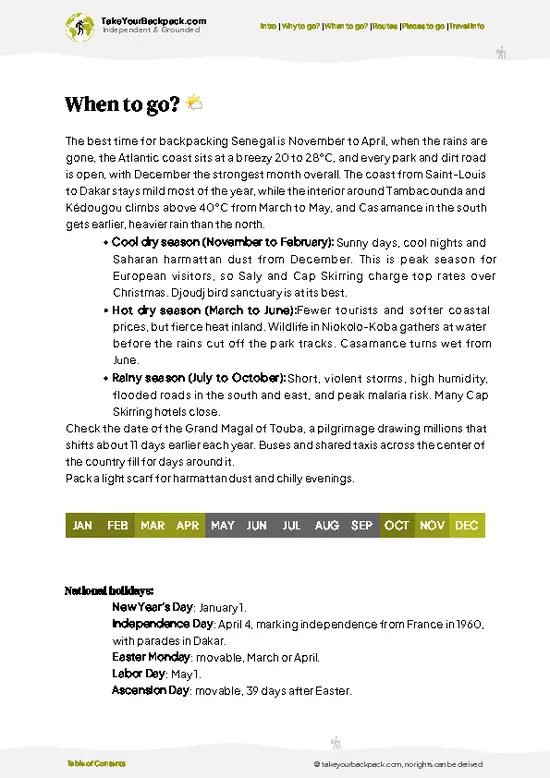
  • Cool Season (November to February): Dakar is at its most comfortable, with highs of 25 to 28°C (77 to 82°F) and nights of 17 to 20°C (63 to 68°F). Walking from the Corniche to the museum is pleasant. Hotel rates and crowds peak, especially around December holidays.
  • Hot Dry Months (March to May): Sea breezes keep the coast milder than inland, at 24 to 29°C (75 to 84°F). The galleries are air-conditioned, which is a welcome break. Prices ease and queues thin out.
  • Rainy Season (June to October): Expect 30 to 33°C (86 to 91°F), heavy humidity and downpours that flood some Dakar streets in August and September. Indoor galleries make a good rainy-day plan, and rooms are cheapest.
  • Daylight: Days run roughly 11 to 13 hours across the year, so mornings suit the museum best.
Arrive on a weekday morning, … read more 👉
  • Cool Season (November to February): Dakar is at its most comfortable, with highs of 25 to 28°C (77 to 82°F) and nights of 17 to 20°C (63 to 68°F). Walking from the Corniche to the museum is pleasant. Hotel rates and crowds peak, especially around December holidays.
  • Hot Dry Months (March to May): Sea breezes keep the coast milder than inland, at 24 to 29°C (75 to 84°F). The galleries are air-conditioned, which is a welcome break. Prices ease and queues thin out.
  • Rainy Season (June to October): Expect 30 to 33°C (86 to 91°F), heavy humidity and downpours that flood some Dakar streets in August and September. Indoor galleries make a good rainy-day plan, and rooms are cheapest.
  • Daylight: Days run roughly 11 to 13 hours across the year, so mornings suit the museum best.
Arrive on a weekday morning, when school groups are rare and the exhibits are quiet.


source: climatestotravel.comJANJanuary: excellent for travelingFEBFebruary: excellent for travelingMARMarch: highly recommended for travelingAPRApril: highly recommended for travelingMAYMay: good for travelingJUNJune: fair for travelingJULJuly: below average for travelingAUGAugust: below average for travelingSEPSeptember: fair for travelingOCTOctober: fair for travelingNOVNovember: highly recommended for travelingDECDecember: excellent for traveling
when-to-go

✈️ The backpacker research shortcutSenegal Travel Guide

An offline-friendly backpacking guide with optimized travel routes, ranked highlights, transport advice, and the best areas to stay.
example page 0 from our offline Travel Guide for Senegal
example page 1 from our offline Travel Guide for Senegal
example page 2 from our offline Travel Guide for Senegal
example page 3 from our offline Travel Guide for Senegal
example page 4 from our offline Travel Guide for Senegal
example page 5 from our offline Travel Guide for Senegal
example page 6 from our offline Travel Guide for Senegal
example page 7 from our offline Travel Guide for Senegal
The digital guide (360 pages) contains:
✅ 85 highlights, ranked by travel appeal
✅ Optimized 5, 10 & 15-day travel routes
✅ Cities, national parks, landmarks, beaches
✅ How to get around
✅ Offline-friendly for travel without Wi-Fi
👉 Click to see all 30+ guide features

📅 Plan smarter in minutes, not weeks
✅ Month by month travel advice
✅ Festivals & national holidays
✅ Budget expectations

🗺️ Go to the right places, skip the overrated ones
✅ Honest pros & cons of destinations
✅ Top hikes, parks & viewpoints
✅ Lesser-known places most travelers miss
✅ Clear “worth it vs skip it” guidance

🛏️ Travel smoothly without rookie mistakes
✅ Best areas to stay
✅ Transport systems explained simply
✅ Common scams & safety advice
✅ SIM cards, money & practical tips

🌍 Understand the country, not just visit it
✅ Culture & traditions
✅ 52 Essential phrases & customs
✅ Festivals worth planning around
✅ Traveler-friendly historical context
✅ Insights that make places more meaningful

📱 Built for real travel conditions
✅ Fully downloadable PDF
✅ Works completely offline
✅ Optimized for phone use
✅ Useful in remote areas & buses
✅ Everything in one place
Stop searching, start planning
Get instant access to your full guide. 30‑day money-back guarantee.
+ Add another guide for just

By proceeding you agree to our terms.
Sent to your inbox immediately after payment • 100% Secure Checkout
Best Backpacking Travel Advisor 2025 tourism awardBest Backpacking
Travel Advisor
2025
What others say about Take Your Backpack Guides:
⭐⭐⭐⭐⭐
Fantastic, amazing amount of information!
⭐⭐⭐⭐⭐
My goodness this is amazing, it's what I've been looking for hats off too you!
⭐⭐⭐⭐⭐
I think this is absolutely BRILLIANT
⭐⭐⭐⭐
Very complete and informative. It's still missing places, but I gotta to commend you
⭐⭐⭐⭐⭐
This is truly amazing, thank you, can't wait to explore it with my kids!
⭐⭐⭐⭐⭐
Awesome resource, thank you!
⭐⭐⭐⭐⭐
This is amazing! Can't wait to explore the ones I haven't seen
⭐⭐⭐⭐
I love this! Well done, great idea.
⭐⭐⭐⭐⭐
Thanks for taking the time to make this gem!
⭐⭐⭐⭐⭐
This might be the best website I've ever seen.
⭐⭐⭐⭐⭐
Congratulations, and thank you so much for your work; it's incredibly valuable.
⭐⭐⭐⭐
In all seriousness I think you did a great job pointing out the important spots
⭐⭐⭐⭐⭐
10/10 very good
⭐⭐⭐⭐⭐
As someone who's only just starting to visit regularly this is awesome, thank you.
⭐⭐⭐⭐
Thank you very much! I'm going to visit my dad, it's going to be very useful!
⭐⭐⭐⭐⭐
This is really cool! We'll be travelling for the first time and this definitely come in handy.
⭐⭐⭐⭐⭐
You are now our minister of culture, congratulations 👨‍💼
⭐⭐⭐⭐⭐
Just wanted to tell you that this is a pearl! Going to follow your recommendations.
⭐⭐⭐⭐⭐
This is so cool. I'll definitely be using the resource for my travels soon.
⭐⭐⭐⭐⭐
This is very impressive! Good work.
⭐⭐⭐⭐⭐
This is an amazing and informative site. Very well done!

🛏️ Where to stay?Best areas and accommodation options

Plateau and Medina put you within a short taxi ride of Musée des Civilisations Noires, and they are where most budget travelers end up. The museum sits on Boulevard du Général de Gaulle, close to the Grand Théâtre, so staying central saves taxi money.

Plateau is Dakar’s downtown. It is walkable, has banks, ferry connections to Gorée Island and plenty of cheap lunch spots, but it empties out on weekends and some evenings feel quiet. Hostels and guesthouses here suit travelers who want easy logistics.

Medina is livelier and more local, with street food, tailors and music drifting from open doorways. … read more 👉
Plateau and Medina put you within a short taxi ride of Musée des Civilisations Noires, and they are where most budget travelers end up. The museum sits on Boulevard du Général de Gaulle, close to the Grand Théâtre, so staying central saves taxi money.

Plateau is Dakar’s downtown. It is walkable, has banks, ferry connections to Gorée Island and plenty of cheap lunch spots, but it empties out on weekends and some evenings feel quiet. Hostels and guesthouses here suit travelers who want easy logistics.

Medina is livelier and more local, with street food, tailors and music drifting from open doorways. Rooms cost less, but streets are crowded and rougher after dark, so use taxis at night.

Fann and Point E are leafy, calmer residential districts with guesthouses, cafés and a university crowd. They are a good fit if you want a quieter base and reliable Wi-Fi, and the museum is a short taxi ride away.

Ngor and Ouakam are the surf and social neighborhoods, with beach hostels, other backpackers and bars. They are farther out, roughly 20 to 40 minutes by taxi depending on traffic, but the atmosphere is the friendliest for solo travelers.

👛 Costs (as of 22 October 2026)Travel costs and budget guide for Musée des Civilisations Noires

Musée des Civilisations Noires can be covered on about €27 to 62 a day in Dakar, and the ticket itself is a small part of that. The table assumes high season.
CategoryBudget RangeLocal Reality
Museum entry (foreign adult)€4 to 8Paid at the desk. Discounts exist for students and children with ID.
Guided visit€0 to 8Guides are available on site for the permanent collection. Prices vary by guide and group.
Accommodation (high season)€12 to 25Dorm bed or basic guesthouse room in Plateau, Medina or Ngor. Off-season rates drop by roughly a quarter.
Food€6 to 12Street meals of thieboudienne or fataya cost a few euros. Café lunches near the museum run higher.
Local transport€3 to 6Taxis are metered rarely, so agree the fare first. Short city rides cost about €1.50 to 4. Pay in CFA francs.
Extras€2 to 3Water,
… read more 👉
Musée des Civilisations Noires can be covered on about €27 to 62 a day in Dakar, and the ticket itself is a small part of that. The table assumes high season.
CategoryBudget RangeLocal Reality
Museum entry (foreign adult)€4 to 8Paid at the desk. Discounts exist for students and children with ID.
Guided visit€0 to 8Guides are available on site for the permanent collection. Prices vary by guide and group.
Accommodation (high season)€12 to 25Dorm bed or basic guesthouse room in Plateau, Medina or Ngor. Off-season rates drop by roughly a quarter.
Food€6 to 12Street meals of thieboudienne or fataya cost a few euros. Café lunches near the museum run higher.
Local transport€3 to 6Taxis are metered rarely, so agree the fare first. Short city rides cost about €1.50 to 4. Pay in CFA francs.
Extras€2 to 3Water, café coffee and small museum shop purchases.
Total Daily Budget€27 to 62Roughly €38 to 62 on a comfortable backpacker day.
⚠️ Prices can change and everyone travels differently, so take this as a rough guide. Hope it helps you plan your adventure!

FAQFrequently asked questions about Musée des Civilisations Noires

Allow 2 to 3 hours for Musée des Civilisations Noires. That covers the main permanent galleries on African history, art and masks plus a temporary exhibition. Add another hour if you join a guide or stop at the café, and plan a morning visit before Dakar’s afternoon heat.
Yes for most travelers, since the ticket costs roughly €4 to 8 for foreigners. Musée des Civilisations Noires is a modern, air-conditioned building with well-lit galleries, and it gives a strong overview of Black civilizations that few Dakar sights match. Students usually pay less, so bring ID.
Take a taxi from anywhere in Dakar to Musée des Civilisations Noires on Boulevard du Général de Gaulle, near the Grand Théâtre. From Plateau it is 10 to 15 minutes and about €2 to 4, while from Ngor or Ouakam expect 25 to 45 minutes depending on traffic. Agree the fare before getting in, or use a ride-hailing app.
⚠️ Things can change over time, so always validate details locally before you go.

Other Senegalese attractions near Musée des Civilisations Noires

Explore more nearby:


💡 Not sure where to go next?
Create a personalized itinerary for Senegal including Musée des Civilisations Noires and the places that fit your trip.

Generate my itinerary

👉 Discover all attractions

Or checkout all Senegal has to offer (think cities, towns, villages, national parks, hikes, beaches, festivals)
Country photo of Senegal

We 💚 feedbackSumming up the experience

Musée des Civilisations Noires deserves a solid two to three hours, and a half day if you read labels and linger over the instruments and art. I would go on a weekday morning, bring a light layer for the cold air conditioning and save the esplanade for a cooling-off sit afterward. Do not rush it between ferry times.

✍️ Help improve this page!
The information on this page is based on in-depth research, insights shared by experienced travelers, and feedback from the local travel community in Senegal. While every effort is made to keep the information accurate and current, conditions can change — so if you spot anything incorrect or outdated, please get in touch.


🙋‍♂️ Give feedback

👋 Meet the founderWho’s Behind Take Your Backpack?

Johan, backpacker and founder of TakeYourBackpackHi, I’m Johan (Netherlands 🇳🇱), the creator of TakeYourBackpack. Over the past 3 decades, I’ve backpacked through 90+ countries across six continents, gaining extensive experience with independent travel, long-term trips, and overland routes.

This site is built on a combination of firsthand travel experience and carefully curated insights from other backpackers. Many guides are based on places I’ve personally visited, while others bring together tips, observations, and practical advice shared by trusted travelers I’ve met along the way.

The goal is to provide realistic, experience-driven guidance — not generic itineraries — so you can explore destinations with better context, clearer expectations, and more confidence.