v2.webp)
- Massive seabird colonies on the central plateau — The island’s heartbeat: tens of thousands of terns, noddies and tropicbirds breeding on the flat interior. Walking the trails during nesting season you get absurdly close to huge flocks and theatrical diving flights — a seabird experience that feels raw and utterly island-specific.
- Granite cliff viewpoints — Jagged granite outcrops drop into the sea and give you sweeping views of the colonies, neighbouring blue water and winged traffic lanes. Great for photos and for watching the way seabirds use wind and thermals along the cliffs.
- Sheltered white-sand cove on the northeast shore — A tiny, pristine beach ringed by boulders where water is calm and the sand is almost powdery. Not for busy sunbathing — more for quiet swims, picnics, and listening
- Massive seabird colonies on the central plateau — The island’s heartbeat: tens of thousands of terns, noddies and tropicbirds breeding on the flat interior. Walking the trails during nesting season you get absurdly close to huge flocks and theatrical diving flights — a seabird experience that feels raw and utterly island-specific.
- Granite cliff viewpoints — Jagged granite outcrops drop into the sea and give you sweeping views of the colonies, neighbouring blue water and winged traffic lanes. Great for photos and for watching the way seabirds use wind and thermals along the cliffs.
- Sheltered white-sand cove on the northeast shore — A tiny, pristine beach ringed by boulders where water is calm and the sand is almost powdery. Not for busy sunbathing — more for quiet swims, picnics, and listening to the seabird colony in the afternoon.
- Endemic land-bird patches — Small stretches of native scrub and woodland where Seychelles endemics like warblers and fodies forage and sing. Birding here is special because the island’s isolation concentrates species and behaviors you won’t see the same way on larger islands.
- Plantation-era ruins and terraced slopes — Weathered stone walls, old wells and coconut terraces left from 19th-century use. They’re low-key but atmospheric: you can literally walk the traces of past human presence and see how nature has reclaimed the island.
- Cliffside tropicbird nesting ledges — Narrow ledges and crevices where tropicbirds nest, often with chicks poking out and adults circling close. It’s one of those moments — quiet, a little frantic, and uniquely Aride because of how concentrated the nesting is.
- Granite boulder labyrinth and rockpools (hidden gem) — A maze of low boulders and tidal pools that most people miss. Wander slowly and you’ll find tiny marine life, fossicked crabs, and micro-ecosystems that are surprisingly rich for such a small island.
- Secret snorkeling shelf off the southwest (hidden gem) — A shallow reef ledge accessible from a short bob in a tender where the coral and reef fish are compact and colourful. Not a massive dive site, but ideal for a calm, private snorkel with lots of small fish and easy visibility.
- Tiny freshwater seep & rare plant patch (hidden gem) — A modest spring and the little stand of endemic plants it nourishes. Rangers and locals point it out because it’s a tiny but critical refuge for insects and rare flora — the kind of detailed ecology you only notice when you slow down.
- Western ridge sunset perch — A modest, wind-swept knoll that becomes incandescent at dusk. Sit here and watch the light change on the cliffs, seabirds returning to roost, and the horizon turn colours — simple, local, and memorable in a way that postcards don’t capture.
Spotted a mistake or missing something? Contact us.

Private Transfers to Praslin Ferry Terminal
✓ Free cancellation

Praslin Private Tours Vallee de Mai Praslin Museum Anse Lazio
✓ Free cancellation

Fond Ferdinand Nature Reserve and Anse Georgette
✓ Free cancellation

Private Transfer to PRASLIN Airport
✓ Free cancellation
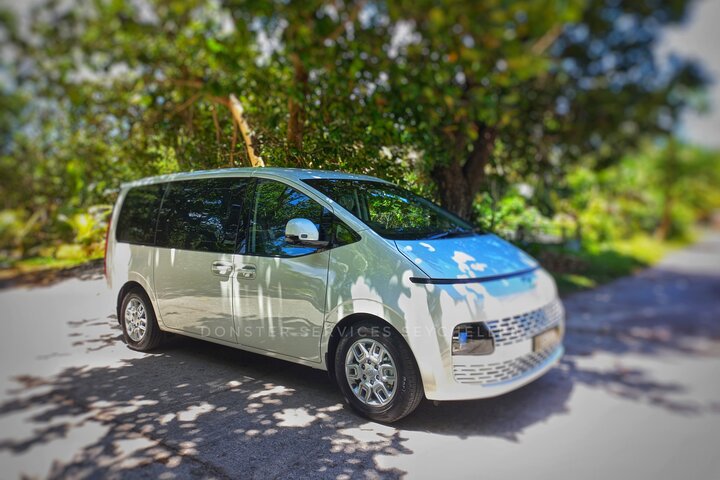
Private Transfers to Praslin Airport | Ferry Terminal
✓ Free cancellation

Full Day Praslin Island Tour 8hours
✓ Free cancellation

Discover Praslin Island Tour - 04 hours
✓ Free cancellation
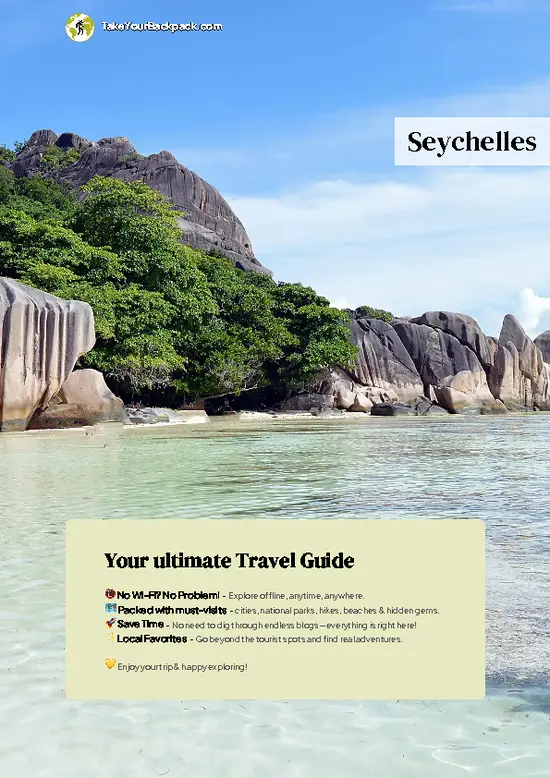

 Best Backpacking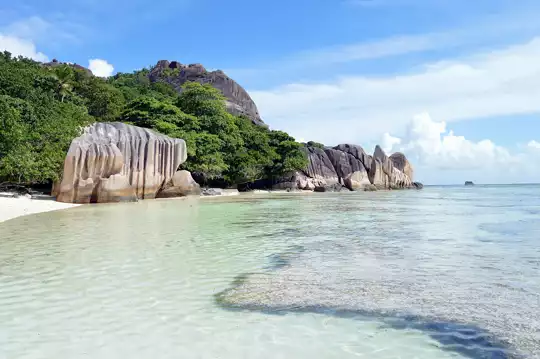
.jpg) Hi, I’m Johan (Netherlands 🇳🇱), the creator of TakeYourBackpack. Over the past decade, I’ve backpacked through 80+ countries across six continents, gaining extensive experience with independent travel, long-term trips, and overland routes.
Hi, I’m Johan (Netherlands 🇳🇱), the creator of TakeYourBackpack. Over the past decade, I’ve backpacked through 80+ countries across six continents, gaining extensive experience with independent travel, long-term trips, and overland routes.