×

Seychelles🇸🇨 | townsLa Digueox-cart lanes, granite boulders, Anse Source d’Argent, Creole guesthouses | things to do and best time to go

Explore Cousin IslandExplore Port Glaud

Backpacking in La Digue
🏆 Top picktown ranked #1
By Johan Kruseman 🇳🇱 | Updated June 5, 2026

The secret most travelers only realize after leaving La Digue: you don’t need a plan here—just a bike, a sense of time that runs on island hours, and a willingness to let the day unfold. La Digue sits northeast of Mahé, tucked between Praslin and the open Indian Ocean, a ferry hop away but a world apart. For backpackers, the village is a paradox: it’s both the Seychelles’ most photographed postcard and its most laid-back corner. You’ll trade traffic for ox-carts and the scent of frangipani drifting through humid air. The pros? Beaches like Anse Source d’Argent really do look like the travel posters, but you’ll earn them—by pedaling past vanilla farms, dodging the odd chicken, and sweating under a sun that doesn’t care about your Instagram. Evenings are quiet, sometimes almost meditative, with guesthouses hosting communal Creole dinners and the hum of cicadas replacing nightlife. It’s easy to meet fellow travelers—everyone ends up at the same handful of beach bars or sharing tips over grilled fish. Compared to Praslin’s busier resorts or Mahé’s urban sprawl, La Digue’s village is slower, more scenic, and feels like a place that still belongs to its locals, not just its visitors.

Discover everything you want to know in the 📖 Seychelles Travel Guide.
Loading the map 🌍
CLICK TO FILTER
towns
villages
landmarks
national parks
hikes
beaches
attractions
festivals
regions
SHOW COUNTRY’S BESTSHOW ALL

✨ Why go?
Ranked #1 town in Seychelles
Why La Digue should be on your travel list

La Digue is a backpacker’s haven that offers a unique blend of local character and natural beauty. The village exudes a laid-back atmosphere that invites you to slow down and soak in the surroundings. Picture this: the scent of fresh bread wafting from a nearby bakery, the sound of waves gently lapping against the shore, and the sight of locals chatting over a game of pétanque. It’s a place where you can truly pause between busier destinations like Mahé and Praslin.

The island is a gateway to stunning beaches like Anse Source d’Argent, but it also serves as a launchpad for hikes through lush trails that lead to breathtaking viewpoints. Backpackers often find themselves lingering here, whether they’re solo travelers seeking tranquility or couples looking for a romantic escape. The village’s … read more 👉
La Digue is a backpacker’s haven that offers a unique blend of local character and natural beauty. The village exudes a laid-back atmosphere that invites you to slow down and soak in the surroundings. Picture this: the scent of fresh bread wafting from a nearby bakery, the sound of waves gently lapping against the shore, and the sight of locals chatting over a game of pétanque. It’s a place where you can truly pause between busier destinations like Mahé and Praslin.

The island is a gateway to stunning beaches like Anse Source d’Argent, but it also serves as a launchpad for hikes through lush trails that lead to breathtaking viewpoints. Backpackers often find themselves lingering here, whether they’re solo travelers seeking tranquility or couples looking for a romantic escape. The village’s charm lies in its intimacy; you can easily strike up conversations with fellow travelers or locals, creating a sense of community.

While some may stop for just a night, many choose to stay longer to fully embrace the island’s rhythm. If you’re after a calm retreat with opportunities for adventure, La Digue is a perfect fit.
Want to include La Digue in your Seychelles route?
Create a personalized Seychelles itinerary that includes La Digue and the places that fit your trip — based on your travel style, budget, and available time. Get your route in seconds.

Generate my trip

💡 HighlightsThe experiences that define the visit

  • La Passe jetty (ferry terminal) — The island’s real front door: watch the boats, grab a ferry timetable, and soak up the hustle of fishermen, traders and islanders. Great people-watching and the fastest way to orient yourself to La Digue life.
  • L’Union Estate (plantation grounds & house) — A working heritage site: a restored plantation house, old graveyard, vanilla and breadfruit trees and the slow, lived-in feel of colonial-era Seychelles. It’s where history, landscape and local stories meet.
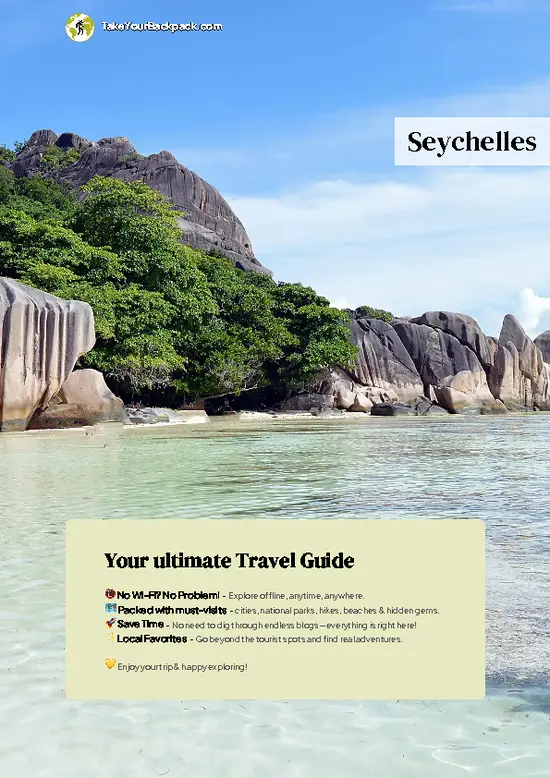
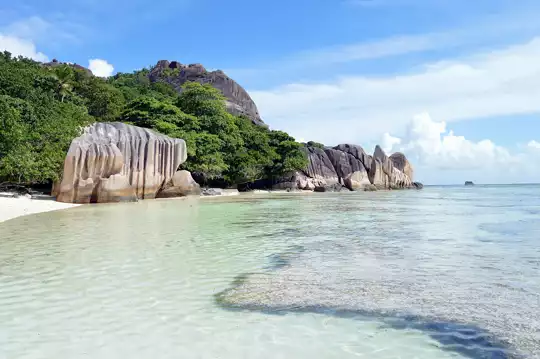
  • Anse Source d’Argent — The iconic beach with pink sand, shallow turquoise pools and the massive granite boulders you’ve seen in photos. It’s on the L’Union Estate and worth the visit early or late to avoid the crowds and actually enjoy the scenery.
  • Giant tortoise enclosure (L’Union Estate) — Real
read more 👉
  • La Passe jetty (ferry terminal) — The island’s real front door: watch the boats, grab a ferry timetable, and soak up the hustle of fishermen, traders and islanders. Great people-watching and the fastest way to orient yourself to La Digue life.
  • L’Union Estate (plantation grounds & house) — A working heritage site: a restored plantation house, old graveyard, vanilla and breadfruit trees and the slow, lived-in feel of colonial-era Seychelles. It’s where history, landscape and local stories meet.
  • Anse Source d’Argent — The iconic beach with pink sand, shallow turquoise pools and the massive granite boulders you’ve seen in photos. It’s on the L’Union Estate and worth the visit early or late to avoid the crowds and actually enjoy the scenery.
  • Giant tortoise enclosure (L’Union Estate) — Real Aldabra giants you can approach on foot. It’s an easy, very photogenic stop that’s also educational about past and present island farming practices.
  • Old copra mill and plantation museum (inside L’Union Estate) — A compact, hands-on look at how copra and vanilla shaped island life. The mill’s machinery and small displays give context to what you’re seeing across the estate.
  • Anse Sévère — The sheltered bay in La Passe: calm water for a quick snorkel, easy swimming, and a fine place to watch sunset fishermen bring in the catch. Very walkable from the village center.
  • La Digue market and main street (La Passe) — Small but alive: bakeries, fruit stalls, fish counters, little cafés and creole eateries. It’s where you’ll notice daily rhythms, sample local snacks, and see how islanders shop and socialize.
  • Veuve Nature Reserve (Black Parrot/Paradise Flycatcher area) — A short walk from the village leads into this tiny reserve where the endemic black paradise flycatcher (locally “veuve”) nests. Good for a quiet nature stop and a real taste of Seychelles’ unique birdlife.
  • La Digue village church — The small Creole church in La Passe is more than architecture: it’s often the social heart of the village, with Sunday services and community events that give a glimpse of island culture and rhythm.
  • La Passe waterfront workshops and boatyards — Walk along the harbor and you’ll see traditional boat-repair yards, small-scale carpentry and fishermen mending nets. It’s not a museum — it’s living craft and local industry, and surprisingly interesting up close.
A few excellent day-trip highlights just outside La Digue are Praslin’s Vallée de Mai and Anse Lazio, the wildlife reserve on Cousin Island, and Curieuse Island (giant tortoises and mangroves) — all easily reached by short boat trips.
Spotted a mistake or missing something? Contact us.

Things to do around La Digue

Ratings based on Tripadvisor reviews. When you book through this link, you support our work at no extra cost to you.

🏘️ NeighborhoodsNeighborhood guide to La Digue

La Digue is a small island where the pace slows to the rhythm of bicycles and waves. Knowing where to base yourself here shapes everything—from how you catch the morning light on granite boulders to whether you can stumble back from a late beach bonfire without a taxi.

La Passe
This is the island’s main hub, where the ferry docks and the few shops, cafes, and guesthouses cluster. It’s lively but low-key—think local chatter, the scent of fresh bread, and the occasional bicycle bell. Perfect if you want easy access to transport and basic amenities. Nightlife is minimal but enough for a casual drink. It’s the go-to for short stays or if you want to be in the thick of things without noise bleeding into your room.

Grand Anse
Stretching along one of the island’s longest beaches, Grand Anse … read more 👉
La Digue is a small island where the pace slows to the rhythm of bicycles and waves. Knowing where to base yourself here shapes everything—from how you catch the morning light on granite boulders to whether you can stumble back from a late beach bonfire without a taxi.

La Passe
This is the island’s main hub, where the ferry docks and the few shops, cafes, and guesthouses cluster. It’s lively but low-key—think local chatter, the scent of fresh bread, and the occasional bicycle bell. Perfect if you want easy access to transport and basic amenities. Nightlife is minimal but enough for a casual drink. It’s the go-to for short stays or if you want to be in the thick of things without noise bleeding into your room.

Grand Anse
Stretching along one of the island’s longest beaches, Grand Anse offers a quieter, more laid-back vibe. It’s a bit farther from the ferry, so expect a 20-minute bike ride or a longer walk. The beach here is expansive and less crowded, ideal for morning swims and sunset reflections. Accommodation tends to be more spread out and budget-friendly, making it a solid choice for longer stays where you want to soak in the island’s slower pulse.

La Réunion
This neighborhood sits inland, away from the coast’s tourist buzz. It’s where you’ll find local markets and a few guesthouses that feel more like home stays. The vibe is authentic and calm, with fewer tourists and more interaction with island life. It’s less walkable to beaches but great if you want to cycle everywhere and experience the island’s everyday rhythms. Best for travelers who want to stretch out their visit and dive deeper into local culture.

Anse Severe
On the northwest tip, Anse Severe is quieter and more remote. The beach here is smaller but charming, with fewer visitors and a slower pace. Transport options are limited, so it’s best if you have your own bike or don’t mind a longer ride to the ferry. This spot suits backpackers who crave solitude and don’t mind sacrificing convenience for a peaceful retreat.

Each area on La Digue offers a distinct flavor. Your choice shapes how you experience the island’s light, sounds, and rhythms—so pick your base with an eye on what kind of island story you want to live.

⌛️ 1 dayA smart one-day plan

La Digue feels like stepping into a postcard, but it’s more than just picture-perfect beaches and granite boulders. The town itself is small, laid-back, and refreshingly unhurried—no cars clutter the streets here, just bicycles and the occasional ox cart clattering by. This quiet rhythm sets the tone for a day that’s about soaking in the island’s unique blend of Creole culture, nature, and slow island life.

Start your morning with a bike ride from the main village, La Passe, where the scent of salt and frangipani hangs in the air. Head east toward Anse Source d’Argent, the beach everyone talks about but for good reason: the early light casts a soft glow on the pink granite rocks, and the water is calm enough for a refreshing dip before the crowds arrive. On your way back, detour through the … read more 👉
La Digue feels like stepping into a postcard, but it’s more than just picture-perfect beaches and granite boulders. The town itself is small, laid-back, and refreshingly unhurried—no cars clutter the streets here, just bicycles and the occasional ox cart clattering by. This quiet rhythm sets the tone for a day that’s about soaking in the island’s unique blend of Creole culture, nature, and slow island life.

Start your morning with a bike ride from the main village, La Passe, where the scent of salt and frangipani hangs in the air. Head east toward Anse Source d’Argent, the beach everyone talks about but for good reason: the early light casts a soft glow on the pink granite rocks, and the water is calm enough for a refreshing dip before the crowds arrive. On your way back, detour through the small neighborhood of La Réunion. It’s often overlooked but worth a stroll—here you’ll find traditional Creole houses with their peeling pastel paint and gardens bursting with tropical blooms. It’s a quiet slice of everyday island life that feels genuine, not staged.

By afternoon, make your way to L’Union Estate, a working plantation that’s part history museum, part nature reserve. The giant tortoises lumbering around are a highlight, but don’t miss the vanilla plantation and the old copra mill. It’s a hands-on way to connect with the island’s past beyond the beach scenes. Afterward, grab a fresh coconut or a plate of grilled fish from a local stall in La Passe, then find a shaded spot near the harbor to watch the fishing boats come in, their nets heavy with the day’s catch.

As the sun dips low, head to the western side of the island, near Grand Anse. It’s less crowded and the waves here have a wild energy that contrasts with the morning’s calm. The light at sunset turns the sand golden and the sea a deep blue, perfect for a reflective walk or just sitting quietly with a cold drink. Dinner back in La Passe offers plenty of Creole flavors—think rich curries and fresh seafood that taste like the island itself. By the end of the day, you’ll have felt the pulse of La Digue—not just its postcard moments, but the slower, richer rhythm that makes it unforgettable.
Turn your La Digue visit into an Seychelles adventure
Build a complete Seychelles route with La Digue, hidden gems, must-see destinations, and realistic travel times included.

Generate my trip

🌤️ When to go?Seasonal considerations and timing


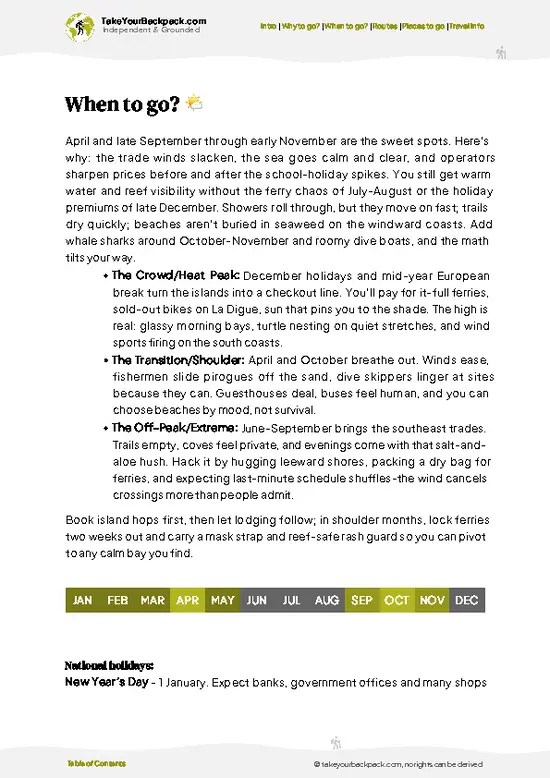
  • Topic: Weather – La Digue’s tropical climate means warm, humid days year-round, but from May to September, the southeast trade winds cool things down to a comfortable 24-28°C (75-82°F). This is your best window to avoid the sticky heat and heavy rains that dominate November to March.

  • Topic: Temperature – Expect highs around 30°C (86°F) in the hot season, with nights rarely dipping below 24°C (75°F). The cooler months bring a gentler warmth that makes hiking and beach time less exhausting.

  • Topic: Daylight Hours – Near the equator, daylight stays steady at about 12 hours year-round, but the sun rises and sets sharply, so plan your outdoor adventures early or late to catch softer light and avoid the midday blaze.

  • Topic: Crowds – Peak tourist season aligns with the dry months (June-August),
read more 👉

  • Topic: Weather – La Digue’s tropical climate means warm, humid days year-round, but from May to September, the southeast trade winds cool things down to a comfortable 24-28°C (75-82°F). This is your best window to avoid the sticky heat and heavy rains that dominate November to March.

  • Topic: Temperature – Expect highs around 30°C (86°F) in the hot season, with nights rarely dipping below 24°C (75°F). The cooler months bring a gentler warmth that makes hiking and beach time less exhausting.

  • Topic: Daylight Hours – Near the equator, daylight stays steady at about 12 hours year-round, but the sun rises and sets sharply, so plan your outdoor adventures early or late to catch softer light and avoid the midday blaze.

  • Topic: Crowds – Peak tourist season aligns with the dry months (June-August), when the island fills with honeymooners and divers. Visiting shoulder months like April or October means quieter beaches and more space to breathe.

  • Topic: Seasonal Activities – Diving and snorkeling thrive in the calmer dry season, while the wet season’s rougher seas limit water sports but bring lush greenery and fewer visitors.

  • Topic: Price Fluctuations – Accommodation and flights spike during the dry season’s peak. Booking in shoulder months can save you a solid 20-30%, letting you stretch your budget without sacrificing the experience.


Pro-tip: Aim for late April or early October—when the island’s pulse slows, the air smells fresher after brief rains, and you get the best balance of weather, solitude, and wallet-friendly rates.


source: climatestotravel.comJANJanuary: fair for travelingFEBFebruary: fair for travelingMARMarch: fair for travelingAPRApril: highly recommended for travelingMAYMay: excellent for travelingJUNJune: excellent for travelingJULJuly: excellent for travelingAUGAugust: excellent for travelingSEPSeptember: excellent for travelingOCTOctober: highly recommended for travelingNOVNovember: fair for travelingDECDecember: fair for traveling
when-to-go

✈️ The backpacker research shortcutSeychelles Travel Guide

An offline-friendly backpacking guide with optimized travel routes, ranked highlights, transport advice, and the best areas to stay.
example page 0 from our offline Travel Guide for Seychelles
example page 1 from our offline Travel Guide for Seychelles
example page 2 from our offline Travel Guide for Seychelles
example page 3 from our offline Travel Guide for Seychelles
example page 4 from our offline Travel Guide for Seychelles
example page 5 from our offline Travel Guide for Seychelles
example page 6 from our offline Travel Guide for Seychelles
example page 7 from our offline Travel Guide for Seychelles
The digital guide (186 pages) contains:
46 highlights, ranked by travel appeal
Optimized 2, 3 & 5-day travel routes
Cities, national parks, landmarks, beaches
How to get around
Offline-friendly for travel without Wi-Fi
👉 Click to see all 30+ guide features

📅 Plan smarter in minutes, not weeks
Month by month travel advice
Festivals & national holidays
Budget expectations

🗺️ Go to the right places, skip the overrated ones
Honest pros & cons of destinations
Top hikes, parks & viewpoints
Lesser-known places most travelers miss
Clear “worth it vs skip it” guidance

🛏️ Travel smoothly without rookie mistakes
Best areas to stay
Transport systems explained simply
Common scams & safety advice
SIM cards, money & practical tips

🌍 Understand the country, not just visit it
Culture & traditions
52 Essential phrases & customs
Festivals worth planning around
Traveler-friendly historical context
Insights that make places more meaningful

📱 Built for real travel conditions
Fully downloadable PDF
Works completely offline
Optimized for phone use
Useful in remote areas & buses
Everything in one place
Save weeks of stressful planning
Get instant access to your full guide. 30‑day money-back guarantee.


By proceeding you agree to our terms.
Sent to your inbox immediately after payment • 100% Secure Checkout
Best Backpacking Travel Advisor 2025 tourism awardBest Backpacking
Travel Advisor
2025
What others say about Take Your Backpack Guides:
⭐⭐⭐⭐⭐
Fantastic, amazing amount of information!
⭐⭐⭐⭐⭐
My goodness this is amazing, it's what I've been looking for hats off too you!
⭐⭐⭐⭐⭐
I think this is absolutely BRILLIANT
⭐⭐⭐⭐
Very complete and informative. It's still missing places, but I gotta to commend you
⭐⭐⭐⭐⭐
This is truly amazing, thank you, can't wait to explore it with my kids!
⭐⭐⭐⭐⭐
Awesome resource, thank you!
⭐⭐⭐⭐⭐
This is amazing! Can't wait to explore the ones I haven't seen
⭐⭐⭐⭐
I love this! Well done, great idea.
⭐⭐⭐⭐⭐
Thanks for taking the time to make this gem!
⭐⭐⭐⭐⭐
This might be the best website I've ever seen.
⭐⭐⭐⭐⭐
Congratulations, and thank you so much for your work; it's incredibly valuable.
⭐⭐⭐⭐
In all seriousness I think you did a great job pointing out the important spots
⭐⭐⭐⭐⭐
10/10 very good
⭐⭐⭐⭐⭐
As someone who's only just starting to visit regularly this is awesome, thank you.
⭐⭐⭐⭐
Thank you very much! I'm going to visit my dad, it's going to be very useful!
⭐⭐⭐⭐⭐
This is really cool! We'll be travelling for the first time and this definitely come in handy.
⭐⭐⭐⭐⭐
You are now our minister of culture, congratulations 👨‍💼
⭐⭐⭐⭐⭐
Just wanted to tell you that this is a pearl! Going to follow your recommendations.
⭐⭐⭐⭐⭐
This is so cool. I'll definitely be using the resource for my travels soon.
⭐⭐⭐⭐⭐
This is very impressive! Good work.
⭐⭐⭐⭐⭐
This is an amazing and informative site. Very well done!

🛏️ Where to stay?Best areas and accommodation options

La Digue’s charm is in its slow pace and raw nature, so where you stay shapes your whole experience. Forget big resorts—they clash with the island’s vibe and hike your budget unnecessarily. Instead, lean into guesthouses and small inns scattered around La Passe, the village hub. These spots put you steps from the ferry and local markets, where the scent of fresh vanilla and grilled fish hangs in the air. Staying here means you’re part of the daily rhythm, not just a visitor.

For backpackers, simplicity is key. Places like Le Repaire Boutique Hotel or Chez Marston offer clean, basic rooms with … read more 👉
La Digue’s charm is in its slow pace and raw nature, so where you stay shapes your whole experience. Forget big resorts—they clash with the island’s vibe and hike your budget unnecessarily. Instead, lean into guesthouses and small inns scattered around La Passe, the village hub. These spots put you steps from the ferry and local markets, where the scent of fresh vanilla and grilled fish hangs in the air. Staying here means you’re part of the daily rhythm, not just a visitor.

For backpackers, simplicity is key. Places like Le Repaire Boutique Hotel or Chez Marston offer clean, basic rooms with fans or simple AC—enough to cool you after a day biking through the sun-dappled trails. The best part? They often include breakfast with tropical fruits and freshly brewed coffee, fueling you for early morning swims or hikes to Anse Source d’Argent.

If you want to stretch your legs and wallet, head a bit inland or toward Grand Anse. Here, lodgings are quieter and cheaper, surrounded by coconut palms and the faint hum of cicadas. You’ll trade proximity for peace, but the payoff is waking to birdsong and the smell of salt on the breeze.

Booking ahead is smart, especially in high season. La Digue’s limited options fill fast, and last-minute scrambling means missing out on the best spots where you can truly soak in the island’s laid-back pulse.

🚌 Getting aroundHow to get from A to B

La Digue moves at its own rhythm—slow, deliberate, and unhurried, like the gentle sway of the coconut palms lining its shores. There’s no rush here, no honking horns or crowded bus stops. Instead, the island’s pulse is set by the creak of bicycle chains, the shuffle of bare feet on sun-warmed sand, and the occasional hum of a small motorboat cutting through turquoise waters. Time feels elastic; mornings stretch lazily into afternoons, and the scent of salt and frangipani hangs thick in the air. This isn’t a place where schedules dominate; it’s a place where intuition guides you, and the journey is as much about soaking in the atmosphere as it is about getting from point A to B. Understanding this flow is your key to moving like a local—easy, efficient, and fully present.


  • Walking: The island’s
read more 👉
La Digue moves at its own rhythm—slow, deliberate, and unhurried, like the gentle sway of the coconut palms lining its shores. There’s no rush here, no honking horns or crowded bus stops. Instead, the island’s pulse is set by the creak of bicycle chains, the shuffle of bare feet on sun-warmed sand, and the occasional hum of a small motorboat cutting through turquoise waters. Time feels elastic; mornings stretch lazily into afternoons, and the scent of salt and frangipani hangs thick in the air. This isn’t a place where schedules dominate; it’s a place where intuition guides you, and the journey is as much about soaking in the atmosphere as it is about getting from point A to B. Understanding this flow is your key to moving like a local—easy, efficient, and fully present.


  • Walking: The island’s compact size makes walking the most straightforward and immersive way to get around. Trails and sandy paths link most points of interest within 20-30 minutes on foot. Walking lets you catch the subtle details—the rough texture of granite boulders, the distant call of seabirds, and the cool shade under tamarind trees. No cost, no schedule, just your pace and the island’s natural soundtrack.


  • Bicycle Rental: Bikes are the backbone of La Digue’s transit system. Rentals run about SCR 150-200 per day (roughly $10-$13 USD), and shops open early, around 7 AM, closing by 6 PM. Bikes offer a perfect balance of speed and freedom, letting you cover the island’s 10 square kilometers in under an hour. The terrain is mostly flat but watch for sandy patches near the beaches that can slow you down. Bring a lock; theft is rare but not unheard of.


  • Ox-Cart Taxi: For a truly local experience, hop on an ox-cart taxi. These lumbering rides cost around SCR 50-100 ($3-$7 USD) depending on distance and are available throughout the day, though less frequent after sunset. They’re slow but charming, perfect for short hops or when you want to soak in the island’s laid-back vibe without pedaling yourself. Expect a gentle creak and the earthy scent of hay and leather.


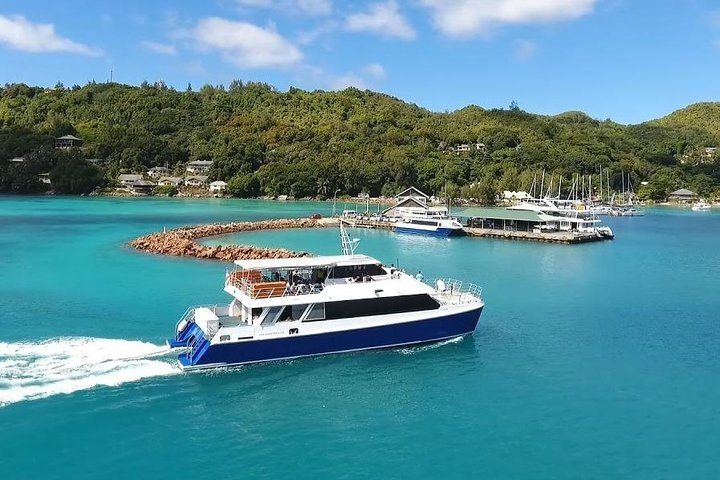
  • Boat Transfers: While not for island-wide travel, boats are essential for connecting La Digue to nearby islands like Praslin and Mahé. Ferries run from early morning (around 7 AM) until late afternoon (about 5 PM), with prices ranging from SCR 150-300 ($10-$20 USD). Booking in advance during high season is smart. The ride offers a refreshing sea breeze and panoramic views, but seas can get choppy—pack a light jacket and prepare for a splash or two.

👛 Costs (as of 16 March 2026)What things cost and how to budget

Backpacking in La Digue, Seychelles, carries a price tag that reflects its island charm and limited infrastructure, but knowing the costs upfront helps you plan smart and savor every moment without surprises.
  • Dorm Accommodation: Dorm beds are scarce on La Digue, but guesthouses and small hostels offer shared rooms starting around €30 to €50 per night. These places are basic but clean, often with a fan rather than air conditioning, which suits the island’s gentle sea breeze.
  • Meals: Eating out leans toward casual local eateries and food stalls where a meal costs between €7 and €15. Fresh seafood and tropical fruits dominate menus, and grabbing a takeaway curry or grilled fish with rice is both affordable and filling. Self-catering is an option if you shop at the small local markets, but expect
read more 👉
Backpacking in La Digue, Seychelles, carries a price tag that reflects its island charm and limited infrastructure, but knowing the costs upfront helps you plan smart and savor every moment without surprises.
  • Dorm Accommodation: Dorm beds are scarce on La Digue, but guesthouses and small hostels offer shared rooms starting around €30 to €50 per night. These places are basic but clean, often with a fan rather than air conditioning, which suits the island’s gentle sea breeze.
  • Meals: Eating out leans toward casual local eateries and food stalls where a meal costs between €7 and €15. Fresh seafood and tropical fruits dominate menus, and grabbing a takeaway curry or grilled fish with rice is both affordable and filling. Self-catering is an option if you shop at the small local markets, but expect prices to be higher than mainland Africa.
  • Local Transport: The island is small, so transport is simple. Renting a bicycle is the go-to choice, costing about €7 to €10 per day. There’s no public bus system, and taxis are rare and expensive, so cycling is not just cheaper but the best way to soak in the salty air and lush greenery.
  • Basic Activities/Entry Fees: Most of La Digue’s charm is free—beaches, hiking trails, and village strolls. Entry fees for places like the Veuve Nature Reserve or Union Estate are minimal, around €2 to €5. Renting snorkeling gear runs about €5 to €10 per day, a must for exploring the vibrant underwater life.
  • Miscellaneous Expenses: Expect to spend €3 to €7 daily on bottled water, snacks, or occasional treats like fresh coconut juice. Internet access is patchy and often comes at a premium in guesthouses, so factor in a small daily cost if staying connected is a priority.

La Digue’s daily budget for a backpacker comfortably ranges from about €55 to €90. This covers the essentials without cutting corners, letting you enjoy the island’s slow pace, pristine beaches, and local flavors without constant worry about overspending.


source: seychelles.travel
⚠️ Prices can change and everyone travels differently, so take this as a rough guide. Hope it helps you plan your adventure!

🚌 Day tripsWhere to go beyond the main area

La Digue is a backpacker’s dream base, offering easy access to some of the most stunning spots in Seychelles. The island’s laid-back vibe and manageable size make day trips a breeze, allowing you to soak in the beauty without the hassle.

Trip to Anse Source d’Argent
This iconic beach is often touted as one of the most photographed in the world, and for good reason. The granite boulders, soft white sand, and turquoise waters create a scene that feels almost surreal. It’s just a 15-minute bike ride from La Digue, and the entrance fee to L’Union Estate is around 115 SCR (about $8). Aim for early morning or late afternoon to dodge the crowds and catch that golden light. A common mistake? Many first-timers rush in without their camera ready. Trust me, you’ll want to capture every angle. 👉 Explore read more 👉
La Digue is a backpacker’s dream base, offering easy access to some of the most stunning spots in Seychelles. The island’s laid-back vibe and manageable size make day trips a breeze, allowing you to soak in the beauty without the hassle.

Trip to Anse Source d’Argent
This iconic beach is often touted as one of the most photographed in the world, and for good reason. The granite boulders, soft white sand, and turquoise waters create a scene that feels almost surreal. It’s just a 15-minute bike ride from La Digue, and the entrance fee to L’Union Estate is around 115 SCR (about $8). Aim for early morning or late afternoon to dodge the crowds and catch that golden light. A common mistake? Many first-timers rush in without their camera ready. Trust me, you’ll want to capture every angle. 👉 Explore La Digue

Trip to Grand Anse
For a more rugged experience, head to Grand Anse. This beach is a bit wilder, with powerful waves that attract surfers and a more secluded feel. It’s about a 30-minute bike ride from La Digue, and the journey itself is part of the adventure, with lush greenery and local wildlife along the way. Bring a picnic; there are no vendors here, and you’ll want to spend a few hours soaking up the sun. The best time to visit is during the dry season, from May to September, when the weather is more predictable. A common pitfall? Forgetting sunscreen; the sun can be relentless. 👉 Explore La Digue

Trip to Île Cocos
A short boat ride from La Digue, Île Cocos is a slice of paradise. This small island is perfect for snorkeling, with vibrant coral reefs teeming with life. The trip typically costs around 1,500 SCR ($100) for a round trip, including gear rental. Plan for a half-day excursion, leaving in the morning to maximize your time in the water. The best months for this adventure are April and October, when the sea is calmest. Many backpackers underestimate the importance of checking tide schedules; low tide can limit your snorkeling spots. 👉 Explore La Digue

Trip to Félicité Island
If you’re feeling adventurous, consider a day trip to Félicité Island. The boat ride takes about 45 minutes, and the cost is around 2,000 SCR ($135) for a round trip. This island offers pristine beaches and excellent hiking trails. The best time to go is during the dry season, when the trails are less muddy. A common mistake is not bringing enough water; it’s easy to get dehydrated while exploring. Make sure to pack snacks and enjoy the breathtaking views from the top of the trails. 👉 Explore La Digue
Want to know what more Seychelles offers?
The Seychelles Travel Guide describes 46 highlights, from cities to national parks, from beaches to hikes

Get the Travel Guide -

🛡️ SafetyStaying Safe: What Travelers Should Know

La Digue moves at a gentle pace, and that calm extends to its safety. You won’t find the usual urban hustle here, so your biggest challenge is staying aware without losing the island’s laid-back rhythm. The main village and beaches are safe during the day, but as dusk falls, lighting thins out quickly. Stick to well-traveled paths after dark—there’s no need to wander alone through dim alleys or quiet streets. Solo travelers blend right in if they carry themselves with quiet confidence; avoid flashing valuables like expensive cameras or jewelry, which can draw unwanted attention in any small community.

Scams are rare, but the occasional overcharge on bike rentals or boat tours pops up. Always agree on prices upfront and confirm what’s included. Vendors are friendly but firm—if something feels … read more 👉
La Digue moves at a gentle pace, and that calm extends to its safety. You won’t find the usual urban hustle here, so your biggest challenge is staying aware without losing the island’s laid-back rhythm. The main village and beaches are safe during the day, but as dusk falls, lighting thins out quickly. Stick to well-traveled paths after dark—there’s no need to wander alone through dim alleys or quiet streets. Solo travelers blend right in if they carry themselves with quiet confidence; avoid flashing valuables like expensive cameras or jewelry, which can draw unwanted attention in any small community.

Scams are rare, but the occasional overcharge on bike rentals or boat tours pops up. Always agree on prices upfront and confirm what’s included. Vendors are friendly but firm—if something feels off, a polite “no, thank you” works better than a debate. The island’s charm is in its simplicity, so keeping your wits about you means you’ll spend less time worrying and more time soaking in the salty breeze and granite shadows.

Other Seychellois towns near La Digue

Explore more nearby:

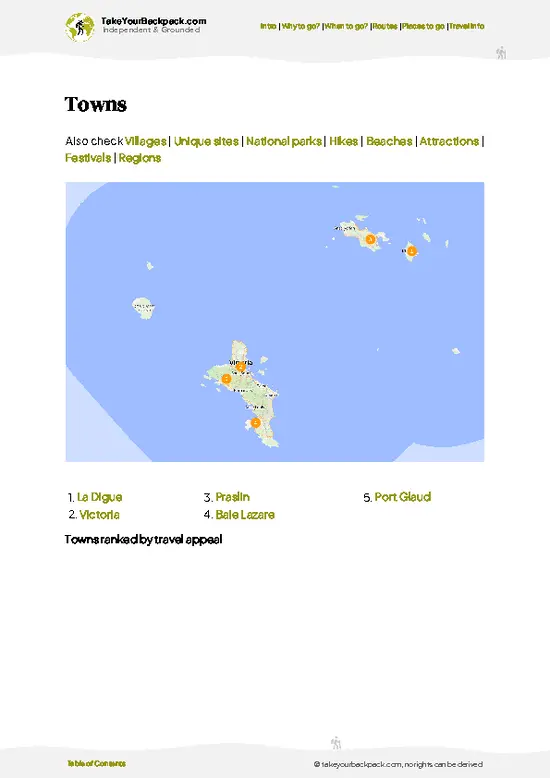
  • Praslin—Vallée de Mai, Anse Lazio, island ferries, laid-back resorts| 11 km away
  • Victoria—clocktower, central market, botanical gardens, administrative center| 52 km away
  • Port Glaud—mangrove inlets, waterfall trails, reef flats, rural settlement| 57 km away

💡 Not sure where to go next?
Create a personalized itinerary for Seychelles including La Digue and the places that fit your trip.

Generate my itinerary

👉 Discover all towns

Or checkout all Seychelles has to offer (think cities, towns, villages, national parks, hikes, beaches, festivals)
Country photo of Seychelles

We 💚 feedbackParting advice and final tips

La Digue has a rhythm all its own. Picture this: the scent of frangipani in the air, the soft crunch of sand beneath your feet, and the gentle sway of palm trees. The best surprise? The local food stalls—try the grilled fish with a squeeze of lime; it’s a flavor explosion. Just a heads-up: bike rentals can run out quickly, so snag one early. Embrace the laid-back vibe, and let the island’s charm wash over you. You’ll leave with a piece of it in your heart.

✍️ Help improve this page!
The information on this page is based on in-depth research, insights shared by experienced travelers, and feedback from the local travel community in Seychelles. While every effort is made to keep the information accurate and current, conditions can change — so if you spot anything incorrect or outdated, please get in touch.


🙋‍♂️ Give feedback

👋 Meet the founderWho’s Behind Take Your Backpack?

Johan, backpacker and founder of TakeYourBackpackHi, I’m Johan (Netherlands 🇳🇱), the creator of TakeYourBackpack. Over the past decade, I’ve backpacked through 80+ countries across six continents, gaining extensive experience with independent travel, long-term trips, and overland routes.

This site is built on a combination of firsthand travel experience and carefully curated insights from other backpackers. Many guides are based on places I’ve personally visited, while others bring together tips, observations, and practical advice shared by trusted travelers I’ve met along the way.

The goal is to provide realistic, experience-driven guidance — not generic itineraries — so you can explore destinations with better context, clearer expectations, and more confidence.

Get full Seychelles guide •
Instant download • 46 highlights • Full Offline guide