Yes, Sint Maarten is one of the easiest places in the Caribbean to travel on your own: English is spoken everywhere, prices are quoted in US dollars and the Dutch side covers only about 34 square kilometers.
The challenge is cost, not logistics. There are very few hostels, so expect US$60 to 150 a night for a guesthouse or small apartment in
Philipsburg or
Simpson Bay, and a realistic budget of US$90 to 150 a day. Minibuses cost around US$2 to 4 a ride, and no stop on the Dutch side is more than 30 to 40 minutes from another. Crossing to the French side at
Grand Case involves no border checks.
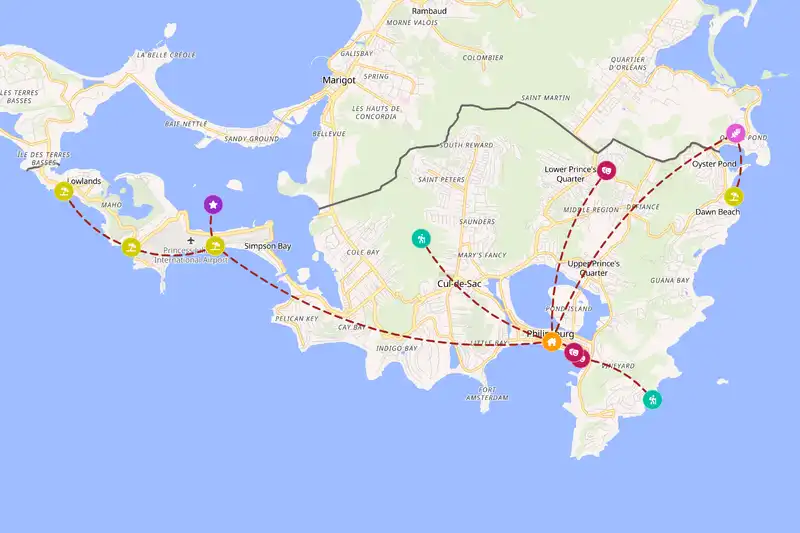
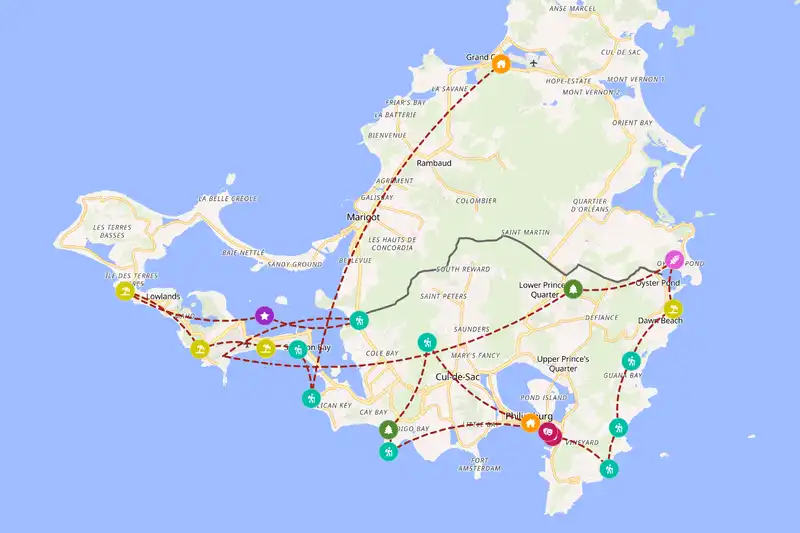
Three to five days is the right amount of time for Sint Maarten; two days covers Philipsburg and the east coast, and five lets you see both sides of the Dutch territory without rushing.
With 2 days, stay in
Philipsburg for
Frontstreet, the
Guana Bay Trail and lunch at
Oyster Pond. With 3 days, base yourself in
Simpson Bay for
Maho Beach, the lagoon and
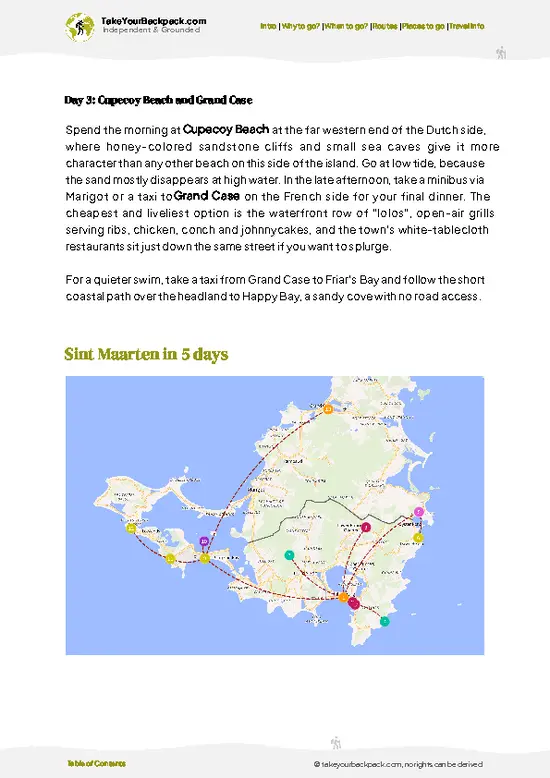
Cupecoy Beach. With 5 days, split 2 nights in Philipsburg and 3 in Simpson Bay and add a hike, a snorkel trip to
Pelican Key and dinner in
Grand Case. Philipsburg to Simpson Bay takes 20 to 40 minutes, depending on traffic.
Yes, you can get around Sint Maarten without a car, because privately run minibuses connect Philipsburg, Cole Bay, Simpson Bay, Maho and the French side from early morning until early evening.
Fares run about US$2 to 4 a ride, and you flag the vans down anywhere along the main roads. Service is frequent on the
Philipsburg to
Simpson Bay and
Maho corridor, and you can reach
Grand Case by changing in Marigot. It thins out after dark and toward
Oyster Pond and
Guana Bay, where a taxi (fixed fares, roughly US$15 to 30 for short hops) fills the gap. Expect traffic jams around Cole Bay at rush hour.
The must-visits in Sint Maarten are Philipsburg’s Frontstreet and Old Street, Maho Beach with its low-flying planes, Simpson Bay Lagoon and the wild east coast around Guana Bay and Oyster Pond.
Walk
Frontstreet after 4 pm, when the cruise crowds leave. Catch the midday wide-body arrivals at
Maho Beach, 5 minutes from
Simpson Bay. Rent a kayak on the
Simpson Bay Lagoon for around US$20 to 30 an hour. Hike the
Guana Bay Trail before 8 am to beat the heat, then take a 10 to 15 minute taxi to
Oyster Pond for lunch. All of these fit into 3 to 4 days, and most are reachable by US$2 to 4 minibus rides.
If you are short on time in Sint Maarten, skip Dawn Beach, the Yoda Guy Movie Exhibit and the Pelican Key boat trip, and keep your hours for Maho, the lagoon and the Guana Bay coast.
Dawn Beach is pleasant but quiet, and the cliff views on the
Guana Bay Trail give you more of the east coast in the same time. The
Yoda Guy Movie Exhibit is a 45-minute stop best kept for film fans or a rainy hour in
Philipsburg. A
Pelican Key snorkel trip takes half a day and costs more than a beach day at
Cupecoy. Skip Frontstreet on a four-ship cruise day until after 4 pm, when the crowds thin out.
Yes, our itinerary-planner does exactly that. Set your trip length in days, give your interests and travel style, optionally give start- and end location and/or some mandatory stops you would like to include and the itinerary planner creates your personalized routes for Sint Maarten in seconds. Try it out!
Try the itinerary plannerv2.webp)


 Best Backpacking