×

Somalia🇸🇴 | national parksLag Badana National Park
coastal forest, Indian Ocean beaches, rare birdlife, mangrove lagoons | things to do and best time to go

Explore Sheikh PassExplore Awdal Region

Backpacking in Lag Badana
🏆 Top picknational park ranked #1
By Johan Kruseman 🇳🇱 | last update: 9 April, 2026

Most guides gloss over this, but here’s the truth: Lag Badana National Park is not a functioning park in the way most backpackers expect—there are no marked trails, no rangers, and no official infrastructure. It sits in southern Somalia, hugging the Indian Ocean near the border with Kenya, and what you’ll find is raw, unfiltered wilderness. The coastline is wild and beautiful, with palm-fringed beaches and mangrove forests, but hiking here is more about bushwhacking than following a trail. Wildlife is present—think monkeys, antelope, and a riot of birds—but don’t expect easy sightings or interpretive signs. Accessibility is a major hurdle; the region’s security situation and lack of public transport mean you’ll need serious local connections and a high tolerance for uncertainty. There are no official entrance fees, but informal payments and negotiations are the norm. Camping is possible if you’re self-sufficient, but don’t count on budget lodges. Compared to the more accessible Daallo Forest or Kismayo National Parks, Lag Badana is wilder, less predictable, and best suited for those who value solitude over comfort. The vibe is untamed, not curated—rewarding for the prepared, punishing for the naïve.

Discover everything you want to know in the 📖 Somalia Travel Guide.
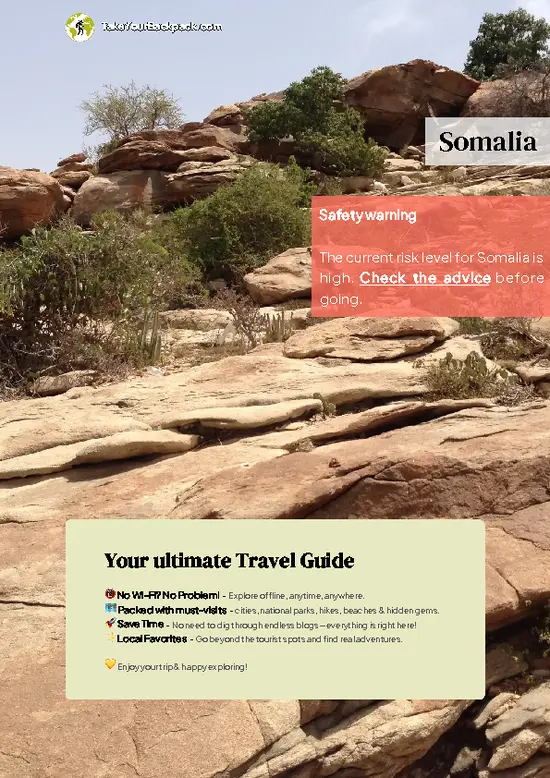
Safety warning

The current risk level for Somalia is high. Check the advice before going.


Get your Somalia Travel Guide
Loading the map 🌍
CLICK TO FILTER
city
town
unique site
national park
hike
beach
attraction
festival
region
SHOW COUNTRY‘S BESTSHOW ALL

✨ Why go?
Ranked #1 national park in Somalia
Why Lag Badana should be on your travel list

Lag Badana National Park in Somalia attracts backpackers for several compelling reasons. First, independent exploration is a major draw. The park’s vast landscapes invite you to wander off the beaten path, allowing for a personal connection with the rugged terrain and diverse wildlife.

Budget-conscious travelers appreciate the camping options available nearby. You can pitch your tent under the stars or find affordable hostels in the surrounding areas, making it easier to stretch your funds. This flexibility means you can allocate more of your budget to experiences that matter, like local cuisine or guided hikes.

The trail variety is another highlight. Whether you’re seeking coastal views or inland adventures, the park offers routes that cater to different skill levels. This diversity makes … read more 👉
Lag Badana National Park in Somalia attracts backpackers for several compelling reasons. First, independent exploration is a major draw. The park’s vast landscapes invite you to wander off the beaten path, allowing for a personal connection with the rugged terrain and diverse wildlife.

Budget-conscious travelers appreciate the camping options available nearby. You can pitch your tent under the stars or find affordable hostels in the surrounding areas, making it easier to stretch your funds. This flexibility means you can allocate more of your budget to experiences that matter, like local cuisine or guided hikes.

The trail variety is another highlight. Whether you’re seeking coastal views or inland adventures, the park offers routes that cater to different skill levels. This diversity makes it suitable for both novice hikers and seasoned trekkers.

For those who prefer a self-guided experience, Lag Badana is ideal. While tours are available, the park’s layout encourages solo exploration. Just be mindful of your surroundings and stay hydrated. With the right preparation, you can enjoy the park’s beauty without the constraints of a guided itinerary.
Get the complete Travel Guide for Somalia
Everything organized for offline planning — routes, highlights, costs & tips

See what’s inside 👉

Get the Travel Guide -
  • Coastal beaches & sea-turtle nesting areas — Long, largely undeveloped beaches where green and hawksbill turtles come ashore to nest. Quiet, natural shorelines make for great low-impact wildlife watching at dawn and dusk (bring a headlamp and keep your distance).
  • Nearshore coral reefs and snorkeling — Fringing reefs off the park harbor colorful reef fish, hard corals and small cleaning stations. Snorkeling here rewards you with easy encounters compared with busier tourist spots—just watch tides and currents.
  • Sand dunes and coastal cliffs — Dramatic dune fields and occasional rocky promontories give sweeping views of the Indian Ocean and big, photogenic sunsets. Great for short, sandy scrambles and sunset hikes if you like wide horizons and wind-sculpted landscapes.
  • Acacia woodlands and
  • read more 👉
  • Coastal beaches & sea-turtle nesting areas — Long, largely undeveloped beaches where green and hawksbill turtles come ashore to nest. Quiet, natural shorelines make for great low-impact wildlife watching at dawn and dusk (bring a headlamp and keep your distance).
  • Nearshore coral reefs and snorkeling — Fringing reefs off the park harbor colorful reef fish, hard corals and small cleaning stations. Snorkeling here rewards you with easy encounters compared with busier tourist spots—just watch tides and currents.
  • Sand dunes and coastal cliffs — Dramatic dune fields and occasional rocky promontories give sweeping views of the Indian Ocean and big, photogenic sunsets. Great for short, sandy scrambles and sunset hikes if you like wide horizons and wind-sculpted landscapes.
  • Acacia woodlands and dry-river wadis — Inland patches of acacia, shrubs and seasonal wadis create a surprisingly varied dryland habitat. These are the best places for short hikes, especially after rains when wildflowers and water pools pop up.
  • Birdwatching hotspots — A mix of resident and migratory species: shorebirds, terns and waders along the coast, plus raptors and bush birds inland. Bring binoculars—you’ll pick up neat seasonal movements that big birding countries usually hog the credit for.
  • Small mammal and antelope sightings — Expect to see small antelopes (like dik-dik and gazelle), troops of baboons and the usual desert adaptors such as jackals. Animals are skittish, so quiet, early-morning walks pay off.
  • Wilderness hiking routes — Unmarked trails and informal routes through dunes, scrub and wadis give a real “off-the-map” feel. Routes aren’t manicured—perfect if you like backcountry navigation, but carry water, a map/GPS and tell someone your plan.
Spotted a mistake or missing something? Contact me.

🌤️ When to go?Choosing the right time of year


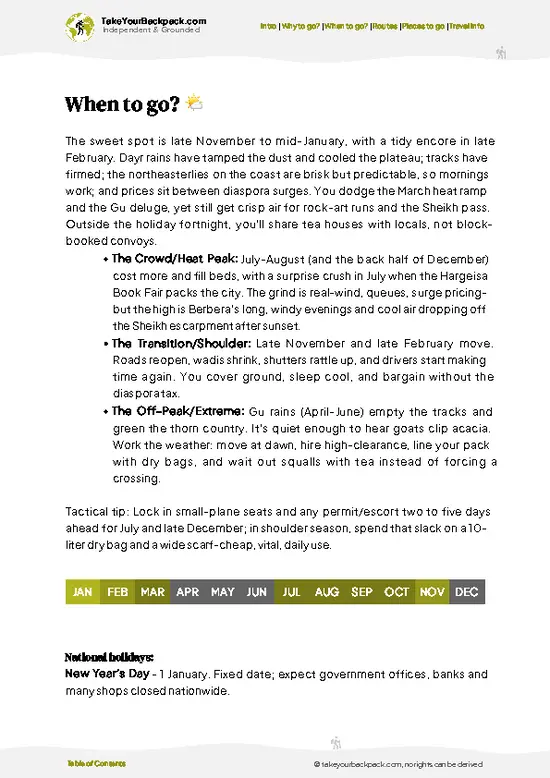
  • Topic: Weather – The best time to visit Lag Badana National Park is during the dry season, roughly from November to March. Expect minimal rain, which means trails are less slippery and wildlife sightings are more predictable. Avoid the heavy rains of April to October, when flooding can make access difficult and uncomfortable.

  • Topic: Temperature – Daytime temperatures during the dry season hover around 25-30°C (77-86°F), which is warm but manageable with proper hydration and sun protection. Nights can cool down to about 15-20°C (59-68°F), so pack layers. The wet season is hotter and more humid, pushing daytime temps above 35°C (95°F), which can drain your energy fast.

  • Topic: Daylight Hours – Somalia’s proximity to the equator means fairly consistent daylight year-round, roughly 11 to
  • read more 👉

  • Topic: Weather – The best time to visit Lag Badana National Park is during the dry season, roughly from November to March. Expect minimal rain, which means trails are less slippery and wildlife sightings are more predictable. Avoid the heavy rains of April to October, when flooding can make access difficult and uncomfortable.

  • Topic: Temperature – Daytime temperatures during the dry season hover around 25-30°C (77-86°F), which is warm but manageable with proper hydration and sun protection. Nights can cool down to about 15-20°C (59-68°F), so pack layers. The wet season is hotter and more humid, pushing daytime temps above 35°C (95°F), which can drain your energy fast.

  • Topic: Daylight Hours – Somalia’s proximity to the equator means fairly consistent daylight year-round, roughly 11 to 12 hours daily. This steadiness helps with planning hikes and activities without worrying about drastic seasonal shifts in daylight.

  • Topic: Crowds – The park sees very few tourists year-round, so crowding is rarely an issue. However, local visitors increase slightly during dry months, especially around holidays. This means quieter trails and campsites outside peak local travel times.

  • Topic: Seasonal Activities – Dry months are ideal for trekking, birdwatching, and coastal exploration. The wet season can limit these activities due to muddy paths and reduced visibility but is better for botanists interested in the park’s flora in bloom.

  • Topic: Price Fluctuations – Prices for guides and accommodations tend to rise modestly during the dry season when access is easier and conditions are favorable. The wet season may offer lower rates but comes with the trade-off of less reliable conditions and potential cancellations.


Pro-tip: Plan your visit for the early dry season (November-December) to catch pleasant weather, fewer local visitors, and better rates before the peak of the dry season pushes prices up.


source: climatestotravel.comJANJanuary: excellent for travelingFEBFebruary: excellent for travelingMARMarch: excellent for travelingAPRApril: fair for travelingMAYMay: below average for travelingJUNJune: below average for travelingJULJuly: below average for travelingAUGAugust: below average for travelingSEPSeptember: fair for travelingOCTOctober: fair for travelingNOVNovember: excellent for travelingDECDecember: highly recommended for traveling
when-to-go

✈️ The ultimate backpacker shortcutSomalia Travel Guide

Skip weeks of research and hit the road with confidence. Get 293 pages of proven routes, transport advice, and real safety insights—built for your phone and 100% offline-ready.
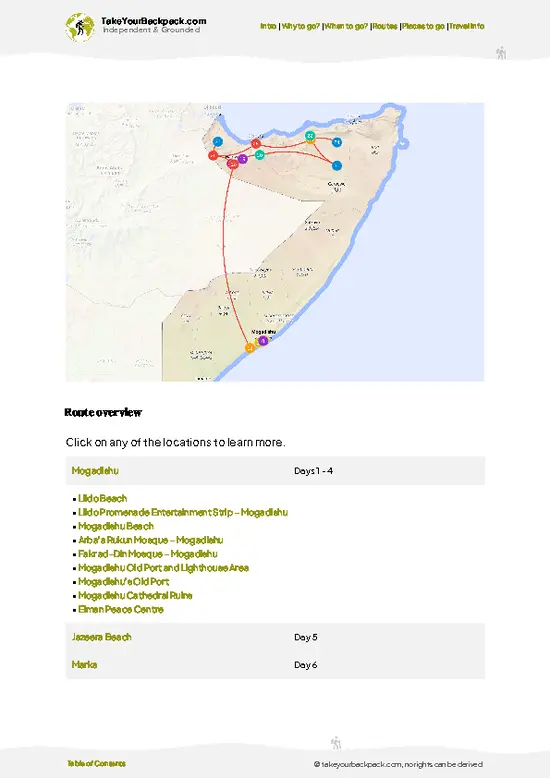
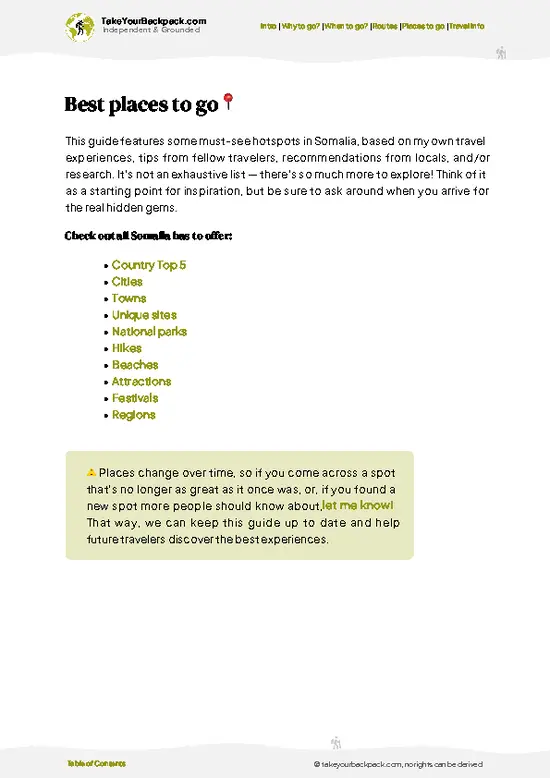
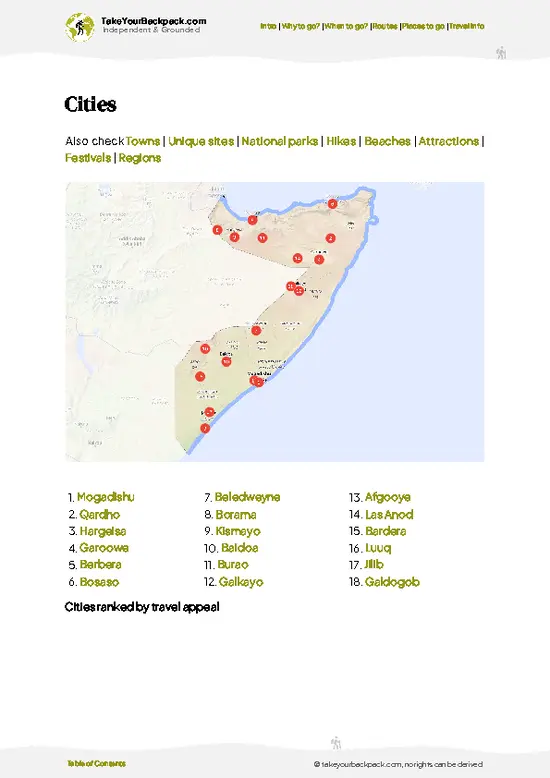
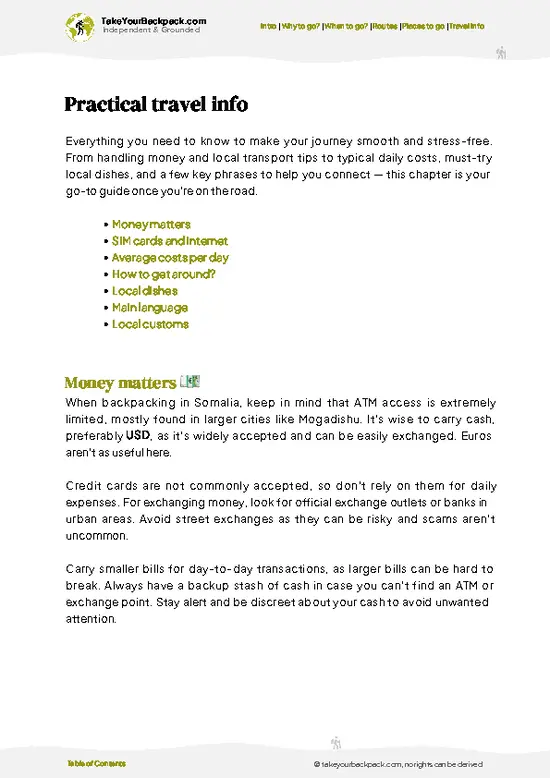
example page 0 from our offline Travel Guide for Somaliaexample page 1 from our offline Travel Guide for Somaliaexample page 2 from our offline Travel Guide for Somaliaexample page 3 from our offline Travel Guide for Somaliaexample page 4 from our offline Travel Guide for Somalia
🎒 Your 293-page offline travel companion
5, 10 & 15-day routes paced for real travel
83 ranked highlights with honest skip-it advice
Logistics solved: Best areas to stay & transport
Safety blueprints: Common local scams to avoid
No Wi-Fi? No problem: Phone-optimized offline PDF
👉 See all 30+ guide features

📅 Plan smarter in minutes, not weeks
Realistic travel times & pacing
Best months per region
Festivals & national holidays
Budget expectations

🗺️ Go to the right places, skip the overrated ones
83 ranked highlights across the country
Hidden gems beyond the tourist trail
Honest pros & cons of destinations
Top hikes, parks & viewpoints
Lesser-known places most travelers miss
Clear “worth it vs skip it” guidance

🛏️ Travel smoothly without rookie mistakes
Best areas to stay
Transport systems explained simply
Local transport tradeoffs
Common scams & safety advice
SIM cards, money & practical tips
What to expect before arrival

🌍 Understand the country, not just visit it
Culture & traditions
52 Essential phrases & customs
Festivals worth planning around
Traveler-friendly historical context
Insights that make places more meaningful

📱 Built for real travel conditions
Fully downloadable PDF
Works completely offline
Optimized for phone use
Useful in remote areas & buses
Everything in one place
Save weeks of stressful planning
Get instant access to the full guide directly. 30-day money-back guarantee.


Sent to your inbox immediately after payment • 100% Secure Checkout
Best Backpacking Travel Advisor 2025 tourism awardBest Backpacking
Travel Advisor
2025
What others say about Take Your Backpack Guides:
⭐⭐⭐⭐⭐
Fantastic, amazing amount of information!
⭐⭐⭐⭐⭐
My goodness this is amazing, it's what I've been looking for hats off too you!
⭐⭐⭐⭐⭐
I think this is absolutely BRILLIANT
⭐⭐⭐⭐
Very complete and informative. It's still missing places, but I gotta to commend you
⭐⭐⭐⭐⭐
This is truly amazing, thank you, can't wait to explore it with my kids!
⭐⭐⭐⭐⭐
Awesome resource, thank you!
⭐⭐⭐⭐⭐
This is amazing! Can't wait to explore the ones I haven't seen
⭐⭐⭐⭐
I love this! Well done, great idea.
⭐⭐⭐⭐⭐
Thanks for taking the time to make this gem!
⭐⭐⭐⭐⭐
This might be the best website I've ever seen.
⭐⭐⭐⭐⭐
Congratulations, and thank you so much for your work; it's incredibly valuable.
⭐⭐⭐⭐
In all seriousness I think you did a great job pointing out the important spots
⭐⭐⭐⭐⭐
10/10 very good
⭐⭐⭐⭐⭐
As someone who's only just starting to visit regularly this is awesome, thank you.
⭐⭐⭐⭐
Thank you very much! I'm going to visit my dad, it's going to be very useful!
⭐⭐⭐⭐⭐
This is really cool! We'll be travelling for the first time and this definitely come in handy.
⭐⭐⭐⭐⭐
You are now our minister of culture, congratulations 👨‍💼
⭐⭐⭐⭐⭐
Just wanted to tell you that this is a pearl! Going to follow your recommendations.
⭐⭐⭐⭐⭐
This is so cool. I'll definitely be using the resource for my travels soon.
⭐⭐⭐⭐⭐
This is very impressive! Good work.
⭐⭐⭐⭐⭐
This is an amazing and informative site. Very well done!

🛏️ Where to stay?How to pick the right area

Lag Badana National Park in Somalia is a wild, rugged beauty, but finding a place to stay can be tricky. There are no established lodges or hotels within the park itself. Instead, your best bet is to base yourself in nearby towns.

Kismayo is the closest city, about an hour’s drive from the park entrance. It offers a few basic hotels and guesthouses. Options like the Kismayo Hotel provide a decent bed and some local flavor, but don’t expect luxury. The town has a few eateries where you can sample Somali cuisine, which is a nice way to fuel up before your adventures.

If you’re looking for something … read more 👉
Lag Badana National Park in Somalia is a wild, rugged beauty, but finding a place to stay can be tricky. There are no established lodges or hotels within the park itself. Instead, your best bet is to base yourself in nearby towns.

Kismayo is the closest city, about an hour’s drive from the park entrance. It offers a few basic hotels and guesthouses. Options like the Kismayo Hotel provide a decent bed and some local flavor, but don’t expect luxury. The town has a few eateries where you can sample Somali cuisine, which is a nice way to fuel up before your adventures.

If you’re looking for something a bit more rustic, consider camping. Just be aware that this requires careful planning. Bring your own gear and check local regulations. Safety is paramount, so connect with local guides who know the area well. They can help you navigate both the park and the logistics of camping.

Keep in mind that transportation can be a challenge. Roads may not be well-maintained, so factor in extra time for travel. This isn’t just about getting from point A to B; it’s about preserving your energy and budget for the experiences that truly matter in this stunning landscape.

👛 Costs (as of 22 March 2026)What things cost and how to budget

Visiting Lag Badana National Park in Somalia requires careful budgeting. Entry fees typically range from €5 to €10 per person. This is a small price for the chance to explore its unique landscapes.

Guided tours are highly recommended for safety and navigation. Expect to pay between €30 and €100 for a full-day tour, depending on the group size and inclusions. Private guides may charge more, but they can offer tailored experiences.

Accommodation options near the park are limited. Basic lodgings start around €15 per night, while more comfortable options can reach €50. Always confirm availability in advance, as options can fill up quickly.

Food costs are generally low. Local meals can be found for €3 to €10. However, be prepared for limited choices, especially in remote areas.

Transportation … read more 👉
Visiting Lag Badana National Park in Somalia requires careful budgeting. Entry fees typically range from €5 to €10 per person. This is a small price for the chance to explore its unique landscapes.

Guided tours are highly recommended for safety and navigation. Expect to pay between €30 and €100 for a full-day tour, depending on the group size and inclusions. Private guides may charge more, but they can offer tailored experiences.

Accommodation options near the park are limited. Basic lodgings start around €15 per night, while more comfortable options can reach €50. Always confirm availability in advance, as options can fill up quickly.

Food costs are generally low. Local meals can be found for €3 to €10. However, be prepared for limited choices, especially in remote areas.

Transportation to the park can be tricky. Hiring a vehicle may cost around €50 to €100 per day, depending on the type and distance. Public transport is less reliable, so plan accordingly.

Factor in additional costs for permits or fees that may arise, especially if you’re planning to camp or engage in specific activities. Always check for the latest requirements before your trip.

Being aware of these costs will help you allocate your budget wisely, ensuring you can focus on the experience rather than financial surprises.
⚠️ Prices can change and everyone travels differently, so take this as a rough guide. Hope it helps you plan your adventure!

🥾 TrailsBest hikes in Lag Badana national park

Lag Badana National Park is a hidden gem in Somalia, offering a unique blend of coastal and mountainous scenery. The terrain varies from rugged hills to sandy beaches, making it a feast for the eyes. You might spot some impressive wildlife, including various bird species and perhaps even a shy gazelle or two. The park isn’t overly crowded, so you can enjoy the tranquility of nature without the hustle and bustle of more popular spots.

One of the standout hikes is the Biyo Kulule Trail. Here are the details:
  • Length: 8 km
  • Estimated Duration: 3-4 hours
  • Difficulty Level: Moderate
  • Key Features: Stunning
  • read more 👉
Lag Badana National Park is a hidden gem in Somalia, offering a unique blend of coastal and mountainous scenery. The terrain varies from rugged hills to sandy beaches, making it a feast for the eyes. You might spot some impressive wildlife, including various bird species and perhaps even a shy gazelle or two. The park isn’t overly crowded, so you can enjoy the tranquility of nature without the hustle and bustle of more popular spots.

One of the standout hikes is the Biyo Kulule Trail. Here are the details:
  • Length: 8 km
  • Estimated Duration: 3-4 hours
  • Difficulty Level: Moderate
  • Key Features: Stunning coastal views, diverse flora, and potential wildlife sightings
  • Terrain: Mix of sandy paths and rocky sections

Getting to the park can be a bit of an adventure in itself. Public transport options are limited, but you can find shared taxis from nearby towns. Just be prepared for a bumpy ride! As for crowds, you’ll likely have the trails mostly to yourself, which is a huge plus. There’s usually no entrance fee, but it’s always good to check local guidelines before heading out. Just pack your essentials, and you’re set for an unforgettable experience!
⚠️ Hiking info can sometimes be outdated or inaccurate. Before you hit the trail, check the latest conditions with locals. If you do spot anything that's off, I'd love to hear from you, so I can update it for fellow travelers.

🛡️ SafetyScams, Hazards, and Annoyances

Lag Badana National Park offers a unique experience, but it’s essential to approach it with a grounded mindset. The weather can shift quickly, especially during the rainy season, so pack a reliable waterproof jacket and be prepared for sudden downpours. The terrain varies; some trails are steep and rocky, requiring good footwear and careful navigation. Pay attention to your footing, especially near river crossings, which can be slippery.

Wildlife encounters are possible, but they’re generally uneventful. If you spot animals, maintain a respectful distance and avoid feeding them. This keeps both you and the wildlife safe.

First-time visitors often underestimate the importance of pacing. Take your time on the trails; rushing can lead to missteps or fatigue. Ensure your gear is lightweight … read more 👉
Lag Badana National Park offers a unique experience, but it’s essential to approach it with a grounded mindset. The weather can shift quickly, especially during the rainy season, so pack a reliable waterproof jacket and be prepared for sudden downpours. The terrain varies; some trails are steep and rocky, requiring good footwear and careful navigation. Pay attention to your footing, especially near river crossings, which can be slippery.

Wildlife encounters are possible, but they’re generally uneventful. If you spot animals, maintain a respectful distance and avoid feeding them. This keeps both you and the wildlife safe.

First-time visitors often underestimate the importance of pacing. Take your time on the trails; rushing can lead to missteps or fatigue. Ensure your gear is lightweight yet durable, as you’ll want to conserve energy for the stunning views that await. Overall, Lag Badana is manageable for most hikers, but preparation is key to enjoying its beauty without unnecessary stress.

Expanding your trip beyond this stop

Lag Badana isn’t the only highlight in Somalia. Explore all what Somalia has to offer.
Country photo of Somalia

I 💚 feedbackKey takeaways before you go

Lag Badana National Park is raw and beautiful, but don’t let the scenery fool you. The vibe is serene, yet the remoteness can catch you off guard. Bring enough water; it’s easy to underestimate the heat. The best surprise? The local wildlife—watch for the elusive Somali wild ass. It’s a thrill to see them in their natural habitat. Embrace the simplicity here, but stay prepared. This place rewards those who respect its wild nature.

✍️ Help improve this page!
The information on this page is based on in-depth research, insights shared by experienced travelers, and feedback from the local travel community in Somalia. While every effort is made to keep the information accurate and current, conditions can change — so if you spot anything incorrect or outdated, please get in touch.


🙋‍♂️ Give feedback

👋 Meet the authorWho’s Behind Take Your Backpack?

Johan, backpacker and founder of TakeYourBackpackHi, I’m Johan (Netherlands 🇳🇱), the creator of TakeYourBackpack. Over the past decade, I’ve backpacked through 80+ countries across six continents, gaining extensive experience with independent travel, long-term trips, and overland routes.

This site is built on a combination of firsthand travel experience and carefully curated insights from other backpackers. Many guides are based on places I’ve personally visited, while others bring together tips, observations, and practical advice shared by trusted travelers I’ve met along the way.

The goal is to provide realistic, experience-driven guidance — not generic itineraries — so you can explore destinations with better context, clearer expectations, and more confidence.

Get Full Country Guide |
Instant download • 83 highlights • Full Offline guide