
×

South Africa🇿🇦 | townsPort St. JohnsWild Coast cliffs, river mouth, backpacker hostels | things to do and best time to go

Explore ParysExplore Bathurst

Backpacking in Port St. Johns
🌟 Highlighttown ranked #8
By Johan Kruseman 🇳🇱 | Updated September 3, 2026

Everyone hears about Port St. Johns for its so-called “Wild Coast paradise”—but the real draw isn’t just the beaches or the dramatic cliffs. What matters more is how the place feels: humid air thick with river scent, the slow pulse of a town that’s more crossroads than destination. Wedged between jungle and ocean in South Africa’s Eastern Cape, Port St. Johns is less a bucket-list stop than a launchpad for barefoot hikes, Xhosa village visits, and lazy afternoons watching the Umzimvubu River. It’s easy to reach by minibus from Mthatha, but you’ll need patience for the winding roads and a sense of humor for the town’s patchy infrastructure. The center is walkable, but most adventures start with a shared taxi or a long stroll. Hostels cluster near the river, making it social but never rowdy—think fireside chats, not wild parties. Costs are low, safety is manageable if you keep your wits, and compared to busier Coffee Bay, Port St. Johns feels more lived-in, less curated, and just a bit rougher around the edges—perfect if you want the Wild Coast with a side of real life.

Discover everything you want to know in the 📖 South Africa Travel Guide.
Loading the map 🌍
CLICK TO FILTER
cities
towns
villages
landmarks
national parks
hikes
beaches
attractions
festivals
regions
SHOW COUNTRY’S BESTSHOW ALL

✨ Why go?
Ranked #8 town in South Africa
Why Port St. Johns should be on your travel list

Port St. Johns is a backpacker’s haven on the Wild Coast, perfectly positioned for hikes and beaches that feel untouched. The small-scale hostels and guesthouses create a cozy vibe, making it easy to connect with fellow travelers. You’ll find walkable streets where the scent of local food wafts through the air, inviting you to try traditional dishes. Most travelers linger a few days, soaking in the friendly atmosphere and exploring nearby trails. It’s ideal for slow travelers and solo adventurers looking for a mix of tranquility and community without the chaos of nightlife.
Want to include Port St. Johns in your South Africa route?
Create a personalized South Africa itinerary that includes Port St. Johns and the places that fit your trip — based on your travel style, budget, and available time. Get your route in seconds.

Generate my trip

💡 HighlightsPlaces and moments you shouldn't skip

  1. Umzimvubu River mouth and estuary — Where the river meets the sea: huge tidal shifts, rich birdlife and a dramatic backdrop for sunset walks or a slow boat trip up the estuary to see storks, kingfishers and the river communities.
  2. Port St. Johns harbour and jetty — A working, photogenic fishing harbour with colourful skiffs, the town’s informal fish market and the launch point for dolphin/whale-watching and estuary trips (seasonal but very real).
  3. Main Street market stalls — The handful of street vendors and small shops along the main drag are where you’ll actually meet makers: beadwork, woven goods, carved curios and honest local chatter over a cup of tea.
  4. Cliff-top lookouts above town — Short, steep walks from town take you to raw cliff edges with sweeping views of the Umzimvubu mouth
read more 👉
  1. Umzimvubu River mouth and estuary — Where the river meets the sea: huge tidal shifts, rich birdlife and a dramatic backdrop for sunset walks or a slow boat trip up the estuary to see storks, kingfishers and the river communities.
  2. Port St. Johns harbour and jetty — A working, photogenic fishing harbour with colourful skiffs, the town’s informal fish market and the launch point for dolphin/whale-watching and estuary trips (seasonal but very real).
  3. Main Street market stalls — The handful of street vendors and small shops along the main drag are where you’ll actually meet makers: beadwork, woven goods, carved curios and honest local chatter over a cup of tea.
  4. Cliff-top lookouts above town — Short, steep walks from town take you to raw cliff edges with sweeping views of the Umzimvubu mouth and the Wild Coast. Great for photos, cliff watching and rough, windy exhilaration.
  5. Riverside walks along the Umzimvubu — Gentle paths and riverbanks inside town where locals fish, children play and you can watch the town’s daily rhythm up close without needing a guide.
  6. Local fish smokehouses and seafood shacks — Small-scale smokehouses and waterfront shacks serve freshly smoked fish and seafood; eating here connects you directly to the town’s livelihoods and flavours.
  7. Community craft corners and co-ops — Modest, often tucked-away stalls and small co-ops run by local women; quieter than tourist hubs but where you find authentic handcrafts and support the local economy.
  8. Tide pools and rocky beaches at the river mouth — Explore safe rock pools at low tide, hunt for small sea life and enjoy a very uncurated Wild Coast shoreline without the crowds.
  9. Informal township walks and village visits (arranged locally) — Short, guided walks into adjacent neighbourhoods let you learn Pondo/Xhosa customs, see everyday life, and visit local homesteads or shebeens if hosts invite you in.
  10. Harbour-based boat trips and short cruises — Daytime launches from the jetty take you into the estuary, up tributaries or along the coast to spot dolphins, birds and secluded beaches — practical, on-the-ground experiences you’ll only get from PSJ’s harbour.
Nearby day-trip highlights include Hluleka Nature Reserve, the secluded beaches and trails of Mkambati Nature Reserve, and the famous Hole-in-the-Wall at Coffee Bay — all doable as full-day excursions from Port St. Johns.
Spotted a mistake or missing something? Contact us.

🏘️ NeighborhoodsWhere things are and how it's laid out

Port St. Johns is a vibrant coastal town that offers a unique blend of natural beauty and local culture, perfect for backpackers seeking adventure and authenticity.

Second Beach: This area buzzes with energy. It’s popular among surfers and beach lovers. Affordable hostels line the shore, making it easy to meet fellow travelers. The nightlife here is lively, with beach bars offering local brews and music. It’s walkable, but be cautious after dark.

First Beach: Quieter and more laid-back, this spot is ideal for those looking to relax. The vibe is chill, with fewer crowds. You’ll find cozy guesthouses and a few eateries. It’s perfect for longer stays, allowing you to soak in the serene atmosphere.

Town Center: The heart of Port St. Johns, this area is bustling with shops and markets. It’s … read more 👉
Port St. Johns is a vibrant coastal town that offers a unique blend of natural beauty and local culture, perfect for backpackers seeking adventure and authenticity.

Second Beach: This area buzzes with energy. It’s popular among surfers and beach lovers. Affordable hostels line the shore, making it easy to meet fellow travelers. The nightlife here is lively, with beach bars offering local brews and music. It’s walkable, but be cautious after dark.

First Beach: Quieter and more laid-back, this spot is ideal for those looking to relax. The vibe is chill, with fewer crowds. You’ll find cozy guesthouses and a few eateries. It’s perfect for longer stays, allowing you to soak in the serene atmosphere.

Town Center: The heart of Port St. Johns, this area is bustling with shops and markets. It’s a great base for transport access to nearby attractions. While not as picturesque, it offers practical amenities and a taste of local life.

⌛️ 1 daySeeing the highlights in 24 hours

Port St. Johns is a slice of South Africa where the Wild Coast meets the Indian Ocean, a place where the air is thick with the scent of salt and adventure. Start your day with a sunrise hike up to the iconic Hole in the Wall. The light filtering through the rock formation creates a magical glow, and the sound of waves crashing below sets the tone for the day.

Afterward, grab breakfast at a local café in the bustling township of Mthatha. The vibe is electric, and the food—think fresh pap and chakalaka—will fuel your next adventure.

In the afternoon, head to the less-trodden paths of the Silaka Nature Reserve. The lush greenery and diverse birdlife offer a serene escape, and you might even spot a bushbuck or two.

As evening falls, stroll along the beach at Second Beach, where the golden … read more 👉
Port St. Johns is a slice of South Africa where the Wild Coast meets the Indian Ocean, a place where the air is thick with the scent of salt and adventure. Start your day with a sunrise hike up to the iconic Hole in the Wall. The light filtering through the rock formation creates a magical glow, and the sound of waves crashing below sets the tone for the day.

Afterward, grab breakfast at a local café in the bustling township of Mthatha. The vibe is electric, and the food—think fresh pap and chakalaka—will fuel your next adventure.

In the afternoon, head to the less-trodden paths of the Silaka Nature Reserve. The lush greenery and diverse birdlife offer a serene escape, and you might even spot a bushbuck or two.

As evening falls, stroll along the beach at Second Beach, where the golden sands meet the vibrant local scene. Grab a meal at a nearby eatery, savoring fresh seafood while listening to the distant sounds of laughter and music. This day in Port St. Johns isn’t just about sights; it’s about feeling the pulse of a community that thrives on connection and nature.
Turn your Port St. Johns visit into an South Africa adventure
Build a complete South Africa route with Port St. Johns, hidden gems, must-see destinations, and realistic travel times included.

Generate my trip

🌤️ When to go?Weather, crowds, and seasonal trade-offs


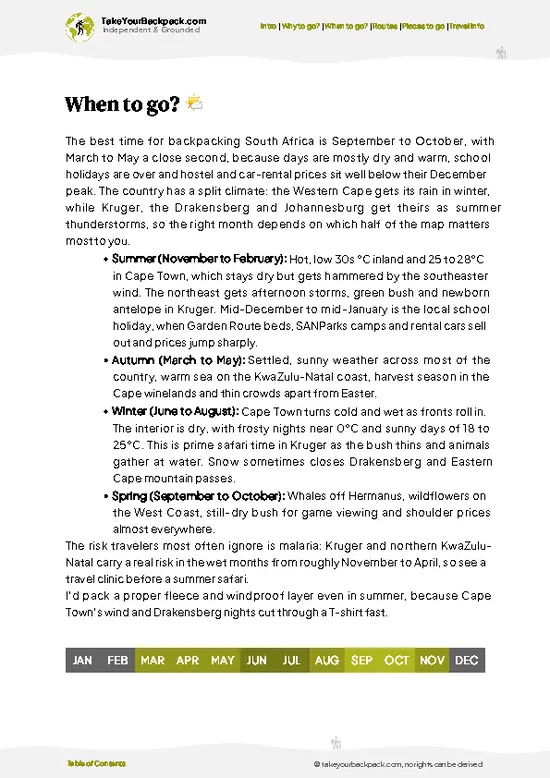
  • Weather: The dry season from May to September offers cooler, crisp air around 18-24°C (64-75°F), perfect for hiking without the sticky heat or sudden downpours that dominate the summer months.

  • Temperature: Summer (October to April) can push highs to 28-32°C (82-90°F), making midday trekking sweaty but rewarding with lush greenery and vibrant river flows.

  • Daylight Hours: Longer days in summer stretch up to 14 hours, giving you more time to explore, while winter days shrink to about 10 hours, urging an early start to catch the light.

  • Crowds: Peak tourist season aligns with South African school holidays (December-January), so expect busier trails and higher prices; off-peak months offer solitude and better deals.

  • Seasonal Activities: Summer invites river rafting and swimming in the
read more 👉

  • Weather: The dry season from May to September offers cooler, crisp air around 18-24°C (64-75°F), perfect for hiking without the sticky heat or sudden downpours that dominate the summer months.

  • Temperature: Summer (October to April) can push highs to 28-32°C (82-90°F), making midday trekking sweaty but rewarding with lush greenery and vibrant river flows.

  • Daylight Hours: Longer days in summer stretch up to 14 hours, giving you more time to explore, while winter days shrink to about 10 hours, urging an early start to catch the light.

  • Crowds: Peak tourist season aligns with South African school holidays (December-January), so expect busier trails and higher prices; off-peak months offer solitude and better deals.

  • Seasonal Activities: Summer invites river rafting and swimming in the Umzimvubu River, while winter is ideal for birdwatching and spotting whales offshore, each season shaping your adventure vibe.

  • Price Fluctuations: Accommodation and tours spike during December holidays; booking in shoulder seasons (April-May or September-October) can save you cash and grant a more relaxed pace.


Pro-tip: Aim for late spring or early autumn—when the air smells fresh, the trails are quiet, and the light softens the rugged coastline into something almost magical.


source: climatestotravel.comJANJanuary: good for travelingFEBFebruary: good for travelingMARMarch: good for travelingAPRApril: highly recommended for travelingMAYMay: excellent for travelingJUNJune: excellent for travelingJULJuly: excellent for travelingAUGAugust: excellent for travelingSEPSeptember: highly recommended for travelingOCTOctober: highly recommended for travelingNOVNovember: good for travelingDECDecember: fair for traveling
when-to-go

✈️ The backpacker research shortcutSouth Africa Travel Guide

An offline-friendly backpacking guide with optimized travel routes, ranked highlights, transport advice, and the best areas to stay.
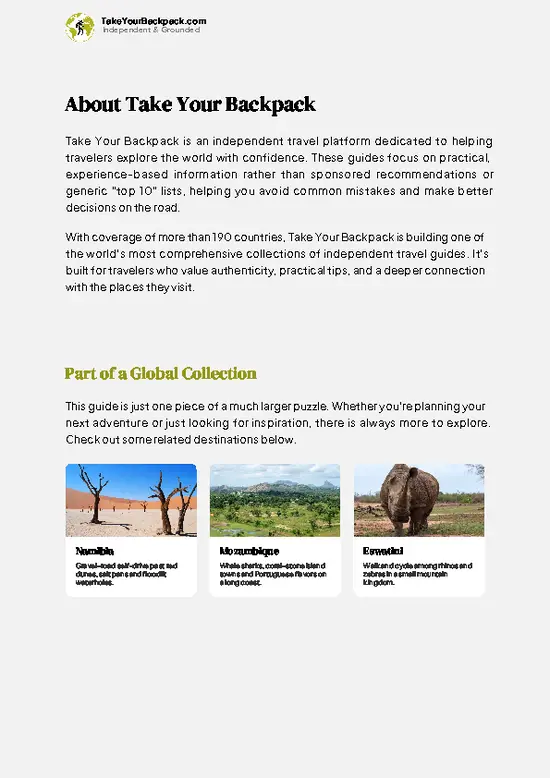
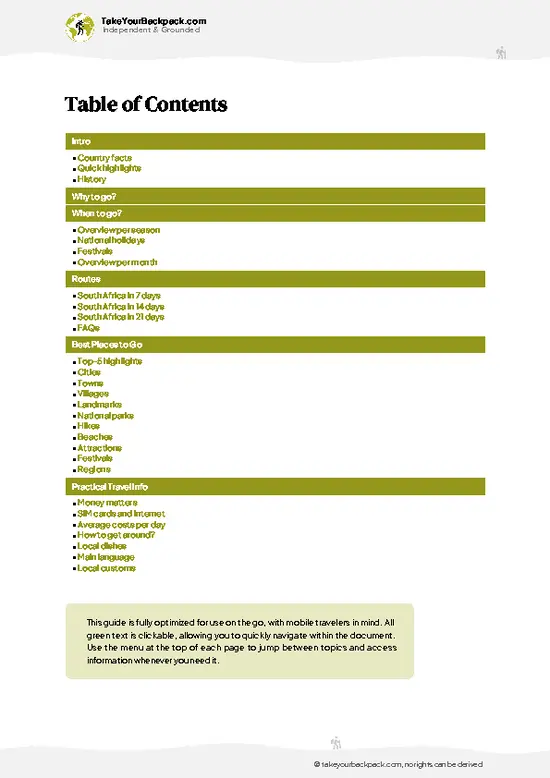
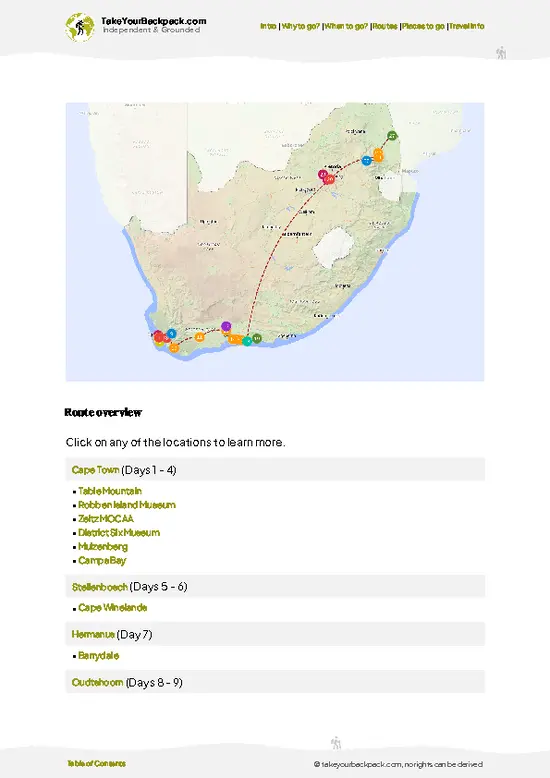
example page 0 from our offline Travel Guide for South Africa
example page 1 from our offline Travel Guide for South Africa
example page 2 from our offline Travel Guide for South Africa
example page 3 from our offline Travel Guide for South Africa
example page 4 from our offline Travel Guide for South Africa
example page 5 from our offline Travel Guide for South Africa
example page 6 from our offline Travel Guide for South Africa
example page 7 from our offline Travel Guide for South Africa
The digital guide (453 pages) contains:
129 highlights, ranked by travel appeal
Optimized 7, 14 & 21-day travel routes
Cities, national parks, landmarks, beaches
How to get around
Offline-friendly for travel without Wi-Fi
👉 Click to see all 30+ guide features

📅 Plan smarter in minutes, not weeks
Month by month travel advice
Festivals & national holidays
Budget expectations

🗺️ Go to the right places, skip the overrated ones
Honest pros & cons of destinations
Top hikes, parks & viewpoints
Lesser-known places most travelers miss
Clear “worth it vs skip it” guidance

🛏️ Travel smoothly without rookie mistakes
Best areas to stay
Transport systems explained simply
Common scams & safety advice
SIM cards, money & practical tips

🌍 Understand the country, not just visit it
Culture & traditions
Local customs
Festivals worth planning around
Traveler-friendly historical context
Insights that make places more meaningful

📱 Built for real travel conditions
Fully downloadable PDF
Works completely offline
Optimized for phone use
Useful in remote areas & buses
Everything in one place
Save weeks of stressful planning
Get instant access to your full guide. 30‑day money-back guarantee.
+ Add another guide for just US$7.80

By proceeding you agree to our terms.
Sent to your inbox immediately after payment • 100% Secure Checkout
Best Backpacking Travel Advisor 2025 tourism awardBest Backpacking
Travel Advisor
2025
What others say about Take Your Backpack Guides:
⭐⭐⭐⭐⭐
Fantastic, amazing amount of information!
⭐⭐⭐⭐⭐
My goodness this is amazing, it's what I've been looking for hats off too you!
⭐⭐⭐⭐⭐
I think this is absolutely BRILLIANT
⭐⭐⭐⭐
Very complete and informative. It's still missing places, but I gotta to commend you
⭐⭐⭐⭐⭐
This is truly amazing, thank you, can't wait to explore it with my kids!
⭐⭐⭐⭐⭐
Awesome resource, thank you!
⭐⭐⭐⭐⭐
This is amazing! Can't wait to explore the ones I haven't seen
⭐⭐⭐⭐
I love this! Well done, great idea.
⭐⭐⭐⭐⭐
Thanks for taking the time to make this gem!
⭐⭐⭐⭐⭐
This might be the best website I've ever seen.
⭐⭐⭐⭐⭐
Congratulations, and thank you so much for your work; it's incredibly valuable.
⭐⭐⭐⭐
In all seriousness I think you did a great job pointing out the important spots
⭐⭐⭐⭐⭐
10/10 very good
⭐⭐⭐⭐⭐
As someone who's only just starting to visit regularly this is awesome, thank you.
⭐⭐⭐⭐
Thank you very much! I'm going to visit my dad, it's going to be very useful!
⭐⭐⭐⭐⭐
This is really cool! We'll be travelling for the first time and this definitely come in handy.
⭐⭐⭐⭐⭐
You are now our minister of culture, congratulations 👨‍💼
⭐⭐⭐⭐⭐
Just wanted to tell you that this is a pearl! Going to follow your recommendations.
⭐⭐⭐⭐⭐
This is so cool. I'll definitely be using the resource for my travels soon.
⭐⭐⭐⭐⭐
This is very impressive! Good work.
⭐⭐⭐⭐⭐
This is an amazing and informative site. Very well done!

🛏️ Where to stay?Best areas and accommodation options

In Port St. Johns, the heart of backpacker life pulses strongest around the town center and the nearby beachfront. This area balances safety with a laid-back vibe, where the salty air mingles with the scent of wood smoke from local fires. It’s where you’ll find the most hostels clustered, making it easy to meet fellow travelers swapping stories over a cold drink. Compared to the quieter, more residential outskirts, staying here means you’re steps from the river mouth and the rugged Wild Coast trails, so you can dive into adventure without long commutes. The streets hum with a casual energy—enough … read more 👉
In Port St. Johns, the heart of backpacker life pulses strongest around the town center and the nearby beachfront. This area balances safety with a laid-back vibe, where the salty air mingles with the scent of wood smoke from local fires. It’s where you’ll find the most hostels clustered, making it easy to meet fellow travelers swapping stories over a cold drink. Compared to the quieter, more residential outskirts, staying here means you’re steps from the river mouth and the rugged Wild Coast trails, so you can dive into adventure without long commutes. The streets hum with a casual energy—enough buzz to feel connected, but never overwhelming. This is where the backpacker spirit thrives, practical and social.

🚌 Getting aroundHow to get around Port St. Johns

Port St. Johns moves at its own rhythm—laid-back but alive with the pulse of the ocean and the chatter of market stalls. Time here isn’t dictated by clocks but by the sun’s slow climb and fall, the smell of salt in the air, and the steady shuffle of locals making their way through the day. Expect a blend of casual spontaneity and practical necessity; buses and taxis don’t run on a tight schedule, but they’re reliable enough if you know when and where to catch them. The town’s compact size means you can feel the sea breeze on your face as you walk, but for longer hauls, a bit of local savvy goes a long way.


  • Walking: The best way to soak in the town’s atmosphere. Most spots are within a 20-minute stroll, letting you catch the scent of the ocean and the hum of daily life without missing a
read more 👉
Port St. Johns moves at its own rhythm—laid-back but alive with the pulse of the ocean and the chatter of market stalls. Time here isn’t dictated by clocks but by the sun’s slow climb and fall, the smell of salt in the air, and the steady shuffle of locals making their way through the day. Expect a blend of casual spontaneity and practical necessity; buses and taxis don’t run on a tight schedule, but they’re reliable enough if you know when and where to catch them. The town’s compact size means you can feel the sea breeze on your face as you walk, but for longer hauls, a bit of local savvy goes a long way.


  • Walking: The best way to soak in the town’s atmosphere. Most spots are within a 20-minute stroll, letting you catch the scent of the ocean and the hum of daily life without missing a beat.

  • Minibus Taxis: The backbone of local transit. They run from early morning (around 5:30 AM) until dusk (about 6 PM), costing just a few rand. Expect a lively, sometimes cramped ride with frequent stops—perfect for budget travelers who want to blend in.

  • Local Buses: Slightly more structured than minibus taxis, these run on set routes connecting Port St. Johns to nearby towns. They’re slower but cheaper, with departures typically every hour during the day.

  • Motorbike Taxis: For quick hops or when you’re pressed for time, these zippy rides dart through traffic and cost a bit more than minibuses. Negotiate the fare upfront and hold tight—this is not for the faint-hearted.

  • Car Rentals: If you want freedom beyond town limits, renting a car is your best bet. Roads can be rough, so a sturdy vehicle is essential. Prices vary, but splitting costs with fellow travelers makes this a smart option for exploring the Wild Coast.

👛 Costs (as of 3 September 2026)Travel costs and budget guide for Port St. Johns

Backpacking in Port St. Johns, South Africa, offers a raw, coastal vibe where the ocean breeze mixes with the scent of wild bush. Knowing the daily costs here helps you plan without surprises and keeps your focus on the rugged beauty outside your door.
  • Dorm Accommodation: Expect to pay around $10 to $15 per night for a bed in a basic backpacker hostel dorm. These places are simple but clean, often with shared bathrooms and a communal kitchen. The vibe is laid-back, perfect for meeting other travelers without breaking the bank.
  • Meals: Local eateries serve hearty, no-frills meals for about $3 to $6. Think fresh fish or a plate of pap and chakalaka. If you cook your own food, groceries can cost roughly $2 to $4 per day, especially if you stick to basics like bread, eggs, and fresh produce from
read more 👉
Backpacking in Port St. Johns, South Africa, offers a raw, coastal vibe where the ocean breeze mixes with the scent of wild bush. Knowing the daily costs here helps you plan without surprises and keeps your focus on the rugged beauty outside your door.
  • Dorm Accommodation: Expect to pay around $10 to $15 per night for a bed in a basic backpacker hostel dorm. These places are simple but clean, often with shared bathrooms and a communal kitchen. The vibe is laid-back, perfect for meeting other travelers without breaking the bank.
  • Meals: Local eateries serve hearty, no-frills meals for about $3 to $6. Think fresh fish or a plate of pap and chakalaka. If you cook your own food, groceries can cost roughly $2 to $4 per day, especially if you stick to basics like bread, eggs, and fresh produce from the market.
  • Local Transport: Minibus taxis are the go-to here, costing about $0.50 to $1 per trip within town or nearby villages. They’re crowded and lively, but cheap and authentic. For longer distances or more comfort, a shared shuttle might run $5 to $10.
  • Basic Activities/Entry Fees: Many natural attractions like beaches and hiking trails are free or ask for a small donation around $1 to $3. Organized tours or cultural experiences can cost $10 to $20, but you can often negotiate or join group tours to keep costs down.
  • Miscellaneous Expenses: Budget around $2 to $5 for essentials like bottled water, snacks, or a local SIM card top-up. Internet cafes or Wi-Fi spots might charge a small fee if your accommodation doesn’t include it.

All told, you’re looking at roughly $20 to $40 per day to cover the essentials without cutting corners. This range keeps you comfortably off the tourist track, soaking in the salty air and the slow rhythm of this coastal town. The modest costs here reflect the simplicity of life, where every rand spent feels like a step closer to the wild edges of South Africa’s Eastern Cape.


source: southafrica.net
⚠️ Prices can change and everyone travels differently, so take this as a rough guide. Hope it helps you plan your adventure!

🚌 Day tripsExploring the surroundings

Port St. Johns is a backpacker’s dream base, offering easy access to stunning landscapes and rich culture. Here are some day trips that will elevate your experience.

Hiking the Wild Coast
The Wild Coast is a rugged stretch of coastline that feels untouched. You’ll hike through lush hills, with the salty breeze whipping through your hair. The trails can take a few hours, so pack snacks and water. Expect to spend around R50 for a local guide, which is worth it to avoid getting lost. The best time to go is during the dry season, from May to September. First-timers often underestimate the terrain; wear sturdy shoes to avoid slips.
👉 Explore Wild Coast

Coffee Bay
Just a short drive away, Coffee Bay is famous for its laid-back vibe and stunning cliffs. The drive takes about an hour, and … read more 👉
Port St. Johns is a backpacker’s dream base, offering easy access to stunning landscapes and rich culture. Here are some day trips that will elevate your experience.

Hiking the Wild Coast
The Wild Coast is a rugged stretch of coastline that feels untouched. You’ll hike through lush hills, with the salty breeze whipping through your hair. The trails can take a few hours, so pack snacks and water. Expect to spend around R50 for a local guide, which is worth it to avoid getting lost. The best time to go is during the dry season, from May to September. First-timers often underestimate the terrain; wear sturdy shoes to avoid slips.
👉 Explore Wild Coast

Coffee Bay
Just a short drive away, Coffee Bay is famous for its laid-back vibe and stunning cliffs. The drive takes about an hour, and you can grab a local taxi for around R100. Once there, enjoy a swim or try the local cuisine at a beachside shack. The best time to visit is during summer, when the ocean is warm. Many overlook the cultural experience; don’t miss the chance to chat with locals about their traditions.
👉 Explore Coffee Bay

Mzimvubu River Cruise
A river cruise on the Mzimvubu offers a serene escape. The trip typically lasts about three hours, and you can find local operators for around R150. The lush banks are alive with bird calls, and you might spot a crocodile sunning itself. Aim for early morning to catch the mist rising off the water. A common mistake is not bringing a camera; the scenery is breathtaking.
Want to know what more South Africa offers?
The South Africa Travel Guide describes 129 highlights, from cities to national parks, from beaches to hikes

Get the Travel Guide -

🛡️ SafetyStaying Safe: What Travelers Should Know

Port St. Johns is generally safe, but a few simple practices can enhance your experience. Stay aware in busier areas like the beachfront, especially during the evening when the vibe shifts. If you’re solo, avoid wandering too far off the beaten path after dark; stick to well-lit streets and populated spots.

Scams are rare, but be cautious of overly friendly locals offering unsolicited help. Trust your instincts—if something feels off, it probably is. Carry your belongings close, and keep your phone handy for navigation. This way, you can soak in the atmosphere without unnecessary distractions.

FAQFrequently asked questions about Port St. Johns

Yes, Port St. Johns is worth visiting for its stunning natural beauty, including the Wild Coast beaches and the Umzimvubu River estuary. It offers a unique blend of cultural experiences and outdoor activities like hiking and fishing, making it more than just a stopover.
You need at least 2 to 3 days in Port St. Johns to explore the main attractions, enjoy the beaches, and take part in activities like boat trips or hiking trails. This allows enough time to relax and experience the local culture without rushing.
No, Port St. Johns is not ideal for a day trip from nearby cities due to its remote location and travel time. It is about 270 km from East London, which takes around 4 to 5 hours by road, making an overnight stay necessary to fully appreciate the area.
⚠️ Things can change over time, so always validate details locally before you go.

Other South African towns near Port St. Johns

Explore more nearby:

  • Underberg—Drakensberg foothills, farm stalls, Sani Pass gateway| 204 km away
  • St. Lucia—wetland park, hippo sightings, boat cruises| 455 km away
  • Graaff-Reinet—Karoo architecture, Camdeboo National Park, valley viewpoints| 478 km away

💡 Not sure where to go next?
Create a personalized itinerary for South Africa including Port St. Johns and the places that fit your trip.

Generate my itinerary

👉 Discover all towns

Or checkout all South Africa has to offer (think cities, towns, villages, national parks, hikes, beaches, festivals)
Country photo of South Africa

We 💚 feedbackIs it worth it?

Port St. Johns is a slice of paradise where the ocean meets lush hills, and the air is thick with the scent of salt and earth. But be ready for a slower pace; amenities can be sparse. Embrace it—this is where the real adventure begins.

✈️ When did I visit South Africa?
I have visited South Africa, before and after my Zimbabwe trip in 2001.

✍️ Help improve this page!
The information on this page is based on my own backpacking experience in South Africa, supplemented with up-to-date research and feedback from other travelers. Travel details can change, so if you notice anything outdated or incomplete, feel free to let me know.


🙋‍♂️ Give feedback

👋 Meet the founderWho’s Behind Take Your Backpack?

Johan, backpacker and founder of TakeYourBackpackHi, I’m Johan (Netherlands 🇳🇱), the creator of TakeYourBackpack. Over the past decade, I’ve backpacked through 80+ countries across six continents, gaining extensive experience with independent travel, long-term trips, and overland routes.

This site is built on a combination of firsthand travel experience and carefully curated insights from other backpackers. Many guides are based on places I’ve personally visited, while others bring together tips, observations, and practical advice shared by trusted travelers I’ve met along the way.

The goal is to provide realistic, experience-driven guidance — not generic itineraries — so you can explore destinations with better context, clearer expectations, and more confidence.

Get full country guide •
Instant download • 129 highlights • Full Offline guide