×

South Africa🇿🇦 | townsSabiewaterfalls, pine plantations, mountain biking | things to do and best time to go

Explore Pilgrim’s RestExplore Underberg

Backpacking in Sabie
🌟 Highlighttown ranked #10
By Johan Kruseman 🇳🇱 | Updated September 3, 2026

Everyone hears about Sabie’s waterfalls—those Instagrammed veils of water—but the real reason to come is the air itself: pine-sweet, cool, and edged with woodsmoke at dusk. Sabie sits in Mpumalanga’s highlands, a few hours’ drive from Johannesburg, and it’s less a destination than a launchpad. The town is compact, friendly, and honest about its lumber-town roots. It’s not a nightlife hub, but you’ll find hostels with fire pits and travelers swapping trail tips. It’s cheaper and calmer than touristy Graskop, with easier access to forest hikes and the Panorama Route. Buses reach town, but you’ll want wheels for the best trails. Safety is decent by South African standards—just keep your wits at night. Sabie is for those who’d rather earn their view than buy it.

Discover everything you want to know in the 📖 South Africa Travel Guide.
Loading the map 🌍
CLICK TO FILTER
cities
towns
villages
landmarks
national parks
hikes
beaches
attractions
festivals
regions
SHOW COUNTRY’S BESTSHOW ALL

✨ Why go?
Ranked #10 town in South Africa
Why Sabie should be on your travel list

Backpackers flock to Sabie for its convenience as a gateway to stunning hikes in the Drakensberg and nearby waterfalls. The walkable streets invite exploration, with cozy hostels and guesthouses offering a friendly vibe perfect for solo travelers or small groups. You can savor local dishes at family-run eateries, where the aroma of grilled meats fills the air. Most travelers linger a few days, soaking in the laid-back atmosphere and connecting with fellow adventurers. It’s not a party town; instead, it’s a place where the scenery and community make every moment feel worthwhile.
Want to include Sabie in your South Africa route?
Create a personalized South Africa itinerary that includes Sabie and the places that fit your trip — based on your travel style, budget, and available time. Get your route in seconds.

Generate my trip

💡 HighlightsWhat this place is best known for

  • Lone Creek Falls — A short, well-built boardwalk leads to a lovely curtain of water and a shaded picnic spot; great for a quick stop, photos and a brisk stretch after a drive.
  • Bridal Veil Falls — Right on the edge of town, this easily accessible fall spills into a ferny gorge; you can park, wander to the viewing points and feel the spray without a long hike.
  • Sabie Falls / Sabie River cascades — The town sits on the Sabie River, and the series of small rapids and pools through town are perfect for riverside strolls, birdwatching and informal swims in summer.
  • Sabie Waterfall Trail (town loop) — A network of short footpaths linking several small falls and viewpoints within and just outside the town limits; ideal if you want waterfall-hopping in a single morning.
  • Sabie Heritage/Forestry
read more 👉
  • Lone Creek Falls — A short, well-built boardwalk leads to a lovely curtain of water and a shaded picnic spot; great for a quick stop, photos and a brisk stretch after a drive.
  • Bridal Veil Falls — Right on the edge of town, this easily accessible fall spills into a ferny gorge; you can park, wander to the viewing points and feel the spray without a long hike.
  • Sabie Falls / Sabie River cascades — The town sits on the Sabie River, and the series of small rapids and pools through town are perfect for riverside strolls, birdwatching and informal swims in summer.
  • Sabie Waterfall Trail (town loop) — A network of short footpaths linking several small falls and viewpoints within and just outside the town limits; ideal if you want waterfall-hopping in a single morning.
  • Sabie Heritage/Forestry Museum & Visitor Centre — Small but worthwhile for the town’s logging history, old photos, maps and local stories that explain why Sabie exists and how forestry shaped it.
  • Local wood-carving workshops and craft shops — Sabie’s timber culture shows up in honest, hand-made carvings and galleries down the main streets; watching a carver at work gives real local flavour.
  • Sabie town lookout / riverside picnic spots — Scattered benches, small viewpoints and picnic lawns give instant panoramas of the river valley and plantations — simple, free and very Sabie.
  • Steam-era relics and railway memorabilia — Scattered displays and plaques in town mark the old forestry rail routes; the relics give a tangible sense of the timber era that built Sabie.
  • Trailheads for hiking and mountain-biking — Sabie is a hub for short to medium trails starting right in town: you can hit singletrack or forest walks without needing a long transfer.
  • The Saturday market and local cafés — If your timing’s right, the market and the cluster of family-run cafés are where you sample local jams, pies, coffees and meet the characters who actually live and work here.
A few excellent day-trip highlights just outside Sabie are Mac Mac Falls, the historic mining village of Pilgrim’s Rest and the Panorama Route attractions (Blyde River Canyon / Bourke’s Luck Potholes and God’s Window).
Spotted a mistake or missing something? Contact us.

Things to do near Sabie

Ratings based on Tripadvisor reviews. When you book through this link, you support our work at no extra cost to you.

🏘️ NeighborhoodsHow different areas shape the experience

Sabie is a charming town that serves as a gateway to the stunning landscapes of South Africa’s Mpumalanga province. Here’s how to navigate its neighborhoods:

Town Center: This is the heartbeat of Sabie. You’ll find budget-friendly hostels and eateries. The vibe is lively, especially in the evenings when locals gather. Walkability is excellent, making it easy to explore shops and cafes. Perfect for short stays.

Sabie River Area: A tranquil escape along the river, ideal for those seeking peace. The lush surroundings offer a refreshing scent of pine. Accommodations here are slightly pricier but worth it for the views. Great for longer stays, with easy access to hiking trails.

Graskop Road: A quieter stretch with a mix of guesthouses and backpacker lodges. It’s a bit removed from the nightlife, … read more 👉
Sabie is a charming town that serves as a gateway to the stunning landscapes of South Africa’s Mpumalanga province. Here’s how to navigate its neighborhoods:

Town Center: This is the heartbeat of Sabie. You’ll find budget-friendly hostels and eateries. The vibe is lively, especially in the evenings when locals gather. Walkability is excellent, making it easy to explore shops and cafes. Perfect for short stays.

Sabie River Area: A tranquil escape along the river, ideal for those seeking peace. The lush surroundings offer a refreshing scent of pine. Accommodations here are slightly pricier but worth it for the views. Great for longer stays, with easy access to hiking trails.

Graskop Road: A quieter stretch with a mix of guesthouses and backpacker lodges. It’s a bit removed from the nightlife, making it suitable for those who prefer a restful atmosphere. Transport links to nearby attractions are solid, making it a practical base for day trips.

⌛️ 1 dayHow to make the most of one day

Sabie, South Africa, is a charming town nestled in the lush Mpumalanga province, known for its stunning waterfalls and proximity to the Blyde River Canyon. The air here carries a hint of pine and earth, inviting you to explore.

Start your morning with a hearty breakfast at the local favorite, The Wilds, where the aroma of freshly brewed coffee mingles with the scent of warm pastries. After fueling up, head to the nearby Mac Mac Falls. The sound of rushing water fills the air as you take in the breathtaking views—this spot is often overlooked by tourists, but it’s a must-see.

In the afternoon, wander through the quaint streets of Sabie, stopping by the local craft shops. Don’t miss the Sabie River, where you can dip your toes in the cool water. For a unique experience, visit the Sabie Brewing … read more 👉
Sabie, South Africa, is a charming town nestled in the lush Mpumalanga province, known for its stunning waterfalls and proximity to the Blyde River Canyon. The air here carries a hint of pine and earth, inviting you to explore.

Start your morning with a hearty breakfast at the local favorite, The Wilds, where the aroma of freshly brewed coffee mingles with the scent of warm pastries. After fueling up, head to the nearby Mac Mac Falls. The sound of rushing water fills the air as you take in the breathtaking views—this spot is often overlooked by tourists, but it’s a must-see.

In the afternoon, wander through the quaint streets of Sabie, stopping by the local craft shops. Don’t miss the Sabie River, where you can dip your toes in the cool water. For a unique experience, visit the Sabie Brewing Company, where you can sample locally crafted beers while soaking in the laid-back vibe.

As evening approaches, grab dinner at The Sportsman’s Pub, where you can enjoy hearty meals and chat with friendly locals. The warm glow of the setting sun casts a golden hue over the town, wrapping up your day with a sense of connection and adventure.
Turn your Sabie visit into an South Africa adventure
Build a complete South Africa route with Sabie, hidden gems, must-see destinations, and realistic travel times included.

Generate my trip

🌤️ When to go?When to go for the best experience


  • Weather: Sabie’s best weather hits between April and September, when the dry season keeps trails clear and the air crisp. Expect daytime highs around 20-25°C (68-77°F), perfect for hiking without overheating or mud.

  • Temperature: Nights can dip to 5-10°C (41-50°F) in winter, so pack layers. Summers (October-March) bring 25-30°C (77-86°F) but also afternoon thunderstorms that can flood paths and dampen plans.

  • Daylight Hours: Winter days are shorter, with about 10 hours of light—enough for solid treks but less wiggle room for late starts. Summer stretches to 13-14 hours, ideal for long explorations.

  • Crowds: Peak season aligns with South African school holidays (July and December), swelling visitor numbers. For a quieter vibe, aim for shoulder months like May or September.

  • Seasonal
read more 👉

  • Weather: Sabie’s best weather hits between April and September, when the dry season keeps trails clear and the air crisp. Expect daytime highs around 20-25°C (68-77°F), perfect for hiking without overheating or mud.

  • Temperature: Nights can dip to 5-10°C (41-50°F) in winter, so pack layers. Summers (October-March) bring 25-30°C (77-86°F) but also afternoon thunderstorms that can flood paths and dampen plans.

  • Daylight Hours: Winter days are shorter, with about 10 hours of light—enough for solid treks but less wiggle room for late starts. Summer stretches to 13-14 hours, ideal for long explorations.

  • Crowds: Peak season aligns with South African school holidays (July and December), swelling visitor numbers. For a quieter vibe, aim for shoulder months like May or September.

  • Seasonal Activities: Autumn and winter bring clearer skies for stargazing and better wildlife spotting as animals gather near water sources. Summer’s lush greenery is beautiful but can hide trails and insects.

  • Price Fluctuations: Accommodation and tours spike during school holidays and festive seasons. Booking in shoulder seasons often nets better rates and more flexible options.


Pro-tip: Visit Sabie in late August or early September to catch dry trails, mild temperatures, and fewer crowds—perfect for soaking in the waterfalls without the rush.


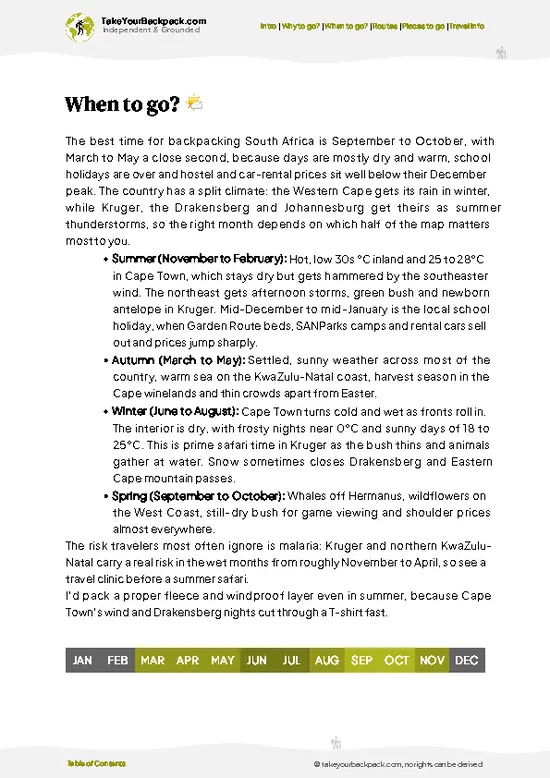
source: climatestotravel.comJANJanuary: fair for travelingFEBFebruary: fair for travelingMARMarch: good for travelingAPRApril: highly recommended for travelingMAYMay: highly recommended for travelingJUNJune: excellent for travelingJULJuly: highly recommended for travelingAUGAugust: excellent for travelingSEPSeptember: excellent for travelingOCTOctober: good for travelingNOVNovember: fair for travelingDECDecember: good for traveling
when-to-go

✈️ The backpacker research shortcutSouth Africa Travel Guide

An offline-friendly backpacking guide with optimized travel routes, ranked highlights, transport advice, and the best areas to stay.
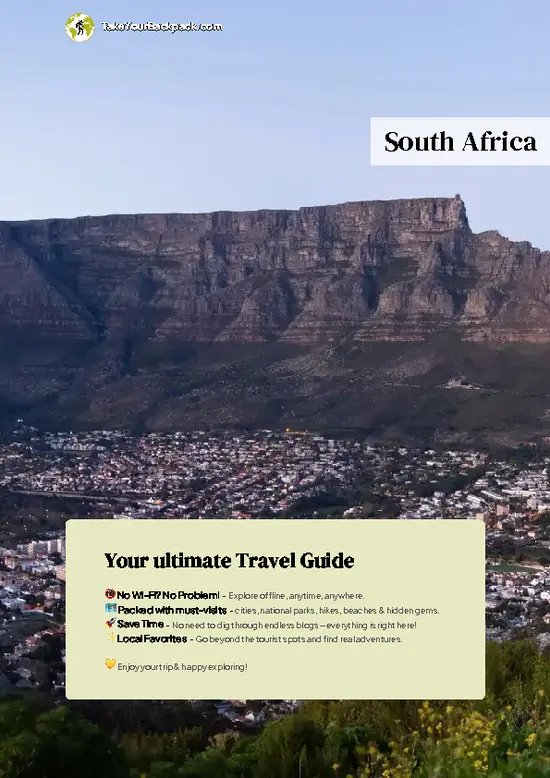
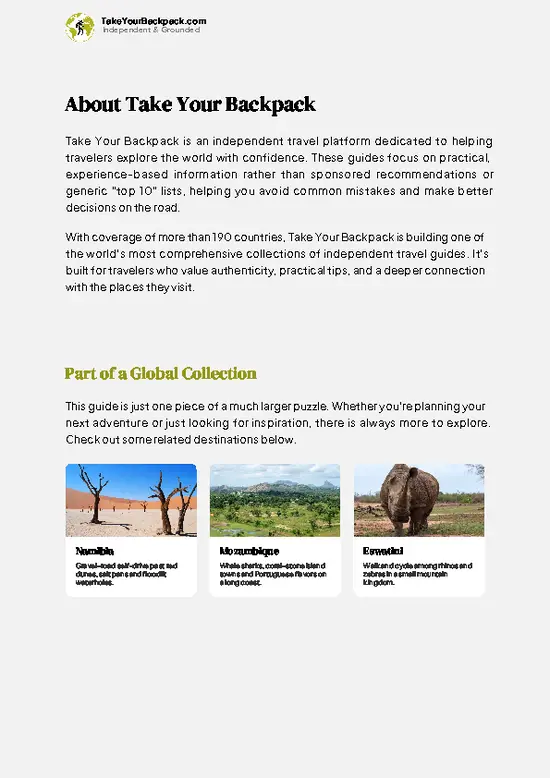
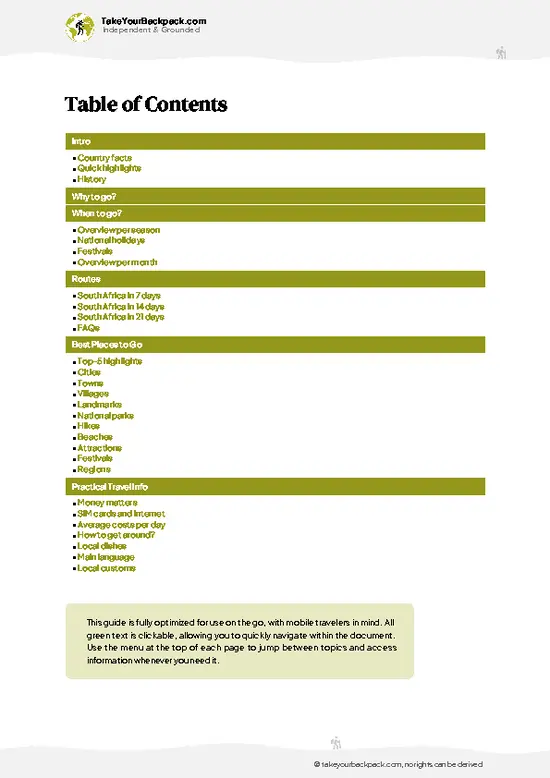
example page 0 from our offline Travel Guide for South Africa
example page 1 from our offline Travel Guide for South Africa
example page 2 from our offline Travel Guide for South Africa
example page 3 from our offline Travel Guide for South Africa
example page 4 from our offline Travel Guide for South Africa
example page 5 from our offline Travel Guide for South Africa
example page 6 from our offline Travel Guide for South Africa
example page 7 from our offline Travel Guide for South Africa
The digital guide (453 pages) contains:
129 highlights, ranked by travel appeal
Optimized 7, 14 & 21-day travel routes
Cities, national parks, landmarks, beaches
How to get around
Offline-friendly for travel without Wi-Fi
👉 Click to see all 30+ guide features

📅 Plan smarter in minutes, not weeks
Month by month travel advice
Festivals & national holidays
Budget expectations

🗺️ Go to the right places, skip the overrated ones
Honest pros & cons of destinations
Top hikes, parks & viewpoints
Lesser-known places most travelers miss
Clear “worth it vs skip it” guidance

🛏️ Travel smoothly without rookie mistakes
Best areas to stay
Transport systems explained simply
Common scams & safety advice
SIM cards, money & practical tips

🌍 Understand the country, not just visit it
Culture & traditions
Local customs
Festivals worth planning around
Traveler-friendly historical context
Insights that make places more meaningful

📱 Built for real travel conditions
Fully downloadable PDF
Works completely offline
Optimized for phone use
Useful in remote areas & buses
Everything in one place
Save weeks of stressful planning
Get instant access to your full guide. 30‑day money-back guarantee.
+ Add another guide for just US$7.80

By proceeding you agree to our terms.
Sent to your inbox immediately after payment • 100% Secure Checkout
Best Backpacking Travel Advisor 2025 tourism awardBest Backpacking
Travel Advisor
2025
What others say about Take Your Backpack Guides:
⭐⭐⭐⭐⭐
Fantastic, amazing amount of information!
⭐⭐⭐⭐⭐
My goodness this is amazing, it's what I've been looking for hats off too you!
⭐⭐⭐⭐⭐
I think this is absolutely BRILLIANT
⭐⭐⭐⭐
Very complete and informative. It's still missing places, but I gotta to commend you
⭐⭐⭐⭐⭐
This is truly amazing, thank you, can't wait to explore it with my kids!
⭐⭐⭐⭐⭐
Awesome resource, thank you!
⭐⭐⭐⭐⭐
This is amazing! Can't wait to explore the ones I haven't seen
⭐⭐⭐⭐
I love this! Well done, great idea.
⭐⭐⭐⭐⭐
Thanks for taking the time to make this gem!
⭐⭐⭐⭐⭐
This might be the best website I've ever seen.
⭐⭐⭐⭐⭐
Congratulations, and thank you so much for your work; it's incredibly valuable.
⭐⭐⭐⭐
In all seriousness I think you did a great job pointing out the important spots
⭐⭐⭐⭐⭐
10/10 very good
⭐⭐⭐⭐⭐
As someone who's only just starting to visit regularly this is awesome, thank you.
⭐⭐⭐⭐
Thank you very much! I'm going to visit my dad, it's going to be very useful!
⭐⭐⭐⭐⭐
This is really cool! We'll be travelling for the first time and this definitely come in handy.
⭐⭐⭐⭐⭐
You are now our minister of culture, congratulations 👨‍💼
⭐⭐⭐⭐⭐
Just wanted to tell you that this is a pearl! Going to follow your recommendations.
⭐⭐⭐⭐⭐
This is so cool. I'll definitely be using the resource for my travels soon.
⭐⭐⭐⭐⭐
This is very impressive! Good work.
⭐⭐⭐⭐⭐
This is an amazing and informative site. Very well done!

🛏️ Where to stay?Best areas to stay in South Africa

Sabie’s heart for backpackers beats strongest around the town center and the nearby Sabie River area. This zone is where the pulse of local life meets the ease of social hangouts. Staying here means you’re steps from lively communal spaces where travelers swap stories over fire pits, and the scent of wood smoke mingles with fresh pine from the surrounding forests. It’s safe, with a friendly, small-town vibe that feels like a warm invitation rather than a tourist trap. Hostels cluster here, offering budget-friendly beds and a built-in social scene that’s perfect for solo adventurers craving connection … read more 👉
Sabie’s heart for backpackers beats strongest around the town center and the nearby Sabie River area. This zone is where the pulse of local life meets the ease of social hangouts. Staying here means you’re steps from lively communal spaces where travelers swap stories over fire pits, and the scent of wood smoke mingles with fresh pine from the surrounding forests. It’s safe, with a friendly, small-town vibe that feels like a warm invitation rather than a tourist trap. Hostels cluster here, offering budget-friendly beds and a built-in social scene that’s perfect for solo adventurers craving connection without the hassle of long commutes. Compared to quieter, more residential outskirts, this area keeps you plugged into Sabie’s rhythm—day and night.

🚌 Getting aroundTransportation options and practical tips

Sabie moves at the pace of the forest around it—unhurried but deliberate. The air carries the scent of pine and damp earth, and the town’s rhythm is less about strict timetables and more about catching the right moment. Locals know when the minibus will rattle down the gravel roads, but it’s not a clock you can set your watch by. Instead, you learn to read the flow: the morning light filtering through eucalyptus leaves signals the start of market bustle, while late afternoon brings a quieter, reflective calm. This isn’t a place for rigid schedules; it’s a place to sync with nature’s pulse and the easygoing hum of small-town life.


  • Walking: Sabie’s compact center is best explored on foot. The trails and streets are dirt or gravel, so sturdy shoes are a must. Walking lets you soak in the
read more 👉
Sabie moves at the pace of the forest around it—unhurried but deliberate. The air carries the scent of pine and damp earth, and the town’s rhythm is less about strict timetables and more about catching the right moment. Locals know when the minibus will rattle down the gravel roads, but it’s not a clock you can set your watch by. Instead, you learn to read the flow: the morning light filtering through eucalyptus leaves signals the start of market bustle, while late afternoon brings a quieter, reflective calm. This isn’t a place for rigid schedules; it’s a place to sync with nature’s pulse and the easygoing hum of small-town life.


  • Walking: Sabie’s compact center is best explored on foot. The trails and streets are dirt or gravel, so sturdy shoes are a must. Walking lets you soak in the pine-scented air and spot local wildlife—expect about 20-30 minutes to cover the main spots.

  • Minibus Taxi: The backbone of local transit, these shared taxis run between Sabie and nearby towns like Graskop and Hazyview. They start early, around 6:30 AM, and run until dusk. Fares hover around 15-20 ZAR, but be ready for a bumpy, lively ride packed with locals.

  • Local Shuttle Services: Some guesthouses offer shuttle pickups to key trailheads or the Kruger Park gates. These are pricier but save time and hassle, especially if you’re carrying gear or traveling early or late when taxis thin out.

  • Bicycle Rentals: For the adventurous, renting a bike is a solid way to cover more ground without losing the fresh forest air. Rentals cost about 100-150 ZAR per day, and the terrain is a mix of gentle climbs and flat stretches—perfect for a morning ride before the heat sets in.

👛 Costs (as of 3 September 2026)How expensive it really is

Backpacking in Sabie, South Africa, offers a refreshing blend of nature and small-town charm, and knowing the daily costs helps you plan without surprises.
  • Dorm Accommodation: Expect to pay around $10 to $15 per night for a bed in a basic backpacker hostel dorm. These places are simple but clean, often with communal kitchens and a laid-back vibe that suits travelers looking to connect or rest after hiking.
  • Meals: Local eateries and small cafes serve hearty meals for about $5 to $8. You can grab a filling plate of traditional South African fare or a sandwich with fresh ingredients. If you cook your own food, groceries will cost roughly $3 to $5 per day, especially if you stick to basics like bread, eggs, and fruit.
  • Local Transport: Sabie is small enough to explore mostly on foot, but if
read more 👉
Backpacking in Sabie, South Africa, offers a refreshing blend of nature and small-town charm, and knowing the daily costs helps you plan without surprises.
  • Dorm Accommodation: Expect to pay around $10 to $15 per night for a bed in a basic backpacker hostel dorm. These places are simple but clean, often with communal kitchens and a laid-back vibe that suits travelers looking to connect or rest after hiking.
  • Meals: Local eateries and small cafes serve hearty meals for about $5 to $8. You can grab a filling plate of traditional South African fare or a sandwich with fresh ingredients. If you cook your own food, groceries will cost roughly $3 to $5 per day, especially if you stick to basics like bread, eggs, and fruit.
  • Local Transport: Sabie is small enough to explore mostly on foot, but if you need to get around, minibus taxis or local buses cost about $1 to $2 per trip. Renting a bicycle is another option, usually around $10 per day, giving you freedom to explore nearby waterfalls and trails.
  • Basic Activities/Entry Fees: Many natural attractions like waterfalls and hiking trails have entry fees ranging from $2 to $5. Some guided tours or adventure activities like zip-lining or canopy tours can push the cost higher, around $20 to $30, but these are optional extras rather than daily must-dos.
  • Miscellaneous Expenses: Budget around $2 to $5 for small extras like bottled water, snacks, or occasional internet access. Keep some cash handy, as card payments aren’t always accepted in smaller shops or rural spots.

All told, a sensible daily budget for backpacking in Sabie falls between $20 and $40. This range covers basic comfort without skimping on the experiences that make the town worth visiting. The fresh air, the sound of waterfalls nearby, and the chance to unwind in nature make every dollar feel well spent.


source: southafrica.net
⚠️ Prices can change and everyone travels differently, so take this as a rough guide. Hope it helps you plan your adventure!

🚌 Day tripsExploring the surroundings

Sabie is a backpacker’s dream base, surrounded by lush landscapes and thrilling adventures. Here are some day trips that make the most of your time in this vibrant area.

Blyde River Canyon
Just over an hour’s drive from Sabie, the Blyde River Canyon offers jaw-dropping views and a chance to hike along its rim. The lush greenery and dramatic cliffs create a stunning backdrop for your trek. Pack a picnic to enjoy at one of the viewpoints, and don’t forget your camera—this place is a photographer’s paradise. Aim for early morning to beat the crowds and catch the soft light filtering through the trees. Expect to spend around R50 for park entry and a few extra for snacks.


God’s Window
A mere 30 minutes from Sabie, God’s Window is a must-see for its panoramic vistas. The hike to the viewpoint … read more 👉
Sabie is a backpacker’s dream base, surrounded by lush landscapes and thrilling adventures. Here are some day trips that make the most of your time in this vibrant area.

Blyde River Canyon
Just over an hour’s drive from Sabie, the Blyde River Canyon offers jaw-dropping views and a chance to hike along its rim. The lush greenery and dramatic cliffs create a stunning backdrop for your trek. Pack a picnic to enjoy at one of the viewpoints, and don’t forget your camera—this place is a photographer’s paradise. Aim for early morning to beat the crowds and catch the soft light filtering through the trees. Expect to spend around R50 for park entry and a few extra for snacks.


God’s Window
A mere 30 minutes from Sabie, God’s Window is a must-see for its panoramic vistas. The hike to the viewpoint is short but steep, rewarding you with breathtaking views of the escarpment. The scent of fresh pine fills the air, and the sound of birdsong accompanies your ascent. Visit in the late afternoon for the golden hour glow, but be cautious of the mist that can roll in unexpectedly. A small fee for parking is all you’ll need.


Mac Mac Falls
Only 20 minutes away, Mac Mac Falls is a quick escape into nature. The falls cascade dramatically, and the surrounding area is perfect for a leisurely stroll. Bring a swimsuit if you’re feeling adventurous; the pool at the base is inviting on a hot day. The best time to visit is after rain, when the falls are at their most powerful. Keep an eye out for slippery paths—first-timers often underestimate the terrain. Entry is free, making it a budget-friendly option.
Want to know what more South Africa offers?
The South Africa Travel Guide describes 129 highlights, from cities to national parks, from beaches to hikes

Get the Travel Guide -

🛡️ SafetyTraveler Safety Guide

In Sabie, you’ll find a generally safe atmosphere, but a few practical tips can enhance your experience. Stay aware in crowded areas, especially near markets where distractions can lead to petty theft. If you’re solo, avoid wandering too far after dark; the streets can feel empty, and it’s best to stick to well-lit paths.

Common scams are rare, but always be cautious of overly friendly strangers offering unsolicited help. Carry yourself confidently, and trust your instincts. A relaxed demeanor goes a long way in blending in and enjoying the vibrant local culture.

FAQFrequently asked questions about Sabie

Yes, Sabie is worth visiting for its scenic waterfalls, hiking trails, and proximity to the Panorama Route. It offers a peaceful atmosphere and outdoor activities that go beyond just a stopover.
You need 2 to 3 days in Sabie to fully explore the main waterfalls, enjoy hiking trails like the Lone Creek Falls trail, and visit nearby attractions such as the Mac Mac Falls and the Sabie Forest.
Yes, Sabie can be visited as a day trip from nearby cities like Hazyview or Nelspruit, which are about 40 to 60 kilometers away. However, a day trip limits time for hiking and exploring multiple waterfalls.
⚠️ Things can change over time, so always validate details locally before you go.

Other South African towns near Sabie

Explore more nearby:

  • Graskop—panorama route, waterfalls, pancake cafés| 19 km away
  • Pilgrim’s Rest—Gold rush relics, corrugated iron buildings, wooded hills| 23 km away
  • Hoedspruit—private game reserves, bushveld airstrip, wildlife rehabilitation| 85 km away

💡 Not sure where to go next?
Create a personalized itinerary for South Africa including Sabie and the places that fit your trip.

Generate my itinerary

👉 Discover all towns

Or checkout all South Africa has to offer (think cities, towns, villages, national parks, hikes, beaches, festivals)
Country photo of South Africa

We 💚 feedbackSumming up the experience

Sabie’s waterfalls are a symphony of sound and sight, each one a reward after a hike through lush forests. But be ready for the rain; it can come out of nowhere. Embrace it, though—it adds to the adventure and keeps the landscape vibrant.

✈️ When did I visit South Africa?
I have visited South Africa, before and after my Zimbabwe trip in 2001.

✍️ Help improve this page!
The information on this page is based on my own backpacking experience in South Africa, supplemented with up-to-date research and feedback from other travelers. Travel details can change, so if you notice anything outdated or incomplete, feel free to let me know.


🙋‍♂️ Give feedback

👋 Meet the founderWho’s Behind Take Your Backpack?

Johan, backpacker and founder of TakeYourBackpackHi, I’m Johan (Netherlands 🇳🇱), the creator of TakeYourBackpack. Over the past decade, I’ve backpacked through 80+ countries across six continents, gaining extensive experience with independent travel, long-term trips, and overland routes.

This site is built on a combination of firsthand travel experience and carefully curated insights from other backpackers. Many guides are based on places I’ve personally visited, while others bring together tips, observations, and practical advice shared by trusted travelers I’ve met along the way.

The goal is to provide realistic, experience-driven guidance — not generic itineraries — so you can explore destinations with better context, clearer expectations, and more confidence.

Get full country guide •
Instant download • 129 highlights • Full Offline guide