×

South Korea🇰🇷 | festivalsChuseok (Korean Harvest Festival)ancestral rites, family gatherings, harvest foods | things to do and best time to go

Explore Cherry Blossom FestivalExplore Hwacheon Sancheoneo Ice Festival

Backpacking in Chuseok (Korean Harvest )
👀 For curious travelersfestival ranked #18
By Johan Kruseman 🇳🇱 | Updated September 4, 2026

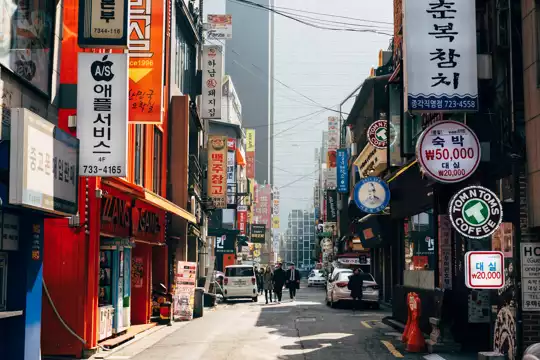
Most guides sell Chuseok as a single day of parades and performances; the real shock is that for backpackers it’s more about what shuts down than what turns on. Chuseok (Korean Harvest Festival) happens nationwide across South Korea, with Seoul, Busan, and Daegu feeling it hardest. It’s a family-centered harvest holiday, not a tourist festival: think quiet streets, closed shops, packed highways, ancestral rites, folk games, and traditional music like pungmul. Expect three intense days, sparse nightlife, eerie-empty cities, and a rare, raw look at Korea off-duty.

Discover everything you want to know in the 📖 South Korea Travel Guide.
Loading the map 🌍
CLICK TO FILTER
cities
towns
villages
landmarks
national parks
hikes
beaches
attractions
festivals
regions
SHOW COUNTRY’S BESTSHOW ALL

✨ Why go?
Ranked #18 festival in South Korea
Reasons people choose to celebrate the here

Backpackers flock to Chuseok, South Korea’s vibrant Harvest Festival, for a reason. It’s a chance to dive into a temporary community where locals and travelers unite over shared traditions. The social energy is electric, with families honoring ancestors and sharing delicious traditional foods like songpyeon and bulgogi.

Planning your route around Chuseok isn’t just smart; it’s essential for cultural immersion. You’ll witness age-old customs, from folk games to dance performances, that you won’t find in guidebooks. Plus, it’s a budget-friendly experience compared to other global festivals, allowing you to stretch your travel funds while soaking up authentic experiences.

Integrating Chuseok into your longer travel plans means you’ll not only enjoy the festival but also explore the stunning … read more 👉
Backpackers flock to Chuseok, South Korea’s vibrant Harvest Festival, for a reason. It’s a chance to dive into a temporary community where locals and travelers unite over shared traditions. The social energy is electric, with families honoring ancestors and sharing delicious traditional foods like songpyeon and bulgogi.

Planning your route around Chuseok isn’t just smart; it’s essential for cultural immersion. You’ll witness age-old customs, from folk games to dance performances, that you won’t find in guidebooks. Plus, it’s a budget-friendly experience compared to other global festivals, allowing you to stretch your travel funds while soaking up authentic experiences.

Integrating Chuseok into your longer travel plans means you’ll not only enjoy the festival but also explore the stunning landscapes and bustling cities of Korea. This festival is more than a date on the calendar; it’s a gateway to understanding the heart of Korean culture while preserving your energy and budget for the adventures that lie ahead.
Want to include Chuseok (Korean Harvest Festival) in your South Korea route?
Create a personalized South Korea itinerary that includes Chuseok (Korean Harvest Festival) and the places that fit your trip — based on your travel style, budget, and available time. Get your route in seconds.

Generate my trip

💡 HighlightsThe experiences that define the visit

  • Charye — ancestral memorial rites and family reunions: The heart of Chuseok is the formal family ritual where generations set a special table, offer food to ancestors and eat together. It’s equal parts solemn and homey — if you want to feel the holiday’s meaning, there’s nothing like sitting through the ritual and then sharing the food and stories with relatives.
  • Songpyeon and seasonal harvest foods: These half-moon rice cakes are Chuseok’s edible symbol — making, filling and steaming songpyeon is a hands-on way to join the festival. Regional fillings, backyard chestnuts and piles of freshly picked fruits make the food scene distinctly seasonal and oddly comforting.
  • Seongmyo & beolcho — visiting and tending ancestral graves: Families travel to tidy gravesites, sweep, offer food and
read more 👉
  • Charye — ancestral memorial rites and family reunions: The heart of Chuseok is the formal family ritual where generations set a special table, offer food to ancestors and eat together. It’s equal parts solemn and homey — if you want to feel the holiday’s meaning, there’s nothing like sitting through the ritual and then sharing the food and stories with relatives.
  • Songpyeon and seasonal harvest foods: These half-moon rice cakes are Chuseok’s edible symbol — making, filling and steaming songpyeon is a hands-on way to join the festival. Regional fillings, backyard chestnuts and piles of freshly picked fruits make the food scene distinctly seasonal and oddly comforting.
  • Seongmyo & beolcho — visiting and tending ancestral graves: Families travel to tidy gravesites, sweep, offer food and bow; it’s the practical, earthy side of giving thanks for the harvest. The quiet fieldwork and ritual bows provide a powerful connection to family history and the land.
  • Folk performances and participatory games: Think raw pansori singing, drumming (samulnori), tightrope walkers and the famous Ganggangsullae circle dance — many events invite spectators to join in. The performances are communal and unpolished in the best way: you’ll see locals laughing, dancing and dragging visitors into the fun.
  • Folk villages, markets and the holiday atmosphere: Places like traditional villages and weekend markets hum with Chuseok-only programs — folk craft demos, food stalls, hanbok rental photo ops and big gift-box displays. Combine that with the nationwide exodus home and you get a slower, more communal Korea that’s easy to soak up whether you’re browsing a market or learning to make a craft.
Spotted a mistake or missing something? Contact us.

Things to do around Chuseok (Korean Harvest Festival)

Ratings based on Tripadvisor reviews. When you book through this link, you support our work at no extra cost to you.

🌤️ When to go?When is the celebration of Chuseok (Korean Harvest Festival)?


  • Topic: Weather — Chuseok falls in early autumn, usually late September or early October. Expect crisp air, 15-22°C (59-72°F), perfect for trekking without sweating buckets or freezing your toes.

  • Topic: Daylight Hours — Days shorten to about 11-12 hours, giving you enough light for sightseeing but nudging you to plan hikes and temple visits early.

  • Topic: Crowds — This is a major holiday, so expect locals to flood transport and tourist spots. Book accommodations early or prepare for packed trains and buses.

  • Topic: Seasonal Activities — Harvest rituals, folk games, and traditional food markets pop up everywhere. It’s a cultural jackpot but also means some businesses close for family time.

  • Topic: Price Fluctuations — Prices spike on and around Chuseok, especially for transport and lodging.
read more 👉

  • Topic: Weather — Chuseok falls in early autumn, usually late September or early October. Expect crisp air, 15-22°C (59-72°F), perfect for trekking without sweating buckets or freezing your toes.

  • Topic: Daylight Hours — Days shorten to about 11-12 hours, giving you enough light for sightseeing but nudging you to plan hikes and temple visits early.

  • Topic: Crowds — This is a major holiday, so expect locals to flood transport and tourist spots. Book accommodations early or prepare for packed trains and buses.

  • Topic: Seasonal Activities — Harvest rituals, folk games, and traditional food markets pop up everywhere. It’s a cultural jackpot but also means some businesses close for family time.

  • Topic: Price Fluctuations — Prices spike on and around Chuseok, especially for transport and lodging. Avoid last-minute bookings or you’ll pay a premium that drains your energy and wallet.


Pro-tip: Arrive a day before Chuseok kicks off to soak in the build-up, dodge the worst crowds, and snag better deals.


source: climatestotravel.comJANJanuary: not recommended for travelingFEBFebruary: not recommended for travelingMARMarch: not recommended for travelingAPRApril: not recommended for travelingMAYMay: not recommended for travelingJUNJune: not recommended for travelingJULJuly: not recommended for travelingAUGAugust: not recommended for travelingSEPSeptember: excellent for travelingOCTOctober: not recommended for travelingNOVNovember: not recommended for travelingDECDecember: not recommended for traveling

✈️ The backpacker research shortcutSouth Korea Travel Guide

An offline-friendly backpacking guide with optimized travel routes, ranked highlights, transport advice, and the best areas to stay.
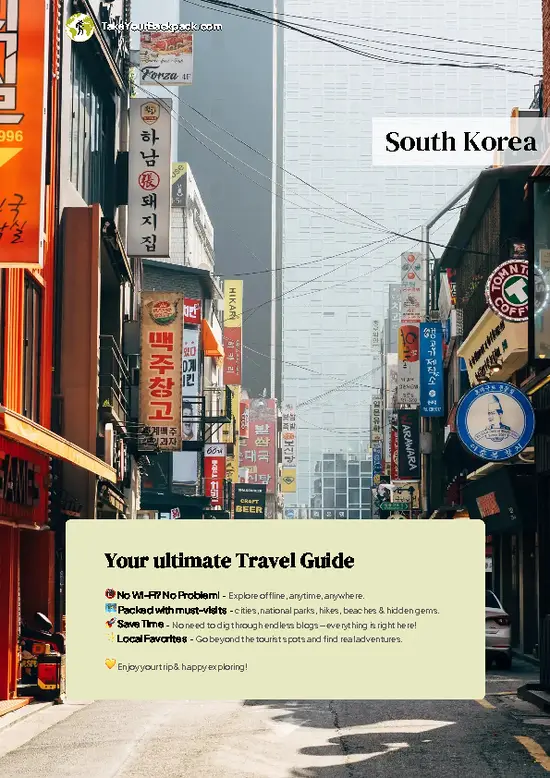
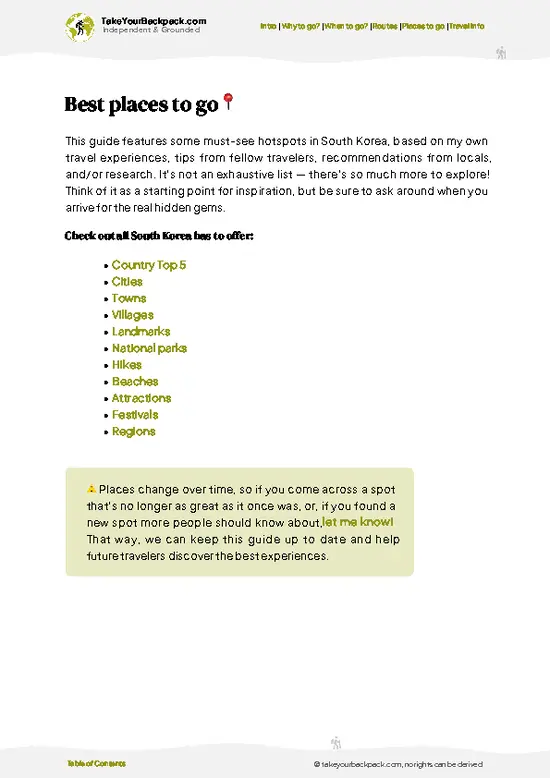
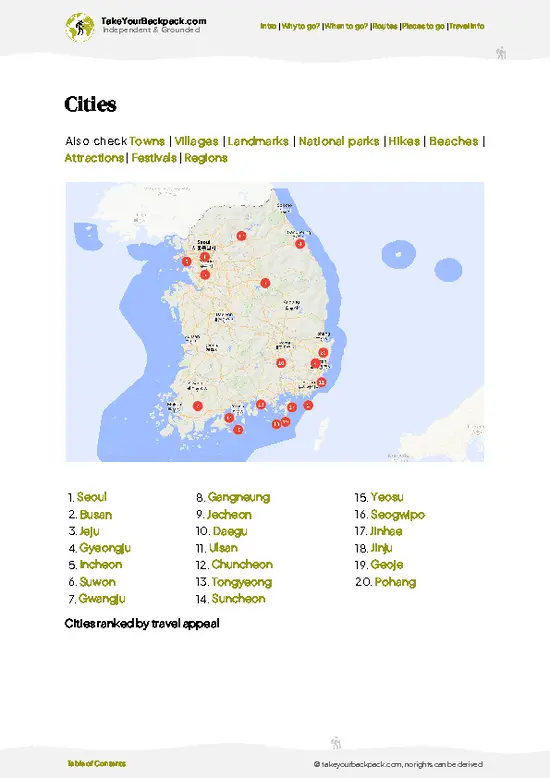
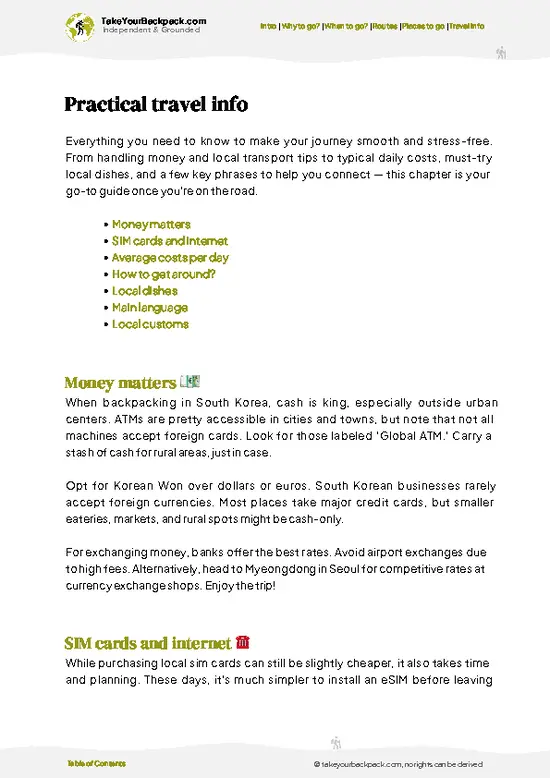
example page 0 from our offline Travel Guide for South Korea
example page 1 from our offline Travel Guide for South Korea
example page 2 from our offline Travel Guide for South Korea
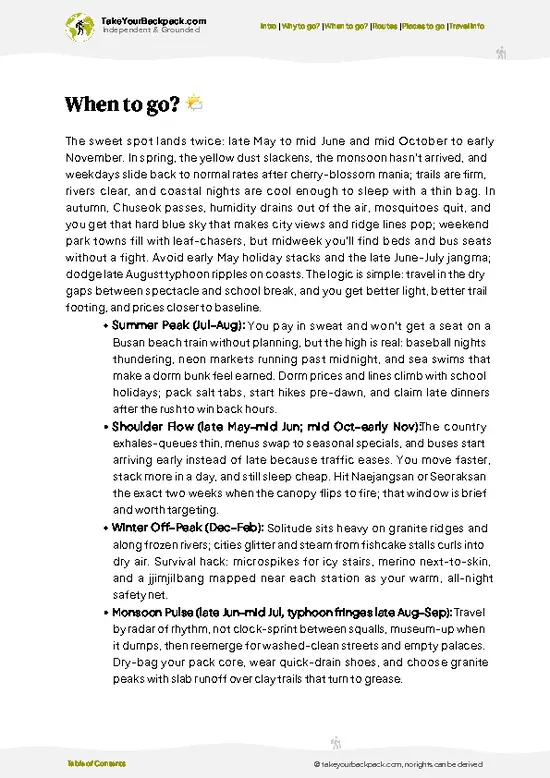
example page 3 from our offline Travel Guide for South Korea
example page 4 from our offline Travel Guide for South Korea
example page 5 from our offline Travel Guide for South Korea
example page 6 from our offline Travel Guide for South Korea
example page 7 from our offline Travel Guide for South Korea
The digital guide (439 pages) contains:
124 highlights, ranked by travel appeal
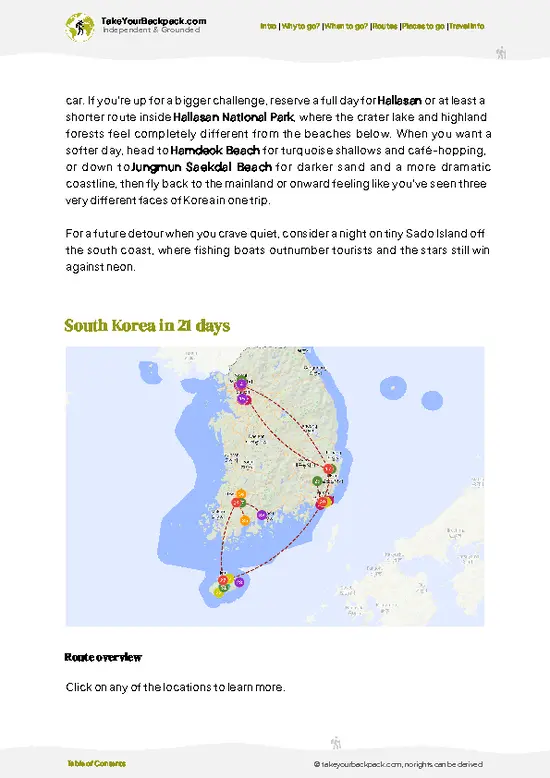
Optimized 7, 14 & 21-day travel routes
Cities, national parks, landmarks, beaches
How to get around
Offline-friendly for travel without Wi-Fi
👉 Click to see all 30+ guide features

📅 Plan smarter in minutes, not weeks
Month by month travel advice
Festivals & national holidays
Budget expectations

🗺️ Go to the right places, skip the overrated ones
Honest pros & cons of destinations
Top hikes, parks & viewpoints
Lesser-known places most travelers miss
Clear “worth it vs skip it” guidance

🛏️ Travel smoothly without rookie mistakes
Best areas to stay
Transport systems explained simply
Common scams & safety advice
SIM cards, money & practical tips

🌍 Understand the country, not just visit it
Culture & traditions
52 Essential phrases & customs
Festivals worth planning around
Traveler-friendly historical context
Insights that make places more meaningful

📱 Built for real travel conditions
Fully downloadable PDF
Works completely offline
Optimized for phone use
Useful in remote areas & buses
Everything in one place
Save weeks of stressful planning
Get instant access to your full guide. 30‑day money-back guarantee.
+ Add another guide for just US$7.80

By proceeding you agree to our terms.
Sent to your inbox immediately after payment • 100% Secure Checkout
Best Backpacking Travel Advisor 2025 tourism awardBest Backpacking
Travel Advisor
2025
What others say about Take Your Backpack Guides:
⭐⭐⭐⭐⭐
Fantastic, amazing amount of information!
⭐⭐⭐⭐⭐
My goodness this is amazing, it's what I've been looking for hats off too you!
⭐⭐⭐⭐⭐
I think this is absolutely BRILLIANT
⭐⭐⭐⭐
Very complete and informative. It's still missing places, but I gotta to commend you
⭐⭐⭐⭐⭐
This is truly amazing, thank you, can't wait to explore it with my kids!
⭐⭐⭐⭐⭐
Awesome resource, thank you!
⭐⭐⭐⭐⭐
This is amazing! Can't wait to explore the ones I haven't seen
⭐⭐⭐⭐
I love this! Well done, great idea.
⭐⭐⭐⭐⭐
Thanks for taking the time to make this gem!
⭐⭐⭐⭐⭐
This might be the best website I've ever seen.
⭐⭐⭐⭐⭐
Congratulations, and thank you so much for your work; it's incredibly valuable.
⭐⭐⭐⭐
In all seriousness I think you did a great job pointing out the important spots
⭐⭐⭐⭐⭐
10/10 very good
⭐⭐⭐⭐⭐
As someone who's only just starting to visit regularly this is awesome, thank you.
⭐⭐⭐⭐
Thank you very much! I'm going to visit my dad, it's going to be very useful!
⭐⭐⭐⭐⭐
This is really cool! We'll be travelling for the first time and this definitely come in handy.
⭐⭐⭐⭐⭐
You are now our minister of culture, congratulations 👨‍💼
⭐⭐⭐⭐⭐
Just wanted to tell you that this is a pearl! Going to follow your recommendations.
⭐⭐⭐⭐⭐
This is so cool. I'll definitely be using the resource for my travels soon.
⭐⭐⭐⭐⭐
This is very impressive! Good work.
⭐⭐⭐⭐⭐
This is an amazing and informative site. Very well done!

🛏️ Where to stay?Best areas and accommodation options

For Chuseok, the Korean Harvest Festival, you want to be where the action is, but also where you can connect with fellow travelers. Head to Hongdae in Seoul. This area pulses with energy, street performances, and a vibrant nightlife. It’s a hotspot for backpackers, so you’ll find plenty of social opportunities. Plus, the public transport is top-notch, making it easy to hop over to festival events.

Next up, consider Insadong. This neighborhood is steeped in tradition, with art galleries and tea houses that offer a taste of Korean culture. It’s quieter than Hongdae but still attracts a friendly … read more 👉
For Chuseok, the Korean Harvest Festival, you want to be where the action is, but also where you can connect with fellow travelers. Head to Hongdae in Seoul. This area pulses with energy, street performances, and a vibrant nightlife. It’s a hotspot for backpackers, so you’ll find plenty of social opportunities. Plus, the public transport is top-notch, making it easy to hop over to festival events.

Next up, consider Insadong. This neighborhood is steeped in tradition, with art galleries and tea houses that offer a taste of Korean culture. It’s quieter than Hongdae but still attracts a friendly crowd. You can mingle with locals and other travelers while enjoying the festive atmosphere.

Don’t overlook Busan either. The Haeundae Beach area is popular among backpackers, especially during Chuseok. You can soak up the sun, enjoy fresh seafood, and join in on beach festivities.

Stay smart, stay social, and let the festival fuel your adventure!

👛 Costs (as of 4 September 2026)How expensive it really is

Chuseok, the Korean Harvest Festival, is a vibrant celebration filled with tradition, food, and community spirit. However, navigating the costs can be tricky. Here’s how to budget wisely for this cultural experience.
  • Festival Tickets: Many Chuseok events are free, especially in public spaces. However, some special performances or workshops may charge between $10 to $30 USD. Keep an eye out for local announcements to catch the best deals.
  • Accommodation: Prices can skyrocket during Chuseok. Expect to pay around $50 to $150 USD per night for mid-range hotels. Booking in advance is crucial; otherwise, you might find yourself in a cramped guesthouse or paying premium rates.
  • Local Transport: Public transport is efficient and affordable. A subway or bus ride typically costs about $1 to $2 USD. If you
read more 👉
Chuseok, the Korean Harvest Festival, is a vibrant celebration filled with tradition, food, and community spirit. However, navigating the costs can be tricky. Here’s how to budget wisely for this cultural experience.
  • Festival Tickets: Many Chuseok events are free, especially in public spaces. However, some special performances or workshops may charge between $10 to $30 USD. Keep an eye out for local announcements to catch the best deals.
  • Accommodation: Prices can skyrocket during Chuseok. Expect to pay around $50 to $150 USD per night for mid-range hotels. Booking in advance is crucial; otherwise, you might find yourself in a cramped guesthouse or paying premium rates.
  • Local Transport: Public transport is efficient and affordable. A subway or bus ride typically costs about $1 to $2 USD. If you plan to travel between cities, budget around $20 to $50 USD for a bus or train ticket, depending on the distance.
  • Food & Drinks: Street food is a must-try and usually costs between $3 to $10 USD per meal. Dining in a restaurant will set you back about $10 to $30 USD per person. Don’t forget to sample traditional Chuseok dishes like songpyeon (rice cakes) and bulgogi!
  • Miscellaneous Expenses: Set aside $20 to $50 USD for souvenirs, snacks, or unexpected costs. This cushion will help you enjoy spontaneous experiences without stress.

Planning ahead will keep your energy high and your budget intact. Embrace the festival spirit without breaking the bank!


source: english.visitkorea.or.kr
⚠️ Prices can change and everyone travels differently, so take this as a rough guide. Hope it helps you plan your adventure!

🍲 FoodLocal Flavors for Backpackers

At the Chuseok festival, **food** transforms into a communal celebration. You’ll find stalls brimming with **songpyeon**, those delightful rice cakes filled with sweetened sesame or red bean paste. They’re not just a treat; they symbolize the harvest and are a must-try for authenticity.

Don’t miss **jeon**, savory pancakes that come in various flavors, from kimchi to seafood. Grab a few and share them with fellow festival-goers. Sharing is key here; it’s all about community.

As for **drinks**, look for **makgeolli**, a traditional rice wine that’s slightly sweet and fizzy. It pairs perfectly with the savory bites.

Be ready for lines; they can snake around stalls, but that’s part of the experience. Cash is king here, so keep some on hand. Serving sizes are often generous, so don’t hesitate … read more 👉
At the Chuseok festival, **food** transforms into a communal celebration. You’ll find stalls brimming with **songpyeon**, those delightful rice cakes filled with sweetened sesame or red bean paste. They’re not just a treat; they symbolize the harvest and are a must-try for authenticity.

Don’t miss **jeon**, savory pancakes that come in various flavors, from kimchi to seafood. Grab a few and share them with fellow festival-goers. Sharing is key here; it’s all about community.

As for **drinks**, look for **makgeolli**, a traditional rice wine that’s slightly sweet and fizzy. It pairs perfectly with the savory bites.

Be ready for lines; they can snake around stalls, but that’s part of the experience. Cash is king here, so keep some on hand. Serving sizes are often generous, so don’t hesitate to split dishes with friends. This festival isn’t just about eating; it’s about connecting, celebrating, and savoring every moment.

FAQFrequently asked questions about Chuseok (Korean Harvest )

Chuseok takes place on the 15th day of the 8th month of the lunar calendar, usually falling in late September or early October. It is a three-day holiday in South Korea.
Attending Chuseok itself is free as it is a national holiday celebrated across the country. Costs may arise from travel, accommodation, and special events or performances during the festival.
No, you do not need tickets in advance to participate in the general Chuseok celebrations, as it is a public holiday. However, some cultural events or performances during Chuseok may require advance booking or tickets.
⚠️ Things can change over time, so always validate details locally before you go.

Other South Korean festivals near Chuseok (Korean Harvest )

Explore more nearby:


💡 Not sure where to go next?
Create a personalized itinerary for South Korea including Chuseok (Korean Harvest ) and the places that fit your trip.

Generate my itinerary

👉 Discover all festivals

Or checkout all South Korea has to offer (think cities, towns, villages, national parks, hikes, beaches, festivals)
Country photo of South Korea

We 💚 feedbackFinal thoughts on celebrating the Chuseok (Korean Harvest )

Chuseok is electric. Families gather, laughter fills the air, and the aroma of freshly made songpyeon wafts through the streets. Expect crowds at popular sites; plan ahead to avoid the rush. The best surprise? The warmth of local hospitality—people genuinely want to share their traditions. Just remember, many shops close for the holiday, so stock up on snacks and essentials beforehand. Embrace the chaos; it’s part of the experience!

✍️ Help improve this page!
The information on this page is based on in-depth research, insights shared by experienced travelers, and feedback from the local travel community in South Korea. While every effort is made to keep the information accurate and current, conditions can change — so if you spot anything incorrect or outdated, please get in touch.


🙋‍♂️ Give feedback

👋 Meet the founderWho’s Behind Take Your Backpack?

Johan, backpacker and founder of TakeYourBackpackHi, I’m Johan (Netherlands 🇳🇱), the creator of TakeYourBackpack. Over the past decade, I’ve backpacked through 80+ countries across six continents, gaining extensive experience with independent travel, long-term trips, and overland routes.

This site is built on a combination of firsthand travel experience and carefully curated insights from other backpackers. Many guides are based on places I’ve personally visited, while others bring together tips, observations, and practical advice shared by trusted travelers I’ve met along the way.

The goal is to provide realistic, experience-driven guidance — not generic itineraries — so you can explore destinations with better context, clearer expectations, and more confidence.

Get full country guide •
Instant download • 124 highlights • Full Offline guide