×

South Korea🇰🇷 | festivalsGwangju Biennalecontemporary art, global exhibitions, experimental installations | things to do and best time to go

Explore Jeonju International Film FestivalExplore Jinju Namgang Yudeung Festival

Backpacking in Gwangju Biennale
👀 For curious travelersfestival ranked #17
By Johan Kruseman 🇳🇱 | Updated October 15, 2026

Gwangju Biennale is not for anyone chasing cheap beer, EDM drops, or a beach-party crowd. It’s for backpackers who can walk through big ideas like they’re hiking a ridge line, and still enjoy the climb. Held in Gwangju, in South Korea’s southwest, this contemporary art biennial pulls artists, students, and culture nerds into warehouses, galleries, and outdoor installations for several weeks at a time. Expect concept-heavy themes, political undercurrents, and a thoughtful, sometimes intense vibe that rewards slow wandering more than quick selfies.

Discover everything you want to know in the 📖 South Korea Travel Guide.


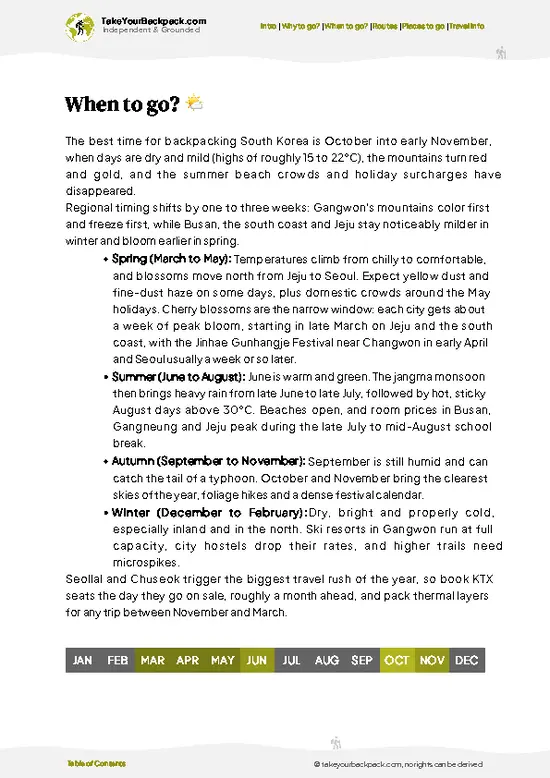
example page 0 from our offline Travel Guide for South Korea
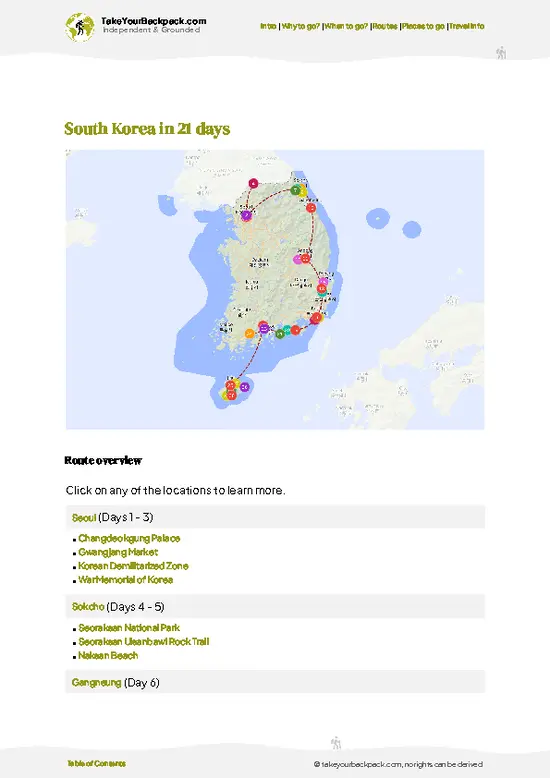
example page 1 from our offline Travel Guide for South Korea
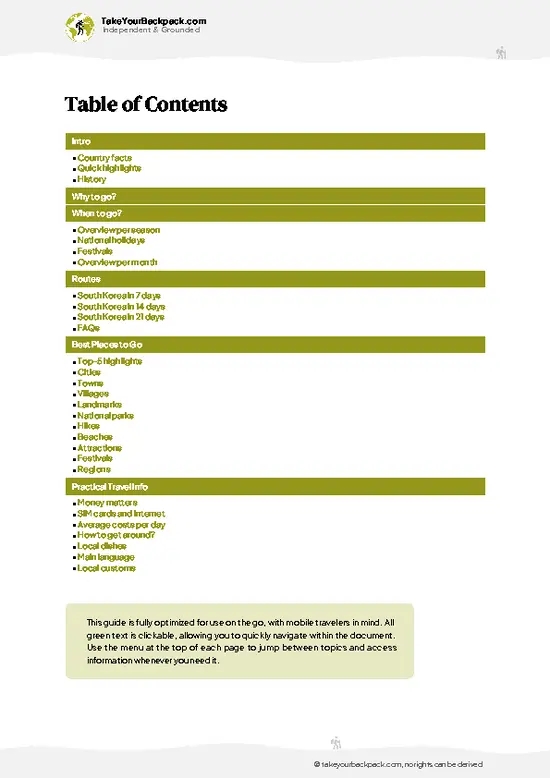
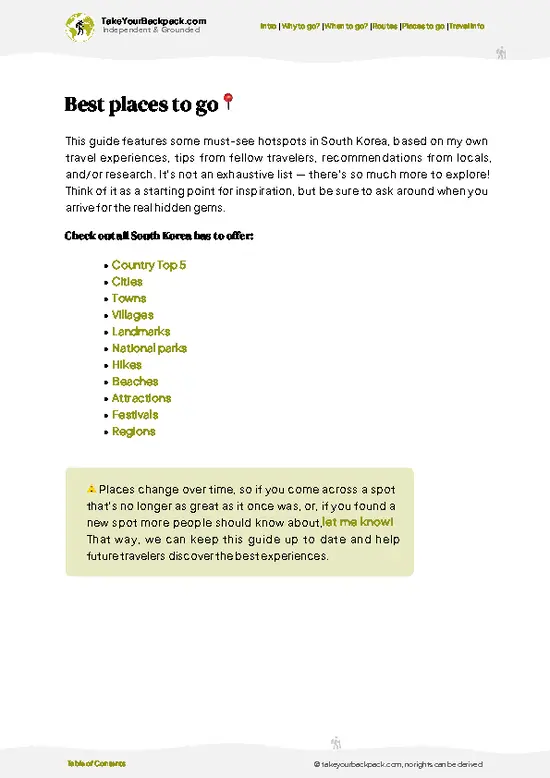
example page 2 from our offline Travel Guide for South Korea
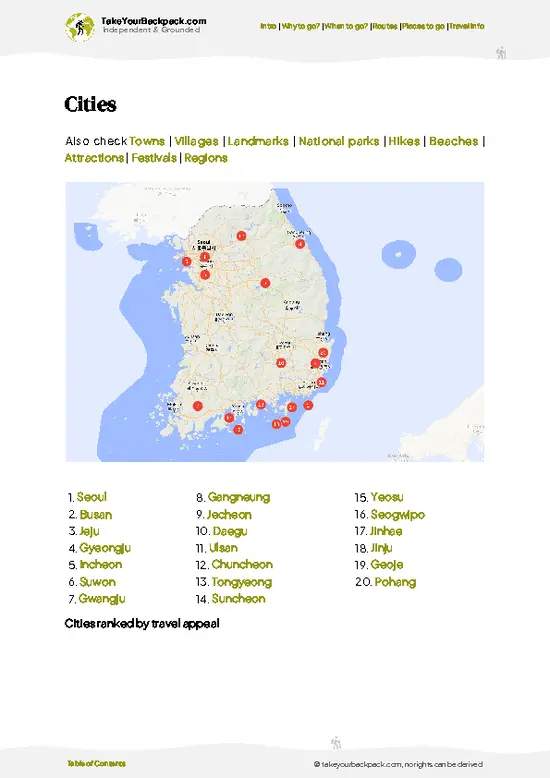
example page 3 from our offline Travel Guide for South Korea
example page 4 from our offline Travel Guide for South Korea
example page 5 from our offline Travel Guide for South Korea
example page 6 from our offline Travel Guide for South Korea
example page 7 from our offline Travel Guide for South Korea
Loading the map 🌍
CLICK TO FILTER
cities
towns
villages
landmarks
national parks
hikes
beaches
attractions
festivals
regions
SHOW COUNTRY’S BESTSHOW ALL

✨ Why go?
Ranked #17 festival in South Korea
Why Gwangju Biennale should be on your travel list

Backpackers flock to the Gwangju Biennale for a jolt of social energy and a chance to dive into a temporary community. This festival isn’t just about art; it’s a vibrant cultural immersion that transforms the city into a canvas of creativity. You’ll find yourself surrounded by fellow travelers and locals, all buzzing with excitement and ideas.

Planning your route around this event means you’re not just ticking boxes; you’re engaging with a dynamic atmosphere that breathes life into your journey. Plus, it’s affordable compared to similar global festivals, allowing you to stretch your budget for those unforgettable experiences.

Integrating the Biennale into your travel plans adds depth to your adventure, making each moment richer. You’ll leave with more than just memories; you’ll carry the … read more 👉
Backpackers flock to the Gwangju Biennale for a jolt of social energy and a chance to dive into a temporary community. This festival isn’t just about art; it’s a vibrant cultural immersion that transforms the city into a canvas of creativity. You’ll find yourself surrounded by fellow travelers and locals, all buzzing with excitement and ideas.

Planning your route around this event means you’re not just ticking boxes; you’re engaging with a dynamic atmosphere that breathes life into your journey. Plus, it’s affordable compared to similar global festivals, allowing you to stretch your budget for those unforgettable experiences.

Integrating the Biennale into your travel plans adds depth to your adventure, making each moment richer. You’ll leave with more than just memories; you’ll carry the pulse of Gwangju with you, fueling your next steps on the road.

💡 HighlightsWhat this place is best known for

  • Site-specific, large-scale installations in repurposed spaces — The Biennale turns old factories, warehouses and public plazas into immersive art environments, so pieces feel like they’re built into the city rather than plonked in a gallery. Walking through these oversized works is a great way to see how contemporary art can reframe ordinary architecture and surprise you around every corner.
  • Experimental performance and live art — Expect performances that blend dance, sound, theater and sound art in unexpected places: courtyards, rooftops, or even subway concourses. They’re often ephemeral and a little wild, so show up early, stay open-minded, and don’t be afraid to join in if the piece invites participation.
  • Community-driven participatory projects — Many programs actively involve local
… read more 👉
  • Site-specific, large-scale installations in repurposed spaces — The Biennale turns old factories, warehouses and public plazas into immersive art environments, so pieces feel like they’re built into the city rather than plonked in a gallery. Walking through these oversized works is a great way to see how contemporary art can reframe ordinary architecture and surprise you around every corner.
  • Experimental performance and live art — Expect performances that blend dance, sound, theater and sound art in unexpected places: courtyards, rooftops, or even subway concourses. They’re often ephemeral and a little wild, so show up early, stay open-minded, and don’t be afraid to join in if the piece invites participation.
  • Community-driven participatory projects — Many programs actively involve local residents, schools and grassroots groups, so the festival feels less like an elite showcase and more like shared civic culture. Participating in a workshop or neighborhood event is the fastest way to meet locals and understand how art connects to everyday life here.
  • Curatorial focus on social and political memory rooted in Gwangju — The Biennale regularly foregrounds themes of human rights, collective memory and civic action, and being in Gwangju gives those themes extra weight because of the city’s modern history. Exhibitions often ask hard questions; they’re thoughtful and occasionally confrontational in a way that stays with you.
  • Citywide art walk, public art and fringe programs — Beyond the main venues, there are satellite shows, outdoor sculptures, pop-up exhibitions and night markets scattered across town, many of them free. It’s perfect for budget travelers: you can craft your own route, snack on street food between stops, and soak up the festival atmosphere without an expensive ticket.
Spotted a mistake or missing something? Contact us.

Things to do near Gwangju Biennale

Ratings based on Tripadvisor reviews. When you book through this link, you support our work at no extra cost to you.

🌤️ When to go?When is the celebration of Gwangju Biennale?

  • Topic: Weather - The Gwangju Biennale runs in autumn, usually September to November. Expect crisp air, 15-22°C (59-72°F), perfect for walking between exhibits without overheating or freezing.
  • Topic: Daylight Hours - Days shorten but still offer 10-12 hours of light, enough to soak in art and city vibes without rushing.
  • Topic: Crowds - Early autumn draws fewer tourists than summer, so you get elbow room in galleries and local spots.
  • Topic: Seasonal Activities - Autumn harvest festivals and street food markets pop up, adding layers to your cultural dive.
  • Topic: Price Fluctuations - Accommodation and flights dip after summer peak, letting you stretch your budget further for experiences that count.
Pro-tip: Aim for mid-October to catch the festival in full swing with mild weather and manageable crowds—prime conditions for a backpacker’s rhythm.

source: climatestotravel.comJANJanuary: not recommended for travelingFEBFebruary: not recommended for travelingMARMarch: not recommended for travelingAPRApril: not recommended for travelingMAYMay: not recommended for travelingJUNJune: not recommended for travelingJULJuly: not recommended for travelingAUGAugust: not recommended for travelingSEPSeptember: highly recommended for travelingOCTOctober: highly recommended for travelingNOVNovember: highly recommended for travelingDECDecember: not recommended for traveling

✈️ The backpacker research shortcutSouth Korea Travel Guide

An offline-friendly backpacking guide with optimized travel routes, ranked highlights, transport advice, and the best areas to stay.
example page 0 from our offline Travel Guide for South Korea
example page 1 from our offline Travel Guide for South Korea
example page 2 from our offline Travel Guide for South Korea
example page 3 from our offline Travel Guide for South Korea
example page 4 from our offline Travel Guide for South Korea
example page 5 from our offline Travel Guide for South Korea
example page 6 from our offline Travel Guide for South Korea
example page 7 from our offline Travel Guide for South Korea
The digital guide (419 pages) contains:
✅ 117 highlights, ranked by travel appeal
✅ Optimized 7, 14 & 21-day travel routes
✅ Cities, national parks, landmarks, beaches
✅ How to get around
✅ Offline-friendly for travel without Wi-Fi
👉 Click to see all 30+ guide features

📅 Plan smarter in minutes, not weeks
✅ Month by month travel advice
✅ Festivals & national holidays
✅ Budget expectations

🗺️ Go to the right places, skip the overrated ones
✅ Honest pros & cons of destinations
✅ Top hikes, parks & viewpoints
✅ Lesser-known places most travelers miss
✅ Clear “worth it vs skip it” guidance

🛏️ Travel smoothly without rookie mistakes
✅ Best areas to stay
✅ Transport systems explained simply
✅ Common scams & safety advice
✅ SIM cards, money & practical tips

🌍 Understand the country, not just visit it
✅ Culture & traditions
✅ 52 Essential phrases & customs
✅ Festivals worth planning around
✅ Traveler-friendly historical context
✅ Insights that make places more meaningful

📱 Built for real travel conditions
✅ Fully downloadable PDF
✅ Works completely offline
✅ Optimized for phone use
✅ Useful in remote areas & buses
✅ Everything in one place
Stop searching, start planning
Get instant access to your full guide. 30‑day money-back guarantee.
+ Add another guide for just

By proceeding you agree to our terms.
Sent to your inbox immediately after payment • 100% Secure Checkout
Best Backpacking Travel Advisor 2025 tourism awardBest Backpacking
Travel Advisor
2025
What others say about Take Your Backpack Guides:
⭐⭐⭐⭐⭐
Fantastic, amazing amount of information!
⭐⭐⭐⭐⭐
My goodness this is amazing, it's what I've been looking for hats off too you!
⭐⭐⭐⭐⭐
I think this is absolutely BRILLIANT
⭐⭐⭐⭐
Very complete and informative. It's still missing places, but I gotta to commend you
⭐⭐⭐⭐⭐
This is truly amazing, thank you, can't wait to explore it with my kids!
⭐⭐⭐⭐⭐
Awesome resource, thank you!
⭐⭐⭐⭐⭐
This is amazing! Can't wait to explore the ones I haven't seen
⭐⭐⭐⭐
I love this! Well done, great idea.
⭐⭐⭐⭐⭐
Thanks for taking the time to make this gem!
⭐⭐⭐⭐⭐
This might be the best website I've ever seen.
⭐⭐⭐⭐⭐
Congratulations, and thank you so much for your work; it's incredibly valuable.
⭐⭐⭐⭐
In all seriousness I think you did a great job pointing out the important spots
⭐⭐⭐⭐⭐
10/10 very good
⭐⭐⭐⭐⭐
As someone who's only just starting to visit regularly this is awesome, thank you.
⭐⭐⭐⭐
Thank you very much! I'm going to visit my dad, it's going to be very useful!
⭐⭐⭐⭐⭐
This is really cool! We'll be travelling for the first time and this definitely come in handy.
⭐⭐⭐⭐⭐
You are now our minister of culture, congratulations 👨‍💼
⭐⭐⭐⭐⭐
Just wanted to tell you that this is a pearl! Going to follow your recommendations.
⭐⭐⭐⭐⭐
This is so cool. I'll definitely be using the resource for my travels soon.
⭐⭐⭐⭐⭐
This is very impressive! Good work.
⭐⭐⭐⭐⭐
This is an amazing and informative site. Very well done!

🛏️ Where to stay?Best areas and accommodation options

When you’re gearing up for the Gwangju Biennale, the right base can make all the difference. Head to the Dong-gu district. It’s buzzing with energy and creativity, perfect for mingling with fellow travelers. You’ll find a mix of affordable guesthouses and lively hostels, where late-night conversations flow as freely as the local soju.

Another solid option is the area around Gwangju Station. It’s a transit hub, making it easy to hop on public transport to the festival. Plus, the streets are lined with eateries and cafes, where you can fuel up on delicious bibimbap before diving into the art scene. … read more 👉
When you’re gearing up for the Gwangju Biennale, the right base can make all the difference. Head to the Dong-gu district. It’s buzzing with energy and creativity, perfect for mingling with fellow travelers. You’ll find a mix of affordable guesthouses and lively hostels, where late-night conversations flow as freely as the local soju.

Another solid option is the area around Gwangju Station. It’s a transit hub, making it easy to hop on public transport to the festival. Plus, the streets are lined with eateries and cafes, where you can fuel up on delicious bibimbap before diving into the art scene.

Don’t overlook the city center, either. It’s packed with cultural spots and has a vibrant nightlife. You’ll meet other backpackers, share stories, and maybe even discover a new favorite hangout.

Stay smart, stay social, and keep your energy focused on the art and experiences that await you.

👛 Costs (as of 15 October 2026)How expensive it really is

The Gwangju Biennale is a thrilling dive into contemporary art, but understanding the costs can keep your adventure smooth and your wallet intact.
  • Festival Tickets: Expect to pay around $10 to $20 for a single entry. If you’re planning to attend multiple days or special events, consider a multi-day pass, which can range from $30 to $50. This investment opens the door to a world of creativity and inspiration.
  • Accommodation: Options vary widely. Budget travelers can find hostels or guesthouses starting at $20 per night. Mid-range hotels typically range from $50 to $100. For a more upscale experience, expect to pay $150 and up. Booking in advance can snag you better deals.
  • Local Transport: Gwangju has a reliable public transport system. A single bus or subway ride costs about $1. If you plan to
… read more 👉
The Gwangju Biennale is a thrilling dive into contemporary art, but understanding the costs can keep your adventure smooth and your wallet intact.
  • Festival Tickets: Expect to pay around $10 to $20 for a single entry. If you’re planning to attend multiple days or special events, consider a multi-day pass, which can range from $30 to $50. This investment opens the door to a world of creativity and inspiration.
  • Accommodation: Options vary widely. Budget travelers can find hostels or guesthouses starting at $20 per night. Mid-range hotels typically range from $50 to $100. For a more upscale experience, expect to pay $150 and up. Booking in advance can snag you better deals.
  • Local Transport: Gwangju has a reliable public transport system. A single bus or subway ride costs about $1. If you plan to explore extensively, consider a transport card for around $10, which can save you money on multiple trips. Taxis are available but can add up quickly, so use them sparingly.
  • Food & Drinks: Street food is a must-try and usually costs between $2 to $5 per dish. If you prefer dining in restaurants, budget around $10 to $20 for a meal. For drinks, local beers are about $3, while coffee can range from $2 to $5. Eating like a local can keep your costs down while enhancing your experience.
  • Miscellaneous Expenses: Always set aside some cash for unexpected costs. This could include souvenirs, additional activities, or even a spontaneous night out. Budget around $50 to $100 for these extras, depending on your interests.

Planning ahead and keeping these costs in mind will help you focus on what truly matters: immersing yourself in the vibrant world of art and culture.


source: english.visitkorea.or.kr
⚠️ Prices can change and everyone travels differently, so take this as a rough guide. Hope it helps you plan your adventure!

🍲 FoodEating & Drinking in Gwangju Biennale

At the Gwangju Biennale, food and drink are as much a part of the experience as the art. You’ll find local specialties like tteokbokki—spicy rice cakes that pack a punch—and bibimbap, a colorful mix of rice, veggies, and gochujang. Festival stalls buzz with energy, serving up korean fried chicken that’s crispy and addictive. Don’t skip the makgeolli, a traditional rice wine that’s slightly sweet and perfect for sharing.

For authenticity, dive into the street food scene. Grab a hotteok, a sweet pancake filled with brown sugar, and enjoy it while wandering through the exhibits. The atmosphere is electric, but be prepared for lines; they’re part of the charm.

Cash is king here, so keep some on hand. Serving sizes can be generous, so consider sharing dishes to sample more. Embrace the communal … read more 👉
At the Gwangju Biennale, food and drink are as much a part of the experience as the art. You’ll find local specialties like tteokbokki—spicy rice cakes that pack a punch—and bibimbap, a colorful mix of rice, veggies, and gochujang. Festival stalls buzz with energy, serving up korean fried chicken that’s crispy and addictive. Don’t skip the makgeolli, a traditional rice wine that’s slightly sweet and perfect for sharing.

For authenticity, dive into the street food scene. Grab a hotteok, a sweet pancake filled with brown sugar, and enjoy it while wandering through the exhibits. The atmosphere is electric, but be prepared for lines; they’re part of the charm.

Cash is king here, so keep some on hand. Serving sizes can be generous, so consider sharing dishes to sample more. Embrace the communal vibe—sharing food is a way to connect with fellow festival-goers. This isn’t just about eating; it’s about savoring the moment.

FAQTraveler FAQ

Gwangju Biennale takes place every two years, usually starting in September and running for about three months until December. The exact dates vary with each edition, so check the current year's schedule before planning your visit.
The cost to attend Gwangju Biennale typically ranges from 10,000 to 15,000 KRW for a general admission ticket. Discounts are often available for students, seniors, and groups, so bring valid ID to save money.
Yes, you need tickets in advance for Gwangju Biennale, especially during weekends and holidays when it gets crowded. Tickets can be purchased online or at the venue, but buying ahead guarantees entry and avoids long waits.
⚠️ Things can change over time, so always validate details locally before you go.

Other South Korean festivals near Gwangju Biennale

Explore more nearby:


💡 Not sure where to go next?
Create a personalized itinerary for South Korea including Gwangju Biennale and the places that fit your trip.

Generate my itinerary

👉 Discover all festivals

Or checkout all South Korea has to offer (think cities, towns, villages, national parks, hikes, beaches, festivals)
Country photo of South Korea

We 💚 feedbackParting advice and final tips

The Gwangju Biennale pulses with raw creativity and a spirit of rebellion. Expect to be challenged and inspired. The best surprise? The local art scene spills beyond the galleries—street performances and pop-up exhibits are everywhere. Just a heads-up: navigating the venues can be a maze, so keep your phone charged for maps. Embrace the chaos; it’s part of the adventure. You’ll leave with more than just art; you’ll carry stories.

✍️ Help improve this page!
The information on this page is based on in-depth research, insights shared by experienced travelers, and feedback from the local travel community in South Korea. While every effort is made to keep the information accurate and current, conditions can change — so if you spot anything incorrect or outdated, please get in touch.


🙋‍♂️ Give feedback

👋 Meet the founderWho’s Behind Take Your Backpack?

Johan, backpacker and founder of TakeYourBackpackHi, I’m Johan (Netherlands 🇳🇱), the creator of TakeYourBackpack. Over the past 3 decades, I’ve backpacked through 90+ countries across six continents, gaining extensive experience with independent travel, long-term trips, and overland routes.

This site is built on a combination of firsthand travel experience and carefully curated insights from other backpackers. Many guides are based on places I’ve personally visited, while others bring together tips, observations, and practical advice shared by trusted travelers I’ve met along the way.

The goal is to provide realistic, experience-driven guidance — not generic itineraries — so you can explore destinations with better context, clearer expectations, and more confidence.