
×

South Korea🇰🇷 | villagesHahoe Folk Villageclay-roofed hanok, mask dance, riverside cliffs | things to do and best time to go

Explore DodamsambongExplore Yangdong Folk Village

Backpacking in Hahoe Folk Village
UNESCO World Heritage site
🏆 Top pickvillage ranked #1
By Johan Kruseman 🇳🇱 | Updated October 15, 2026

Most people hear “Hahoe Folk Village” and picture a fenced-off theme park of old houses. It isn’t that. It’s a lived-in Confucian clan village on a river bend in North Gyeongsang Province, just outside Andong in eastern South Korea. For backpackers, Hahoe is a slow detour: beautiful, yes, but also controlled, ticketed, and a bit curated. You come for the curve of the Nakdong River, the sandy riverbank under the cliff at Buyongdae, the creak of old wooden hanok doors, and the mask-dance performances that feel more like a village ritual than a show when the crowd is small.

Evenings are quiet: yellow lamplight, early-closing eateries, guesthouse courtyards where you might share makgeolli with one or two other travelers, not a crowd. It’s easier to meet Koreans on a day trip than fellow backpackers overnight. Compared with Andong city, Hahoe is far more scenic and traditional, but also more managed and less spontaneous.

Discover everything you want to know in the 📖 South Korea Travel Guide.


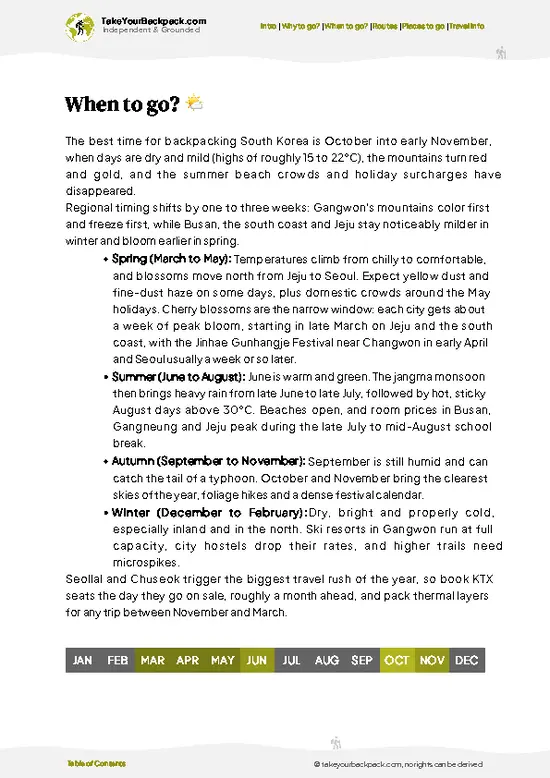
example page 0 from our offline Travel Guide for South Korea
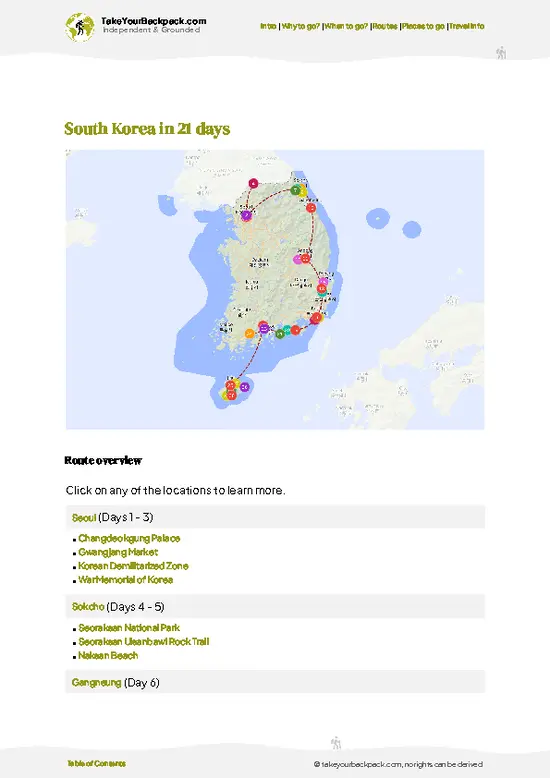
example page 1 from our offline Travel Guide for South Korea
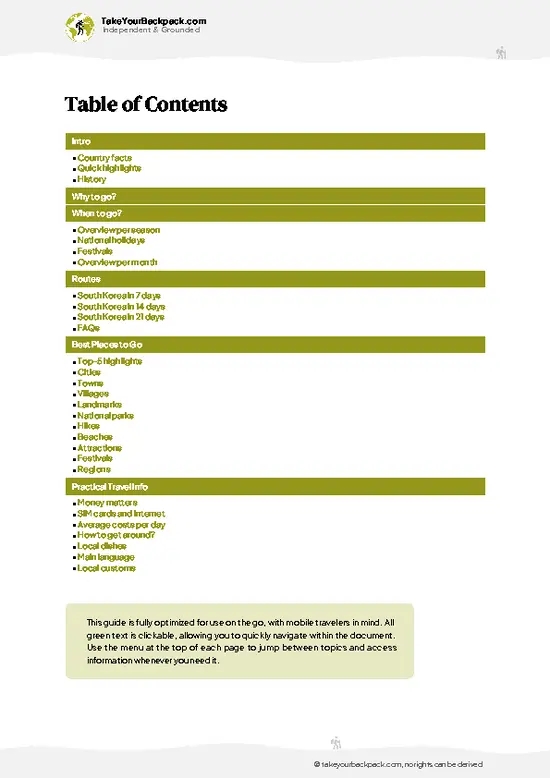
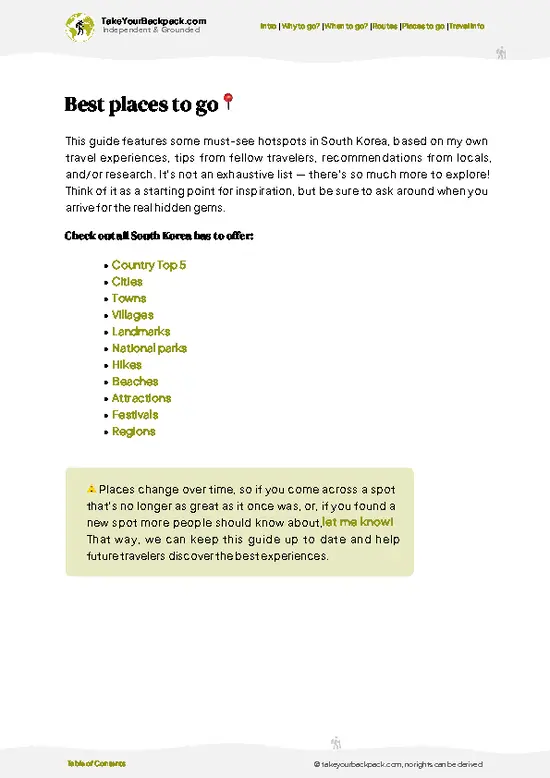
example page 2 from our offline Travel Guide for South Korea
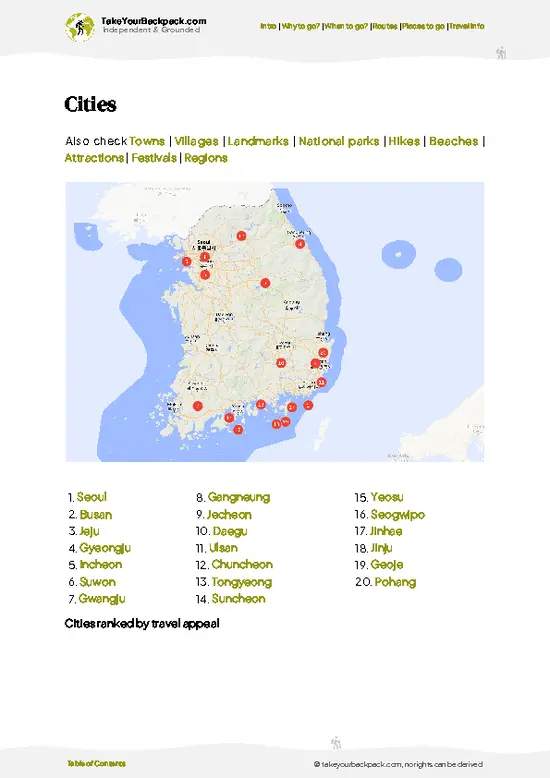
example page 3 from our offline Travel Guide for South Korea
example page 4 from our offline Travel Guide for South Korea
example page 5 from our offline Travel Guide for South Korea
example page 6 from our offline Travel Guide for South Korea
example page 7 from our offline Travel Guide for South Korea
Loading the map 🌍
CLICK TO FILTER
cities
towns
villages
landmarks
national parks
hikes
beaches
attractions
festivals
regions
SHOW COUNTRY’S BESTSHOW ALL

✨ Why go?
Ranked #1 village in South Korea
Reasons people choose to visit here

Hahoe is a backpacker’s haven that offers a refreshing pause in the whirlwind of South Korea’s busier spots. Nestled along the Nakdong River, the village exudes a slow pace that invites you to breathe deeply and soak in the natural beauty. The air is often filled with the scent of rice paddies and the distant sound of water flowing, creating a serene backdrop for reflection.

This village is perfect for slow travelers and hikers alike, with trails that lead you through lush landscapes and to nearby beaches. You can easily spend a day wandering the traditional houses or engaging with the local artisans, who are often eager to share their crafts. The atmosphere is friendly yet tranquil, making it ideal for solo travelers seeking calm or couples wanting to connect away from the crowds.

Most … read more 👉
Hahoe is a backpacker’s haven that offers a refreshing pause in the whirlwind of South Korea’s busier spots. Nestled along the Nakdong River, the village exudes a slow pace that invites you to breathe deeply and soak in the natural beauty. The air is often filled with the scent of rice paddies and the distant sound of water flowing, creating a serene backdrop for reflection.

This village is perfect for slow travelers and hikers alike, with trails that lead you through lush landscapes and to nearby beaches. You can easily spend a day wandering the traditional houses or engaging with the local artisans, who are often eager to share their crafts. The atmosphere is friendly yet tranquil, making it ideal for solo travelers seeking calm or couples wanting to connect away from the crowds.

Most backpackers find themselves lingering longer than planned, drawn in by the local character and the chance to unwind. Hahoe serves as a perfect stopover between busier destinations like Busan and Gyeongju, offering a much-needed breather. If you’re looking for a place to recharge, this village is a worthwhile detour.

💡 HighlightsEssential experiences to have while visiting Hahoe Folk Village

  1. Hahoe Folk Village (the village core) — The living UNESCO village itself: a cluster of preserved hanok, narrow lanes, and working farms where families from the same Pungsan Ryu lineage still live — you’ll get the full slice-of-life feel here, not just a museum set.
  2. Buyongdae Cliff (부용대) — Classic postcard viewpoint across the river: a short climb to a rocky overlook that frames the village, river and surrounding hills perfectly at sunrise or late afternoon.
  3. Hahoe Mask Museum — Small but focused collection of traditional masks and masks’ history; great context before (or after) watching a live mask-dance performance.
  4. Hahoe Byeolsingut Talnori performance stage — Where the village’s famous mask-dance (an important intangible cultural heritage) is staged; catching a performance brings the
… read more 👉
  1. Hahoe Folk Village (the village core) — The living UNESCO village itself: a cluster of preserved hanok, narrow lanes, and working farms where families from the same Pungsan Ryu lineage still live — you’ll get the full slice-of-life feel here, not just a museum set.
  2. Buyongdae Cliff (부용대) — Classic postcard viewpoint across the river: a short climb to a rocky overlook that frames the village, river and surrounding hills perfectly at sunrise or late afternoon.
  3. Hahoe Mask Museum — Small but focused collection of traditional masks and masks’ history; great context before (or after) watching a live mask-dance performance.
  4. Hahoe Byeolsingut Talnori performance stage — Where the village’s famous mask-dance (an important intangible cultural heritage) is staged; catching a performance brings the place to life in a way photos can’t.
  5. Nakdong River boat ride around Hahoe — A short river cruise that lets you view the village from the water; helps you appreciate the village’s horseshoe bend setting and makes for calm, memorable photos.
  6. Pungsan Ryu clan houses and ancestral shrines — A group of well-preserved yangban (scholar-official) residences and shrines open to visitors; they show how elite Joseon families lived and maintained lineage rituals.
  7. Thatched-roof quarter and village lanes — Wander the lanes where thatched roofs, stone walls and small courtyards remain; it’s low-key and intimate — best for people who like wandering rather than ticking boxes.
  8. Local craft and mask-making workshops — Small studios run by local artisans where you can watch (and sometimes try) mask-making, woodcraft or traditional paper work — authentic, hands-on souvenirs and a real connection to local skills.
  9. Open hanok house museums and household displays — Several homes in the village let you step inside and see original interiors, furniture and farming implements — much better than reading signs from a distance.
  10. Homestays / overnight hanok experience — Staying a night in a hanok here changes the vibe: lantern-lit lanes, morning mist on the river and a quieter village rhythm are why many people linger.
A few excellent day-trip spots just outside Hahoe are Byeongsan Seowon, Andong’s folk museums (Andong Folk Museum / Andong Museum) and the wooden Woryeonggyo bridge in Andong — all easily combined with a half-day or full-day outing.
Spotted a mistake or missing something? Contact us.

Things to do around Hahoe Folk Village

Ratings based on Tripadvisor reviews. When you book through this link, you support our work at no extra cost to you.

🌤️ When to go?Best time to visit Hahoe Folk Village

  • Weather: Spring (April to June) and autumn (September to November) offer the most comfortable weather. Expect mild temperatures around 15-22°C (59-72°F), perfect for wandering without overheating or freezing. Summers can be hot and humid, while winters dip below freezing, making outdoor exploration less enjoyable.
  • Temperature: Spring mornings start cool, around 10°C (50°F), warming by midday. Autumn evenings cool off quickly, so layers are essential. Winter nights can plunge to -5°C (23°F), so unless you’re prepared for cold, avoid December to February.
  • Daylight Hours: Longer days in spring and autumn mean more daylight for hiking and village tours—up to 13-14 hours. Winter days shrink to about 9-10 hours, limiting your window for outdoor activities.
  • Crowds: Peak tourist season hits in
… read more 👉
  • Weather: Spring (April to June) and autumn (September to November) offer the most comfortable weather. Expect mild temperatures around 15-22°C (59-72°F), perfect for wandering without overheating or freezing. Summers can be hot and humid, while winters dip below freezing, making outdoor exploration less enjoyable.
  • Temperature: Spring mornings start cool, around 10°C (50°F), warming by midday. Autumn evenings cool off quickly, so layers are essential. Winter nights can plunge to -5°C (23°F), so unless you’re prepared for cold, avoid December to February.
  • Daylight Hours: Longer days in spring and autumn mean more daylight for hiking and village tours—up to 13-14 hours. Winter days shrink to about 9-10 hours, limiting your window for outdoor activities.
  • Crowds: Peak tourist season hits in late spring and early autumn weekends, especially during local festivals. Visiting on weekdays or shoulder months like early April or late October helps you dodge the crowds and enjoy quieter streets.
  • Seasonal Activities: Autumn brings vibrant foliage, a photographer’s dream, while spring showcases cherry blossoms and azaleas. Winter offers traditional mask dance performances indoors, but outdoor activities slow down.
  • Price Fluctuations: Accommodation and transport costs rise during peak festival times and national holidays. Booking in shoulder seasons can save you 20-30%, plus you get a more relaxed vibe.
Pro-tip: Aim for mid-October to early November—cool air, golden leaves, fewer tourists, and prices that won’t make your wallet wince.


source: climatestotravel.comJANJanuary: below average for travelingFEBFebruary: below average for travelingMARMarch: good for travelingAPRApril: highly recommended for travelingMAYMay: excellent for travelingJUNJune: excellent for travelingJULJuly: fair for travelingAUGAugust: fair for travelingSEPSeptember: highly recommended for travelingOCTOctober: excellent for travelingNOVNovember: excellent for travelingDECDecember: below average for traveling
south-korea-city-hahoe-folk-village
© Google |

✈️ The backpacker research shortcutSouth Korea Travel Guide

An offline-friendly backpacking guide with optimized travel routes, ranked highlights, transport advice, and the best areas to stay.
example page 0 from our offline Travel Guide for South Korea
example page 1 from our offline Travel Guide for South Korea
example page 2 from our offline Travel Guide for South Korea
example page 3 from our offline Travel Guide for South Korea
example page 4 from our offline Travel Guide for South Korea
example page 5 from our offline Travel Guide for South Korea
example page 6 from our offline Travel Guide for South Korea
example page 7 from our offline Travel Guide for South Korea
The digital guide (419 pages) contains:
✅ 117 highlights, ranked by travel appeal
✅ Optimized 7, 14 & 21-day travel routes
✅ Cities, national parks, landmarks, beaches
✅ How to get around
✅ Offline-friendly for travel without Wi-Fi
👉 Click to see all 30+ guide features

📅 Plan smarter in minutes, not weeks
✅ Month by month travel advice
✅ Festivals & national holidays
✅ Budget expectations

🗺️ Go to the right places, skip the overrated ones
✅ Honest pros & cons of destinations
✅ Top hikes, parks & viewpoints
✅ Lesser-known places most travelers miss
✅ Clear “worth it vs skip it” guidance

🛏️ Travel smoothly without rookie mistakes
✅ Best areas to stay
✅ Transport systems explained simply
✅ Common scams & safety advice
✅ SIM cards, money & practical tips

🌍 Understand the country, not just visit it
✅ Culture & traditions
✅ 52 Essential phrases & customs
✅ Festivals worth planning around
✅ Traveler-friendly historical context
✅ Insights that make places more meaningful

📱 Built for real travel conditions
✅ Fully downloadable PDF
✅ Works completely offline
✅ Optimized for phone use
✅ Useful in remote areas & buses
✅ Everything in one place
Stop searching, start planning
Get instant access to your full guide. 30‑day money-back guarantee.
+ Add another guide for just

By proceeding you agree to our terms.
Sent to your inbox immediately after payment • 100% Secure Checkout
Best Backpacking Travel Advisor 2025 tourism awardBest Backpacking
Travel Advisor
2025
What others say about Take Your Backpack Guides:
⭐⭐⭐⭐⭐
Fantastic, amazing amount of information!
⭐⭐⭐⭐⭐
My goodness this is amazing, it's what I've been looking for hats off too you!
⭐⭐⭐⭐⭐
I think this is absolutely BRILLIANT
⭐⭐⭐⭐
Very complete and informative. It's still missing places, but I gotta to commend you
⭐⭐⭐⭐⭐
This is truly amazing, thank you, can't wait to explore it with my kids!
⭐⭐⭐⭐⭐
Awesome resource, thank you!
⭐⭐⭐⭐⭐
This is amazing! Can't wait to explore the ones I haven't seen
⭐⭐⭐⭐
I love this! Well done, great idea.
⭐⭐⭐⭐⭐
Thanks for taking the time to make this gem!
⭐⭐⭐⭐⭐
This might be the best website I've ever seen.
⭐⭐⭐⭐⭐
Congratulations, and thank you so much for your work; it's incredibly valuable.
⭐⭐⭐⭐
In all seriousness I think you did a great job pointing out the important spots
⭐⭐⭐⭐⭐
10/10 very good
⭐⭐⭐⭐⭐
As someone who's only just starting to visit regularly this is awesome, thank you.
⭐⭐⭐⭐
Thank you very much! I'm going to visit my dad, it's going to be very useful!
⭐⭐⭐⭐⭐
This is really cool! We'll be travelling for the first time and this definitely come in handy.
⭐⭐⭐⭐⭐
You are now our minister of culture, congratulations 👨‍💼
⭐⭐⭐⭐⭐
Just wanted to tell you that this is a pearl! Going to follow your recommendations.
⭐⭐⭐⭐⭐
This is so cool. I'll definitely be using the resource for my travels soon.
⭐⭐⭐⭐⭐
This is very impressive! Good work.
⭐⭐⭐⭐⭐
This is an amazing and informative site. Very well done!

🛏️ Where to stay?How to pick the right area

In Hahoe Village, the best places to stay for backpackers are the traditional hanok guesthouses scattered around the village’s winding lanes. Why hanok? Because these wooden houses with their curved tile roofs aren’t just accommodations—they’re a living connection to Korea’s Joseon-era soul. Staying here means waking up to the scent of aged wood and the soft creak of paper sliding doors, not the hum of a city street.

Most hanok guesthouses in Hahoe are family-run, which means you get more than a bed—you get stories, homemade kimchi, and a chance to see daily life unfold in slow motion. Booking … read more 👉
In Hahoe Village, the best places to stay for backpackers are the traditional hanok guesthouses scattered around the village’s winding lanes. Why hanok? Because these wooden houses with their curved tile roofs aren’t just accommodations—they’re a living connection to Korea’s Joseon-era soul. Staying here means waking up to the scent of aged wood and the soft creak of paper sliding doors, not the hum of a city street.

Most hanok guesthouses in Hahoe are family-run, which means you get more than a bed—you get stories, homemade kimchi, and a chance to see daily life unfold in slow motion. Booking a hanok with ondol floors (heated floors) is a game-changer, especially in cooler months. It’s a simple comfort that makes the rustic charm feel like a warm hug.

If you want to avoid the tourist crush, pick a guesthouse on the village’s quieter edges, near the Nakdong River. The morning light here filters through ginkgo trees, casting long shadows on stone paths. It’s a peaceful way to start the day before the crowds arrive.

For budget travelers, dorm-style rooms exist but are rare. Most hanoks lean toward private rooms, so sharing a space with fellow backpackers means booking a hostel in nearby Andong and making a day trip. That’s a solid trade-off if you want to soak in Hahoe’s atmosphere without sacrificing social energy.

Bottom line: Choose a hanok for authenticity, ondol for comfort, and riverside for calm. That’s how you turn a night in Hahoe into a memory worth carrying home.

🚌 Day tripsBest day trips from Hahoe Folk Village

Hahoe, with its traditional thatched-roof houses and serene riverside views, serves as a perfect launching pad for day trips that blend culture and nature. Here’s how to make the most of your time.

Andong Hahoe Folk Village
Just a short walk from Hahoe, this UNESCO World Heritage site is a living museum of Korean culture. Spend the morning wandering the village, where the scent of wood smoke mingles with the earthy aroma of the surrounding fields. You’ll see locals practicing traditional crafts and maybe catch a mask dance performance. The entrance fee is around 3,000 KRW, and you can easily explore in about two hours. Many first-timers rush through; take your time to soak in the atmosphere.

Dosan Seowon Confucian Academy
A 30-minute bus ride from Hahoe leads you to this tranquil academy, … read more 👉
Hahoe, with its traditional thatched-roof houses and serene riverside views, serves as a perfect launching pad for day trips that blend culture and nature. Here’s how to make the most of your time.

Andong Hahoe Folk Village
Just a short walk from Hahoe, this UNESCO World Heritage site is a living museum of Korean culture. Spend the morning wandering the village, where the scent of wood smoke mingles with the earthy aroma of the surrounding fields. You’ll see locals practicing traditional crafts and maybe catch a mask dance performance. The entrance fee is around 3,000 KRW, and you can easily explore in about two hours. Many first-timers rush through; take your time to soak in the atmosphere.

Dosan Seowon Confucian Academy
A 30-minute bus ride from Hahoe leads you to this tranquil academy, where the teachings of Confucius come alive. The air is thick with history, and the serene gardens invite reflection. Entry is free, and you can spend a couple of hours here, especially in spring when cherry blossoms bloom. A common mistake is to overlook the guided tours; they add depth to the experience, revealing stories behind the architecture.

Byeongsan Seowon
Another gem just 40 minutes away, Byeongsan Seowon offers a quieter alternative to Dosan. The path leading to the academy is lined with vibrant wildflowers in late spring, and the views of the surrounding mountains are breathtaking. Expect to spend about an hour here, and don’t forget your camera. The bus fare is minimal, around 1,500 KRW. Many backpackers miss this spot, thinking it’s too far, but it’s well worth the trip for a peaceful escape.

Woryeonggyo Bridge
This picturesque bridge is a 20-minute stroll from Hahoe and offers stunning views of the Nakdong River, especially at sunset. The golden light reflecting off the water creates a magical atmosphere. It’s free to walk across, and you can easily spend an hour here, snapping photos and enjoying the scenery. First-timers often overlook it, thinking it’s just a bridge, but it’s a perfect spot to unwind after a day of exploring.

Gyeongju
A bit further afield, about an hour by bus, Gyeongju is packed with ancient sites. The city is often called “the museum without walls.” You can visit the ancient tombs, temples, and the beautiful Anapji Pond. Budget around 10,000 KRW for the bus and entry fees. Many backpackers underestimate the time needed; plan for a full day to truly appreciate the history and culture.

FAQTraveler FAQ

Take a bus or train to Andong, then a local bus or taxi for about 15 minutes to Hahoe Village. The village is approximately 3 kilometers from Andong city center. Buses run frequently from Andong, making it accessible for travelers without a car.
Yes, Hahoe is worth the trip for its well-preserved traditional Korean architecture and cultural heritage. It is a UNESCO World Heritage site known for its scenic views and traditional mask dance performances. Visitors often spend 2-3 hours exploring the village and nearby attractions.
Yes, Hahoe can be visited as a day trip from Andong or nearby cities. Most visitors spend around 3-4 hours in the village, enough to see the main sites and enjoy the atmosphere. Plan for transportation time to and from Andong, which is about 15 minutes each way.
⚠️ Things can change over time, so always validate details locally before you go.

Where to go next

Hahoe Folk Village isn’t the only highlight in South Korea. Explore all what South Korea has to offer.
Country photo of South Korea

We 💚 feedbackIs it worth it?

Hahoe feels like stepping into a living painting, where the air is thick with the scent of pine and the laughter of locals fills the streets. The best surprise? Watching a traditional mask dance unfold at dusk—it’s raw and electric. Just a heads-up: the paths can be slippery after rain, so tread carefully. Embrace the slower pace here; it’s not just about the sights, but the stories woven into every corner. You’ll leave with a piece of Hahoe in your heart.

✍️ Help improve this page!
The information on this page is based on in-depth research, insights shared by experienced travelers, and feedback from the local travel community in South Korea. While every effort is made to keep the information accurate and current, conditions can change — so if you spot anything incorrect or outdated, please get in touch.


🙋‍♂️ Give feedback

👋 Meet the founderWho’s Behind Take Your Backpack?

Johan, backpacker and founder of TakeYourBackpackHi, I’m Johan (Netherlands 🇳🇱), the creator of TakeYourBackpack. Over the past 3 decades, I’ve backpacked through 90+ countries across six continents, gaining extensive experience with independent travel, long-term trips, and overland routes.

This site is built on a combination of firsthand travel experience and carefully curated insights from other backpackers. Many guides are based on places I’ve personally visited, while others bring together tips, observations, and practical advice shared by trusted travelers I’ve met along the way.

The goal is to provide realistic, experience-driven guidance — not generic itineraries — so you can explore destinations with better context, clearer expectations, and more confidence.