×

South Korea🇰🇷 | national parksSobaeksan National Parkazalea blooms, high plateaus, starry skies | things to do and best time to go

Explore Odaesan National ParkExplore Woraksan National Park

Backpacking in Sobaeksan
👍 Recommendednational park ranked #12
By Johan Kruseman 🇳🇱 | Updated September 23, 2026

Many travelers assume Sobaeksan National Park is a minor side trip compared to the “big name” Korean parks; it isn’t. Sitting on the border of Chungcheongbuk-do and Gyeongsangbuk-do in central South Korea, it’s a serious mountain area with long ridgelines, real elevation gain, and weather that can turn quickly. Trails are well-marked, scenery is forested and subtle rather than dramatic, and wildlife is mostly birds and small mammals. Access by bus is decent but slower than parks closer to Seoul, entrance fees are low, and crowds are lighter than Seoraksan or Jirisan, especially on weekdays. Expect basic campgrounds, a few budget pensions or minbak nearby, and a calm, almost old-fashioned hiking culture that rewards patience more than peak-bagging.

Discover everything you want to know in the 📖 South Korea Travel Guide.


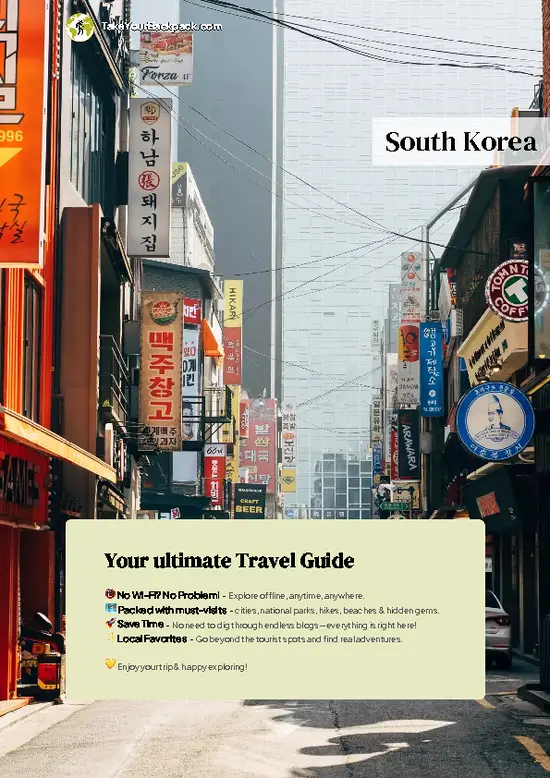
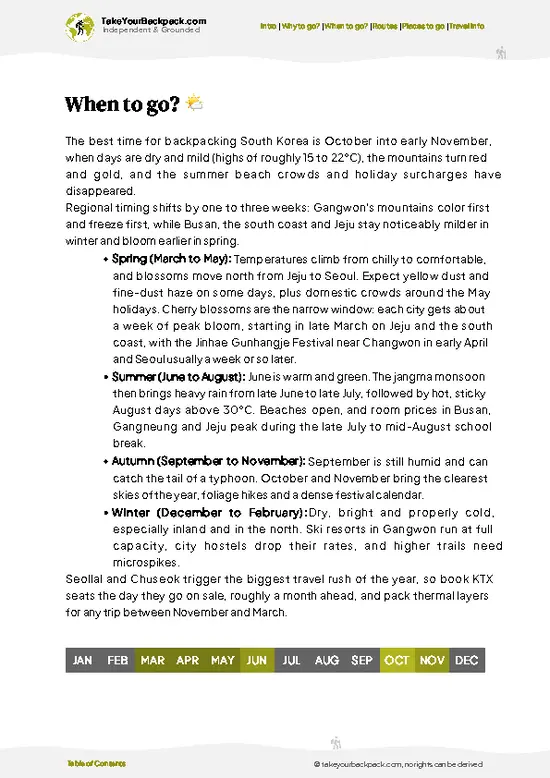
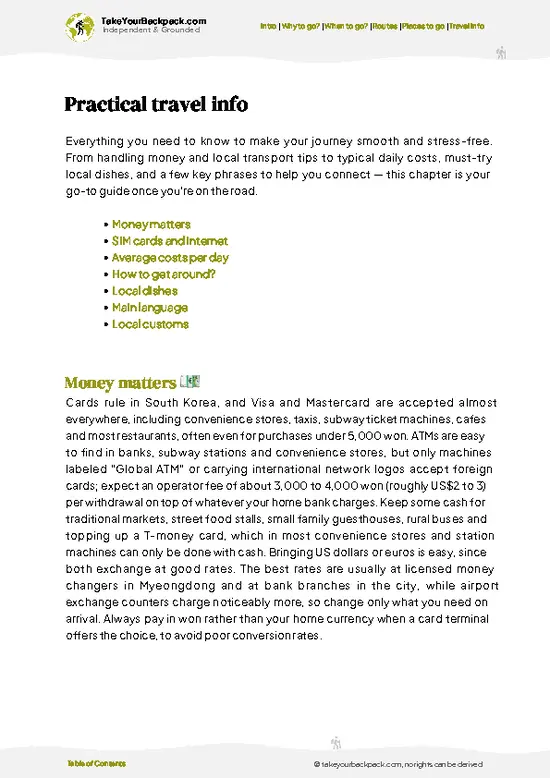
example page 0 from our offline Travel Guide for South Korea
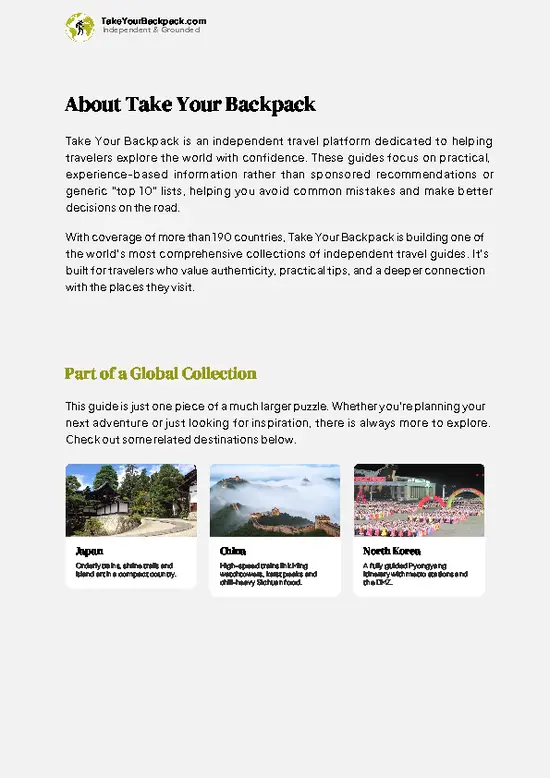
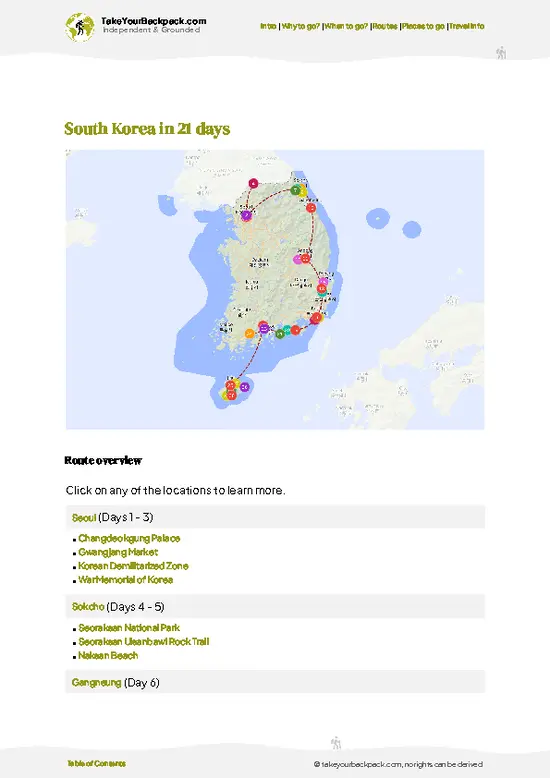
example page 1 from our offline Travel Guide for South Korea
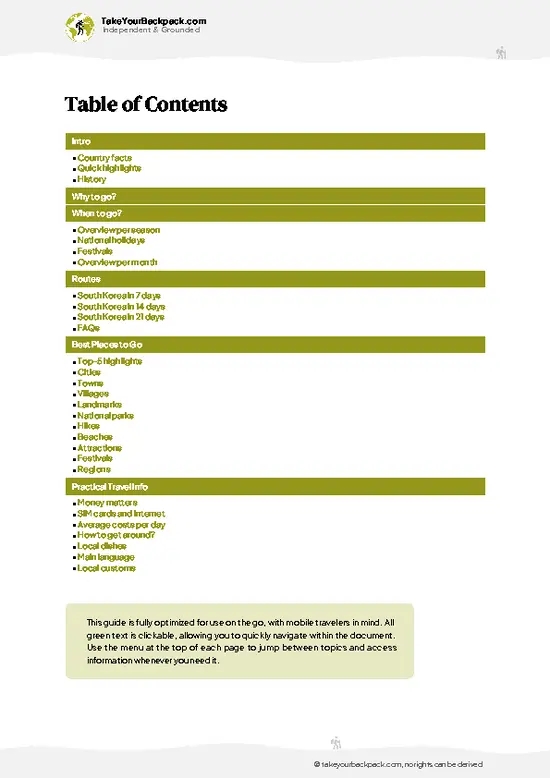
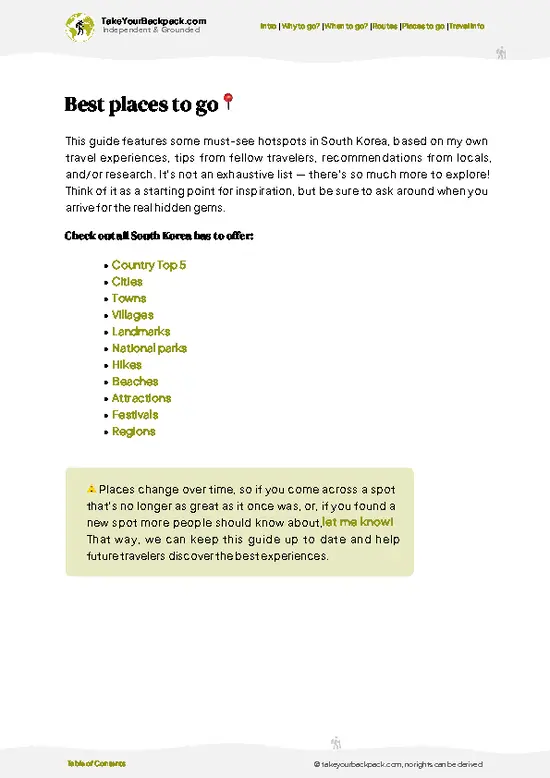
example page 2 from our offline Travel Guide for South Korea
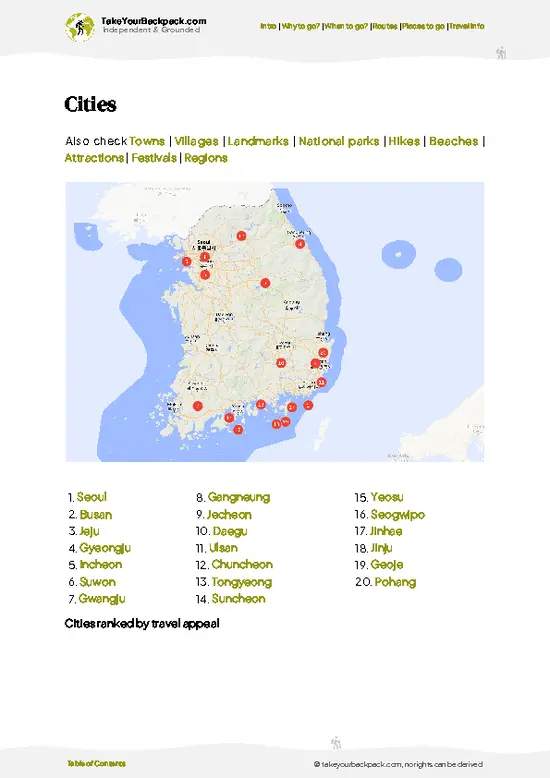
example page 3 from our offline Travel Guide for South Korea
example page 4 from our offline Travel Guide for South Korea
example page 5 from our offline Travel Guide for South Korea
example page 6 from our offline Travel Guide for South Korea
example page 7 from our offline Travel Guide for South Korea
Loading the map 🌍
CLICK TO FILTER
cities
towns
villages
landmarks
national parks
hikes
beaches
attractions
festivals
regions
SHOW COUNTRY’S BESTSHOW ALL

✨ Why go?
Ranked #12 national park in South Korea
What sets this place apart

Backpackers flock to Sobaeksan National Park for its blend of independent exploration and budget-friendly options. With camping sites and hostels nearby, you can stretch your wallet while enjoying the great outdoors. The park offers a variety of trails that cater to different skill levels, making it ideal for both novices and seasoned hikers. You can easily navigate the paths without the need for guided tours, allowing for a more personal experience with nature. This freedom to roam means you can choose your pace and focus on what truly matters: the stunning landscapes and the thrill of discovery.

💡 HighlightsDon't-miss highlights and experiences

  • Sobaeksan Summit (1,439 m) — The obvious highlight: a steep but rewarding climb to wide panoramic views across the Sobaek and Taebaek ranges. On a clear day you get long ridgeline vistas and a real sense of how Korea’s interior mountains stack up.
  • Royal azalea slopes (spring blooms) — In late April-May parts of the upper slopes erupt in pink azaleas that carpet the ridges. It’s one of those short, brilliant windows when the mountain feels completely transformed.
  • Sea of clouds & sunrise spots — Plenty of narrow ridges and early-morning access points make Sobaeksan a great place to catch a cloud inversion or sunrise. You’ll often see hikers camping nearby just for that light show.
  • Dark-sky stargazing / observatory access — Low light pollution up here makes for excellent night skies; there’s
… read more 👉
  • Sobaeksan Summit (1,439 m) — The obvious highlight: a steep but rewarding climb to wide panoramic views across the Sobaek and Taebaek ranges. On a clear day you get long ridgeline vistas and a real sense of how Korea’s interior mountains stack up.
  • Royal azalea slopes (spring blooms) — In late April-May parts of the upper slopes erupt in pink azaleas that carpet the ridges. It’s one of those short, brilliant windows when the mountain feels completely transformed.
  • Sea of clouds & sunrise spots — Plenty of narrow ridges and early-morning access points make Sobaeksan a great place to catch a cloud inversion or sunrise. You’ll often see hikers camping nearby just for that light show.
  • Dark-sky stargazing / observatory access — Low light pollution up here makes for excellent night skies; there’s an astronomy-friendly atmosphere and local observatory events at times, so bring a headlamp with a red filter if you plan to stay up late.
  • Ridge and loop hikes — The park offers solid day-hike options: steady ascents, exposed ridgelines, and well-marked trails that suit fit day-trippers or multi-day backpackers. Routes are rewarding without technical scrambling.
  • Streams, valleys and small waterfalls — Hidden in the lower reaches are cool mountain streams, mossy rocks and seasonal cascades — perfect spots to rest, cool off in summer, or listen to water after a rainy day.
  • Flora and quiet wildlife — Beyond the azaleas you’ll find mixed deciduous and conifer stands, wildflowers in season, and birds and small mammals typical of Korea’s mid-elevation parks. Wildlife sightings aren’t guaranteed, but quiet mornings raise your chances.
Spotted a mistake or missing something? Contact us.

Things to do near Sobaeksan National Park

Ratings based on Tripadvisor reviews. When you book through this link, you support our work at no extra cost to you.

🌤️ When to go?Weather, crowds, and seasonal trade-offs

  • Weather: Spring (April to June) and autumn (September to November) offer the most stable weather. Summers can be hot and humid, often exceeding 30°C (86°F), while winters drop below freezing, sometimes hitting -10°C (14°F).
  • Temperature: Daytime highs in spring and autumn hover around 15-22°C (59-72°F), perfect for hiking without overheating or freezing. Nights can be chilly, so pack layers.
  • Daylight Hours: Longer days in late spring and early autumn provide 12-14 hours of light, giving you ample time to explore without rushing.
  • Crowds: Peak crowds arrive during autumn foliage season and spring cherry blossoms. For a quieter experience, aim for early spring or late autumn before the leaves fully change.
  • Seasonal Activities: Autumn is prime for leaf-peeping; spring brings wildflowers and
… read more 👉
  • Weather: Spring (April to June) and autumn (September to November) offer the most stable weather. Summers can be hot and humid, often exceeding 30°C (86°F), while winters drop below freezing, sometimes hitting -10°C (14°F).
  • Temperature: Daytime highs in spring and autumn hover around 15-22°C (59-72°F), perfect for hiking without overheating or freezing. Nights can be chilly, so pack layers.
  • Daylight Hours: Longer days in late spring and early autumn provide 12-14 hours of light, giving you ample time to explore without rushing.
  • Crowds: Peak crowds arrive during autumn foliage season and spring cherry blossoms. For a quieter experience, aim for early spring or late autumn before the leaves fully change.
  • Seasonal Activities: Autumn is prime for leaf-peeping; spring brings wildflowers and fresh greenery. Winter offers snow-covered trails but demands proper gear and experience.
  • Price Fluctuations: Accommodation and transport costs spike during peak seasons (spring and autumn weekends). Visiting midweek or off-peak months can save money and reduce hassle.
Pro-tip: Plan your trip for early autumn weekdays to balance great weather, fewer crowds, and better prices—keeping your energy and budget focused on the trail, not the stress.


source: climatestotravel.comJANJanuary: fair for travelingFEBFebruary: fair for travelingMARMarch: good for travelingAPRApril: highly recommended for travelingMAYMay: excellent for travelingJUNJune: highly recommended for travelingJULJuly: fair for travelingAUGAugust: fair for travelingSEPSeptember: highly recommended for travelingOCTOctober: excellent for travelingNOVNovember: highly recommended for travelingDECDecember: fair for traveling
when-to-go

✈️ The backpacker research shortcutSouth Korea Travel Guide

An offline-friendly backpacking guide with optimized travel routes, ranked highlights, transport advice, and the best areas to stay.
example page 0 from our offline Travel Guide for South Korea
example page 1 from our offline Travel Guide for South Korea
example page 2 from our offline Travel Guide for South Korea
example page 3 from our offline Travel Guide for South Korea
example page 4 from our offline Travel Guide for South Korea
example page 5 from our offline Travel Guide for South Korea
example page 6 from our offline Travel Guide for South Korea
example page 7 from our offline Travel Guide for South Korea
The digital guide (419 pages) contains:
✅ 117 highlights, ranked by travel appeal
✅ Optimized 7, 14 & 21-day travel routes
✅ Cities, national parks, landmarks, beaches
✅ How to get around
✅ Offline-friendly for travel without Wi-Fi
👉 Click to see all 30+ guide features

📅 Plan smarter in minutes, not weeks
✅ Month by month travel advice
✅ Festivals & national holidays
✅ Budget expectations

🗺️ Go to the right places, skip the overrated ones
✅ Honest pros & cons of destinations
✅ Top hikes, parks & viewpoints
✅ Lesser-known places most travelers miss
✅ Clear “worth it vs skip it” guidance

🛏️ Travel smoothly without rookie mistakes
✅ Best areas to stay
✅ Transport systems explained simply
✅ Common scams & safety advice
✅ SIM cards, money & practical tips

🌍 Understand the country, not just visit it
✅ Culture & traditions
✅ 52 Essential phrases & customs
✅ Festivals worth planning around
✅ Traveler-friendly historical context
✅ Insights that make places more meaningful

📱 Built for real travel conditions
✅ Fully downloadable PDF
✅ Works completely offline
✅ Optimized for phone use
✅ Useful in remote areas & buses
✅ Everything in one place
Stop searching, start planning
Get instant access to your full guide. 30‑day money-back guarantee.
+ Add another guide for just

By proceeding you agree to our terms.
Sent to your inbox immediately after payment • 100% Secure Checkout
Best Backpacking Travel Advisor 2025 tourism awardBest Backpacking
Travel Advisor
2025
What others say about Take Your Backpack Guides:
⭐⭐⭐⭐⭐
Fantastic, amazing amount of information!
⭐⭐⭐⭐⭐
My goodness this is amazing, it's what I've been looking for hats off too you!
⭐⭐⭐⭐⭐
I think this is absolutely BRILLIANT
⭐⭐⭐⭐
Very complete and informative. It's still missing places, but I gotta to commend you
⭐⭐⭐⭐⭐
This is truly amazing, thank you, can't wait to explore it with my kids!
⭐⭐⭐⭐⭐
Awesome resource, thank you!
⭐⭐⭐⭐⭐
This is amazing! Can't wait to explore the ones I haven't seen
⭐⭐⭐⭐
I love this! Well done, great idea.
⭐⭐⭐⭐⭐
Thanks for taking the time to make this gem!
⭐⭐⭐⭐⭐
This might be the best website I've ever seen.
⭐⭐⭐⭐⭐
Congratulations, and thank you so much for your work; it's incredibly valuable.
⭐⭐⭐⭐
In all seriousness I think you did a great job pointing out the important spots
⭐⭐⭐⭐⭐
10/10 very good
⭐⭐⭐⭐⭐
As someone who's only just starting to visit regularly this is awesome, thank you.
⭐⭐⭐⭐
Thank you very much! I'm going to visit my dad, it's going to be very useful!
⭐⭐⭐⭐⭐
This is really cool! We'll be travelling for the first time and this definitely come in handy.
⭐⭐⭐⭐⭐
You are now our minister of culture, congratulations 👨‍💼
⭐⭐⭐⭐⭐
Just wanted to tell you that this is a pearl! Going to follow your recommendations.
⭐⭐⭐⭐⭐
This is so cool. I'll definitely be using the resource for my travels soon.
⭐⭐⭐⭐⭐
This is very impressive! Good work.
⭐⭐⭐⭐⭐
This is an amazing and informative site. Very well done!

🛏️ Where to stay?How to pick the right area

Sobaeksan National Park offers a few solid options for backpackers. Inside the park, you’ll find basic shelters and campsites, perfect for those who want to immerse themselves in nature. These spots are often first-come, first-served, so arrive early to snag a good one.

If you prefer a bit more comfort, head to nearby towns like Danyang or Jecheon. Both have guesthouses and budget hotels that cater to travelers. Danyang, in particular, is known for its vibrant local food scene, which can be a welcome treat after a long hike.

Keep in mind that public transport can be limited, so plan your travel times carefully to avoid unnecessary delays.

👛 Costs (as of 23 September 2026)Money, prices, and spending tips

Visiting Sobaeksan National Park in South Korea can be a rewarding experience, but it’s essential to be aware of the costs involved to avoid surprises.

Entrance fees to the park typically range from €2 to €5 (around $2 to $5). This fee grants you access to the main trails and facilities. If you plan to camp, expect to pay an additional €5 to €10 ($5 to $10) per night for a designated camping area.

Transportation can add up. If you’re taking public transport, a bus from nearby cities like Daejeon or Jecheon will cost about €5 to €10 ($5 to $10) one way. If you opt for a taxi, be prepared for a fare of around €30 to €50 ($30 to $50) depending on your starting point.

Food options within the park are limited. Budget around €5 to €15 ($5 to $15) for meals at local eateries or convenience stores. … read more 👉
Visiting Sobaeksan National Park in South Korea can be a rewarding experience, but it’s essential to be aware of the costs involved to avoid surprises.

Entrance fees to the park typically range from €2 to €5 (around $2 to $5). This fee grants you access to the main trails and facilities. If you plan to camp, expect to pay an additional €5 to €10 ($5 to $10) per night for a designated camping area.

Transportation can add up. If you’re taking public transport, a bus from nearby cities like Daejeon or Jecheon will cost about €5 to €10 ($5 to $10) one way. If you opt for a taxi, be prepared for a fare of around €30 to €50 ($30 to $50) depending on your starting point.

Food options within the park are limited. Budget around €5 to €15 ($5 to $15) for meals at local eateries or convenience stores. If you bring your own food, you’ll save money and have more flexibility.

Lastly, consider the cost of gear if you need to rent equipment. Rental prices for hiking gear can range from €10 to €30 ($10 to $30) per day.

By keeping these costs in mind, you can allocate your budget wisely and focus on enjoying the stunning landscapes and tranquility of Sobaeksan National Park.
⚠️ Prices can change and everyone travels differently, so take this as a rough guide. Hope it helps you plan your adventure!

🥾 TrailsWhere to hike in Sobaeksan: trails for every level

Sobaeksan National Park is a gem tucked away in South Korea, perfect for those looking to soak in some stunning mountain scenery without breaking the bank. The park features a mix of rugged terrain and gentle slopes, making it accessible for various skill levels. You’ll find yourself surrounded by dense forests, rocky outcrops, and breathtaking vistas, especially during autumn when the foliage bursts into vibrant colors.

One of the standout trails is Cheonhwangsan Trail. Here’s what you can expect:
  • Length: 8 km
  • Estimated Duration: 4-5 hours
  • Difficulty Level: Moderate
  • Key Features: Panoramic views
… read more 👉
Sobaeksan National Park is a gem tucked away in South Korea, perfect for those looking to soak in some stunning mountain scenery without breaking the bank. The park features a mix of rugged terrain and gentle slopes, making it accessible for various skill levels. You’ll find yourself surrounded by dense forests, rocky outcrops, and breathtaking vistas, especially during autumn when the foliage bursts into vibrant colors.

One of the standout trails is Cheonhwangsan Trail. Here’s what you can expect:
  • Length: 8 km
  • Estimated Duration: 4-5 hours
  • Difficulty Level: Moderate
  • Key Features: Panoramic views from the summit, beautiful wildflowers in spring, and unique rock formations
  • Terrain: A mix of well-marked paths and rocky sections, with some steep inclines

Wildlife enthusiasts will appreciate the chance to spot various birds and maybe even a deer or two if you’re quiet enough. The park isn’t overly crowded, especially if you hit the trails early in the morning or on weekdays. As for getting there, public transport is pretty straightforward; you can catch a bus from nearby cities like Daejeon or Chungju. Just be sure to check the schedules, as they can be a bit sparse on weekends. There’s a small entrance fee, but it’s usually worth it for the peace and beauty you’ll find inside.
⚠️ Hiking info can sometimes be outdated or inaccurate. Before you hit the trail, check the latest conditions with locals. If you do spot anything that's off, I'd love to hear from you, so I can update it for fellow travelers.

🛡️ SafetyStaying Safe: What Travelers Should Know

Sobaeksan National Park is generally well-managed, but a few realities can catch you off guard. Weather can shift quickly, so pack layers and check forecasts before heading out. The trails vary in steepness; some sections require careful footing, especially after rain. Navigation is straightforward, but always carry a map or download offline trails. Wildlife is present, including deer and the occasional bear; keep food secured and maintain a respectful distance. Most importantly, pace yourself. Enjoy the journey, but don’t rush—this park rewards those who take their time.

FAQCommon questions from travelers

2 days are sufficient to explore the main trails and scenic spots of Sobaeksan National Park. This allows time for hiking to the summit and visiting the Sobaeksan Observatory. Additional days may be needed for more extensive trekking or to explore nearby attractions.
Yes, you can visit Sobaeksan National Park without a car. Public buses run from nearby cities like Danyang and Yeongju to the park entrance, but schedules can be limited, so plan accordingly. Local taxis are also an option for reaching trailheads from bus stops.
No entrance fee or special permit is required to enter Sobaeksan National Park. However, some specific facilities or guided tours within the park may charge a fee. General access to hiking trails and natural areas is free year-round.
⚠️ Things can change over time, so always validate details locally before you go.

Other South Korean national parks near Sobaeksan

Explore more nearby:


💡 Not sure where to go next?
Create a personalized itinerary for South Korea including Sobaeksan and the places that fit your trip.

Generate my itinerary

👉 Discover all national parks

Or checkout all South Korea has to offer (think cities, towns, villages, national parks, hikes, beaches, festivals)
Country photo of South Korea

We 💚 feedbackParting advice and final tips

Sobaeksan National Park has a serene vibe that invites you to breathe deeply. The best surprise? The wildflowers in spring—an explosion of color that feels like nature’s own celebration. Just a heads-up: the trails can get slippery after rain, so tread carefully. It’s all about savoring the journey, not just the destination.

✍️ Help improve this page!
The information on this page is based on in-depth research, insights shared by experienced travelers, and feedback from the local travel community in South Korea. While every effort is made to keep the information accurate and current, conditions can change — so if you spot anything incorrect or outdated, please get in touch.


🙋‍♂️ Give feedback

👋 Meet the founderWho’s Behind Take Your Backpack?

Johan, backpacker and founder of TakeYourBackpackHi, I’m Johan (Netherlands 🇳🇱), the creator of TakeYourBackpack. Over the past 3 decades, I’ve backpacked through 90+ countries across six continents, gaining extensive experience with independent travel, long-term trips, and overland routes.

This site is built on a combination of firsthand travel experience and carefully curated insights from other backpackers. Many guides are based on places I’ve personally visited, while others bring together tips, observations, and practical advice shared by trusted travelers I’ve met along the way.

The goal is to provide realistic, experience-driven guidance — not generic itineraries — so you can explore destinations with better context, clearer expectations, and more confidence.