

×

Sudan🇸🇩 | hikesNuba Mountainsrolling highlands, patchwork farms, traditional villages | things to do and best time to go

Explore Bayuda DesertExplore Red Sea Mountains

Backpacking in Nuba Mountains
👍 Recommendedhike ranked #4
By Johan Kruseman 🇳🇱 | Updated June 6, 2026

Red dust coats your calves as you scramble up a sun-baked ridge, sweat stinging your eyes, the air thick with the scent of wild basil and woodsmoke. Somewhere below, a goat bell clangs, echoing off the ancient granite. This is the Nuba Mountains—tucked in central-southern Sudan, far from the Nile’s tourist circuit, and a world away from anything resembling easy. The hike here is raw: expect steep, rocky climbs, heat that presses down like a hand, and trails that vanish into thorny scrub. But the payoff? Cresting a summit to see patchwork farms and ochre villages sprawled beneath a sky so wide it feels mythic. Getting here is a mission—public transport is sparse and patience is mandatory. Compared to the gentler hills near Kassala or the Red Sea, Nuba is wilder, less forgiving, but infinitely more rewarding if you crave real adventure over comfort.

Discover everything you want to know in the 📖 Sudan Travel Guide.
Best time to go: June - February
Duration: 7 to 10 days
Distance: 200 to 300 kilometers
Total ascent: 1,000 to 2,500 meters
Safety warning

The current risk level for Sudan is high. Check the advice before going.


Get your Sudan guide
72 ranked highlights, routes & tips, works offline (300 pages)
Loading the map 🌍
CLICK TO FILTER
cities
towns
landmarks
national parks
hikes
beaches
attractions
festivals
regions
SHOW COUNTRY’S BESTSHOW ALL

✨ Why go?
Ranked #4 hike in Sudan
Reasons people choose to hike the here

The Nuba Mountains in Sudan are a backpacker’s playground, where the scenery-to-effort ratio is off the charts. Imagine rugged peaks rising dramatically, dotted with lush valleys and vibrant local culture. The trails here are not just paths; they’re gateways to adventure, offering a mix of flexible distances that cater to both the casual hiker and the seasoned trekker.

Getting there is a breeze. Public transport whisks you from Khartoum to the heart of the mountains, making it easy to dive into the wild without breaking the bank. You can spend a few days or a few weeks, depending on your pace and curiosity.

Each step through the rocky terrain brings you closer to breathtaking views that make the sweat worth it. Picture yourself reaching a summit, the sun dipping below the horizon, painting … read more 👉
The Nuba Mountains in Sudan are a backpacker’s playground, where the scenery-to-effort ratio is off the charts. Imagine rugged peaks rising dramatically, dotted with lush valleys and vibrant local culture. The trails here are not just paths; they’re gateways to adventure, offering a mix of flexible distances that cater to both the casual hiker and the seasoned trekker.

Getting there is a breeze. Public transport whisks you from Khartoum to the heart of the mountains, making it easy to dive into the wild without breaking the bank. You can spend a few days or a few weeks, depending on your pace and curiosity.

Each step through the rocky terrain brings you closer to breathtaking views that make the sweat worth it. Picture yourself reaching a summit, the sun dipping below the horizon, painting the sky in hues you didn’t know existed. After a day of exploration, nothing beats cracking open a cold beer with fellow travelers, sharing stories of the trails you conquered. The Nuba Mountains aren’t just a hike; they’re a visceral experience that lingers long after you leave.
Want to include Nuba Mountains in your Sudan route?
Create a personalized Sudan itinerary that includes Nuba Mountains and the places that fit your trip — based on your travel style, budget, and available time. Get your route in seconds.

Generate my trip

💡 HighlightsThe experiences that define the visit

  1. Ridge-top panoramas — Walk along the serrated ridges and you get sudden, jaw-dropping views over patchwork valleys and distant plains. The contrast between the raw granite cliffs and the wide Sudanese horizon makes these viewpoints feel more remote and cinematic than most hillwalks back home.
  2. Traditional Nuba villages — Tiny stone and mud compounds, women in bright beadwork, and informal market stalls; the area’s living culture is the real highlight. These villages offer genuine, up-close cultural encounters you won’t find on a typical nature trail — local hospitality, craftwork, and occasional public wrestling or dance if you time it right.
  3. Terraced fields and green valleys (in season) — After rains the valley terraces turn lush and dramatic, a vivid contrast to the otherwise arid surround.
read more 👉
  1. Ridge-top panoramas — Walk along the serrated ridges and you get sudden, jaw-dropping views over patchwork valleys and distant plains. The contrast between the raw granite cliffs and the wide Sudanese horizon makes these viewpoints feel more remote and cinematic than most hillwalks back home.
  2. Traditional Nuba villages — Tiny stone and mud compounds, women in bright beadwork, and informal market stalls; the area’s living culture is the real highlight. These villages offer genuine, up-close cultural encounters you won’t find on a typical nature trail — local hospitality, craftwork, and occasional public wrestling or dance if you time it right.
  3. Terraced fields and green valleys (in season) — After rains the valley terraces turn lush and dramatic, a vivid contrast to the otherwise arid surround. The farming terraces carved into steep slopes are both beautiful and a reminder of how people have adapted to this landscape for generations.
  4. Granite tors and rock formations — Weathered rocks form towers, arches, and narrow gorges ideal for short scrambles and photography. The geology gives the hikes real variety — it’s not just a walk, it’s a landscape of sculpted stone you can clamber over.
  5. Seasonal pools, waterfalls and birdlife — Ephemeral streams and rock pools appear after rains and attract a surprising number of birds and small mammals, making for excellent wildlife moments without crowds. The silence at dusk — broken by birds and distant campfires — is one of those rare trail experiences.
Personal favorite: Traditional Nuba villages — nothing beats the mix of hospitality, craft, and storytelling that turns a hike into a real human exchange.
Spotted a mistake or missing something? Contact us.

🌤️ When to go?When to go for the best experience


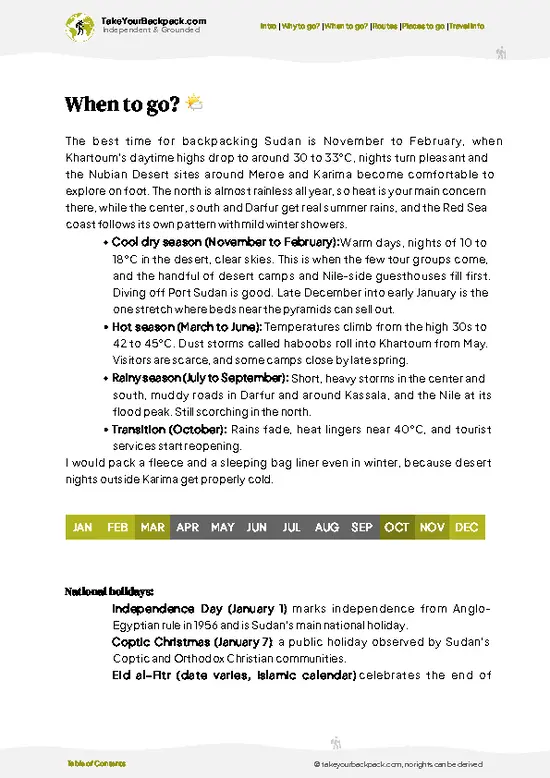
  • Weather: The Nuba Mountains bake under the Sudanese sun from March to May, with temperatures soaring above 40°C (104°F). Avoid this scorch unless you’re a desert warrior. The cooler months, November to February, offer a more forgiving climate, hovering between 20-28°C (68-82°F), perfect for long days on the trail without frying your skin.

  • Temperature: Nights can dip sharply, especially in December and January, dropping to around 10°C (50°F). Layer up for early mornings and evenings—those cold snaps hit hard after the sun sets behind the ridges.

  • Daylight Hours: Expect roughly 11 to 12 hours of daylight year-round. The sun rises early and sets late enough to squeeze in a full day of trekking, but plan to start early to avoid the midday heat in shoulder seasons.

  • Crowds: The Nuba Mountains
read more 👉

  • Weather: The Nuba Mountains bake under the Sudanese sun from March to May, with temperatures soaring above 40°C (104°F). Avoid this scorch unless you’re a desert warrior. The cooler months, November to February, offer a more forgiving climate, hovering between 20-28°C (68-82°F), perfect for long days on the trail without frying your skin.

  • Temperature: Nights can dip sharply, especially in December and January, dropping to around 10°C (50°F). Layer up for early mornings and evenings—those cold snaps hit hard after the sun sets behind the ridges.

  • Daylight Hours: Expect roughly 11 to 12 hours of daylight year-round. The sun rises early and sets late enough to squeeze in a full day of trekking, but plan to start early to avoid the midday heat in shoulder seasons.

  • Crowds: The Nuba Mountains remain off most tourist radars year-round. You’ll find solitude and raw encounters with local culture, especially outside the brief influx of Sudanese visitors during cooler months.

  • Seasonal Activities: Harvest season in late autumn brings vibrant local festivals and a chance to witness traditional dances and crafts. Timing your hike here adds a cultural layer to the physical challenge.

  • Price Fluctuations: Costs stay stable due to low tourism volume, but expect slightly higher prices during the dry, cooler months when local guides are in demand.


Pro-tip: Aim for late November to early February—cooler temps, cultural buzz, and empty trails combine for a backpacking experience that rewards every drop of sweat with unforgettable views and genuine connection.


source: climatestotravel.comJANJanuary: excellent for travelingFEBFebruary: excellent for travelingMARMarch: fair for travelingAPRApril: below average for travelingMAYMay: below average for travelingJUNJune: good for travelingJULJuly: good for travelingAUGAugust: good for travelingSEPSeptember: highly recommended for travelingOCTOctober: highly recommended for travelingNOVNovember: excellent for travelingDECDecember: excellent for traveling
when-to-go

✈️ The backpacker research shortcutSudan Travel Guide

An offline-friendly backpacking guide with optimized travel routes, ranked highlights, transport advice, and the best areas to stay.
example page 0 from our offline Travel Guide for Sudan
example page 1 from our offline Travel Guide for Sudan
example page 2 from our offline Travel Guide for Sudan
example page 3 from our offline Travel Guide for Sudan
example page 4 from our offline Travel Guide for Sudan
example page 5 from our offline Travel Guide for Sudan
example page 6 from our offline Travel Guide for Sudan
example page 7 from our offline Travel Guide for Sudan
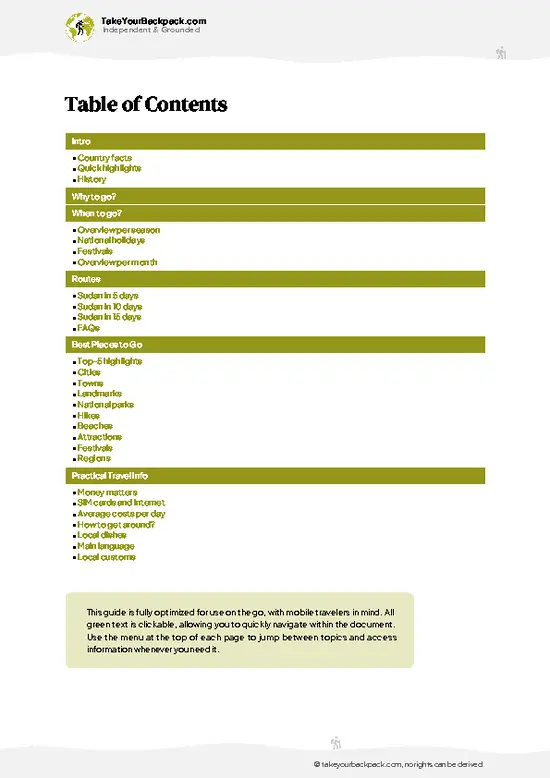
The digital guide (300 pages) contains:
72 highlights, ranked by travel appeal
Optimized 5, 10 & 15-day travel routes
Cities, national parks, landmarks, beaches
How to get around
Offline-friendly for travel without Wi-Fi
👉 Click to see all 30+ guide features

📅 Plan smarter in minutes, not weeks
Month by month travel advice
Festivals & national holidays
Budget expectations

🗺️ Go to the right places, skip the overrated ones
Honest pros & cons of destinations
Top hikes, parks & viewpoints
Lesser-known places most travelers miss
Clear “worth it vs skip it” guidance

🛏️ Travel smoothly without rookie mistakes
Best areas to stay
Transport systems explained simply
Common scams & safety advice
SIM cards, money & practical tips

🌍 Understand the country, not just visit it
Culture & traditions
52 Essential phrases & customs
Festivals worth planning around
Traveler-friendly historical context
Insights that make places more meaningful

📱 Built for real travel conditions
Fully downloadable PDF
Works completely offline
Optimized for phone use
Useful in remote areas & buses
Everything in one place
Save weeks of stressful planning
Get instant access to your full guide. 30‑day money-back guarantee.


By proceeding you agree to our terms.
Sent to your inbox immediately after payment • 100% Secure Checkout
Best Backpacking Travel Advisor 2025 tourism awardBest Backpacking
Travel Advisor
2025
What others say about Take Your Backpack Guides:
⭐⭐⭐⭐⭐
Fantastic, amazing amount of information!
⭐⭐⭐⭐⭐
My goodness this is amazing, it's what I've been looking for hats off too you!
⭐⭐⭐⭐⭐
I think this is absolutely BRILLIANT
⭐⭐⭐⭐
Very complete and informative. It's still missing places, but I gotta to commend you
⭐⭐⭐⭐⭐
This is truly amazing, thank you, can't wait to explore it with my kids!
⭐⭐⭐⭐⭐
Awesome resource, thank you!
⭐⭐⭐⭐⭐
This is amazing! Can't wait to explore the ones I haven't seen
⭐⭐⭐⭐
I love this! Well done, great idea.
⭐⭐⭐⭐⭐
Thanks for taking the time to make this gem!
⭐⭐⭐⭐⭐
This might be the best website I've ever seen.
⭐⭐⭐⭐⭐
Congratulations, and thank you so much for your work; it's incredibly valuable.
⭐⭐⭐⭐
In all seriousness I think you did a great job pointing out the important spots
⭐⭐⭐⭐⭐
10/10 very good
⭐⭐⭐⭐⭐
As someone who's only just starting to visit regularly this is awesome, thank you.
⭐⭐⭐⭐
Thank you very much! I'm going to visit my dad, it's going to be very useful!
⭐⭐⭐⭐⭐
This is really cool! We'll be travelling for the first time and this definitely come in handy.
⭐⭐⭐⭐⭐
You are now our minister of culture, congratulations 👨‍💼
⭐⭐⭐⭐⭐
Just wanted to tell you that this is a pearl! Going to follow your recommendations.
⭐⭐⭐⭐⭐
This is so cool. I'll definitely be using the resource for my travels soon.
⭐⭐⭐⭐⭐
This is very impressive! Good work.
⭐⭐⭐⭐⭐
This is an amazing and informative site. Very well done!

🛏️ Where to stay?Best areas to stay in Sudan

If you enjoy meeting fellow travelers, consider choosing hostels with high ratings for atmosphere. On the other hand, if you prefer having your own space, a hotel might be a better option.

🥾 Hike detailsA practical overview of the hike

Total Distance: The Nuba Mountains trail spans approximately 120 kilometers (about 75 miles) from one end to the other, depending on your chosen route and detours.

Estimated Duration: Expect to spend around 7 to 10 days on the trail, depending on your pace, the time you take to soak in the scenery, and any side trips you might want to do.

Difficulty Level: This trail is generally rated as moderate to challenging. There are sections with steep climbs and rocky terrain, so a good level of fitness is recommended.

Starting Point: The trail typically begins in the town of Kadugli. To get there via … read more 👉
Total Distance: The Nuba Mountains trail spans approximately 120 kilometers (about 75 miles) from one end to the other, depending on your chosen route and detours.

Estimated Duration: Expect to spend around 7 to 10 days on the trail, depending on your pace, the time you take to soak in the scenery, and any side trips you might want to do.

Difficulty Level: This trail is generally rated as moderate to challenging. There are sections with steep climbs and rocky terrain, so a good level of fitness is recommended.

Starting Point: The trail typically begins in the town of Kadugli. To get there via public transport, you can take a bus from Khartoum, which takes about 10 to 12 hours. Buses run regularly, but it’s wise to buy your ticket a day in advance, especially during peak travel times.

Major Landmarks Along the Route:
  • Mount Kordofan: A stunning peak that offers breathtaking views of the surrounding area.
  • Wadi Khor: A beautiful valley with seasonal water flows, perfect for a rest stop.
  • Traditional Villages: You’ll pass through several Nuba villages where you can interact with locals and learn about their culture.

Type of Terrain and Scenery: The terrain varies significantly, from rocky paths and steep hills to lush valleys. As you trek, you’ll encounter dramatic landscapes, including granite outcrops and rolling hills, with some sections offering panoramic views of the mountains and valleys below.

Typical Vegetation and Wildlife:
  • Vegetation: Expect to see a mix of acacia trees, wild grasses, and shrubs. In the valleys, you might find more dense vegetation, including fruit trees.
  • Wildlife: Keep your eyes peeled for various birds, monkeys, and possibly even antelope. The area is rich in biodiversity, so you might get lucky with some wildlife sightings.

If you’re planning to hike the Nuba Mountains, make sure to carry enough water, as some stretches can be quite dry. Also, consider hiring a local guide for a better experience and to navigate the less-marked paths. Happy hiking!
⚠️ Hiking info can sometimes be outdated or inaccurate. Before you hit the trail, check the latest conditions with locals. If you do spot anything that's off, I'd love to hear from you, so I can update it for fellow travelers.

🛡️ SafetyTraveler Safety Guide

The Nuba Mountains offer a raw, exhilarating experience, but you need to be prepared for what lies ahead. Weather can shift quickly; sunny skies can morph into sudden rain, so pack a lightweight, waterproof jacket. The trails are rugged, with steep ascents and rocky footing that demand your attention. Navigation can be tricky, so a good map and a compass are essential—don’t rely solely on your phone.

Wildlife is part of the charm here. You might spot monkeys or various birds, but keep your distance. Respect their space; a calm observer is a safe observer.

Timing matters. Early mornings are cooler and less humid, making for a more enjoyable trek. Carry enough water and snacks to keep your energy up; the terrain can be demanding, and you’ll want to savor that first cold drink at the end of … read more 👉
The Nuba Mountains offer a raw, exhilarating experience, but you need to be prepared for what lies ahead. Weather can shift quickly; sunny skies can morph into sudden rain, so pack a lightweight, waterproof jacket. The trails are rugged, with steep ascents and rocky footing that demand your attention. Navigation can be tricky, so a good map and a compass are essential—don’t rely solely on your phone.

Wildlife is part of the charm here. You might spot monkeys or various birds, but keep your distance. Respect their space; a calm observer is a safe observer.

Timing matters. Early mornings are cooler and less humid, making for a more enjoyable trek. Carry enough water and snacks to keep your energy up; the terrain can be demanding, and you’ll want to savor that first cold drink at the end of the day. Embrace the challenge, and the Nuba Mountains will reward you with breathtaking views and a sense of accomplishment that lingers long after the hike.

Other Sudanese hikes near Nuba Mountains

Explore more nearby:


💡 Not sure where to go next?
Create a personalized itinerary for Sudan including Nuba Mountains and the places that fit your trip.

Generate my itinerary

👉 Discover all hikes

Or checkout all Sudan has to offer (think cities, towns, villages, national parks, hikes, beaches, festivals)
Country photo of Sudan

We 💚 feedbackWhat to keep in mind

The Nuba Mountains pulse with life. Trekking through those rugged trails, you’ll feel the earth beneath your boots and the warmth of the locals who greet you with genuine smiles. But be ready for the heat—it’s relentless. Hydration is non-negotiable. Still, the payoff? Standing atop a ridge, watching the sun dip behind the peaks, painting the sky in hues you didn’t know existed. It’s a moment that makes every drop of sweat worth it.

✈️ When did I visit Sudan?
Sudan I visited back in October 2017. I combined the trip with a visit to Ethiopia.

✍️ Help improve this page!
The information on this page is based on my own backpacking experience in Sudan, supplemented with up-to-date research and feedback from other travelers. Travel details can change, so if you notice anything outdated or incomplete, feel free to let me know.


🙋‍♂️ Give feedback

👋 Meet the founderWho’s Behind Take Your Backpack?

Johan, backpacker and founder of TakeYourBackpackHi, I’m Johan (Netherlands 🇳🇱), the creator of TakeYourBackpack. Over the past decade, I’ve backpacked through 80+ countries across six continents, gaining extensive experience with independent travel, long-term trips, and overland routes.

This site is built on a combination of firsthand travel experience and carefully curated insights from other backpackers. Many guides are based on places I’ve personally visited, while others bring together tips, observations, and practical advice shared by trusted travelers I’ve met along the way.

The goal is to provide realistic, experience-driven guidance — not generic itineraries — so you can explore destinations with better context, clearer expectations, and more confidence.

Get full Sudan guide •
Instant download • 72 highlights • Full Offline guide