×

Sweden🇸🇪 | regionsLaponian Areatundra plateaus, Sámi culture, reindeer migration | things to do and best time to go

Explore GotlandExplore Skåne

Backpacking in Laponian Area
UNESCO World Heritage site
🏆 Top pickregion ranked #2
By Johan Kruseman 🇳🇱 | Updated June 13, 2026

Ten, fifteen years ago, the Laponian Area felt like a rumor passed between hikers: no Instagram crowds, just Sami reindeer herders, weather-beaten cabins, and the occasional German with a paper map. Today it’s still wild, but you’ll notice better-marked trails, fuller huts, and a quiet arms race in outdoor gear on the Kungsleden. This UNESCO-listed chunk of Arctic wilderness sits in Sweden’s far north, mostly in Norrbotten, wrapping around Jokkmokk and stretching toward the Norwegian border. For backpackers, it’s a trade: outrageous mountain plateaus, Sarek’s trackless valleys, and midnight-sun skies in exchange for high prices, long transport days, and weather that can flip from T-shirt to hypothermia warning in an hour. Compared with Abisko or Kiruna, Laponia feels older, rougher, less curated; buses are sparse, towns are tiny, and nightlife is a camp stove and a good story. But if you want Sweden without the souvenir shops, this is where it still feels real.

Discover everything you want to know in the 📖 Sweden Travel Guide.


Get your Sweden guide
119 ranked highlights, routes & tips, works offline (446 pages)
Loading the map 🌍
CLICK TO FILTER
cities
towns
villages
landmarks
national parks
hikes
beaches
attractions
festivals
regions
SHOW COUNTRY’S BESTSHOW ALL

✨ Why go?
Ranked #2 region in Sweden
What makes this region worth visiting

In the Laponian Area of Sweden, backpackers find a treasure trove of experiences that blend nature and culture seamlessly. The variety of landscapes here is staggering—think towering mountains, serene lakes, and vast forests. You can hike, fish, or simply soak in the views without the hassle of constant relocation.

Transport is a breeze, too. With flexible options like buses and trains, you can easily hop between towns and trails, making it simple to explore at your own pace. This is the essence of slow travel—you’re not just ticking boxes; you’re immersing yourself in the local rhythm.

Plus, the chance to connect with the Sami culture adds a rich layer to your adventure. Whether it’s visiting a reindeer farm or enjoying traditional cuisine, you’re not just a spectator; you’re part of … read more 👉
In the Laponian Area of Sweden, backpackers find a treasure trove of experiences that blend nature and culture seamlessly. The variety of landscapes here is staggering—think towering mountains, serene lakes, and vast forests. You can hike, fish, or simply soak in the views without the hassle of constant relocation.

Transport is a breeze, too. With flexible options like buses and trains, you can easily hop between towns and trails, making it simple to explore at your own pace. This is the essence of slow travel—you’re not just ticking boxes; you’re immersing yourself in the local rhythm.

Plus, the chance to connect with the Sami culture adds a rich layer to your adventure. Whether it’s visiting a reindeer farm or enjoying traditional cuisine, you’re not just a spectator; you’re part of the story. In Laponia, every moment is a chance to savor the journey, making it a high-value experience you won’t forget.
Want to include Laponian Area in your Sweden route?
Create a personalized Sweden itinerary that includes Laponian Area and the places that fit your trip — based on your travel style, budget, and available time. Get your route in seconds.

Generate my trip

💡 HighlightsWhat this place is best known for

  • Skierfe (Skierffe) viewpoint — The sheer cliff above the Rapa Valley: a short but steep hike from Aktse that delivers one of northern Europe’s most dramatic panoramas — a thousand-foot drop to a braided green river and glaciated peaks. Perfect for sunrise photos and a real “I’m-that-far-north” moment.
  • Rapa Valley (Rapaälven delta) — That wide, braided river delta flowing out of Sarek is the Laponian Area’s signature landscape. Walk or boat to the riverbanks and watch the patterns change with the light; the scale and wildness here (and the silence) are hard to find elsewhere.
  • Aktse and the boat crossing to Rapa — A proper field-base rather than a town: a tiny settlement with a summer boat that ferries hikers across to the Rapa Valley and beyond. Staying here or taking the boat is part of
read more 👉
  • Skierfe (Skierffe) viewpoint — The sheer cliff above the Rapa Valley: a short but steep hike from Aktse that delivers one of northern Europe’s most dramatic panoramas — a thousand-foot drop to a braided green river and glaciated peaks. Perfect for sunrise photos and a real “I’m-that-far-north” moment.
  • Rapa Valley (Rapaälven delta) — That wide, braided river delta flowing out of Sarek is the Laponian Area’s signature landscape. Walk or boat to the riverbanks and watch the patterns change with the light; the scale and wildness here (and the silence) are hard to find elsewhere.
  • Aktse and the boat crossing to Rapa — A proper field-base rather than a town: a tiny settlement with a summer boat that ferries hikers across to the Rapa Valley and beyond. Staying here or taking the boat is part of the classic Sarek experience — simple, practical, and fiercely local.
  • Sarek National Park — wild mountain wilderness — Glaciated peaks, deep valleys and no marked trails: Sarek is about raw, route-finding mountain country and glacier views. If you want untrammeled high-mountain solitude and big objective terrain, this is it — bring map skills and respect.
  • Áhkká massif (the “Queen of Lapland”) — A jagged, multi-summit massif with glaciers and striking ridgelines rising above Akkajaure. Hikes and viewpoints around Áhkká show a dramatic contrast between the low plateaus and sharp mountain relief, and the massif is important in Sámi tradition.
  • Padjelanta National Park & Lake Virihaure — A broad, low alpine plateau with long, gentle hikes, huge lakes and active Sámi summer grazing. Virihaure’s shores and the surrounding pastures feel human-scaled — you’ll see reindeer, seasonal huts and a cultural landscape shaped by centuries of Sámi herding.
  • Muddus (Muttos) National Park & Muddusfallet — Ancient pine forest, bogs and boardwalks lead to powerful waterfalls and narrow gorges. This is the old-growth boreal side of the Laponian Area: mellow trails, birdlife, and a moody, wetland feel that’s nothing like the high mountains.
  • Stora Sjöfallet & Suorva viewpoint — Visit the rim of the old Stora Sjöfallet gorge and the Suorva dam area to see how hydro development changed the landscape (and drowned the old falls). The viewpoint gives a strong sense of history tied to the land — plus dramatic views over Akkajaure and surrounding peaks.
  • Kvikkjokk village (hidden gem) — A tiny hamlet that’s a quieter gateway into Padjelanta and Sarek. Wooden village church, old timber houses and immediate access to day-hikes make Kvikkjokk a great place to meet locals, pick up route tips, and feel the living Sámi mountain-culture without the crowds.
  • Staloluokta & Saltoluokta area (hidden gem) — Small, traditional mountain hamlets on the shores of Langas/Akkajaure, reachable by boat and off the main road. The preserved wooden buildings, simple lakeside life and the sound of rowing oars at dusk are the kind of low-key, local experiences most tourists miss — stay a night if you can.
Spotted a mistake or missing something? Contact us.

⌛️ 5 daysWhat you can realistically do in a week

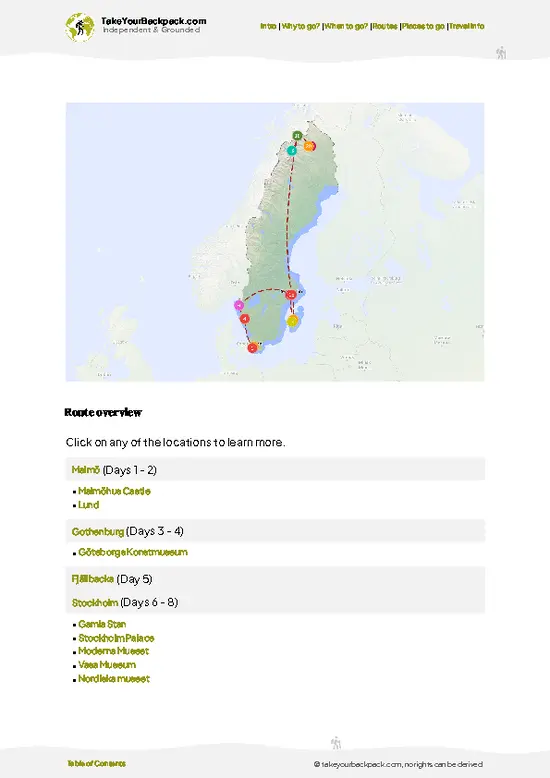
Day 1: Kiruna
Kiruna is your gateway to the Laponian Area, and it’s where the adventure begins. The train ride from Stockholm is scenic, but the real magic happens when you step into this town. You’ll want to check out the Icehotel, a marvel of artistry and engineering. Spend the night here to soak in the unique atmosphere. This sets the tone for your trip: a blend of comfort and the wild.

Day 2: Abisko
A quick train ride takes you to Abisko, a hub for outdoor activities. The Abisko National Park is a playground for hikers and skiers alike. The chairlift to Nuolja offers breathtaking views without the sweat. This is where you can catch the Northern Lights if the timing is right. The transport here is efficient, allowing you to maximize your time outdoors.

Day 3: Kebnekaise
From Abisko, … read more 👉
Day 1: Kiruna
Kiruna is your gateway to the Laponian Area, and it’s where the adventure begins. The train ride from Stockholm is scenic, but the real magic happens when you step into this town. You’ll want to check out the Icehotel, a marvel of artistry and engineering. Spend the night here to soak in the unique atmosphere. This sets the tone for your trip: a blend of comfort and the wild.

Day 2: Abisko
A quick train ride takes you to Abisko, a hub for outdoor activities. The Abisko National Park is a playground for hikers and skiers alike. The chairlift to Nuolja offers breathtaking views without the sweat. This is where you can catch the Northern Lights if the timing is right. The transport here is efficient, allowing you to maximize your time outdoors.

Day 3: Kebnekaise
From Abisko, take a bus to Kebnekaise, Sweden’s highest peak. This is a full-day commitment, but the trek to the summit is worth every step. The trails are well-marked, and the scenery is jaw-dropping. Pack a lunch and enjoy it at the top; the sense of accomplishment is unbeatable.

Day 4: Nikkaluokta
A short bus ride brings you to Nikkaluokta, where you can recharge. This is a great spot to explore local Sami culture. Visit a reindeer farm or try some traditional dishes. It’s a slower day, but it’s essential for soaking in the local vibe.

Day 5: Off-Path Reward: Riksgränsen
Take a detour to Riksgränsen, just a bit further north. This ski resort is less crowded and offers a unique experience. You can ski or hike, depending on the season. The local vibe is chill, and you’ll feel like a true insider.

The must-do day? Day 3 at Kebnekaise. It’s the heart of the Laponian experience, blending challenge with stunning rewards. This is where you’ll feel the pulse of the wild.
Turn your Laponian Area visit into an Sweden adventure
Build a complete Sweden route with Laponian Area, hidden gems, must-see destinations, and realistic travel times included.

Generate my trip

🌤️ When to go?Seasonal considerations and timing


  • Weather: The Laponian Area swings from crisp summers to brutal winters. June to August offers mild temps around 10-20°C (50-68°F), perfect for hiking without freezing your toes off. Winter months plunge below -20°C (-4°F), which is epic for snow adventures but demands serious gear.

  • Daylight Hours: Midnight sun rules from late May to mid-July, giving you nearly 24 hours of light. This means more time on the trail but also messes with your sleep if you’re not prepped. Conversely, December brings polar nights—pitch dark for weeks—ideal if you’re chasing the Northern Lights but tough for daytime trekking.

  • Crowds: Summer is peak season, so expect more hikers and pricier accommodations. Shoulder seasons (late May or early September) offer a quieter vibe, fewer tourists, and a better chance
read more 👉

  • Weather: The Laponian Area swings from crisp summers to brutal winters. June to August offers mild temps around 10-20°C (50-68°F), perfect for hiking without freezing your toes off. Winter months plunge below -20°C (-4°F), which is epic for snow adventures but demands serious gear.

  • Daylight Hours: Midnight sun rules from late May to mid-July, giving you nearly 24 hours of light. This means more time on the trail but also messes with your sleep if you’re not prepped. Conversely, December brings polar nights—pitch dark for weeks—ideal if you’re chasing the Northern Lights but tough for daytime trekking.

  • Crowds: Summer is peak season, so expect more hikers and pricier accommodations. Shoulder seasons (late May or early September) offer a quieter vibe, fewer tourists, and a better chance to snag deals without sacrificing decent weather.

  • Seasonal Activities: Summer is all about trekking, fishing, and canoeing. Winter flips the script to skiing, dog sledding, and aurora hunting. Spring and autumn are transitional but offer unique wildlife spotting and fewer crowds.

  • Price Fluctuations: Expect accommodation and guided tours to spike in summer. Booking in shoulder seasons can save you a chunk, but some services might be limited outside peak months.


Pro-tip: Aim for late May or early September—daylight is generous, crowds thin, and the weather still plays nice. You’ll feel like you’ve hacked the system.


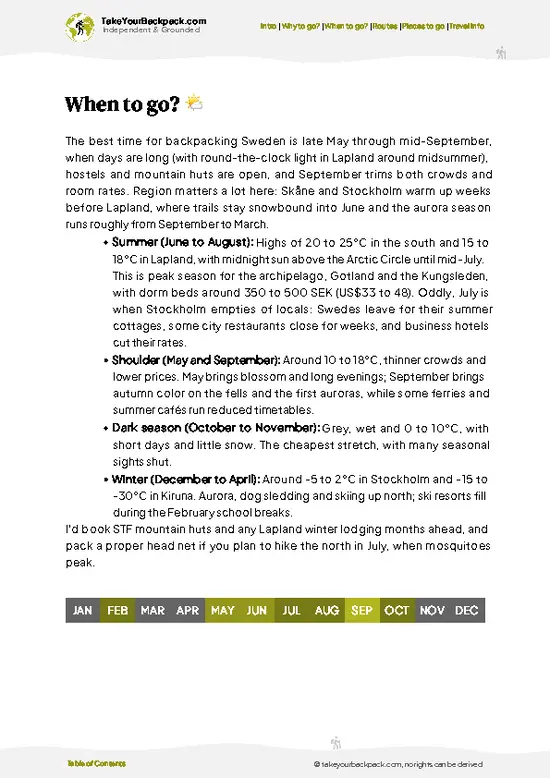
source: climatestotravel.comJANJanuary: fair for travelingFEBFebruary: fair for travelingMARMarch: fair for travelingAPRApril: good for travelingMAYMay: highly recommended for travelingJUNJune: excellent for travelingJULJuly: excellent for travelingAUGAugust: excellent for travelingSEPSeptember: highly recommended for travelingOCTOctober: good for travelingNOVNovember: fair for travelingDECDecember: fair for traveling
when-to-go

✈️ The backpacker research shortcutSweden Travel Guide

An offline-friendly backpacking guide with optimized travel routes, ranked highlights, transport advice, and the best areas to stay.
example page 0 from our offline Travel Guide for Sweden
example page 1 from our offline Travel Guide for Sweden
example page 2 from our offline Travel Guide for Sweden
example page 3 from our offline Travel Guide for Sweden
example page 4 from our offline Travel Guide for Sweden
example page 5 from our offline Travel Guide for Sweden
example page 6 from our offline Travel Guide for Sweden
example page 7 from our offline Travel Guide for Sweden
The digital guide (446 pages) contains:
119 highlights, ranked by travel appeal
Optimized 5, 10 & 15-day travel routes
Cities, national parks, landmarks, beaches
How to get around
Offline-friendly for travel without Wi-Fi
👉 Click to see all 30+ guide features

📅 Plan smarter in minutes, not weeks
Month by month travel advice
Festivals & national holidays
Budget expectations

🗺️ Go to the right places, skip the overrated ones
Honest pros & cons of destinations
Top hikes, parks & viewpoints
Lesser-known places most travelers miss
Clear “worth it vs skip it” guidance

🛏️ Travel smoothly without rookie mistakes
Best areas to stay
Transport systems explained simply
Common scams & safety advice
SIM cards, money & practical tips

🌍 Understand the country, not just visit it
Culture & traditions
52 Essential phrases & customs
Festivals worth planning around
Traveler-friendly historical context
Insights that make places more meaningful

📱 Built for real travel conditions
Fully downloadable PDF
Works completely offline
Optimized for phone use
Useful in remote areas & buses
Everything in one place
Save weeks of stressful planning
Get instant access to your full guide. 30‑day money-back guarantee.


By proceeding you agree to our terms.
Sent to your inbox immediately after payment • 100% Secure Checkout
Best Backpacking Travel Advisor 2025 tourism awardBest Backpacking
Travel Advisor
2025
What others say about Take Your Backpack Guides:
⭐⭐⭐⭐⭐
Fantastic, amazing amount of information!
⭐⭐⭐⭐⭐
My goodness this is amazing, it's what I've been looking for hats off too you!
⭐⭐⭐⭐⭐
I think this is absolutely BRILLIANT
⭐⭐⭐⭐
Very complete and informative. It's still missing places, but I gotta to commend you
⭐⭐⭐⭐⭐
This is truly amazing, thank you, can't wait to explore it with my kids!
⭐⭐⭐⭐⭐
Awesome resource, thank you!
⭐⭐⭐⭐⭐
This is amazing! Can't wait to explore the ones I haven't seen
⭐⭐⭐⭐
I love this! Well done, great idea.
⭐⭐⭐⭐⭐
Thanks for taking the time to make this gem!
⭐⭐⭐⭐⭐
This might be the best website I've ever seen.
⭐⭐⭐⭐⭐
Congratulations, and thank you so much for your work; it's incredibly valuable.
⭐⭐⭐⭐
In all seriousness I think you did a great job pointing out the important spots
⭐⭐⭐⭐⭐
10/10 very good
⭐⭐⭐⭐⭐
As someone who's only just starting to visit regularly this is awesome, thank you.
⭐⭐⭐⭐
Thank you very much! I'm going to visit my dad, it's going to be very useful!
⭐⭐⭐⭐⭐
This is really cool! We'll be travelling for the first time and this definitely come in handy.
⭐⭐⭐⭐⭐
You are now our minister of culture, congratulations 👨‍💼
⭐⭐⭐⭐⭐
Just wanted to tell you that this is a pearl! Going to follow your recommendations.
⭐⭐⭐⭐⭐
This is so cool. I'll definitely be using the resource for my travels soon.
⭐⭐⭐⭐⭐
This is very impressive! Good work.
⭐⭐⭐⭐⭐
This is an amazing and informative site. Very well done!

🛏️ Where to stay?Best areas and accommodation options

In the Laponian Area, your best bets for backpacking are the towns of Abisko, Kiruna, and Gällivare.

Abisko is a haven for outdoor enthusiasts. It’s got a laid-back vibe, perfect for meeting fellow travelers. The Abisko National Park is right at your doorstep, offering stunning hikes and the chance to see the Northern Lights in winter. Timing is everything here; visit in late winter for the best aurora displays.

Kiruna, the northernmost town in Sweden, is a cultural hotspot. It’s safe and social, with a mix of locals and travelers. Check out the Icehotel, even if you don’t stay there—just wandering … read more 👉
In the Laponian Area, your best bets for backpacking are the towns of Abisko, Kiruna, and Gällivare.

Abisko is a haven for outdoor enthusiasts. It’s got a laid-back vibe, perfect for meeting fellow travelers. The Abisko National Park is right at your doorstep, offering stunning hikes and the chance to see the Northern Lights in winter. Timing is everything here; visit in late winter for the best aurora displays.

Kiruna, the northernmost town in Sweden, is a cultural hotspot. It’s safe and social, with a mix of locals and travelers. Check out the Icehotel, even if you don’t stay there—just wandering through is a unique experience. The town’s charm lies in its quirky architecture and friendly atmosphere.

Gällivare is another solid choice. It’s less touristy, which means you’ll find more authentic interactions. The surrounding nature is breathtaking, and you can easily access hiking trails and the nearby Muddus National Park.

Each spot offers a unique slice of Laponian life, so choose based on your vibe—adventure, culture, or authenticity.

🚌 Getting aroundHow to get from A to B

In the Laponian Area, time feels fluid, like the shimmering northern lights dancing across the sky. Schedules exist, but they often bend to the whims of weather and the rhythm of nature. Here, you’ll find a blend of rugged adventure and serene isolation. It’s a place where you can choose to follow the clock or let spontaneity guide you. The locals know the secrets of this land, and if you’re willing to embrace a bit of chaos, you’ll uncover experiences that are anything but ordinary.


  • Bus: The backbone of public transport here. Buses run between major towns like Kiruna and Abisko, with prices around 100-200 SEK. First departures are usually around 7 AM, with the last ones around 8 PM. Expect a 1.5 to 2-hour journey, offering a decent level of comfort.


  • Train: The Inlandsbanan is a scenic
read more 👉
In the Laponian Area, time feels fluid, like the shimmering northern lights dancing across the sky. Schedules exist, but they often bend to the whims of weather and the rhythm of nature. Here, you’ll find a blend of rugged adventure and serene isolation. It’s a place where you can choose to follow the clock or let spontaneity guide you. The locals know the secrets of this land, and if you’re willing to embrace a bit of chaos, you’ll uncover experiences that are anything but ordinary.


  • Bus: The backbone of public transport here. Buses run between major towns like Kiruna and Abisko, with prices around 100-200 SEK. First departures are usually around 7 AM, with the last ones around 8 PM. Expect a 1.5 to 2-hour journey, offering a decent level of comfort.


  • Train: The Inlandsbanan is a scenic route that connects Östersund to Gällivare. Tickets range from 300-600 SEK, depending on the class. Trains run less frequently, so check the schedule; typically, there’s one train per day. It’s a slow ride, but the views of the vast wilderness are worth every minute.


  • Car Rental: If you want freedom, renting a car is the way to go. Prices start around 800 SEK per day. You can explore at your own pace, but be prepared for long drives on winding roads. Just remember, fuel can be pricey, and some remote areas might not have gas stations.


  • Hiking: Not a traditional transport option, but hear me out. Many trails connect towns and attractions. Walking is free and gives you a chance to soak in the landscape. Just be mindful of the weather and plan your routes wisely.


  • Taxi: While not the most budget-friendly option, taxis can be a lifesaver for late-night returns or remote locations. Fares vary, but expect around 200-400 SEK for short distances.


For a tactical tip: download local transport apps or check out community boards in towns. Locals often share ride-sharing opportunities or last-minute bus updates that can save you both time and money. Embrace the unpredictability, and you’ll find your way through this enchanting wilderness like a true insider.

🍲 FoodLocal Cuisine & Drinks

In the Laponian Area, food is a celebration of the land. Dive into reindeer stew, a hearty dish simmered with root vegetables, rich in flavor and history. Pair it with lingonberry sauce for that sweet-tart kick that dances on your palate. Don’t miss out on surströmming, fermented herring that’s an acquired taste but a rite of passage for adventurous eaters.

For a true local vibe, hit up the open-air markets where vendors showcase fresh produce and artisanal cheeses. Grab a kanelbullar (cinnamon bun) from a cozy café, the aroma wafting through the air like a warm hug. Street food stalls often serve grilled sausages with a side of crispy potatoes, perfect for a quick refuel between hikes.

Dining here is casual. You’ll find locals sharing tables, so don’t hesitate to join in. It’s common to … read more 👉
In the Laponian Area, food is a celebration of the land. Dive into reindeer stew, a hearty dish simmered with root vegetables, rich in flavor and history. Pair it with lingonberry sauce for that sweet-tart kick that dances on your palate. Don’t miss out on surströmming, fermented herring that’s an acquired taste but a rite of passage for adventurous eaters.

For a true local vibe, hit up the open-air markets where vendors showcase fresh produce and artisanal cheeses. Grab a kanelbullar (cinnamon bun) from a cozy café, the aroma wafting through the air like a warm hug. Street food stalls often serve grilled sausages with a side of crispy potatoes, perfect for a quick refuel between hikes.

Dining here is casual. You’ll find locals sharing tables, so don’t hesitate to join in. It’s common to say “Tack för maten” (thanks for the food) after a meal, a simple gesture that goes a long way. Embrace the communal spirit, and let the flavors of Laponia linger long after your visit.

Other Swedish regions near Laponian Area

Explore more nearby:

  • Dalarna—red cottages, forested hills, folk traditions| 683 km away
  • Bohuslän—granite coast, fishing villages, sea kayaking| 958 km away
  • Gotland—limestone cliffs, medieval ruins, Baltic beaches| 985 km away

💡 Not sure where to go next?
Create a personalized itinerary for Sweden including Laponian Area and the places that fit your trip.

Generate my itinerary

👉 Discover all regions

Or checkout all Sweden has to offer (think cities, towns, villages, national parks, hikes, beaches, festivals)
Country photo of Sweden

We 💚 feedbackWhat to keep in mind

The Laponian Area is a wild playground where nature reigns supreme. Imagine hiking through vast, untouched landscapes, with the Northern Lights dancing overhead. But here’s the kicker: it’s remote. Getting around can be a slog, and services are sparse. You’ll trade comfort for authenticity, but trust me, that’s a worthy sacrifice. Embrace the challenge, and you’ll walk away with stories that’ll make your friends green with envy.

✈️ When did I visit Sweden?
Having played floorball (famous sport in Sweden, known as innebandy) for many years, I have visited Sweden many times too in the years between 1999 and 2012.

✍️ Help improve this page!
The information on this page is based on my own backpacking experience in Sweden, supplemented with up-to-date research and feedback from other travelers. Travel details can change, so if you notice anything outdated or incomplete, feel free to let me know.


🙋‍♂️ Give feedback

👋 Meet the founderWho’s Behind Take Your Backpack?

Johan, backpacker and founder of TakeYourBackpackHi, I’m Johan (Netherlands 🇳🇱), the creator of TakeYourBackpack. Over the past decade, I’ve backpacked through 80+ countries across six continents, gaining extensive experience with independent travel, long-term trips, and overland routes.

This site is built on a combination of firsthand travel experience and carefully curated insights from other backpackers. Many guides are based on places I’ve personally visited, while others bring together tips, observations, and practical advice shared by trusted travelers I’ve met along the way.

The goal is to provide realistic, experience-driven guidance — not generic itineraries — so you can explore destinations with better context, clearer expectations, and more confidence.

Get full Sweden guide •
Instant download • 119 highlights • Full Offline guide