×

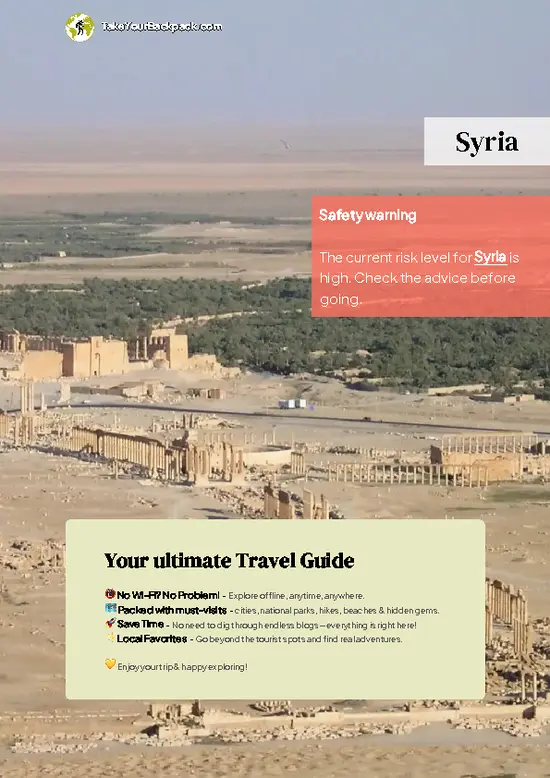
Syria🇸🇾 | townsPalmyradesert ruins, colonnaded streets, oasis springs | things to do and best time to go

Explore MaaloulaExplore Zabadani

Backpacking in Palmyra
🏆 Top picktown ranked #1
By Johan Kruseman 🇳🇱 | Updated June 9, 2026

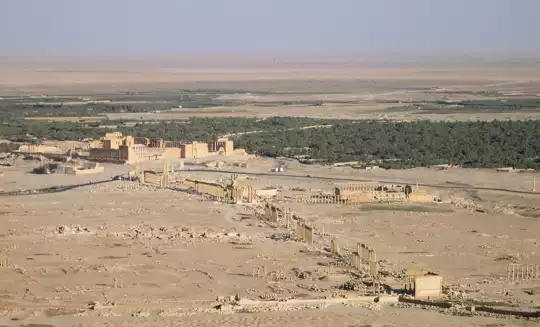
Most online blurbs still sell Palmyra as a grand “ruined city in the desert,” but the backpacker-relevant twist is this: the modern town around it is small, scarred, and surprisingly quiet, so your experience is less about ticking off a famous site and more about sitting with the weight of history in a half-rebuilt community. Palmyra sits in central Syria, roughly midway between Homs and Deir ez-Zor, out in the desert basin. As a stop on a longer Syria route, it works best as a one- or two-night layover rather than a base: you come for the ruins, the desert light at sunrise and sunset, and the eerie, open feel of the place, not for nightlife or café culture. Streets are walkable but dusty; you’ll likely rely on hired cars or local drivers to reach viewpoints and outlying ruins. Compared with Damascus or Homs, Palmyra feels more exposed, less social, cheaper day to day, and more emotionally heavy, with safety and access conditions something you factor in before you even think about romance-of-the-desert fantasies.

Discover everything you want to know in the 📖 Syria Travel Guide.
Safety warning

The current risk level for Syria is high. Check the advice before going.


Get your Syria guide
90 ranked highlights, routes & tips, works offline (347 pages)
Loading the map 🌍
CLICK TO FILTER
cities
towns
landmarks
national parks
hikes
beaches
attractions
festivals
regions
SHOW COUNTRY’S BESTSHOW ALL

✨ Why go?
Ranked #1 town in Syria
Reasons people choose to visit here

Backpackers flock to Palmyra not just for its ancient ruins but for its strategic position within a broader travel route. The town serves as a gateway to stunning hikes in the surrounding desert, where the air is crisp and the sunsets paint the sky in fiery hues. After a day of exploration, you can unwind at one of the small-scale guesthouses that offer a cozy atmosphere, often run by locals who are eager to share stories over a meal of hearty Syrian fare.

The streets are walkable, inviting you to meander through local markets where the scent of spices fills the air. This isn’t a place for the party-seeker; it’s more suited for slow travelers and solo adventurers who appreciate a friendly, communal vibe. Many stay a few days, soaking in the history and culture, while others might just pause … read more 👉
Backpackers flock to Palmyra not just for its ancient ruins but for its strategic position within a broader travel route. The town serves as a gateway to stunning hikes in the surrounding desert, where the air is crisp and the sunsets paint the sky in fiery hues. After a day of exploration, you can unwind at one of the small-scale guesthouses that offer a cozy atmosphere, often run by locals who are eager to share stories over a meal of hearty Syrian fare.

The streets are walkable, inviting you to meander through local markets where the scent of spices fills the air. This isn’t a place for the party-seeker; it’s more suited for slow travelers and solo adventurers who appreciate a friendly, communal vibe. Many stay a few days, soaking in the history and culture, while others might just pause briefly to catch their breath before heading to nearby beaches or other cultural sites.

In Palmyra, you’ll find a balance of quiet reflection and social interaction, making it a perfect stop for those who want to connect with both the land and its people.
Want to include Palmyra in your Syria route?
Create a personalized Syria itinerary that includes Palmyra and the places that fit your trip — based on your travel style, budget, and available time. Get your route in seconds.

Generate my trip

💡 HighlightsEssential experiences to have while visiting Palmyra

  • Great Colonnade (Colonnaded Street) — The spine of ancient Palmyra: a long, partly intact avenue of columns that gives you the scale of the city and is the clearest way to imagine how the market and processions ran through town. Great for strolling and orienting yourself to the site’s layout.
  • Tetrapylon — The dramatic four-column monument (reassembled from original stones) that marks a major crossroads. It’s compact, photogenic, and a good spot to appreciate Roman-Palmyrene sculptural detail and reconstruction work up close.
  • Roman Theater — A broad semicircular theater with surviving seating and stage areas that still convey Palmyra’s public life; even after damage, it’s atmospheric and gives a real sense of performance culture in antiquity.
  • Valley of the Tombs and Funerary Towers — A
read more 👉
  • Great Colonnade (Colonnaded Street) — The spine of ancient Palmyra: a long, partly intact avenue of columns that gives you the scale of the city and is the clearest way to imagine how the market and processions ran through town. Great for strolling and orienting yourself to the site’s layout.
  • Tetrapylon — The dramatic four-column monument (reassembled from original stones) that marks a major crossroads. It’s compact, photogenic, and a good spot to appreciate Roman-Palmyrene sculptural detail and reconstruction work up close.
  • Roman Theater — A broad semicircular theater with surviving seating and stage areas that still convey Palmyra’s public life; even after damage, it’s atmospheric and gives a real sense of performance culture in antiquity.
  • Valley of the Tombs and Funerary Towers — A stretch of vertical funerary towers and cliff-cut tombs on the town’s edge; they’re visually striking, culturally rich, and show how locals memorialized the dead over centuries. Walking among them feels very different from the city center.
  • Qalaʿat Ibn Maan (Palmyra Castle) — The hilltop medieval castle above the town. The ruins are worth the climb for the panoramic views over the ruins and desert, plus the later-period history that layers on top of the Roman/Palmyrene story.
  • Temple of Bel (site and platform) — Although the temple was heavily damaged in recent years, the massive podium, cella footprint and surrounding colonnades still communicate why this was Palmyra’s religious heart. Visiting the remains helps you connect the archaeological plan with historical meaning.
  • Ancient Agora / Market Area — Remains of the commercial heart near the colonnade where shops and public life clustered. It’s less about grand monuments and more about getting a feel for everyday ancient urban life and the city’s role as a caravan hub.
  • Roman Baths Complex — The public baths’ ruins (rooms, heating structures and some mosaic traces) give a window into daily routines and social life; smaller and quieter than the big monuments, but rewarding if you like how people actually lived.
  • Diocletian’s Camp (Roman military remains) — The footprint and defensive traces of a Roman military camp near the site; not as flashy as temples but important for understanding the strategic, imperial side of Palmyra’s story.
  • Palmyra Archaeological Museum — The local museum (where access permits) showcases rescued artifacts, sculpture fragments and context for the ruins. Seeing objects close-up after walking the site ties names and dates to what you’ve just seen in the open air.
A few good day-trip options nearby: the Umayyad desert castle Qasr al-Hayr al-Sharqi, the desert oasis town of Al-Sukhnah and the surrounding desert/Bedouin routes for 4x4 or camel excursions — my personal favorite for a day trip is Qasr al-Hayr al-Sharqi (it’s a different vibe from the city and shows the early Islamic desert architecture well). Check current local conditions and opening status before you go.
Spotted a mistake or missing something? Contact us.
🏘️ NeighborhoodsUnderstanding the local layout

Palmyra, with its ancient ruins and rich history, offers a unique blend of adventure and culture for backpackers. Here’s how to navigate its neighborhoods effectively.

Old Town: This is the heart of Palmyra, where history breathes. The vibe is electric, with locals bustling about and vendors selling spices and sweets. It’s walkable, making it easy to explore the ancient ruins nearby. Costs here are reasonable, with budget-friendly hostels and eateries. Perfect for short stays, but the charm might keep you longer.

Al-Mahatta: A quieter area, Al-Mahatta is ideal for those seeking a peaceful retreat after a day of exploration. The atmosphere is laid-back, with small cafés and gardens. It’s a bit farther from the main attractions, so transport is necessary, but the tranquility is worth it. Great … read more 👉
Palmyra, with its ancient ruins and rich history, offers a unique blend of adventure and culture for backpackers. Here’s how to navigate its neighborhoods effectively.

Old Town: This is the heart of Palmyra, where history breathes. The vibe is electric, with locals bustling about and vendors selling spices and sweets. It’s walkable, making it easy to explore the ancient ruins nearby. Costs here are reasonable, with budget-friendly hostels and eateries. Perfect for short stays, but the charm might keep you longer.

Al-Mahatta: A quieter area, Al-Mahatta is ideal for those seeking a peaceful retreat after a day of exploration. The atmosphere is laid-back, with small cafés and gardens. It’s a bit farther from the main attractions, so transport is necessary, but the tranquility is worth it. Great for longer stays if you want to soak in the local life.

Al-Jazeera: This neighborhood has a more modern feel, with a mix of local shops and restaurants. It’s a hub for nightlife, with bars and music venues that come alive after sunset. While it’s a bit pricier, the vibrant scene makes it suitable for those looking to socialize. Walkability is decent, but you might want to use local transport for longer distances.

Western Outskirts: For the adventurous, this area offers a glimpse into rural life. The vibe is rustic, with stunning views of the surrounding landscape. It’s less touristy, so costs are lower. However, it requires more planning for transport and is best for longer stays if you want to explore the natural beauty beyond the ruins.

⌛️ 1 dayWhat you can realistically do in a day

Palmyra, once a thriving oasis on the Silk Road, is a tapestry of ancient ruins and rich history. The air carries a hint of dust and sun-baked stone, whispering tales of a civilization that flourished in the desert. Spending a day here is like stepping into a living museum, where every corner invites exploration.

Start your morning with a stroll through the bustling souk. The scent of spices mingles with the aroma of freshly baked bread, creating an intoxicating blend that pulls you in. Grab a warm manakish from a local vendor; it’s a simple flatbread topped with za’atar that will fuel your adventures. As you wander, take note of the vibrant colors of the textiles and the intricate craftsmanship of the pottery. This is where you’ll find the heart of Palmyra, away from the typical tourist … read more 👉
Palmyra, once a thriving oasis on the Silk Road, is a tapestry of ancient ruins and rich history. The air carries a hint of dust and sun-baked stone, whispering tales of a civilization that flourished in the desert. Spending a day here is like stepping into a living museum, where every corner invites exploration.

Start your morning with a stroll through the bustling souk. The scent of spices mingles with the aroma of freshly baked bread, creating an intoxicating blend that pulls you in. Grab a warm manakish from a local vendor; it’s a simple flatbread topped with za’atar that will fuel your adventures. As you wander, take note of the vibrant colors of the textiles and the intricate craftsmanship of the pottery. This is where you’ll find the heart of Palmyra, away from the typical tourist spots.

After breakfast, head to the Temple of Bel. The towering columns stand like sentinels against the azure sky, and the intricate carvings tell stories of gods and rituals. Spend time absorbing the atmosphere; the silence here is profound, broken only by the soft rustle of the wind. It’s a place that demands respect, and you’ll feel the weight of history as you walk among the ruins.

In the afternoon, venture to the lesser-known neighborhood of Al-Qaryatayn. Here, the pace slows, and you can chat with locals over a cup of strong Arabic coffee. The warmth of their hospitality is palpable, and you might even hear stories of the town that aren’t found in guidebooks.

As the sun begins to set, return to the ruins for a golden hour experience. The light casts long shadows, illuminating the ancient stones in a warm glow. It’s a photographer’s dream, but more importantly, it’s a moment to reflect on the day’s journey.

Finish your evening with a simple meal at a local eatery. Try the kebabs; they’re grilled to perfection and served with fresh vegetables. As you savor each bite, you’ll realize that Palmyra isn’t just about the sights—it’s about the connections you make and the stories you carry home.
Turn your Palmyra visit into an Syria adventure
Build a complete Syria route with Palmyra, hidden gems, must-see destinations, and realistic travel times included.

Generate my trip

🌤️ When to go?Best time to visit Palmyra


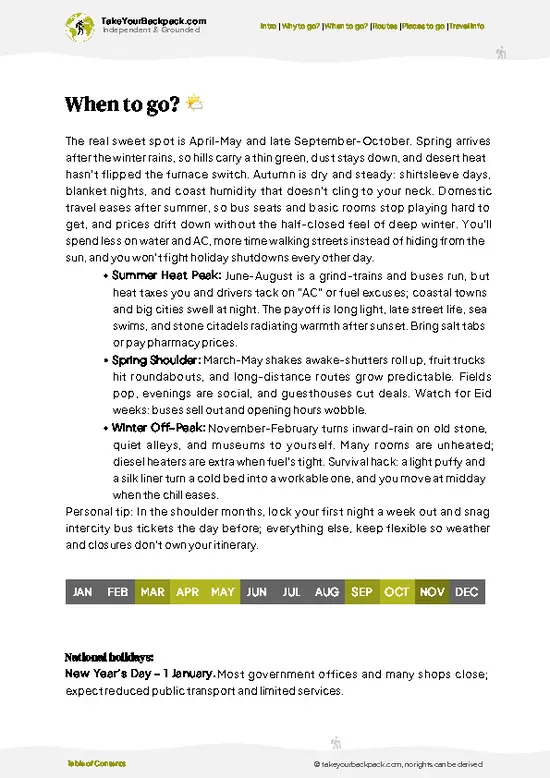
  • Weather: Palmyra’s desert climate means scorching summers with highs often soaring above 40°C (104°F), making midday trekking brutal. Winters are mild and dry, with daytime temperatures around 15-20°C (59-68°F), perfect for exploring ruins without overheating or shivering.

  • Temperature: Spring (March to May) and autumn (September to November) offer the best balance—daytime temps hover between 20-30°C (68-86°F), cool enough for long walks but warm enough to enjoy the open desert light that sharpens every stone and shadow.

  • Daylight Hours: Longer days in spring and autumn provide about 11 to 13 hours of light, giving you ample time to wander the ancient city and surrounding desert before dusk cools the air and paints the sky with deep reds.

  • Crowds: Palmyra isn’t a tourist hotspot, but
read more 👉

  • Weather: Palmyra’s desert climate means scorching summers with highs often soaring above 40°C (104°F), making midday trekking brutal. Winters are mild and dry, with daytime temperatures around 15-20°C (59-68°F), perfect for exploring ruins without overheating or shivering.

  • Temperature: Spring (March to May) and autumn (September to November) offer the best balance—daytime temps hover between 20-30°C (68-86°F), cool enough for long walks but warm enough to enjoy the open desert light that sharpens every stone and shadow.

  • Daylight Hours: Longer days in spring and autumn provide about 11 to 13 hours of light, giving you ample time to wander the ancient city and surrounding desert before dusk cools the air and paints the sky with deep reds.

  • Crowds: Palmyra isn’t a tourist hotspot, but spring and autumn attract more visitors due to comfortable weather. Visiting in winter means fewer people, offering a quieter, more intimate experience of the ruins.

  • Seasonal Activities: The Palmyra Festival, usually held in late spring, brings music and cultural events that add a lively contrast to the silent stones, but it also means higher local prices and busier accommodations.

  • Price Fluctuations: Expect accommodation and transport costs to rise slightly during the festival and peak tourist seasons (spring and autumn). Winter offers the best deals but requires packing warmer layers.


Pro-tip: Aim for early spring or late autumn mornings when the desert air is crisp, the ruins glow golden, and the day stretches ahead—this is when Palmyra’s ancient soul feels most alive and accessible.


source: climatestotravel.comJANJanuary: highly recommended for travelingFEBFebruary: highly recommended for travelingMARMarch: excellent for travelingAPRApril: excellent for travelingMAYMay: highly recommended for travelingJUNJune: fair for travelingJULJuly: below average for travelingAUGAugust: below average for travelingSEPSeptember: highly recommended for travelingOCTOctober: excellent for travelingNOVNovember: excellent for travelingDECDecember: highly recommended for traveling
when-to-go

✈️ The backpacker research shortcutSyria Travel Guide

An offline-friendly backpacking guide with optimized travel routes, ranked highlights, transport advice, and the best areas to stay.
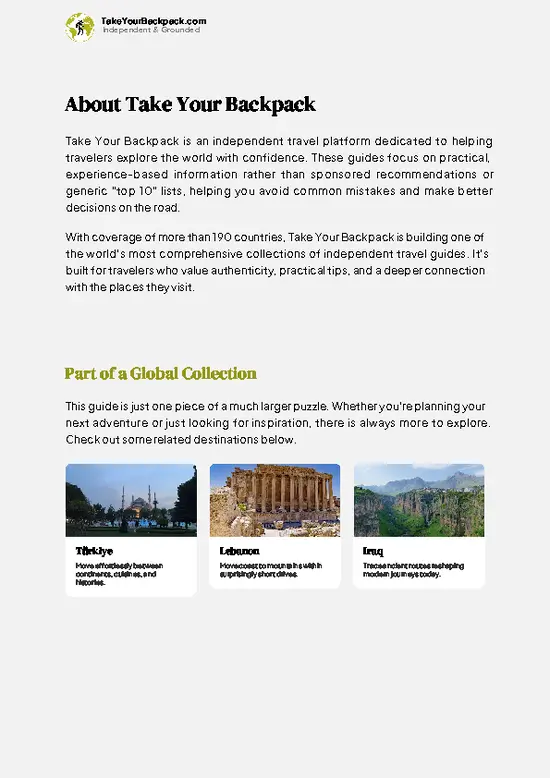
example page 0 from our offline Travel Guide for Syria
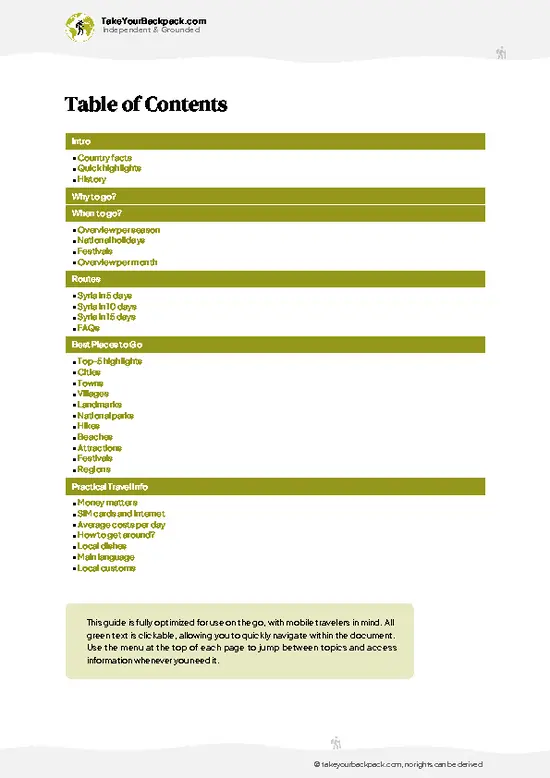
example page 1 from our offline Travel Guide for Syria
example page 2 from our offline Travel Guide for Syria
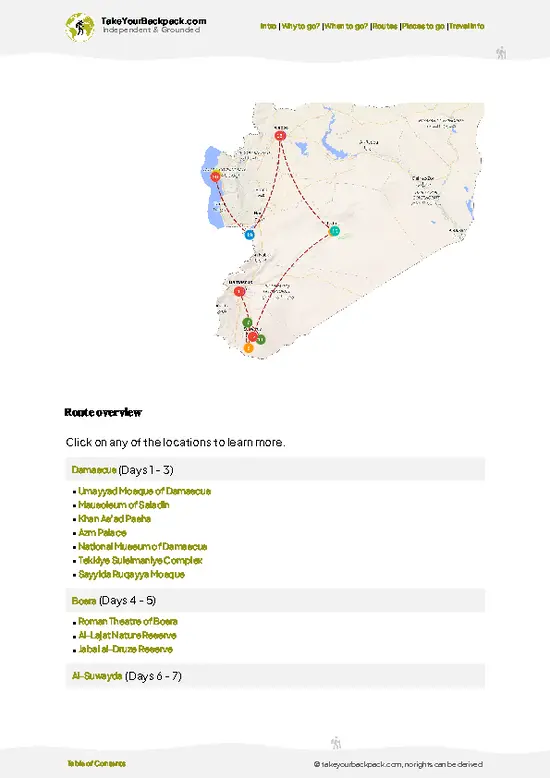
example page 3 from our offline Travel Guide for Syria
example page 4 from our offline Travel Guide for Syria
example page 5 from our offline Travel Guide for Syria
example page 6 from our offline Travel Guide for Syria
example page 7 from our offline Travel Guide for Syria
The digital guide (347 pages) contains:
90 highlights, ranked by travel appeal
Optimized 5, 10 & 15-day travel routes
Cities, national parks, landmarks, beaches
How to get around
Offline-friendly for travel without Wi-Fi
👉 Click to see all 30+ guide features

📅 Plan smarter in minutes, not weeks
Month by month travel advice
Festivals & national holidays
Budget expectations

🗺️ Go to the right places, skip the overrated ones
Honest pros & cons of destinations
Top hikes, parks & viewpoints
Lesser-known places most travelers miss
Clear “worth it vs skip it” guidance

🛏️ Travel smoothly without rookie mistakes
Best areas to stay
Transport systems explained simply
Common scams & safety advice
SIM cards, money & practical tips

🌍 Understand the country, not just visit it
Culture & traditions
52 Essential phrases & customs
Festivals worth planning around
Traveler-friendly historical context
Insights that make places more meaningful

📱 Built for real travel conditions
Fully downloadable PDF
Works completely offline
Optimized for phone use
Useful in remote areas & buses
Everything in one place
Save weeks of stressful planning
Get instant access to your full guide. 30‑day money-back guarantee.


By proceeding you agree to our terms.
Sent to your inbox immediately after payment • 100% Secure Checkout
Best Backpacking Travel Advisor 2025 tourism awardBest Backpacking
Travel Advisor
2025
What others say about Take Your Backpack Guides:
⭐⭐⭐⭐⭐
Fantastic, amazing amount of information!
⭐⭐⭐⭐⭐
My goodness this is amazing, it's what I've been looking for hats off too you!
⭐⭐⭐⭐⭐
I think this is absolutely BRILLIANT
⭐⭐⭐⭐
Very complete and informative. It's still missing places, but I gotta to commend you
⭐⭐⭐⭐⭐
This is truly amazing, thank you, can't wait to explore it with my kids!
⭐⭐⭐⭐⭐
Awesome resource, thank you!
⭐⭐⭐⭐⭐
This is amazing! Can't wait to explore the ones I haven't seen
⭐⭐⭐⭐
I love this! Well done, great idea.
⭐⭐⭐⭐⭐
Thanks for taking the time to make this gem!
⭐⭐⭐⭐⭐
This might be the best website I've ever seen.
⭐⭐⭐⭐⭐
Congratulations, and thank you so much for your work; it's incredibly valuable.
⭐⭐⭐⭐
In all seriousness I think you did a great job pointing out the important spots
⭐⭐⭐⭐⭐
10/10 very good
⭐⭐⭐⭐⭐
As someone who's only just starting to visit regularly this is awesome, thank you.
⭐⭐⭐⭐
Thank you very much! I'm going to visit my dad, it's going to be very useful!
⭐⭐⭐⭐⭐
This is really cool! We'll be travelling for the first time and this definitely come in handy.
⭐⭐⭐⭐⭐
You are now our minister of culture, congratulations 👨‍💼
⭐⭐⭐⭐⭐
Just wanted to tell you that this is a pearl! Going to follow your recommendations.
⭐⭐⭐⭐⭐
This is so cool. I'll definitely be using the resource for my travels soon.
⭐⭐⭐⭐⭐
This is very impressive! Good work.
⭐⭐⭐⭐⭐
This is an amazing and informative site. Very well done!

🛏️ Where to stay?Best areas to stay in Syria

In Palmyra, the best spot for backpackers is the area around the Old City’s western edge, near the main entrance to the ruins. This neighborhood pulses with a quiet energy, where the scent of dry earth and ancient stone mixes with the occasional waft of fresh bread from local bakeries. It’s not just about proximity to the ruins—staying here means you’re steps away from the heart of the town’s history, but also close enough to the modest cafes and street vendors where you can swap stories with fellow travelers or locals.

Compared to the newer parts of Palmyra, which feel more residential and less … read more 👉
In Palmyra, the best spot for backpackers is the area around the Old City’s western edge, near the main entrance to the ruins. This neighborhood pulses with a quiet energy, where the scent of dry earth and ancient stone mixes with the occasional waft of fresh bread from local bakeries. It’s not just about proximity to the ruins—staying here means you’re steps away from the heart of the town’s history, but also close enough to the modest cafes and street vendors where you can swap stories with fellow travelers or locals.

Compared to the newer parts of Palmyra, which feel more residential and less geared toward visitors, this zone offers a safer, more social atmosphere. It’s where budget travelers naturally gravitate because the guesthouses and hostels here cater to those who want to stretch their lira without sacrificing access or atmosphere. Hostels are small, often family-run, and have a communal vibe that makes solo backpackers feel less like outsiders and more like part of a temporary tribe.

The streets here are quieter at night, but not dead—there’s a comforting hum of life, the occasional call to prayer, and the soft clink of tea glasses. This balance of calm and connection is what makes this area the smart choice. You avoid the isolation of the outskirts and the noise of the busier commercial zones, unlocking a smoother, more authentic Palmyra experience.

🚌 Getting aroundHow to get from A to B

Palmyra moves at the pace of ancient stones settling underfoot—steady, deliberate, and a bit dusty. It’s not a place where you’ll find a clock dictating your every step, but rather the sun’s slow crawl across the sky marking your rhythm. The town’s layout is straightforward, but the real flow comes from reading the subtle cues: the timing of the midday heat pushing locals indoors, the quiet lull before the evening market buzz, and the occasional burst of life when a tour group rolls in. Expect a blend of old-world patience and the occasional burst of chaotic energy when buses or shared taxis arrive, packed and ready to spill their passengers into the dusty streets. This isn’t a city of rigid schedules; it’s a place where intuition and a bit of local insight smooth the way.


  • Walking: Palmyra’s
read more 👉
Palmyra moves at the pace of ancient stones settling underfoot—steady, deliberate, and a bit dusty. It’s not a place where you’ll find a clock dictating your every step, but rather the sun’s slow crawl across the sky marking your rhythm. The town’s layout is straightforward, but the real flow comes from reading the subtle cues: the timing of the midday heat pushing locals indoors, the quiet lull before the evening market buzz, and the occasional burst of life when a tour group rolls in. Expect a blend of old-world patience and the occasional burst of chaotic energy when buses or shared taxis arrive, packed and ready to spill their passengers into the dusty streets. This isn’t a city of rigid schedules; it’s a place where intuition and a bit of local insight smooth the way.


  • Walking: Palmyra’s compact center is best explored on foot. The ruins and main town are within easy walking distance, letting you soak in the dry, sunbaked air and the faint scent of desert herbs. Walking costs nothing, but bring sturdy shoes—the ground is uneven, and the sun can be relentless midday.


  • Shared Taxis (Service): These are the lifeblood for budget travelers moving between Palmyra and nearby towns like Homs or Damascus. They don’t run on a strict timetable; instead, they leave when full, which means waiting can be unpredictable. Prices are low, often just a few dollars, but comfort is minimal—expect a packed car and a fast, sometimes bumpy ride over rough roads.


  • Local Buses: If you’re after a slower, more authentic experience, local buses connect Palmyra with surrounding villages. They run roughly from early morning until late afternoon, but schedules can shift without notice. Tickets are cheap, and the ride offers a window into daily life, though expect basic seating and occasional stops for passengers or goods.


  • Motorbike Rentals: For those comfortable with two wheels, renting a motorbike offers freedom to explore beyond the town’s edges at your own pace. Prices vary but are generally affordable. The dry desert air and open roads make for a thrilling ride, though be prepared for dust and the need to navigate without clear signage.


  • Private Car Hire: If your budget allows, hiring a private car with a driver can save time and hassle, especially for reaching more distant archaeological sites. This option is pricier but offers comfort, flexibility, and the chance to avoid the unpredictability of shared transport. Drivers often know the best routes and times to avoid the midday heat and crowds.

👛 Costs (as of 9 July 2025)Travel costs and budget guide for Palmyra

Backpacking in Palmyra, Syria, is a rare and intense experience, shaped by the region’s complex realities. Knowing the costs helps you plan not just your budget but your pace and expectations.
  • Dorm Accommodation: Options are extremely limited due to the ongoing situation. If available, expect to pay around $10-$15 USD per night for basic guesthouses or shared rooms. These places are often simple, with minimal amenities, so pack accordingly.
  • Meals: Eating local is the way to go. Street food and small eateries offer hearty meals like kebabs, flatbreads, and lentil stews for about $3-$6 USD per meal. Fresh fruit and nuts from markets add affordable snacks, keeping daily food costs around $10-$15 USD.
  • Local Transport: Public transport is sparse and informal. Shared taxis or minibuses are the
read more 👉
Backpacking in Palmyra, Syria, is a rare and intense experience, shaped by the region’s complex realities. Knowing the costs helps you plan not just your budget but your pace and expectations.
  • Dorm Accommodation: Options are extremely limited due to the ongoing situation. If available, expect to pay around $10-$15 USD per night for basic guesthouses or shared rooms. These places are often simple, with minimal amenities, so pack accordingly.
  • Meals: Eating local is the way to go. Street food and small eateries offer hearty meals like kebabs, flatbreads, and lentil stews for about $3-$6 USD per meal. Fresh fruit and nuts from markets add affordable snacks, keeping daily food costs around $10-$15 USD.
  • Local Transport: Public transport is sparse and informal. Shared taxis or minibuses are the norm, costing roughly $1-$2 USD per short trip. Walking is often the best way to soak in the atmosphere and save money.
  • Basic Activities/Entry Fees: Visiting the ancient ruins of Palmyra is the main draw, but access can be restricted or require special arrangements. When possible, expect entry fees around $5-$10 USD. Hiring a local guide, which is highly recommended for safety and context, might cost an additional $15-$25 USD for a half-day.
  • Miscellaneous Expenses: Water, snacks, and small essentials can add up to $3-$5 USD daily. Keep some cash handy for unexpected needs, as card payments are rare.

All told, a realistic daily budget for backpacking in Palmyra hovers between $30 and $50 USD. This isn’t a place for luxury or convenience, but for those who come prepared, the raw history and atmosphere offer a profound payoff. The key is to embrace simplicity and flexibility—your patience and adaptability become part of the journey’s value.
⚠️ Prices can change and everyone travels differently, so take this as a rough guide. Hope it helps you plan your adventure!

🚌 Day tripsShort trips worth adding

Palmyra, with its ancient ruins and rich history, serves as an ideal base for day trips that reveal the heart of Syria. Each journey offers a unique glimpse into the country’s diverse landscapes and cultures, making the effort truly worthwhile.

Trip to the Valley of the Tombs
Just a short hike from Palmyra, the Valley of the Tombs is a hauntingly beautiful site. The sun casts long shadows over the intricate carvings, and the scent of desert sage fills the air. You’ll feel the weight of history as you wander among the tombs, some dating back to the 1st century AD. It takes about 30 minutes to reach on foot, and you can easily spend a couple of hours exploring. Bring water and snacks; the total cost is minimal, just a few Syrian pounds for entry. Early morning is the best time to avoid the … read more 👉
Palmyra, with its ancient ruins and rich history, serves as an ideal base for day trips that reveal the heart of Syria. Each journey offers a unique glimpse into the country’s diverse landscapes and cultures, making the effort truly worthwhile.

Trip to the Valley of the Tombs
Just a short hike from Palmyra, the Valley of the Tombs is a hauntingly beautiful site. The sun casts long shadows over the intricate carvings, and the scent of desert sage fills the air. You’ll feel the weight of history as you wander among the tombs, some dating back to the 1st century AD. It takes about 30 minutes to reach on foot, and you can easily spend a couple of hours exploring. Bring water and snacks; the total cost is minimal, just a few Syrian pounds for entry. Early morning is the best time to avoid the heat and catch the golden light on the stone. A common mistake is underestimating the desert sun—wear a hat and sunscreen.


Trip to the Temple of Bel
The Temple of Bel is a must-see, showcasing the grandeur of ancient architecture. It’s about a 15-minute walk from the center of Palmyra. The ruins are awe-inspiring, with towering columns that once held sacred significance. Expect to spend around 1-2 hours here, soaking in the atmosphere. Entry is inexpensive, and the best time to visit is during the cooler months, from October to April. Many first-timers rush through; take your time to appreciate the details and the stories behind the stones.


Trip to the Desert Castle of Qasr al-Hayr al-Gharbi
A bit further afield, about an hour’s drive, the Desert Castle of Qasr al-Hayr al-Gharbi offers a glimpse into the Umayyad era. The drive itself is a sensory experience, with the vast desert stretching out before you, punctuated by the occasional palm oasis. The castle’s architecture is striking, and the surrounding landscape is a photographer’s dream. Budget around $10 for transportation and entry. Late afternoon is ideal for capturing the sunset against the castle walls. A common oversight is not checking road conditions; some paths can be rough, so a sturdy vehicle is recommended.


Trip to the City of Homs
Just over an hour away, Homs offers a vibrant contrast to the ancient ruins. The bustling souks are filled with the aroma of spices and fresh bread, and the lively atmosphere is infectious. You can easily spend half a day wandering through the markets and sampling local delicacies. Costs are low, with meals averaging around $5. The best time to visit is during the cooler months, and be prepared for a bit of chaos—embrace it! Many travelers stick to the tourist spots; don’t miss the chance to chat with locals for a richer experience.
Want to know what more Syria offers?
The Syria Travel Guide describes 90 highlights, from cities to national parks, from beaches to hikes

Get the Travel Guide -

🛡️ SafetyStaying Safe: What Travelers Should Know

In Palmyra, the atmosphere is rich with history, but staying sharp is key. The ancient ruins draw many, and while the town is generally safe, a few areas require extra awareness. Stick to well-trodden paths, especially around the market. Crowds can be lively, and it’s easy to get distracted by the vibrant exchanges of goods and stories.

Solo travelers should be mindful after dark. The streets can feel quiet, and while locals are often friendly, it’s wise to keep your plans flexible and avoid wandering too far from the main areas.

Scams are rare, but be cautious of overly eager guides offering unsolicited help. Politely decline and seek out licensed guides if you want a deeper dive into the history. Everyday annoyances might include the occasional stray dog or a persistent vendor, but a … read more 👉
In Palmyra, the atmosphere is rich with history, but staying sharp is key. The ancient ruins draw many, and while the town is generally safe, a few areas require extra awareness. Stick to well-trodden paths, especially around the market. Crowds can be lively, and it’s easy to get distracted by the vibrant exchanges of goods and stories.

Solo travelers should be mindful after dark. The streets can feel quiet, and while locals are often friendly, it’s wise to keep your plans flexible and avoid wandering too far from the main areas.

Scams are rare, but be cautious of overly eager guides offering unsolicited help. Politely decline and seek out licensed guides if you want a deeper dive into the history. Everyday annoyances might include the occasional stray dog or a persistent vendor, but a friendly smile and a firm “no, thank you” usually do the trick. Carry yourself confidently, and you’ll find that the beauty of Palmyra is well worth the effort.

Other Syrian towns near Palmyra

Explore more nearby:

  • Al-Rastan—river crossing, concrete bridges, industrial outskirts| 146 km away
  • Al-Nabk—mountain pass, Christian monasteries, roadside stalls| 153 km away
  • Al-Qusayr—orchards, riverbank, rural checkpoint| 154 km away

💡 Not sure where to go next?
Create a personalized itinerary for Syria including Palmyra and the places that fit your trip.

Generate my itinerary

👉 Discover all towns

Or checkout all Syria has to offer (think cities, towns, villages, national parks, hikes, beaches, festivals)
Country photo of Syria

We 💚 feedbackSumming up the experience

Palmyra is a hauntingly beautiful testament to ancient civilization, where the sun sets behind crumbling columns, casting long shadows that whisper stories of the past. The scent of warm earth and distant spices fills the air, grounding you in history. But be prepared: the journey here can be challenging. Security concerns and limited infrastructure mean you’ll need to plan carefully. Embrace the grit; it makes the reward of standing among those ruins feel hard-won and profoundly real.

✈️ When did I visit Syria?
As part of my trip to Jordan in August 2004, I also visited Syria, which sadly changed for the worse soon afterwards.

✍️ Help improve this page!
The information on this page is based on my own backpacking experience in Syria, supplemented with up-to-date research and feedback from other travelers. Travel details can change, so if you notice anything outdated or incomplete, feel free to let me know.


🙋‍♂️ Give feedback

👋 Meet the founderWho’s Behind Take Your Backpack?

Johan, backpacker and founder of TakeYourBackpackHi, I’m Johan (Netherlands 🇳🇱), the creator of TakeYourBackpack. Over the past decade, I’ve backpacked through 80+ countries across six continents, gaining extensive experience with independent travel, long-term trips, and overland routes.

This site is built on a combination of firsthand travel experience and carefully curated insights from other backpackers. Many guides are based on places I’ve personally visited, while others bring together tips, observations, and practical advice shared by trusted travelers I’ve met along the way.

The goal is to provide realistic, experience-driven guidance — not generic itineraries — so you can explore destinations with better context, clearer expectations, and more confidence.

Get full Syria guide •
Instant download • 90 highlights • Full Offline guide