×

Thailand🇹🇭 | national parksMae Wongdense jungle, remote trails, birdwatching | things to do and best time to go

Explore Thung Yai NaresuanExplore Phu Ruea

Backpacking in Mae Wong
👌 Worth visitingnational park ranked #19
By Johan Kruseman 🇳🇱 | Updated June 10, 2026

The first real decision in Mae Wong is whether you commit to the long, bumpy ride in for serious hiking, or skip it and spend your limited days in easier parks like Khao Yai or Erawan; that choice decides if Mae Wong is worth your time. Sitting on the border of Nakhon Sawan and Kamphaeng Phet in western Thailand, Mae Wong National Park is remote, hilly, and quietly beautiful rather than showy. Trails are long and sometimes overgrown, views are wide but not dramatic every step, and wildlife is more about possibility than guarantees: you come for the chance of elephants or even tigers, but you mostly see tracks, birds, and the occasional barking deer. Access is awkward without your own wheels, entrance fees are the usual Thai national park two-tier system, and public transport drops you inconveniently far from the gate. Camping is cheap, basic, and peaceful, with cool nights and dark skies, but there’s little in the way of backpacker-style hostels or social scene. Compared with nearby parks, Mae Wong feels wilder and less curated than Khao Yai, less waterfall-focused than Khlong Lan, and far less crowded than Erawan; it rewards patience and preparation, not casual day-trippers.

Discover everything you want to know in the 📖 Thailand Travel Guide.
Loading the map 🌍
CLICK TO FILTER
cities
towns
landmarks
national parks
hikes
beaches
attractions
festivals
regions
SHOW COUNTRY’S BESTSHOW ALL

✨ Why go?
Ranked #19 national park in Thailand
Reasons people choose to explore here

Mae Wong National Park attracts backpackers for its independent exploration opportunities. You can wander the trails without the constraints of a tour, making it ideal for self-guided travelers. The trail variety caters to all levels, from easy walks to challenging hikes, ensuring you can tailor your adventure. Budget-conscious travelers appreciate the camping options and nearby hostels, which keep costs low while providing a base for exploration. The park’s less commercialized atmosphere means you can immerse yourself in nature without the usual tourist traps, preserving both your energy and budget for the moments that truly matter.
Want to include Mae Wong in your Thailand route?
Create a personalized Thailand itinerary that includes Mae Wong and the places that fit your trip — based on your travel style, budget, and available time. Get your route in seconds.

Generate my trip

💡 HighlightsEssential experiences to have while exploring Mae Wong

  • Panoramic ridgeline viewpoints — High ridges give sweeping views over the Mae Wong valley, especially at dawn when mist fills the lowlands. Great for sunrise/sunset photos and getting your bearings before a trek.
  • Multi-day jungle treks and ranger camps — The park’s long ridge routes drop you into real, quiet forest. You can do overnight treks to basic ranger campsites; it’s rugged, remote, and feels like proper wilderness (book through the park office).
  • Waterfalls and cooling pools — Mae Wong has several cascades and plunge pools tucked into the forest. They’re at their best in the rainy season — perfect for a sweaty hike followed by a dip.
  • Wildlife watching — Dense forest supports elephants, gibbons, deer and other mammals; camera-trap records and ranger reports also point to harder-to-see
read more 👉
  • Panoramic ridgeline viewpoints — High ridges give sweeping views over the Mae Wong valley, especially at dawn when mist fills the lowlands. Great for sunrise/sunset photos and getting your bearings before a trek.
  • Multi-day jungle treks and ranger camps — The park’s long ridge routes drop you into real, quiet forest. You can do overnight treks to basic ranger campsites; it’s rugged, remote, and feels like proper wilderness (book through the park office).
  • Waterfalls and cooling pools — Mae Wong has several cascades and plunge pools tucked into the forest. They’re at their best in the rainy season — perfect for a sweaty hike followed by a dip.
  • Wildlife watching — Dense forest supports elephants, gibbons, deer and other mammals; camera-trap records and ranger reports also point to harder-to-see large fauna. Early morning and dusk are your best bets for sightings.
  • Birding — hornbills and forest specialists — The mix of lowland and hill forest attracts hornbills, leafbirds and other specialty species. Bring binoculars and listen for calls at first light.
  • Riparian valleys and lowland forest — The rivers and moist valleys host a different feel from the dry ridges: lush understory, orchids and a richer chorus of frogs and insects. Nice contrast on a loop hike.
  • Night walks and nocturnal life — Guided night walks reveal civets, owls, frogs and other nocturnal creatures. It’s a whole different park after dark — noisy, alive and surprisingly rewarding.
Spotted a mistake or missing something? Contact us.

🌤️ When to go?Best time to explore Mae Wong


  • Topic: Weather – The dry season from November to February offers the most reliable conditions, avoiding the heavy rains that can turn trails into mudslides and rivers into barriers.

  • Topic: Temperature – Expect daytime highs around 25-30°C (77-86°F) in the dry season, with cooler nights dropping to 15-20°C (59-68°F), perfect for hiking without overheating or freezing.

  • Topic: Daylight Hours – Around 11 to 12 hours of daylight during the dry season, giving you ample time to explore without rushing but still needing an early start to avoid afternoon heat.

  • Topic: Crowds – Mae Wong is off the beaten path, but weekends and Thai holidays can bring local visitors; weekdays in the dry season are your best bet for solitude.

  • Topic: Seasonal Activities – Wildlife spotting peaks in the dry season
read more 👉

  • Topic: Weather – The dry season from November to February offers the most reliable conditions, avoiding the heavy rains that can turn trails into mudslides and rivers into barriers.

  • Topic: Temperature – Expect daytime highs around 25-30°C (77-86°F) in the dry season, with cooler nights dropping to 15-20°C (59-68°F), perfect for hiking without overheating or freezing.

  • Topic: Daylight Hours – Around 11 to 12 hours of daylight during the dry season, giving you ample time to explore without rushing but still needing an early start to avoid afternoon heat.

  • Topic: Crowds – Mae Wong is off the beaten path, but weekends and Thai holidays can bring local visitors; weekdays in the dry season are your best bet for solitude.

  • Topic: Seasonal Activities – Wildlife spotting peaks in the dry season when animals gather near water sources; the wet season’s lushness is tempting but often inaccessible.

  • Topic: Price Fluctuations – Accommodation and transport costs rise slightly in the dry season due to demand; the wet season offers lower prices but at the cost of comfort and access.


Pro-tip: Plan for early dry season visits—November to early December—when the park is accessible, wildlife is active, and prices haven’t peaked yet.


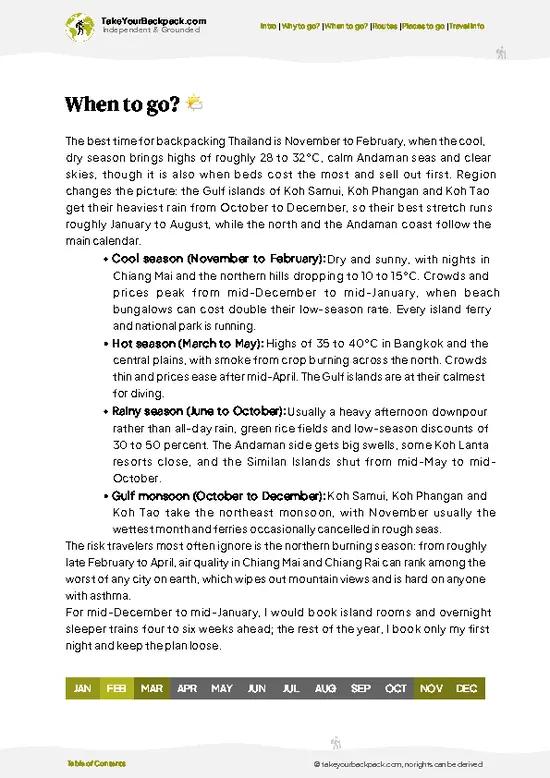
source: climatestotravel.comJANJanuary: excellent for travelingFEBFebruary: excellent for travelingMARMarch: good for travelingAPRApril: fair for travelingMAYMay: below average for travelingJUNJune: below average for travelingJULJuly: below average for travelingAUGAugust: below average for travelingSEPSeptember: fair for travelingOCTOctober: good for travelingNOVNovember: excellent for travelingDECDecember: highly recommended for traveling
when-to-go

✈️ The backpacker research shortcutThailand Travel Guide

An offline-friendly backpacking guide with optimized travel routes, ranked highlights, transport advice, and the best areas to stay.
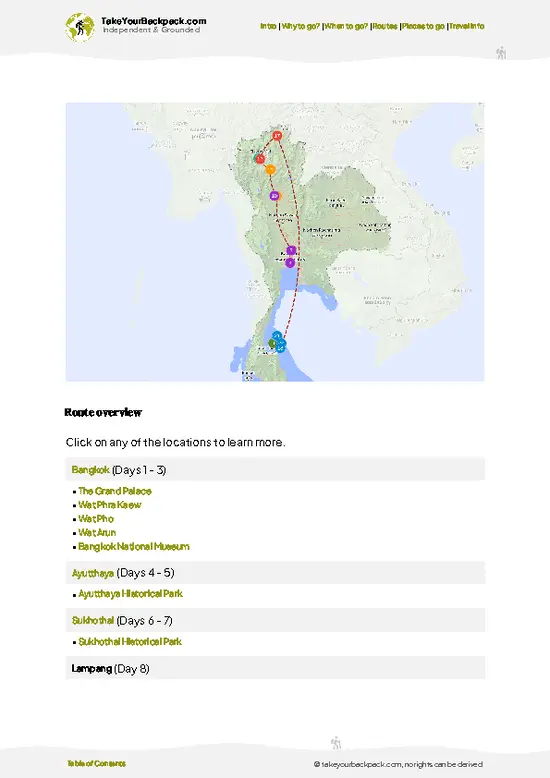
example page 0 from our offline Travel Guide for Thailand
example page 1 from our offline Travel Guide for Thailand
example page 2 from our offline Travel Guide for Thailand
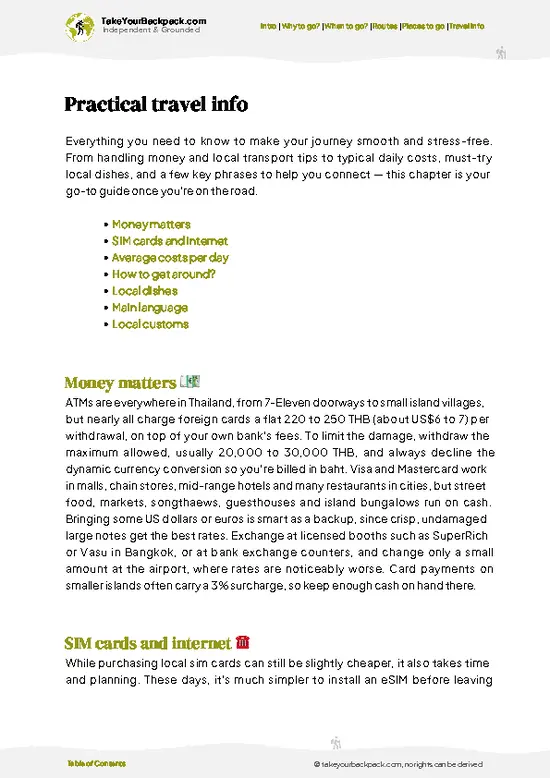
example page 3 from our offline Travel Guide for Thailand
example page 4 from our offline Travel Guide for Thailand
example page 5 from our offline Travel Guide for Thailand
example page 6 from our offline Travel Guide for Thailand
example page 7 from our offline Travel Guide for Thailand
The digital guide (510 pages) contains:
139 highlights, ranked by travel appeal
Optimized 7, 14 & 21-day travel routes
Cities, national parks, landmarks, beaches
How to get around
Offline-friendly for travel without Wi-Fi
👉 Click to see all 30+ guide features

📅 Plan smarter in minutes, not weeks
Month by month travel advice
Festivals & national holidays
Budget expectations

🗺️ Go to the right places, skip the overrated ones
Honest pros & cons of destinations
Top hikes, parks & viewpoints
Lesser-known places most travelers miss
Clear “worth it vs skip it” guidance

🛏️ Travel smoothly without rookie mistakes
Best areas to stay
Transport systems explained simply
Common scams & safety advice
SIM cards, money & practical tips

🌍 Understand the country, not just visit it
Culture & traditions
52 Essential phrases & customs
Festivals worth planning around
Traveler-friendly historical context
Insights that make places more meaningful

📱 Built for real travel conditions
Fully downloadable PDF
Works completely offline
Optimized for phone use
Useful in remote areas & buses
Everything in one place
Save weeks of stressful planning
Get instant access to your full guide. 30‑day money-back guarantee.


By proceeding you agree to our terms.
Sent to your inbox immediately after payment • 100% Secure Checkout
Best Backpacking Travel Advisor 2025 tourism awardBest Backpacking
Travel Advisor
2025
What others say about Take Your Backpack Guides:
⭐⭐⭐⭐⭐
Fantastic, amazing amount of information!
⭐⭐⭐⭐⭐
My goodness this is amazing, it's what I've been looking for hats off too you!
⭐⭐⭐⭐⭐
I think this is absolutely BRILLIANT
⭐⭐⭐⭐
Very complete and informative. It's still missing places, but I gotta to commend you
⭐⭐⭐⭐⭐
This is truly amazing, thank you, can't wait to explore it with my kids!
⭐⭐⭐⭐⭐
Awesome resource, thank you!
⭐⭐⭐⭐⭐
This is amazing! Can't wait to explore the ones I haven't seen
⭐⭐⭐⭐
I love this! Well done, great idea.
⭐⭐⭐⭐⭐
Thanks for taking the time to make this gem!
⭐⭐⭐⭐⭐
This might be the best website I've ever seen.
⭐⭐⭐⭐⭐
Congratulations, and thank you so much for your work; it's incredibly valuable.
⭐⭐⭐⭐
In all seriousness I think you did a great job pointing out the important spots
⭐⭐⭐⭐⭐
10/10 very good
⭐⭐⭐⭐⭐
As someone who's only just starting to visit regularly this is awesome, thank you.
⭐⭐⭐⭐
Thank you very much! I'm going to visit my dad, it's going to be very useful!
⭐⭐⭐⭐⭐
This is really cool! We'll be travelling for the first time and this definitely come in handy.
⭐⭐⭐⭐⭐
You are now our minister of culture, congratulations 👨‍💼
⭐⭐⭐⭐⭐
Just wanted to tell you that this is a pearl! Going to follow your recommendations.
⭐⭐⭐⭐⭐
This is so cool. I'll definitely be using the resource for my travels soon.
⭐⭐⭐⭐⭐
This is very impressive! Good work.
⭐⭐⭐⭐⭐
This is an amazing and informative site. Very well done!

🛏️ Where to stay?Choosing the right base

Mae Wong National Park offers limited accommodation options within its boundaries. The park has a few basic campsites, ideal for those who want to immerse themselves in nature. Bring your own gear; facilities are minimal.

For more comfort, head to nearby towns like Nakhon Sawan or Kamphaeng Phet. Both have guesthouses and budget hotels that cater to backpackers. Nakhon Sawan is about an hour away and has a lively atmosphere, while Kamphaeng Phet offers a quieter vibe with historical sites.

Plan ahead; availability can be tight during peak seasons. Prioritize your energy and budget by booking in advance.

👛 Costs (as of 16 June 2026)Typical daily expenses

Visiting Mae Wong National Park in Thailand can be a rewarding experience, but it’s essential to be aware of the costs involved to avoid surprises.

Entrance fees typically range from 200 to 300 THB (about $6 to $9 USD) for foreign visitors. This fee grants you access to the park’s trails and facilities. If you plan to camp, expect to pay an additional fee of around 30 to 50 THB ($1 to $1.50 USD) per person per night.

Transportation is another factor. If you’re coming from nearby towns, a songthaew (shared taxi) might cost you between 100 to 300 THB ($3 to $9 USD), depending on your starting point. Private taxis or rideshare options will be more expensive, often exceeding 1,000 THB ($30 USD) for a one-way trip.

Food options within the park are limited. Budget around 100 to 200 THB ($3 to … read more 👉
Visiting Mae Wong National Park in Thailand can be a rewarding experience, but it’s essential to be aware of the costs involved to avoid surprises.

Entrance fees typically range from 200 to 300 THB (about $6 to $9 USD) for foreign visitors. This fee grants you access to the park’s trails and facilities. If you plan to camp, expect to pay an additional fee of around 30 to 50 THB ($1 to $1.50 USD) per person per night.

Transportation is another factor. If you’re coming from nearby towns, a songthaew (shared taxi) might cost you between 100 to 300 THB ($3 to $9 USD), depending on your starting point. Private taxis or rideshare options will be more expensive, often exceeding 1,000 THB ($30 USD) for a one-way trip.

Food options within the park are limited. Budget around 100 to 200 THB ($3 to $6 USD) per meal if you’re relying on local vendors. If you prefer to bring your own supplies, factor in the cost of groceries beforehand.

Lastly, consider the cost of guided tours if you want a deeper understanding of the park’s ecology. These can range from 1,500 to 3,000 THB ($45 to $90 USD) depending on the length and inclusions of the tour.

By keeping these costs in mind, you can better allocate your budget and energy for the experiences that truly matter in Mae Wong.


source: thainationalparks.com
⚠️ Prices can change and everyone travels differently, so take this as a rough guide. Hope it helps you plan your adventure!

🥾 TrailsTrail guide for Mae Wong national park

Mae Wong National Park is a hidden gem for hikers looking to explore Thailand’s lush landscapes. The park boasts a mix of dense forests, rolling hills, and scenic viewpoints that make every step worthwhile. Wildlife enthusiasts will appreciate the chance to spot gibbons, various bird species, and maybe even a deer or two if you’re lucky. The terrain can vary quite a bit, with some trails offering gentle slopes while others challenge your stamina.

One of the standout trails is Wang Kha Trail. Here’s what you can expect:
  • Length: 10 km
  • Estimated Duration: 4-6 hours
  • Difficulty Level: Moderate
  • Key Features:
read more 👉
Mae Wong National Park is a hidden gem for hikers looking to explore Thailand’s lush landscapes. The park boasts a mix of dense forests, rolling hills, and scenic viewpoints that make every step worthwhile. Wildlife enthusiasts will appreciate the chance to spot gibbons, various bird species, and maybe even a deer or two if you’re lucky. The terrain can vary quite a bit, with some trails offering gentle slopes while others challenge your stamina.

One of the standout trails is Wang Kha Trail. Here’s what you can expect:
  • Length: 10 km
  • Estimated Duration: 4-6 hours
  • Difficulty Level: Moderate
  • Key Features: Stunning waterfalls, diverse flora, and panoramic views from the summit
  • Terrain: A mix of dirt paths and rocky sections, with some steep inclines

Getting to Mae Wong isn’t too tricky. You can catch a bus from Bangkok to Nakhon Sawan and then grab a local songthaew to the park entrance. Just be prepared for a bit of a wait, as public transport can be unpredictable. The park isn’t overly crowded, especially compared to more famous spots, so you can enjoy the tranquility. There’s a nominal entrance fee, usually around 200 baht, which helps keep the park maintained. Just remember to bring enough water and snacks—there’s not much in the way of facilities once you’re out on the trails!
⚠️ Hiking info can sometimes be outdated or inaccurate. Before you hit the trail, check the latest conditions with locals. If you do spot anything that's off, I'd love to hear from you, so I can update it for fellow travelers.

🛡️ SafetyScams, Hazards, and Annoyances

Mae Wong National Park offers a generally straightforward hiking experience, but a few realities can catch you off guard. Weather can shift quickly; afternoon storms are common, so start early and keep an eye on the sky. The terrain varies—some trails are steep and rocky, requiring good footwear and careful footing. River crossings may be necessary, so be prepared to get your feet wet.

Wildlife encounters are rare, but if you see animals, observe from a distance and don’t feed them. Respect the environment and fellow hikers by keeping noise down and leaving no trace. With the right preparation, you can focus on enjoying the park’s beauty without unnecessary stress.

Other Thai national parks near Mae Wong

Explore more nearby:

  • Thung Yai Naresuan—protected wilderness, wildlife corridor, rugged terrain| 75 km away
  • Erawan—turquoise pools, limestone tiers, fish-filled streams| 165 km away
  • Sai Yok—river caves, waterfalls, WWII railway| 166 km away

💡 Not sure where to go next?
Create a personalized itinerary for Thailand including Mae Wong and the places that fit your trip.

Generate my itinerary

👉 Discover all national parks

Or checkout all Thailand has to offer (think cities, towns, villages, national parks, hikes, beaches, festivals)
Country photo of Thailand

We 💚 feedbackWhat to keep in mind

Mae Wong is a treasure for those who crave solitude in nature. The trails are less crowded, allowing you to connect deeply with the landscape. Just be prepared for the humidity—it can sap your energy if you’re not ready. Pack wisely, and you’ll savor every moment.

✈️ When did I visit Thailand?
Before visiting Vietnam (1998), I had some time in Thailand to explore the country.

✍️ Help improve this page!
The information on this page is based on my own backpacking experience in Thailand, supplemented with up-to-date research and feedback from other travelers. Travel details can change, so if you notice anything outdated or incomplete, feel free to let me know.


🙋‍♂️ Give feedback

👋 Meet the founderWho’s Behind Take Your Backpack?

Johan, backpacker and founder of TakeYourBackpackHi, I’m Johan (Netherlands 🇳🇱), the creator of TakeYourBackpack. Over the past decade, I’ve backpacked through 80+ countries across six continents, gaining extensive experience with independent travel, long-term trips, and overland routes.

This site is built on a combination of firsthand travel experience and carefully curated insights from other backpackers. Many guides are based on places I’ve personally visited, while others bring together tips, observations, and practical advice shared by trusted travelers I’ve met along the way.

The goal is to provide realistic, experience-driven guidance — not generic itineraries — so you can explore destinations with better context, clearer expectations, and more confidence.

Get full Thailand guide •
Instant download • 139 highlights • Full Offline guide