×

Togo🇹🇬 | hikesTamberma Valleyfortified mud houses, river crossings, baobab groves, traditional compounds | things to do and best time to go

Explore Mount AgouExplore Danyi Plateau Trail

Backpacking in Tamberma Valley
👌 Worth visitinghike ranked #4
By Johan Kruseman 🇳🇱 | Updated June 8, 2026

Forget the travel-brochure myth: Tamberma Valley isn’t some untouched Eden where you’ll wander alone through ancient villages and pristine savanna. The reality is sweat, dust, and the steady thump of your boots as you wind through northern Togo’s Atakora mountains, just shy of the Benin border. The hike here isn’t a casual stroll—it’s a rolling, sun-baked trek that throws you into the thick of fortress-like mud-brick Tata houses and fields buzzing with daily life. Expect a solid half-day on foot, sometimes longer if you linger for a chat or a bowl of millet beer with locals. The scenery is raw: ochre cliffs, baobabs, and the kind of open sky that makes you feel both tiny and invincible. Getting to the trailhead by public transport is a test of patience—bush taxis and moto rides, nothing direct or easy. Compared to the more accessible Kpalimé or Fazao-Malfakassa hikes, Tamberma is tougher, less polished, but the payoff—standing atop a Tata, wind in your face, history under your boots—hits harder than any postcard promise.

Discover everything you want to know in the 📖 Togo Travel Guide.
Best time to go: November - March
Duration: 3 to 4 days
Distance: 20 kilometers
Total ascent: 1,200 meters


Get your Togo guide
55 ranked highlights, routes & tips, works offline (234 pages)
Loading the map 🌍
CLICK TO FILTER
cities
towns
landmarks
national parks
hikes
beaches
attractions
festivals
regions
SHOW COUNTRY’S BESTSHOW ALL

✨ Why go?
Ranked #4 hike in Togo
What sets this place apart

The Tamberma Valley in Togo is a backpacker’s playground, where the scenery-to-effort ratio is off the charts. You’ll trek through lush landscapes dotted with traditional Tata Somba houses, each one a vibrant testament to local culture. The trails are well-trodden yet wild enough to feel like an adventure.

Getting here is a breeze; public transport whisks you from Lomé to the valley with minimal fuss. Once you arrive, the low cost of accommodation and food means you can stretch your budget while soaking in the sights.

What’s fantastic is the flexible distances; you can choose a short day hike or push yourself further for a more immersive experience. Each step brings you closer to breathtaking views that make the sweat worthwhile.

After a day of exploring, nothing beats that first cold … read more 👉
The Tamberma Valley in Togo is a backpacker’s playground, where the scenery-to-effort ratio is off the charts. You’ll trek through lush landscapes dotted with traditional Tata Somba houses, each one a vibrant testament to local culture. The trails are well-trodden yet wild enough to feel like an adventure.

Getting here is a breeze; public transport whisks you from Lomé to the valley with minimal fuss. Once you arrive, the low cost of accommodation and food means you can stretch your budget while soaking in the sights.

What’s fantastic is the flexible distances; you can choose a short day hike or push yourself further for a more immersive experience. Each step brings you closer to breathtaking views that make the sweat worthwhile.

After a day of exploring, nothing beats that first cold beer at a local spot, where you can swap stories with fellow travelers. The Tamberma Valley isn’t just a hike; it’s a chapter in your backpacking saga that flows seamlessly into a longer route through West Africa.
Want to include Tamberma Valley in your Togo route?
Create a personalized Togo itinerary that includes Tamberma Valley and the places that fit your trip — based on your travel style, budget, and available time. Get your route in seconds.

Generate my trip

💡 HighlightsEssential experiences to have while hiking the Tamberma Valley

  1. Tata Somba Fortified Houses — The weirdly beautiful, red-mud, multi-story houses are the whole reason you’re here: each is a defensive home, granary and rooftop terrace carved into vernacular architecture. Climb (ask first) onto a roof terrace for a close look at carved doors, painted motifs and daily life unfolding below — nothing else in West Africa looks like this.
  2. Ridge Viewpoints and Inselbergs — Short scrambles up rocky outcrops give panoramic views across the valley’s ochre fields and isolated domes of rock. Sunrises and sunsets light the laterite like molten copper — perfect for photos, and a quiet counterpoint to the villages down in the hollows.
  3. Village Walks and Batammariba Culture — Trails thread right through working hamlets where farmers tend millet, women weave and blacksmiths
read more 👉
  1. Tata Somba Fortified Houses — The weirdly beautiful, red-mud, multi-story houses are the whole reason you’re here: each is a defensive home, granary and rooftop terrace carved into vernacular architecture. Climb (ask first) onto a roof terrace for a close look at carved doors, painted motifs and daily life unfolding below — nothing else in West Africa looks like this.
  2. Ridge Viewpoints and Inselbergs — Short scrambles up rocky outcrops give panoramic views across the valley’s ochre fields and isolated domes of rock. Sunrises and sunsets light the laterite like molten copper — perfect for photos, and a quiet counterpoint to the villages down in the hollows.
  3. Village Walks and Batammariba Culture — Trails thread right through working hamlets where farmers tend millet, women weave and blacksmiths hammer iron. It’s not a museum: expect to see ceremonies, shrines and everyday rituals if you time it right, and local guides will open doors and stories that maps won’t.
  4. Baobabs, Millet Terraces and Photogenic Paths — The hike alternates between compact laterite tracks, neat millet terraces and lonely baobabs — little cinematic scenes around every bend. The changing textures and colors of the landscape make even short sections feel like a new trail.
  5. Birds, Bats and Night Skies — Wildlife here is subtle but rewarding: raptors cruising thermals, weaver colonies by the huts, and bats roosting in roofs and caves. With almost no light pollution, camping near a village or on a rooftop gives you ridiculous stargazing after a long day on the trail.
Spotted a mistake or missing something? Contact us.

🌤️ When to go?Best time to hike the Tamberma Valley


  • Weather: The dry season from November to March is your best bet. The skies clear, the trails firm up, and the oppressive humidity drops. Rainy months (April to October) turn paths into mud traps and can wash out remote villages.

  • Temperature: Daytime highs hover around 28-32°C (82-90°F) in the dry season—warm but manageable. Nights dip to a cooler 18-22°C (64-72°F), perfect for camping without sweating through your sleeping bag.

  • Daylight Hours: Expect roughly 11 to 12 hours of daylight year-round, giving you solid windows for long hikes and village visits without rushing.

  • Crowds: The Tamberma Valley remains off the beaten path, but the dry season draws a trickle of adventurous backpackers and cultural tourists. You’ll find solitude with a hint of company, enough to swap stories but
read more 👉

  • Weather: The dry season from November to March is your best bet. The skies clear, the trails firm up, and the oppressive humidity drops. Rainy months (April to October) turn paths into mud traps and can wash out remote villages.

  • Temperature: Daytime highs hover around 28-32°C (82-90°F) in the dry season—warm but manageable. Nights dip to a cooler 18-22°C (64-72°F), perfect for camping without sweating through your sleeping bag.

  • Daylight Hours: Expect roughly 11 to 12 hours of daylight year-round, giving you solid windows for long hikes and village visits without rushing.

  • Crowds: The Tamberma Valley remains off the beaten path, but the dry season draws a trickle of adventurous backpackers and cultural tourists. You’ll find solitude with a hint of company, enough to swap stories but not enough to feel crowded.

  • Seasonal Activities: Dry months coincide with local festivals and traditional ceremonies, adding cultural depth to your trek. Rainy season dulls the social calendar and complicates access to remote communities.

  • Price Fluctuations: Accommodation and guide fees stay steady year-round, but transport costs can spike during the rainy season due to difficult road conditions and fewer vehicles.


Pro-tip: Aim for late November or early December—trails are dry, temperatures are comfortable, and you catch the valley waking up to its cultural calendar without the crowds.


source: climatestotravel.comJANJanuary: excellent for travelingFEBFebruary: excellent for travelingMARMarch: excellent for travelingAPRApril: fair for travelingMAYMay: fair for travelingJUNJune: fair for travelingJULJuly: fair for travelingAUGAugust: fair for travelingSEPSeptember: fair for travelingOCTOctober: fair for travelingNOVNovember: excellent for travelingDECDecember: excellent for traveling
when-to-go

✈️ The backpacker research shortcutTogo Travel Guide

An offline-friendly backpacking guide with optimized travel routes, ranked highlights, transport advice, and the best areas to stay.
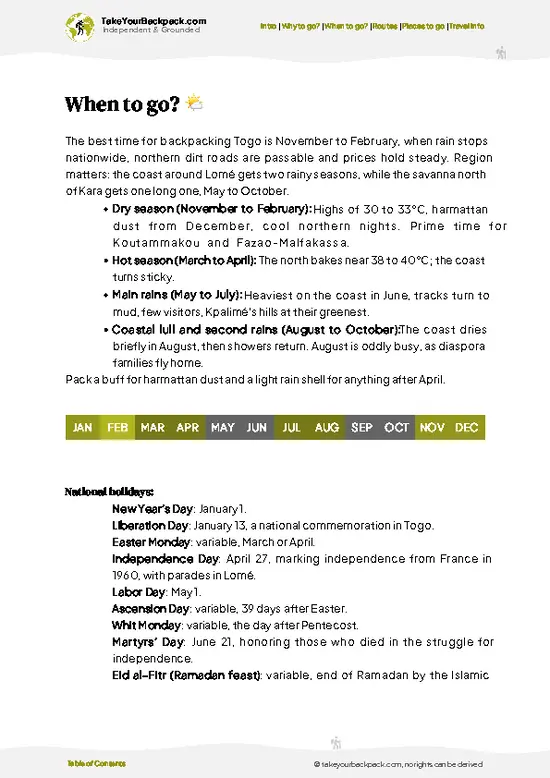
example page 0 from our offline Travel Guide for Togo
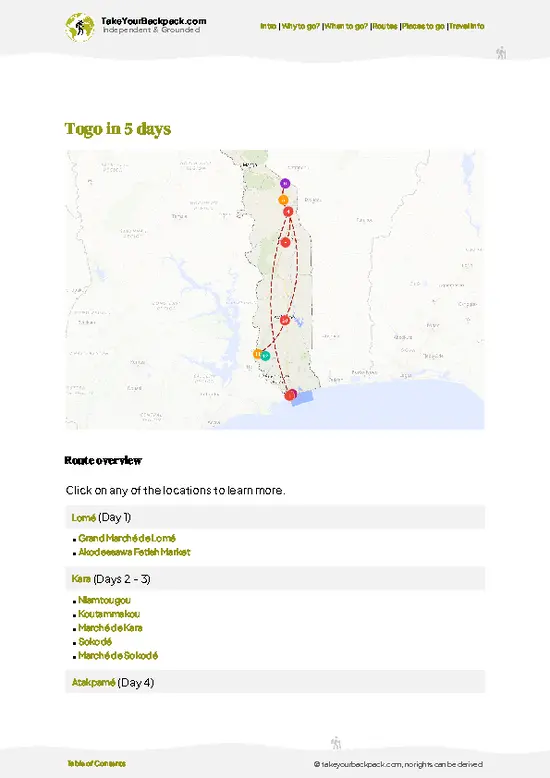
example page 1 from our offline Travel Guide for Togo
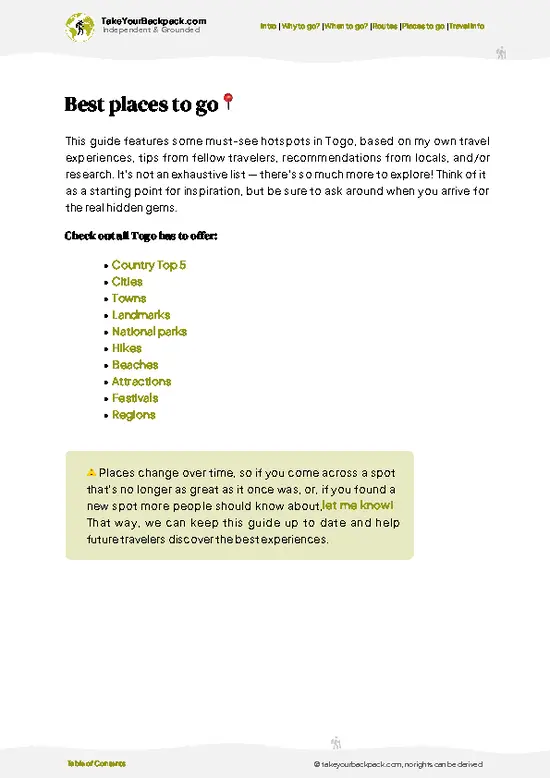
example page 2 from our offline Travel Guide for Togo
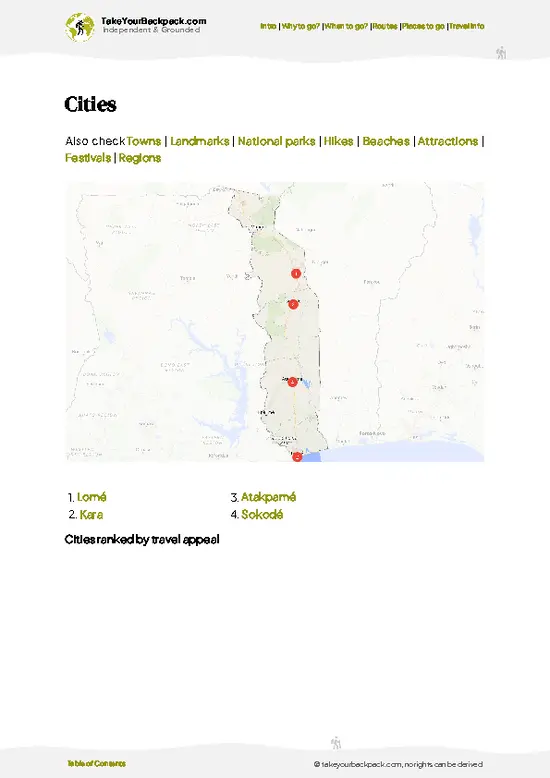
example page 3 from our offline Travel Guide for Togo
example page 4 from our offline Travel Guide for Togo
example page 5 from our offline Travel Guide for Togo
example page 6 from our offline Travel Guide for Togo
example page 7 from our offline Travel Guide for Togo
The digital guide (234 pages) contains:
55 highlights, ranked by travel appeal
Optimized 2, 3 & 5-day travel routes
Cities, national parks, landmarks, beaches
How to get around
Offline-friendly for travel without Wi-Fi
👉 Click to see all 30+ guide features

📅 Plan smarter in minutes, not weeks
Month by month travel advice
Festivals & national holidays
Budget expectations

🗺️ Go to the right places, skip the overrated ones
Honest pros & cons of destinations
Top hikes, parks & viewpoints
Lesser-known places most travelers miss
Clear “worth it vs skip it” guidance

🛏️ Travel smoothly without rookie mistakes
Best areas to stay
Transport systems explained simply
Common scams & safety advice
SIM cards, money & practical tips

🌍 Understand the country, not just visit it
Culture & traditions
52 Essential phrases & customs
Festivals worth planning around
Traveler-friendly historical context
Insights that make places more meaningful

📱 Built for real travel conditions
Fully downloadable PDF
Works completely offline
Optimized for phone use
Useful in remote areas & buses
Everything in one place
Save weeks of stressful planning
Get instant access to your full guide. 30‑day money-back guarantee.


By proceeding you agree to our terms.
Sent to your inbox immediately after payment • 100% Secure Checkout
Best Backpacking Travel Advisor 2025 tourism awardBest Backpacking
Travel Advisor
2025
What others say about Take Your Backpack Guides:
⭐⭐⭐⭐⭐
Fantastic, amazing amount of information!
⭐⭐⭐⭐⭐
My goodness this is amazing, it's what I've been looking for hats off too you!
⭐⭐⭐⭐⭐
I think this is absolutely BRILLIANT
⭐⭐⭐⭐
Very complete and informative. It's still missing places, but I gotta to commend you
⭐⭐⭐⭐⭐
This is truly amazing, thank you, can't wait to explore it with my kids!
⭐⭐⭐⭐⭐
Awesome resource, thank you!
⭐⭐⭐⭐⭐
This is amazing! Can't wait to explore the ones I haven't seen
⭐⭐⭐⭐
I love this! Well done, great idea.
⭐⭐⭐⭐⭐
Thanks for taking the time to make this gem!
⭐⭐⭐⭐⭐
This might be the best website I've ever seen.
⭐⭐⭐⭐⭐
Congratulations, and thank you so much for your work; it's incredibly valuable.
⭐⭐⭐⭐
In all seriousness I think you did a great job pointing out the important spots
⭐⭐⭐⭐⭐
10/10 very good
⭐⭐⭐⭐⭐
As someone who's only just starting to visit regularly this is awesome, thank you.
⭐⭐⭐⭐
Thank you very much! I'm going to visit my dad, it's going to be very useful!
⭐⭐⭐⭐⭐
This is really cool! We'll be travelling for the first time and this definitely come in handy.
⭐⭐⭐⭐⭐
You are now our minister of culture, congratulations 👨‍💼
⭐⭐⭐⭐⭐
Just wanted to tell you that this is a pearl! Going to follow your recommendations.
⭐⭐⭐⭐⭐
This is so cool. I'll definitely be using the resource for my travels soon.
⭐⭐⭐⭐⭐
This is very impressive! Good work.
⭐⭐⭐⭐⭐
This is an amazing and informative site. Very well done!

🛏️ Where to stay?Best areas to stay in Togo

If you enjoy meeting fellow travelers, consider choosing hostels with high ratings for atmosphere. On the other hand, if you prefer having your own space, a hotel might be a better option.

🥾 Hike detailsKey facts about the Tamberma Valley hike

Total Distance: The Tamberma Valley trail stretches approximately 15 kilometers (about 9.3 miles).

Estimated Duration: Expect to spend around 5 to 7 hours on the trail, depending on your pace and how often you stop to take in the views or snap some photos.

Difficulty Level: This trail is generally considered moderate. There are some steep sections, but nothing too technical, making it manageable for most hikers with a reasonable fitness level.

Starting Point: The trail begins in the village of Koutammakou, a UNESCO World Heritage site. To get there by public transport, you can take a bus from … read more 👉
Total Distance: The Tamberma Valley trail stretches approximately 15 kilometers (about 9.3 miles).

Estimated Duration: Expect to spend around 5 to 7 hours on the trail, depending on your pace and how often you stop to take in the views or snap some photos.

Difficulty Level: This trail is generally considered moderate. There are some steep sections, but nothing too technical, making it manageable for most hikers with a reasonable fitness level.

Starting Point: The trail begins in the village of Koutammakou, a UNESCO World Heritage site. To get there by public transport, you can take a bus from Lomé to Kpalimé, which takes about 3-4 hours. From Kpalimé, catch a shared taxi or a bush taxi to Koutammakou, which is about an hour’s drive.

Major Landmarks Along the Route:
  • Traditional Batammariba Houses: These unique mud-brick structures are a highlight, showcasing the local architecture.
  • Scenic Overlooks: There are several viewpoints along the trail where you can enjoy panoramic vistas of the valley.
  • Local Villages: You’ll pass through smaller villages where you can interact with locals and experience their culture.

Type of Terrain and Scenery: The terrain varies from dirt paths to rocky sections, with some ascents that might get your heart pumping. The scenery is a mix of lush green hills, valleys, and the iconic Batammariba houses dotting the landscape.

Typical Vegetation and Wildlife: Expect to see a variety of vegetation, including savannah grasses, acacia trees, and occasional patches of forest. Wildlife includes birds like the violet turaco and various butterflies, although larger animals are less common.

This trail offers a fantastic blend of culture and nature, making it a rewarding experience for independent hikers. Just pack plenty of water and maybe a snack or two, and you’re good to go!
⚠️ Hiking info can sometimes be outdated or inaccurate. Before you hit the trail, check the latest conditions with locals. If you do spot anything that's off, I'd love to hear from you, so I can update it for fellow travelers.

🛡️ SafetySafety Tips and Common Scams in Tamberma Valley

Tamberma Valley offers a rugged beauty that rewards those willing to embrace its challenges. Expect variable weather; the sun can scorch one moment, then rain can sweep in unexpectedly. Dress in layers and pack a lightweight poncho.

The terrain is a mix of steep ascents and rocky paths. Good footwear is essential—think sturdy hiking boots with solid grip. Navigation can be tricky; keep your map handy and consider downloading offline maps.

Wildlife is present but generally shy. If you spot monkeys or birds, enjoy the moment quietly—no sudden movements.

Prepare for river crossings, especially during the rainy season. Timing is key; early mornings are cooler and less crowded. Respect local customs and fellow hikers; a friendly nod goes a long way. The effort pays off with breathtaking views … read more 👉
Tamberma Valley offers a rugged beauty that rewards those willing to embrace its challenges. Expect variable weather; the sun can scorch one moment, then rain can sweep in unexpectedly. Dress in layers and pack a lightweight poncho.

The terrain is a mix of steep ascents and rocky paths. Good footwear is essential—think sturdy hiking boots with solid grip. Navigation can be tricky; keep your map handy and consider downloading offline maps.

Wildlife is present but generally shy. If you spot monkeys or birds, enjoy the moment quietly—no sudden movements.

Prepare for river crossings, especially during the rainy season. Timing is key; early mornings are cooler and less crowded. Respect local customs and fellow hikers; a friendly nod goes a long way. The effort pays off with breathtaking views and a sense of accomplishment that lingers long after the hike.

Other Togolese hikes near Tamberma Valley

Explore more nearby:

  • Mount Agou—summit ascent, rocky outcrops, border views, mountain flora
  • Kloto Trail—forest canopy, colonial-era tracks, artisan workshops, panoramic lookouts
  • Danyi Plateau Trail—eucalyptus groves, plateau villages, misty mornings, terraced fields

💡 Not sure where to go next?
Create a personalized itinerary for Togo including Tamberma Valley and the places that fit your trip.

Generate my itinerary

👉 Discover all hikes

Or checkout all Togo has to offer (think cities, towns, villages, national parks, hikes, beaches, festivals)
Country photo of Togo

We 💚 feedbackParting advice and final tips

Tamberma Valley is a raw, vibrant slice of Togo that feels like stepping into another world. The mud huts, with their intricate designs, are a feast for the eyes, but it’s the warmth of the people that truly hooks you. Expect some rugged trails; they’ll test your legs, but the panoramic views from the hilltops are worth every drop of sweat. Just be ready for the occasional downpour—bring a rain jacket. Trust me, you’ll want to savor that first cold beer at the end of the day.

✍️ Help improve this page!
The information on this page is based on in-depth research, insights shared by experienced travelers, and feedback from the local travel community in Togo. While every effort is made to keep the information accurate and current, conditions can change — so if you spot anything incorrect or outdated, please get in touch.


🙋‍♂️ Give feedback

👋 Meet the founderWho’s Behind Take Your Backpack?

Johan, backpacker and founder of TakeYourBackpackHi, I’m Johan (Netherlands 🇳🇱), the creator of TakeYourBackpack. Over the past decade, I’ve backpacked through 80+ countries across six continents, gaining extensive experience with independent travel, long-term trips, and overland routes.

This site is built on a combination of firsthand travel experience and carefully curated insights from other backpackers. Many guides are based on places I’ve personally visited, while others bring together tips, observations, and practical advice shared by trusted travelers I’ve met along the way.

The goal is to provide realistic, experience-driven guidance — not generic itineraries — so you can explore destinations with better context, clearer expectations, and more confidence.

Get full Togo guide •
Instant download • 55 highlights • Full Offline guide