×

Tonga🇹🇴 | attractionsAncient Royal Tombs of LapahaLangi stepped tombs, coral limestone slabs, Mu’a village lanes, Fanga’uta Lagoon shore | things to do and best time to go

Explore Royal Palace of TongaExplore Fafa Island Beach

Backpacking in Ancient Royal Tombs of Lapaha
🌟 Highlightattraction ranked #2
By Johan Kruseman 🇳🇱 | Updated October 15, 2026

You can stand on the stones with almost nobody else around, because the tombs sit beside an ordinary village road with no gate or timed entry to plan around. The Ancient Royal Tombs of Lapaha lie in Mu’a, southeast of Nuku’alofa on Tongatapu island, in Tonga. Cruise ships rarely run tours here, so a quiet visit is the normal one. The tombs are called langi, stepped platforms of cut coral limestone that look like low pyramids. They sit in open grass, so shade is scarce. That is why experienced travelers go early or late, when the light rakes across the slabs and the stone is cool under your palm. Signs are minimal, so a local guide or a read-up beforehand makes the mounds mean more. Expect roosters, church singing on Sundays, and the smell of cut grass and wood smoke. For a first day, arrive mid-morning, walk the tombs slowly, then follow the village lanes toward the lagoon.

Discover everything you want to know in the 📖 Tonga Travel Guide.


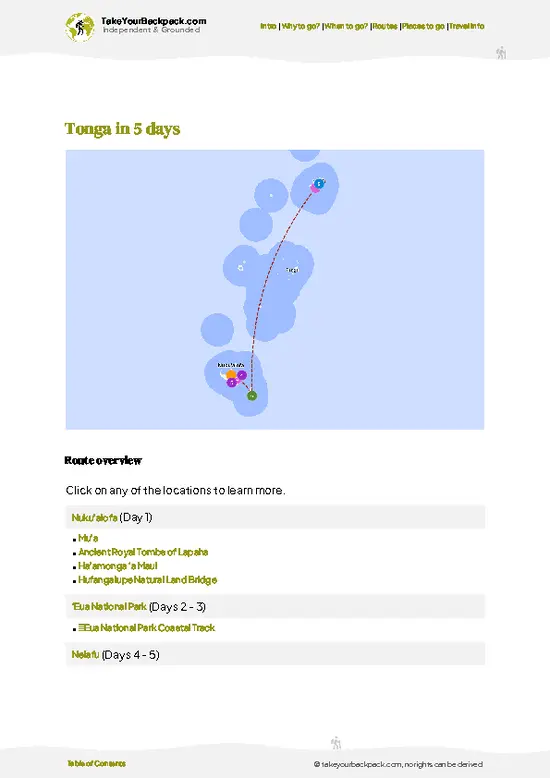
example page 0 from our offline Travel Guide for Tonga
example page 1 from our offline Travel Guide for Tonga
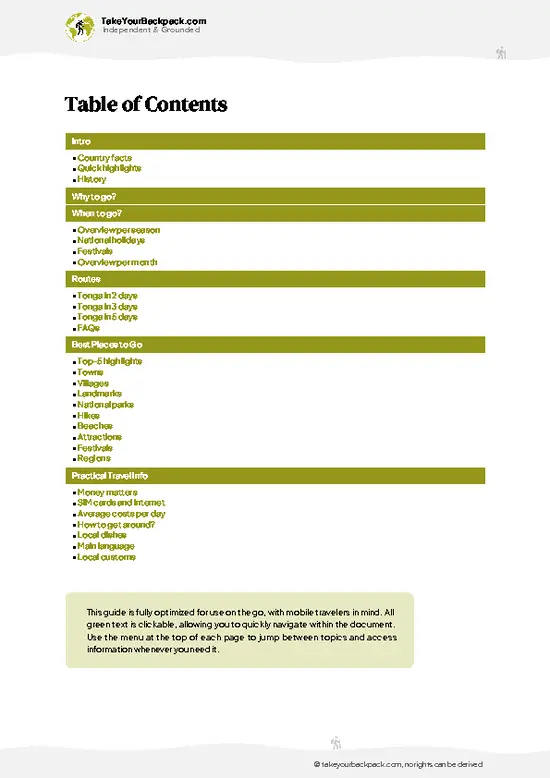
example page 2 from our offline Travel Guide for Tonga
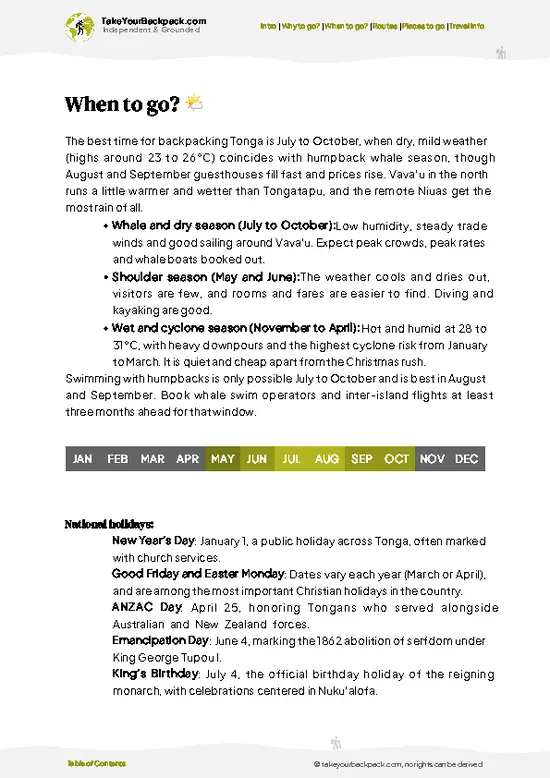
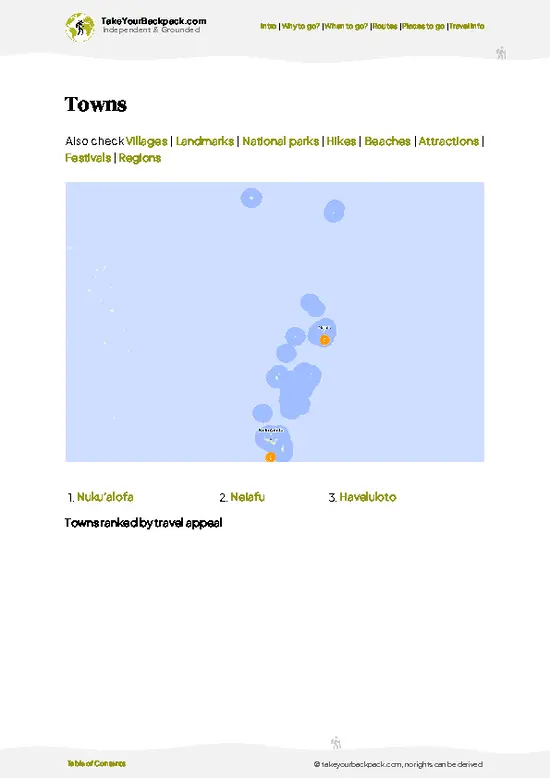
example page 3 from our offline Travel Guide for Tonga
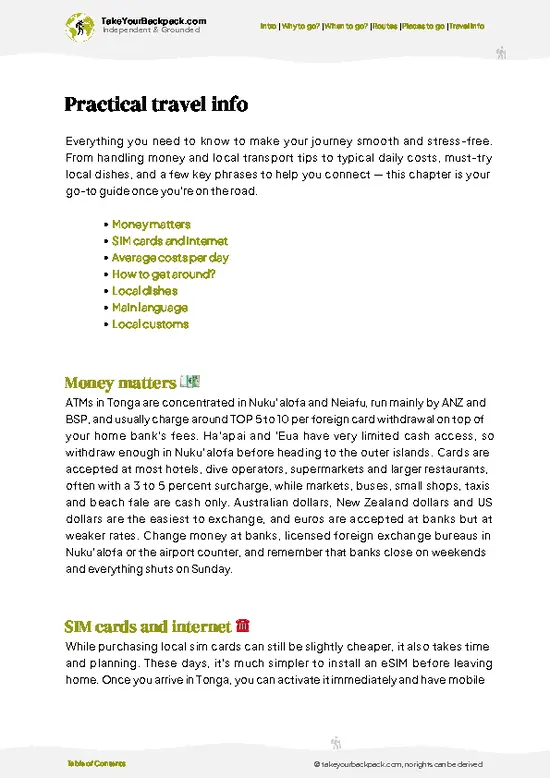
example page 4 from our offline Travel Guide for Tonga
example page 5 from our offline Travel Guide for Tonga
example page 6 from our offline Travel Guide for Tonga
example page 7 from our offline Travel Guide for Tonga
Loading the map 🌍
CLICK TO FILTER
towns
villages
landmarks
national parks
hikes
beaches
attractions
festivals
regions
SHOW COUNTRY’S BESTSHOW ALL

✨ Why go?
Ranked #2 attraction in Tonga
Reasons people choose to visit here

Go because this was the seat of the Tu’i Tonga, the sacred kings who ruled a Pacific maritime empire reaching toward Samoa and Fiji. Nowhere else in Tonga lets you touch the physical remains of that power. The Paepae ‘o Tele’a platform is the clearest example, its tiers built from huge slabs of coral limestone fitted without mortar. Seeing it changes how you read the rest of the islands, from the ruling families to the way chiefly rank still shapes village life.
The second reason is the setting. Lapaha is still a living village, not a fenced archaeological park, so you walk past Mu’a’s churches, pigs and gardens on your way to a thousand-year-old burial ground. You see how comfortably Tongans live alongside their own history.
For your route, it is an easy half-day add-on from Nuku’alofa and … read more 👉
Go because this was the seat of the Tu’i Tonga, the sacred kings who ruled a Pacific maritime empire reaching toward Samoa and Fiji. Nowhere else in Tonga lets you touch the physical remains of that power. The Paepae ‘o Tele’a platform is the clearest example, its tiers built from huge slabs of coral limestone fitted without mortar. Seeing it changes how you read the rest of the islands, from the ruling families to the way chiefly rank still shapes village life.
The second reason is the setting. Lapaha is still a living village, not a fenced archaeological park, so you walk past Mu’a’s churches, pigs and gardens on your way to a thousand-year-old burial ground. You see how comfortably Tongans live alongside their own history.
For your route, it is an easy half-day add-on from Nuku’alofa and a natural pairing with other Tongatapu sights. It rewards anyone who likes understanding a place before ticking it off, and it asks for little effort in return.

💡 HighlightsEssential experiences to have while visiting Ancient Royal Tombs of Lapaha

  1. Paepae ‘o Tele’a: the best-known and largest of the langi, a stepped platform of tightly fitted coral limestone slabs. Walk the edge to see how precisely the blocks were cut and set, and notice how high it rises above the surrounding lawn. This is the one to photograph in low sun.
  2. Langi Namoala: another royal burial mound, quieter and less visited. Its stone facing shows the same craftsmanship, and having it nearly to yourself makes the burial-ground atmosphere stronger than at the headline tomb.
  3. The coral slab masonry: look closely at individual blocks. Their weathered, pitted surface carries marine fossils and shell fragments, a reminder that these kings quarried the reef itself. Touching the joints shows how the builders fitted them with no binding material.
  4. The grassy ceremonial ground around
… read more 👉
  1. Paepae ‘o Tele’a: the best-known and largest of the langi, a stepped platform of tightly fitted coral limestone slabs. Walk the edge to see how precisely the blocks were cut and set, and notice how high it rises above the surrounding lawn. This is the one to photograph in low sun.
  2. Langi Namoala: another royal burial mound, quieter and less visited. Its stone facing shows the same craftsmanship, and having it nearly to yourself makes the burial-ground atmosphere stronger than at the headline tomb.
  3. The coral slab masonry: look closely at individual blocks. Their weathered, pitted surface carries marine fossils and shell fragments, a reminder that these kings quarried the reef itself. Touching the joints shows how the builders fitted them with no binding material.
  4. The grassy ceremonial ground around the tombs: the open green is where Tu’i Tonga gatherings and rites once took place. Standing in it, you grasp the scale of the old capital, and the flat, wide space explains why the tombs were meant to be seen from a distance.
  5. Mu’a village lanes: walk the road between tombs and you pass family plots, small churches and gardens. Sunday brings hymn singing across the fields, and the light and sound make this the most atmospheric stretch of the visit.
  6. The Fanga’uta Lagoon edge: a short stroll beyond the village brings you to the calm lagoon shore, where mangroves, wading birds and a salt breeze show why chiefs chose this site, with water and fertile land close together.
If time is short, skip the lagoon edge and spend it on Paepae ‘o Tele’a and Langi Namoala.
Spotted a mistake or missing something? Contact us.

🌤️ When to go?Seasonal considerations and timing

May to October is the best window for the royal tombs of Lapaha, when rain eases and the open lawns around the langi stay dry underfoot.
  • Dry Season (May to October): Days run 23 to 27°C (73 to 81°F), nights dip to 17 to 19°C (63 to 66°F), and humidity drops. Daylight lasts roughly 11 hours in June. This is peak time for visitors, so Nuku’alofa beds cost more, though Lapaha itself is rarely busy.
  • Wet Season (November to April): Expect 27 to 31°C (81 to 88°F), heavy showers and sticky air. Grass gets slick, mosquitoes multiply, and cyclones are possible, especially February and March. Daylight stretches to about 13.5 hours in December, and prices dip.
  • Festival Week (early July): The Heilala Festival in Nuku’alofa brings parades and crowds. Rooms fill and prices climb, but you can still visit the
… read more 👉
May to October is the best window for the royal tombs of Lapaha, when rain eases and the open lawns around the langi stay dry underfoot.
  • Dry Season (May to October): Days run 23 to 27°C (73 to 81°F), nights dip to 17 to 19°C (63 to 66°F), and humidity drops. Daylight lasts roughly 11 hours in June. This is peak time for visitors, so Nuku’alofa beds cost more, though Lapaha itself is rarely busy.
  • Wet Season (November to April): Expect 27 to 31°C (81 to 88°F), heavy showers and sticky air. Grass gets slick, mosquitoes multiply, and cyclones are possible, especially February and March. Daylight stretches to about 13.5 hours in December, and prices dip.
  • Festival Week (early July): The Heilala Festival in Nuku’alofa brings parades and crowds. Rooms fill and prices climb, but you can still visit the site on a quiet morning.
  • Time of Day: Go before 10 am for softer light on the stone and cooler air.
Book your Nuku’alofa bed early if your dates overlap the Heilala Festival.


source: climatestotravel.comJANJanuary: fair for travelingFEBFebruary: fair for travelingMARMarch: fair for travelingAPRApril: fair for travelingMAYMay: excellent for travelingJUNJune: highly recommended for travelingJULJuly: highly recommended for travelingAUGAugust: highly recommended for travelingSEPSeptember: excellent for travelingOCTOctober: highly recommended for travelingNOVNovember: fair for travelingDECDecember: fair for traveling
tonga-attraction-ancient-royal-tombs-of-lapaha
© Google |

✈️ The backpacker research shortcutTonga Travel Guide

An offline-friendly backpacking guide with optimized travel routes, ranked highlights, transport advice, and the best areas to stay.
example page 0 from our offline Travel Guide for Tonga
example page 1 from our offline Travel Guide for Tonga
example page 2 from our offline Travel Guide for Tonga
example page 3 from our offline Travel Guide for Tonga
example page 4 from our offline Travel Guide for Tonga
example page 5 from our offline Travel Guide for Tonga
example page 6 from our offline Travel Guide for Tonga
example page 7 from our offline Travel Guide for Tonga
The digital guide (128 pages) contains:
✅ 31 highlights, ranked by travel appeal
✅ Optimized 2, 3 & 5-day travel routes
✅ Cities, national parks, landmarks, beaches
✅ How to get around
✅ Offline-friendly for travel without Wi-Fi
👉 Click to see all 30+ guide features

📅 Plan smarter in minutes, not weeks
✅ Month by month travel advice
✅ Festivals & national holidays
✅ Budget expectations

🗺️ Go to the right places, skip the overrated ones
✅ Honest pros & cons of destinations
✅ Top hikes, parks & viewpoints
✅ Lesser-known places most travelers miss
✅ Clear “worth it vs skip it” guidance

🛏️ Travel smoothly without rookie mistakes
✅ Best areas to stay
✅ Transport systems explained simply
✅ Common scams & safety advice
✅ SIM cards, money & practical tips

🌍 Understand the country, not just visit it
✅ Culture & traditions
✅ 52 Essential phrases & customs
✅ Festivals worth planning around
✅ Traveler-friendly historical context
✅ Insights that make places more meaningful

📱 Built for real travel conditions
✅ Fully downloadable PDF
✅ Works completely offline
✅ Optimized for phone use
✅ Useful in remote areas & buses
✅ Everything in one place
Stop searching, start planning
Get instant access to your full guide. 30‑day money-back guarantee.
+ Add another guide for just

By proceeding you agree to our terms.
Sent to your inbox immediately after payment • 100% Secure Checkout
Best Backpacking Travel Advisor 2025 tourism awardBest Backpacking
Travel Advisor
2025
What others say about Take Your Backpack Guides:
⭐⭐⭐⭐⭐
Fantastic, amazing amount of information!
⭐⭐⭐⭐⭐
My goodness this is amazing, it's what I've been looking for hats off too you!
⭐⭐⭐⭐⭐
I think this is absolutely BRILLIANT
⭐⭐⭐⭐
Very complete and informative. It's still missing places, but I gotta to commend you
⭐⭐⭐⭐⭐
This is truly amazing, thank you, can't wait to explore it with my kids!
⭐⭐⭐⭐⭐
Awesome resource, thank you!
⭐⭐⭐⭐⭐
This is amazing! Can't wait to explore the ones I haven't seen
⭐⭐⭐⭐
I love this! Well done, great idea.
⭐⭐⭐⭐⭐
Thanks for taking the time to make this gem!
⭐⭐⭐⭐⭐
This might be the best website I've ever seen.
⭐⭐⭐⭐⭐
Congratulations, and thank you so much for your work; it's incredibly valuable.
⭐⭐⭐⭐
In all seriousness I think you did a great job pointing out the important spots
⭐⭐⭐⭐⭐
10/10 very good
⭐⭐⭐⭐⭐
As someone who's only just starting to visit regularly this is awesome, thank you.
⭐⭐⭐⭐
Thank you very much! I'm going to visit my dad, it's going to be very useful!
⭐⭐⭐⭐⭐
This is really cool! We'll be travelling for the first time and this definitely come in handy.
⭐⭐⭐⭐⭐
You are now our minister of culture, congratulations 👨‍💼
⭐⭐⭐⭐⭐
Just wanted to tell you that this is a pearl! Going to follow your recommendations.
⭐⭐⭐⭐⭐
This is so cool. I'll definitely be using the resource for my travels soon.
⭐⭐⭐⭐⭐
This is very impressive! Good work.
⭐⭐⭐⭐⭐
This is an amazing and informative site. Very well done!

🛏️ Where to stay?How to pick the right area

Nuku’alofa is the place to sleep, because Lapaha is a quiet village with almost no tourist lodging and the tombs sit just a short ride east of the capital on Tongatapu.
The waterfront and central streets near the main market are the most social part of town. Budget travelers cluster here, so you can swap notes at shared tables, find travel partners for a rental car or taxi split, and walk to cafés, supermarkets and the ferry wharf. The area feels safe in daylight and reasonably calm at night, though solo travelers should take a taxi after dark rather than walk the unlit side streets.
The seafront … read more 👉
Nuku’alofa is the place to sleep, because Lapaha is a quiet village with almost no tourist lodging and the tombs sit just a short ride east of the capital on Tongatapu.
The waterfront and central streets near the main market are the most social part of town. Budget travelers cluster here, so you can swap notes at shared tables, find travel partners for a rental car or taxi split, and walk to cafés, supermarkets and the ferry wharf. The area feels safe in daylight and reasonably calm at night, though solo travelers should take a taxi after dark rather than walk the unlit side streets.
The seafront stretch toward the Royal Palace is quieter, with a few small guesthouses and homestays run by local families. It suits anyone who wants breakfast with a host and a slower pace. Hosts are good sources for church service times and tomb access.
The western side of the island toward Houma and Hihifo has a few guesthouses too, but you will rely on taxis. Staying in the center keeps the bus terminal, bike rental and tour pickups within a few minutes’ walk, which matters since the tombs are an easy half-day out and back.

👛 Costs (as of 15 October 2026)How expensive it really is

Expect to spend about US$40 to 55 a day around the Ancient Royal Tombs of Lapaha, and the tombs themselves cost nothing to see.
CategoryBudget RangeLocal Reality
Entry to the tombsUS$0The langi are stone-faced terraced mounds in an open grassy field beside the road. Nobody staffs a gate, though a small donation to a local caretaker is appreciated if one is present.
Accommodation (high season, May to October)US$20 to 35Guesthouses and simple fales in Nuku’alofa, about 8 km (5 miles) west, with a private room or a dorm bed. Lapaha has almost no lodging of its own.
Accommodation (low season)US$15 to 28Rates soften from November to April, and walk-in discounts are common.
Transport to the siteUS$1 to 3 each way by bus, US$12 to 20 by taxiLocal buses run from the Nuku’alofa terminal toward Mu’a and
… read more 👉
Expect to spend about US$40 to 55 a day around the Ancient Royal Tombs of Lapaha, and the tombs themselves cost nothing to see.
CategoryBudget RangeLocal Reality
Entry to the tombsUS$0The langi are stone-faced terraced mounds in an open grassy field beside the road. Nobody staffs a gate, though a small donation to a local caretaker is appreciated if one is present.
Accommodation (high season, May to October)US$20 to 35Guesthouses and simple fales in Nuku’alofa, about 8 km (5 miles) west, with a private room or a dorm bed. Lapaha has almost no lodging of its own.
Accommodation (low season)US$15 to 28Rates soften from November to April, and walk-in discounts are common.
Transport to the siteUS$1 to 3 each way by bus, US$12 to 20 by taxiLocal buses run from the Nuku’alofa terminal toward Mu’a and drop you at the roadside. Taxis charge more, so agree the fare before you get in.
Bike or scooter rentalUS$8 to 15 a dayThe road is flat and the ride takes around 45 minutes by bicycle. It also lets you add nearby sites on the same trip.
FoodUS$8 to 15Market stalls and small bakeries sell cheap fried snacks and rice plates. Sit-down meals in Nuku’alofa cost more, and a few shops near Mu’a stock drinks and basics.
Extras nearbyUS$0 to 10Other Mu’a sites, including the Tongan church and old monuments, are mostly free to walk around. A local guide, if you find one, may ask for a modest tip.
Total Daily BudgetUS$40 to 55Based on a high-season guesthouse, bus transport, local food and one small extra. Prices are paid in Tongan currency.
⚠️ Prices can change and everyone travels differently, so take this as a rough guide. Hope it helps you plan your adventure!

FAQTraveler FAQ

Plan on 1 to 2 hours at the tombs, which is enough to walk around the large stepped langi and read the site’s markers. Add another 2 to 3 hours if you combine it with the nearby Mu’a area, where more royal monuments and old churches sit. Most travelers do it as a half-day trip from Nuku’alofa.
Yes, because there is no entrance fee. You get to see the large terraced stone tombs of Tongan royalty at no cost, usually with few other visitors around. A small donation to a local guide, if you use one, is the only expected spending.
From Nuku’alofa, Lapaha is about 10 to 12 kilometers east on Tongatapu, roughly a 20 to 30 minute drive. Local buses toward Mu’a leave from the main terminal for a low fare, usually under US$1 to 2, while a taxi costs about US$10 to 20 each way. Cyclists can ride the mostly flat road in about 1 to 1.5 hours.
⚠️ Things can change over time, so always validate details locally before you go.

Other Tongan attractions near Ancient Royal Tombs of Lapaha

Explore more nearby:


💡 Not sure where to go next?
Create a personalized itinerary for Tonga including Ancient Royal Tombs of Lapaha and the places that fit your trip.

Generate my itinerary

👉 Discover all attractions

Or checkout all Tonga has to offer (think cities, towns, villages, national parks, hikes, beaches, festivals)
Country photo of Tonga

We 💚 feedbackIs it worth it?

First-timers walk straight to the big platform and leave, missing the stone itself. Crouch down and look at the slab faces: the fossil shells and reef pits show these kings built with their own coastline. I would go late afternoon, bring water and a hat, and stay for the village’s evening quiet.

✍️ Help improve this page!
The information on this page is based on in-depth research, insights shared by experienced travelers, and feedback from the local travel community in Tonga. While every effort is made to keep the information accurate and current, conditions can change — so if you spot anything incorrect or outdated, please get in touch.


🙋‍♂️ Give feedback

👋 Meet the founderWho’s Behind Take Your Backpack?

Johan, backpacker and founder of TakeYourBackpackHi, I’m Johan (Netherlands 🇳🇱), the creator of TakeYourBackpack. Over the past 3 decades, I’ve backpacked through 90+ countries across six continents, gaining extensive experience with independent travel, long-term trips, and overland routes.

This site is built on a combination of firsthand travel experience and carefully curated insights from other backpackers. Many guides are based on places I’ve personally visited, while others bring together tips, observations, and practical advice shared by trusted travelers I’ve met along the way.

The goal is to provide realistic, experience-driven guidance — not generic itineraries — so you can explore destinations with better context, clearer expectations, and more confidence.