×

Tonga🇹🇴 | beachesFafa Island BeachResort boat from Nuku’alofa, shallow warm lagoon, house reef, island loop walk | things to do and best time to go

Explore Ancient Royal Tombs of LapahaExplore Ha’atafu Beach

Backpacking in Fafa Island Beach
👍 Recommendedbeach ranked #2
By Johan Kruseman 🇳🇱 | Updated October 15, 2026

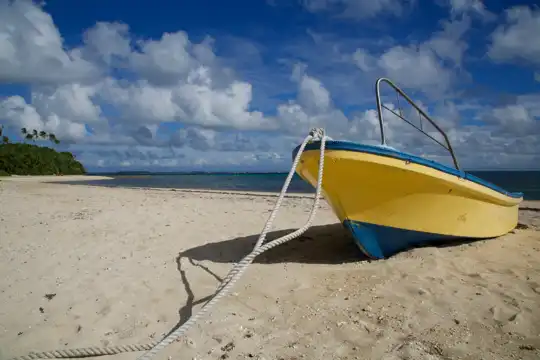
Fafa Island is a private resort island, so there is no public ferry and no hostel dorm; you reach the beach on the resort’s own boat from Nuku’alofa’s wharf. It sits in the lagoon northeast of Tonga’s capital. Once ashore, the sand is soft and pale, the lagoon is calm enough for easy swimming, and the only sounds are palm fronds, small waves and the occasional boat engine. Tiny coral rubble shows up at the waterline, so reef shoes help. Snorkeling over the patch reef is good, with colorful fish close to shore. Crowds stay thin because the island is small and the boat limits numbers. Surf is nonexistent. The trade-off is cost: food and beds are resort-priced, and cheap eateries wait back in Nuku’alofa. Most budget travelers come for the day, packing sunscreen and cash. Book the boat the day before you go.

Discover everything you want to know in the 📖 Tonga Travel Guide.


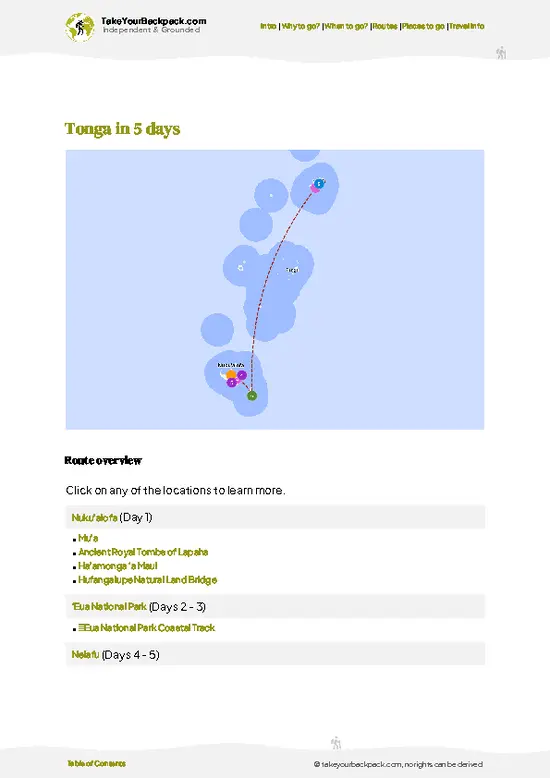
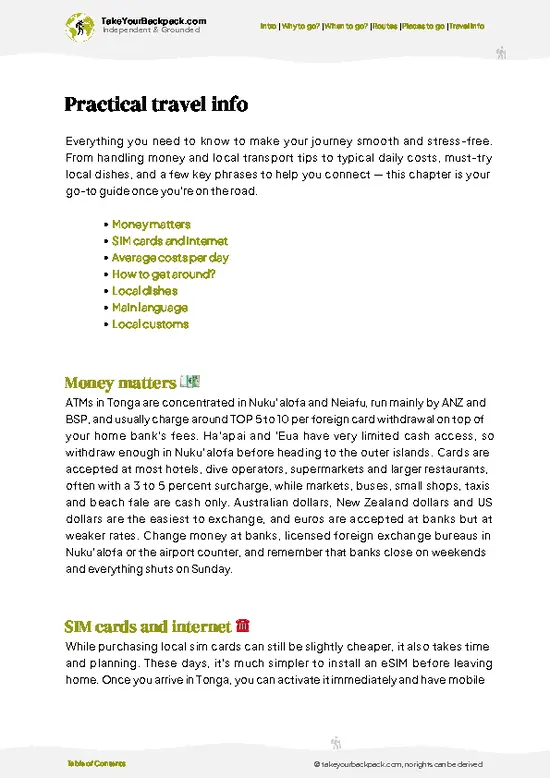
example page 0 from our offline Travel Guide for Tonga
example page 1 from our offline Travel Guide for Tonga
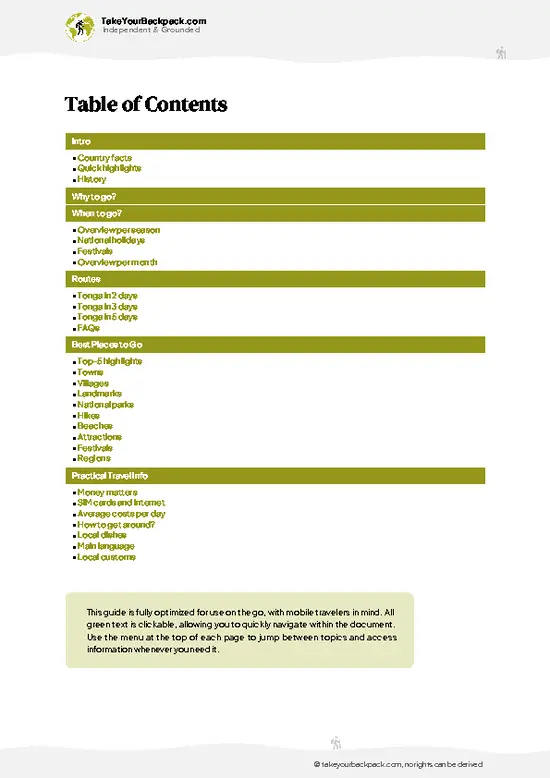
example page 2 from our offline Travel Guide for Tonga
example page 3 from our offline Travel Guide for Tonga
example page 4 from our offline Travel Guide for Tonga
example page 5 from our offline Travel Guide for Tonga
example page 6 from our offline Travel Guide for Tonga
example page 7 from our offline Travel Guide for Tonga
Loading the map 🌍
CLICK TO FILTER
towns
villages
landmarks
national parks
hikes
beaches
attractions
festivals
regions
SHOW COUNTRY’S BESTSHOW ALL

✨ Why go?
Ranked #2 beach in Tonga
What makes it a must-see beach

Backpackers stop here for one reason: it is the easiest true island escape from the capital. Fafa’s calm lagoon lets you swap Nuku’alofa’s traffic, dogs and roosters for clear water and shade in a single short boat ride, and the sand is clean because the resort rakes it and the island is small enough to keep tidy. Nuku’alofa’s own waterfront has no swimmable beach worth the name, so this is where you get one.

The second draw is the fringing reef right off the beach. You can snorkel without a guide, wade in from the sand and see parrotfish, clownfish and branching coral within a few minutes. That matters in a country where most good snorkeling needs a tour boat or a long trip to the outer islands.

The third is the pause it gives a route. Travelers heading on to Ha’apai or Vava’u often spend … read more 👉
Backpackers stop here for one reason: it is the easiest true island escape from the capital. Fafa’s calm lagoon lets you swap Nuku’alofa’s traffic, dogs and roosters for clear water and shade in a single short boat ride, and the sand is clean because the resort rakes it and the island is small enough to keep tidy. Nuku’alofa’s own waterfront has no swimmable beach worth the name, so this is where you get one.

The second draw is the fringing reef right off the beach. You can snorkel without a guide, wade in from the sand and see parrotfish, clownfish and branching coral within a few minutes. That matters in a country where most good snorkeling needs a tour boat or a long trip to the outer islands.

The third is the pause it gives a route. Travelers heading on to Ha’apai or Vava’u often spend a last or first day here, recovering from flights, trading stories at the beachfront tables and letting the Tongan pace settle in before moving on.

💡 HighlightsEssential experiences to have while visiting Fafa Island Beach

  1. The Fafa beach strip: The island’s main attraction is a ribbon of fine white sand on the sheltered side, backed by coconut palms and open-sided fale. The water stays shallow and warm, so you can float for an hour without needing to swim hard. Shade is plentiful if you arrive early.
  2. Snorkeling the house reef: Wade in from the beach and swim over coral heads where reef fish gather close to shore. Visibility is best when the tide is high and the sun is overhead. Bring your own mask if you can, as rental sets vary.
  3. Walking the island loop: A short wander along the shoreline circles most of the island. You pass mangrove edges, coral rubble beaches and quiet corners where hermit crabs scuttle across the sand. It is the best way to find a private patch away from the main beach.
  4. Kayaking the lagoon:
… read more 👉
  1. The Fafa beach strip: The island’s main attraction is a ribbon of fine white sand on the sheltered side, backed by coconut palms and open-sided fale. The water stays shallow and warm, so you can float for an hour without needing to swim hard. Shade is plentiful if you arrive early.
  2. Snorkeling the house reef: Wade in from the beach and swim over coral heads where reef fish gather close to shore. Visibility is best when the tide is high and the sun is overhead. Bring your own mask if you can, as rental sets vary.
  3. Walking the island loop: A short wander along the shoreline circles most of the island. You pass mangrove edges, coral rubble beaches and quiet corners where hermit crabs scuttle across the sand. It is the best way to find a private patch away from the main beach.
  4. Kayaking the lagoon: Paddling the flat, shallow lagoon gives you a different view of the island and the low skyline of Nuku’alofa across the water. Mornings are calmest, before the breeze picks up.
  5. Dinner and sunset at the beachfront restaurant: Stay for the evening and eat seafood, often fresh fish, with your feet near the sand while the sky turns orange. Evenings are quiet, with soft music and conversation rather than clubbing. Check the last boat back before you order dessert.
Do the snorkeling first, as soon as you step off the boat, because the water is clearest and the fish are most active before the afternoon crowd and breeze stir things up.
Spotted a mistake or missing something? Contact us.

🌤️ When to go?Best time to visit Fafa Island Beach

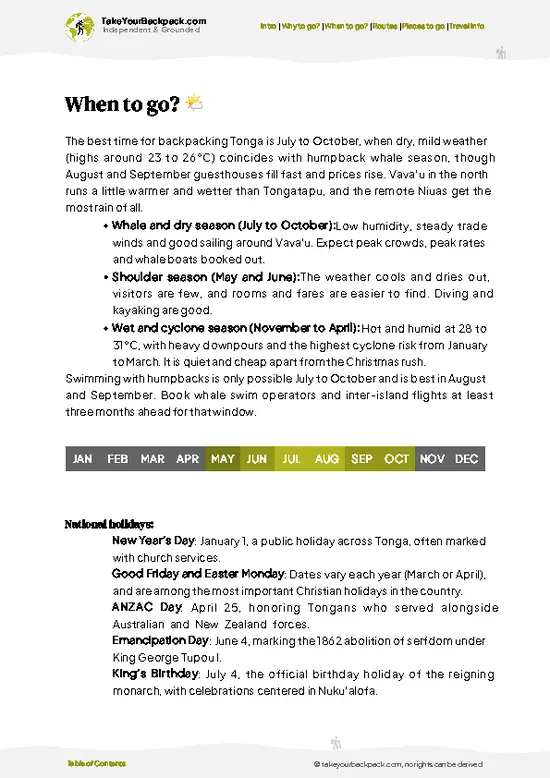
  • May to October (cooler, drier): Fafa Island's best window, with daytime highs of 24 to 27°C (75 to 81°F), lower humidity and steady southeast trades. Water sits near 25°C (77°F). Humpback whales pass Tongatapu from roughly July to October, and boat trips from Nuku'alofa add a whale encounter to a beach day.
  • November to April (hot, wet): Expect 28 to 32°C (82 to 90°F), sticky air and heavy showers, usually short. Cyclone season peaks from January to March, and ferry or boat transfers can be canceled when seas rise. Rooms are easier to book and often cheaper.
  • July to September (busiest): Visiting yachties, families and whale-watchers fill the island's limited beds. Book ahead and expect higher rates.
  • Daylight: About 11 hours in June and 13.5 in December, with sunset between roughly 6:05 and 7:25
… read more 👉
  • May to October (cooler, drier): Fafa Island's best window, with daytime highs of 24 to 27°C (75 to 81°F), lower humidity and steady southeast trades. Water sits near 25°C (77°F). Humpback whales pass Tongatapu from roughly July to October, and boat trips from Nuku'alofa add a whale encounter to a beach day.
  • November to April (hot, wet): Expect 28 to 32°C (82 to 90°F), sticky air and heavy showers, usually short. Cyclone season peaks from January to March, and ferry or boat transfers can be canceled when seas rise. Rooms are easier to book and often cheaper.
  • July to September (busiest): Visiting yachties, families and whale-watchers fill the island's limited beds. Book ahead and expect higher rates.
  • Daylight: About 11 hours in June and 13.5 in December, with sunset between roughly 6:05 and 7:25 pm.
Book in late May or early June for warm water, thin crowds and a bed without a scramble.


source: climatestotravel.comJANJanuary: fair for travelingFEBFebruary: fair for travelingMARMarch: fair for travelingAPRApril: good for travelingMAYMay: highly recommended for travelingJUNJune: highly recommended for travelingJULJuly: good for travelingAUGAugust: good for travelingSEPSeptember: highly recommended for travelingOCTOctober: highly recommended for travelingNOVNovember: fair for travelingDECDecember: fair for traveling
when-to-go

✈️ The backpacker research shortcutTonga Travel Guide

An offline-friendly backpacking guide with optimized travel routes, ranked highlights, transport advice, and the best areas to stay.
example page 0 from our offline Travel Guide for Tonga
example page 1 from our offline Travel Guide for Tonga
example page 2 from our offline Travel Guide for Tonga
example page 3 from our offline Travel Guide for Tonga
example page 4 from our offline Travel Guide for Tonga
example page 5 from our offline Travel Guide for Tonga
example page 6 from our offline Travel Guide for Tonga
example page 7 from our offline Travel Guide for Tonga
The digital guide (128 pages) contains:
✅ 31 highlights, ranked by travel appeal
✅ Optimized 2, 3 & 5-day travel routes
✅ Cities, national parks, landmarks, beaches
✅ How to get around
✅ Offline-friendly for travel without Wi-Fi
👉 Click to see all 30+ guide features

📅 Plan smarter in minutes, not weeks
✅ Month by month travel advice
✅ Festivals & national holidays
✅ Budget expectations

🗺️ Go to the right places, skip the overrated ones
✅ Honest pros & cons of destinations
✅ Top hikes, parks & viewpoints
✅ Lesser-known places most travelers miss
✅ Clear “worth it vs skip it” guidance

🛏️ Travel smoothly without rookie mistakes
✅ Best areas to stay
✅ Transport systems explained simply
✅ Common scams & safety advice
✅ SIM cards, money & practical tips

🌍 Understand the country, not just visit it
✅ Culture & traditions
✅ 52 Essential phrases & customs
✅ Festivals worth planning around
✅ Traveler-friendly historical context
✅ Insights that make places more meaningful

📱 Built for real travel conditions
✅ Fully downloadable PDF
✅ Works completely offline
✅ Optimized for phone use
✅ Useful in remote areas & buses
✅ Everything in one place
Stop searching, start planning
Get instant access to your full guide. 30‑day money-back guarantee.
+ Add another guide for just

By proceeding you agree to our terms.
Sent to your inbox immediately after payment • 100% Secure Checkout
Best Backpacking Travel Advisor 2025 tourism awardBest Backpacking
Travel Advisor
2025
What others say about Take Your Backpack Guides:
⭐⭐⭐⭐⭐
Fantastic, amazing amount of information!
⭐⭐⭐⭐⭐
My goodness this is amazing, it's what I've been looking for hats off too you!
⭐⭐⭐⭐⭐
I think this is absolutely BRILLIANT
⭐⭐⭐⭐
Very complete and informative. It's still missing places, but I gotta to commend you
⭐⭐⭐⭐⭐
This is truly amazing, thank you, can't wait to explore it with my kids!
⭐⭐⭐⭐⭐
Awesome resource, thank you!
⭐⭐⭐⭐⭐
This is amazing! Can't wait to explore the ones I haven't seen
⭐⭐⭐⭐
I love this! Well done, great idea.
⭐⭐⭐⭐⭐
Thanks for taking the time to make this gem!
⭐⭐⭐⭐⭐
This might be the best website I've ever seen.
⭐⭐⭐⭐⭐
Congratulations, and thank you so much for your work; it's incredibly valuable.
⭐⭐⭐⭐
In all seriousness I think you did a great job pointing out the important spots
⭐⭐⭐⭐⭐
10/10 very good
⭐⭐⭐⭐⭐
As someone who's only just starting to visit regularly this is awesome, thank you.
⭐⭐⭐⭐
Thank you very much! I'm going to visit my dad, it's going to be very useful!
⭐⭐⭐⭐⭐
This is really cool! We'll be travelling for the first time and this definitely come in handy.
⭐⭐⭐⭐⭐
You are now our minister of culture, congratulations 👨‍💼
⭐⭐⭐⭐⭐
Just wanted to tell you that this is a pearl! Going to follow your recommendations.
⭐⭐⭐⭐⭐
This is so cool. I'll definitely be using the resource for my travels soon.
⭐⭐⭐⭐⭐
This is very impressive! Good work.
⭐⭐⭐⭐⭐
This is an amazing and informative site. Very well done!

🛏️ Where to stay?How to pick the right area

Stay on Fafa Island itself if you want the beach at your door, and on the Nuku'alofa waterfront if you want a social, budget-friendly base. The island is tiny and sits about 7 kilometers (4 miles) off the capital, reached by a 20 to 30 minute boat ride. It has a small cluster of beachfront fales (thatched-style cottages) near the landing, no roads and no shops, so your evenings are sand, a shared resort restaurant and the night sky. Rates run higher than on the mainland, roughly US$100 to 250 a night (about TOP$235 to 590), so it suits a one or two night splurge better than a long stay.
For lower … read more 👉
Stay on Fafa Island itself if you want the beach at your door, and on the Nuku'alofa waterfront if you want a social, budget-friendly base. The island is tiny and sits about 7 kilometers (4 miles) off the capital, reached by a 20 to 30 minute boat ride. It has a small cluster of beachfront fales (thatched-style cottages) near the landing, no roads and no shops, so your evenings are sand, a shared resort restaurant and the night sky. Rates run higher than on the mainland, roughly US$100 to 250 a night (about TOP$235 to 590), so it suits a one or two night splurge better than a long stay.
For lower costs and more company, sleep in Nuku'alofa, in the streets between the waterfront and the main market. Hostels and guesthouses there charge roughly TOP$40 to 90 (US$17 to 38) for a dorm bed or simple room. You will meet other backpackers, find cheap meals at the market and can book a day trip to Fafa through local operators or your lodging. Expect to pay around TOP$60 to 120 (US$25 to 50) for the boat, depending on what is included. That combination keeps your costs sensible while still getting you onto the sand.

🛡️ SafetySafety Tips and Common Scams in Fafa Island Beach

Fafa Island is a calm, low-risk beach, and the main thing to watch is the sun. The island sits inside a sheltered lagoon, so waves are small and currents are mild, though water can flow briskly through channels near the edges at tide changes. Swim near the resort frontage, where the sand shelves gently. At low tide, shallow patches of coral and sharp rock can scrape bare feet, so reef shoes help for wading and snorkeling. Sea urchins and stonefish live in Tongan shallows, which is another reason to keep footwear on in rocky areas. Shade is limited between about 10 am and 3 pm, and the UV index is high year-round, so bring reef-safe sunscreen and a long-sleeve rash guard. Tropical showers pass quickly in the wet season, but check the forecast before boarding the boat, as rougher seas on the … read more 👉
Fafa Island is a calm, low-risk beach, and the main thing to watch is the sun. The island sits inside a sheltered lagoon, so waves are small and currents are mild, though water can flow briskly through channels near the edges at tide changes. Swim near the resort frontage, where the sand shelves gently. At low tide, shallow patches of coral and sharp rock can scrape bare feet, so reef shoes help for wading and snorkeling. Sea urchins and stonefish live in Tongan shallows, which is another reason to keep footwear on in rocky areas. Shade is limited between about 10 am and 3 pm, and the UV index is high year-round, so bring reef-safe sunscreen and a long-sleeve rash guard. Tropical showers pass quickly in the wet season, but check the forecast before boarding the boat, as rougher seas on the crossing can delay returns. Theft is rare on the island, though a bag left on the sand while you swim is still an easy target for no reason.

FAQCommon questions from travelers

Take a boat from Nuku'alofa, which is the only way to reach Fafa Island. The crossing is about 7 kilometers (4 miles) and takes 20 to 30 minutes, with departures usually from the Faua Jetty area. Day-trip transfers typically cost around TOP$60 to 120 (US$25 to 50) return, and overnight guests usually book the boat through the resort.
Swimming and snorkeling are both good, while surfing is not an option. The lagoon is shallow, clear and sheltered, with water around 25°C (77°F) in the cooler months, and the reef edge and nearby coral patches suit casual snorkelers. There is no surf break at the island, so surfers should look at other parts of Tongatapu. Between July and October, whale-watching boats from Nuku'alofa make a good add-on.
No, because the boat and the island's access are paid. You need to cover the transfer from Nuku'alofa, roughly TOP$60 to 120 (US$25 to 50) return, and day visitors usually pay a package that includes lunch or beach use. Overnight stays cost more, roughly US$100 to 250 a night, so book the day-trip option if you are on a tight budget.
⚠️ Things can change over time, so always validate details locally before you go.

Other Tongan beaches near Fafa Island Beach

Explore more nearby:

  • Mānuka Beach—Free access, calm green shallows, Tongatapu east coast, royal tomb stops| 7 km away
  • Ha’atafu Beach—Left reef break, marine reserve, west-facing sunsets, low-tide pools| 18 km away

💡 Not sure where to go next?
Create a personalized itinerary for Tonga including Fafa Island Beach and the places that fit your trip.

Generate my itinerary

👉 Discover all beaches

Or checkout all Tonga has to offer (think cities, towns, villages, national parks, hikes, beaches, festivals)
Country photo of Tonga

We 💚 feedbackWhat to keep in mind

Many travelers arrive at midday with no cash, no reef shoes and no plan for the return boat, then spend the afternoon watching the clock. Get it right by catching the earliest boat, carrying enough pa’anga for lunch and drinks, and confirming the last departure before you unpack your towel. Snorkel first, nap second.

✍️ Help improve this page!
The information on this page is based on in-depth research, insights shared by experienced travelers, and feedback from the local travel community in Tonga. While every effort is made to keep the information accurate and current, conditions can change — so if you spot anything incorrect or outdated, please get in touch.


🙋‍♂️ Give feedback

👋 Meet the founderWho’s Behind Take Your Backpack?

Johan, backpacker and founder of TakeYourBackpackHi, I’m Johan (Netherlands 🇳🇱), the creator of TakeYourBackpack. Over the past 3 decades, I’ve backpacked through 90+ countries across six continents, gaining extensive experience with independent travel, long-term trips, and overland routes.

This site is built on a combination of firsthand travel experience and carefully curated insights from other backpackers. Many guides are based on places I’ve personally visited, while others bring together tips, observations, and practical advice shared by trusted travelers I’ve met along the way.

The goal is to provide realistic, experience-driven guidance — not generic itineraries — so you can explore destinations with better context, clearer expectations, and more confidence.