×

Trinidad and Tobago🇹🇹 | beachesGrande Riviere BeachLeatherback nesting, river mouth, wide dark sand, rainforest trails | things to do and best time to go

Explore Macqueripe BayExplore Port of Spain

Backpacking in Grande Riviere Beach
👍 Recommendedbeach ranked #8
By Johan Kruseman 🇳🇱 | Updated October 22, 2026

Leatherback turtles haul themselves up the sand here to nest, and in season the beach is patrolled at night by local guides who keep flashlights dim and red. Grande Riviere Beach sits on the north coast of Trinidad, in Trinidad and Tobago, at the mouth of a river that cuts the village in two. The drive in is a winding, pothole-flavored road through forest, and your reward is a wide, dark-sand bay with big surf and a pleasing absence of resorts. Swimming is rough, with strong waves and a current, so you mostly wade and watch. Snorkeling is off the menu. Crowds stay thin outside nesting season, cleanliness is good, and guesthouses and roadside kitchens serve cheap fish and rice. Pelicans and the odd river-mouth heron round it out.

Discover everything you want to know in the 📖 Trinidad and Tobago Travel Guide.


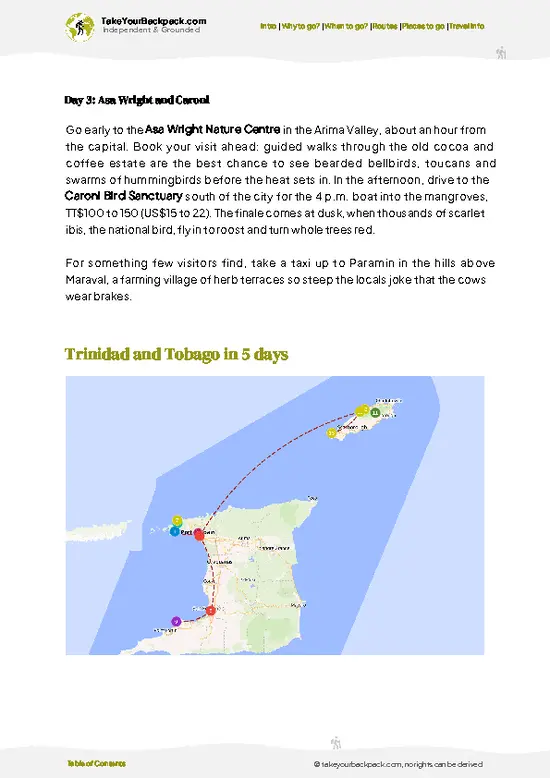
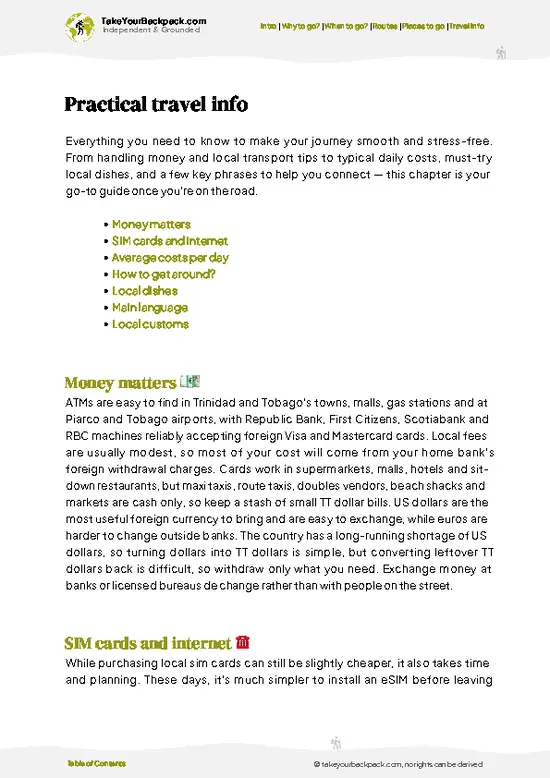
example page 0 from our offline Travel Guide for Trinidad and Tobago
example page 1 from our offline Travel Guide for Trinidad and Tobago
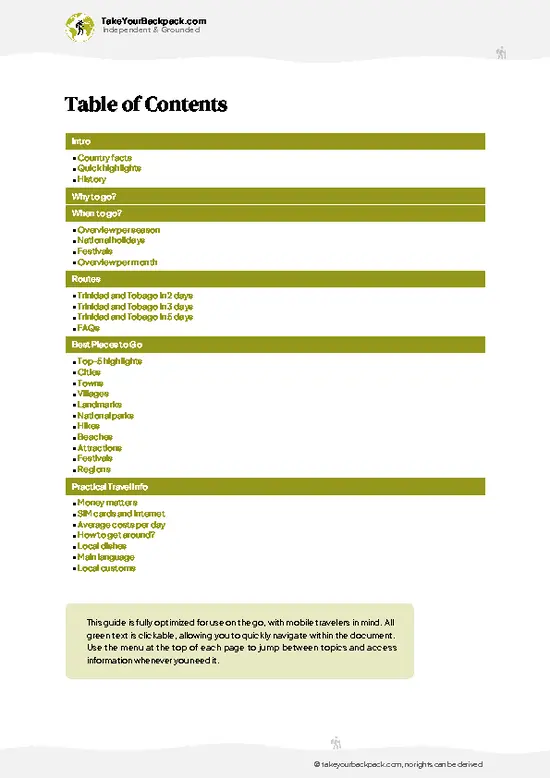
example page 2 from our offline Travel Guide for Trinidad and Tobago
example page 3 from our offline Travel Guide for Trinidad and Tobago
example page 4 from our offline Travel Guide for Trinidad and Tobago
example page 5 from our offline Travel Guide for Trinidad and Tobago
example page 6 from our offline Travel Guide for Trinidad and Tobago
example page 7 from our offline Travel Guide for Trinidad and Tobago
Loading the map 🌍
CLICK TO FILTER
cities
towns
villages
landmarks
national parks
hikes
beaches
attractions
festivals
regions
SHOW COUNTRY’S BESTSHOW ALL

✨ Why go?
Ranked #8 beach in Trinidad and Tobago
What sets this place apart

Grande Riviere Beach is where you go to watch a leatherback, the largest sea turtle on earth, dig a nest in front of you. Nesting runs roughly March to August, and the beach is one of the densest nesting sites in the Caribbean, so a night walk with a licensed local guide is realistic rather than a gamble. That alone justifies the long road up from the Port of Spain side.

The second reason is the village itself. It is small, with a handful of family-run guesthouses and kitchens, so you end up eating with the same people who patrol the sand. Daytime brings the Grande Riviere river mouth where fresh water meets the surf, and trails climbing into the surrounding Northern Range rainforest. It works as a quiet pause on the north coast road beyond Toco, where few other stops have a bed and a hot meal.

💡 HighlightsDon't-miss highlights and experiences

  1. Night turtle watching: Leatherbacks, some weighing several hundred kilograms, crawl ashore after dark to lay eggs. Trained local guides lead small groups with red light only, and no photos with flash are allowed. Tours are typically a modest fee, and you may wait a while before one appears.
  2. Hatchling emergence: Later in the season, tiny hatchlings scramble to the surf, often at dawn or dusk. Guides point out nests and keep people back from the path to the water.
  3. The river mouth: The Grande Riviere meets the sea at the edge of the beach, forming a shallow, calmer pool for cooling off and a spot for pelicans and herons. It shifts with the rains, so the channel looks different from week to week.
  4. Forest and birdwatching walks: Trails behind the village enter Northern Range rainforest with waterfalls
… read more 👉
  1. Night turtle watching: Leatherbacks, some weighing several hundred kilograms, crawl ashore after dark to lay eggs. Trained local guides lead small groups with red light only, and no photos with flash are allowed. Tours are typically a modest fee, and you may wait a while before one appears.
  2. Hatchling emergence: Later in the season, tiny hatchlings scramble to the surf, often at dawn or dusk. Guides point out nests and keep people back from the path to the water.
  3. The river mouth: The Grande Riviere meets the sea at the edge of the beach, forming a shallow, calmer pool for cooling off and a spot for pelicans and herons. It shifts with the rains, so the channel looks different from week to week.
  4. Forest and birdwatching walks: Trails behind the village enter Northern Range rainforest with waterfalls and pools. Guides can point out birds such as motmots and trogons, and the shade is welcome after the open sand.
  5. Beach walking at low tide: The dark sand stretches wide at low water, ideal for a long solitary walk, with surf photography and driftwood from the river. The waves are for watching rather than swimming.
For a first visit, the night turtle watching is the one to book, since nothing else here compares.
Spotted a mistake or missing something? Contact us.

🌤️ When to go?Seasonal considerations and timing

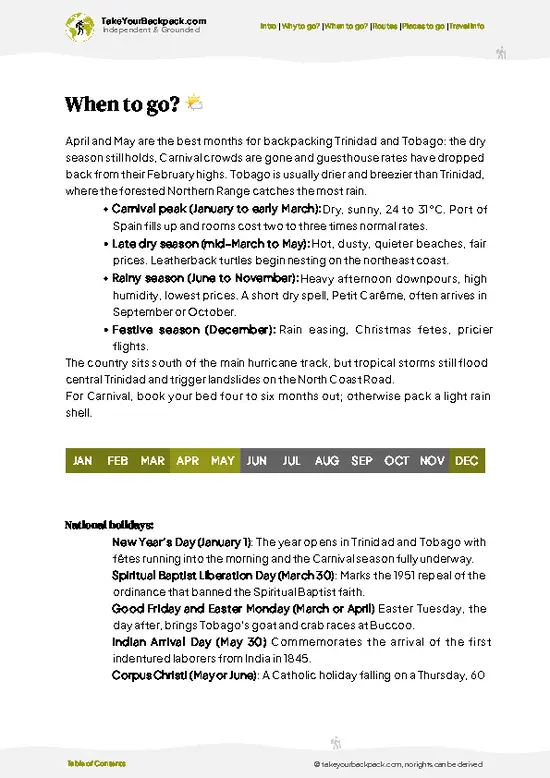
  • Leatherback Nesting (March to July): Peak season is April to June, when giant turtles haul out at night and the beach is at its busiest. Book beds ahead, because the village is tiny.
  • Dry Season (January to May): Days run 24 to 31°C (75 to 88°F) with the least rain and calmer rivers for crossing at the beach mouth.
  • Wet Season (June to December): Expect 23 to 30°C (73 to 86°F), heavy afternoon downpours, a swollen river and bigger surf. The forest turns intensely green and prices soften.
  • Daylight: Close to the equator, days run roughly 11 to 13 hours all year, so plan hikes for the morning.
  • Holidays: Carnival weekends and Easter fill local guesthouses and push rates up.
Arrive on a weekday in late April or May for turtles with fewer people.

source: climatestotravel.comJANJanuary: excellent for travelingFEBFebruary: highly recommended for travelingMARMarch: highly recommended for travelingAPRApril: excellent for travelingMAYMay: highly recommended for travelingJUNJune: fair for travelingJULJuly: fair for travelingAUGAugust: fair for travelingSEPSeptember: fair for travelingOCTOctober: fair for travelingNOVNovember: fair for travelingDECDecember: good for traveling
when-to-go

✈️ The backpacker research shortcutTrinidad and Tobago Travel Guide

An offline-friendly backpacking guide with optimized travel routes, ranked highlights, transport advice, and the best areas to stay.
example page 0 from our offline Travel Guide for Trinidad and Tobago
example page 1 from our offline Travel Guide for Trinidad and Tobago
example page 2 from our offline Travel Guide for Trinidad and Tobago
example page 3 from our offline Travel Guide for Trinidad and Tobago
example page 4 from our offline Travel Guide for Trinidad and Tobago
example page 5 from our offline Travel Guide for Trinidad and Tobago
example page 6 from our offline Travel Guide for Trinidad and Tobago
example page 7 from our offline Travel Guide for Trinidad and Tobago
The digital guide (222 pages) contains:
✅ 58 highlights, ranked by travel appeal
✅ Optimized 2, 3 & 5-day travel routes
✅ Cities, national parks, landmarks, beaches
✅ How to get around
✅ Offline-friendly for travel without Wi-Fi
👉 Click to see all 30+ guide features

📅 Plan smarter in minutes, not weeks
✅ Month by month travel advice
✅ Festivals & national holidays
✅ Budget expectations

🗺️ Go to the right places, skip the overrated ones
✅ Honest pros & cons of destinations
✅ Top hikes, parks & viewpoints
✅ Lesser-known places most travelers miss
✅ Clear “worth it vs skip it” guidance

🛏️ Travel smoothly without rookie mistakes
✅ Best areas to stay
✅ Transport systems explained simply
✅ Common scams & safety advice
✅ SIM cards, money & practical tips

🌍 Understand the country, not just visit it
✅ Culture & traditions
✅ Local customs
✅ Festivals worth planning around
✅ Traveler-friendly historical context
✅ Insights that make places more meaningful

📱 Built for real travel conditions
✅ Fully downloadable PDF
✅ Works completely offline
✅ Optimized for phone use
✅ Useful in remote areas & buses
✅ Everything in one place
Stop searching, start planning
Get instant access to your full guide. 30‑day money-back guarantee.
+ Add another guide for just

By proceeding you agree to our terms.
Sent to your inbox immediately after payment • 100% Secure Checkout
Best Backpacking Travel Advisor 2025 tourism awardBest Backpacking
Travel Advisor
2025
What others say about Take Your Backpack Guides:
⭐⭐⭐⭐⭐
Fantastic, amazing amount of information!
⭐⭐⭐⭐⭐
My goodness this is amazing, it's what I've been looking for hats off too you!
⭐⭐⭐⭐⭐
I think this is absolutely BRILLIANT
⭐⭐⭐⭐
Very complete and informative. It's still missing places, but I gotta to commend you
⭐⭐⭐⭐⭐
This is truly amazing, thank you, can't wait to explore it with my kids!
⭐⭐⭐⭐⭐
Awesome resource, thank you!
⭐⭐⭐⭐⭐
This is amazing! Can't wait to explore the ones I haven't seen
⭐⭐⭐⭐
I love this! Well done, great idea.
⭐⭐⭐⭐⭐
Thanks for taking the time to make this gem!
⭐⭐⭐⭐⭐
This might be the best website I've ever seen.
⭐⭐⭐⭐⭐
Congratulations, and thank you so much for your work; it's incredibly valuable.
⭐⭐⭐⭐
In all seriousness I think you did a great job pointing out the important spots
⭐⭐⭐⭐⭐
10/10 very good
⭐⭐⭐⭐⭐
As someone who's only just starting to visit regularly this is awesome, thank you.
⭐⭐⭐⭐
Thank you very much! I'm going to visit my dad, it's going to be very useful!
⭐⭐⭐⭐⭐
This is really cool! We'll be travelling for the first time and this definitely come in handy.
⭐⭐⭐⭐⭐
You are now our minister of culture, congratulations 👨‍💼
⭐⭐⭐⭐⭐
Just wanted to tell you that this is a pearl! Going to follow your recommendations.
⭐⭐⭐⭐⭐
This is so cool. I'll definitely be using the resource for my travels soon.
⭐⭐⭐⭐⭐
This is very impressive! Good work.
⭐⭐⭐⭐⭐
This is an amazing and informative site. Very well done!

🛏️ Where to stay?How to pick the right area

Stay in Grande Riviere village itself, because it is the only place within walking distance of the sand. The settlement is a single strip of road along the river mouth, and everything sits within a ten-minute stroll of the beach.
There is no hostel scene here. Budget travelers rely on small family-run guesthouses and basic rooms, typically US$30 to 80 a night, with a few pricier eco-lodges facing the water. Dorm beds are not really a thing, so solo travelers meet people at shared dinners, on the turtle watches and on the guided forest walks that start from the village.
During nesting season, rooms … read more 👉
Stay in Grande Riviere village itself, because it is the only place within walking distance of the sand. The settlement is a single strip of road along the river mouth, and everything sits within a ten-minute stroll of the beach.
There is no hostel scene here. Budget travelers rely on small family-run guesthouses and basic rooms, typically US$30 to 80 a night, with a few pricier eco-lodges facing the water. Dorm beds are not really a thing, so solo travelers meet people at shared dinners, on the turtle watches and on the guided forest walks that start from the village.
During nesting season, rooms are scarce and should be booked weeks ahead. Outside it, you can often negotiate a better rate for several nights. Bring cash in local currency, since card machines and ATMs are unreliable in the village. Meals are usually cooked by your host, and the one or two small shops stock only basics, so buy supplies in Toco or Sangre Grande on the way in.
If the village is full, the nearest alternative is Toco, about 30 minutes away by car.

🛡️ SafetyScams, Hazards, and Annoyances

Grande Riviere Beach is safe for a stroll and a paddle, but not for casual swimming. Waves break hard onto steep, coarse sand, and rip currents plus a strong undertow run along the shore, especially in the wet season. Most locals wade rather than swim, and the calmer spot is usually where the river meets the sea. Do not cross the river mouth when it is swollen after heavy rain.
The sun is strong with little shade on the sand, so bring a hat and water. Petty theft is uncommon but do not leave bags unattended. Night turtle watches are run by trained guides, who ask you to use no flash and no white light. Sandflies can bite at dusk, so carry repellent.

FAQTraveler FAQ

Grande Riviere Beach sits on Trinidad’s north coast, about 2.5 to 3 hours by car from Port of Spain via Sangre Grande and Toco. Public transport is limited, so many travelers take a maxi taxi from Port of Spain to Sangre Grande, then a shared taxi onward, or hire a driver for roughly US$80 to 120 one way. The final stretch is a winding road through forested hills.
Grande Riviere Beach is better for watching than for swimming, since the surf is rough and the undertow strong. Surfing is not established here and there are no rentals or schools. Snorkeling is poor because the water is churned and murky, so wade in the shallows or swim at the river mouth when calm. The real draw is leatherback turtles nesting from March to July.
Grande Riviere Beach is free to enter, and there is no gate or ticket. Parking in the village is informal and usually costs nothing or a few dollars. Guided night turtle watches during nesting season cost around US$10 to 20 per person, and forest or waterfall walks with local guides are priced separately.
⚠️ Things can change over time, so always validate details locally before you go.

Other Trinidadian and Tobagonian beaches near Grande Riviere Beach

Explore more nearby:

  • Blanchisseuse Beach—Marianne River mouth, dark sand, Paria Coastal Trail, forest edge| 28 km away
  • Manzanilla Beach—Leaning coconut palms, 24-kilometer strip, Atlantic surf, weekend lime| 36 km away
  • Las Cuevas Beach—Tan sand arc, lifeguards, pirogues, fried fish stalls| 38 km away

💡 Not sure where to go next?
Create a personalized itinerary for Trinidad and Tobago including Grande Riviere Beach and the places that fit your trip.

Generate my itinerary

👉 Discover all beaches

Or checkout all Trinidad and Tobago has to offer (think cities, towns, villages, national parks, hikes, beaches, festivals)
Country photo of Trinidad and Tobago

We 💚 feedbackIs it worth it?

Grande Riviere Beach is best between March and June, when nesting is at its peak and you can pair a night patrol with a quiet, sunny morning on the sand. Book your guesthouse early in those months, bring a dark layer and insect repellent, and leave the flash camera in the room.

✍️ Help improve this page!
The information on this page is based on in-depth research, insights shared by experienced travelers, and feedback from the local travel community in Trinidad and Tobago. While every effort is made to keep the information accurate and current, conditions can change — so if you spot anything incorrect or outdated, please get in touch.


🙋‍♂️ Give feedback

👋 Meet the founderWho’s Behind Take Your Backpack?

Johan, backpacker and founder of TakeYourBackpackHi, I’m Johan (Netherlands 🇳🇱), the creator of TakeYourBackpack. Over the past 3 decades, I’ve backpacked through 90+ countries across six continents, gaining extensive experience with independent travel, long-term trips, and overland routes.

This site is built on a combination of firsthand travel experience and carefully curated insights from other backpackers. Many guides are based on places I’ve personally visited, while others bring together tips, observations, and practical advice shared by trusted travelers I’ve met along the way.

The goal is to provide realistic, experience-driven guidance — not generic itineraries — so you can explore destinations with better context, clearer expectations, and more confidence.