×

Trinidad and Tobago🇹🇹 | villagesGrande Riviereleatherback nesting, remote coastline, eco-lodges | things to do and best time to go

Explore BlanchisseuseExplore Icacos

Backpacking in Grande Riviere
🏆 Top pickvillage ranked #4
By Johan Kruseman 🇳🇱 | Updated May 24, 2026

Ten years ago Grande Riviere felt like the end of the road in every sense: one guesthouse, a dim bar, the smell of woodsmoke and seaweed, and long nights where the loudest thing was the surf. Today it’s still remote, but the edges are softer—more eco-lodges, more guided turtle walks, a few spots serving cold Carib and decent curry, and a quiet confidence that tourism now pays the bills.

You’re on Trinidad’s far northeast coast, past Toco, where the highway thins into a winding, landslide-prone ribbon. For backpackers, Grande Riviere is a deliberate detour, not a casual stop: a small river, a short strip of sand, forested hills pressing in. It works best as a 1–3 night nature base, especially in turtle season, rather than a hub. Everything is walkable, but you’ll rely on shared taxis or pre-arranged rides to get in and out; buses are sparse and slow. Evenings are low-key—more murmured conversations on verandas than bar crawls—so you might meet a handful of other travelers, not a crowd. Costs run higher than in Arima or Sangre Grande because options are limited and more eco-focused. Safety feels good if you use normal sense; the isolation is the main risk, not crime. Compared with Maracas or Las Cuevas, Grande Riviere is wilder, quieter, and less about liming on the beach, more about listening to waves in the dark and watching giant turtles haul themselves out of the surf.

Discover everything you want to know in the 📖 Trinidad and Tobago Travel Guide.
Loading the map 🌍
CLICK TO FILTER
cities
towns
villages
landmarks
national parks
hikes
beaches
attractions
festivals
regions
SHOW COUNTRY’S BESTSHOW ALL

✨ Why go?
Ranked #4 village in Trinidad and Tobago
What makes it a must-see village

Backpackers flock to Grande Riviere for its unique blend of convenience and authenticity. Nestled along the northeastern coast, it serves as a perfect base for nearby hikes in the lush Tobago Forest Reserve and offers easy access to the beaches where leatherback turtles nest. The town’s walkable streets invite exploration, with small-scale hostels and guesthouses that foster a friendly, communal vibe. You’ll find local food stalls serving up fresh catch and spicy curries, making every meal an experience.

Most travelers linger for a few days, soaking in the laid-back atmosphere. It’s ideal for slow travelers and hikers who appreciate the chance to connect with nature and locals alike. The social scene is relaxed, perfect for solo adventurers or small groups looking to share stories over a … read more 👉
Backpackers flock to Grande Riviere for its unique blend of convenience and authenticity. Nestled along the northeastern coast, it serves as a perfect base for nearby hikes in the lush Tobago Forest Reserve and offers easy access to the beaches where leatherback turtles nest. The town’s walkable streets invite exploration, with small-scale hostels and guesthouses that foster a friendly, communal vibe. You’ll find local food stalls serving up fresh catch and spicy curries, making every meal an experience.

Most travelers linger for a few days, soaking in the laid-back atmosphere. It’s ideal for slow travelers and hikers who appreciate the chance to connect with nature and locals alike. The social scene is relaxed, perfect for solo adventurers or small groups looking to share stories over a rum punch. While nightlife isn’t the main draw, the charm lies in the quiet evenings spent listening to the waves. If you’re seeking a genuine slice of Trinidadian life, Grande Riviere is more than a stop; it’s a rewarding chapter in your journey.
Want to include Grande Riviere in your Trinidad and Tobago route?
Create a personalized Trinidad and Tobago itinerary that includes Grande Riviere and the places that fit your trip — based on your travel style, budget, and available time. Get your route in seconds.

Generate my trip

💡 HighlightsEssential experiences to have while visiting Grande Riviere

  1. Grande Riviere Beach (the leatherback nesting beach) — The village’s main draw: a long stretch of black-sand shore where giant leatherback turtles come ashore (seasonal). Walking the beach at the right time of year is a straight-up wildlife show you won’t find many places on the island.
  2. Community turtle-patrol meeting point / night walks — Locals run nightly patrols during nesting season; joining or watching a patrol is the best way to learn about the turtles, conservation work, and local stories from people who’ve lived with the beach for generations.
  3. Grande Riviere river mouth / estuary — Where the small river meets the sea: excellent for birdwatching, tide-pool micro-life, easy photography, and seeing how fishing and village life orient around that junction.
  4. Fishermen’s landing & boat
read more 👉
  1. Grande Riviere Beach (the leatherback nesting beach) — The village’s main draw: a long stretch of black-sand shore where giant leatherback turtles come ashore (seasonal). Walking the beach at the right time of year is a straight-up wildlife show you won’t find many places on the island.
  2. Community turtle-patrol meeting point / night walks — Locals run nightly patrols during nesting season; joining or watching a patrol is the best way to learn about the turtles, conservation work, and local stories from people who’ve lived with the beach for generations.
  3. Grande Riviere river mouth / estuary — Where the small river meets the sea: excellent for birdwatching, tide-pool micro-life, easy photography, and seeing how fishing and village life orient around that junction.
  4. Fishermen’s landing & boat beaching area — Watch skiffs come in, see nets mended on the sand and buy fresh catch if you’re lucky; it’s hands-on, local, and gives a real feel for the village economy.
  5. Coastal headland and viewpoint — A short walk from the main strip leads to grassy rocks and a low headland with open ocean views and strong surf sounds — great for sunrise, whale/porpoise spotting on calm days, or just getting away from the sand.
  6. Village main street and rum-shop scene — Small shops, a rum shop or two and the community hub where neighbors swap news; the best place to overhear local history, pick up snacks, or ask about turtles and secret spots.
  7. Local homestays / eco-lodges — Staying with a village host is both practical and cultural: you get home-cooked food, firsthand stories, and easy access to patrols and guides — much of the village’s hospitality economy is organized around these small stays.
  8. Short littoral-forest trails — Narrow paths dip from the road into coastal scrub and low forest right behind the beach. They’re great for birding (migrants and locals), butterflies, and seeing the plants that hold the sand in place.
  9. Monitored nest sites and hatchling-release viewing points — During hatch season you can watch protected nest sites and, when timed right, small releases of hatchlings — a quiet, moving experience when run by trained volunteers.
  10. Community hall / cultural meeting spots — When there’s an event you’ll see storytelling, music or local gatherings here; timing a visit to coincide with a village event (check locally) gives a deeper cultural snapshot than the beaches alone.
A few nearby day-trip highlights outside Grande Riviere worth exploring: Matura Beach and the Matura River area for more turtle habitat, the Toco headland and seaside eateries for broad coastal views and seafood, and short drives along the northeast coast to visit neighbouring fishing villages and lookouts.
Spotted a mistake or missing something? Contact us.

⌛️ 1 dayWhat you can realistically do in a day

Grande Riviere, a charming coastal village in Trinidad and Tobago, is a treasure trove of natural beauty and local culture. Known for its stunning beaches and the annual turtle nesting season, this town offers a slice of authentic Caribbean life that feels worlds away from the typical tourist traps.

Start your day early with a stroll along Grande Riviere Beach. The soft, golden sand beneath your feet and the rhythmic sound of waves crashing create a serene atmosphere. As the sun rises, the sky transforms into a canvas of oranges and pinks, making it the perfect backdrop for a morning meditation or a few moments of quiet reflection. Grab a local breakfast at a nearby roadside stand—try the bake and shark, a delicious sandwich that packs a punch with its fresh ingredients.

In the afternoon, … read more 👉
Grande Riviere, a charming coastal village in Trinidad and Tobago, is a treasure trove of natural beauty and local culture. Known for its stunning beaches and the annual turtle nesting season, this town offers a slice of authentic Caribbean life that feels worlds away from the typical tourist traps.

Start your day early with a stroll along Grande Riviere Beach. The soft, golden sand beneath your feet and the rhythmic sound of waves crashing create a serene atmosphere. As the sun rises, the sky transforms into a canvas of oranges and pinks, making it the perfect backdrop for a morning meditation or a few moments of quiet reflection. Grab a local breakfast at a nearby roadside stand—try the bake and shark, a delicious sandwich that packs a punch with its fresh ingredients.

In the afternoon, head to the nearby rainforest trails. The lush greenery and the scent of damp earth invigorate your senses. Explore the trails that wind through the forest, where you might spot colorful birds and hear the distant calls of howler monkeys. This is not just a hike; it’s a chance to connect with the vibrant ecosystem that thrives here.

As the sun begins to set, make your way to the village center. Stop by the local craft market, where artisans showcase their handmade goods. This is a great opportunity to pick up unique souvenirs while supporting the community. For dinner, seek out a small, family-run eatery like “The Nest,” where you can savor traditional dishes like callaloo or pelau, cooked with love and local spices.

End your day by returning to the beach. The stars twinkle above, and the sound of the waves becomes a soothing lullaby. Grande Riviere isn’t just a destination; it’s a journey into the heart of Trinidadian culture, where every moment feels earned and every experience is rich with meaning.
Turn your Grande Riviere visit into an Trinidad and Tobago adventure
Build a complete Trinidad and Tobago route with Grande Riviere, hidden gems, must-see destinations, and realistic travel times included.

Generate my trip

🌤️ When to go?Choosing the right time of year


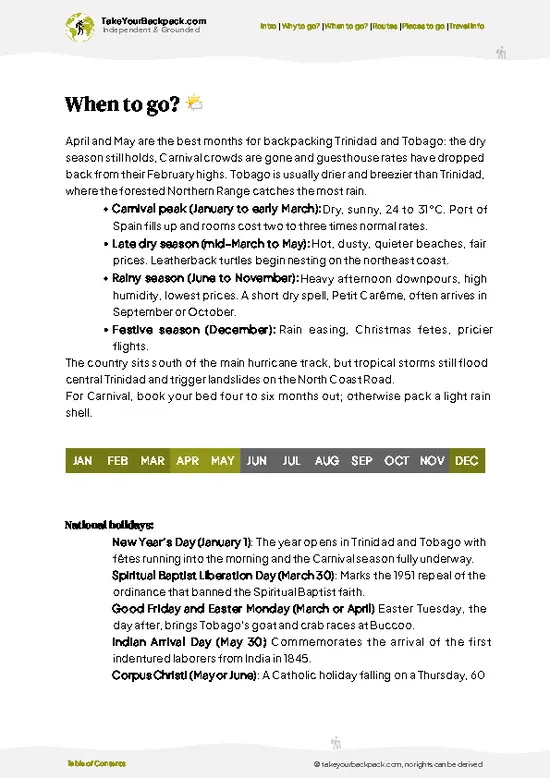
  • Weather: Grande Riviere’s dry season runs from January to May, offering clear skies and less humidity. Rainfall spikes from June through December, often turning trails muddy and the air thick with tropical moisture, which can dampen your hiking plans.

  • Temperature: Expect daytime highs around 29-32°C (84-90°F) year-round, with nights cooling to 23-25°C (73-77°F). The dry season feels more comfortable for trekking, while the wet season’s heat can feel heavier, especially after rain.

  • Daylight Hours: Near the equator, daylight stays steady at about 12 hours year-round. This consistency means you can plan hikes without worrying about early sunsets cutting your adventure short.

  • Crowds: Grande Riviere is a low-key spot, but the dry season draws more eco-tourists and turtle watchers, especially
read more 👉

  • Weather: Grande Riviere’s dry season runs from January to May, offering clear skies and less humidity. Rainfall spikes from June through December, often turning trails muddy and the air thick with tropical moisture, which can dampen your hiking plans.

  • Temperature: Expect daytime highs around 29-32°C (84-90°F) year-round, with nights cooling to 23-25°C (73-77°F). The dry season feels more comfortable for trekking, while the wet season’s heat can feel heavier, especially after rain.

  • Daylight Hours: Near the equator, daylight stays steady at about 12 hours year-round. This consistency means you can plan hikes without worrying about early sunsets cutting your adventure short.

  • Crowds: Grande Riviere is a low-key spot, but the dry season draws more eco-tourists and turtle watchers, especially March to August. The wet season sees fewer visitors, giving you more solitude but fewer services open.

  • Seasonal Activities: Turtle nesting peaks from June to September, a rare natural spectacle worth timing your visit for. Outside this, the dry season is better for hiking and river swimming without the risk of sudden downpours.

  • Price Fluctuations: Accommodation and tours tend to be pricier during turtle season and the dry months when demand is highest. The wet season offers better deals but comes with trade-offs in weather and accessibility.


Pro-tip: Aim for late February to early May to balance dry trails, manageable crowds, and a chance to catch early turtle nesting without paying peak-season prices.


source: climatestotravel.comJANJanuary: excellent for travelingFEBFebruary: excellent for travelingMARMarch: excellent for travelingAPRApril: excellent for travelingMAYMay: highly recommended for travelingJUNJune: good for travelingJULJuly: good for travelingAUGAugust: good for travelingSEPSeptember: good for travelingOCTOctober: fair for travelingNOVNovember: fair for travelingDECDecember: fair for traveling
when-to-go

✈️ The backpacker research shortcutTrinidad and Tobago Travel Guide

An offline-friendly backpacking guide with optimized travel routes, ranked highlights, transport advice, and the best areas to stay.
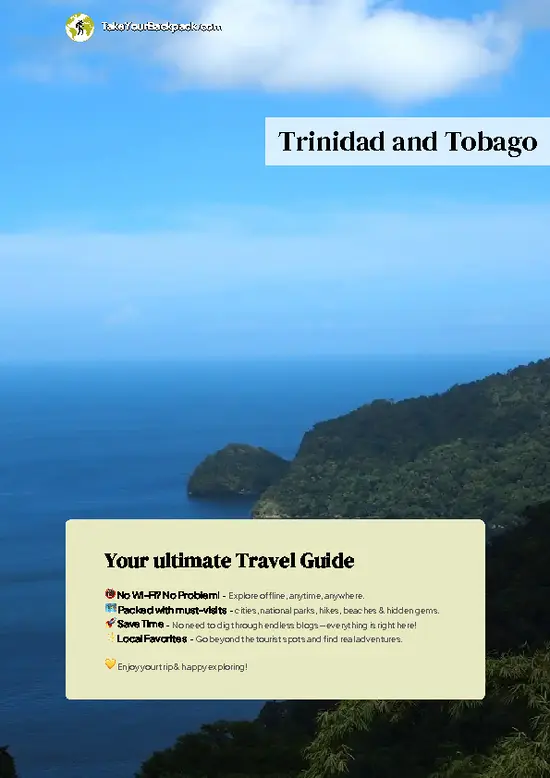
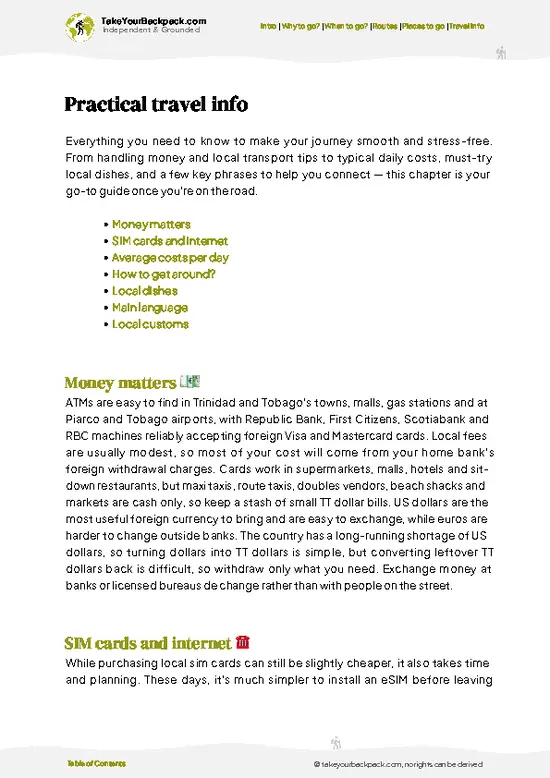
example page 0 from our offline Travel Guide for Trinidad and Tobago
example page 1 from our offline Travel Guide for Trinidad and Tobago
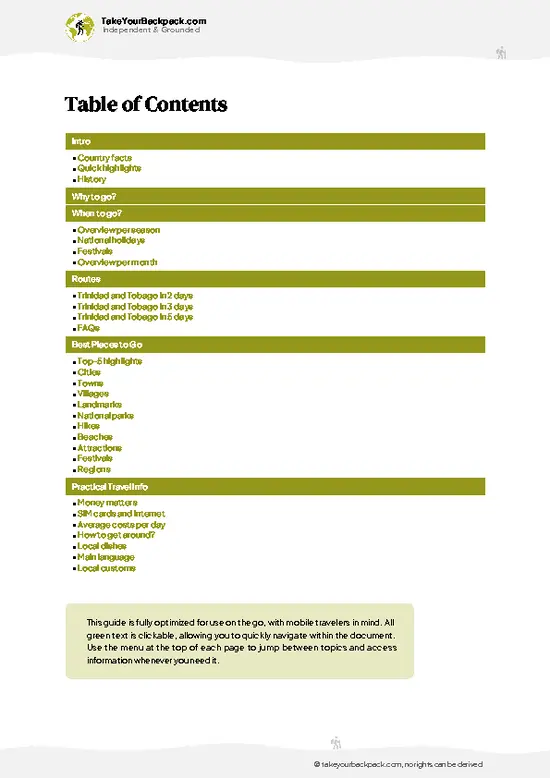
example page 2 from our offline Travel Guide for Trinidad and Tobago
example page 3 from our offline Travel Guide for Trinidad and Tobago
example page 4 from our offline Travel Guide for Trinidad and Tobago
example page 5 from our offline Travel Guide for Trinidad and Tobago
example page 6 from our offline Travel Guide for Trinidad and Tobago
example page 7 from our offline Travel Guide for Trinidad and Tobago
The digital guide (237 pages) contains:
61 highlights, ranked by travel appeal
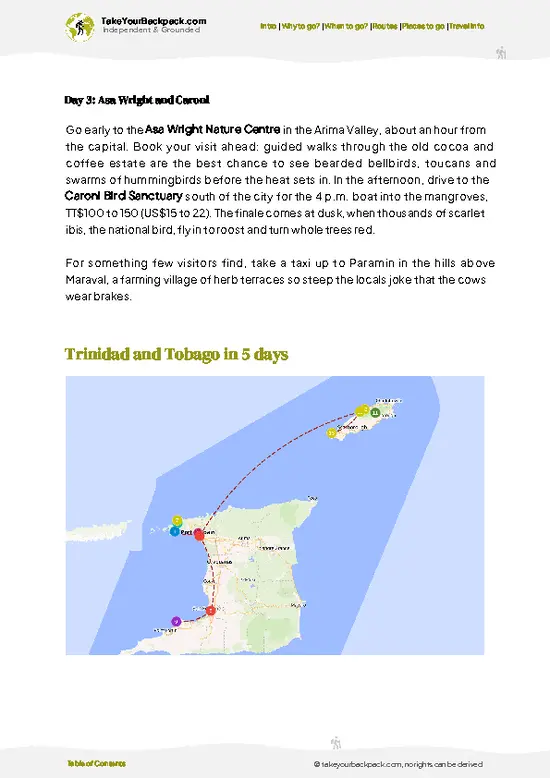
Optimized 2, 3 & 5-day travel routes
Cities, national parks, landmarks, beaches
How to get around
Offline-friendly for travel without Wi-Fi
👉 Click to see all 30+ guide features

📅 Plan smarter in minutes, not weeks
Month by month travel advice
Festivals & national holidays
Budget expectations

🗺️ Go to the right places, skip the overrated ones
Honest pros & cons of destinations
Top hikes, parks & viewpoints
Lesser-known places most travelers miss
Clear “worth it vs skip it” guidance

🛏️ Travel smoothly without rookie mistakes
Best areas to stay
Transport systems explained simply
Common scams & safety advice
SIM cards, money & practical tips

🌍 Understand the country, not just visit it
Culture & traditions
Local customs
Festivals worth planning around
Traveler-friendly historical context
Insights that make places more meaningful

📱 Built for real travel conditions
Fully downloadable PDF
Works completely offline
Optimized for phone use
Useful in remote areas & buses
Everything in one place
Save weeks of stressful planning
Get instant access to your full guide. 30‑day money-back guarantee.


By proceeding you agree to our terms.
Sent to your inbox immediately after payment • 100% Secure Checkout
Best Backpacking Travel Advisor 2025 tourism awardBest Backpacking
Travel Advisor
2025
What others say about Take Your Backpack Guides:
⭐⭐⭐⭐⭐
Fantastic, amazing amount of information!
⭐⭐⭐⭐⭐
My goodness this is amazing, it's what I've been looking for hats off too you!
⭐⭐⭐⭐⭐
I think this is absolutely BRILLIANT
⭐⭐⭐⭐
Very complete and informative. It's still missing places, but I gotta to commend you
⭐⭐⭐⭐⭐
This is truly amazing, thank you, can't wait to explore it with my kids!
⭐⭐⭐⭐⭐
Awesome resource, thank you!
⭐⭐⭐⭐⭐
This is amazing! Can't wait to explore the ones I haven't seen
⭐⭐⭐⭐
I love this! Well done, great idea.
⭐⭐⭐⭐⭐
Thanks for taking the time to make this gem!
⭐⭐⭐⭐⭐
This might be the best website I've ever seen.
⭐⭐⭐⭐⭐
Congratulations, and thank you so much for your work; it's incredibly valuable.
⭐⭐⭐⭐
In all seriousness I think you did a great job pointing out the important spots
⭐⭐⭐⭐⭐
10/10 very good
⭐⭐⭐⭐⭐
As someone who's only just starting to visit regularly this is awesome, thank you.
⭐⭐⭐⭐
Thank you very much! I'm going to visit my dad, it's going to be very useful!
⭐⭐⭐⭐⭐
This is really cool! We'll be travelling for the first time and this definitely come in handy.
⭐⭐⭐⭐⭐
You are now our minister of culture, congratulations 👨‍💼
⭐⭐⭐⭐⭐
Just wanted to tell you that this is a pearl! Going to follow your recommendations.
⭐⭐⭐⭐⭐
This is so cool. I'll definitely be using the resource for my travels soon.
⭐⭐⭐⭐⭐
This is very impressive! Good work.
⭐⭐⭐⭐⭐
This is an amazing and informative site. Very well done!

🛏️ Where to stay?Best areas to stay in Trinidad and Tobago

Grande Riviere is a small, coastal village where the real draw is nature and community, not flashy nightlife or sprawling urban scenes. For backpackers, the best place to stay is right near the beach and the village center. This area is where you’ll find the most social energy—locals and travelers mingle easily here, sharing stories over the scent of salt air mixed with cooking fires. It’s safe because it’s tight-knit; people look out for each other, and the pace is slow enough to feel grounded but lively enough to meet others.

Compared to the outskirts or more isolated spots, staying near the … read more 👉
Grande Riviere is a small, coastal village where the real draw is nature and community, not flashy nightlife or sprawling urban scenes. For backpackers, the best place to stay is right near the beach and the village center. This area is where you’ll find the most social energy—locals and travelers mingle easily here, sharing stories over the scent of salt air mixed with cooking fires. It’s safe because it’s tight-knit; people look out for each other, and the pace is slow enough to feel grounded but lively enough to meet others.

Compared to the outskirts or more isolated spots, staying near the village center means you’re within walking distance of the turtle nesting sites and local eateries, which are the heartbeat of Grande Riviere’s charm. Hostels and guesthouses cluster here, offering budget-friendly beds and a communal vibe that’s perfect for solo travelers wanting to connect. The light in this part of town is soft and golden in the late afternoon, casting long shadows over the palm trees and the narrow streets, making it easy to unwind after a day of hiking or beachcombing.

Avoid the more scattered, rural edges unless you want solitude over socializing; they lack the convenience and safety net of the village core. Staying central means you’re plugged into the rhythm of Grande Riviere, making every moment feel earned and authentic.

🚌 Getting aroundHow to get around Grande Riviere

Grande Riviere moves at its own rhythm—more the sway of the ocean breeze than the tick of a clock. Here, time feels elastic, stretched by the lazy hum of cicadas and the distant crash of waves. The town doesn’t rush you; it invites you to slow down and listen. That means transit isn’t about rigid schedules or slick timetables but about reading the local pulse and catching rides when they come. You’ll find that the best way to get around is less about strict planning and more about tuning into the town’s natural flow—whether that’s a shared taxi pulling up when you least expect it or a barefoot stroll along the dusty road, soaking in the scent of salt and earth.


  • Walking: The most reliable and immersive way to explore Grande Riviere. The town is compact, with dirt paths and shaded lanes
read more 👉
Grande Riviere moves at its own rhythm—more the sway of the ocean breeze than the tick of a clock. Here, time feels elastic, stretched by the lazy hum of cicadas and the distant crash of waves. The town doesn’t rush you; it invites you to slow down and listen. That means transit isn’t about rigid schedules or slick timetables but about reading the local pulse and catching rides when they come. You’ll find that the best way to get around is less about strict planning and more about tuning into the town’s natural flow—whether that’s a shared taxi pulling up when you least expect it or a barefoot stroll along the dusty road, soaking in the scent of salt and earth.


  • Walking: The most reliable and immersive way to explore Grande Riviere. The town is compact, with dirt paths and shaded lanes that reveal local life in every step. No cost, and you control the pace—perfect for catching the scent of frangipani or the chatter of fishermen preparing their nets.


  • Shared Taxis (Maxi Taxis): These minibuses run irregularly, often filling up before they leave. Expect to pay around 50-100 TTD (Trinidad and Tobago Dollars) for a trip to nearby towns. They start early, around 6:00 AM, but don’t expect a strict schedule—these taxis leave when full, so patience is key. They’re a budget-friendly way to cover longer distances but can get cramped and hot.


  • Local Buses: Operated by private companies, these buses connect Grande Riviere to larger hubs like Sangre Grande. They run roughly from 5:30 AM to 6:00 PM. Tickets cost about 10-20 TTD. Buses are slower than taxis but more comfortable and reliable for fixed routes. They’re a good choice if you want to avoid the unpredictability of shared taxis.


  • Motorbike Taxis: For short hops or when you’re in a hurry, motorbike taxis are a common sight. Prices vary but expect to negotiate around 20-50 TTD depending on distance. They’re fast and nimble but less safe, so only use them if you’re comfortable with a bit of adrenaline and the tropical sun on your face.


  • Private Car Hire: If your budget allows, renting a car or hiring a private driver offers the ultimate freedom. Rates start around 400 TTD per day. This option lets you explore the rugged coastline and hidden beaches at your own pace, avoiding the wait and crowd of public transit. It’s a splurge but worth it for the flexibility and comfort.

👛 Costs (as of 21 April 2026)Money, prices, and spending tips

Backpacking in Grande Riviere, Trinidad and Tobago, offers a raw, nature-immersed experience, but it’s not a place for luxury on the cheap. Here’s what you’re realistically looking at for daily costs.
  • Dorm Accommodation: Expect to pay around $15 to $25 USD per night for a basic dorm bed. Options are limited and rustic, often eco-lodges or guesthouses that emphasize simplicity over comfort. The trade-off is waking up to the sound of the ocean and jungle, not a city street.
  • Meals: Local eateries and street food will run you about $5 to $10 USD per day if you stick to simple, hearty meals like doubles, roti, or fresh fish. Cooking your own food is rare here, so budget accordingly. Fresh fruit and local snacks are affordable but not always abundant.
  • Local Transport: Grande Riviere is remote.
read more 👉
Backpacking in Grande Riviere, Trinidad and Tobago, offers a raw, nature-immersed experience, but it’s not a place for luxury on the cheap. Here’s what you’re realistically looking at for daily costs.
  • Dorm Accommodation: Expect to pay around $15 to $25 USD per night for a basic dorm bed. Options are limited and rustic, often eco-lodges or guesthouses that emphasize simplicity over comfort. The trade-off is waking up to the sound of the ocean and jungle, not a city street.
  • Meals: Local eateries and street food will run you about $5 to $10 USD per day if you stick to simple, hearty meals like doubles, roti, or fresh fish. Cooking your own food is rare here, so budget accordingly. Fresh fruit and local snacks are affordable but not always abundant.
  • Local Transport: Grande Riviere is remote. Public transport is sparse and unreliable, so most travelers rely on shared taxis or arrange rides through their accommodation. Budget $5 to $10 USD daily if you plan to move around, but walking is often the best way to soak in the environment.
  • Basic Activities/Entry Fees: The main draw is nature—turtle watching, hiking, and beach time. Turtle tours cost about $20 to $30 USD, which is worth it for the experience but not something you’ll do every day. Other hikes and beach access are usually free, but guided tours can add up.
  • Miscellaneous Expenses: Think bottled water, occasional snacks, or small souvenirs. Around $3 to $7 USD daily is a safe bet. Internet access is patchy and often requires buying data or paying for limited Wi-Fi at lodges.

In total, you’re looking at roughly $50 to $80 USD per day to cover the essentials in Grande Riviere. It’s not dirt cheap, but the price buys you a genuine connection to one of Trinidad and Tobago’s most untouched corners, where the payoff is in the wild, unfiltered atmosphere rather than polished tourist comforts.
⚠️ Prices can change and everyone travels differently, so take this as a rough guide. Hope it helps you plan your adventure!

🚌 Day tripsWhere to go beyond the main area

Grande Riviere is a backpacker’s dream base, offering easy access to some of Trinidad and Tobago’s most captivating experiences. The lush surroundings and local charm set the stage for unforgettable day trips.

1. Turtle Watching at Grande Riviere Beach
Just a short walk from your lodgings, this beach transforms into a nesting ground for leatherback turtles from March to August. Arrive at dusk, when the turtles come ashore, and witness nature’s spectacle. The thrill of seeing these ancient creatures is worth every moment spent waiting. Bring a flashlight, but keep it dim to avoid disturbing them. Expect to spend around $10 for a guided tour, and remember to respect the wildlife. The experience is magical, but first-timers often forget to bring a jacket for the cool evening breeze.
👉 Explore read more 👉
Grande Riviere is a backpacker’s dream base, offering easy access to some of Trinidad and Tobago’s most captivating experiences. The lush surroundings and local charm set the stage for unforgettable day trips.

1. Turtle Watching at Grande Riviere Beach
Just a short walk from your lodgings, this beach transforms into a nesting ground for leatherback turtles from March to August. Arrive at dusk, when the turtles come ashore, and witness nature’s spectacle. The thrill of seeing these ancient creatures is worth every moment spent waiting. Bring a flashlight, but keep it dim to avoid disturbing them. Expect to spend around $10 for a guided tour, and remember to respect the wildlife. The experience is magical, but first-timers often forget to bring a jacket for the cool evening breeze.
👉 Explore Grande Riviere Beach

2. Hike to the Waterfalls at Paria Bay
A 30-minute drive from Grande Riviere, the trail to Paria Bay is a mix of rugged terrain and stunning views. The hike takes about an hour, leading you through dense rainforest to a secluded beach and cascading waterfalls. The sound of rushing water and the scent of damp earth create an immersive experience. Budget around $5 for transportation and snacks. The best time to go is early morning, when the light filters through the trees, but don’t underestimate the trail’s difficulty; sturdy shoes are a must.
👉 Explore Paria Bay

3. Explore the Village of Blanchisseuse
A scenic 45-minute drive along the coast brings you to Blanchisseuse, a quaint village with a laid-back vibe. Spend the day swimming in the calm waters or enjoying local cuisine at a beachside shack. The total cost for the day, including transport and lunch, is about $20. Weekdays are quieter, allowing you to soak in the atmosphere without the crowds. Many first-timers miss the chance to chat with locals, who can share hidden spots and stories that enrich your visit.
👉 Explore Blanchisseuse

4. Birdwatching at Asa Wright Nature Centre
About an hour’s drive from Grande Riviere, this renowned bird sanctuary is a paradise for nature lovers. With over 200 species of birds, including the vibrant hummingbirds, the experience is a feast for the senses. Entry is around $30, and guided tours are available. Early mornings are best for spotting wildlife, but be prepared for a bit of rain—bring a poncho. Many overlook the importance of patience; the longer you stay still, the more you’ll see.
👉 Explore Asa Wright Nature Centre

Each of these trips offers a unique slice of Trinidad and Tobago, making your base in Grande Riviere not just a stopover, but a launchpad for adventure.
Want to know what more Trinidad and Tobago offers?
The Trinidad and Tobago Travel Guide describes 61 highlights, from cities to national parks, from beaches to hikes

Get the Travel Guide -

🛡️ SafetyStaying Safe: What Travelers Should Know

Grande Riviere is generally safe, but a few practical tips can enhance your experience. Stay aware in crowded areas, especially near the beach where locals and tourists mingle. The vibrant atmosphere can distract you, so keep your belongings close.

If you’re solo, consider your surroundings after dark. The beach is beautiful at night, but stick to well-lit paths and avoid wandering too far alone.

While scams are rare, be cautious of overly friendly strangers offering unsolicited help or guiding you to specific shops. Politely decline and trust your instincts.

Annoyances can include the occasional stray dog or persistent vendors, but a friendly smile and firm “no, thank you” usually do the trick. Embrace the local rhythm, and you’ll find that most interactions are genuine and warm. Enjoy the journey; it’s all part of the adventure.

Other Trinidadian and Tobagonian villages near Grande Riviere

Explore more nearby:

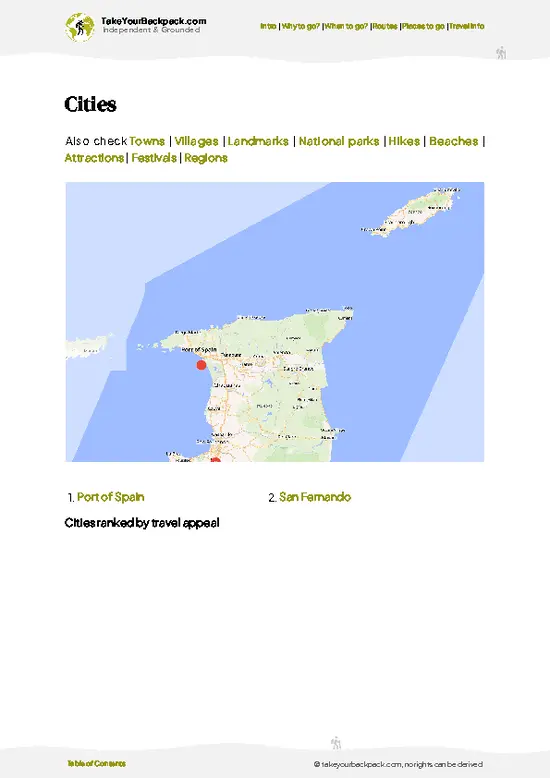
  • Blanchisseuse—secluded beaches, rainforest trails, river mouth| 22 km away
  • Icacos—southernmost point, salt ponds, remote village| 127 km away

💡 Not sure where to go next?
Create a personalized itinerary for Trinidad and Tobago including Grande Riviere and the places that fit your trip.

Generate my itinerary

👉 Discover all villages

Or checkout all Trinidad and Tobago has to offer (think cities, towns, villages, national parks, hikes, beaches, festivals)
Country photo of Trinidad and Tobago

We 💚 feedbackWhat to keep in mind

Grande Riviere feels like a secret shared among friends. The air is thick with the scent of salt and earth, and the sound of waves crashing against the shore is a constant companion. Don’t miss the turtle nesting season; it’s a breathtaking surprise that’ll leave you in awe. Just be ready for the humidity—pack light, breathable clothes. Embrace the slow pace here; it’s part of the charm. You’ll leave with a piece of its tranquility in your heart.

✍️ Help improve this page!
The information on this page is based on in-depth research, insights shared by experienced travelers, and feedback from the local travel community in Trinidad and Tobago. While every effort is made to keep the information accurate and current, conditions can change — so if you spot anything incorrect or outdated, please get in touch.


🙋‍♂️ Give feedback

👋 Meet the founderWho’s Behind Take Your Backpack?

Johan, backpacker and founder of TakeYourBackpackHi, I’m Johan (Netherlands 🇳🇱), the creator of TakeYourBackpack. Over the past decade, I’ve backpacked through 80+ countries across six continents, gaining extensive experience with independent travel, long-term trips, and overland routes.

This site is built on a combination of firsthand travel experience and carefully curated insights from other backpackers. Many guides are based on places I’ve personally visited, while others bring together tips, observations, and practical advice shared by trusted travelers I’ve met along the way.

The goal is to provide realistic, experience-driven guidance — not generic itineraries — so you can explore destinations with better context, clearer expectations, and more confidence.

Get full country guide •
Instant download • 61 highlights • Full Offline guide