×

Trinidad and Tobago🇹🇹 | townsSan Fernandohilltop views, Gulf of Paria, shopping arcades | things to do and best time to go

Explore ChaguanasExplore Scarborough

Backpacking in San Fernando
🌟 Highlighttown ranked #6
By Johan Kruseman 🇳🇱 | Updated May 28, 2026

San Fernando is not for anyone chasing resort gloss, bar-hopping strips, or a neat little “old town” made for Instagram. It’s a working city on Trinidad’s south-west coast, facing the Gulf of Paria, and that’s exactly why backpackers can get a lot out of it. You feel the heat off the asphalt, smell fry bake and doubles at the roadside, and watch the hill light up at dusk from San Fernando Hill. It’s more practical hub than headline act: a solid base for exploring south Trinidad, with maxis and buses fanning out to quieter beaches, industrial ports, and small Indo-Trinidadian towns. It’s cheaper and less intense than Port of Spain, but also less social; hostels are rare, nightlife is local, and you’ll mostly meet Trinis, not travelers. Safety is manageable with city sense—avoid wandering late, use registered taxis, and stick to busy streets after dark.

Discover everything you want to know in the 📖 Trinidad and Tobago Travel Guide.
Loading the map 🌍
CLICK TO FILTER
cities
towns
villages
landmarks
national parks
hikes
beaches
attractions
festivals
regions
SHOW COUNTRY’S BESTSHOW ALL

✨ Why go?
Ranked #6 town in Trinidad and Tobago
Why San Fernando should be on your travel list

San Fernando serves as a gateway for backpackers exploring Trinidad and Tobago, perfectly positioned near hikes, beaches, and cultural sites. The town’s walkable streets make it easy to navigate, with small-scale hostels and guesthouses that offer a cozy, communal vibe. You’ll find local food stalls serving up doubles and roti, filling your senses with the rich aromas of spices and fried dough.

Most travelers tend to stay a few days, soaking in the laid-back atmosphere while connecting with fellow solo travelers or small groups. It’s not a party hub, but the friendly locals and fellow backpackers create a welcoming environment that encourages conversation and shared experiences.

For slow travelers and hikers, San Fernando is a practical base for day trips to the nearby Pitch Lake or Turtle read more 👉
San Fernando serves as a gateway for backpackers exploring Trinidad and Tobago, perfectly positioned near hikes, beaches, and cultural sites. The town’s walkable streets make it easy to navigate, with small-scale hostels and guesthouses that offer a cozy, communal vibe. You’ll find local food stalls serving up doubles and roti, filling your senses with the rich aromas of spices and fried dough.

Most travelers tend to stay a few days, soaking in the laid-back atmosphere while connecting with fellow solo travelers or small groups. It’s not a party hub, but the friendly locals and fellow backpackers create a welcoming environment that encourages conversation and shared experiences.

For slow travelers and hikers, San Fernando is a practical base for day trips to the nearby Pitch Lake or Turtle Beach. The town’s charm lies in its simplicity, making it a worthwhile stop rather than just a fleeting moment on your journey.
Want to include San Fernando in your Trinidad and Tobago route?
Create a personalized Trinidad and Tobago itinerary that includes San Fernando and the places that fit your trip — based on your travel style, budget, and available time. Get your route in seconds.

Generate my trip

💡 HighlightsWhat this place is best known for

  1. San Fernando Hill (Naparima Hill) — The city’s green spine and best lookout: short trails and picnic spots lead to sweeping panoramic views over San Fernando and the Gulf of Paria, making it perfect for sunset watching and getting a feel for the city’s layout.
  2. San Fernando Market — A busy municipal market in the heart of town where vendors sell fresh produce, seafood, spices and hot local eats; it’s the fastest way to taste real South-Trinidad food and watch daily local life up close.
  3. Brian Lara Promenade (San Fernando Esplanade) — The waterfront stretch along the Gulf of Paria named for the great cricketer; an easy evening walk with sea breezes, sunset views, street vendors and a steady local vibe that showcases San Fernando’s seaside character.
  4. Naparima College (historic campus) — One
read more 👉
  1. San Fernando Hill (Naparima Hill) — The city’s green spine and best lookout: short trails and picnic spots lead to sweeping panoramic views over San Fernando and the Gulf of Paria, making it perfect for sunset watching and getting a feel for the city’s layout.
  2. San Fernando Market — A busy municipal market in the heart of town where vendors sell fresh produce, seafood, spices and hot local eats; it’s the fastest way to taste real South-Trinidad food and watch daily local life up close.
  3. Brian Lara Promenade (San Fernando Esplanade) — The waterfront stretch along the Gulf of Paria named for the great cricketer; an easy evening walk with sea breezes, sunset views, street vendors and a steady local vibe that showcases San Fernando’s seaside character.
  4. Naparima College (historic campus) — One of San Fernando’s oldest schools with notable colonial-era architecture and a strong local sporting and cultural legacy; the grounds and buildings are meaningful to the town’s history and are especially interesting during public events or matches.
A few excellent day-trip highlights just outside San Fernando worth adding to your route: the Pitch Lake at La Brea, the Caroni Bird Sanctuary for scarlet ibis sunset flights, and the Point-a-Pierre Wildfowl Trust.
Spotted a mistake or missing something? Contact us.

Things to do around San Fernando

Ratings based on Tripadvisor reviews. When you book through this link, you support our work at no extra cost to you.

🏘️ NeighborhoodsUnderstanding the local layout

San Fernando, a bustling hub in Trinidad and Tobago, offers a blend of local culture and accessibility that backpackers will appreciate. Here’s a breakdown of key neighborhoods to help you navigate this vibrant town.

Downtown San Fernando: This is the heart of the action. Expect a lively atmosphere filled with street vendors and local eateries. It’s walkable, making it easy to explore shops and markets. Nightlife is modest but lively, with a few bars where you can unwind. Perfect for short stays, as you can soak in the local vibe quickly.

Marabella: A bit quieter, Marabella has a more residential feel. It’s great for those seeking a slower pace. The area is affordable, with guesthouses that offer a homey touch. Walkability is decent, but you might want to use local transport for longer distances. … read more 👉
San Fernando, a bustling hub in Trinidad and Tobago, offers a blend of local culture and accessibility that backpackers will appreciate. Here’s a breakdown of key neighborhoods to help you navigate this vibrant town.

Downtown San Fernando: This is the heart of the action. Expect a lively atmosphere filled with street vendors and local eateries. It’s walkable, making it easy to explore shops and markets. Nightlife is modest but lively, with a few bars where you can unwind. Perfect for short stays, as you can soak in the local vibe quickly.

Marabella: A bit quieter, Marabella has a more residential feel. It’s great for those seeking a slower pace. The area is affordable, with guesthouses that offer a homey touch. Walkability is decent, but you might want to use local transport for longer distances. Ideal for longer stays if you want to immerse yourself in local life.

Gulf View: This neighborhood is a bit more upscale, with modern amenities and a relaxed vibe. It’s less walkable, so having a vehicle or using taxis is advisable. The nightlife is subdued, making it suitable for those who prefer peace over parties. Great for longer stays if you want comfort and convenience.

La Romaine: A mix of residential and commercial, La Romaine offers a unique local experience. It’s affordable and has a variety of dining options. Walkability varies, but public transport is accessible. This area is perfect for backpackers looking to blend in with the locals while enjoying a laid-back atmosphere.

⌛️ 1 dayHow to make the most of one day

San Fernando, a bustling town in Trinidad and Tobago, pulses with local life and culture. It’s not just a stopover; it’s a place where you can feel the rhythm of the island. The streets hum with the sounds of steelpan music, and the air is rich with the scent of street food—think savory doubles and spicy roti.

Start your morning at the San Fernando Hill. The climb is steep, but the panoramic views of the Gulf of Paria and the surrounding landscape are worth every drop of sweat. The early sun casts a golden hue over the town, and you can almost taste the freshness of the day. After soaking in the sights, head down to the local market. Here, you’ll find vibrant stalls brimming with fresh produce, handmade crafts, and the occasional friendly vendor eager to share a story. Don’t miss the chance … read more 👉
San Fernando, a bustling town in Trinidad and Tobago, pulses with local life and culture. It’s not just a stopover; it’s a place where you can feel the rhythm of the island. The streets hum with the sounds of steelpan music, and the air is rich with the scent of street food—think savory doubles and spicy roti.

Start your morning at the San Fernando Hill. The climb is steep, but the panoramic views of the Gulf of Paria and the surrounding landscape are worth every drop of sweat. The early sun casts a golden hue over the town, and you can almost taste the freshness of the day. After soaking in the sights, head down to the local market. Here, you’ll find vibrant stalls brimming with fresh produce, handmade crafts, and the occasional friendly vendor eager to share a story. Don’t miss the chance to grab a fresh coconut water; it’s a refreshing treat.

In the afternoon, wander through the neighborhoods of Marabella and La Romaine. These areas showcase the local architecture and give you a glimpse into everyday life. Stop by the San Fernando Arts Council for a dose of local creativity. You might catch an exhibition or even a workshop. It’s a fantastic way to connect with the community.

As evening approaches, make your way to the waterfront at King’s Wharf. The sunset here is a spectacle, painting the sky in hues of orange and pink. Grab a bite at one of the local food stalls—try the grilled fish or a hearty callaloo soup. The atmosphere is lively, filled with laughter and music, making it the perfect end to your day. San Fernando isn’t just a place to visit; it’s an experience that lingers long after you leave.
Turn your San Fernando visit into an Trinidad and Tobago adventure
Build a complete Trinidad and Tobago route with San Fernando, hidden gems, must-see destinations, and realistic travel times included.

Generate my trip

🌤️ When to go?Seasonal considerations and timing


  • Weather: San Fernando’s dry season, from January to May, offers the clearest skies and less humidity, making trekking and exploring much more comfortable. The wet season, June to December, brings heavy rains that can turn trails muddy and unpredictable.

  • Temperature: Expect a steady 24-31°C (75-88°F) year-round. The dry season feels warmer but less sticky, while the wet season’s humidity can make the same temperatures feel heavier on your skin.

  • Daylight Hours: Roughly 11 to 12 hours of daylight throughout the year, with sunrise around 6 a.m. and sunset near 6 p.m. This consistency lets you plan full days without worrying about early nightfall.

  • Crowds: Peak tourist flow aligns with the dry season and Carnival (usually February or March). Outside these times, San Fernando is quieter,
read more 👉

  • Weather: San Fernando’s dry season, from January to May, offers the clearest skies and less humidity, making trekking and exploring much more comfortable. The wet season, June to December, brings heavy rains that can turn trails muddy and unpredictable.

  • Temperature: Expect a steady 24-31°C (75-88°F) year-round. The dry season feels warmer but less sticky, while the wet season’s humidity can make the same temperatures feel heavier on your skin.

  • Daylight Hours: Roughly 11 to 12 hours of daylight throughout the year, with sunrise around 6 a.m. and sunset near 6 p.m. This consistency lets you plan full days without worrying about early nightfall.

  • Crowds: Peak tourist flow aligns with the dry season and Carnival (usually February or March). Outside these times, San Fernando is quieter, giving you more space to soak in local life without the buzz of big groups.

  • Seasonal Activities: Carnival season is a sensory overload of music, color, and street parties—perfect if you want to dive into culture. The dry months also host outdoor festivals and beach days that feel more accessible and less rushed.

  • Price Fluctuations: Accommodation and flights spike during Carnival and the dry season. Visiting just before or after these peaks can save you money while still enjoying good weather and manageable crowds.


Pro-tip: Aim for late January or early May to catch dry weather with fewer tourists and better deals—perfect for a backpacker who wants both comfort and authenticity.


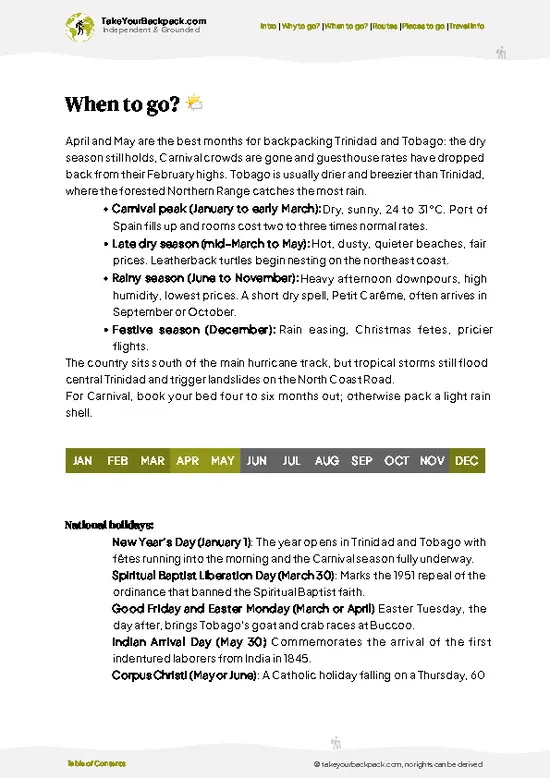
source: climatestotravel.comJANJanuary: highly recommended for travelingFEBFebruary: good for travelingMARMarch: good for travelingAPRApril: highly recommended for travelingMAYMay: highly recommended for travelingJUNJune: fair for travelingJULJuly: fair for travelingAUGAugust: fair for travelingSEPSeptember: fair for travelingOCTOctober: fair for travelingNOVNovember: fair for travelingDECDecember: fair for traveling
trinidad-and-tobago-city-san-fernando
© Google |

✈️ The backpacker research shortcutTrinidad and Tobago Travel Guide

An offline-friendly backpacking guide with optimized travel routes, ranked highlights, transport advice, and the best areas to stay.
example page 0 from our offline Travel Guide for Trinidad and Tobago
example page 1 from our offline Travel Guide for Trinidad and Tobago
example page 2 from our offline Travel Guide for Trinidad and Tobago
example page 3 from our offline Travel Guide for Trinidad and Tobago
example page 4 from our offline Travel Guide for Trinidad and Tobago
example page 5 from our offline Travel Guide for Trinidad and Tobago
example page 6 from our offline Travel Guide for Trinidad and Tobago
example page 7 from our offline Travel Guide for Trinidad and Tobago
The digital guide (236 pages) contains:
61 highlights, ranked by travel appeal
Optimized 2, 3 & 5-day travel routes
Cities, national parks, landmarks, beaches
How to get around
Offline-friendly for travel without Wi-Fi
👉 Click to see all 30+ guide features

📅 Plan smarter in minutes, not weeks
Month by month travel advice
Festivals & national holidays
Budget expectations

🗺️ Go to the right places, skip the overrated ones
Honest pros & cons of destinations
Top hikes, parks & viewpoints
Lesser-known places most travelers miss
Clear “worth it vs skip it” guidance

🛏️ Travel smoothly without rookie mistakes
Best areas to stay
Transport systems explained simply
Common scams & safety advice
SIM cards, money & practical tips

🌍 Understand the country, not just visit it
Culture & traditions
Local customs
Festivals worth planning around
Traveler-friendly historical context
Insights that make places more meaningful

📱 Built for real travel conditions
Fully downloadable PDF
Works completely offline
Optimized for phone use
Useful in remote areas & buses
Everything in one place
Save weeks of stressful planning
Get instant access to your full guide. 30‑day money-back guarantee.


By proceeding you agree to our terms.
Sent to your inbox immediately after payment • 100% Secure Checkout
Best Backpacking Travel Advisor 2025 tourism awardBest Backpacking
Travel Advisor
2025
What others say about Take Your Backpack Guides:
⭐⭐⭐⭐⭐
Fantastic, amazing amount of information!
⭐⭐⭐⭐⭐
My goodness this is amazing, it's what I've been looking for hats off too you!
⭐⭐⭐⭐⭐
I think this is absolutely BRILLIANT
⭐⭐⭐⭐
Very complete and informative. It's still missing places, but I gotta to commend you
⭐⭐⭐⭐⭐
This is truly amazing, thank you, can't wait to explore it with my kids!
⭐⭐⭐⭐⭐
Awesome resource, thank you!
⭐⭐⭐⭐⭐
This is amazing! Can't wait to explore the ones I haven't seen
⭐⭐⭐⭐
I love this! Well done, great idea.
⭐⭐⭐⭐⭐
Thanks for taking the time to make this gem!
⭐⭐⭐⭐⭐
This might be the best website I've ever seen.
⭐⭐⭐⭐⭐
Congratulations, and thank you so much for your work; it's incredibly valuable.
⭐⭐⭐⭐
In all seriousness I think you did a great job pointing out the important spots
⭐⭐⭐⭐⭐
10/10 very good
⭐⭐⭐⭐⭐
As someone who's only just starting to visit regularly this is awesome, thank you.
⭐⭐⭐⭐
Thank you very much! I'm going to visit my dad, it's going to be very useful!
⭐⭐⭐⭐⭐
This is really cool! We'll be travelling for the first time and this definitely come in handy.
⭐⭐⭐⭐⭐
You are now our minister of culture, congratulations 👨‍💼
⭐⭐⭐⭐⭐
Just wanted to tell you that this is a pearl! Going to follow your recommendations.
⭐⭐⭐⭐⭐
This is so cool. I'll definitely be using the resource for my travels soon.
⭐⭐⭐⭐⭐
This is very impressive! Good work.
⭐⭐⭐⭐⭐
This is an amazing and informative site. Very well done!

🛏️ Where to stay?How to pick the right area

San Fernando’s heart for backpackers beats strongest in the area around Cipero Street and the nearby vicinity of Independence Square. This zone is where the city’s pulse is easiest to tap into—streets lined with small eateries, lively markets, and a steady hum of local chatter. It’s safe enough to wander after dark, with a friendly, grounded vibe that makes solo travelers feel part of the scene rather than outsiders. The light here shifts as the sun dips, casting long shadows from the colonial-era buildings and filling the air with the scent of street food—spicy doubles and fresh coconut water. … read more 👉
San Fernando’s heart for backpackers beats strongest in the area around Cipero Street and the nearby vicinity of Independence Square. This zone is where the city’s pulse is easiest to tap into—streets lined with small eateries, lively markets, and a steady hum of local chatter. It’s safe enough to wander after dark, with a friendly, grounded vibe that makes solo travelers feel part of the scene rather than outsiders. The light here shifts as the sun dips, casting long shadows from the colonial-era buildings and filling the air with the scent of street food—spicy doubles and fresh coconut water.

Hostels and budget guesthouses cluster around this core, offering more than just a bed—they’re social hubs where you’ll meet fellow travelers swapping tips over strong coffee or local rum. Compared to the quieter, more residential neighborhoods on the city’s outskirts, this area keeps you close to public transport and the best local hangouts without the sterile feel of tourist traps. Staying here means you’re not just passing through San Fernando; you’re stepping into its daily rhythm, where every corner invites a new story.

🚌 Getting aroundHow to get from A to B

San Fernando moves at its own rhythm—neither frantic nor sluggish. The town’s pulse is set by the sun climbing over the Sierra Madre mountains, casting long shadows on the narrow streets where vendors call out their wares with a casual urgency. Time here isn’t measured by strict timetables but by the ebb and flow of daily life: the clatter of jeepneys pulling up, the chatter of locals bargaining, and the occasional honk slicing through the humid air. You’ll find that patience is your best companion, but so is a keen eye for the informal cues that signal when a ride is ready to roll. This isn’t a place where you wait for a bus to leave on the dot; it’s a place where you learn to read the crowd and move with the current.


  • Jeepneys: The backbone of San Fernando’s transit, these colorful, open-air
read more 👉
San Fernando moves at its own rhythm—neither frantic nor sluggish. The town’s pulse is set by the sun climbing over the Sierra Madre mountains, casting long shadows on the narrow streets where vendors call out their wares with a casual urgency. Time here isn’t measured by strict timetables but by the ebb and flow of daily life: the clatter of jeepneys pulling up, the chatter of locals bargaining, and the occasional honk slicing through the humid air. You’ll find that patience is your best companion, but so is a keen eye for the informal cues that signal when a ride is ready to roll. This isn’t a place where you wait for a bus to leave on the dot; it’s a place where you learn to read the crowd and move with the current.


  • Jeepneys: The backbone of San Fernando’s transit, these colorful, open-air vehicles run frequently from early morning (around 5:30 AM) until late evening (about 9 PM). Fares are dirt cheap, usually under 20 PHP, but expect a slow crawl through the town’s winding streets, packed with locals and their goods. It’s a sensory overload—dust, diesel, and the smell of street food wafting in through the open windows.


  • Tricycles: For short hops or when you’re hauling gear, tricycles are your go-to. They’re small motorcycles with sidecars, darting through alleys and narrow lanes where bigger vehicles can’t fit. Prices vary but typically start around 30 PHP for short distances. They’re quick and flexible but can feel a bit cramped and bumpy, especially on uneven roads.


  • Walking: San Fernando’s compact center is best explored on foot. The streets are a patchwork of concrete and dirt, with uneven sidewalks and the occasional stray dog. Walking lets you soak in the local vibe—the scent of grilled fish from roadside stalls, the chatter from sari-sari stores, and the warm, humid air that sticks to your skin. Just watch your step and keep an eye out for traffic, which doesn’t always follow strict rules.


  • Public Buses: If you’re heading out of town or to nearby provinces, public buses depart from the main terminal starting around 6 AM until early evening. Tickets are affordable, roughly 50–100 PHP depending on the distance, and buses are more spacious than jeepneys but less frequent. They run on a loose schedule, so arriving early is wise.


  • Motorcycle Taxis (Habals): A faster alternative to tricycles, habals weave through traffic with ease. They’re ideal if you’re in a hurry or traveling solo. Expect to pay slightly more than tricycles, around 40–50 PHP for short trips. Helmets aren’t always provided, so bring your own if safety is a priority.

👛 Costs (as of 23 April 2026)Travel costs and budget guide for San Fernando

Backpacking in San Fernando, Trinidad and Tobago, offers a mix of Caribbean charm and practical affordability, but knowing where your money goes helps you stretch every dollar without missing out.
  • Dorm Accommodation: Expect to pay around $10 to $20 USD per night for a bed in a basic hostel dorm. Options are limited compared to bigger cities, so booking ahead is smart. The rooms are simple, often with shared bathrooms, but clean and functional enough to recharge after a day exploring.
  • Meals: Local street food and small eateries serve up hearty, flavorful meals for $3 to $7 USD. Think doubles (a spicy chickpea-filled flatbread) or roti with curry. If you opt for a sit-down restaurant, prices rise to about $8 to $15 USD per meal, especially for seafood or more elaborate dishes.
  • Local Transport:
read more 👉
Backpacking in San Fernando, Trinidad and Tobago, offers a mix of Caribbean charm and practical affordability, but knowing where your money goes helps you stretch every dollar without missing out.
  • Dorm Accommodation: Expect to pay around $10 to $20 USD per night for a bed in a basic hostel dorm. Options are limited compared to bigger cities, so booking ahead is smart. The rooms are simple, often with shared bathrooms, but clean and functional enough to recharge after a day exploring.
  • Meals: Local street food and small eateries serve up hearty, flavorful meals for $3 to $7 USD. Think doubles (a spicy chickpea-filled flatbread) or roti with curry. If you opt for a sit-down restaurant, prices rise to about $8 to $15 USD per meal, especially for seafood or more elaborate dishes.
  • Local Transport: Getting around mostly means maxi taxis and buses, which cost roughly $0.50 to $1.50 USD per ride. They’re frequent but can be crowded and a bit unpredictable on timing. For short distances, a taxi might run $3 to $7 USD, so budgeting for a few rides is wise if you want convenience.
  • Basic Activities/Entry Fees: Many natural attractions like beaches and parks are free or charge a small entry fee around $1 to $3 USD. Museums and cultural sites might ask for $2 to $5 USD. Organized tours or special experiences push the budget higher, but casual exploration stays light on your wallet.
  • Miscellaneous Expenses: This covers essentials like bottled water, snacks, occasional internet top-ups, or small souvenirs. Plan for about $2 to $5 USD daily here, as these little costs add up quickly in the heat and humidity.

Altogether, a realistic daily budget for backpacking in San Fernando ranges from about $20 to $40 USD. This balance lets you enjoy local flavors, get around with ease, and soak in the atmosphere without feeling pinched. The town’s laid-back vibe and accessible prices make it a solid stop on any Caribbean itinerary.
⚠️ Prices can change and everyone travels differently, so take this as a rough guide. Hope it helps you plan your adventure!

🚌 Day tripsWhere to go beyond the main area

San Fernando, Trinidad and Tobago, is a vibrant hub that opens the door to some of the island’s most rewarding day trips. With its central location, you can easily explore diverse landscapes, rich culture, and local flavors. Here are some standout options.

Pitch Lake
A visit to Pitch Lake is like stepping into a natural wonderland. This unique site is the largest natural deposit of asphalt in the world. You’ll wander across a surreal landscape, feeling the warm, sticky ground beneath your feet. The drive takes about 30 minutes, and entry is usually around $5. Best visited in the dry season, the lake is less muddy, making it easier to explore. A common mistake is underestimating the heat; bring plenty of water and a hat.
👉 Explore Pitch Lake

Maracas Beach
Maracas Beach is a slice of … read more 👉
San Fernando, Trinidad and Tobago, is a vibrant hub that opens the door to some of the island’s most rewarding day trips. With its central location, you can easily explore diverse landscapes, rich culture, and local flavors. Here are some standout options.

Pitch Lake
A visit to Pitch Lake is like stepping into a natural wonderland. This unique site is the largest natural deposit of asphalt in the world. You’ll wander across a surreal landscape, feeling the warm, sticky ground beneath your feet. The drive takes about 30 minutes, and entry is usually around $5. Best visited in the dry season, the lake is less muddy, making it easier to explore. A common mistake is underestimating the heat; bring plenty of water and a hat.
👉 Explore Pitch Lake

Maracas Beach
Maracas Beach is a slice of paradise just an hour’s drive from San Fernando. The golden sands and turquoise waters invite you to unwind. Grab a bake and shark from one of the local vendors—it’s a must-try! The beach can get crowded on weekends, so aim for a weekday visit for a more relaxed vibe. Expect to spend around $10 for food and transport. The best time to go is early morning to snag a good spot.


Asa Wright Nature Centre
For nature lovers, the Asa Wright Nature Centre is a treasure trove of biodiversity. Located about an hour away, this eco-lodge offers guided birdwatching tours that immerse you in the sounds of the rainforest. Entry is around $20, and the experience is worth every penny. The early morning tours are best for spotting the vibrant birds. A common rookie mistake is not bringing binoculars; you’ll want to see every flash of color.
👉 Explore Asa Wright Nature Centre

Caroni Bird Sanctuary
Just a short drive from San Fernando, the Caroni Bird Sanctuary is a must for wildlife enthusiasts. A guided boat tour through the mangroves reveals a stunning array of birds, including the famous Scarlet Ibis. Tours typically last about two hours and cost around $30. The best time to visit is at sunset when the birds return to roost, painting the sky in hues of orange and pink. Don’t forget your camera!
👉 Explore Caroni Bird Sanctuary
Want to know what more Trinidad and Tobago offers?
The Trinidad and Tobago Travel Guide describes 61 highlights, from cities to national parks, from beaches to hikes

Get the Travel Guide -

🛡️ SafetyStaying Safe: What Travelers Should Know

San Fernando, Trinidad and Tobago, is generally safe, but a little awareness goes a long way. Stick to well-lit areas at night, especially around the market and waterfront. If you’re solo, keep your phone handy for navigation and avoid empty streets.

Watch for the occasional scam, like overly friendly locals offering unsolicited help—often, they expect a tip. When haggling at markets, be firm but friendly; it’s part of the culture.

Annoyances can pop up, like aggressive taxi drivers or vendors who won’t take no for an answer. A polite but firm “no, thank you” usually does the trick.

Overall, carry yourself confidently, engage with locals, and embrace the rhythm of the town. The more you blend in, the smoother your experience will be.

Other Trinidadian and Tobagonian towns near San Fernando

Explore more nearby:

  • Siparia—La Divina Pastora, religious festivals, rural crossroads| 23 km away
  • Chaguanas—open-air bazaars, Indo-Trinidadian cuisine, temple landmarks| 26 km away
  • Arima—bustling market, Amerindian heritage, horse racing| 43 km away

💡 Not sure where to go next?
Create a personalized itinerary for Trinidad and Tobago including San Fernando and the places that fit your trip.

Generate my itinerary

👉 Discover all towns

Or checkout all Trinidad and Tobago has to offer (think cities, towns, villages, national parks, hikes, beaches, festivals)
Country photo of Trinidad and Tobago

We 💚 feedbackKey takeaways before you go

San Fernando has a pulse that’s hard to ignore. The streets hum with the scent of street food—think spicy doubles and sweet coconut drops. You’ll stumble upon vibrant murals that tell stories of the island’s soul. A heads-up: the traffic can be a beast, especially during rush hour, so plan your outings wisely. But when you find that perfect local spot, where the music wraps around you like a warm hug, you’ll realize it’s all part of the experience. Embrace the chaos; it’s where the magic happens.

✍️ Help improve this page!
The information on this page is based on in-depth research, insights shared by experienced travelers, and feedback from the local travel community in Trinidad and Tobago. While every effort is made to keep the information accurate and current, conditions can change — so if you spot anything incorrect or outdated, please get in touch.


🙋‍♂️ Give feedback

👋 Meet the founderWho’s Behind Take Your Backpack?

Johan, backpacker and founder of TakeYourBackpackHi, I’m Johan (Netherlands 🇳🇱), the creator of TakeYourBackpack. Over the past decade, I’ve backpacked through 80+ countries across six continents, gaining extensive experience with independent travel, long-term trips, and overland routes.

This site is built on a combination of firsthand travel experience and carefully curated insights from other backpackers. Many guides are based on places I’ve personally visited, while others bring together tips, observations, and practical advice shared by trusted travelers I’ve met along the way.

The goal is to provide realistic, experience-driven guidance — not generic itineraries — so you can explore destinations with better context, clearer expectations, and more confidence.

Get full country guide •
Instant download • 61 highlights • Full Offline guide