
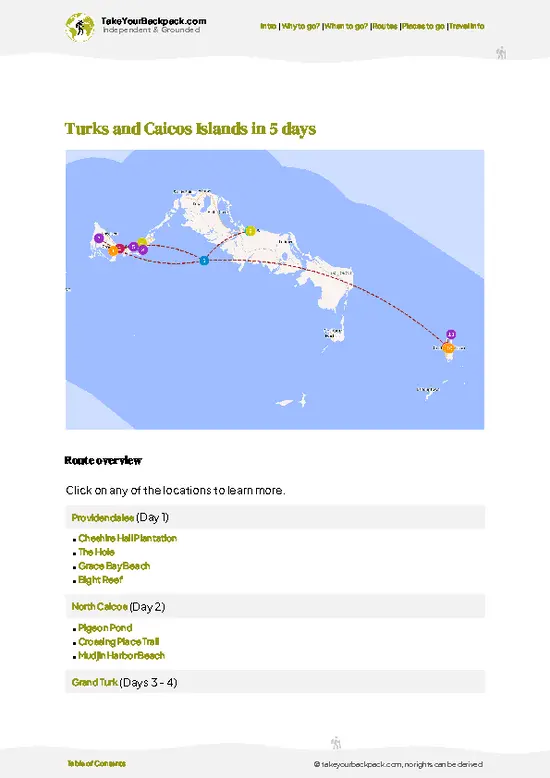
- The Great House Ruins: The main landmark, with thick limestone walls still standing at roughly the height of the old rooms. You can make out the layout of the planter's home and its commanding position on the rise.
- The Cotton House and Storage Structures: Remnants of the buildings where harvested cotton was processed and kept. They explain how the plantation actually earned money before the soil gave out.
- The Stone Cistern: Fresh water was scarce, so collecting rain was essential. The cistern is one of the best-preserved features and shows the engineering needed to live here.
- Slave Quarters Foundations: Low stone outlines mark where enslaved people lived. They are modest and sobering, and the most important part of the site for understanding who did the work.
- Interpretive Signboards: Placed along
- The Great House Ruins: The main landmark, with thick limestone walls still standing at roughly the height of the old rooms. You can make out the layout of the planter's home and its commanding position on the rise.
- The Cotton House and Storage Structures: Remnants of the buildings where harvested cotton was processed and kept. They explain how the plantation actually earned money before the soil gave out.
- The Stone Cistern: Fresh water was scarce, so collecting rain was essential. The cistern is one of the best-preserved features and shows the engineering needed to live here.
- Slave Quarters Foundations: Low stone outlines mark where enslaved people lived. They are modest and sobering, and the most important part of the site for understanding who did the work.
- Interpretive Signboards: Placed along the walking loop, they give names, dates and context for the Loyalist settlers and the short life of the cotton economy.
- The Boundary Walls: Dry-stone walls, laid without mortar, cross the scrub. They trace field divisions and show how much land was cleared of dense bush.
- Views Over the Scrub Toward the Coast: From the rise you look across low bush toward the water. It explains why planters chose this site for drainage and sea breezes.
Spotted a mistake or missing something? Contact us.

Love Buggy Island Tour with Lunch

Caicos Islands Beach Horseback Riding Small-Group Tour

Turks and Caicos Private Beach Horseriding Experience

N&G Providenciales Island Tours of Turks and Caicos

Sunset Horse Ride Experience

Shared Horseback Riding in Turks and Caicos

3-Hour Private Island Tour in Providenciales


 Best Backpacking

 Hi, I’m Johan (Netherlands 🇳🇱), the creator of TakeYourBackpack. Over the past 3 decades, I’ve backpacked through 90+ countries across six continents, gaining extensive experience with independent travel, long-term trips, and overland routes.