
×

Uruguay🇺🇾 | national parksMontes del QueguayQueguay rivers, tala forest strips, capybara banks, dark night sky | things to do and best time to go

Explore Valle del LunarejoExplore Parque Nacional de la Quebrada del Tigre

Backpacking in Montes del Queguay
👀 For curious travelersnational park ranked #10
By Johan Kruseman 🇳🇱 | Updated October 19, 2026

Montes del Queguay has almost no public transport, so most of the planning falls on you. It lies in the northwest of Uruguay, northeast of the city of Paysandú, where the Queguay rivers cut ribbons of native forest through open ranch country. The reward is quiet: river bends, birdsong and hardly anyone else. The cost is logistics. Gravel roads turn slow after rain, shade and shops are scarce, and mobile signal drops out. Fill your tank and water in Paysandú, carry cash, and download offline maps before leaving pavement. A first day could mean an early drive in, a slow walk along a riverbank, and a long lunch in the shade.

Discover everything you want to know in the 📖 Uruguay Travel Guide.


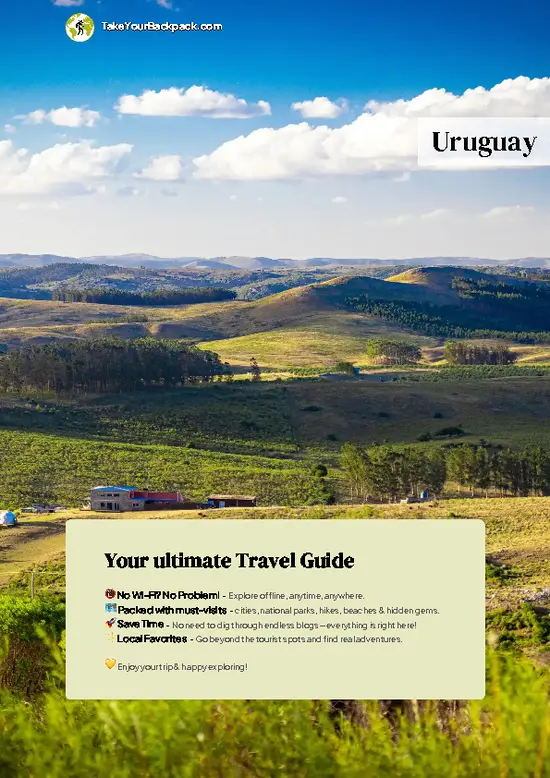
example page 0 from our offline Travel Guide for Uruguay
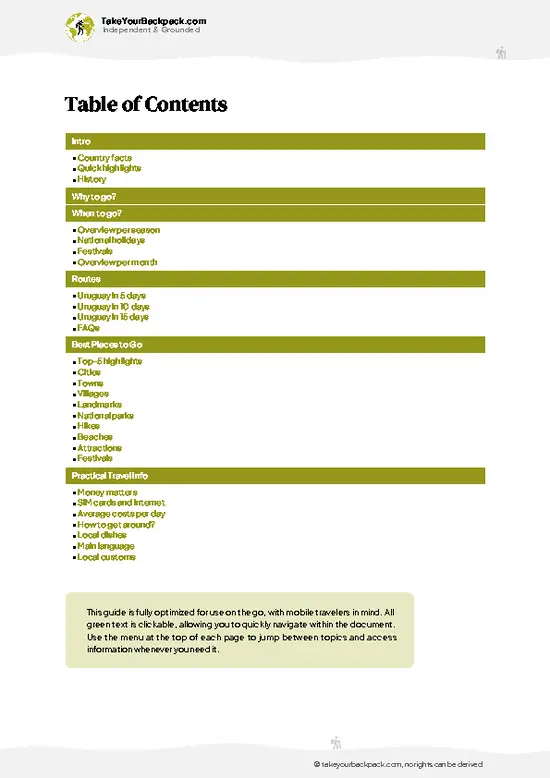
example page 1 from our offline Travel Guide for Uruguay
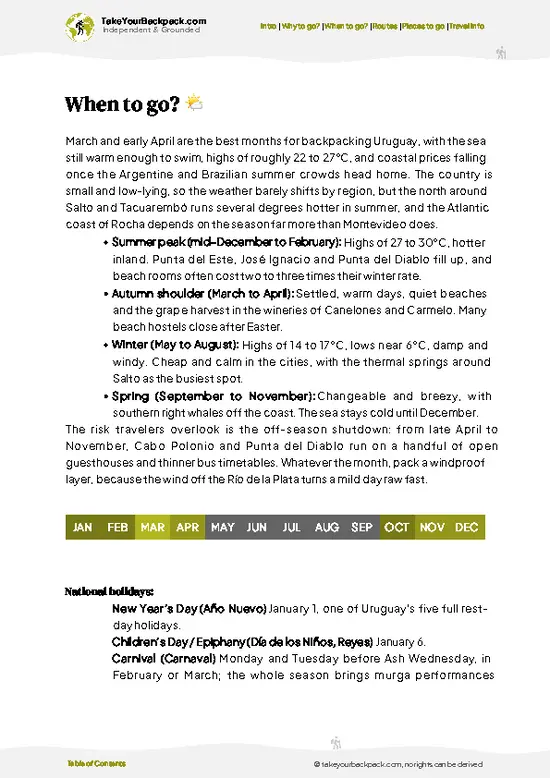
example page 2 from our offline Travel Guide for Uruguay
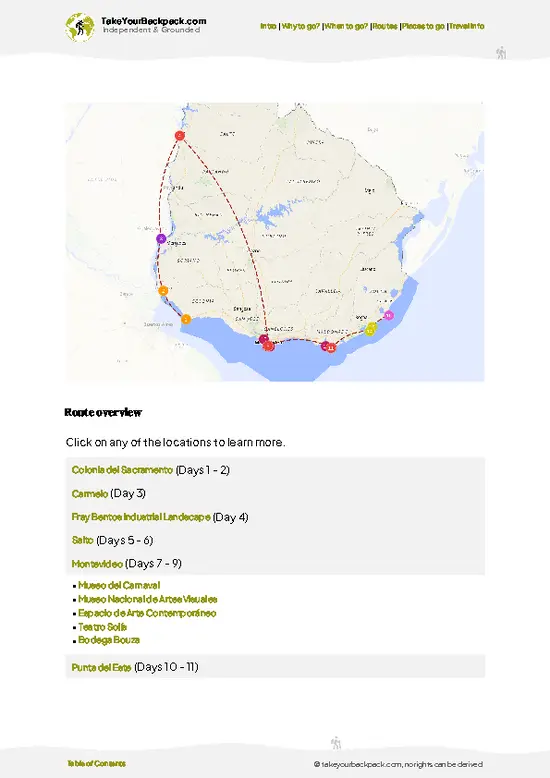
example page 3 from our offline Travel Guide for Uruguay
example page 4 from our offline Travel Guide for Uruguay
example page 5 from our offline Travel Guide for Uruguay
example page 6 from our offline Travel Guide for Uruguay
example page 7 from our offline Travel Guide for Uruguay
Loading the map 🌍
CLICK TO FILTER
cities
towns
villages
landmarks
national parks
hikes
beaches
attractions
festivals
SHOW COUNTRY’S BESTSHOW ALL

✨ Why go?
Ranked #10 national park in Uruguay
What makes it a must-see national park

Montes del Queguay suits backpackers who like to move on their own schedule, because nothing here runs on a tour timetable. The draw is the gallery forest along the Queguay rivers, a dark green corridor of native trees in a landscape otherwise dominated by grassland and cattle. Walking is informal: farm tracks, riverbanks and open fields rather than signed loops, so you set the distance. Birders get a particular payoff, since the wooded river edge concentrates species that are harder to find in the open pampas. Because the area is rural, Paysandú works as your supply point for food, fuel and a bed. If you want solitude and a strong sense of the Uruguayan interior, this fits.

💡 HighlightsEssential experiences to have while exploring Montes del Queguay

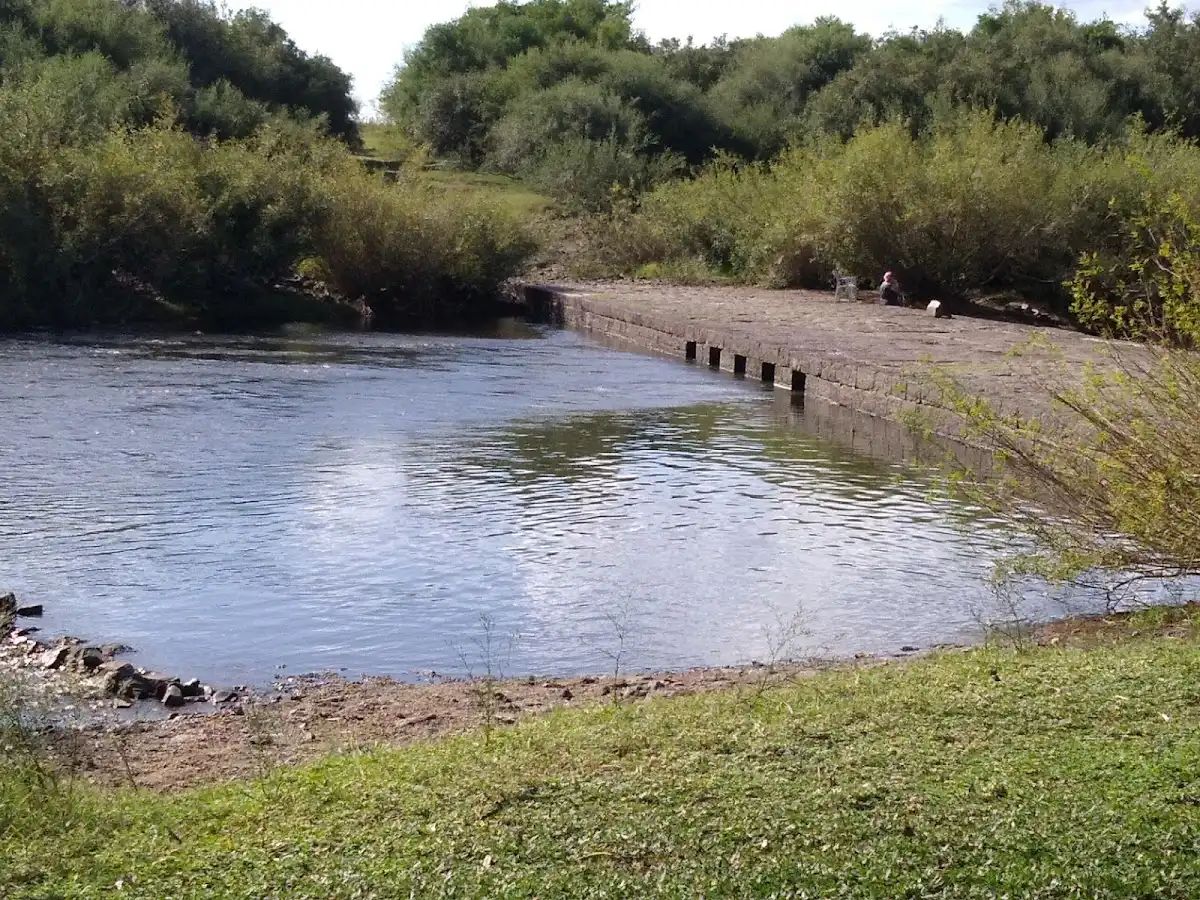
  1. Queguay Grande River: The main watercourse, flowing brown and slow between banks of dense native trees. Riverside spots make good places to sit and watch.
  2. Queguay Chico River: A smaller sister river that joins the system, with quieter, narrower stretches and more shade.
  3. Native gallery forest: Strips of tala, espinillo and other indigenous trees hug the water. They stay cooler than the open fields and hold much of the wildlife.
  4. Birdlife along the river edge: Kingfishers, herons and woodland birds work the water and canopy. Early morning gives the best activity.
  5. Capybaras and river wildlife: Capybaras graze on muddy banks, usually near dusk or dawn, and slip into the water if you approach too fast.
  6. Open grasslands of the Paysandú countryside: Rolling pastureland with gauchos, cattle and wide skies,
… read more 👉
  1. Queguay Grande River: The main watercourse, flowing brown and slow between banks of dense native trees. Riverside spots make good places to sit and watch.
  2. Queguay Chico River: A smaller sister river that joins the system, with quieter, narrower stretches and more shade.
  3. Native gallery forest: Strips of tala, espinillo and other indigenous trees hug the water. They stay cooler than the open fields and hold much of the wildlife.
  4. Birdlife along the river edge: Kingfishers, herons and woodland birds work the water and canopy. Early morning gives the best activity.
  5. Capybaras and river wildlife: Capybaras graze on muddy banks, usually near dusk or dawn, and slip into the water if you approach too fast.
  6. Open grasslands of the Paysandú countryside: Rolling pastureland with gauchos, cattle and wide skies, a useful contrast to the shaded river corridors.
  7. Night sky over the countryside: With almost no light pollution, clear nights show the Milky Way plainly.
You can see all of it in a long day, though a second morning gives the birds and wildlife a fair chance.
Spotted a mistake or missing something? Contact us.
🌤️ When to go?Choosing the right time of year

  • Spring (Oct to Nov): Mild days of 18 to 25°C (64 to 77°F), cool nights near 10°C (50°F), and the native woodland along the Queguay River is in flower. Rain is frequent but short, and prices stay normal.
  • Summer (Dec to Feb): Highs of 28 to 34°C (82 to 93°F) with humid heat, and daylight lasts about 14 hours. River swimming is the draw, and Uruguayan holiday weeks around January lift prices at Paysandú and Guichón.
  • Autumn (Mar to May): Pleasant 17 to 26°C (63 to 79°F), steadier skies, and few other visitors.
  • Winter (Jun to Aug): Daytime 10 to 17°C (50 to 63°F), nights near freezing, about 10 hours of light, and muddy tracks after heavy rain.
Book a weekday in March or October, when the river is warm enough to enjoy and rooms are easy to get.

source: climatestotravel.comJANJanuary: fair for travelingFEBFebruary: fair for travelingMARMarch: highly recommended for travelingAPRApril: excellent for travelingMAYMay: highly recommended for travelingJUNJune: good for travelingJULJuly: good for travelingAUGAugust: good for travelingSEPSeptember: excellent for travelingOCTOctober: excellent for travelingNOVNovember: highly recommended for travelingDECDecember: fair for traveling
uruguay-national-park-montes-del-queguay
© Google |

✈️ The backpacker research shortcutUruguay Travel Guide

An offline-friendly backpacking guide with optimized travel routes, ranked highlights, transport advice, and the best areas to stay.
example page 0 from our offline Travel Guide for Uruguay
example page 1 from our offline Travel Guide for Uruguay
example page 2 from our offline Travel Guide for Uruguay
example page 3 from our offline Travel Guide for Uruguay
example page 4 from our offline Travel Guide for Uruguay
example page 5 from our offline Travel Guide for Uruguay
example page 6 from our offline Travel Guide for Uruguay
example page 7 from our offline Travel Guide for Uruguay
The digital guide (198 pages) contains:
✅ 56 highlights, ranked by travel appeal
✅ Optimized 5, 10 & 15-day travel routes
✅ Cities, national parks, landmarks, beaches
✅ How to get around
✅ Offline-friendly for travel without Wi-Fi
👉 Click to see all 30+ guide features

📅 Plan smarter in minutes, not weeks
✅ Month by month travel advice
✅ Festivals & national holidays
✅ Budget expectations

🗺️ Go to the right places, skip the overrated ones
✅ Honest pros & cons of destinations
✅ Top hikes, parks & viewpoints
✅ Lesser-known places most travelers miss
✅ Clear “worth it vs skip it” guidance

🛏️ Travel smoothly without rookie mistakes
✅ Best areas to stay
✅ Transport systems explained simply
✅ Common scams & safety advice
✅ SIM cards, money & practical tips

🌍 Understand the country, not just visit it
✅ Culture & traditions
✅ 52 Essential phrases & customs
✅ Festivals worth planning around
✅ Traveler-friendly historical context
✅ Insights that make places more meaningful

📱 Built for real travel conditions
✅ Fully downloadable PDF
✅ Works completely offline
✅ Optimized for phone use
✅ Useful in remote areas & buses
✅ Everything in one place
Stop searching, start planning
Get instant access to your full guide. 30‑day money-back guarantee.
+ Add another guide for just

By proceeding you agree to our terms.
Sent to your inbox immediately after payment • 100% Secure Checkout
Best Backpacking Travel Advisor 2025 tourism awardBest Backpacking
Travel Advisor
2025
What others say about Take Your Backpack Guides:
⭐⭐⭐⭐⭐
Fantastic, amazing amount of information!
⭐⭐⭐⭐⭐
My goodness this is amazing, it's what I've been looking for hats off too you!
⭐⭐⭐⭐⭐
I think this is absolutely BRILLIANT
⭐⭐⭐⭐
Very complete and informative. It's still missing places, but I gotta to commend you
⭐⭐⭐⭐⭐
This is truly amazing, thank you, can't wait to explore it with my kids!
⭐⭐⭐⭐⭐
Awesome resource, thank you!
⭐⭐⭐⭐⭐
This is amazing! Can't wait to explore the ones I haven't seen
⭐⭐⭐⭐
I love this! Well done, great idea.
⭐⭐⭐⭐⭐
Thanks for taking the time to make this gem!
⭐⭐⭐⭐⭐
This might be the best website I've ever seen.
⭐⭐⭐⭐⭐
Congratulations, and thank you so much for your work; it's incredibly valuable.
⭐⭐⭐⭐
In all seriousness I think you did a great job pointing out the important spots
⭐⭐⭐⭐⭐
10/10 very good
⭐⭐⭐⭐⭐
As someone who's only just starting to visit regularly this is awesome, thank you.
⭐⭐⭐⭐
Thank you very much! I'm going to visit my dad, it's going to be very useful!
⭐⭐⭐⭐⭐
This is really cool! We'll be travelling for the first time and this definitely come in handy.
⭐⭐⭐⭐⭐
You are now our minister of culture, congratulations 👨‍💼
⭐⭐⭐⭐⭐
Just wanted to tell you that this is a pearl! Going to follow your recommendations.
⭐⭐⭐⭐⭐
This is so cool. I'll definitely be using the resource for my travels soon.
⭐⭐⭐⭐⭐
This is very impressive! Good work.
⭐⭐⭐⭐⭐
This is an amazing and informative site. Very well done!

🛏️ Where to stay?Best areas to stay in Uruguay

Paysandú is the practical base for Montes del Queguay, about 60 to 90 minutes by road from the river area, with hostels, simple hotels and apartments from US$25 to 70 a night. Guichón is a smaller town closer to the Queguay corridor, with a couple of modest hotels at US$30 to 50 and shops for supplies. Inside the protected landscape there is no formal park infrastructure, so lodging is limited to rural estancias and riverside cabins, which you should book ahead by phone or message, typically US$40 to 90 per night. Wild camping is possible only with the landowner’s permission, since most land is … read more 👉
Paysandú is the practical base for Montes del Queguay, about 60 to 90 minutes by road from the river area, with hostels, simple hotels and apartments from US$25 to 70 a night. Guichón is a smaller town closer to the Queguay corridor, with a couple of modest hotels at US$30 to 50 and shops for supplies. Inside the protected landscape there is no formal park infrastructure, so lodging is limited to rural estancias and riverside cabins, which you should book ahead by phone or message, typically US$40 to 90 per night. Wild camping is possible only with the landowner’s permission, since most land is private. Paysandú also has the Termas de Guaviyú hot-spring campground area a short drive north, where tent sites cost roughly US$8 to 15. Stock up on food and water in town before heading out, because shops near the river are rare.

👛 Costs (as of 19 October 2026)What things cost and how to budget

Plan on roughly US$55 a day for Montes del Queguay in high season, mostly for lodging and getting out to the river area.
CategoryBudget RangeLocal Reality
Entrance feesUS$0No general entry charge; some estancias charge for guided visits or day use.
Accommodation (high season)US$15 to 40Hostel beds or basic rooms in Paysandú or Guichón; camping on permitted land is cheaper.
Local transportUS$5 to 15Buses between Paysandú and Guichón are cheap, but reaching the river typically means a taxi, remise or hired car.
Food and suppliesUS$10 to 18Chivitos, empanadas and supermarket groceries; pay in Uruguayan pesos or by card in towns.
Guides or activitiesUS$0 to 20Self-guided walking is free; local guides or boat outings are optional extras.
Total Daily BudgetUS$55Midpoint of the ranges above, with one night of high-season lodging.
⚠️ Prices can change and everyone travels differently, so take this as a rough guide. Hope it helps you plan your adventure!

🥾 TrailsDiscover Montes del Queguay's top trails and natural wonders

Montes del Queguay is walked rather than hiked in the formal sense, so the routes are the ones locals and farm tracks provide. Expect gentle terrain, mud after rain and little shade outside the forest strips.
  • Riverbank walks: Follow the edge of the Queguay rivers for one to three hours at an easy pace. You pass sandy patches, fallen branches and tangled forest, and wildlife is most likely at dawn.
  • Farm track loops: Gravel and dirt tracks through grassland make easy, flat circuits of two to four hours. They are open and exposed, so sun protection matters more than boots.
  • Forest edge birding: Short,
… read more 👉
Montes del Queguay is walked rather than hiked in the formal sense, so the routes are the ones locals and farm tracks provide. Expect gentle terrain, mud after rain and little shade outside the forest strips.
  • Riverbank walks: Follow the edge of the Queguay rivers for one to three hours at an easy pace. You pass sandy patches, fallen branches and tangled forest, and wildlife is most likely at dawn.
  • Farm track loops: Gravel and dirt tracks through grassland make easy, flat circuits of two to four hours. They are open and exposed, so sun protection matters more than boots.
  • Forest edge birding: Short, slow wanders along the tree line, often under an hour, suit binoculars far better than speed.
  • Difficulty: Easy overall, with no real climbing. The challenge is navigation, heat in summer and soft ground after storms.
  • Wildlife: Capybaras, many bird species and occasional foxes or deer are the typical sightings. Insects are common near water, so bring repellent.
Public transport does not reach the area directly. Buses run to Paysandú and nearby towns, but you will need a car, a taxi or a lift for the final stretch on gravel roads. Crowds are essentially absent, and you may go hours without seeing anyone. Most land around the rivers is private, so stay on tracks and close gates behind you. Carry plenty of water, snacks and a paper or offline map.
⚠️ Hiking info can sometimes be outdated or inaccurate. Before you hit the trail, check the latest conditions with locals. If you do spot anything that's off, I'd love to hear from you, so I can update it for fellow travelers.

🛡️ SafetyTraveler Safety Guide

Montes del Queguay is low-risk, but it is remote, private-land country with almost no signage and patchy mobile signal. Download offline maps and tell your host your route. Summer heat and humidity are the main hazard, so walk early, carry at least 3 liters of water and wear a hat. Ticks and mosquitoes are common in the riverside woodland, so use repellent and check your legs afterward. Dirt roads turn to slick clay after rain and can be impassable for a day or two. Wildlife is modest: you may see capybaras, foxes and many birds, and snakes are rare if you keep to paths. Close farm gates behind you and keep clear of cattle.

FAQFrequently asked questions about Montes del Queguay

Two days works well for Montes del Queguay, with one day on the river and woodland and another for a longer walk or a visit to a nearby estancia. Paysandú is the usual base, roughly 60 to 90 minutes away by road. A single long day is possible, but it leaves little time for walking.
Visiting Montes del Queguay without a car is difficult but doable. Buses run to Paysandú and Guichón on Route 90 and Route 3, but nothing reliable covers the final 20 to 40 km of dirt road to the river, so plan on a taxi or remise at roughly US$30 to 70 round trip. Arrange the return pickup beforehand, since mobile signal is weak.
Montes del Queguay has no general entrance fee or permit for visitors, which keeps costs at US$0 for access. Most land around the Queguay River is private, so you need the owner’s permission to camp or cross fields. Estancias that offer guided rides or day use typically charge around US$10 to 40 per person.
⚠️ Things can change over time, so always validate details locally before you go.

Other Uruguayan national parks near Montes del Queguay

Explore more nearby:


💡 Not sure where to go next?
Create a personalized itinerary for Uruguay including Montes del Queguay and the places that fit your trip.

Generate my itinerary

👉 Discover all national parks

Or checkout all Uruguay has to offer (think cities, towns, villages, national parks, hikes, beaches, festivals)
Country photo of Uruguay

We 💚 feedbackSumming up the experience

In Montes del Queguay, base yourself in Paysandú, bring food and water, and aim for first light on the river. I would skip midday walks and save the open fields for the afternoon.

✍️ Help improve this page!
The information on this page is based on in-depth research, insights shared by experienced travelers, and feedback from the local travel community in Uruguay. While every effort is made to keep the information accurate and current, conditions can change — so if you spot anything incorrect or outdated, please get in touch.


🙋‍♂️ Give feedback

👋 Meet the founderWho’s Behind Take Your Backpack?

Johan, backpacker and founder of TakeYourBackpackHi, I’m Johan (Netherlands 🇳🇱), the creator of TakeYourBackpack. Over the past 3 decades, I’ve backpacked through 90+ countries across six continents, gaining extensive experience with independent travel, long-term trips, and overland routes.

This site is built on a combination of firsthand travel experience and carefully curated insights from other backpackers. Many guides are based on places I’ve personally visited, while others bring together tips, observations, and practical advice shared by trusted travelers I’ve met along the way.

The goal is to provide realistic, experience-driven guidance — not generic itineraries — so you can explore destinations with better context, clearer expectations, and more confidence.